-
-
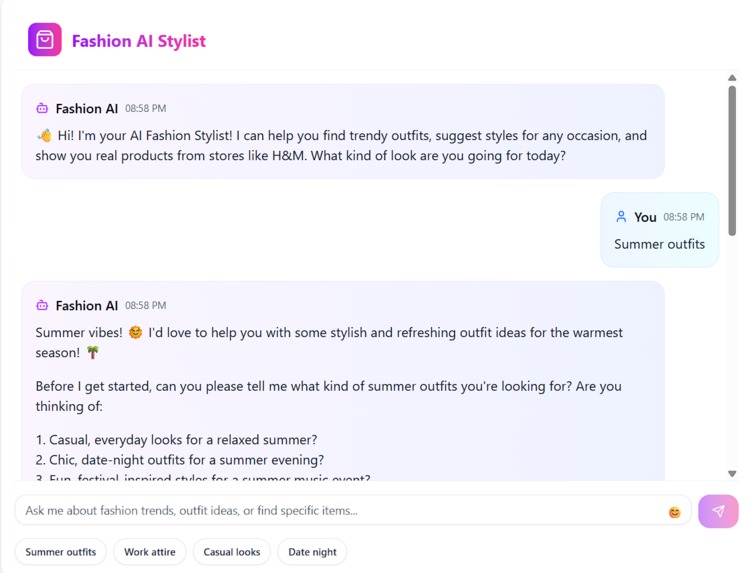
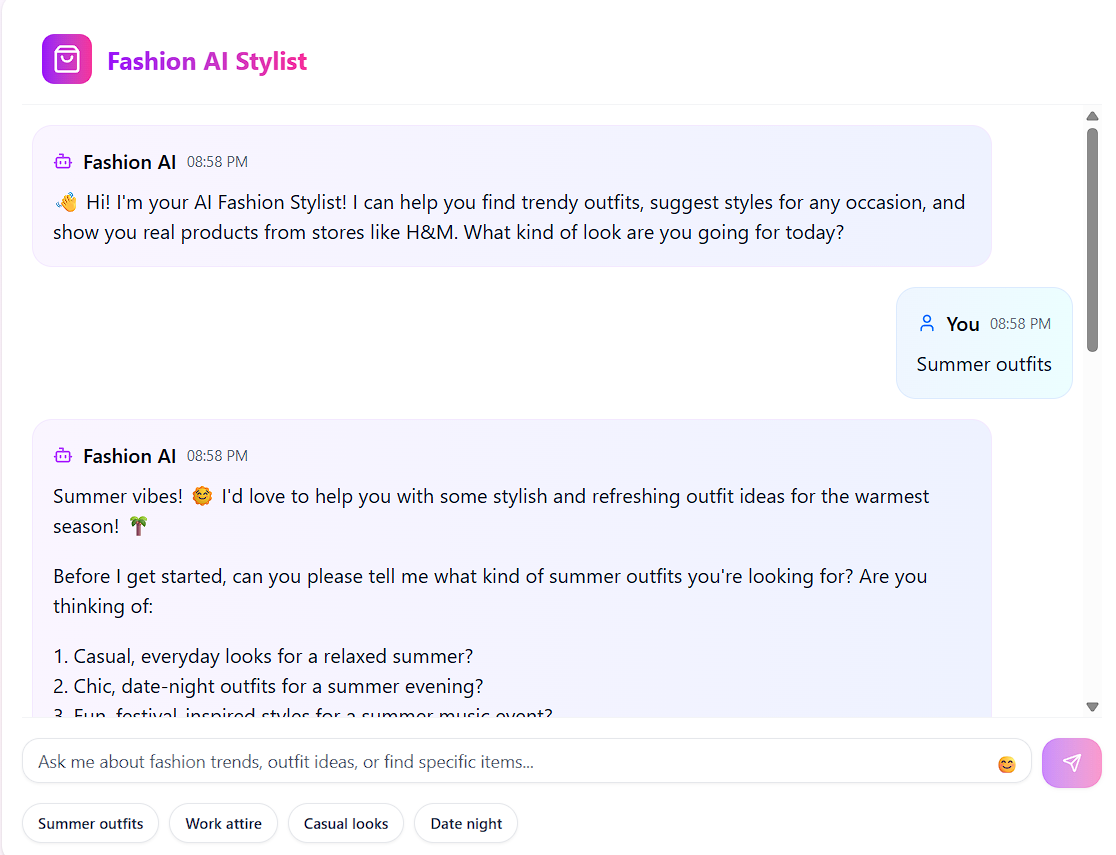
UI of StylerGPT
Inspiration
The inspiration behind StylerGPT comes from a very personal place — me. I’ve always struggled with choosing the right clothes. Fashion has never been my strong suit, and I often found myself wishing there was someone who could guide me, just like a personal stylist. That idea led to the creation of StylerGPT — a fashion chatbot that can act as your personal assistant for styling decisions.
What it does
StylerGPT is a chat-based fashion assistant that answers your personal fashion-related doubts. Whether you're unsure about what outfit suits your body type, what to wear to an event, or which styles match your preferences — the chatbot helps you figure it out. It also recommends real products that best match your style needs, making fashion more accessible, personalized, and hassle-free.
How we built it
We built StylerGPT using the following technologies:
- Frontend: React with Vite and TypeScript
- LLM: Groq API to handle chat-based interaction and understanding user queries
- Recommendation Layer: Qloo API to refine and recommend products based on cultural and stylistic relevance
- UI: Tailwind CSS for sleek and responsive design
The chatbot interface takes user input, processes it through Groq for natural language understanding, and uses Qloo to generate product recommendations, which are then displayed dynamically as product cards.
Challenges we ran into
- Integrating Groq and Qloo APIs: These were new tools for us. Understanding their structure, authentication, and rate limits took time.
- Dynamic product display: Creating responsive and visually appealing product cards that update based on API responses was a complex part of the UI/UX.
Accomplishments that we're proud of
- Successfully completing and submitting this project for the hackathon
- Learned to use and integrate multiple APIs, something I had never done before
- Built a working fashion chatbot prototype that’s genuinely helpful
What we learned
- How to build a chatbot-like interface using Groq (LLM)
- The basics of fashion recommendation and cultural insights via Qloo
- Using React + Vite with TypeScript for faster development
- How APIs work, from request structure to response handling and rendering dynamic components
What's next for StylerGPT
Moving forward, we envision:
- Brand collaborations: Partnering with fashion brands to fetch their latest collections and get real-time data
- Better personalization: Using user profiles, preferences, and feedback loops to refine suggestions
- Real-time fashion insights: Incorporating trend analysis and AI vision to suggest styles from just a photo
- Expanding the dataset: As fashion evolves rapidly, we want StylerGPT to evolve with it using live data pipelines
StylerGPT has the potential to be your real-time fashion buddy, helping you stay trendy without the stress.
Built With
- groq
- qloo
- react
- shadcn
- typescript
- vite

Log in or sign up for Devpost to join the conversation.