-
-
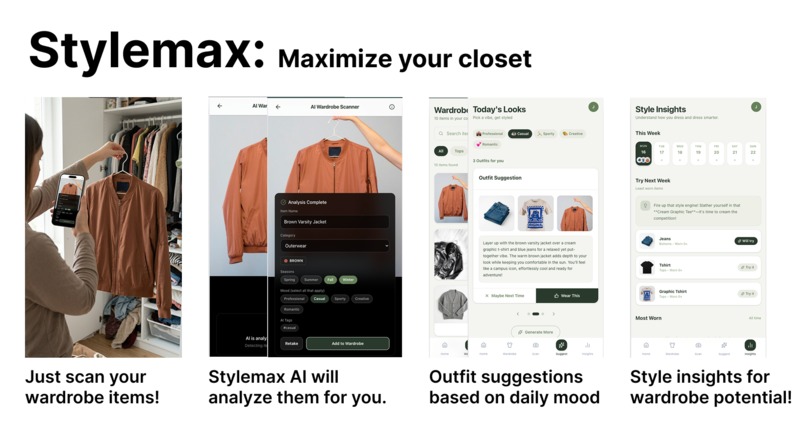
Stylemax: Maximize your closet
-
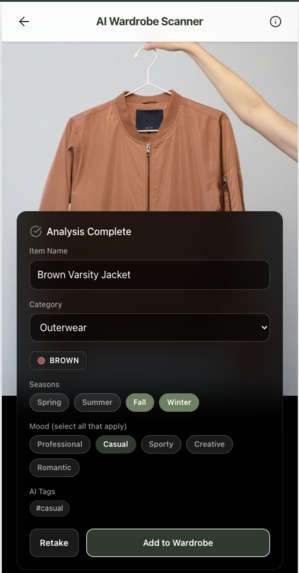
NOVA AI analyzing the item


Inspiration
We've all been there, standing in front of a full closet, running late, saying "I have nothing to wear." Studies show 65% of working professionals waste 10-15 minutes every morning on this exact problem. That's more than 90 hours a year lost to outfit indecision. Meanwhile, the average person only wears about 20% of the 140+ items they own. I wanted to solve this with Stylemax, not by telling people to buy more clothes, but by helping them rediscover and maximize what they already have. The goal: maximize closet potential while reducing morning cognitive overload. The hidden costs are staggering:
- Time waste: 17 minutes/day = 90+ hours per year spent choosing outfits
- Decision fatigue: Reduced mental capacity for important morning decisions
- Wardrobe blindness: Buying duplicates of items already owned
- Style stagnation: Repeating the same 5-7 outfit combinations while the rest of the closet collects dust
What it does
Stylemax is a mobile-first AI fashion companion that transforms your chaotic closet into a curated, weather-aware, mood-matched wardrobe. Users snap a photo of any clothing item and our AI instantly categorizes it — identifying type, color, season, and mood compatibility. When it's time to get dressed, users select their mood (professional, casual, cozy, etc.) and Stylemax pulls real-time weather data to generate three complete outfit suggestions with styling explanations. Over time, a behavioral insights dashboard reveals wearing patterns, highlights forgotten items, and nudges users to diversify their style.
How I built it
Amazon Nova was our secret sauce. Stylemax employs a multi-agent AI architecture powered by Amazon Nova 2 Lite that thinks like a team of fashion experts:
- Intake Specialist Agent — Analyzes clothing photos with computer vision to auto-categorize items by type, color, season, and mood compatibility. This agent recognizes context beyond mere object detection.
- Personal Stylist Agent — Generates weather-aware, mood-matched outfit combinations with intelligent reasoning about color coordination, seasonal appropriateness, and style coherence.
- Behavioral Analyst Agent — Tracks wearing patterns over time, identifies underutilized items, and provides personalized nudges to maximize wardrobe diversity. It analyzes 21 days of wear history, specifically targeted to the user's habits and wardrobe composition, while also encouraging style growth.
Challenges I ran into
- Structured AI output: Getting Nova's multimodal responses to return consistently structured JSON required carefully engineered prompts that balance fashion creativity with accuracy of item detection.
- Token optimization: Passing entire wardrobe data to the Stylist Agent could get expensive fast, so I designed token-efficient wardrobe JSON with limited fields per item.
- Solo + non-technical background: As a solo participant without a technical background, I relied on a code agent for the technical stack. An API key typo with spacing costed me several hours of debugging. That experience taught me to design the overall system architecture and define specific agent roles first, rather than jumping straight into prompting which turned out to be the fastest and clearest way to build.
Accomplishments that I'm proud of
As a non-technical background person, I'm proud of building a genuine multi-agent AI system from design to deployment, entirely on my own. I went from zero coding experience to architecting a three-agent system where each agent has a distinct role and specialized reasoning. The Stylist Agent doesn't just randomly pair items; it explains why combinations work together. I'm also proud of how the app feels in practice: the polished mobile UI, the real-time weather integration, and the behavioral insights that read like advice from a knowledgeable friend rather than a robot. Most importantly, I proved to myself that with the right tools and a clear architectural vision, a non-engineer can bring a complex AI product to life.
What I learned
I learned that prompt engineering for structured, reliable JSON output from multimodal models is both an art and a science, small changes in instruction phrasing dramatically affect consistency. I also learned the importance of designing for token efficiency from the start rather than optimizing later. On the product side, I discovered that building the prototype can often lead to going down a rabbit hole of technical specs instead of the user impact or core user experience. To ensure user engagement and satisfaction, I kept reminding myself to think from user perspective on using the app. And perhaps the biggest lesson: architecture-first thinking beats code-first thinking, especially when you're building something for the first time.
What's next for Stylemax: Maximize your closet
- Short-term (6 months):
- Social sharing: "I wore this Stylemax outfit today!" with shareable outfit cards, targeting students and young professionals through social media
- Partnership: Partner with sustainable fashion influencers for a #WearWhatYouOwn challenge where users share their "forgotten item" outfit reveals using Stylemax suggestions
- Mid-term (1 year):
- Community marketplace: Users share outfit formulas (e.g., "3 ways to style a white t-shirt")
- AI-powered shopping assistant: "You need a neutral cardigan to complete 12 potential outfits"
- Sustainability score: Track carbon footprint saved by wearing existing items vs. buying new B2B partnerships with clothing rental services and resale platforms for a circular fashion economy
- Long-term (2+ years):
- AR visualization: Point your phone camera at a mirror and see Nova-suggested outfits overlaid in real time


Log in or sign up for Devpost to join the conversation.