-
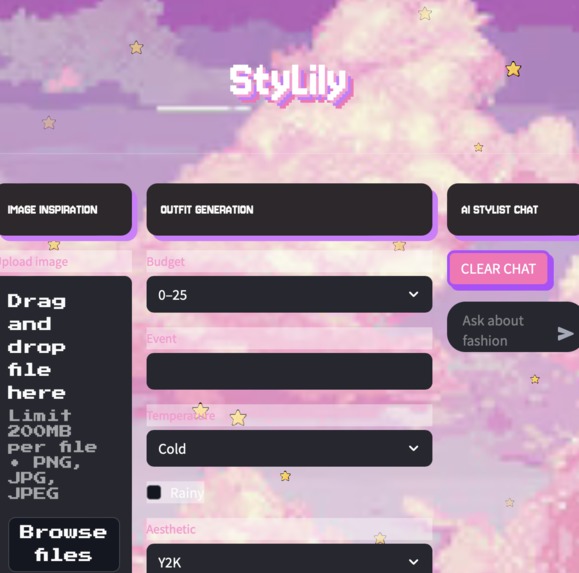
user interface
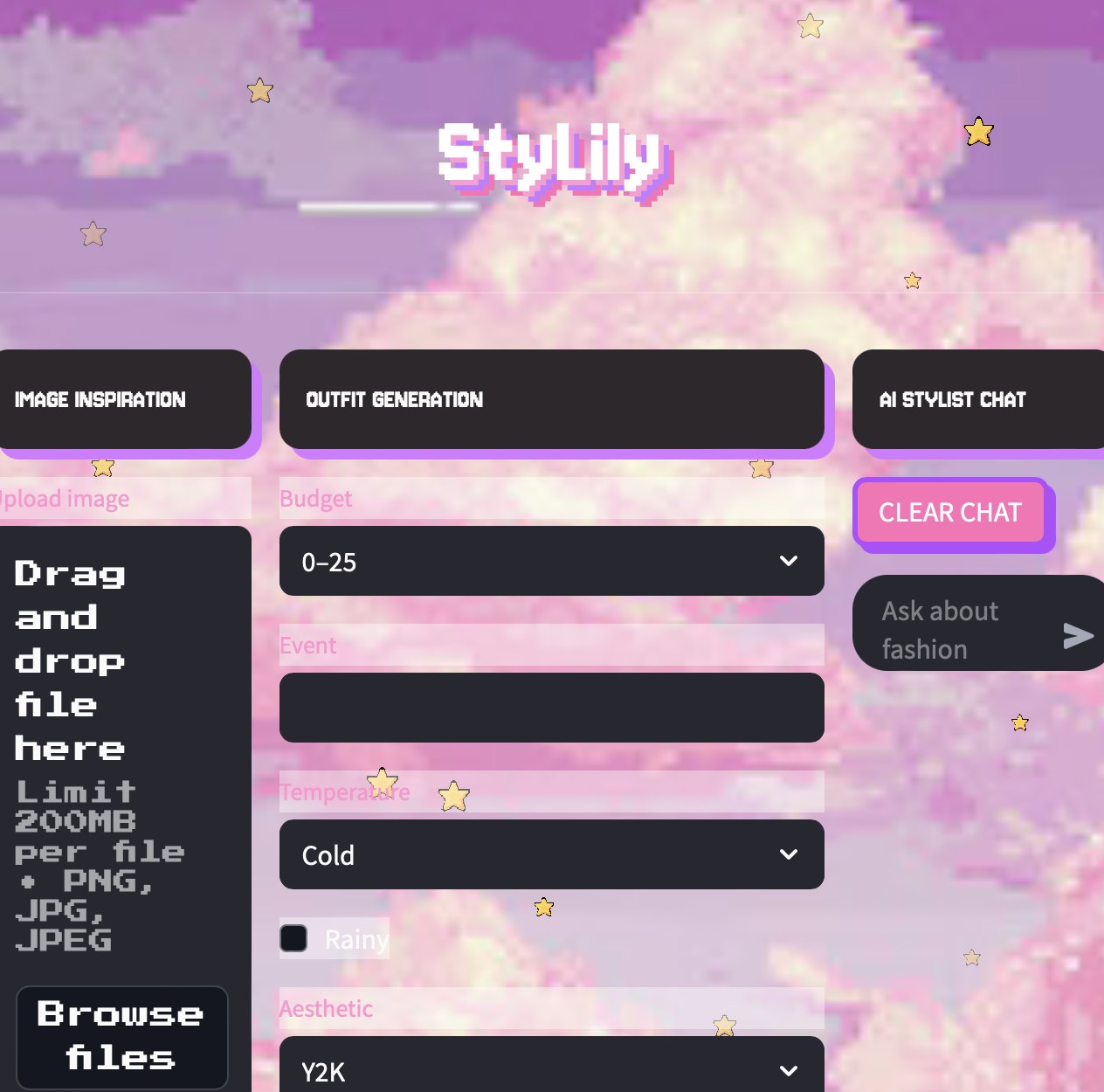
Inspiration
We found a need for innovation in a space where a real problem exists. It can be hard to bring a vision to life, especially in fashion where the options are endless but the right one always feels impossible to find. There have been so many times when I’ve had an event and didn’t know what was appropriate, or I saw a top online and couldn’t find anything close to that exact style anywhere.
What it does
Stylily targets a problem so many people face: the disconnect between inspiration and actually finding those outfits in real life. You might have a clear vision, be in a time crunch, or just want to improve your style but turning ideas into real clothes can be frustrating and time-consuming.
Stylily makes shopping easier and more fun with Lily, our interactive AI that styles you for any occasion. It cross-analyzes your inspiration photos, aesthetics, and preferences with real online stores to find pieces that truly match what you’re looking for. Instead of just showing ideas, it gives you direct links to buy the exact items.
On top of that, Stylily designs your personalized doll character wearing the outfits in an animated way, so you can actually see how your look comes together. It turns styling into something visual, interactive, and way less stressful.
How we built it
We started by coming up with the idea and figuring out what we wanted Stylily to do. Then we split up tasks across the team so everyone could work on different parts at the same time. One part of the team worked on building the AI in Python, while others focused on the front end and designing the doll and her features. We built a system that finds the dominant colours in an uploaded photo, which helps the AI understand a user’s aesthetic and vibe. This made our outfit matching much more accurate. We used PyTorch and Hugging Face for the image processing and model support, and Gemini to generate outfit suggestions and descriptions. We connected everything using Streamlit, which let us combine the HTML and python front end with our Python backend so the whole website could run in one place. Once the AI key was generated and hooked up, everything came together, from photos and colour detection to outfit recommendations and direct links to real stores.
Challenges we ran into
We ran into issues with our original AI setup because LangChain wasn’t compatible with our Python version, and the Hugging Face model wasn’t working properly. Instead of getting stuck, we pivoted and switched to Gemini, which was more stable and easier to integrate.
Another challenge was connecting the Gemini API to our chatbox so it only gave fashion-related responses. Getting that working inside our app took a lot of trial and error, but we used tutorials, documentation, and testing to make it work.
Accomplishments that we're proud of
We’re really proud of the user interface and the doll, which gives users a fun, visual way to see their outfits come to life. We’re also proud of how we integrated Gemini to power the AI styling and recommendations.
What we learned
We learned how to integrate Python with HTML and use PyTorch for image analysis. We also learned how important reusable code is, especially when switching our AI to Gemini without breaking the system.
What's next for Stylily
Stylily won’t just target users, it will also work with the brands selling the clothes we recommend. Partnering with stores like Garage, Old Navy, and Hot Topic creates a new revenue stream while building mutually beneficial relationships. We send them high-intent shoppers, and they get more traffic and more sales.
At the same time, Stylily can spot trends in what users are actually searching for with aesthetics, budgets, colours, events, etc. This data (in a disclosed and anonymous way) helps stores better understand what people want so they can stock and market their products more effectively. Brands only see overall patterns and trends, not individual users, allowing Stylily to protect individual user data.
In the future, we also want to diversify Stylily by expanding it into a mobile app that supports users from different cultures and countries. This includes diversifying the doll and style options so everyone can see themselves represented and styled in a way that feels authentic to them.
Built With
- openai
- openrouter
- python
- streamlit

Log in or sign up for Devpost to join the conversation.