-
-
-
-
-
-

logo

Inspiration
I started thinking about Stylebox because editing short-form videos often feels more complicated than it should. You can have the footage you want, but then you end up jumping between different apps to find fonts, stickers, graphics, music, captions, and other things that make the video actually feel like you.
I also noticed that most AI video editors focus on automatically making a video for you. The problem is that creators don't all want the same video. Someone making a cozy vlog, a Y2K edit, a travel video, or a clean lifestyle video should not get the exact same AI editing style.
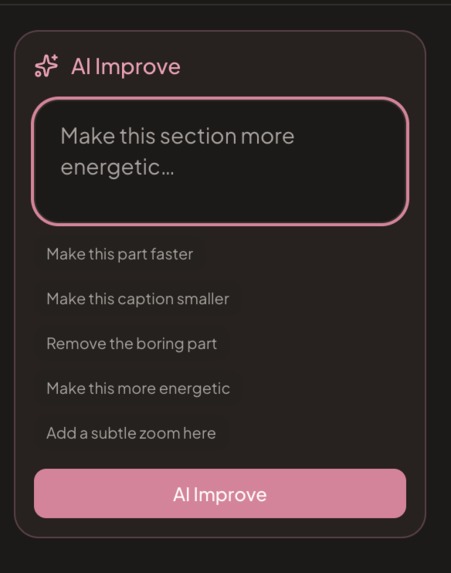
I wanted to build something where AI could handle the repetitive parts of editing while the creator still had control over the creative decisions.
That's where Stylebox came from: an AI video editor built around the idea that your aesthetic should be part of the editing process.
What it does
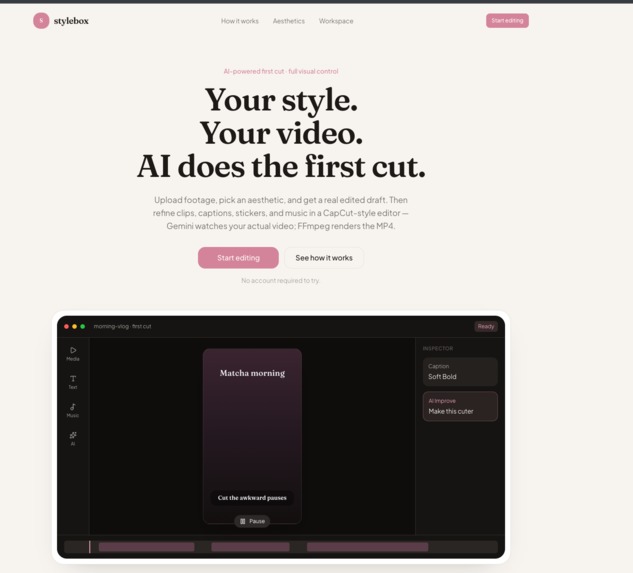
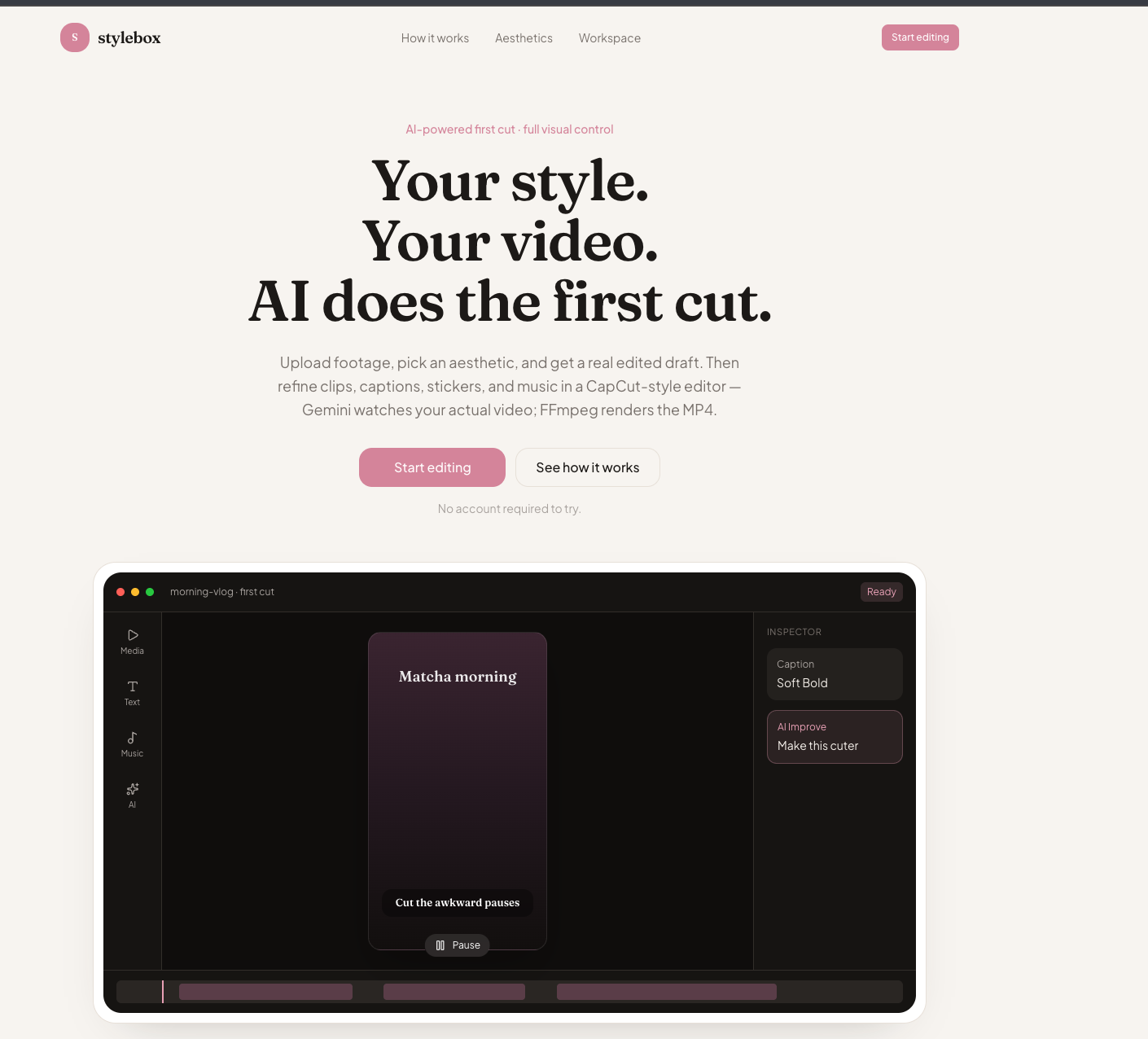
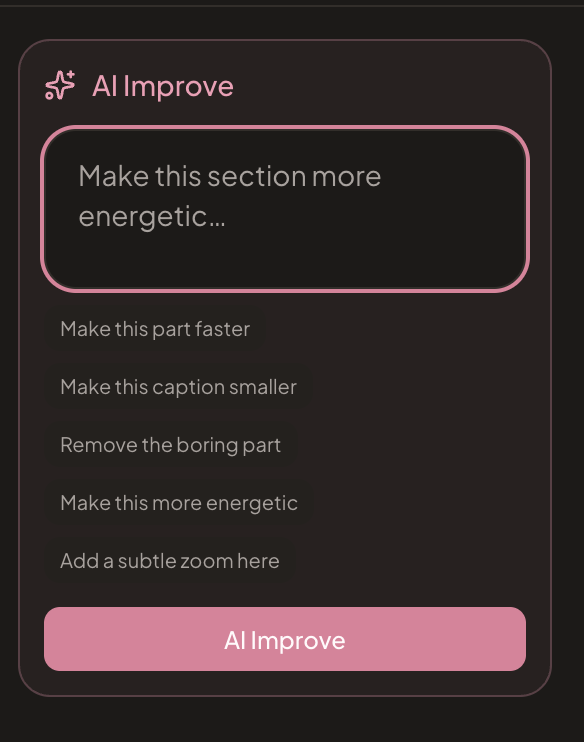
Stylebox lets creators start with their own video and use AI to create a first edit based on what they want.
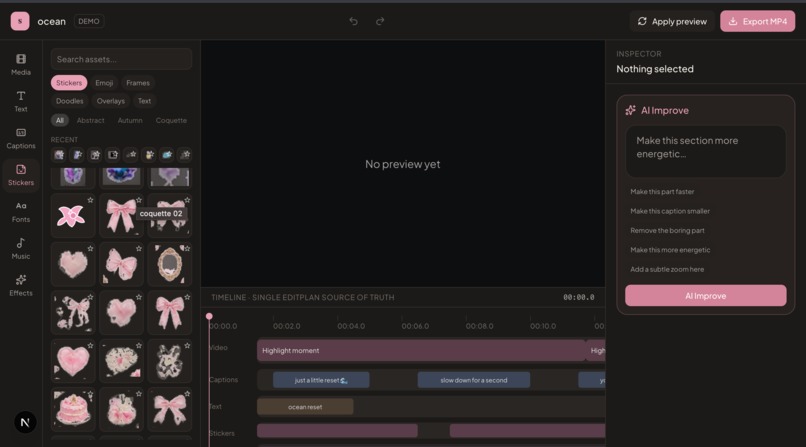
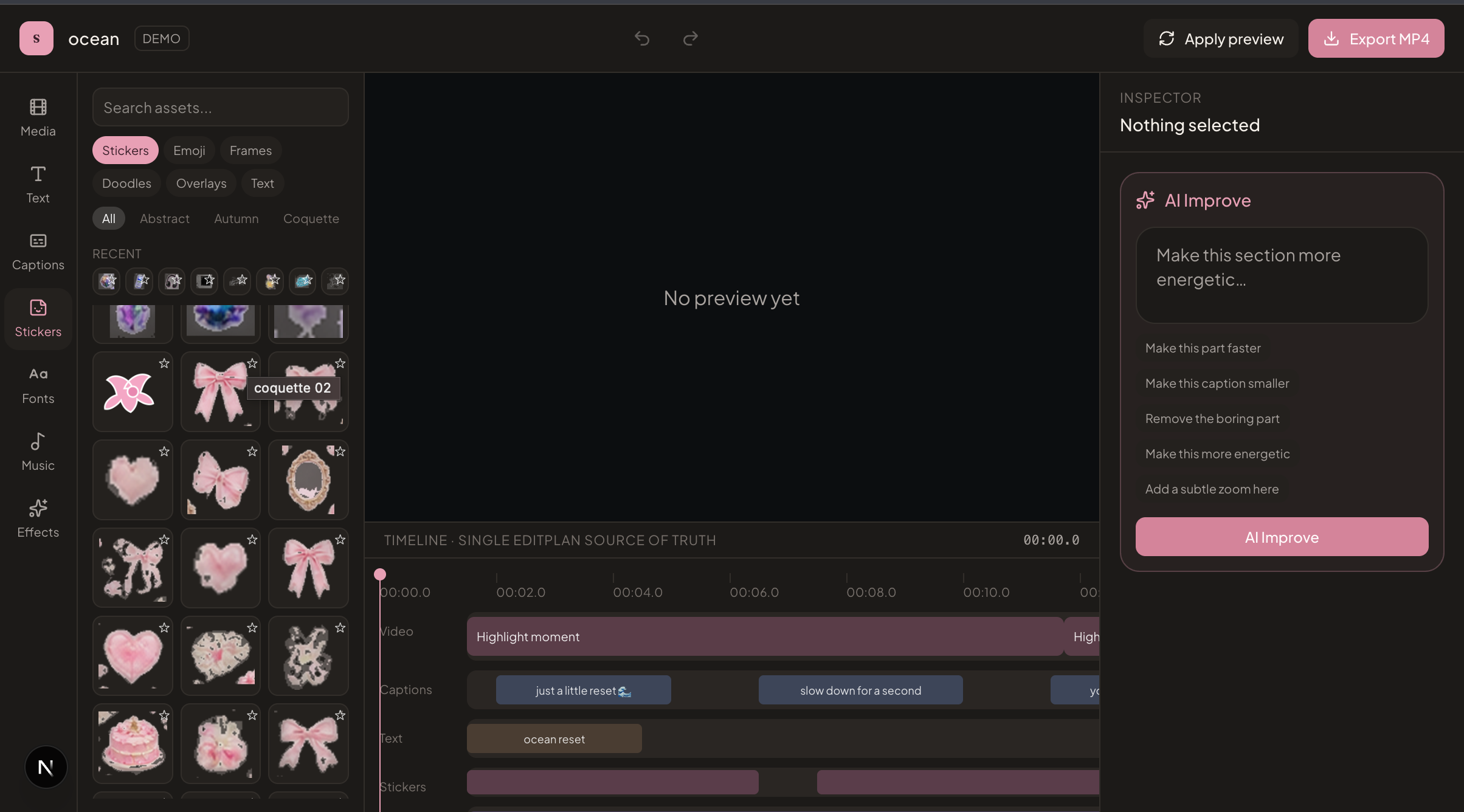
Instead of making the experience completely chat-based, Stylebox is designed around a visual editor where creators can actually see and change their video.
The goal is to combine:
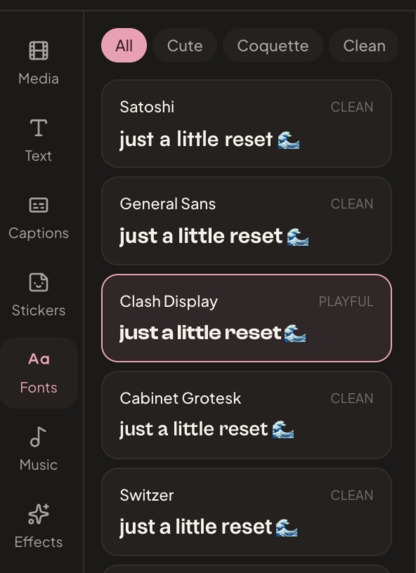
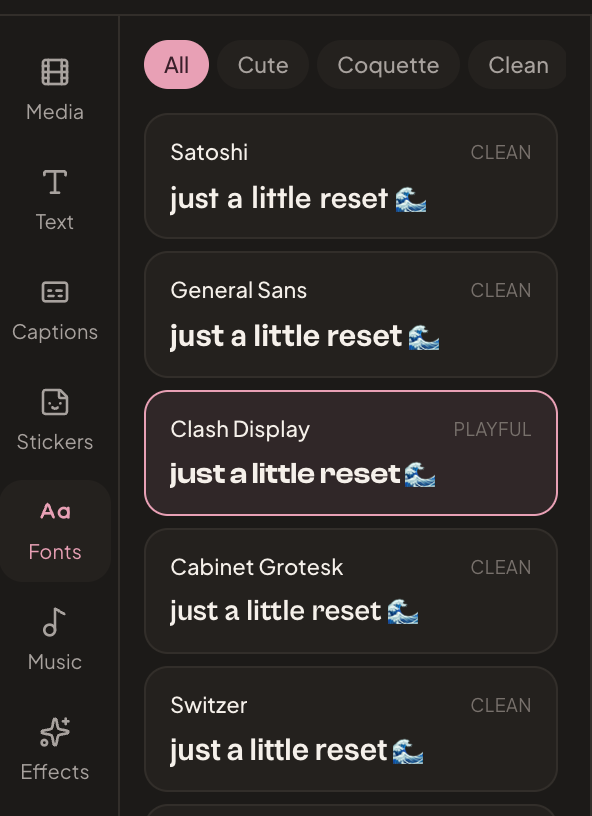
AI-generated first edits A visual timeline and video editor Different aesthetic styles Fonts and text customization Stickers, emojis, and graphic elements Captions and overlays Music and audio Direct creative control over the final video
The bigger idea is that Stylebox shouldn't just ask, "What do you want your video to say?" It should understand "What do you want your video to feel like?"
How we built it
I built Stylebox as a web application with a focus on making the editing experience feel more like a creative tool than a chatbot.
The application takes a video and turns the editing instructions into a structured edit plan. That plan can then be represented inside the visual editor instead of keeping everything as an AI conversation.
I also built the asset system around the idea of aesthetic adaptability. Instead of having one generic collection of stickers, assets can be organized by styles such as Y2K, coquette, travel, cinematic, minimal, nature, food, study, gothic, retro, and more.
The editor is designed so these assets can become actual layers in the video rather than just being decorative elements on the website.
For video processing, I used FFmpeg-based rendering so the final result can be an actual video rather than just a preview.
I also designed the project so AI providers can be swapped instead of making the entire application dependent on one model.
Challenges we ran into
One of the biggest challenges was making sure Stylebox was actually editing videos instead of just looking like a video editor.
It was easy to make buttons for things like "Generate," "Add Sticker," and "Export." Making those buttons actually modify a video and produce a real output was much harder.
I also ran into problems with video processing, API limits, deployment environments, and persistent storage. For example, a local filesystem works during development but cannot be treated as permanent storage in a deployed server environment.
Another challenge was designing the AI output. Different AI providers can return different structures, so I had to create a consistent edit-plan format that the editor could understand.
And because I'm building this as a real product rather than just a demo, I had to think about things like asset licensing, fonts, music rights, performance, and what happens when an AI request fails.
Accomplishments that we're proud of
I'm proud that Stylebox started as a simple idea for an AI video editor and turned into a much bigger product concept around creative control and aesthetics.
The part I'm most interested in is the asset and style system. Instead of treating AI as something that simply creates a finished video, Stylebox is designed to give creators the building blocks to make the result their own.
I'm also proud of building the project around real video editing rather than only creating a simulated interface. Getting an actual uploaded video through the editing pipeline and thinking through how AI, the editor, assets, and rendering connect together taught me a lot about building a real application.
What we learned
I learned how many small decisions go into making an editing tool actually feel usable. Things like where an asset should appear, how a creator should be able to move it, how an AI-generated edit should become something editable, and how all of those pieces need to work together.
I also learned that building what looks like a simple creative tool can become surprisingly complex once you try to make every part actually work. Getting the video pipeline, editor, assets, AI, and export process to connect was one of the biggest parts of the project.
Most importantly, I learned that the AI shouldn't be the entire product. The interesting part is building the experience around it so the creator can take what AI gives them and turn it into something that actually feels like their own.
What's next for Stylebox
The next step is making Stylebox much more adaptable.
I want to build a much larger library of original and properly licensed:
- Stickers
- Fonts
- Emojis
- Graphics
- Frames
- Overlays
- Music
- Animation presets
I also want Stylebox to support style packs where an aesthetic can automatically influence the fonts, colors, stickers, captions, animations, music, and editing choices.
Eventually, I want users to be able to teach Stylebox their own editing style by giving it examples of videos they have already made. Instead of starting from a generic AI edit every time, Stylebox could learn their preferences and use them for future videos.
Built With
- cursor
- gemini


Log in or sign up for Devpost to join the conversation.