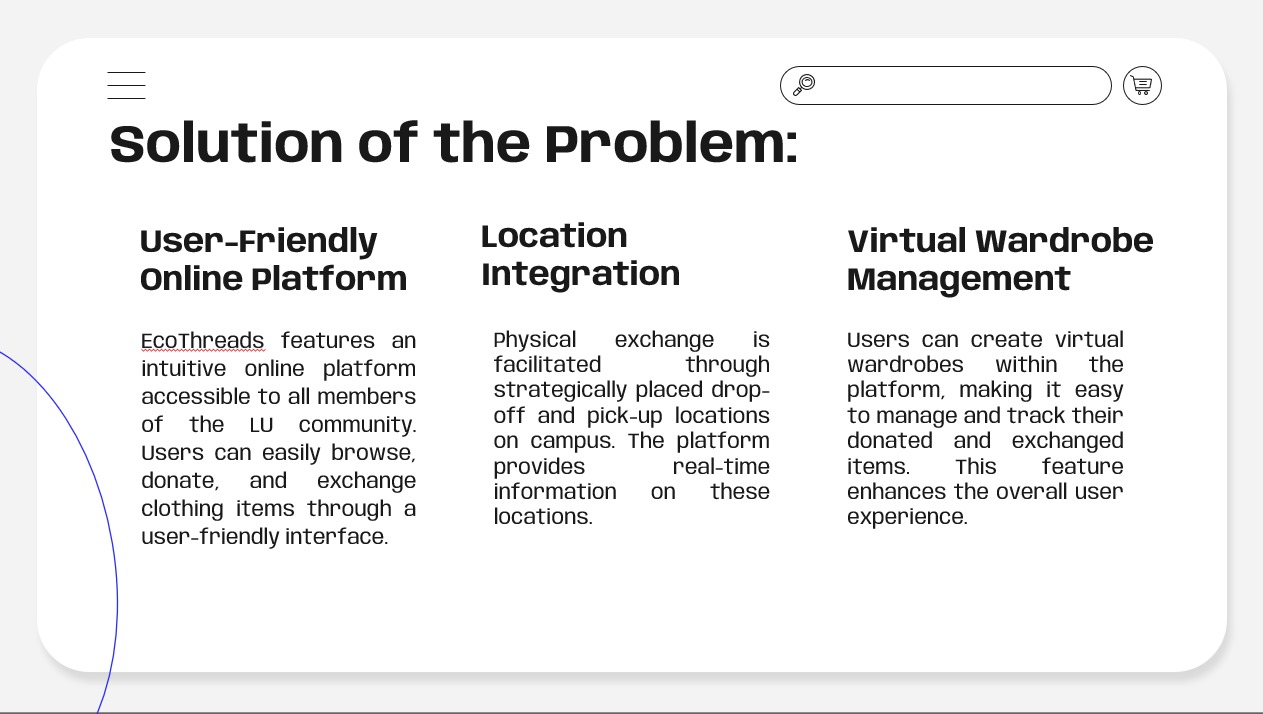
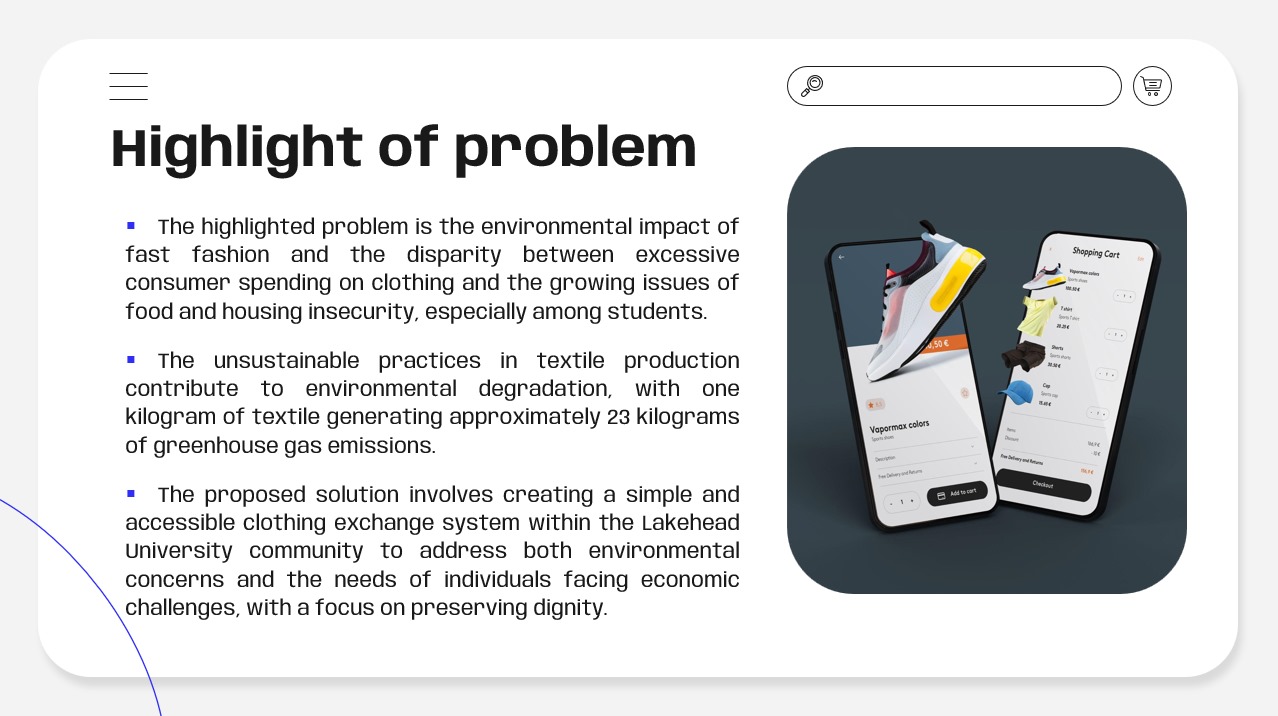
The highlighted problem is the environmental impact of fast fashion and the disparity between excessive consumer spending on clothing and the growing issues of food and housing insecurity, especially among students. The unsustainable practices in textile production contribute to environmental degradation, with one kilogram of textile generating approximately 23 kilograms of greenhouse gas emissions. The proposed solution involves creating a simple and accessible clothing exchange system within the Lakehead University community to address both environmental concerns and the needs of individuals facing economic challenges, with a focus on preserving dignity. EcoThreads features an intuitive online platform accessible to all members of the LU community. Users can easily browse, donate, and exchange clothing items through a user-friendly interface. Physical exchange is facilitated through strategically placed drop-off and pick-up locations on campus. The platform provides real-time information on these locations. Users can create virtual wardrobes within the platform, making it easy to manage and track their donated and exchanged items. This feature enhances the overall user experience. The system will be designed to be user-friendly and straight forward. Users should easily understand how to participate, contribute, and benefit from the exchange. The exchange points will be strategically located across the campus, ensuring easy access for all members of the Lakehead University community. The system will prioritize the dignity of participants by creating a non-judgmental environment. Emphasis will be placed on respectful communication and the promotion of positive community engagement Consider implementing a reward or recognition system to encourage active participation. Publicize success stories and the positive impact of the system on both individuals and the environment. Environmental Sustainability: The initiative aims to tackle the environmental impact of fast fashion. It highlights how the conventional textile industry contributes to greenhouse gas emissions through the use of pesticides in cotton cultivation and the high carbon footprint of textile production. Resource Conservation: EcoThreads targets the surplus of textile resources within the Lakehead community. By promoting donation and redistribution of clothing, shoes, and accessories, the initiative aims to minimize wastage and prolong the lifespan of these resources, reducing the overall demand for new products and conserving resources like water, energy, and raw materials. Social Impact: The project also addresses social sustainability concerns. It acknowledges the financial challenges faced by students and the rising issues of food and housing insecurity. By providing a platform for an exchange system that allows individuals to access clothing and accessories without financial burden, it supports students' basic needs and promotes a more equitable community.
StyleCycle
Redefining Fashion, Sharing Stories, and Giving Wardrobes a Second Spin!
Updates

Leave feedback in the comments!
Log in or sign up for Devpost to join the conversation.