-
-
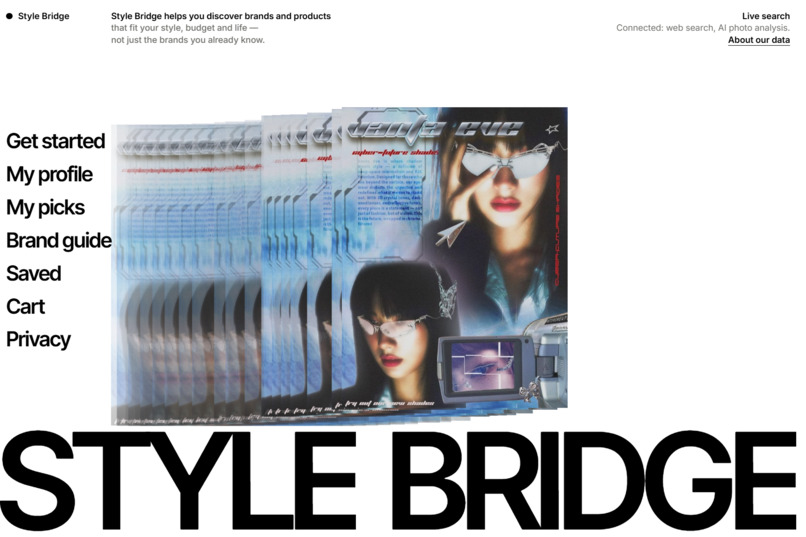
Homepage
-
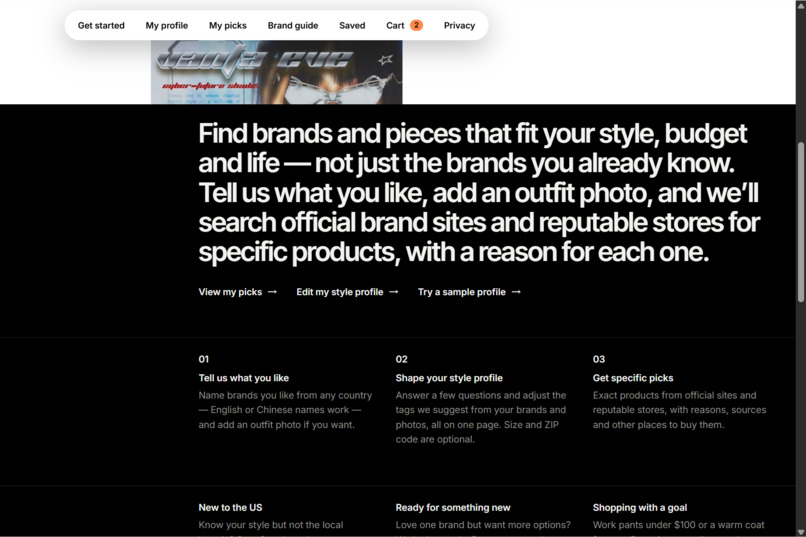
Homepage
-
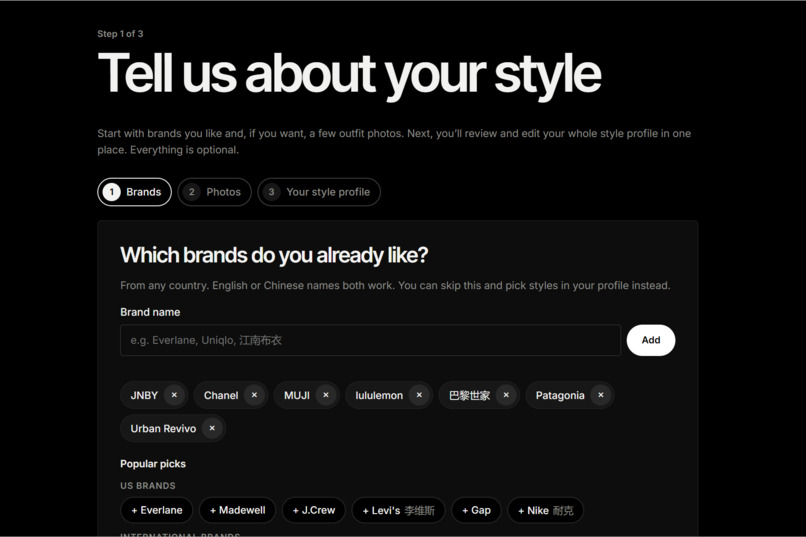
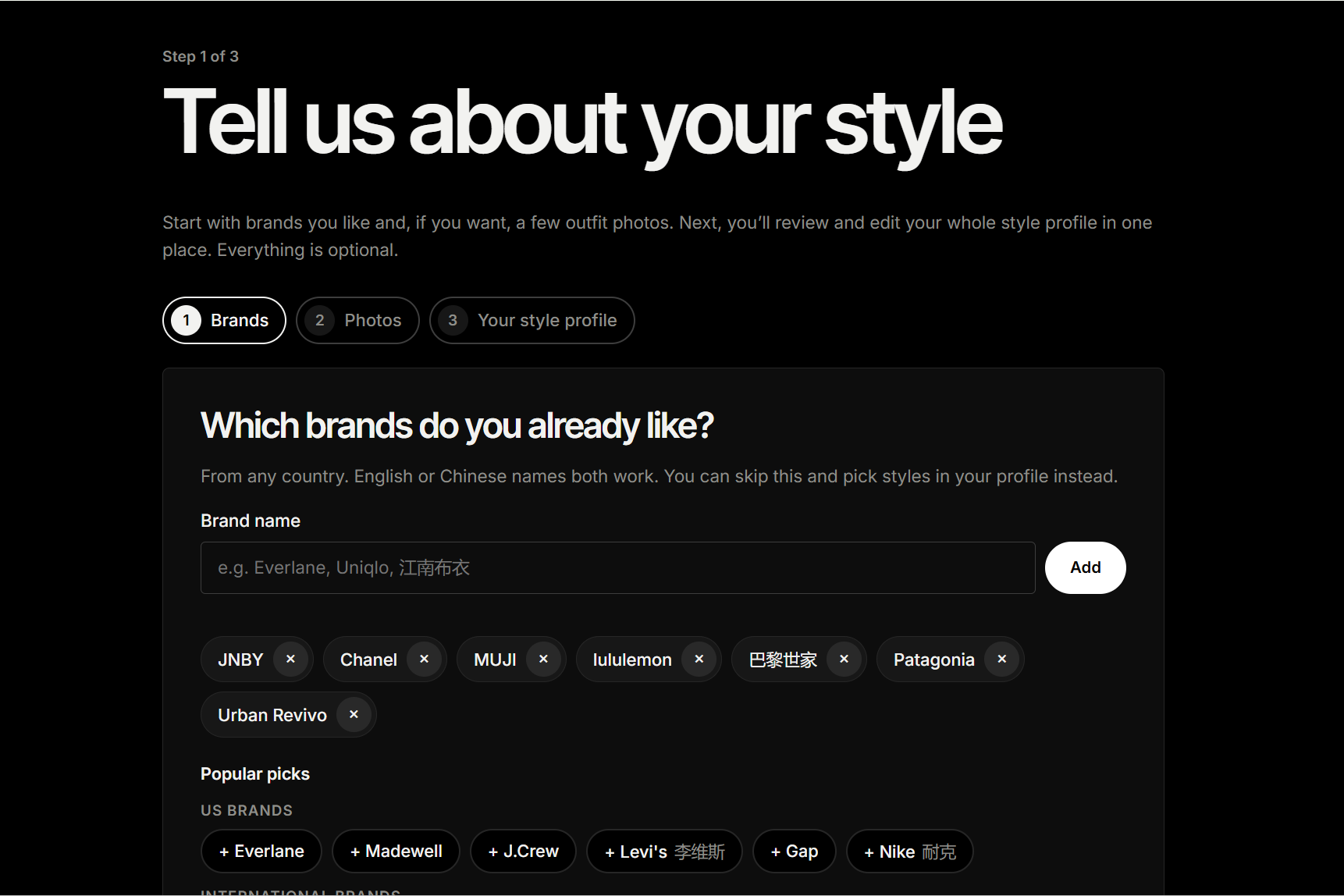
Set Brands
-
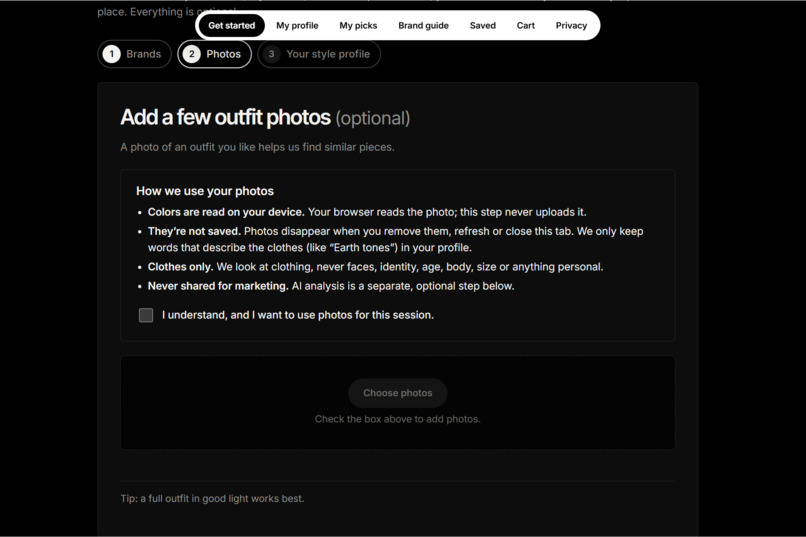
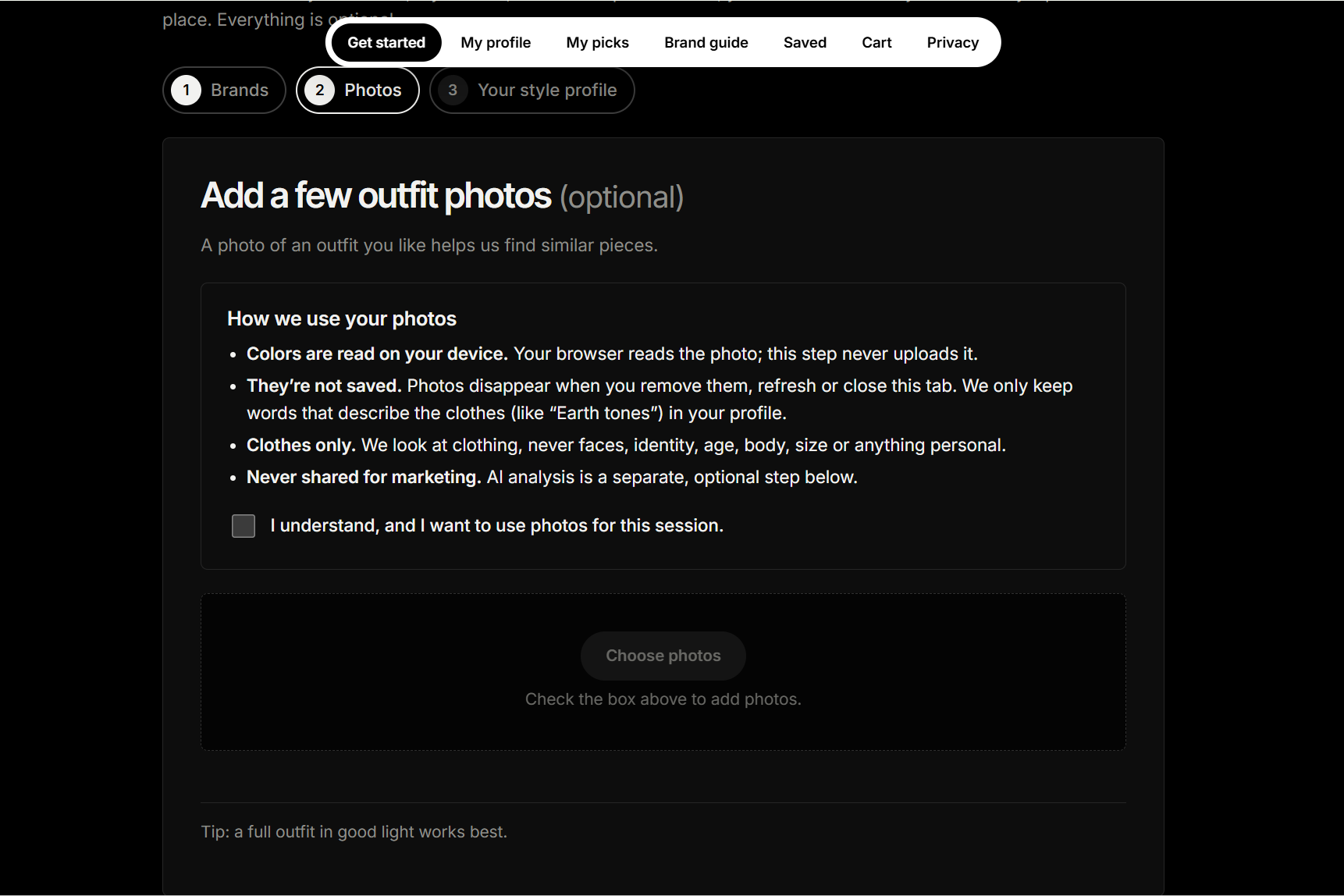
Upload Photo and Style Analysis
-
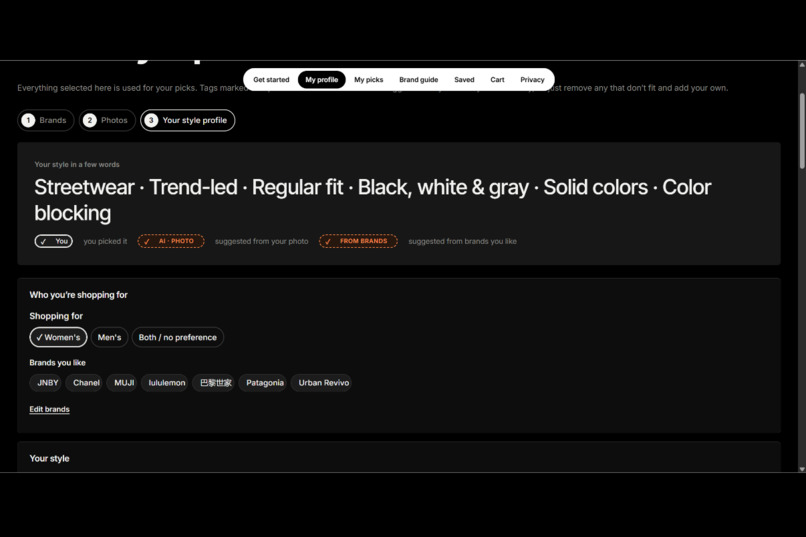
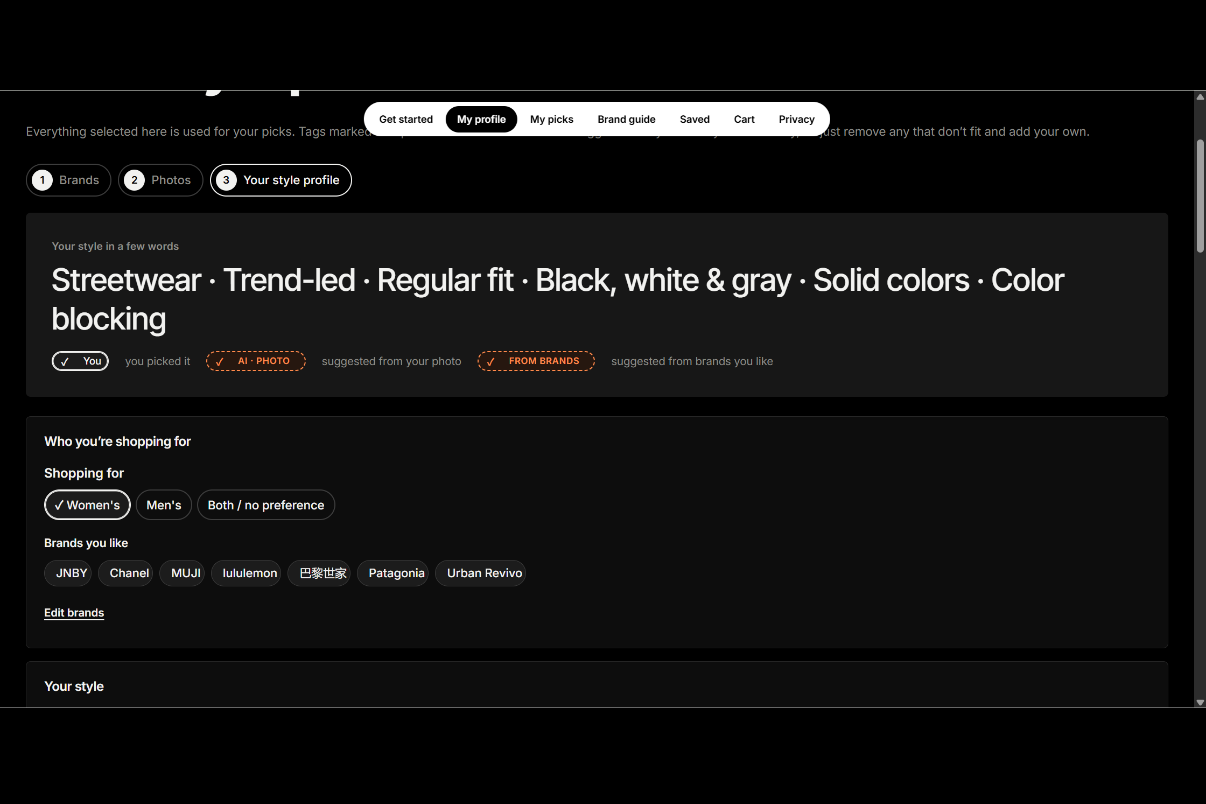
My Profile — Style Preferences
-
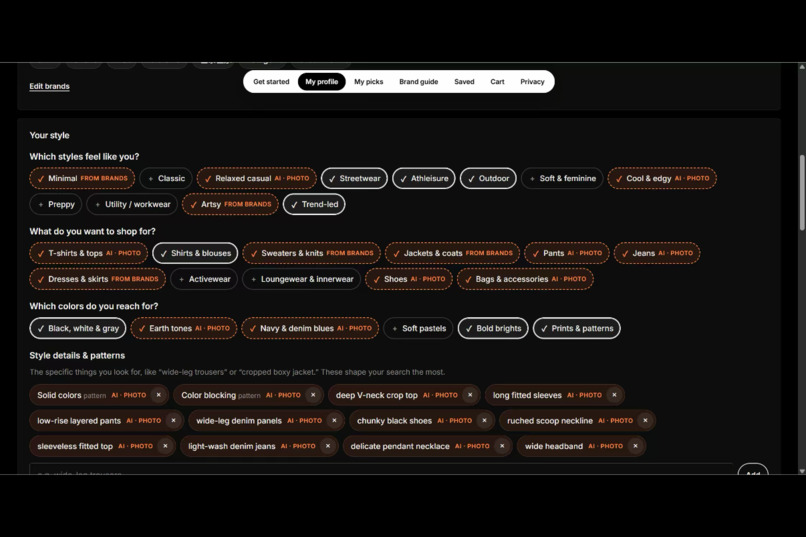
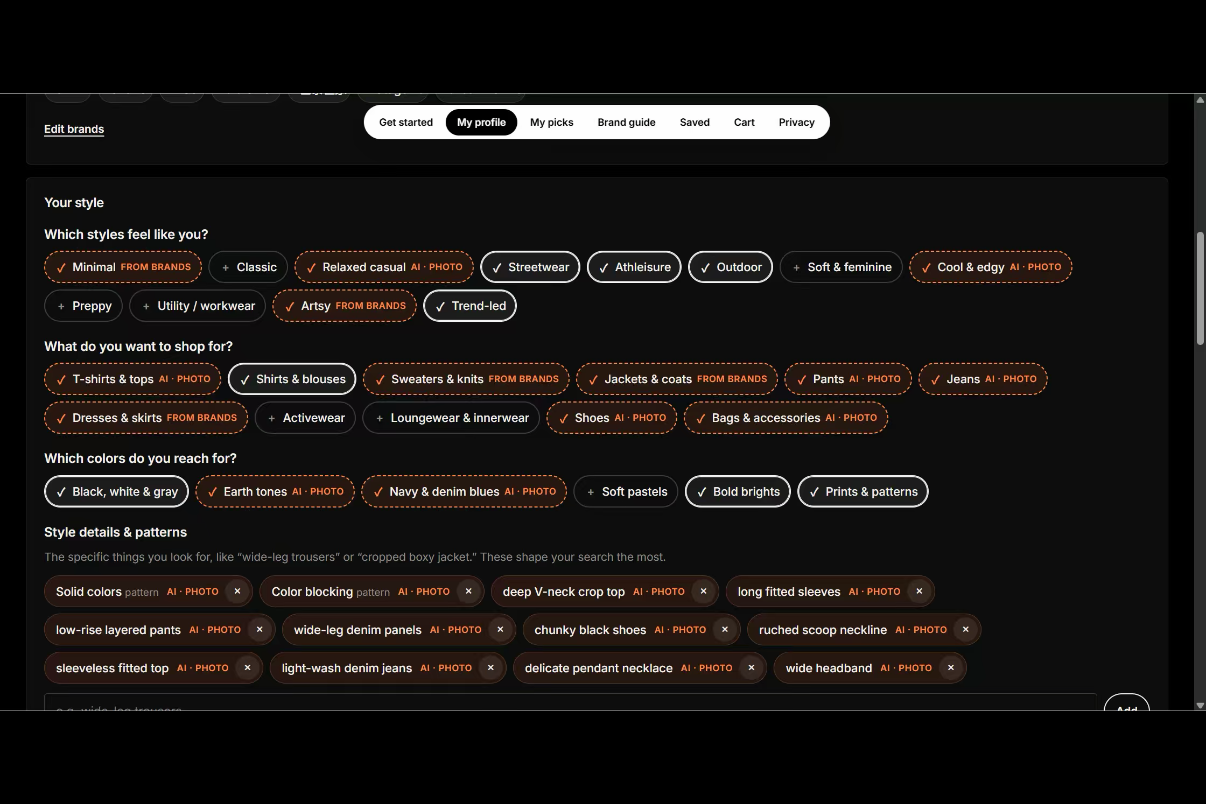
My Profile — Style Preferences
-
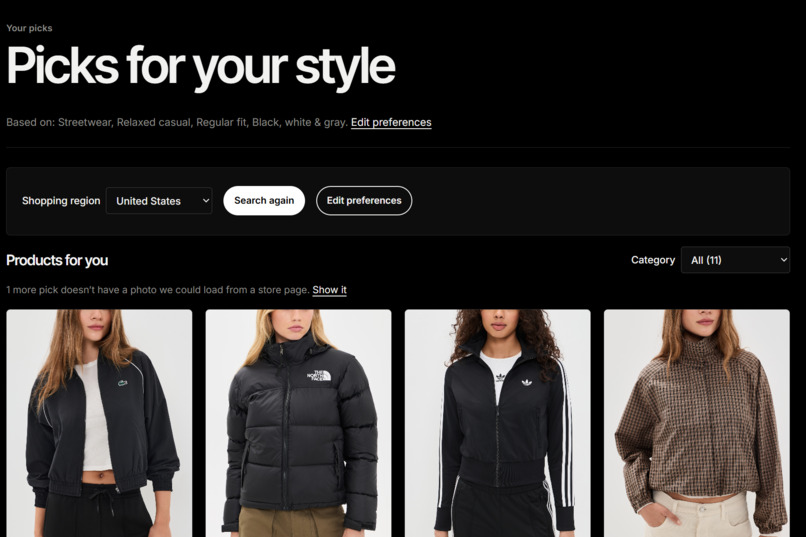
Pick Style
-
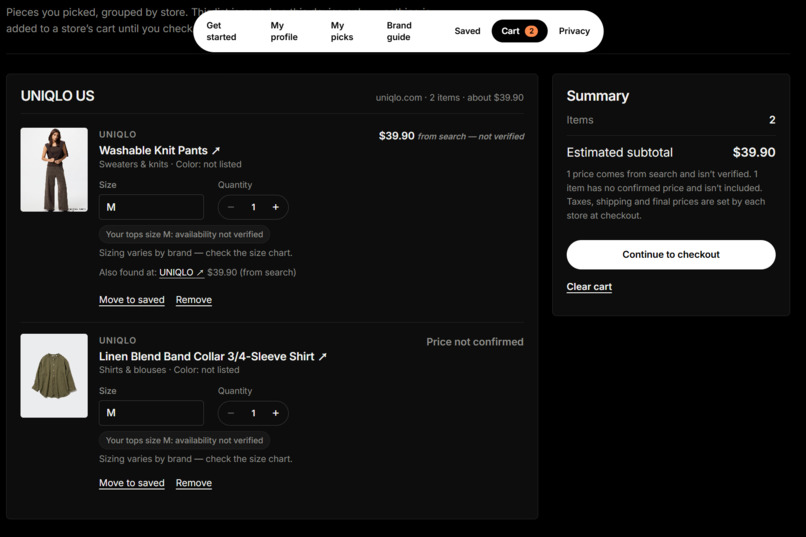
Cart Page
-
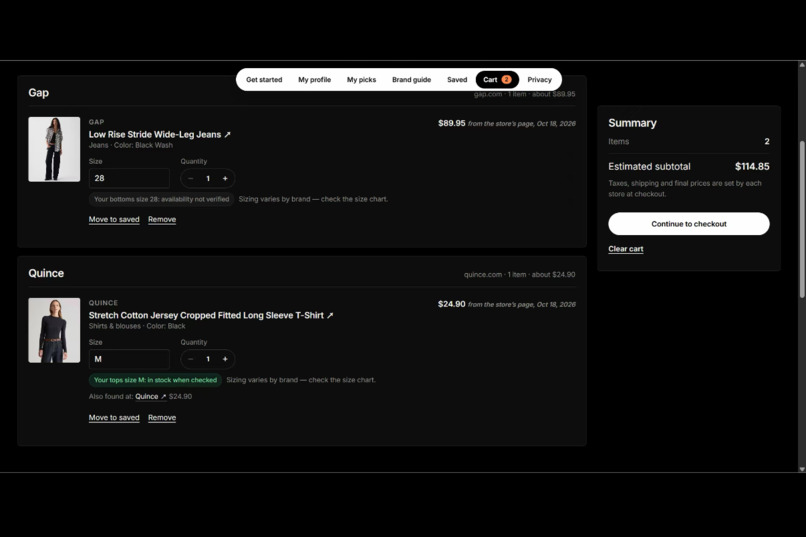
Cart Page
-
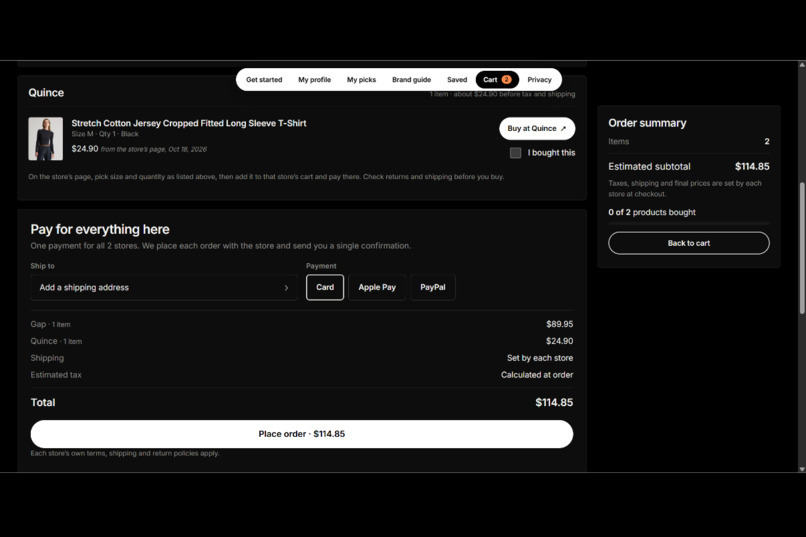
Checkout Page
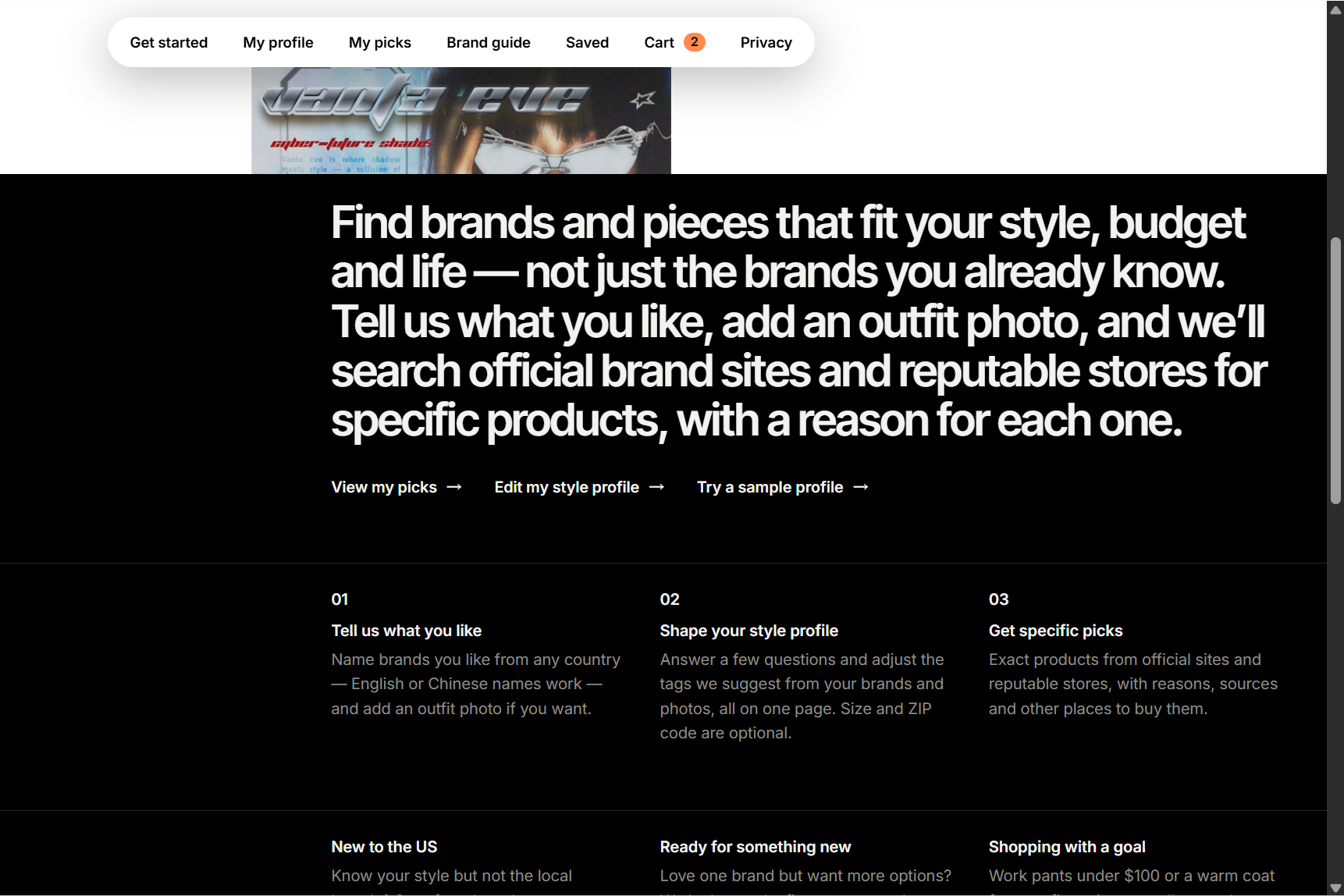
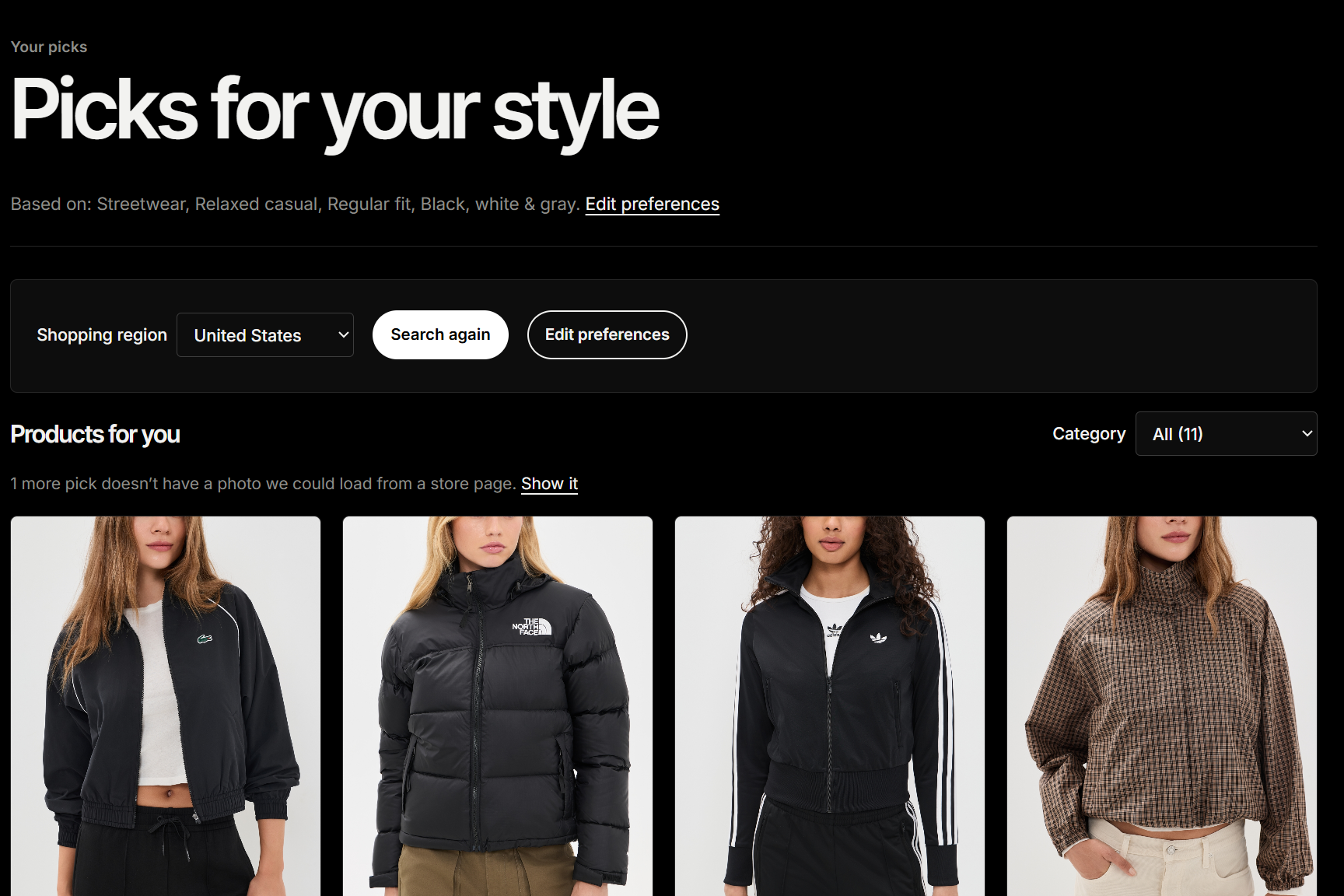
Find brands and pieces that fit your style, budget and life — not just the brands you already know. Tell us what you like, add an outfit photo, and we'll search official brand sites and reputable stores for specific products, with a reason for each one.
Inspiration
Moving to a new country means starting over with the brands you know. Someone who loved JNBY or Urban Revivo at home lands in the US knowing exactly what they like to wear, but not where to buy it, what fits their budget, or which local brands share the same look. Generic "top 10 brands" lists don't help, and shopping assistants often confidently recommend products, prices and stock that turn out to be made up.
We wanted a tool that starts from your style rather than a catalog, and never pretends to know something it doesn't.
What it does
Style Bridge helps people discover brands and products that fit their style, budget and life — not just the brands they already know. Newcomers to the US are our first audience, but it works for anyone.
- Tell us what you like. Add brands you already love, from any country (English or Chinese names work). Optionally upload outfit photos.
- Photo analysis, clothes only. Colors are read on your device. With your consent, an AI vision model suggests garment types, fit, colors, patterns and details like "cropped boxy jacket." It looks only at what you're wearing — never your face, body, age or background.
- One style profile. Brands, photo suggestions and quick questions come together on a single editable page. Suggested tags are on by default and labeled by source. Remove anything that doesn't fit and add your own. Size info and ZIP code are optional, and we never infer either.
- Specific picks, not generic lists. We search official brand sites and reputable retailers for exact products. Each pick shows why it fits you, which of your attributes it matches (checked against the product page where possible), its sources, and what we could and couldn't verify about price, stock and your size.
- Where to buy. A second search looks for the same item across channels: official sites, retailers, Amazon, in-store listings and resale. Photos come from whichever store page we can read.
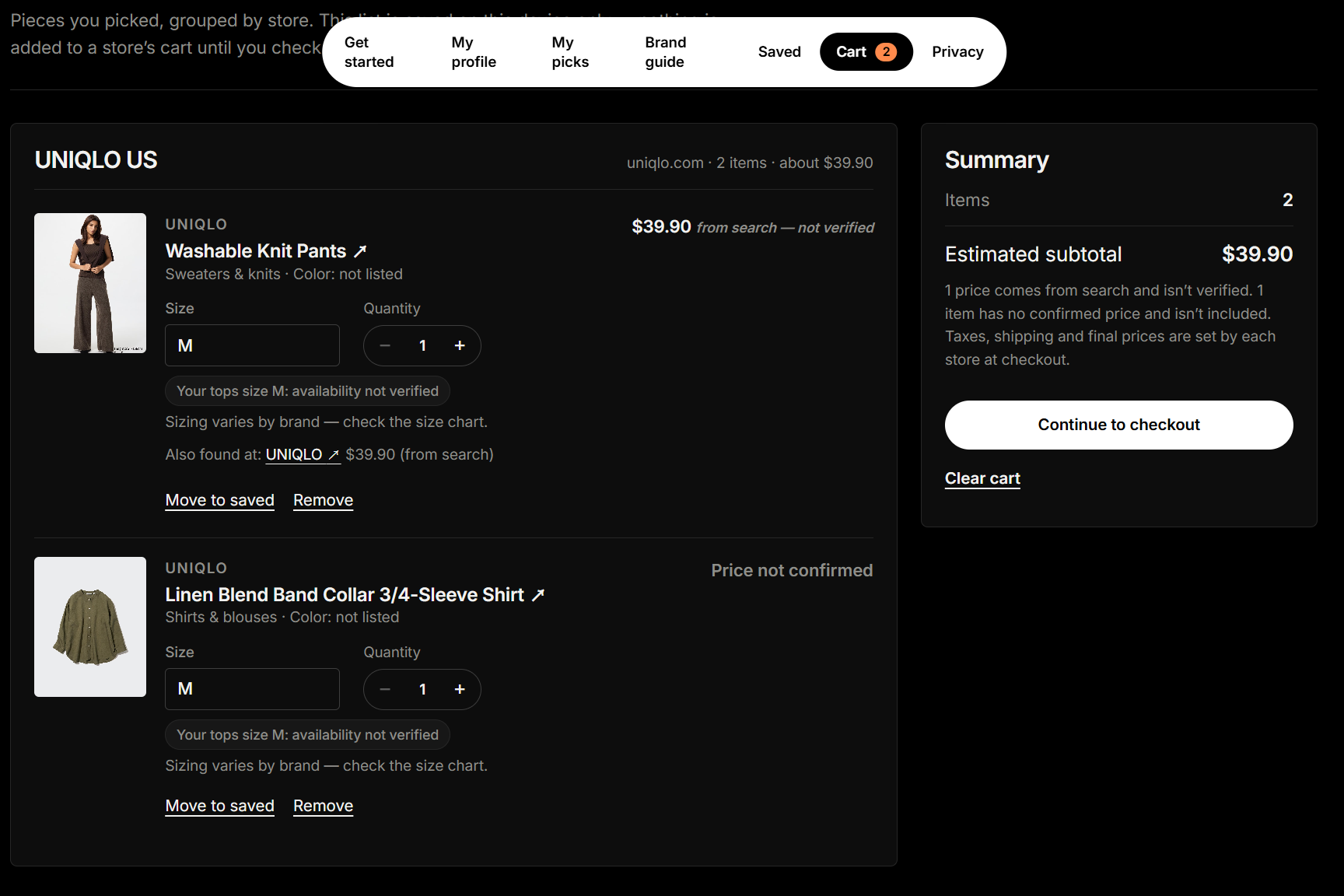
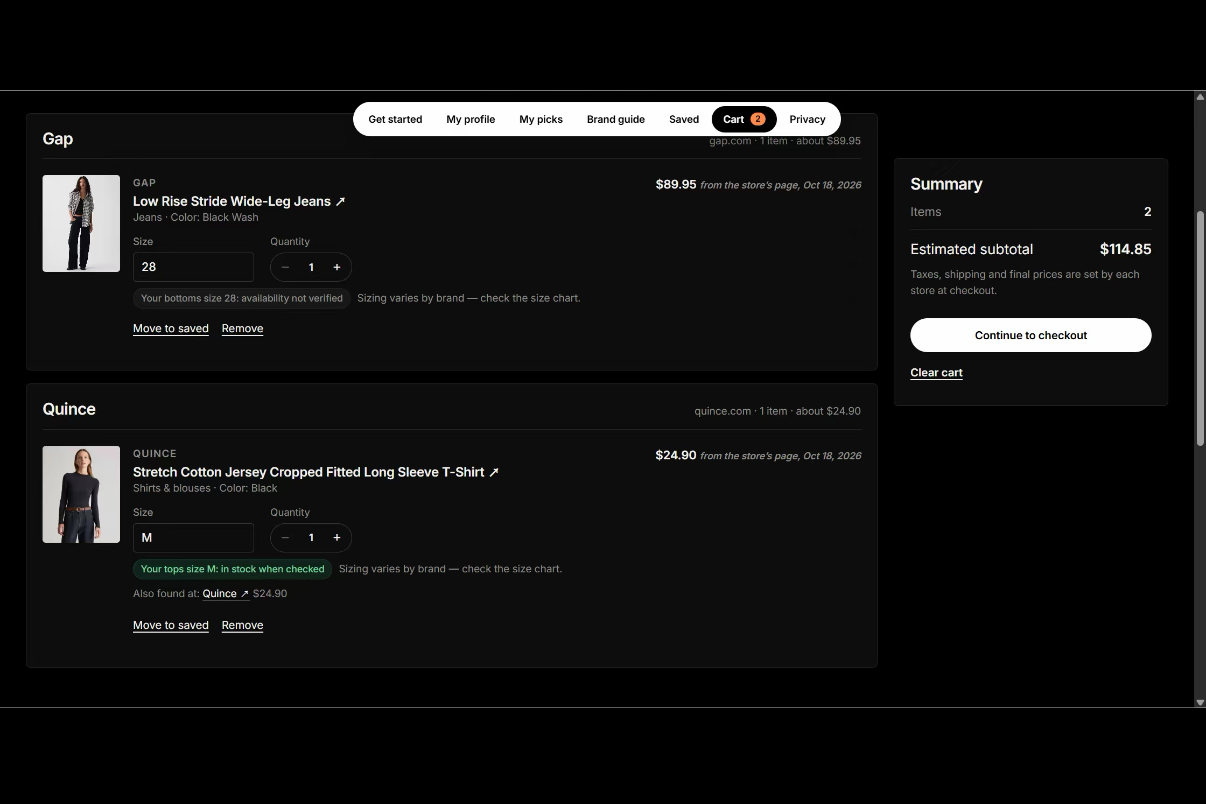
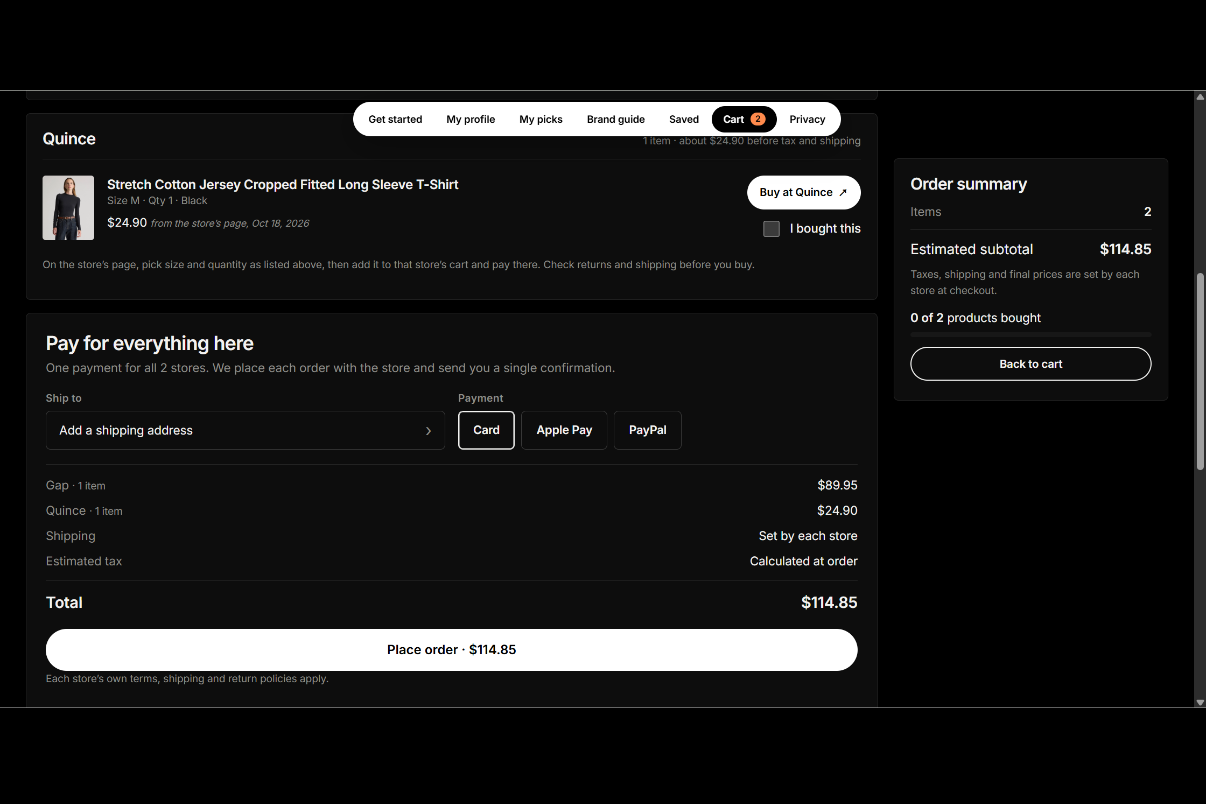
- Cart and checkout. Add pieces to a cart grouped by store and set size and quantity. Then check out item by item on each store's own site, and track what you've bought.
How we built it
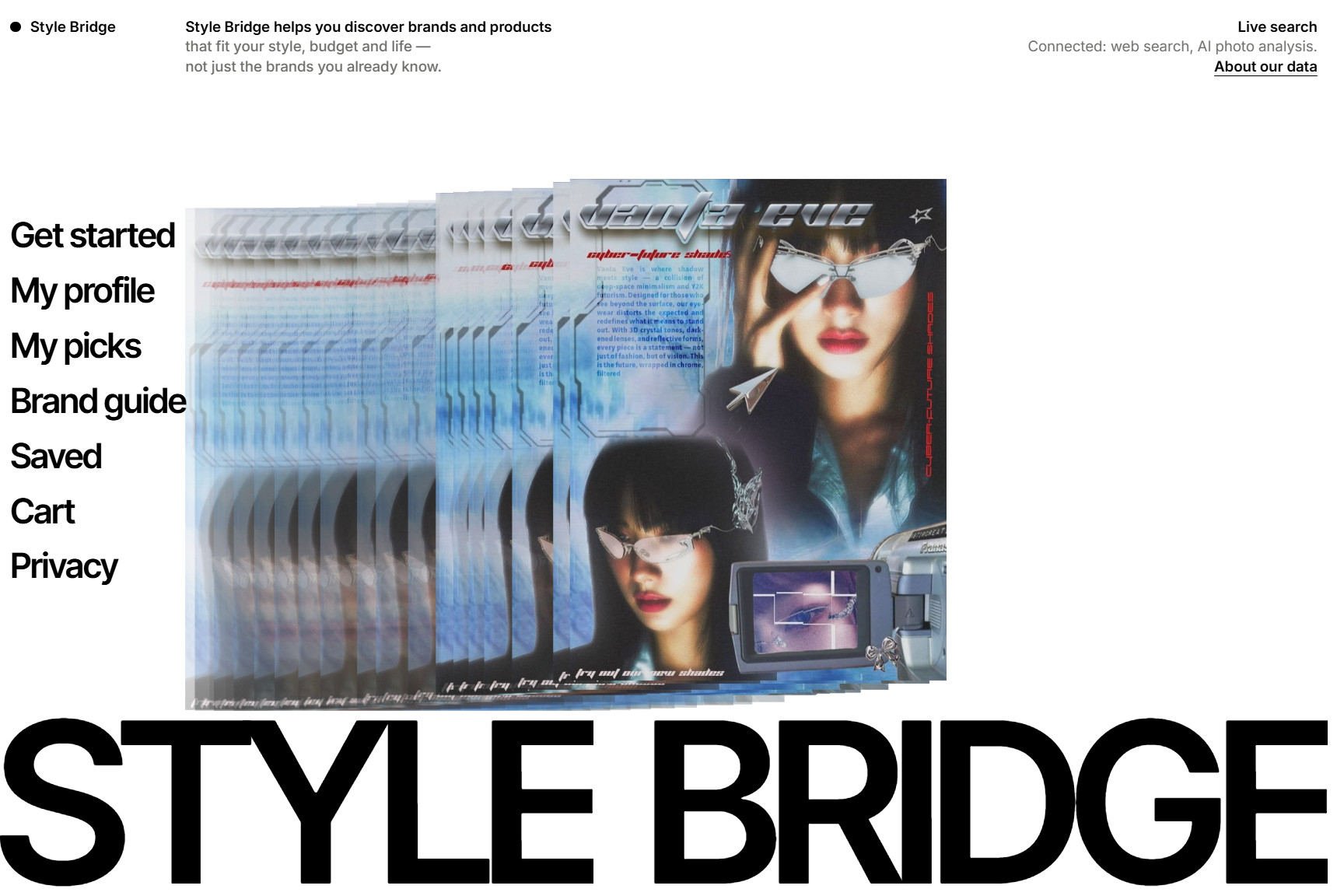
- Frontend: a lightweight single-page app in vanilla JavaScript with no build step. It has an editorial black-and-white design: a full-width wordmark, a rotating hero image stage you can drag to leave a stepped trail, and scroll-triggered reveals. All motion respects the system's reduce-motion setting.
- Backend: a small local server that holds every API key. The browser never sees a key, and logs never print one.
- Search: the OpenAI Responses API with web search and strict structured outputs, so results come back as typed JSON.
- Planned queries: the server builds search queries from your confirmed attributes, photo details first, instead of letting the model search generically.
- Our own ranking: we re-rank results by checking garment type, color, fit, pattern and details against each product page's own data. The model's claims about what matches aren't taken at face value.
- Respectful reads: we follow robots.txt, don't read Amazon pages (its terms prohibit automated extraction), and drop any link that wasn't returned by the search or confirmed on the page.
- Privacy by design: photos never go to the search endpoint, street addresses are never collected, weight stays on your device, and everything else lives in your browser's local storage with clear controls to delete it.
Challenges we ran into
- Grounding the AI. Early results were generic and sometimes asserted prices or stock nobody had checked. We moved to structured outputs, required citations, and only show a price or stock status as verified when our own server read it from the store's page.
- Making photos actually matter. At first, photo suggestions had to be confirmed one by one, so most never reached the search. We restructured the profile so suggestions are on by default, and photo attributes are sent separately and searched first.
- Clothes, not backgrounds. On-device color reading couldn't tell a brown wall from a brown jacket. We now rely on AI clothing analysis when it's available and tell users when a quick color read may include the background.
- The web doesn't want to be read. Many major retailers block server requests outright or serve bot challenges, so product photos and prices were often unavailable. We search for the same item at other stores and use a photo from any channel that allows it. We clearly label what we couldn't verify rather than bypassing protections.
- Real-world limits. Per-minute token limits pushed us to a smaller model, tighter prompts and caching. True one-step checkout across many stores needs retailer partnerships, so it stays a preview.
Accomplishments that we're proud of
- No invented data. Every price, stock status, image and link is either confirmed or clearly labeled as unverified.
- Photo-first matching that produces noticeably different results for a minimalist profile and a colorful, feminine one.
- Cross-channel comparison that shows the same item across official sites, retailers and resale, without mixing up different variants or conditions.
- An honest checkout: price comparison and buy links are fully working, with a one-step payment preview that never collects card details or addresses.
- A design people want to explore that is still accessible: keyboard friendly, screen-reader labels, responsive down to phone width.
What we learned
- LLMs need scaffolding. Planning queries, verifying results and re-ranking them ourselves made a bigger difference than prompt wording alone.
- Honesty is a UX feature. Telling users "we couldn't confirm this" builds more trust than a confident guess.
- The open web isn't an API. Reliable product data, images and checkout ultimately require authorized partnerships.
- Privacy is easiest early. Deciding up front what data we'd never collect made later features simpler and safer.
What's next for Style Bridge
- Authorized product feeds through retailer and affiliate programs, for reliable photos, live prices, size-level stock and US availability.
- Real one-step checkout through store partners or a connected checkout provider, so users can pay once for items from multiple stores.
- Per-garment photo analysis, matching the exact color and silhouette of each piece in an outfit.
- Fit feedback ("ran small," "true to size") to improve size guidance without ever guessing from height or weight.
- More languages and regions beyond the US, starting with Chinese.
- Production hosting on a scalable backend with optional accounts to sync profiles across devices.
Built With
- css3
- gpt-5.4-mini
- html5
- javascript
- json
- openai-responses-api
- powershell

Log in or sign up for Devpost to join the conversation.