Inspiration
I was inspired to build Syle-ish after I started dressing in my personal style instead of following trends. I learned about the Kibbe body type and essences, thinking it would save me from buying the wrong clothing, until I was deciding what to buy in an online or physical store without any tool to guide me. I found myself anxious about choosing, hoping I wouldn't make a mistake, and I always did.
What it does
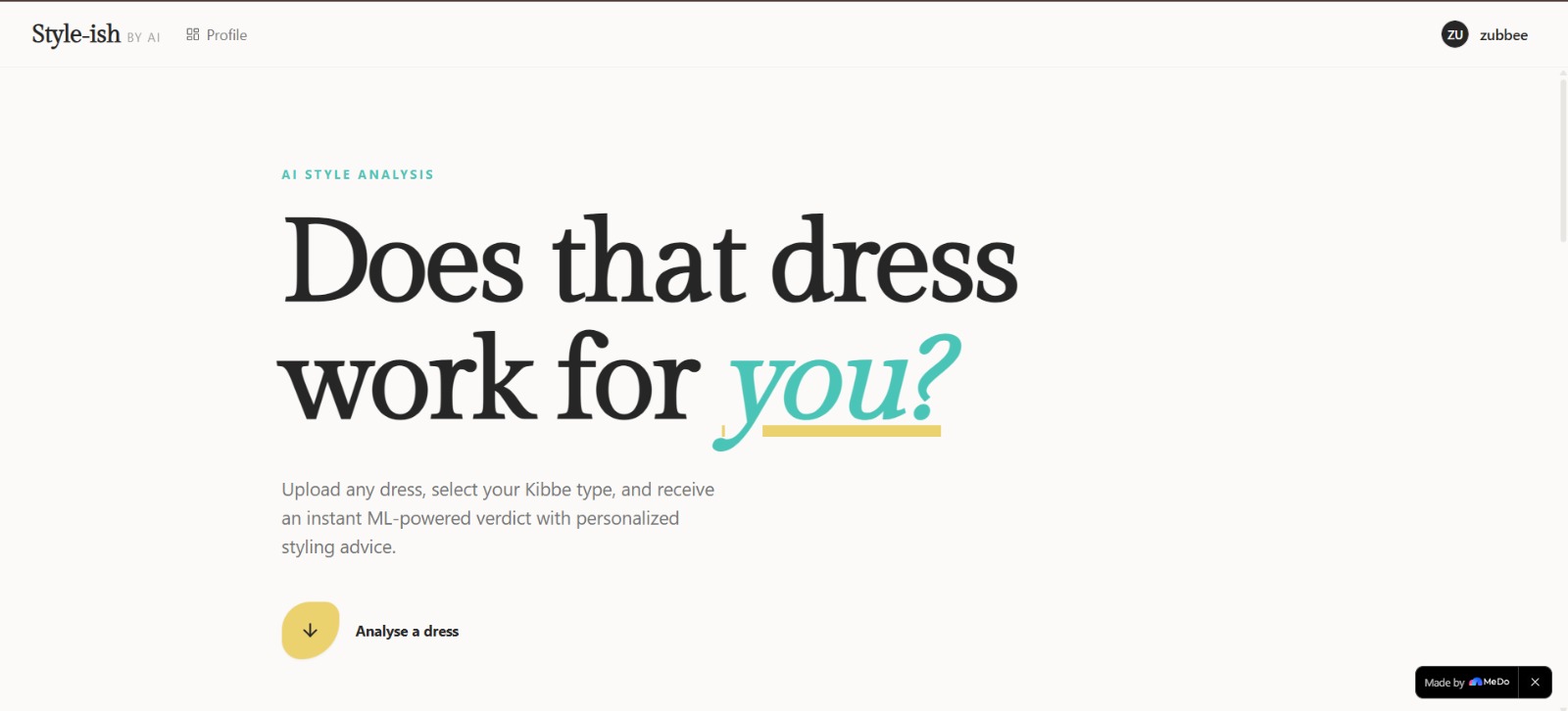
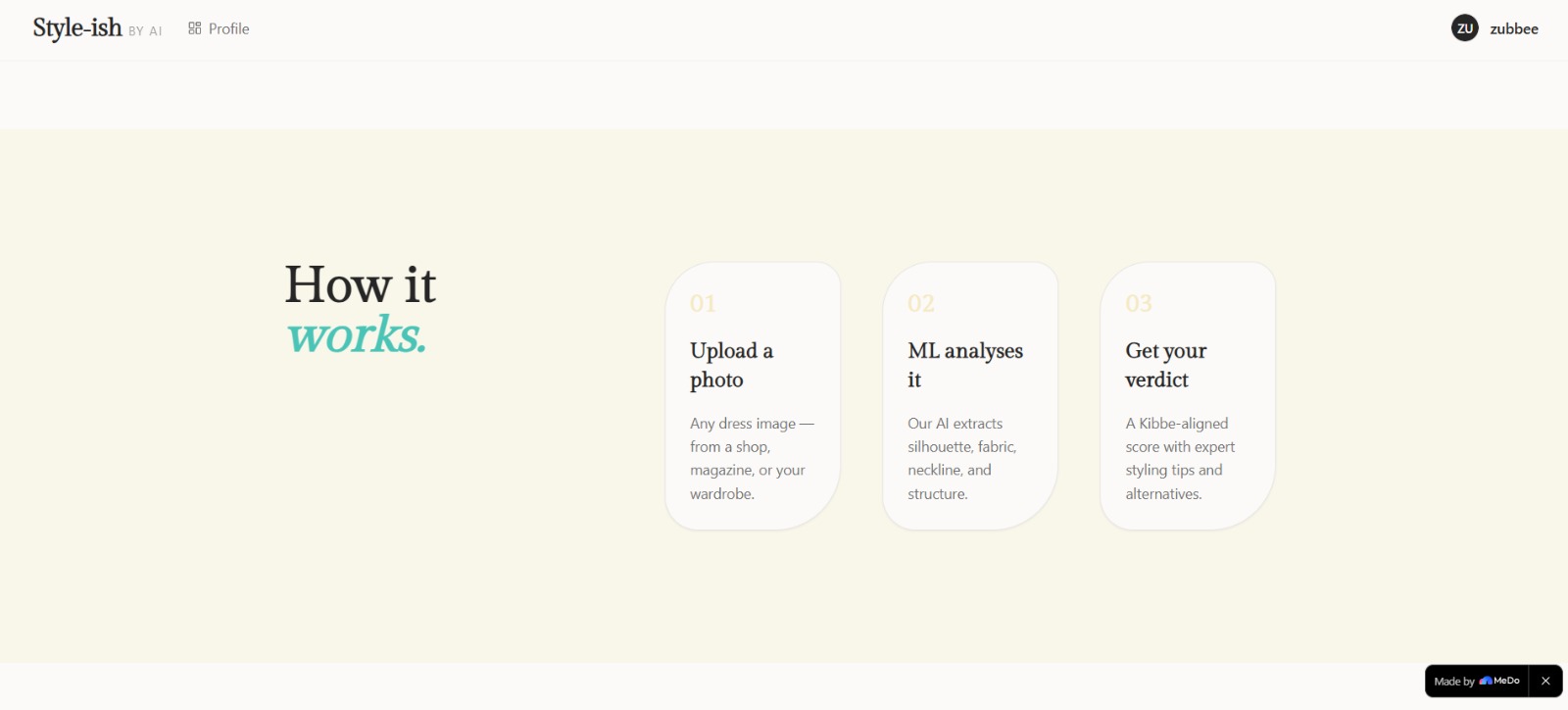
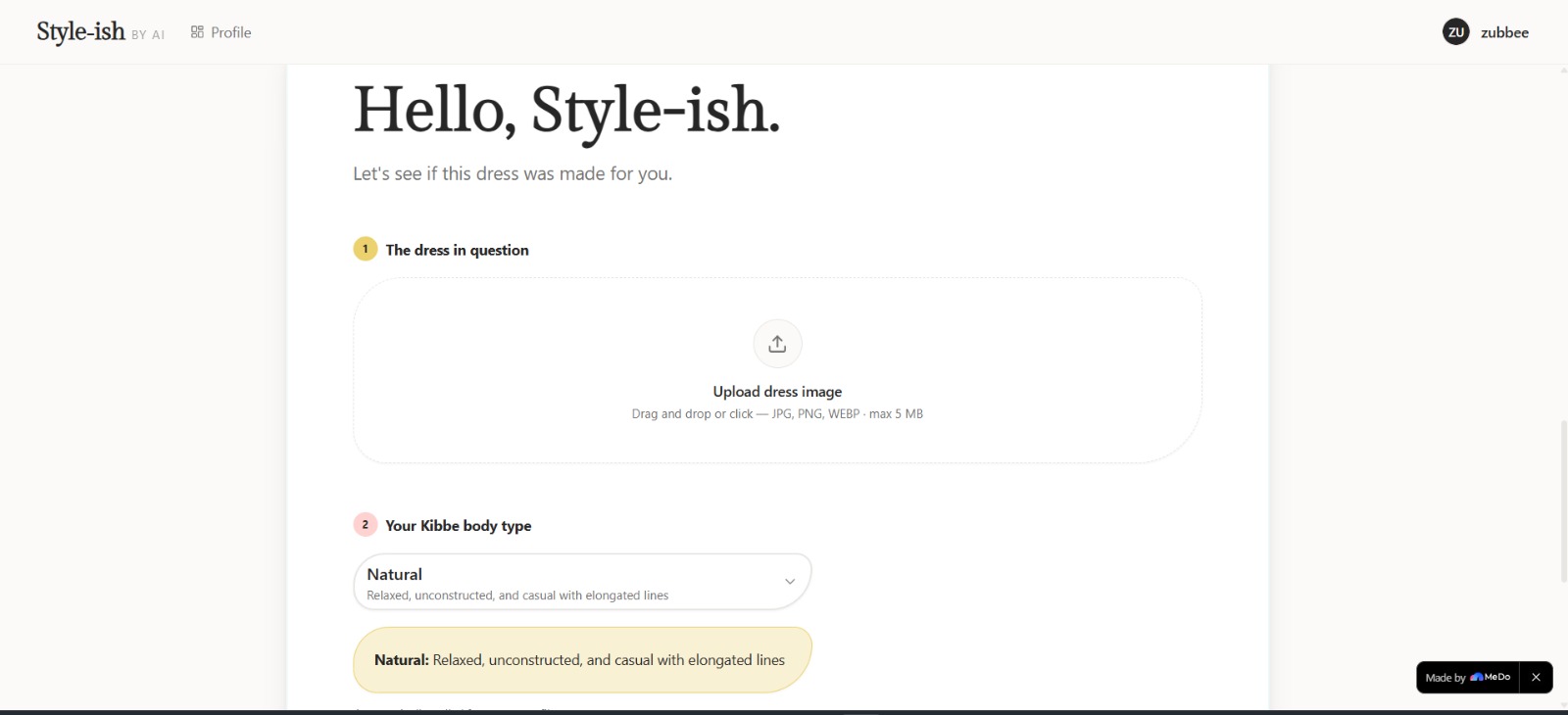
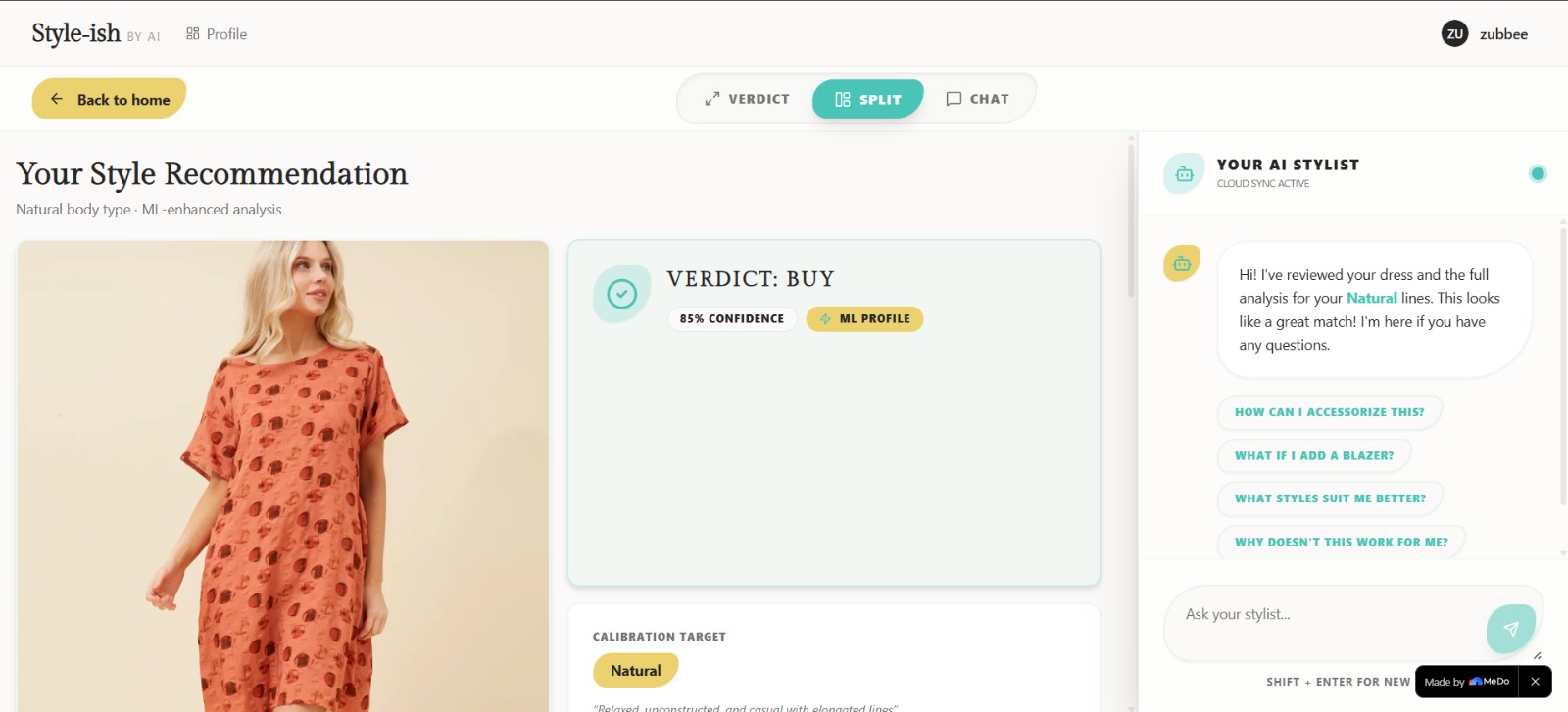
Style-ish serves as an AI-powered guide that tells you whether to buy a dress or not. It can be used for other types of clothing, but beware that the rule-based algorithm works best for just dresses right now. Simply upload an image of a dress to get it analysed with a decision to buy or not to buy. Each decision comes with detailed insights on why the dress works or does not work for you. Together with results, there's an opportunity to chat with AI and ask any follow-up questions you might need to ask. For example, "how can I accessorise this dress?" When the confidence score is less than 70%, or there's a recommendation to not buy, Style-ish also gives 3 recommendations that are similar to the image you uploaded but might be better for you.
How I built it and challenges I ran into
This tool was built with the MeDo platform on 650 credits, most of which I wasted because I didn't read the documentation first. No single line of code was written. I refined my prompt and iterated on each version of MeDo's output to get 31 versions of the product.
I built this project as slowly as I could by refining one feature completely before moving to the other. I broke the requirements of this project into several features or steps from the ground up. The first feature that was implemented was the upload feature with weights applied for each aspect of the Kibbe architecture. I initially created a database for the different Kibbe body types, each mapped to different weights for different relevant features of the dress, utilising manual logic at first.
The next step was implementing ML into analysing the image to give a response instead, and this was where my biggest challenge was. When I tried implementing the ML analysis, it was tough for me because I didn't understand the importance of plugins. I didn't know about the plugins feature, so I prompted the AI without it. As a result, it implemented two models from Hugging Face that were not working. I don't know why, and I even changed my Hugging Face access tokens a million times trying to fix it. It was only after a while that I realised what was happening, and my credits had been wasted by then!
Once I finally utilised the built-in LLM plugin, it worked beautifully. It analysed the image correctly while giving professional stylist explanations as to why the dress worked or didn't. From there, I moved forward and implemented the chatbot for follow-up questions right to the side of the result page, and stacked the web search plugin to pull live shopping links from top e-commerce platforms. It didn’t work that well at first, but then I added the OCR and AI search plugins, and it made it work better. The final hurdle was the UI; I had to reiterate severally to get the exact clean UI I was looking for. Not perfect, but it was a step forward. I have always found it difficult to push LLMs away from the typical UI look.
Finally, I successfully built an onboarding flow to guide users to find their Kibbe type right inside the app, and I managed to implement a history feature that securely saves user profiles and interactions for each individual user so that chatbot interactions and previous image analyses are saved. Authentication and user management were done using the login plugin.
Accomplishments that I'm proud of
I am incredibly proud of building a fully functional, highly technical application from the ground up with absolutely zero coding. Successfully translating a complex fashion philosophy into a database of normalised feature weights, and getting a rule-based engine to cooperate seamlessly with an LLM, feels like a massive achievement. It took me a year to pick up this project again, and I'm glad I did. Also, getting the web search, OCR, and AI search plugins to play nice together so the app accurately fetches live e-commerce product links for alternative recommendations is something I'm deeply proud of. It is my favourite feature!
What I learned
The biggest lesson learned: always read the documentation before burning through your builder credits! There's probably something you don't know. More importantly, I learned how powerful a platform's native plugin ecosystem can be. Moving away from trying to manually force external API integrations and instead using MeDo’s LLM, OCR, AI search, and Web Search plugins completely changed how I think about workflow orchestration. I learned how to manage user history data states and build intuitive, multi-turn onboarding workflows entirely within a no-code ecosystem.
What's next for Stye-ish
Right now, the rule-based algorithm is strictly optimised for dresses. The immediate next step is expanding the architecture and database rules to support other clothing categories like tops, trousers, skirts, and tailored outerwear. Now that user history and interaction saving are fully supported, I also plan to look into building a personalised "Style Journey" dashboard that helps users track trends in their clothing choices over time.
Built With
- gemini
- medo
- react
- supabase
- typescript
- vite


Log in or sign up for Devpost to join the conversation.