-
-
Let's boost Green Energy!
Project
Working Towards Sustainable Trading - From the Programmer's Perspective
Team-20
Inspiration
The world is undergoing a shortage of resources, and thus sustainable development is critical to creating a better future not only for ourselves and our offspring. The goal of quantitative trading is not only to maximize profits but also to promote more efficient and sustainable resource allocation. In this challenge, we devise a quantitative strategy to fulfill the potential of the green energy market. Strategy
First, our basic profit method is basket trading: the difference in the price of a basket and stocks leaves room to profit. We keep running the Python script to detect such opportunities in the market. To be specific, say that we buy the basket and sell the same amount of stocks. The first basket trading method is selecting the smallest asking price of the basket and the biggest bidding price of stocks. But the problem is that the volume of the price is ignored. For example, there is only one volume of the smallest asking price of the basket, but the volume of the second smallest asking price of the basket is very large. In this case, bidding the second smallest asking price would be more beneficial. Therefore, we propose the second basket trading method. We select as many volumes as possible until the asking price of the basket is larger than the bidding price of stocks. Risk control is another key component of our strategy. Since the challenge restricts the risk we take, we also hard-code the limitation and correspondingly re-balance our positions according to the current market. We also implemented the control of our position: the lighter positions can give us more flexible trading space. We do not include the position control in the final competition to enhance code robustness.
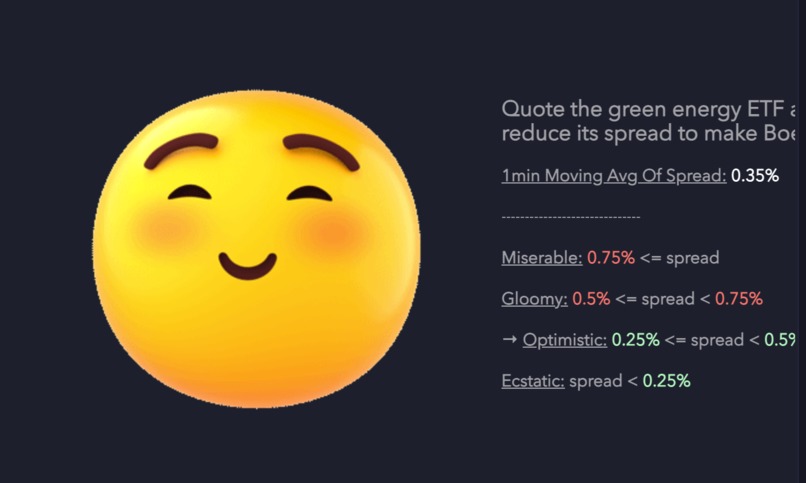
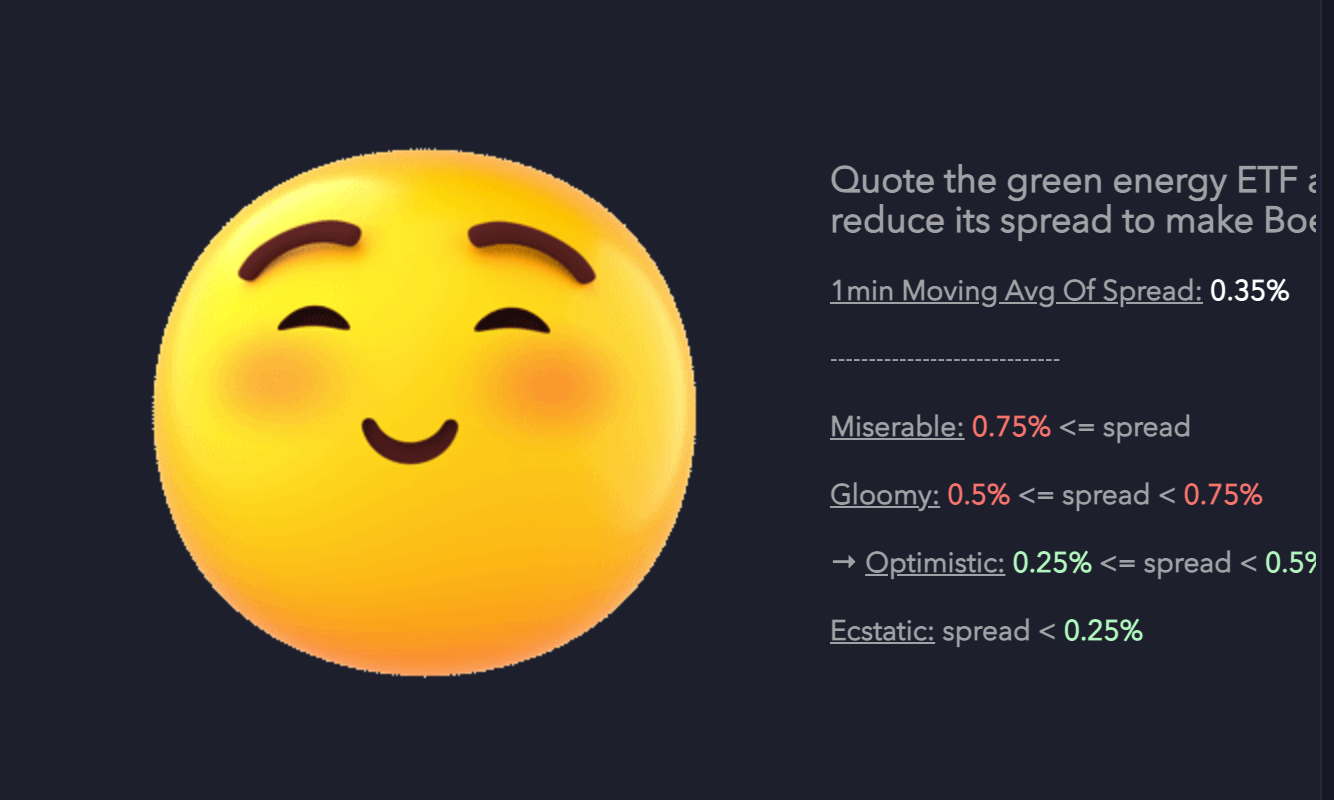
A market maker provides liquidity for the market, which is also beneficial for its sustainable growth. To promote the market of green energy, we apply a two-way quote. Once we detect a positive spread of C2_GREEN_ENERGY_ETF, we will insert simultaneously a new best bid order and a new best ask order to fill the spread gap. If the market is active on both sides(ask and bid) and no other player follows the same strategy, we should be able to make a profit as we are offering the best offer. If the market is not active on both side, this strategy will slightly promote the liquidity of Green Energy without losing money. Finally, if other players decide to compete against us by using the same strategy, then they will offer new bests and offers which will quickly reduce the spread and promote liquidity. The increasing volume and decreased spread of green energy, in turn, help increase the value of our green energy instrument inventory. And the indicator in the visualizer has become a 😊
Say that we would like to buy the basket and sell the stocks. The first basket trading method is selecting the smallest asking price of the basket and the biggest bidding price of stocks. But the problem is that the volume of the price is ignored. For example, there is only one volume of the smallest asking price of the basket, but the volume of the second smallest asking price of the basket is very large. In this case, bidding the second smallest asking price would be more beneficial. Therefore, we propose the second basket trading method. We select as many volumes as possible until the asking price of the basket is larger than the bidding price of stocks.
Built With
- optibook
- python


Log in or sign up for Devpost to join the conversation.