-
-
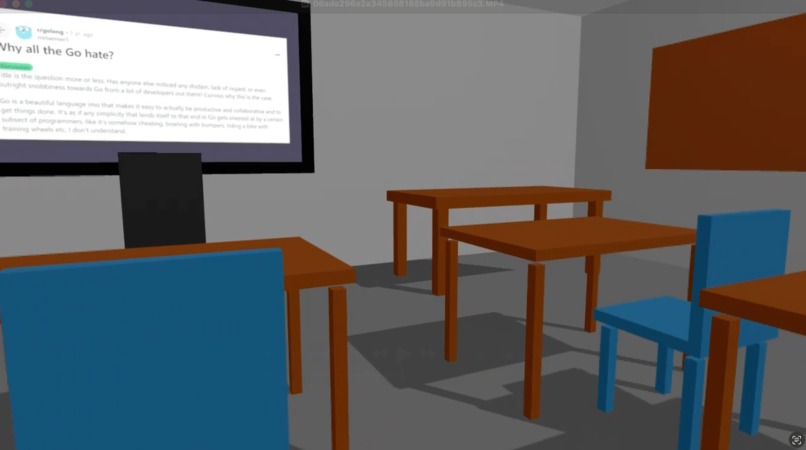
A classroom environment with the video
-
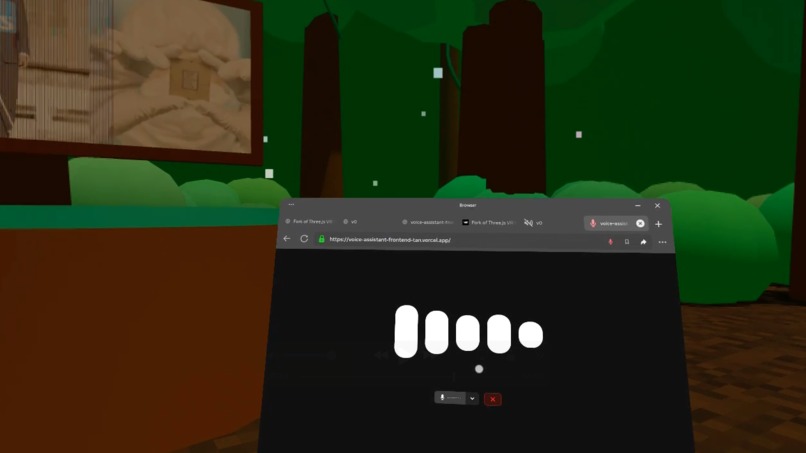
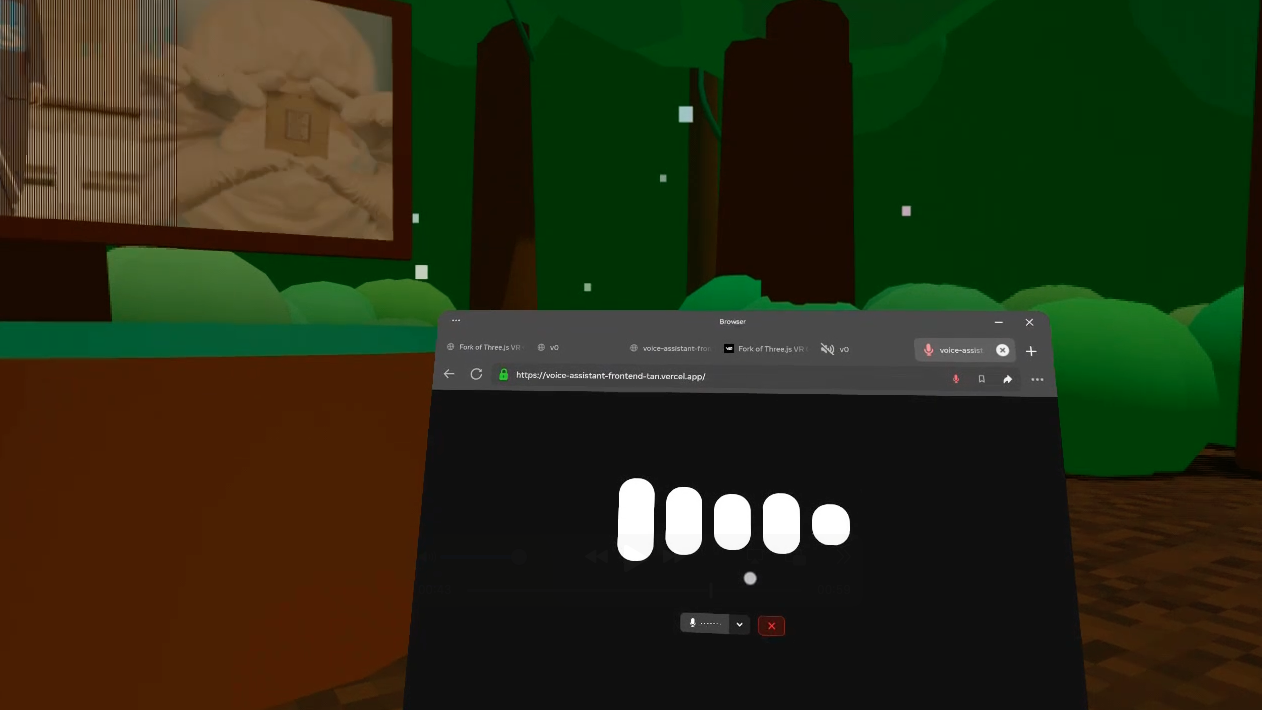
A forest environment with the video + AI assistant
-
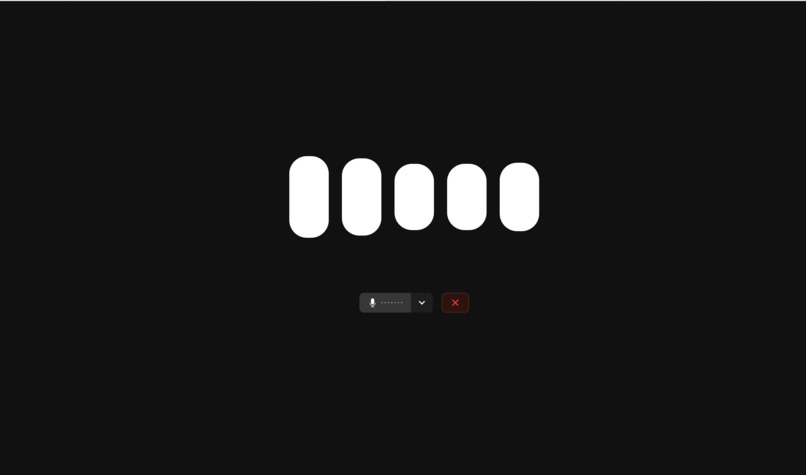
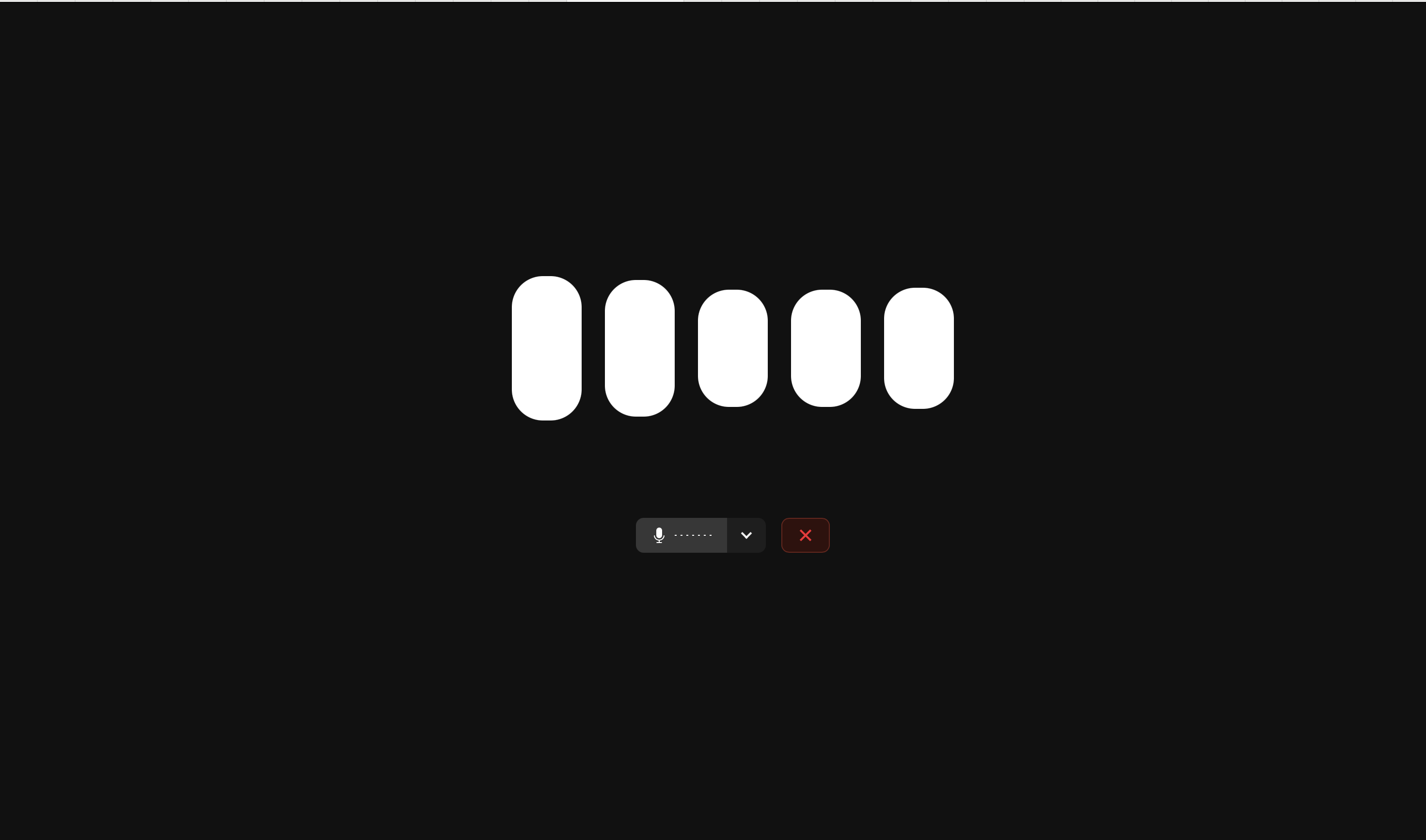
A direct window with the AI assistant
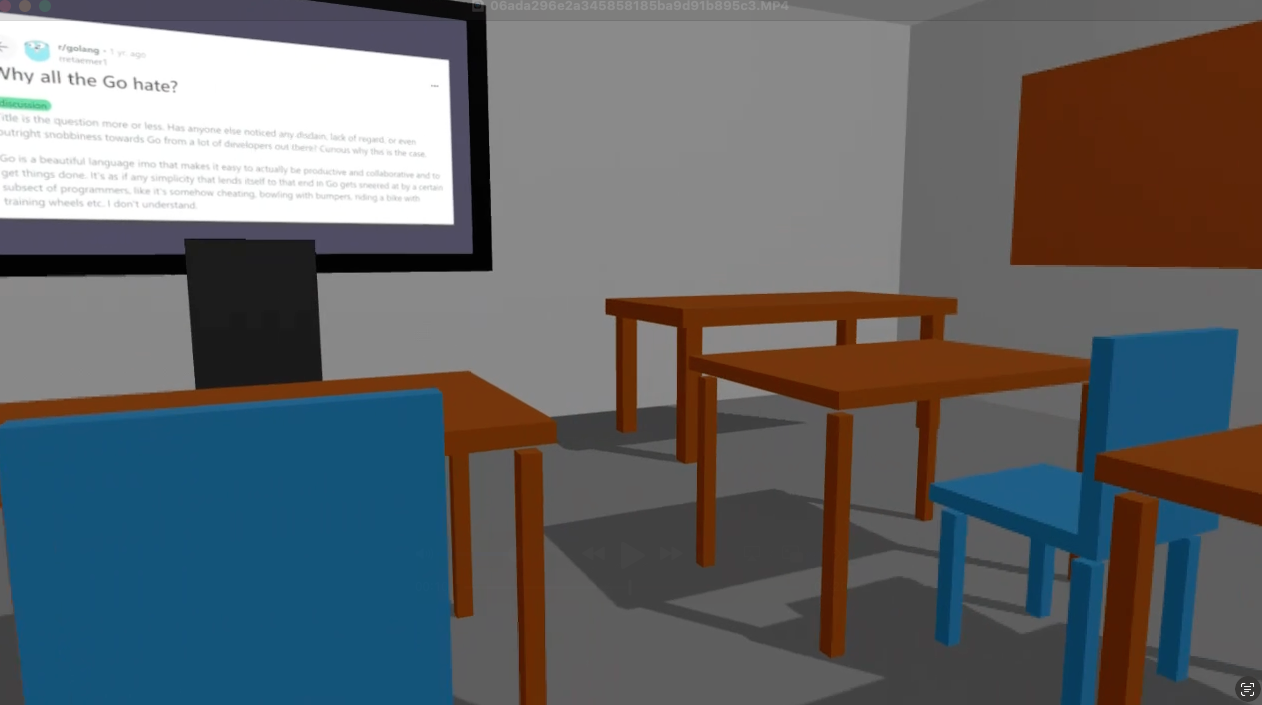
StudyVerse
Inspiration
As a student with ADHD, I often struggle to stay engaged with lecture videos—they’re too slow-paced, lack interactivity, and make it difficult to get answers to my questions. Unlike a real classroom, recorded lectures don’t adapt to my needs, making learning frustrating. StudyVerse was built to change that.
We designed StudyVerse to help neurodivergent students engage more effectively with online learning. With this tool, users can:
✅ Watch educational videos in a VR environment for better focus.
✅ Ask an AI assistant questions in real time, just like in a live classroom.
✅ Get immediate, spoken answers without needing to search manually.
What it does
🎥 YouTube Video Learning in VR – Users watch educational videos inside an interactive VR classroom.
🗣️ AI Assistant (Voice-to-Voice) – The AI listens to user questions and provides spoken answers based on the video content.
🕶️ Web-Based VR for Accessibility – Runs directly in a browser using Three.js + WebXR, so no extra setup is required.
How we built it
- Frontend (VR Classroom) – Developed in Three.js + WebXR for a smooth, web-based VR experience.
- YouTube Video Integration – Embedded via an iframe player inside the VR environment.
- AI Assistant (Voice-to-Voice) –
- Uses WebSockets to connect the VR app to a Node.js AI server for real-time interaction.
- Instead of text-based chat, the assistant responds with natural speech.
- Uses WebSockets to connect the VR app to a Node.js AI server for real-time interaction.
- Backend (Flask + Node.js) –
- Parses YouTube playlists and transcripts for AI context.
- Handles real-time AI responses via WebSockets.
- Parses YouTube playlists and transcripts for AI context.
Challenges we ran into
⚠️ Switching from Unity to Three.js – We initially planned a Unity-based VR app but pivoted to a web-based solution for easier accessibility.
⚠️ Optimizing AI Latency – We improved response speed by caching video transcripts and optimizing WebSocket performance.
⚠️ Engaging Neurodivergent Learners – Balancing interactivity without overwhelming the user was a key design challenge.
Accomplishments that we're proud of
🏆 Creating an AI-powered learning environment tailored for neurodivergent students.
🏆 Making VR learning accessible directly in a web browser.
🏆 Developing a seamless WebSocket system for real-time AI interaction.
What we learned
📌 Traditional video learning doesn’t work for everyone—interactive tools make a difference.
📌 Web-based VR is a powerful alternative to Unity for accessibility.
📌 Voice-driven AI assistants can make learning more dynamic and engaging.
What’s next for StudyVerse?
🚀 Personalized AI Learning Paths – Let the AI track what users have learned and suggest follow-ups.
🚀 Multiplayer VR Classrooms – Enable live discussions with friends and teachers.
🚀 Hand Gesture Controls – Use motion tracking to navigate instead of voice commands.


Log in or sign up for Devpost to join the conversation.