Inspiration
Familiar notes can feel easier to remember than they really are. StudyTrace focuses on the gap between recognizing information and recalling it independently. It brings practice, confidence, and the original notes together in one study loop.
What it does
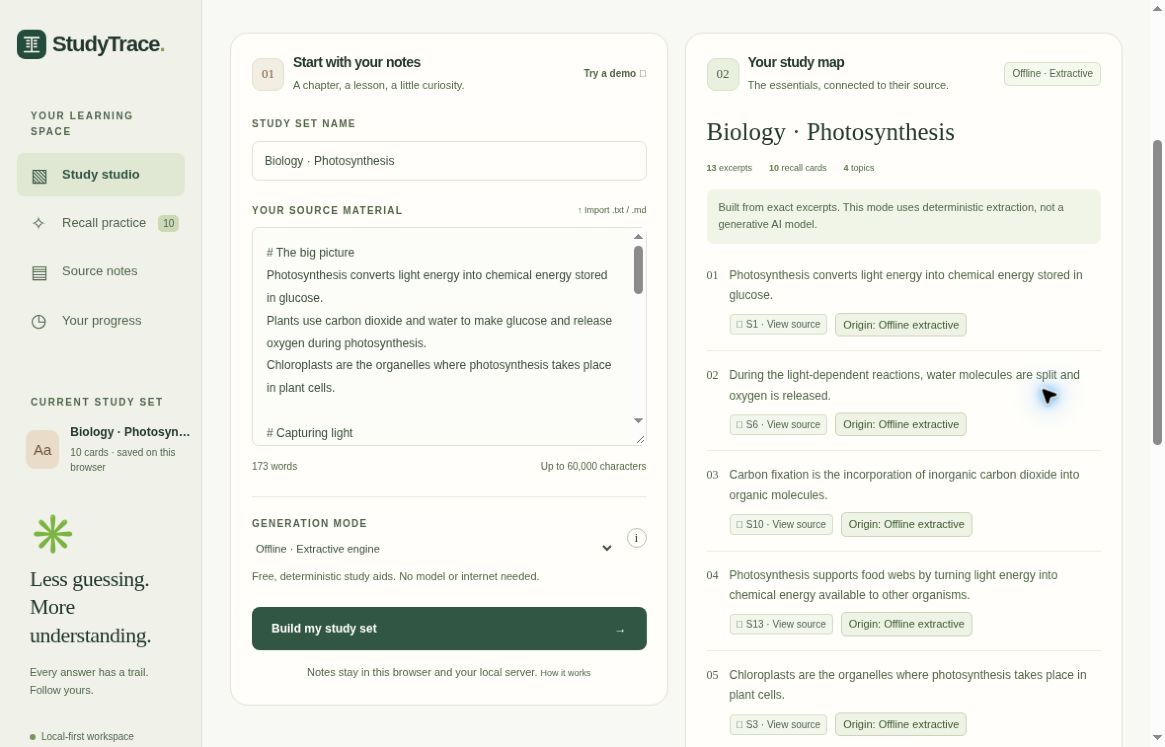
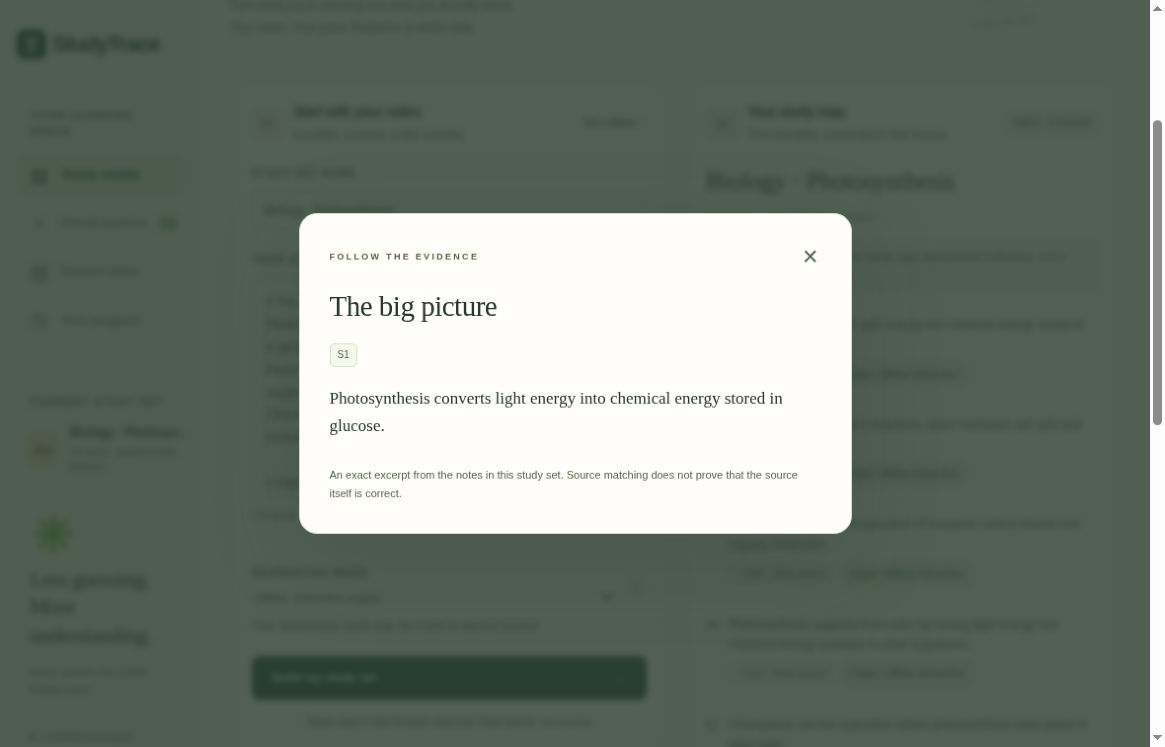
StudyTrace turns English notes into a study map and fill-in-the-blank recall cards. Each item links to an exact source excerpt so students can check where it came from.
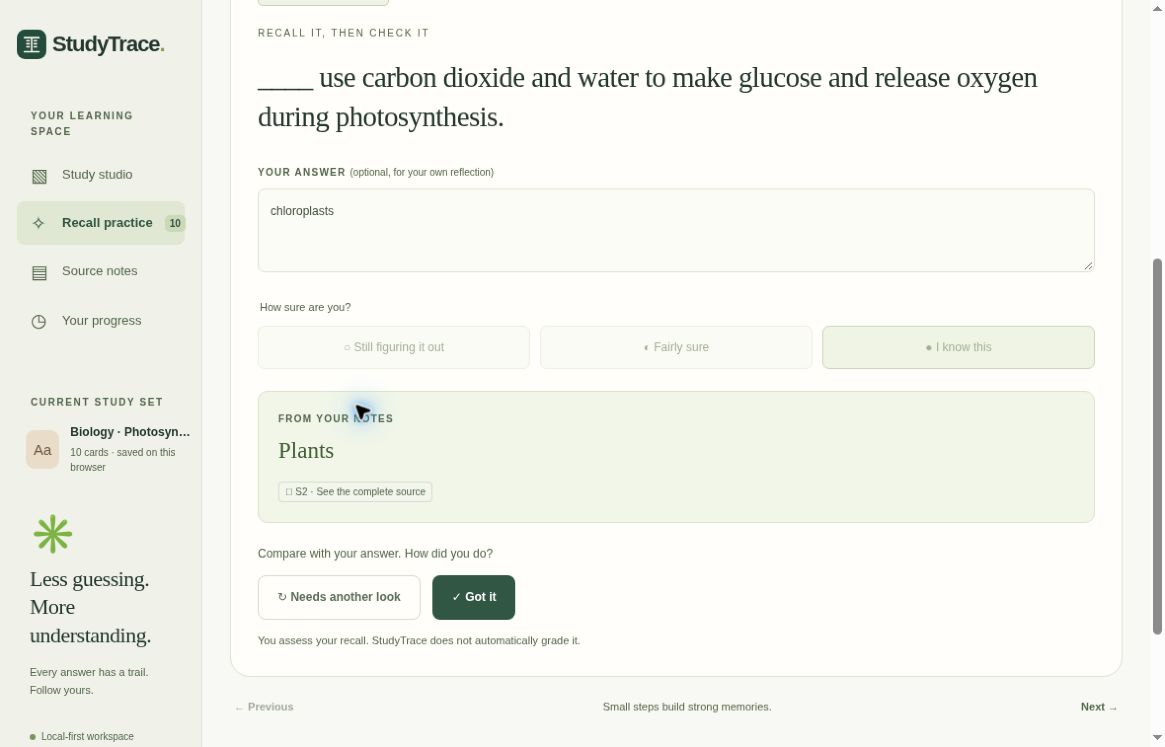
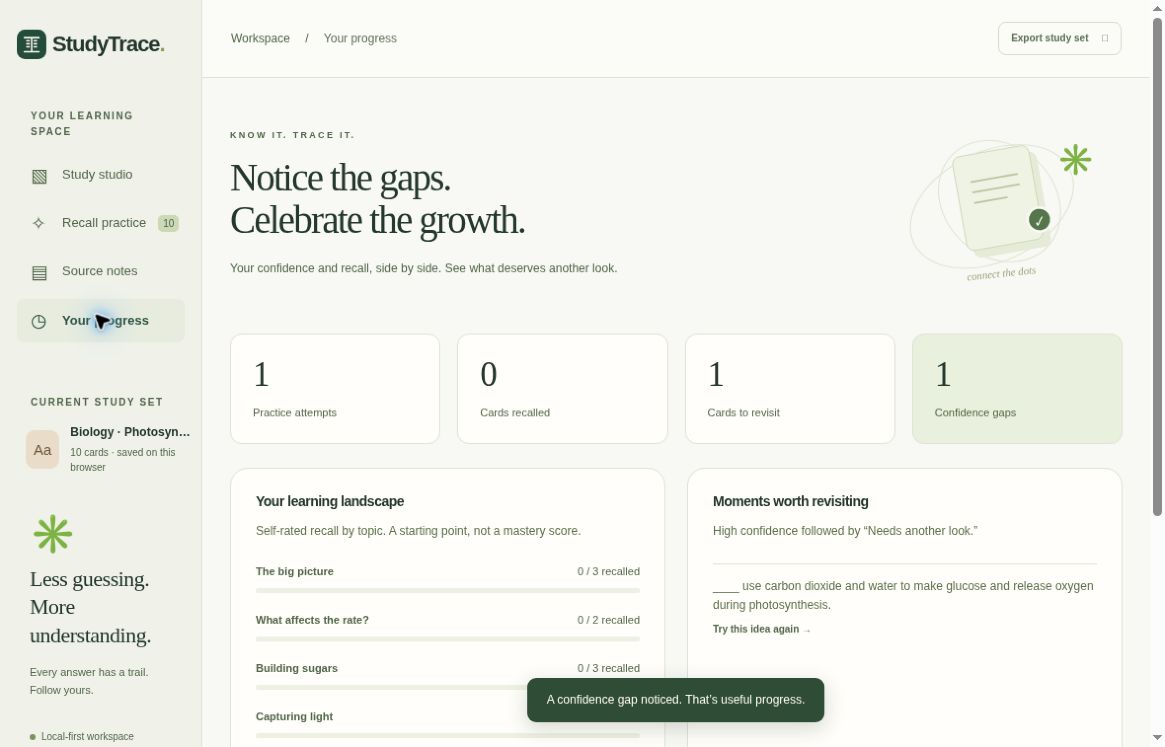
Students attempt an answer and choose their confidence before revealing the source. They then rate whether they recalled it or need another look. When high confidence is followed by a review rating, the app highlights that gap and offers a route back to the card and evidence. It also includes source search, cautious question matching, saved progress, and Markdown export.
How we built it
StudyTrace uses Node.js and plain HTML, CSS, and JavaScript. Its offline mode works without an API key or runtime npm dependencies.
An optional Ollama integration uses Qwen2.5-3B-Instruct to select source passages and exact answer spans. The app validates those selections and builds items from the supplied notes. Invalid selections are replaced with labeled offline items.
OpenAI dot and Codex assisted with implementation, tests, the interface, and documentation.
Challenges we ran into
Keeping study items connected to their evidence was a central challenge. We narrowed model output to source IDs and verbatim answer spans instead of accepting rewritten quotations.
Testing also exposed weak recall blanks, missing context, and questions that could match the wrong numerical conditions. We improved answer-span selection and context, required literal numeric evidence, and added abstention for formula questions.
Accomplishments that we're proud of
StudyTrace brings note extraction, confidence-based practice, self-rated recall, and source review together in a working prototype.
The current project passes 151 automated tests. In a separate offline evaluation across four synthetic subjects, all 80 generated study items matched their cited sources exactly. A desktop browser check verified the main practice loop, question matching, export, and saved progress.
These checks demonstrate prototype behavior, not improved learning outcomes. No independent learner study has been completed.
What we learned
Testing StudyTrace taught me that creating a useful study tool takes more than producing answers that match the source. A recall card also needs a clear question, a focused answer, and enough context to help a student understand the material. Reviewing the app’s outputs showed me why it is important to trace each card back to the original notes and identify cases where a question may be unclear or misleading.
I also learned that automated tests are valuable for checking reliability, but they cannot demonstrate that a tool improves learning on their own. The next step is to gather feedback from learners and evaluate how well StudyTrace supports their study process.
What's next for StudyTrace
We plan to test more representative notes and fresh model output, improve recall targets and source context, and complete mobile, keyboard, and accessibility checks. Testing with consenting learners could help us understand whether the cards are useful and the evidence is easy to follow.
Built With
- css
- html
- javascript
- node.js
- ollama
- qwen2.5-3b-instruct