Inspiration
As a university student juggling exams and part-time work, I struggled to turn sporadic study sessions into meaningful progress. I noticed peers faced the same issue—plenty of effort, but no structured way to track focus or optimize time. I wanted to build something that merged proven study cycle science with actionable data, so students and professionals could study smarter, not just longer.
What it does
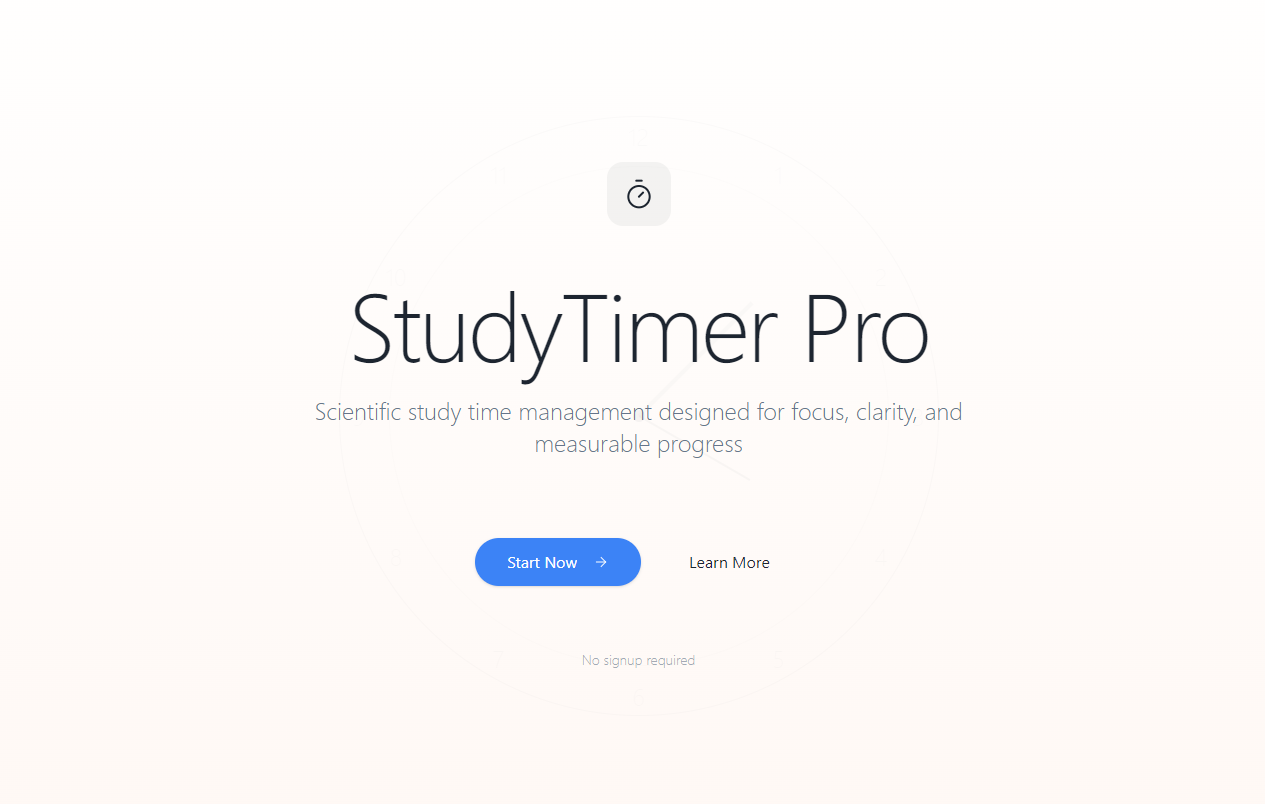
StudyTimer Pro is a web app that structures study cycles (default 50/10, customizable for premium), tracks subject-specific study time, logs distractions to calculate focus rates, and delivers insights into productivity patterns. Free users get core tracking; premium unlocks AI-driven optimal study time recommendations, advanced reports, and unlimited subjects.
How we built it
I started by mapping user workflows (onboarding, study sessions, insights) to align with real student needs. The frontend was built with React for responsive design (desktop/mobile), using Chart.js for data visualizations. The backend (Node.js/Express) handles session logic, distraction calculations, and goal tracking, with MongoDB storing user data. Stripe API integrated subscription management, and Firebase enabled cloud sync for premium users.
Challenges we ran into
The biggest hurdle was perfecting the study cycle logic—ensuring automatic long breaks after 4 cycles, accurate distraction time calculations, and seamless session resumption after pauses. I also struggled with balancing free/premium access control, making sure premium prompts were helpful (not intrusive) and subscription status synced in real-time across the app.
Accomplishments that we're proud of
The focus rate calculation ((Total time - Distraction time)/Total time × 100%) became a game-changer for user accountability. I’m also proud of the responsive design that works flawlessly on both desktop and mobile browsers, and the smooth payment flow that unlocks premium features instantly.
What we learned
I deepened my understanding of user-centric design—small details (like rotating break activity suggestions) boosted engagement far more than I expected. I also learned to balance feature complexity with usability; over-engineering the AI recommendation logic early on taught me to prioritize core functionality first.
What's next for this project
Short-term: Add calendar integrations (Google/Apple) to sync study sessions with existing schedules. Long-term: Build a native iOS/Android app, introduce gamification (streaks/badges), and integrate focus music playlists. I also plan to expand AI capabilities to generate personalized study plans based on goal deadlines and past performance.

Log in or sign up for Devpost to join the conversation.