-
-
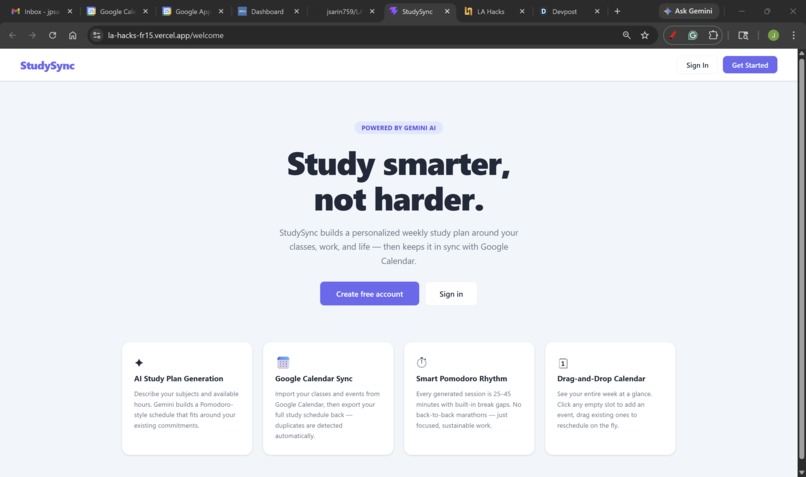
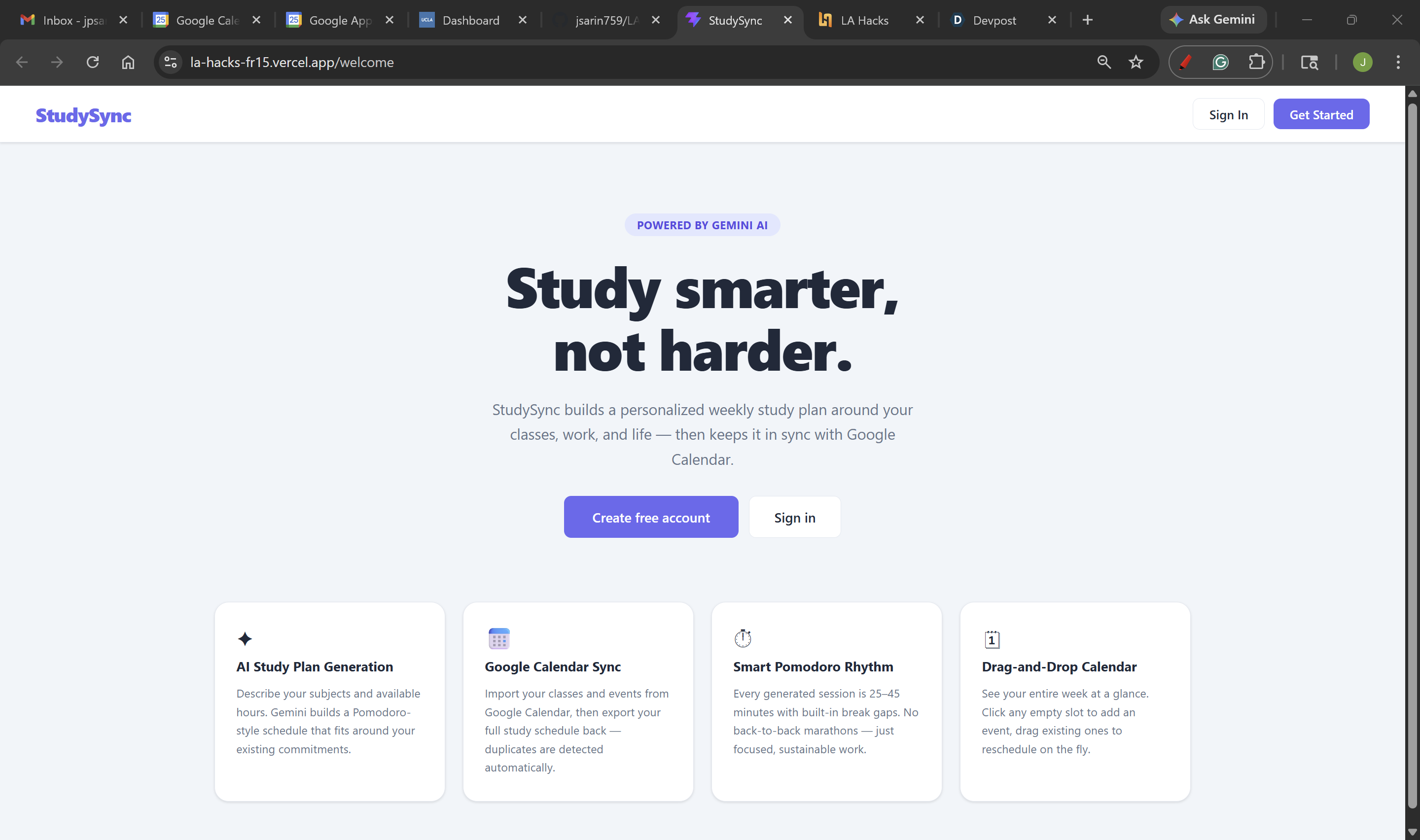
Welcome Page
-
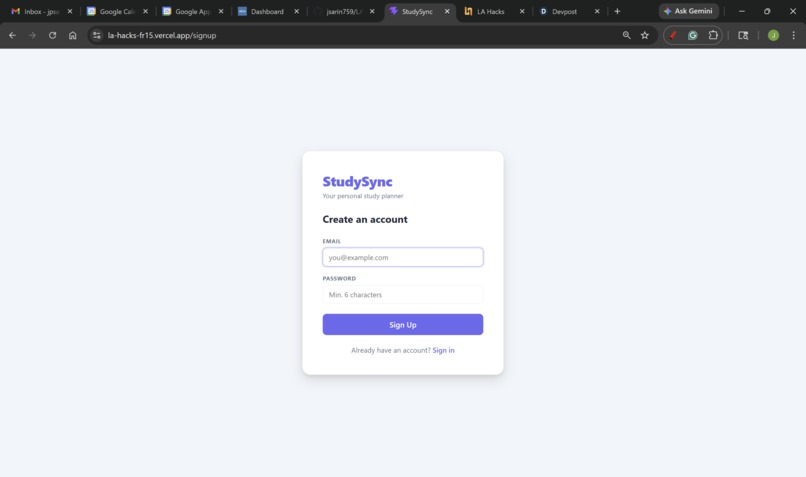
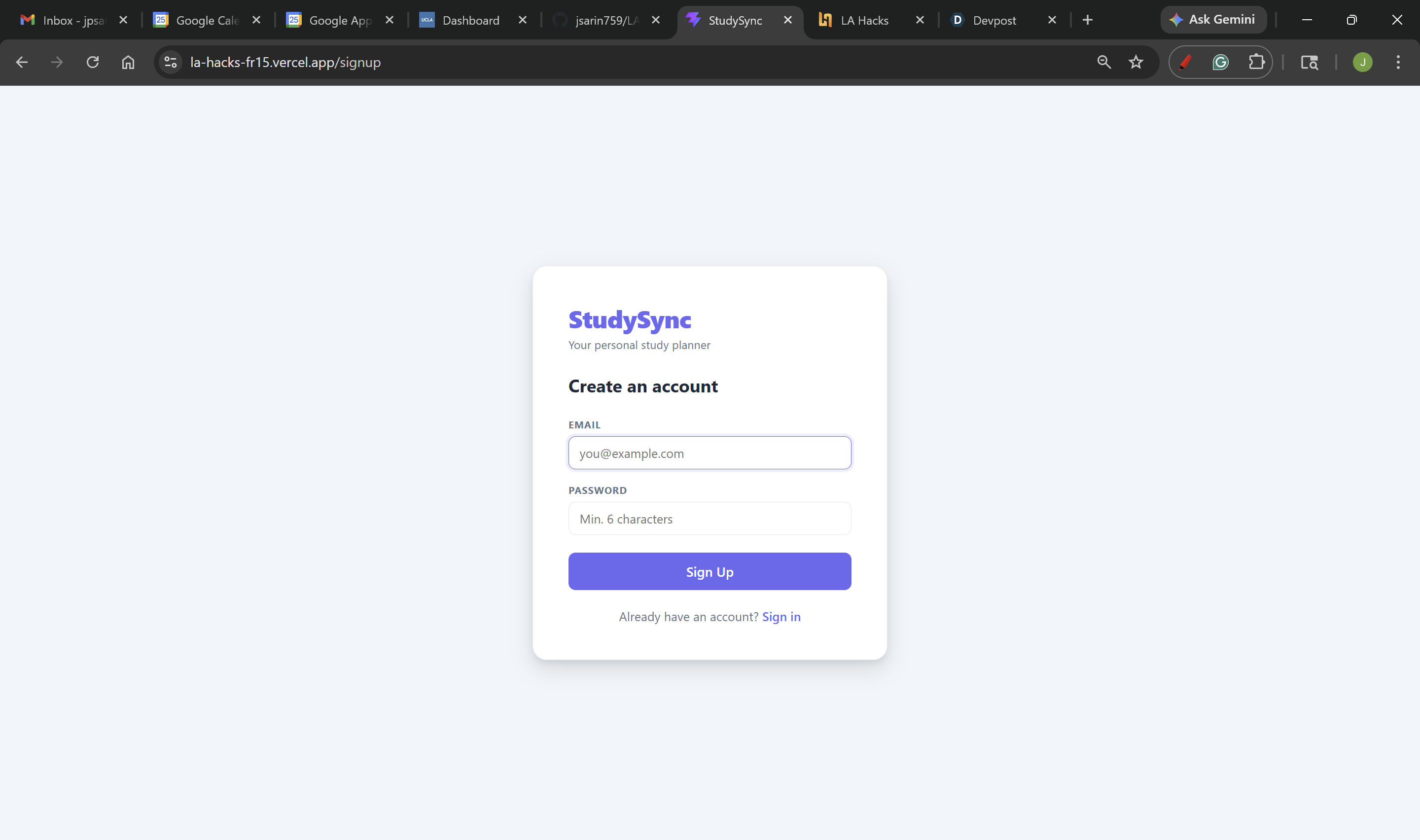
Account Creation Page
-
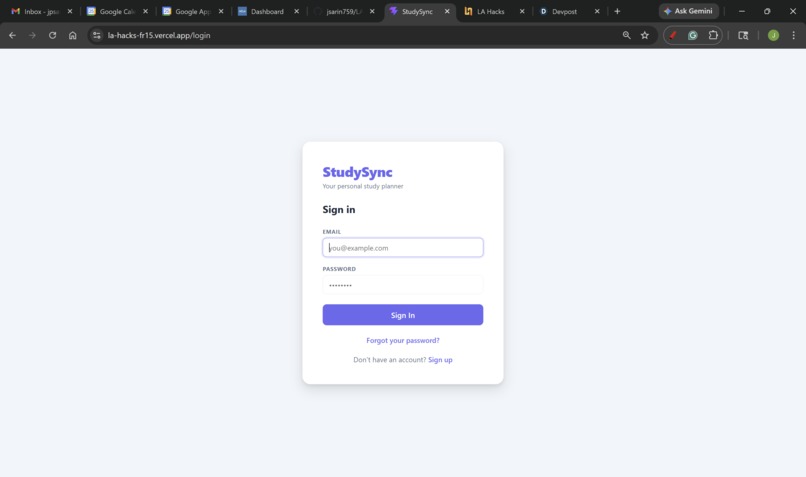
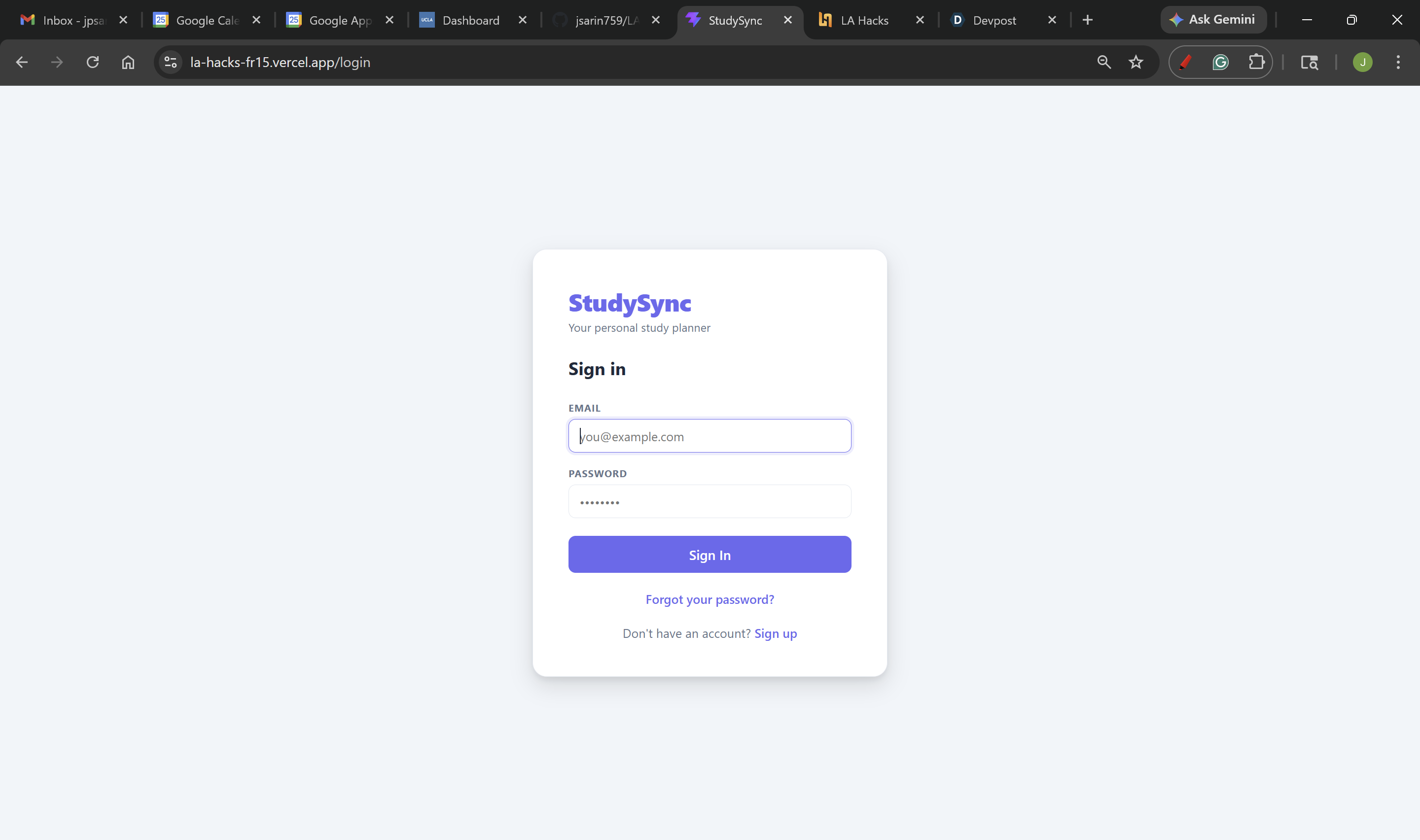
Login Page
-
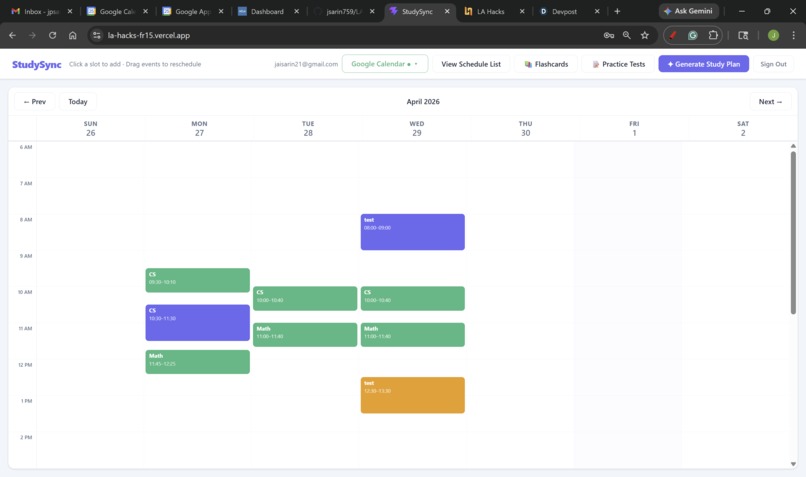
Home Page
-
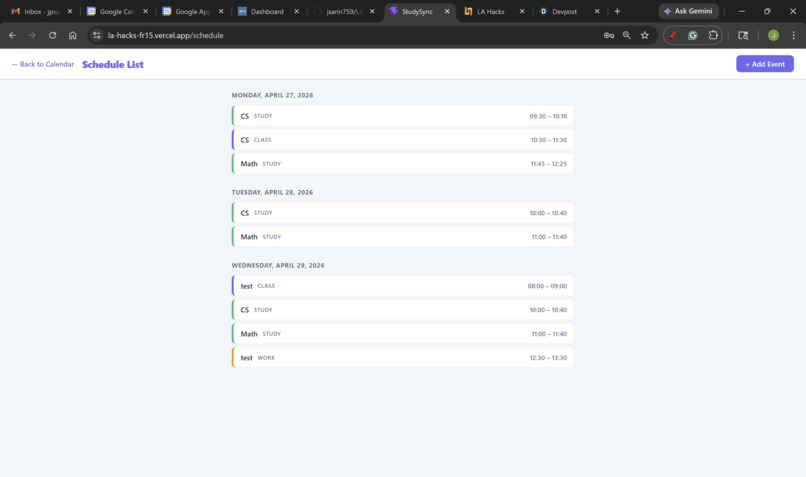
Schedule List Page
-
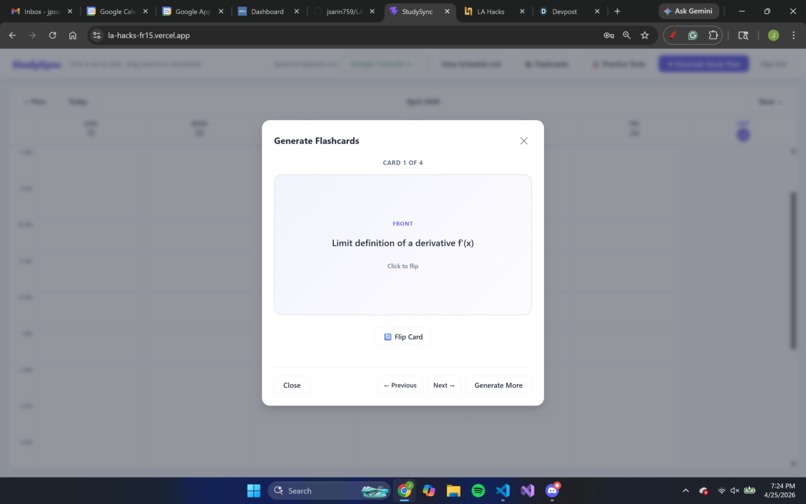
Flashcards Page
-
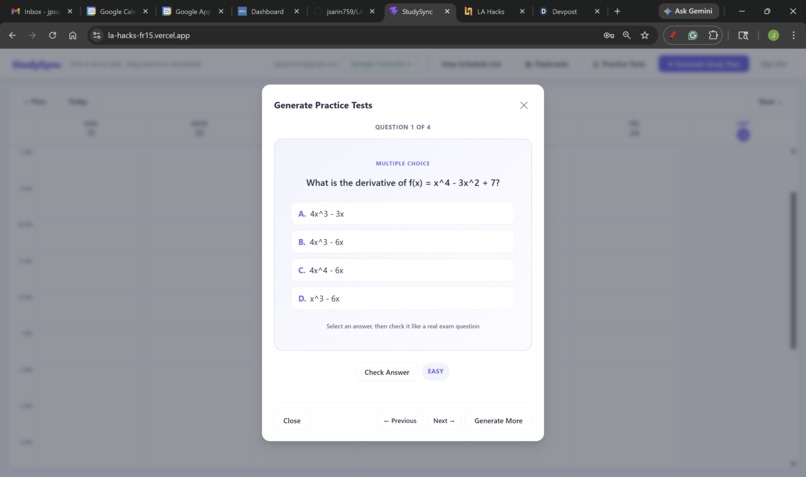
Practice Test Page
-
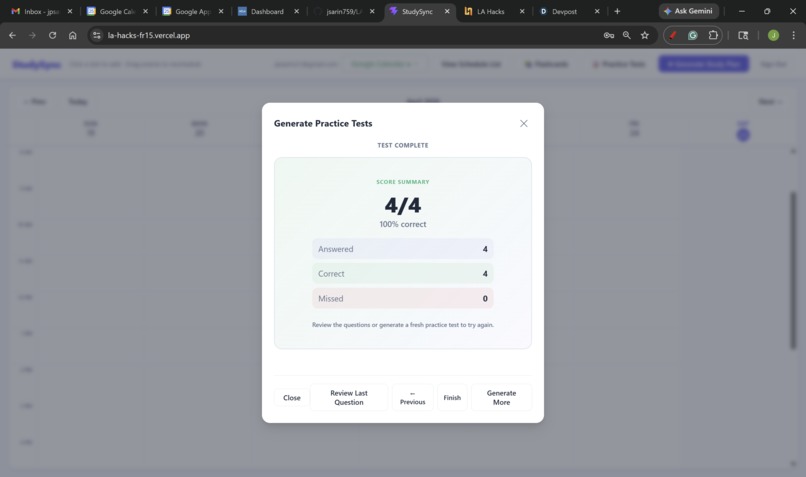
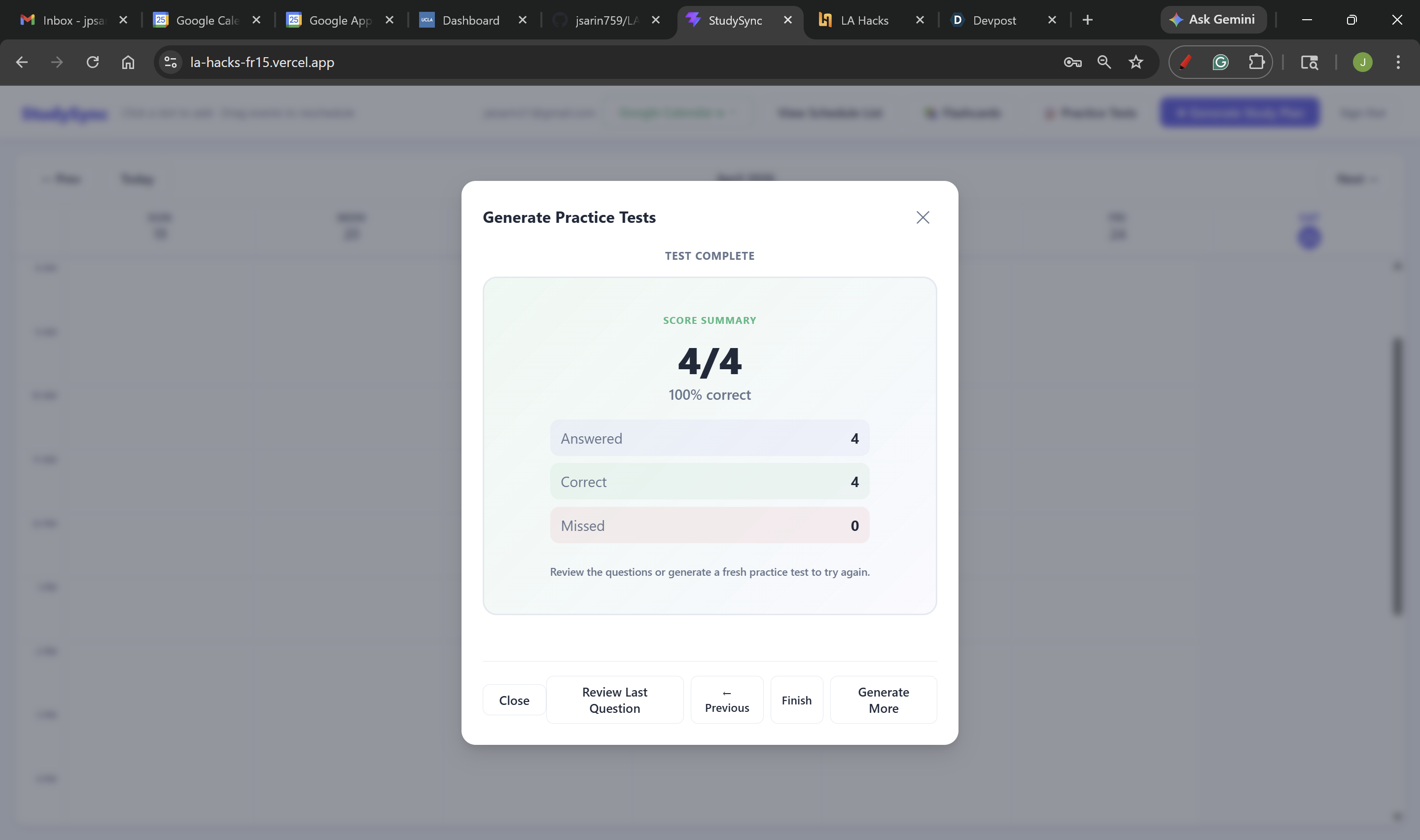
Practice Test Completion Page
-
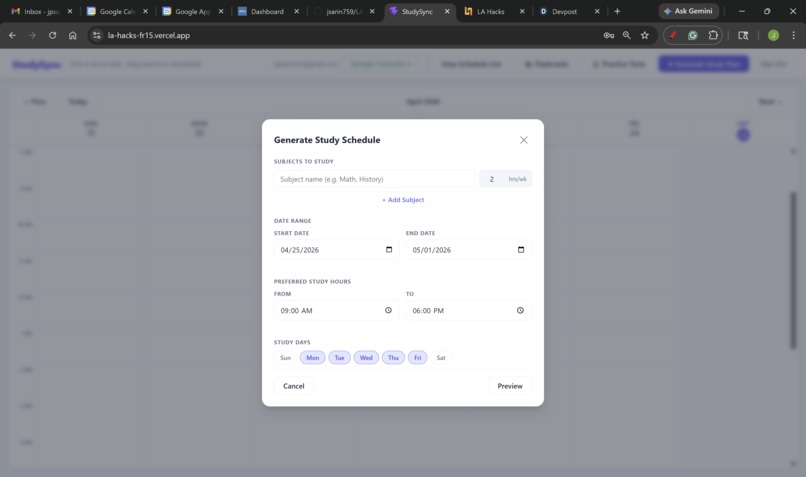
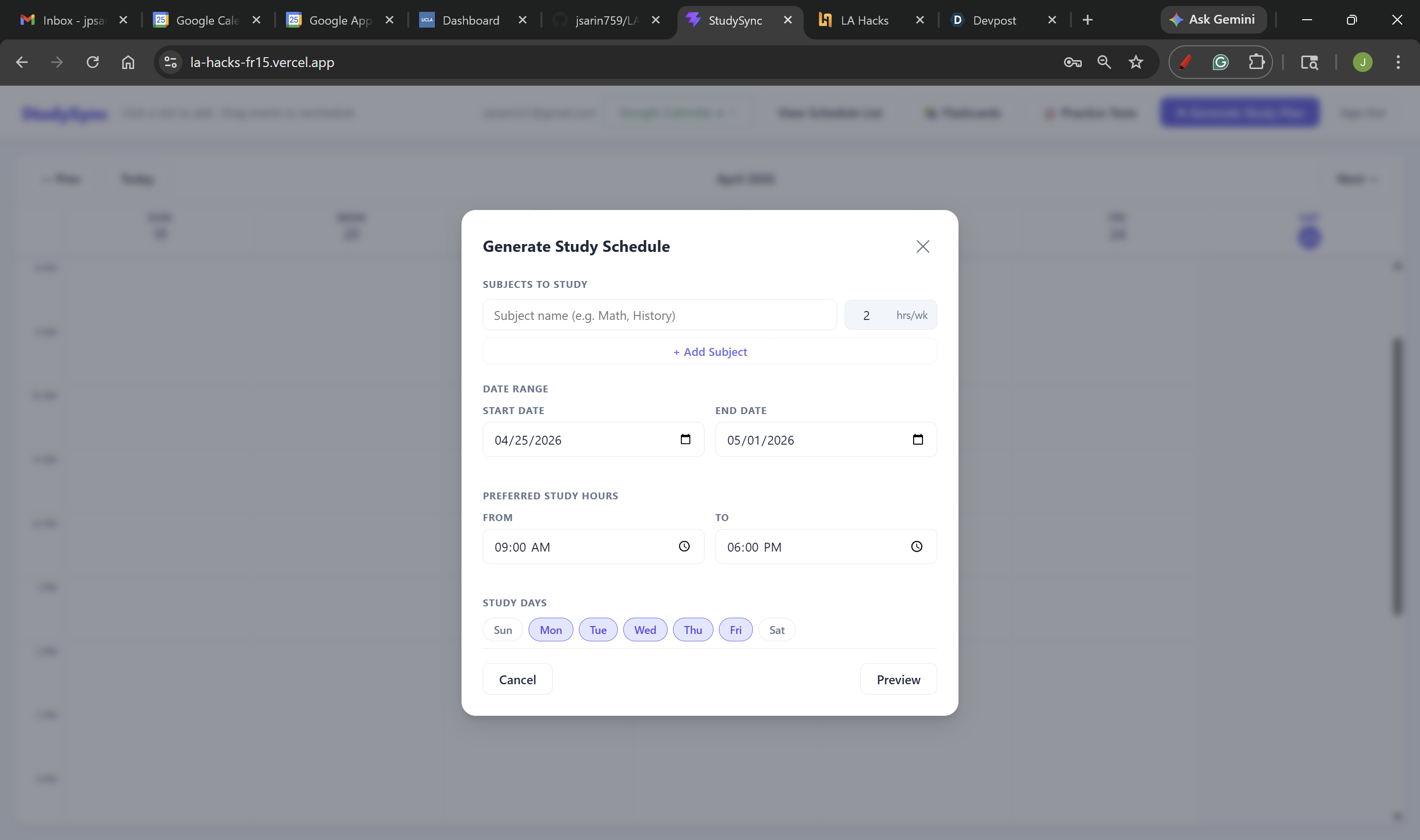
Generate Study Schedule Page
Inspiration
As students who have to deal with various commitments, both academic and social, we often struggle to manage our time effectively. This project aims to help students better manage their study schedule.
What it does
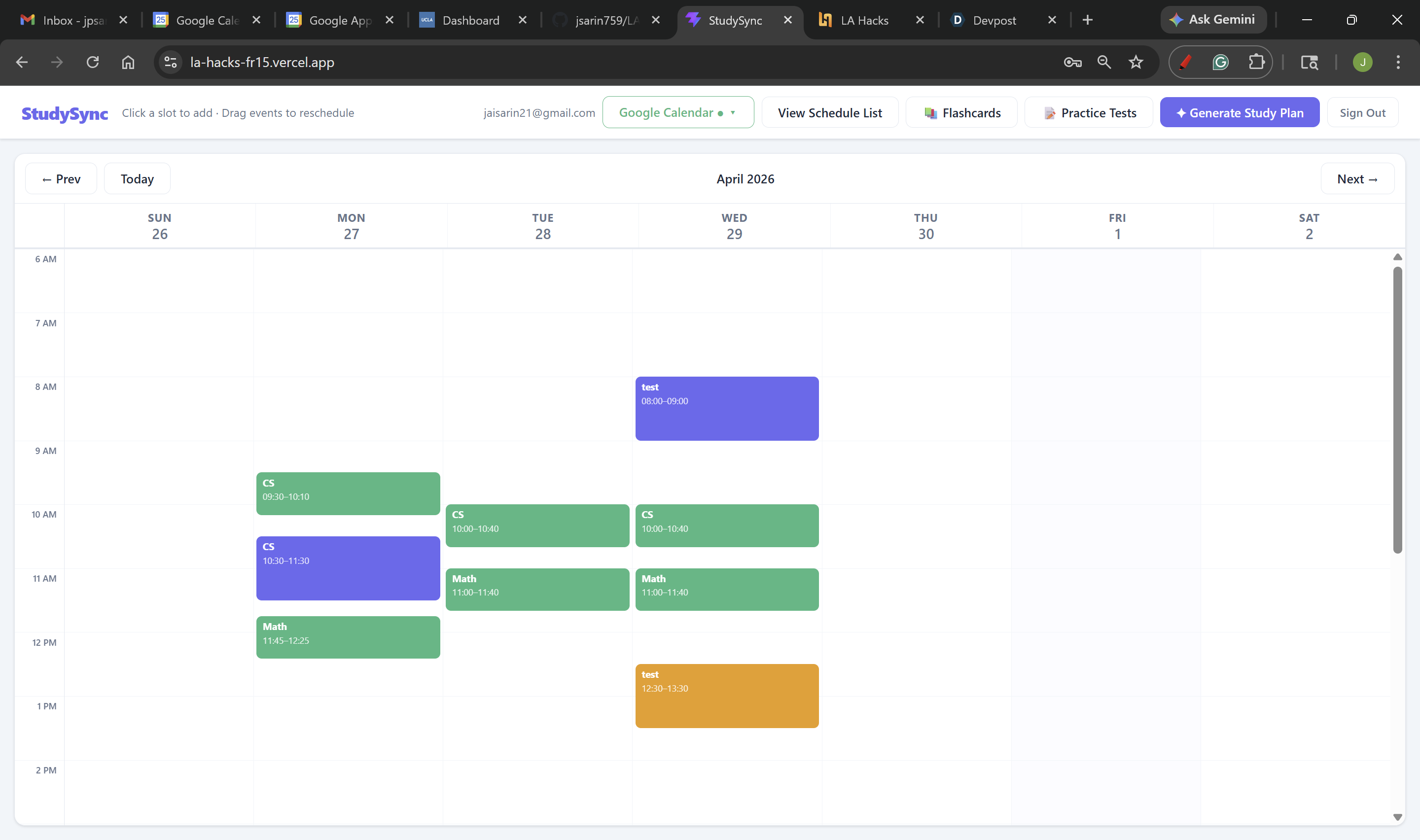
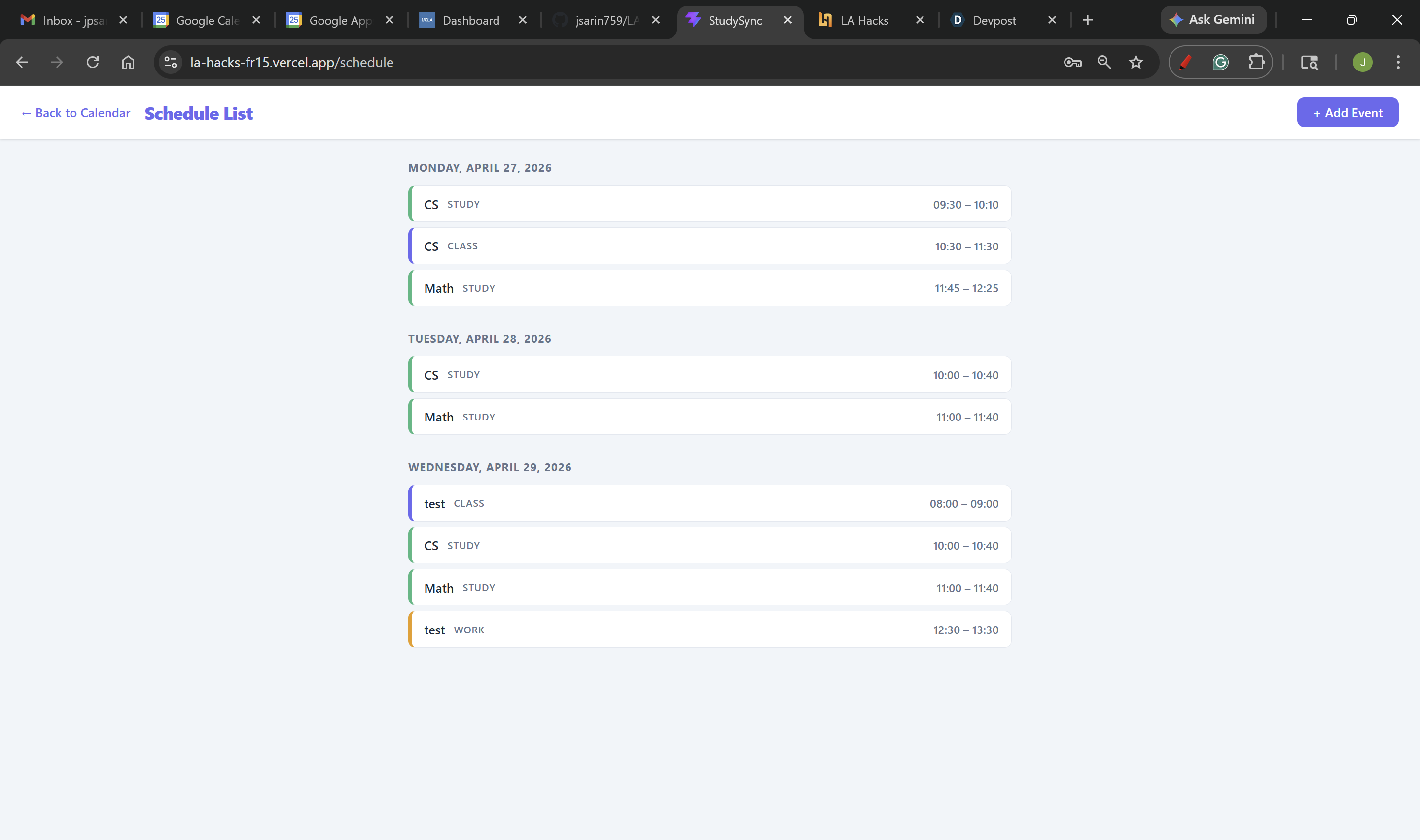
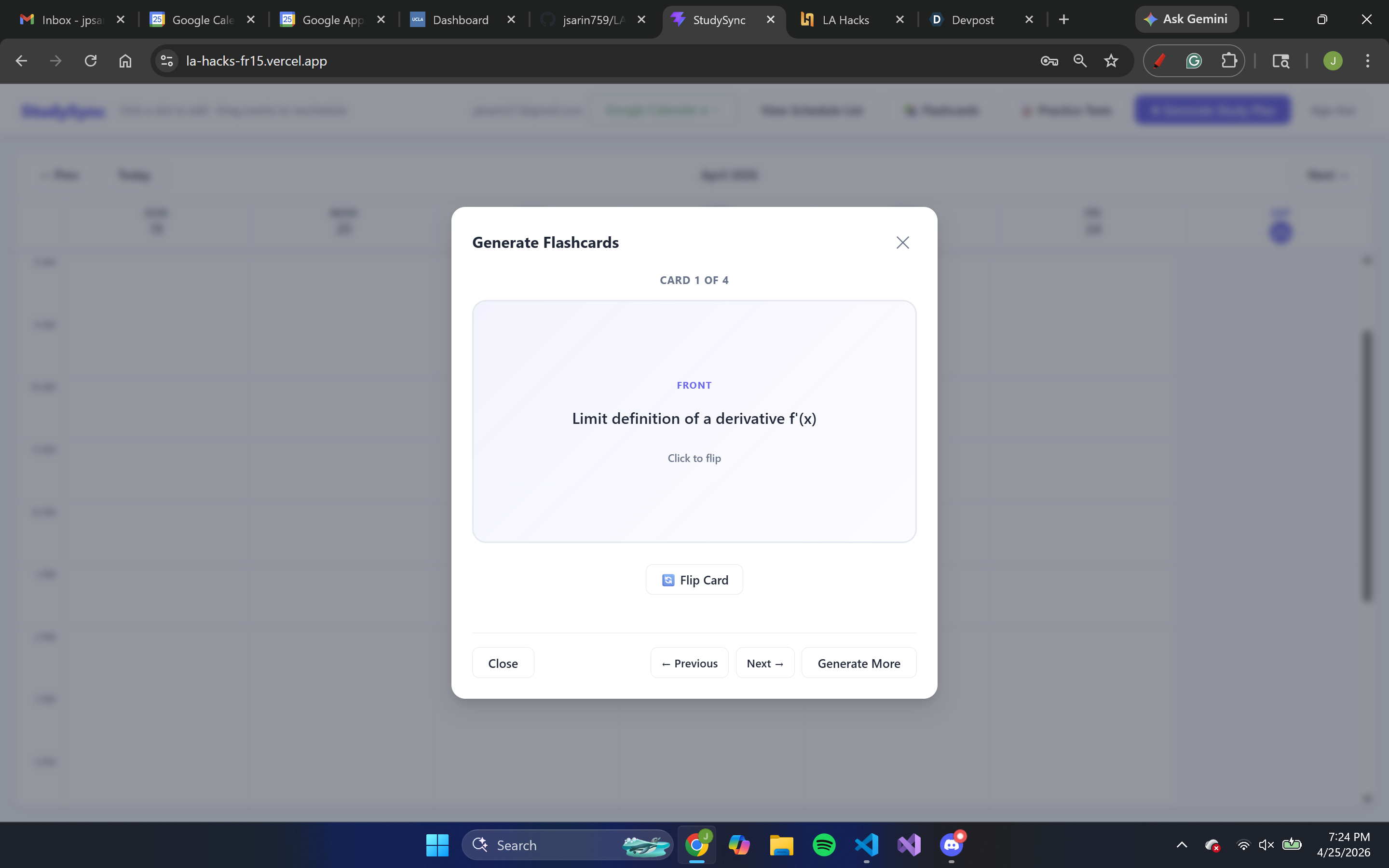
Weekly calendar view: drag-and-drop events, click empty slots to add, see your full week at a glance AI study plan generation: uses Gemini to fit study sessions into your free time, respecting existing classes/work and following a Pomodoro rhythm (25–45 min sessions with breaks) Google Calendar sync: import events from Google Calendar and export your schedule back, with duplicate detection on both sides Persistent storage: all events are saved to Supabase and tied to your account Flashcard support: generate flashcards from your study sessions Schedule list view: browse all events grouped by date with type color-coding
How we built it
We utilized React for the frontend, Node.js for the backend, Supabase for the authentication and database, Gemini API for the scheduling, and the Google Calendar API to interact with the users' calendars.
Challenges we ran into
We struggled with integrating all of the features together and implementing all of the backend, as we had to make sure all of the pieces fit together. We also struggled with deployment to Vercel because of the complexity of the tech stack.
Accomplishments that we're proud of
We are proud of the fact that we were able to integrate the AI and Calendar APIs into the website. The project is now more versatile because of the AI we implemented.
What we learned
We learned how to integrate Gemini and Google Calendar using APIs and also how to implement our backend through Express servers.
What's next for StudySync
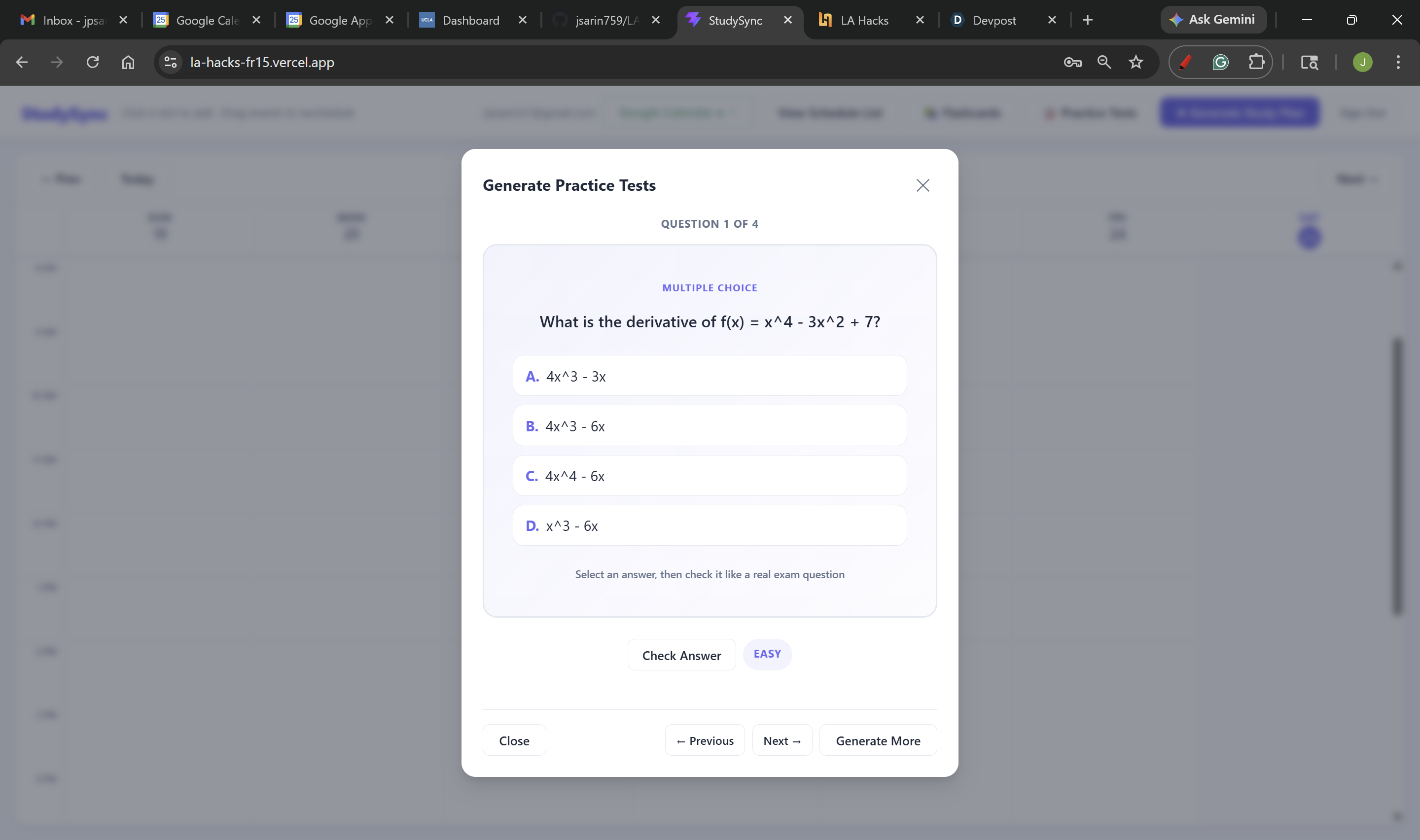
The next steps are to scale the website and improve the AI to generate better flashcards and practice tests.
Built With
- api
- calendar
- express.js
- gemini
- node.js
- react
- supabase
- vite

Log in or sign up for Devpost to join the conversation.