Inspiration
Seeing someone cheat with AI in school is a daily occurrence at this point. So as they say, if you can't beat them, join them. Why not embrace AI and use it to maximize student-teacher connections and provide live analytics for teachers to better understand the material that their students need help with.
What it does
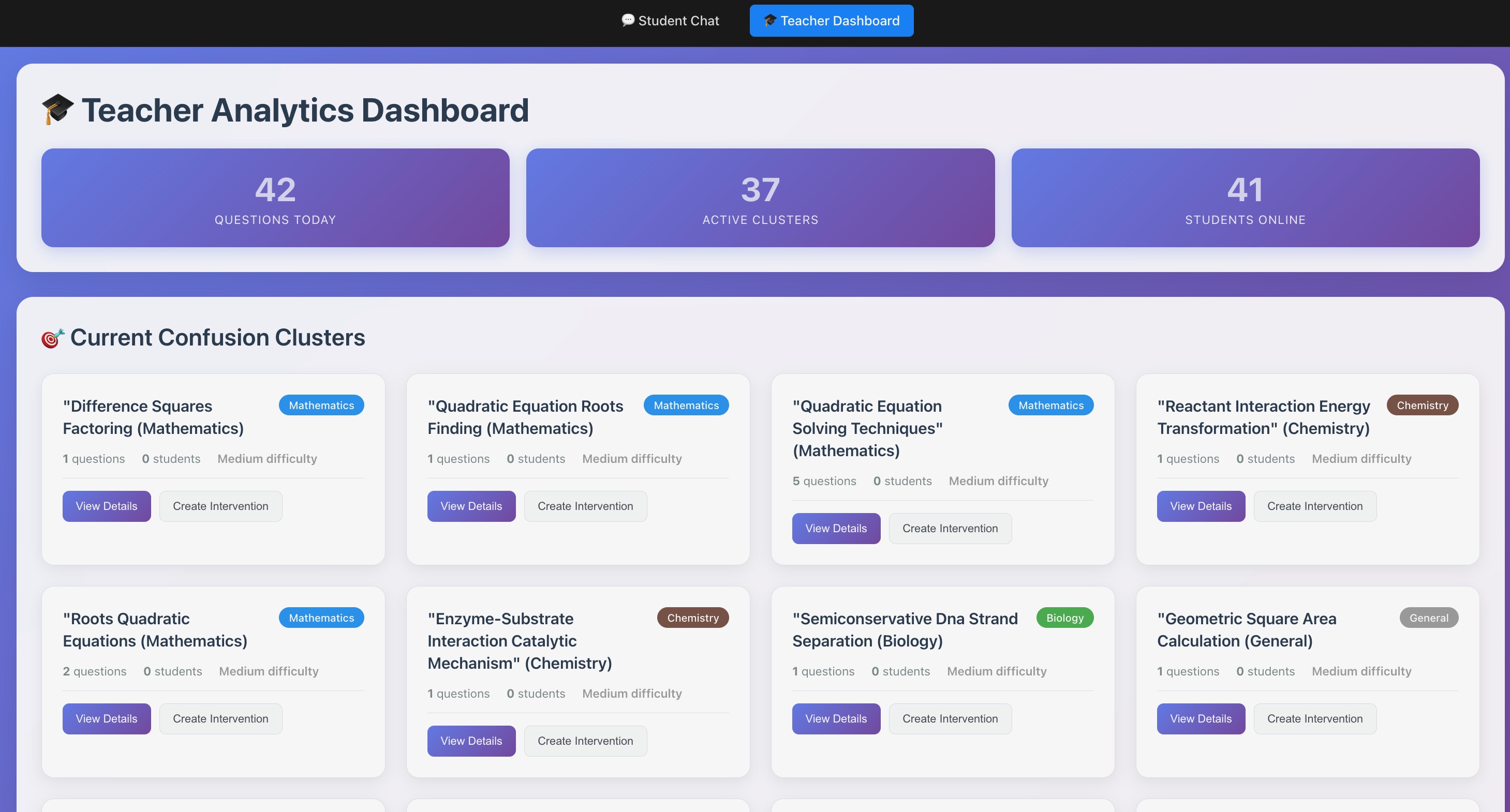
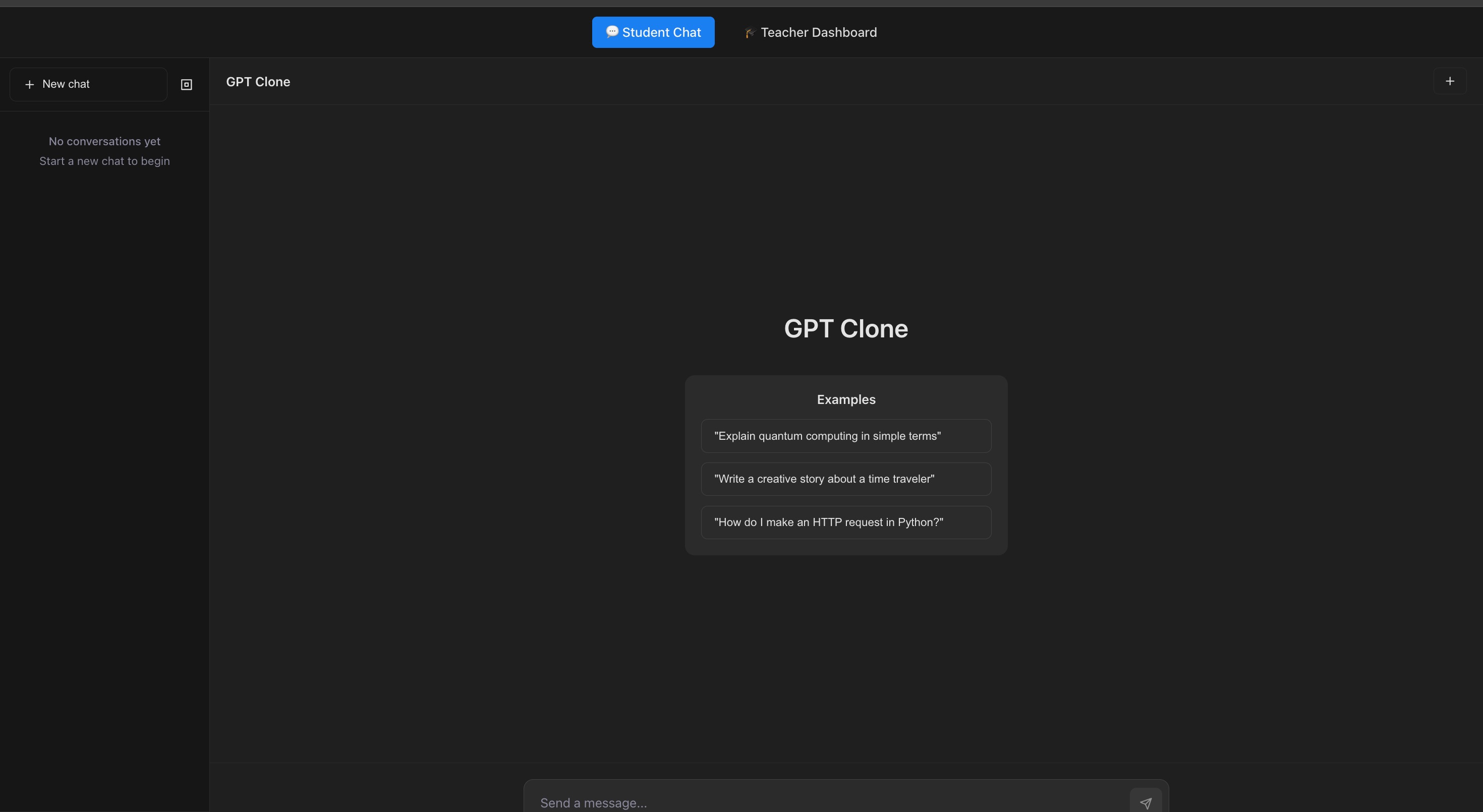
For Students: A chat interface where they can ask questions and receive AI-powered educational responses. The system learns from each question to improve future answers. For Teachers: A dashboard that automatically clusters similar student questions to identify common confusion areas, tracks student engagement patterns, and provides real-time analytics on trending topics and learning gaps.
How we built it
Phase 1: Core Infrastructure We built a FastAPI backend with OpenAI integration for educational responses. The system could handle student questions and provide helpful explanations, but we needed more. Phase 2: The Clustering Breakthrough The real innovation came when we implemented question clustering using semantic similarity. Instead of treating each question in isolation, we grouped similar questions together. This revealed patterns that individual questions couldn't show. Phase 3: Teacher Dashboard We created analytics endpoints that transform raw question data into actionable insights - showing teachers exactly where students struggle most, trending topics, and engagement metrics. Phase 4: Frontend Integration A React frontend was built to provide intuitive interfaces for both students (chat) and teachers (analytics dashboard), creating a seamless experience. The Result: A platform that doesn't just answer questions, but learns from them to help teachers understand their students better. What started as a simple Q&A system evolved into an intelligent educational analytics platform.
Challenges we ran into
- Question Clustering Accuracy Determining semantic similarity between educational questions is complex Math problems vs. conceptual questions require different clustering approaches Balancing between over-clustering (too many small groups) and under-clustering (missing patterns)
- Real-time Analytics Performance Processing and clustering questions in real-time while maintaining API responsiveness Handling concurrent student questions without performance degradation Efficiently querying and aggregating data for teacher dashboards
Accomplishments that we're proud of
Creating a system that doesn't just answer questions, but learns from them to make teachers more effective. The clustering feature is particularly innovative - it transforms individual student struggles into collective learning intelligence.
What we learned
What's next for StudySync
- User Authentication & Multi-Classroom Support Add user registration/login for students and teachers Support multiple classrooms and subjects Implement role-based access controls
- Advanced Analytics Features Historical trend analysis and progress tracking Individual student performance dashboards Export capabilities for reports and presentations
Built With
- api
- chatgptapi
- python

Log in or sign up for Devpost to join the conversation.