-
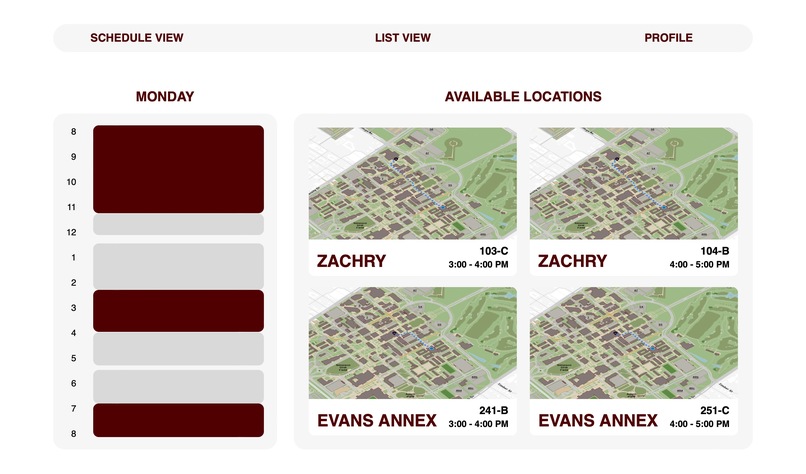
Your Schedule View
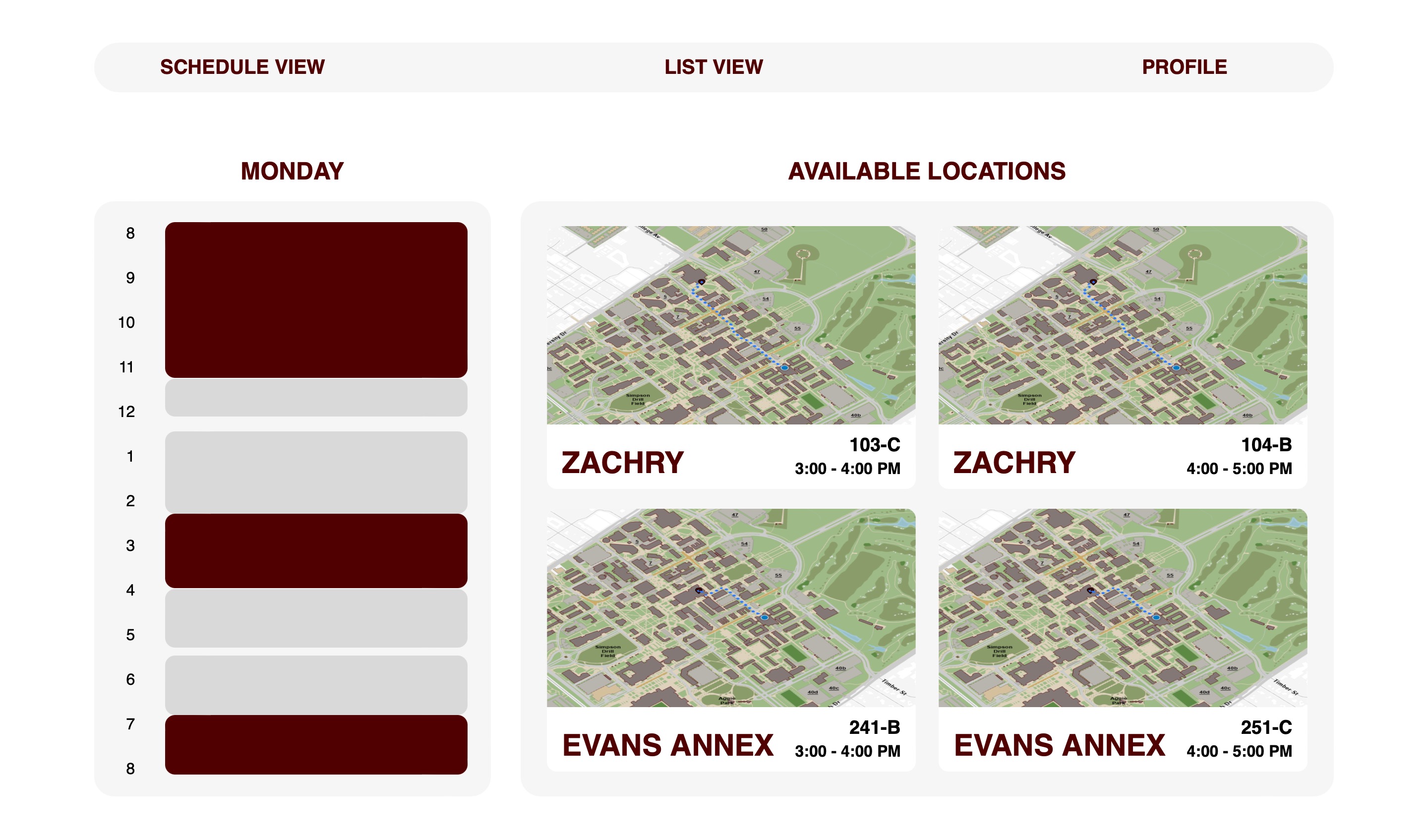
Inspiration
Our project was inspired by the ongoing struggle to find a peaceful and convenient place to study. Many times, our schedules clashed with reserved study rooms, which led us to create a website connecting users to nearby available study spaces.
What it does
Our website simplifies the process of finding available study rooms. You just need to upload your class schedule as a PDF, and our Python script does the rest. It extracts crucial class details like location, date, and time, allowing us to recommend available study rooms that fit between your classes. Our system ranks these options by proximity, walking distance, and real-time availability. The information is then presented in a sleek and user-friendly interface for easy understanding along with a map to guide the student to the study room.
How we built it
Our application was built using HTML, CSS, Python, Bootstrap, Flask, SQL, and Javascript.
Challenges we ran into
One of our biggest challenges was creating a login authentication system using google’s authentication. Along with that, saving user data into the associated database caused our program to not store information. The biggest challenge was outputting the JSON file to an HTML formatted text because the JSON data would not store into the database.
Accomplishments that we're proud of
We're thrilled about our Python script, which efficiently extracts schedule data from PDFs and formats it into a user-friendly JSON for our website. We also use Selenium to gather location data and display a map for easy navigation to nearby study areas. And we take pride in our app's design, featuring a modern and stylish look that incorporates Aggie colors seamlessly.
What we learned
Through our project, we were able to familiarize ourselves with backend frameworks such as Flask.
What's next for AggieStops
We hope to turn our project into a fully functional web application with a completed front and back end.

Log in or sign up for Devpost to join the conversation.