-
-
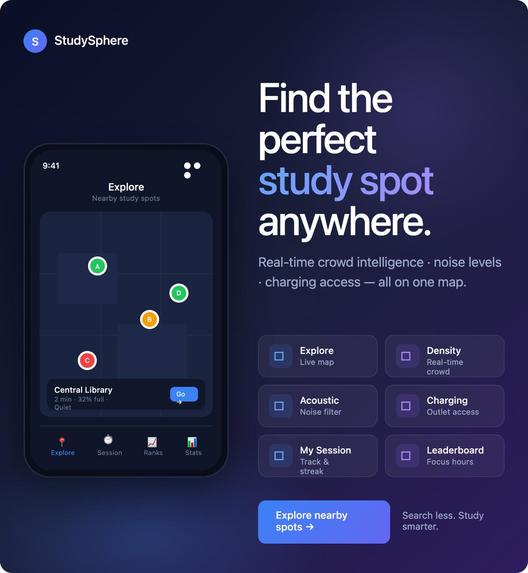
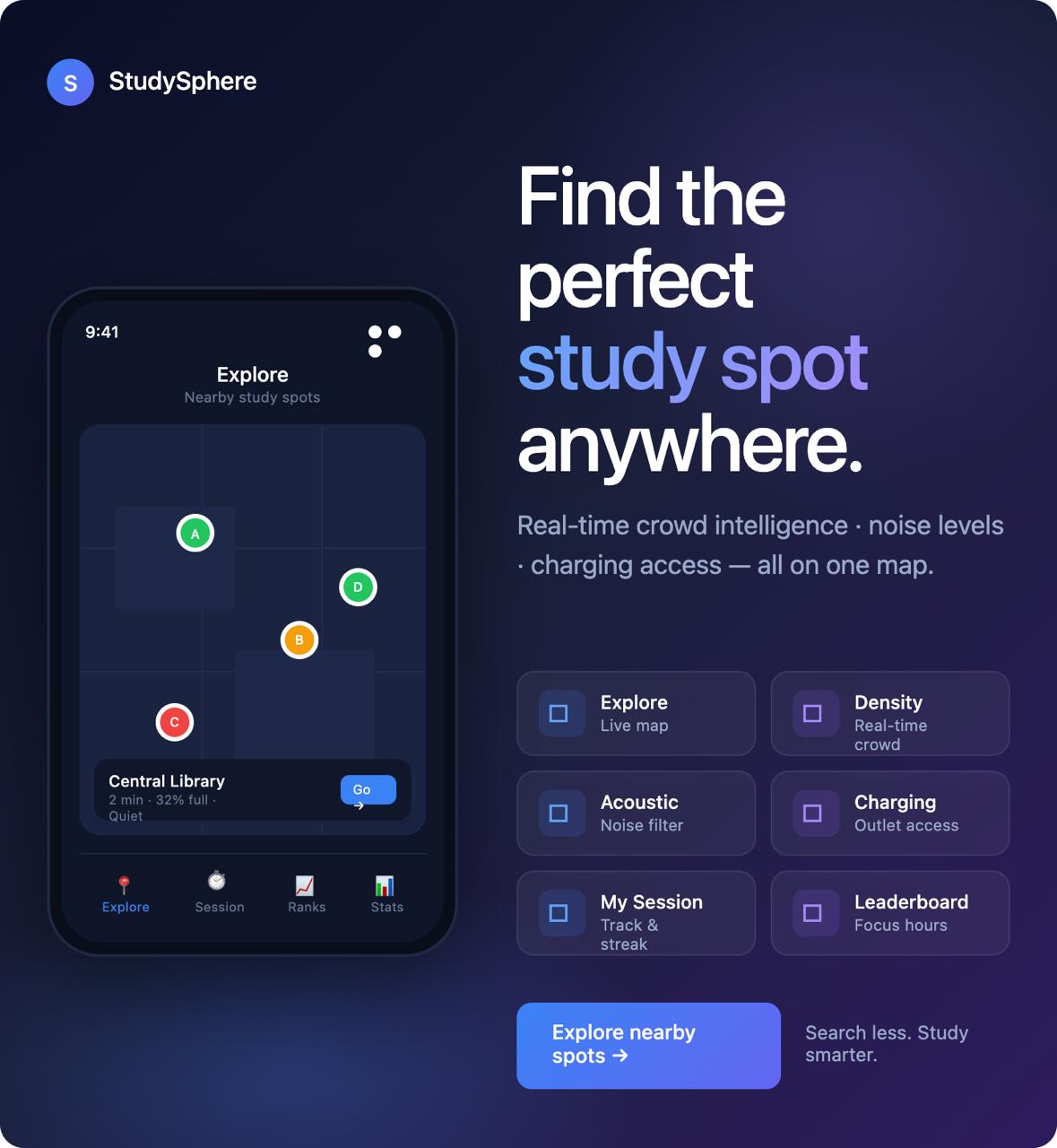
Main poster
-
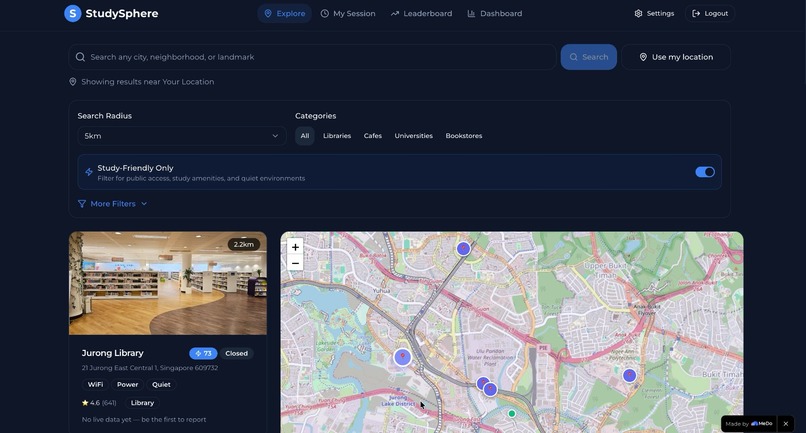
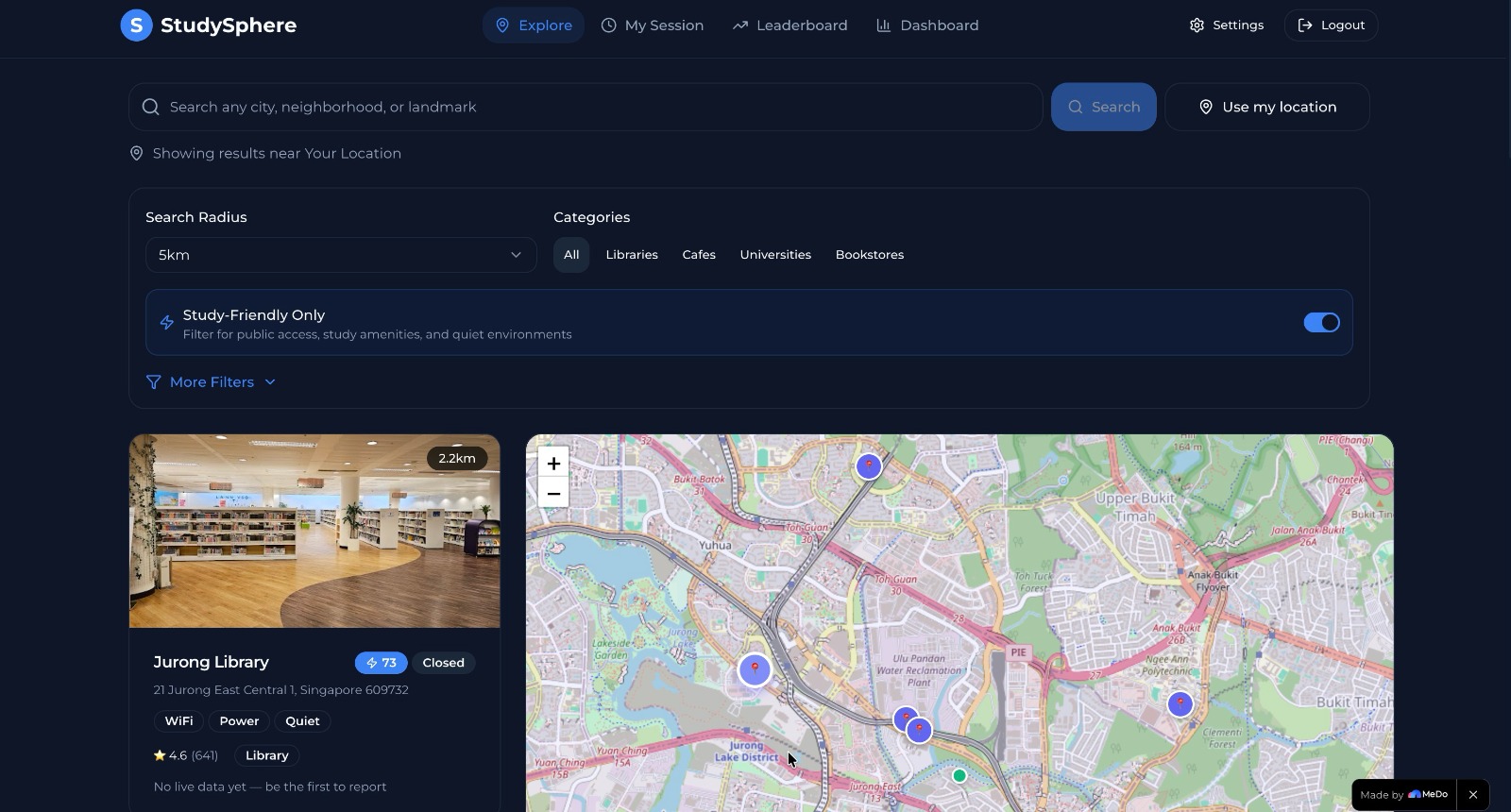
Map feature
-
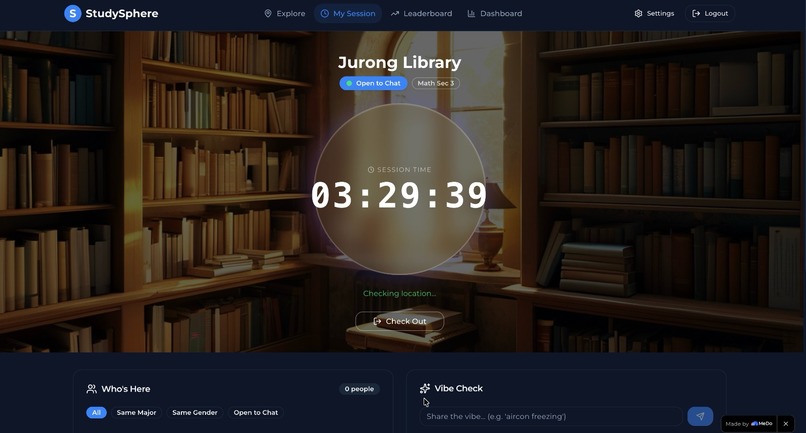
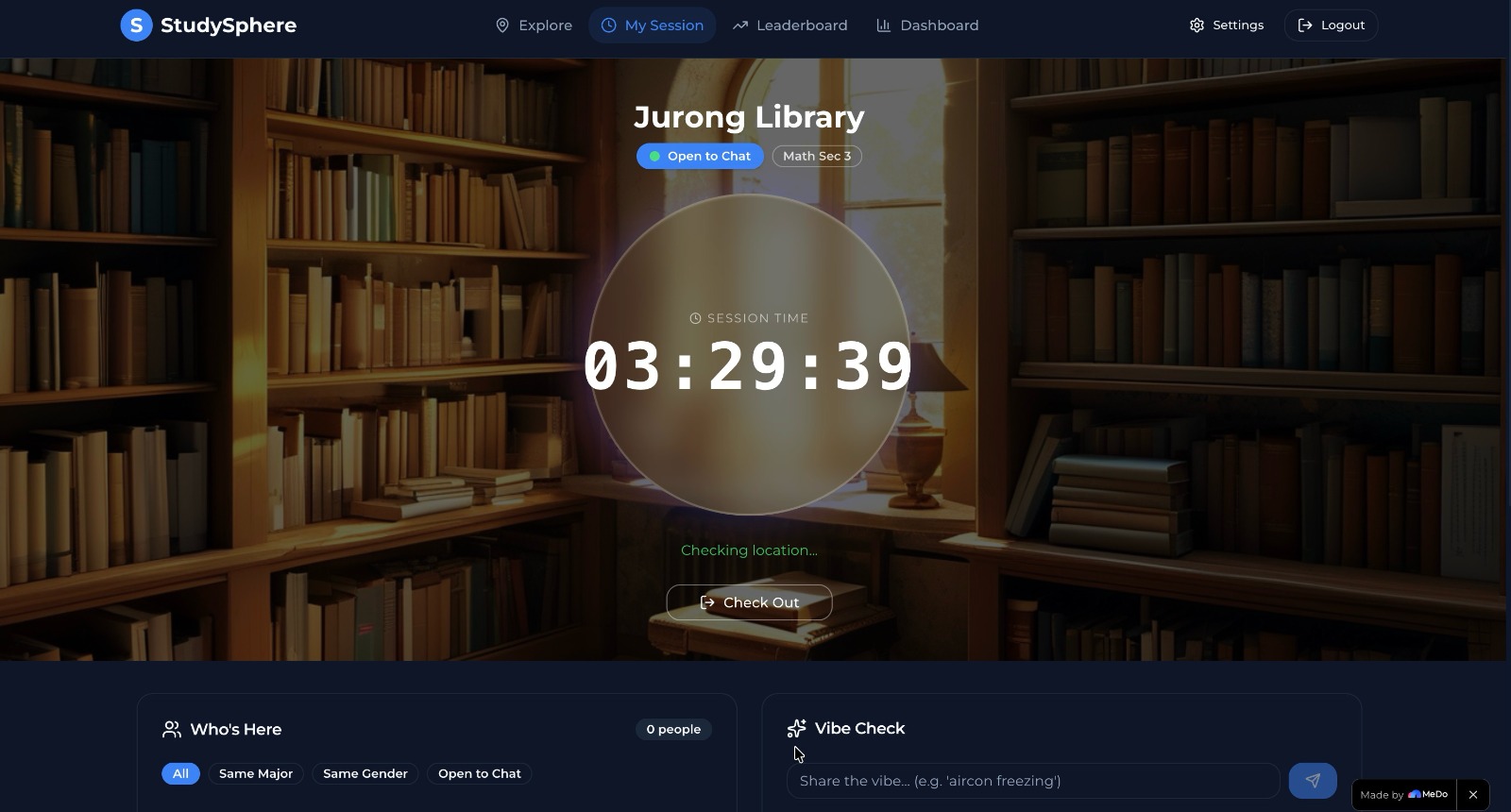
Check in page
-
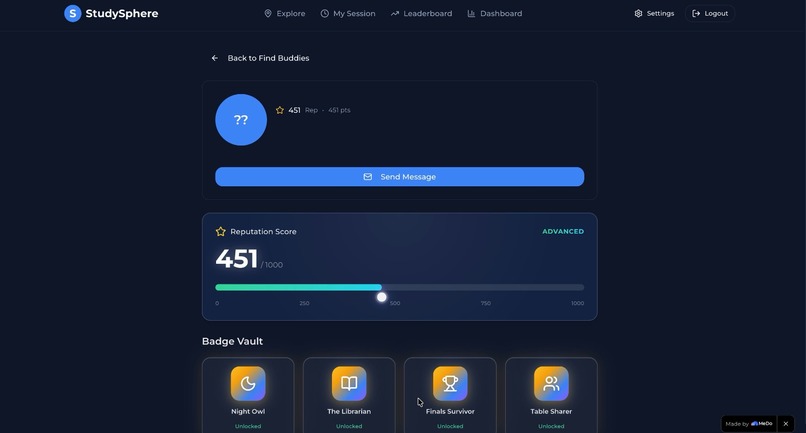
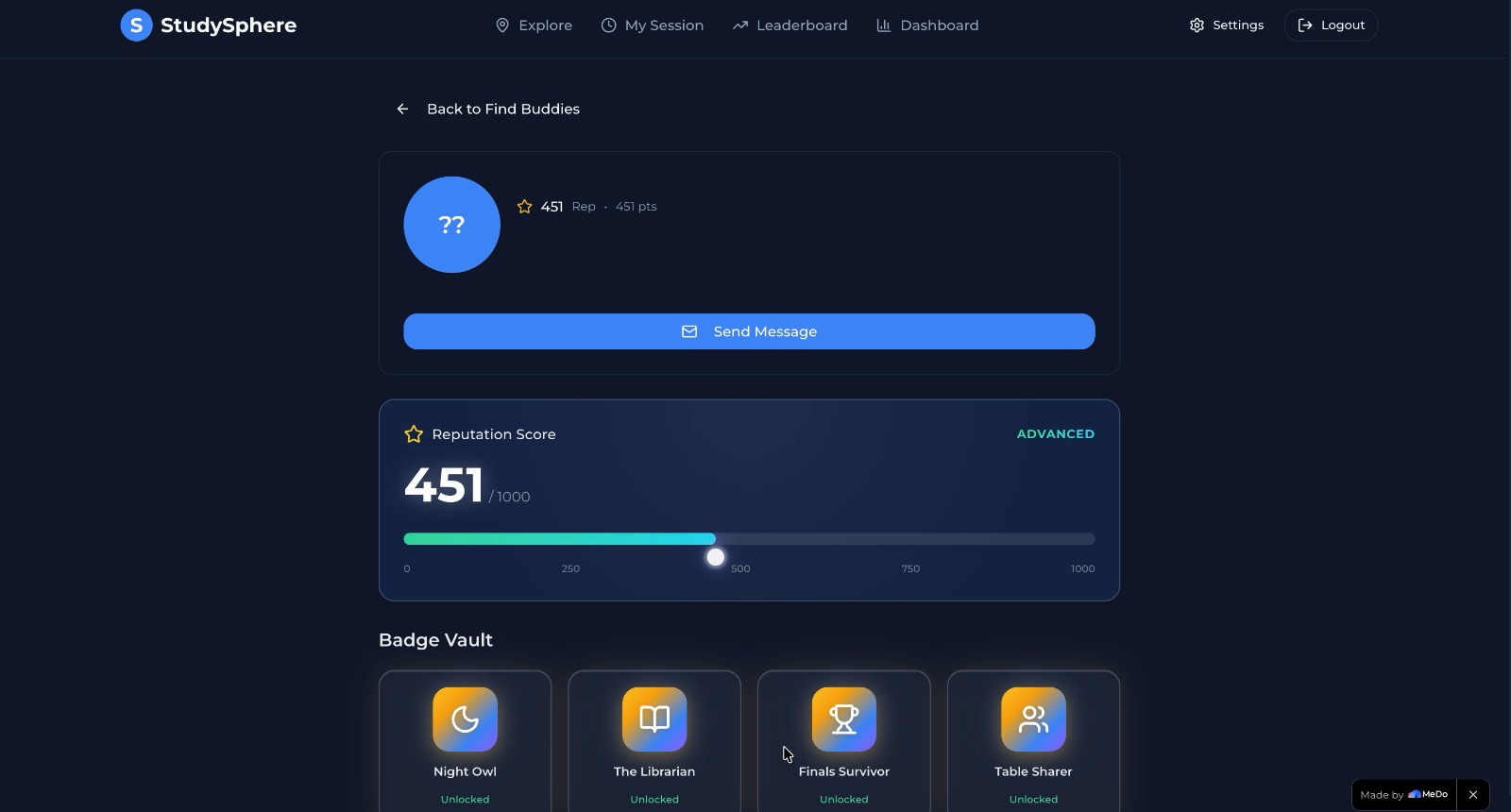
Leader board
StudySphere — Search Less. Study Smarter.
Finding a study spot is still a daily guessing game for students. Many of us have experienced the same frustrating loop: leaving home, travelling to a library or café, and only realising after arriving that the space is full, too noisy, or has no available charging points. This can waste 10–30 minutes each trip — time that could have been spent studying (Chen, 2025).
The data shows that this is a real and scalable problem. In 2024, there were over 269 million higher education students worldwide, while 72% of students lack adequate quiet study space at home. For the 7.3 million students studying abroad, the need is even stronger, as many rely heavily on external study spaces. Existing tools show locations, but not whether those spaces are actually usable right now (Number of Students in Higher Education More Than Doubled in 20 Years, but Inequalities Remain, 2026).
StudySphere solves this by helping students find the right study space before they leave. It is a map-first app that shows nearby study spots with real-time crowd density, noise level, charging availability, and seat status. Beyond finding a place, StudySphere also helps students stay accountable through study session tracking, streaks, leaderboards, and a personal dashboard.
The app has four main sections: Explore — a live map of study locations, filterable by crowd level, noise level, charging access, and seat availability. My Session — a session tracker for logging focused study time and building streaks. Leaderboard — a social motivation layer where students can compare focused hours with friends and the wider community. Dashboard — personal analytics showing study habits, total study time, and most productive locations.
We used MeDo as both a product and senior engineering partner throughout the build. We started by describing the core user problem: students waste time travelling to study spaces without knowing whether seats, quiet areas, or charging points are actually available. We also defined the key information students care about: real-time availability, crowd density, noise level, and charging access. MeDo helped me turn this broad idea into a realistic hackathon MVP by focusing on the features that directly reduce uncertainty before a student leaves home.
From there, we asked MeDo to scaffold the full app, including the navigation, landing page, authentication flow, and data structure for users, study spots, and study sessions. This gave me a working foundation quickly, with the four core sections of StudySphere: Explore, My Session, Leaderboard, and Dashboard. Instead of spending most of the hackathon setting up boilerplate, we could immediately move into refining the actual user experience.
The most impressive feature MeDo helped create was the real-time interactive map with crowd intelligence. From one clear brief, MeDo generated a map experience with colour-coded pins, live filters, nearest-available sorting, and a tap-to-expand detail panel. We then used follow-up prompts to refine the filter logic, improve the session-tracking flow, adjust the leaderboard, and make the dashboard feel more useful for students.
This was powerful because MeDo did not just generate code; it helped me translate product intent into working features. By describing outcomes and constraints instead of low-level implementation details, we could move much faster. MeDo handled the technical scaffolding, while we focused on the human parts of the product: what students actually need, how the app should feel, and how to make StudySphere motivating rather than purely functional.
StudySphere matters because students do not just need a map. They need visibility, accountability, and community. MeDo made it possible to turn that idea into a working product within one weekend.
Built With
- api


Log in or sign up for Devpost to join the conversation.