Inspiration
Many students struggle to balance multiple subjects, upcoming exams, and limited study time. We wanted to create a simple tool that helps students decide what to study first instead of spending too much time planning.
StudySpark was inspired by the idea that studying smarter is often more effective than simply studying longer. We wanted to build a system that helps students focus on the areas that need the most attention.
What it does
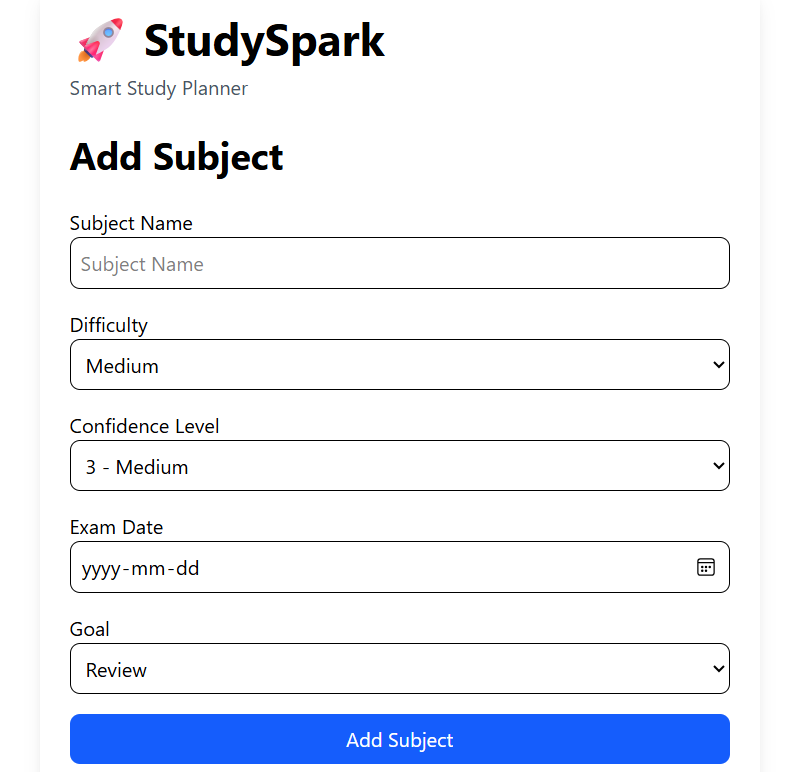
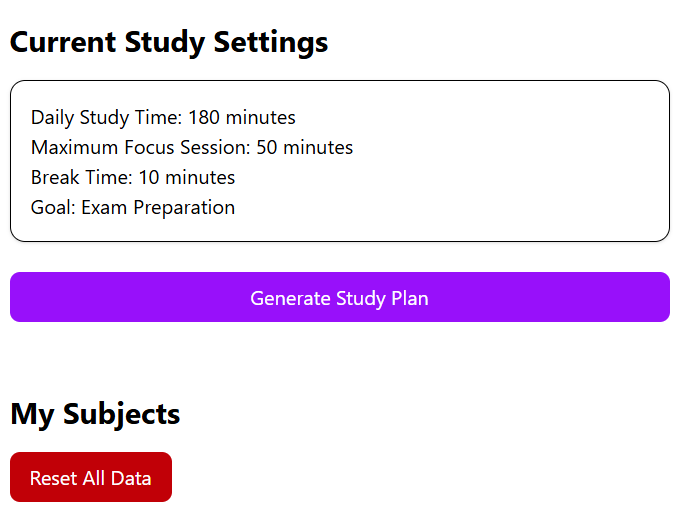
StudySpark is a smart study planning web application that generates personalized study schedules using a priority-based algorithm.
The application analyzes:
- Available daily study time
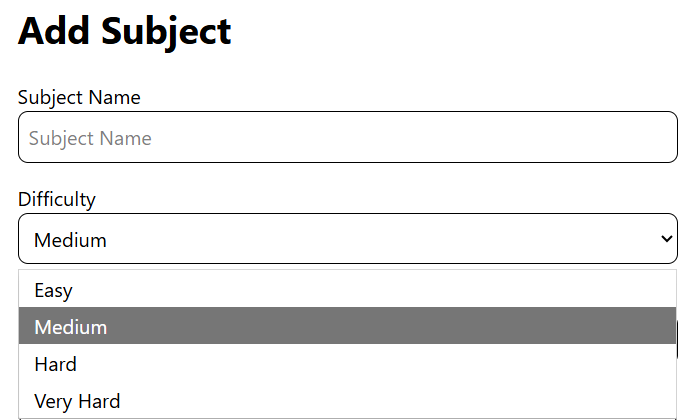
- Subject difficulty
- Exam urgency
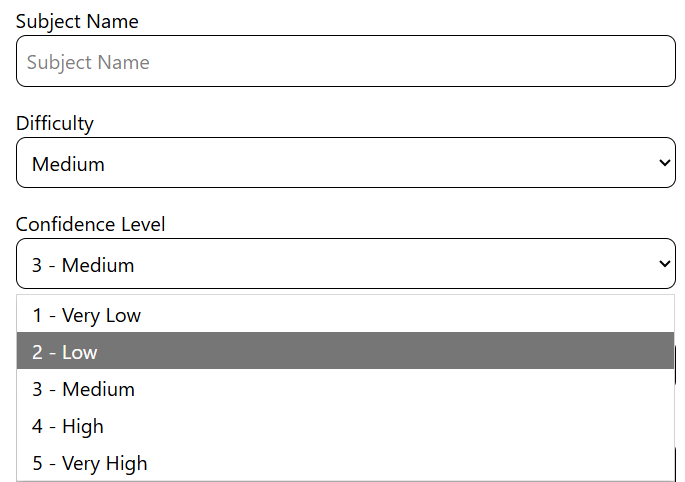
- Confidence level
- Learning goals
Using these factors, StudySpark calculates a priority score for each subject and automatically distributes study time into three sections:
- 📖 Study
- 🔄 Review
- 📝 Organize
This helps students create a balanced and realistic study plan based on their current needs.
How we built it
We built StudySpark using:
- React
- TypeScript
- Vite
- Tailwind CSS
- Supabase
- PostgreSQL
- Vercel
Instead of relying on external AI services, we designed our own algorithm to analyze user inputs and generate personalized study plans.
The priority algorithm combines factors such as exam urgency, subject difficulty, confidence level, and learning goals to determine how study time should be allocated.
Supabase was used for database management, allowing users to store subjects and study settings. The application was deployed using Vercel for easy access.
Challenges we faced
One of the biggest challenges was designing a fair and practical priority algorithm.
We needed to balance different factors, such as a subject having a difficult topic but a distant exam date, or an upcoming exam with low confidence. Creating a scoring system that could handle different situations required multiple adjustments and testing.
Another challenge was connecting the frontend application with Supabase while keeping the user experience simple and reliable.
Through this process, we learned more about full-stack web development, database integration, algorithm design, and deploying real-world applications.
What's next
We plan to continue improving StudySpark with more personalization features, including:
- User accounts
- Calendar integration
- Progress tracking
- Notifications
- AI-assisted study recommendations
- Mobile support
Our goal is to make StudySpark a more powerful learning companion while continuing to respect user privacy and data security.
Built With
- app
- css
- database
- education
- frontend
- full
- javascript
- personalization
- planner
- postgresql
- productivity
- react
- stack
- study
- supabase
- tailwind
- typescript
- vercel
- vite
- web

Log in or sign up for Devpost to join the conversation.