-
-
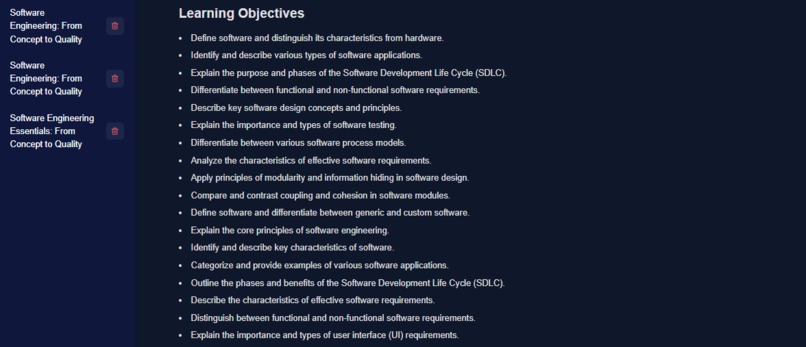
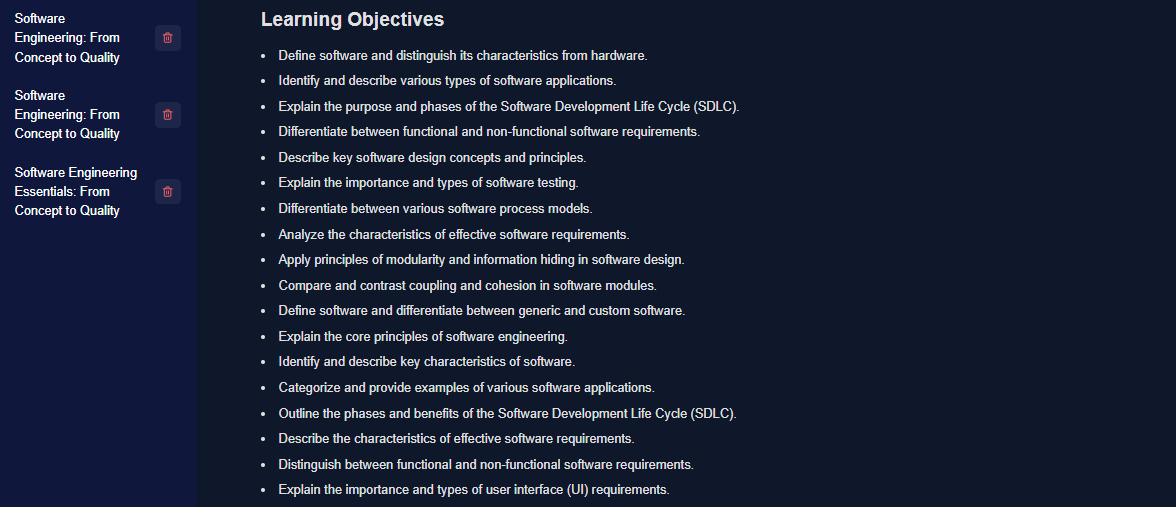
Learning Objectives View
-
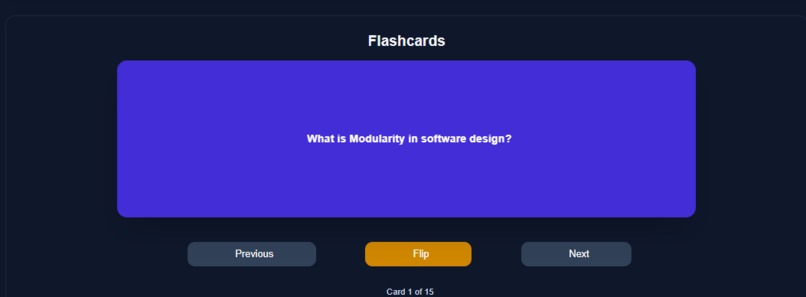
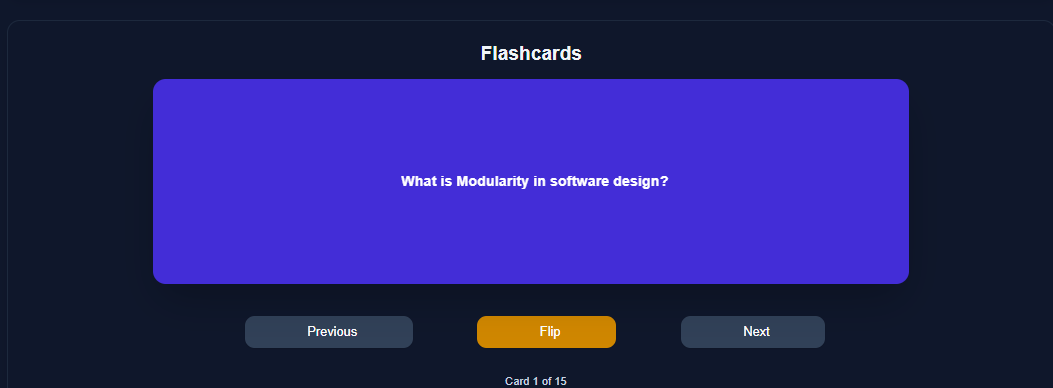
FlashCards View
-
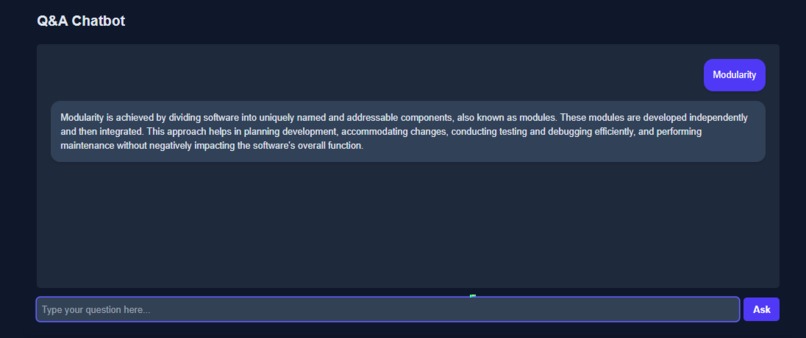
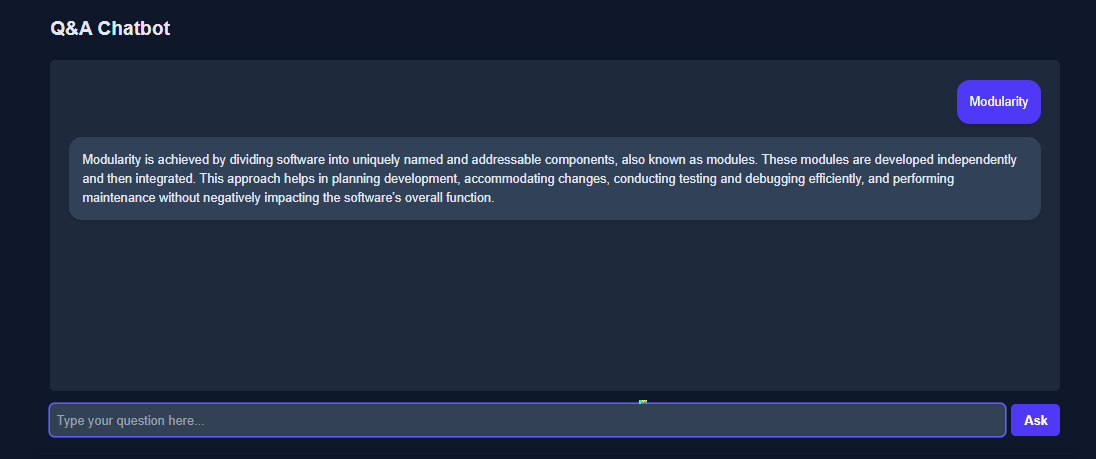
Q&A View
-
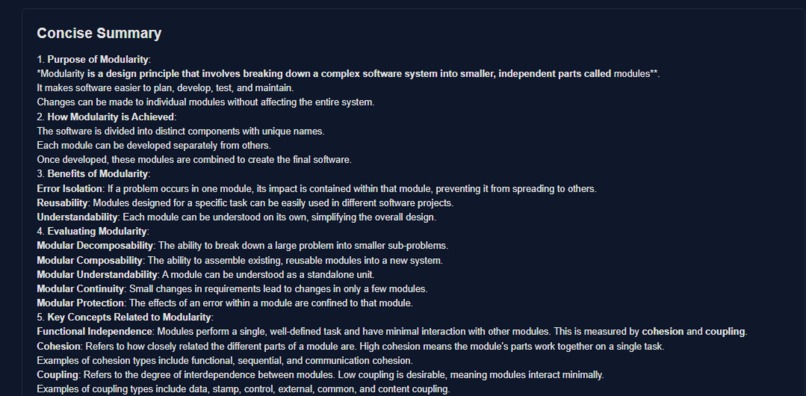
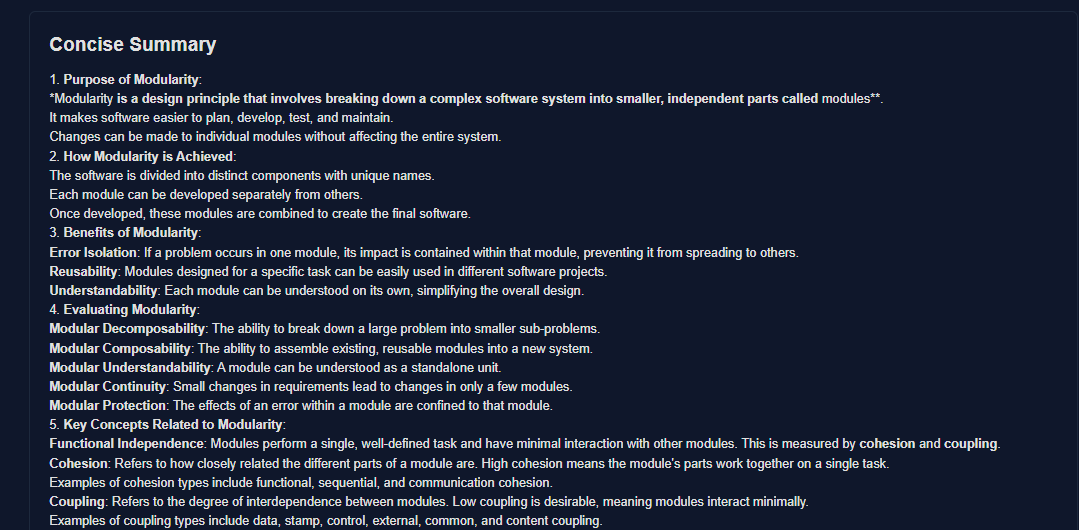
Summary View
-
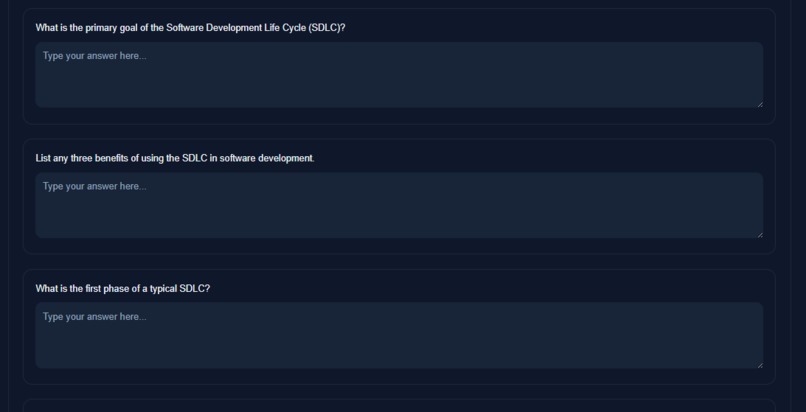
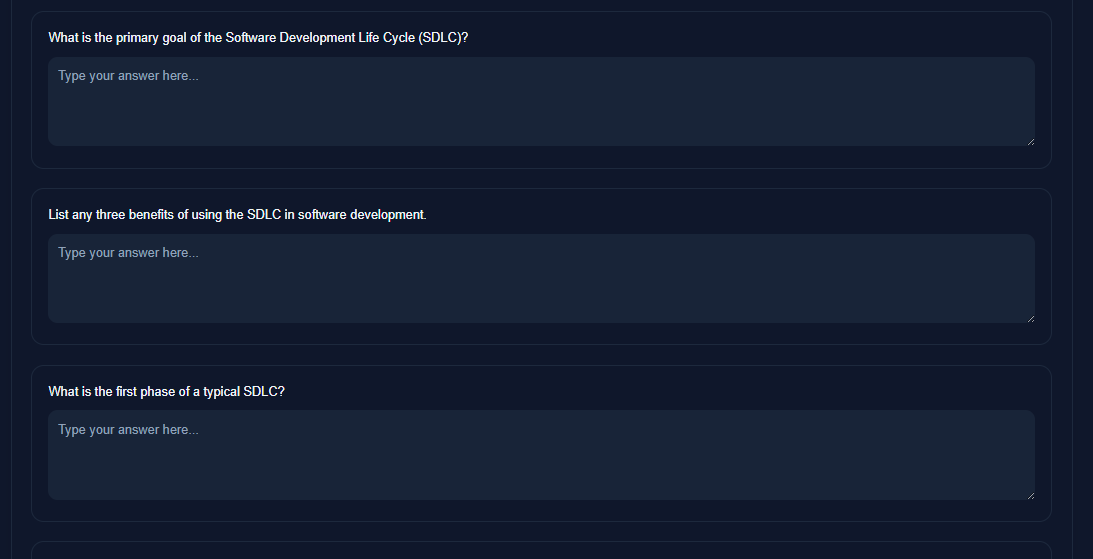
Short Answer Quiz View
-
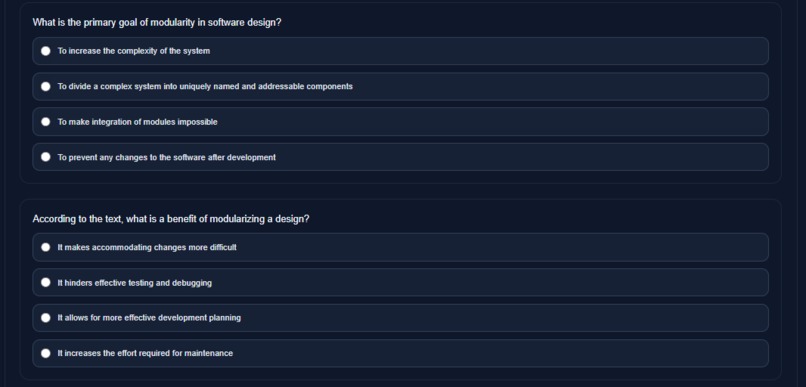
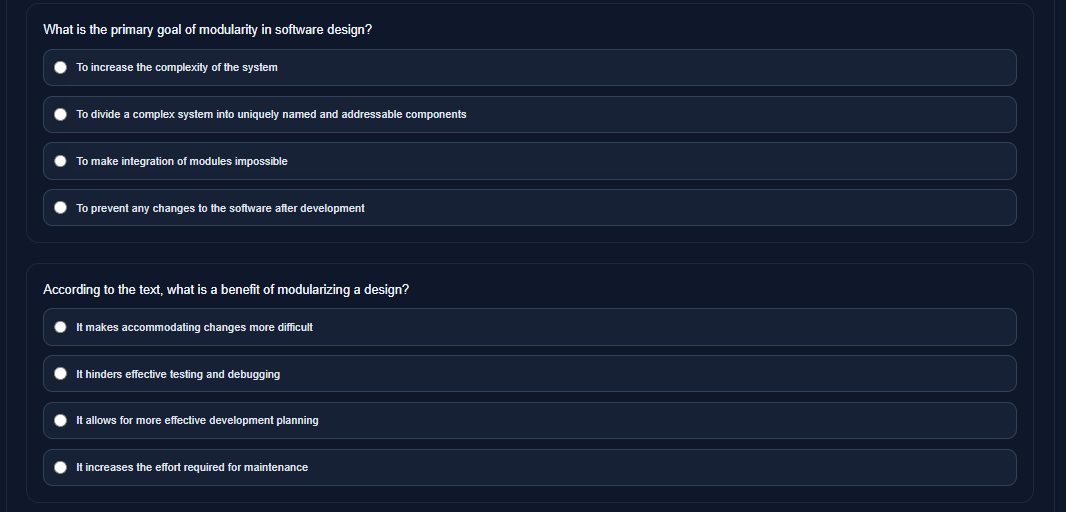
Multiple Choice Quiz View
StudySmith Project Story
Inspiration
As students, we often spent hours manually turning lecture slides, PDFs, and notes into actionable study materials — creating flashcards, summarizing content, and trying to extract meaningful learning objectives. It felt inefficient and overwhelming. We wanted a way to automate the entire process so students could focus on learning rather than busywork. The inspiration came from the idea: “What if your notes could teach you back, automatically?”
What it does
StudySmith transforms raw lecture materials into structured learning experiences.
- Upload your notes, slides, or PDFs.
- Instantly generate measurable learning objectives using Bloom’s taxonomy.
- Create smart flashcards with spaced repetition for active recall.
- Ask questions and receive cited answers directly from your notes.
- Search by meaning or keyword using semantic + full-text search.
All of this is powered by TiDB, which serves as the backbone for storing embeddings, retrieving content semantically, and connecting all modules in a fast, scalable workflow.
How we built it
We built StudySmith as a Next.js + TailwindCSS frontend with Framer Motion animations for a polished, interactive experience.
- File Ingestion: Users upload PDFs, DOCX, PPTX, or plain text files.
- Vector Storage & Retrieval: TiDB Serverless stores embeddings of all uploaded content, enabling fast, semantic searches and Q&A.
- Objective & Flashcard Generation: A backend pipeline generates learning objectives and flashcards, connecting results to the original notes.
- Multi-Step Automation: TiDB acts as the central memory, linking uploads → analysis → flashcards || Q&A || Quizes seamlessly.
TiDB made it possible to scale effortlessly, store and query vector embeddings, and retrieve precise answers in real time — all without complex server management.
Challenges we ran into
- Diverse Document Formats: PDFs, slides, and Word docs all have different structures; parsing them consistently was tricky.
- Semantic Accuracy: Creating meaningful learning objectives and flashcards required fine-tuning the AI pipeline.
- System Integration: Coordinating multiple modules into one smooth workflow was challenging.
Accomplishments that we're proud of
- Fully automated upload-to-study workflow in under a minute.
- Accurate semantic search and cited Q&A that students can trust.
- Seamless multi-step automation powered entirely by TiDB, linking storage, retrieval, and AI processing.
- A polished, interactive UI that encourages consistent use and makes learning fun.
What we learned
- Multi-step AI workflows work best when there’s a reliable memory layer — TiDB enabled this with serverless scalability and vector storage.
- Handling diverse note formats requires both preprocessing and smart extraction.
- User experience is just as important as AI accuracy — students need to feel the system is fast, intuitive, and trustworthy.
- Cloud-native databases like TiDB make scaling and multi-user management painless.
What's next for StudySmith
- Integrate more content types: videos, audio lectures, and online articles.
- Enhanced analytics: give students insights into learning progress and gaps.
- Collaboration features: allow sharing study objectives and flashcards within study groups.
- Further AI personalization: dynamically adjust study plans based on student performance.
TiDB will continue to be the backbone of these innovations, enabling real-time, scalable, and reliable workflows for all student data.

Log in or sign up for Devpost to join the conversation.