Inspiration
StudySignal
Inspiration
Teachers often discover that a student is struggling only after a major test, when the gap is already difficult to close. But the early signs are usually there: an incorrect quiz pattern, missed practice, a concept a student avoids, or a gradual drop in confidence.
StudySignal was inspired by a simple question: what if teachers could see those signals early enough to act? Rather than replacing teacher judgment, it helps teachers quickly understand where support will have the greatest impact—at both the class and individual-student level.
What it does
StudySignal turns everyday classroom data into clear, actionable learning signals.
For this prototype, a Class 9 maths teacher can:
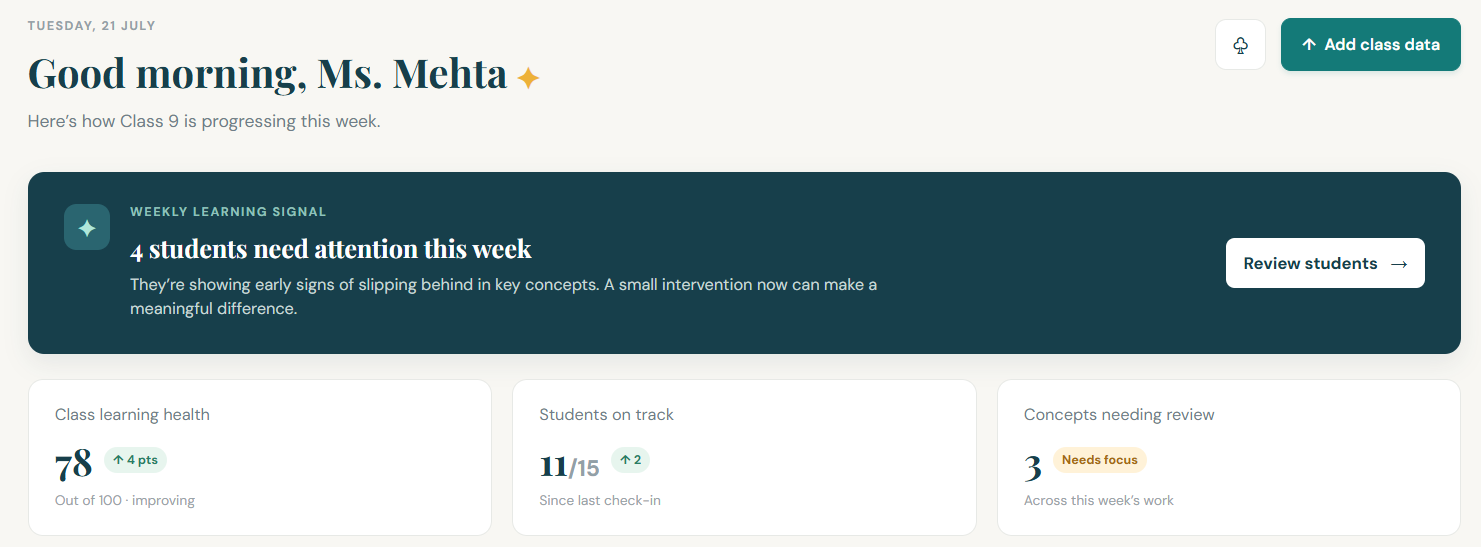
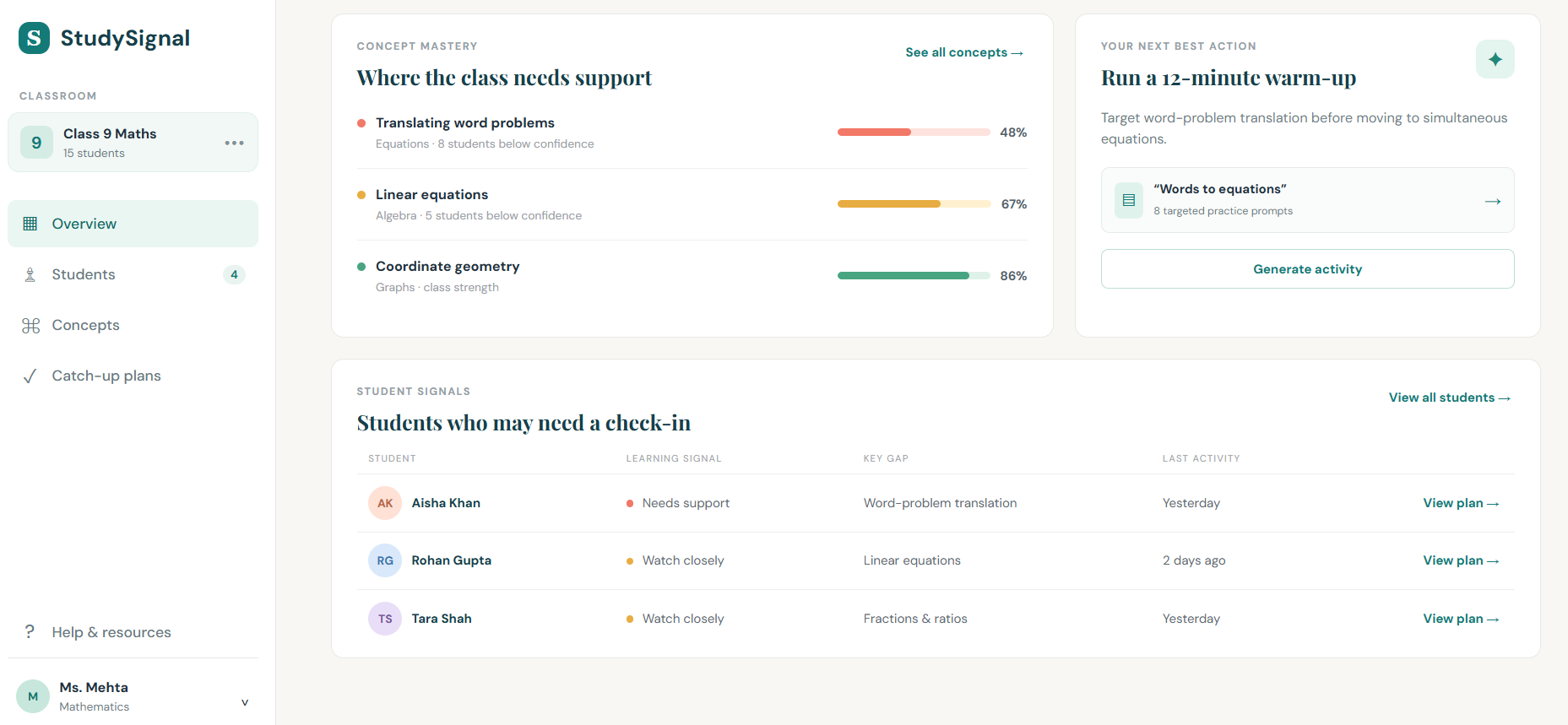
- See an at-a-glance classroom health score and students who may need attention.
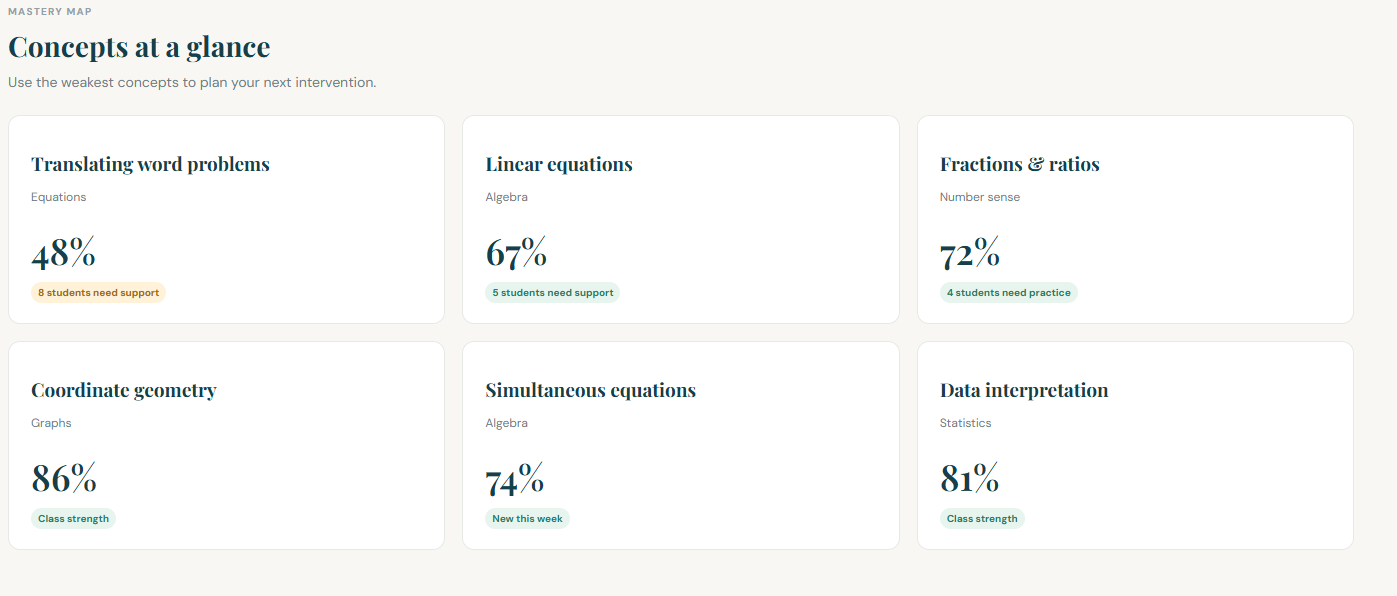
- Identify concepts where the class is struggling, such as translating word problems into equations.
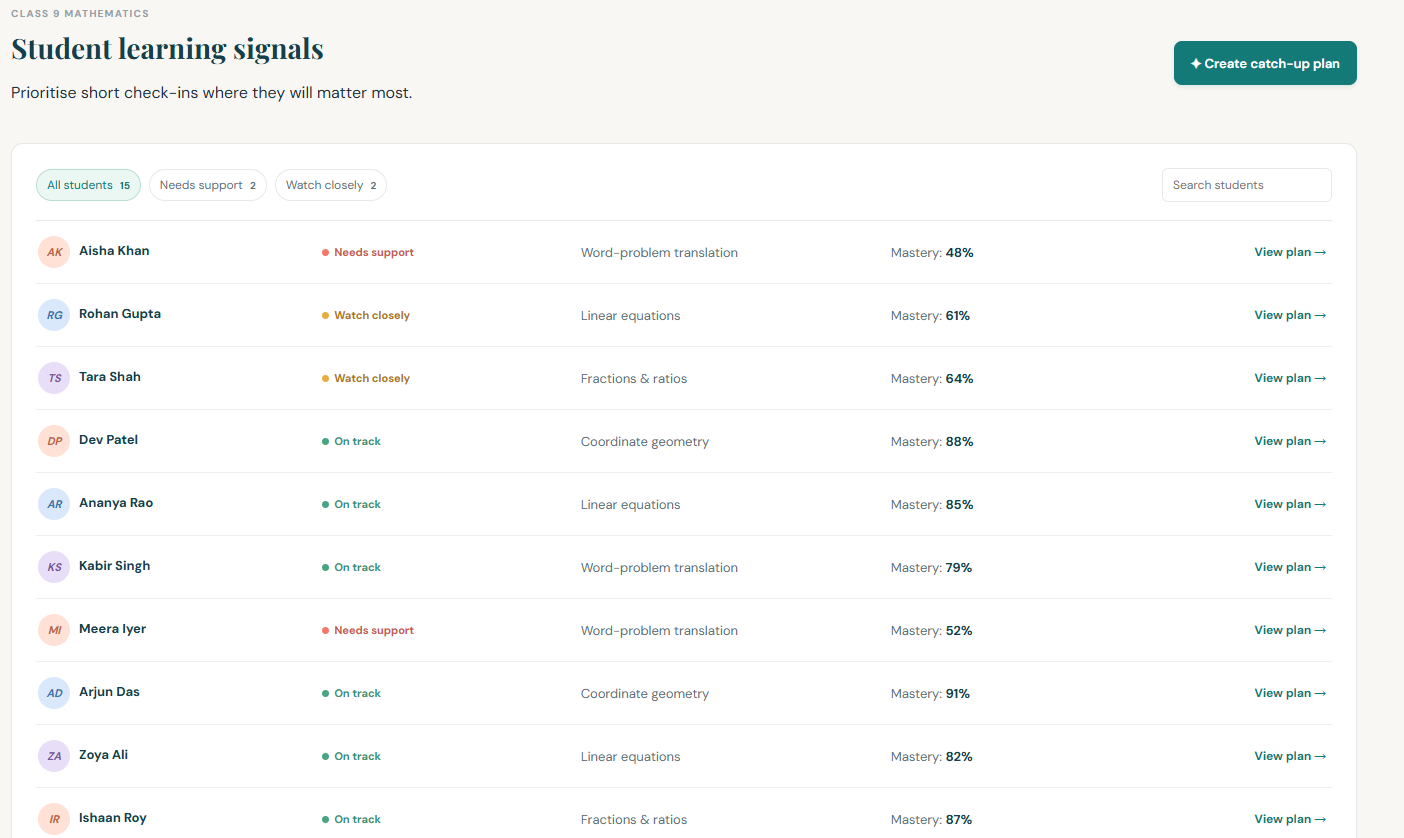
- Open student-specific signals to understand the key learning gap.
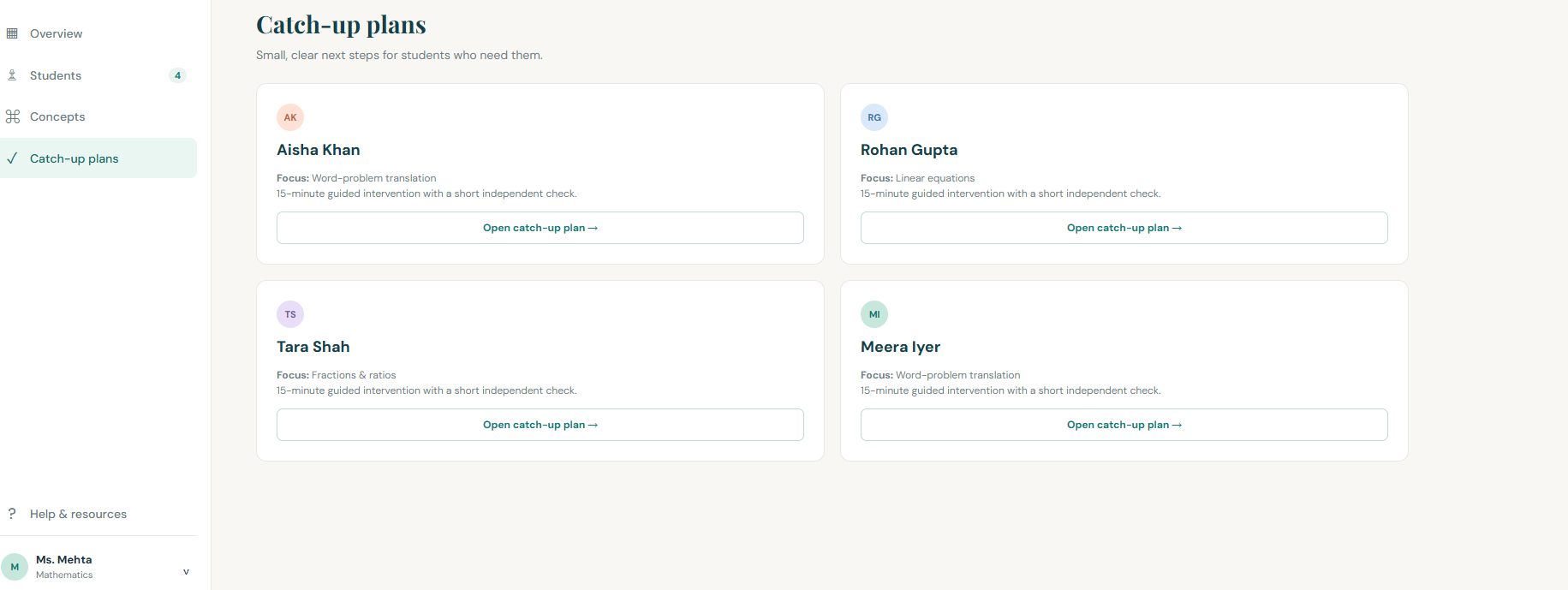
- Generate a focused 15-minute catch-up plan with guided practice and an independent check.
- Browse concepts, student risk levels, and personalised support plans through a polished teacher dashboard.
The goal is to move from “Aisha scored poorly” to “Aisha is struggling to translate real-world language into equations, so here is a small intervention she can complete today.”
How we built it
We built StudySignal as a lightweight, browser-based education dashboard using HTML, CSS, and JavaScript. The experience is deliberately self-contained so it can be opened and demonstrated without sign-in, setup, or an API key.
Codex accelerated the end-to-end product workflow: shaping the product concept, designing the information architecture, creating the responsive interface, implementing interactive dashboard views, and building the demo-ready catch-up-plan flow.
The prototype uses carefully designed synthetic Class 9 mathematics data to demonstrate the product experience safely. The dashboard includes:
- A weekly early-warning signal
- Class-level concept mastery visualisations
- Student risk indicators
- Searchable student data
- Interactive personalised catch-up plans
- A CSV upload interaction for the intended future data workflow
In a production version, GPT-5.6 would analyse lesson material, quiz results, student work, and teacher notes to identify concept-level gaps, explain the evidence behind each signal, and generate tailored practice plans in the teacher’s preferred style.
Challenges we faced
The largest challenge was avoiding a dashboard that merely displays grades. Grades explain what happened, but not necessarily why. We focused the experience on concept-level learning gaps and concrete next actions, so the output feels useful during a busy school day.
A second challenge was balancing useful intervention detail with simplicity. Teachers should not need to interpret a complicated AI report, so each signal is paired with a clear recommended action: who needs support, what concept to address, and a short plan to begin with.
Finally, because student data is sensitive, we chose synthetic data for the prototype. A real version would need strong privacy controls, teacher review before sharing plans, transparent explanations of recommendations, and appropriate school-level data governance.
What we learned
We learned that effective AI for education should make educators more capable, not add another tool for them to manage. The best moment in StudySignal is not the score or chart—it is the transition from an early warning to a small, practical action a teacher can take immediately.
We also learned that a compelling AI product needs more than a model output. It needs thoughtful design, a clear user journey, explanations people can trust, and a focused job to be done. StudySignal is our first step toward making every student’s learning signals visible while there is still time to help.
What it does
How we built it
Challenges we ran into
Accomplishments that we're proud of
What we learned
What's next for StudySignal
Built With
- codex


Log in or sign up for Devpost to join the conversation.