-
-
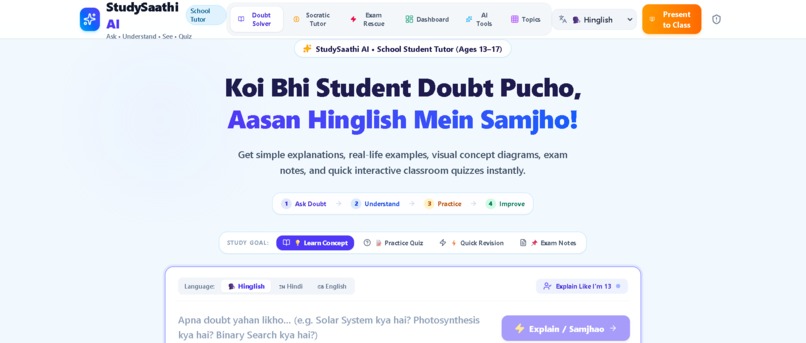
Project demonstration and working interface
-
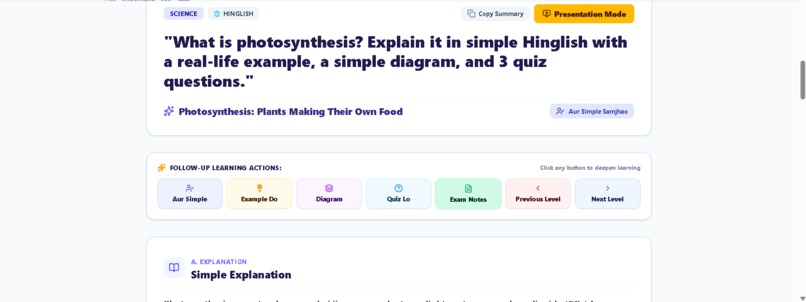
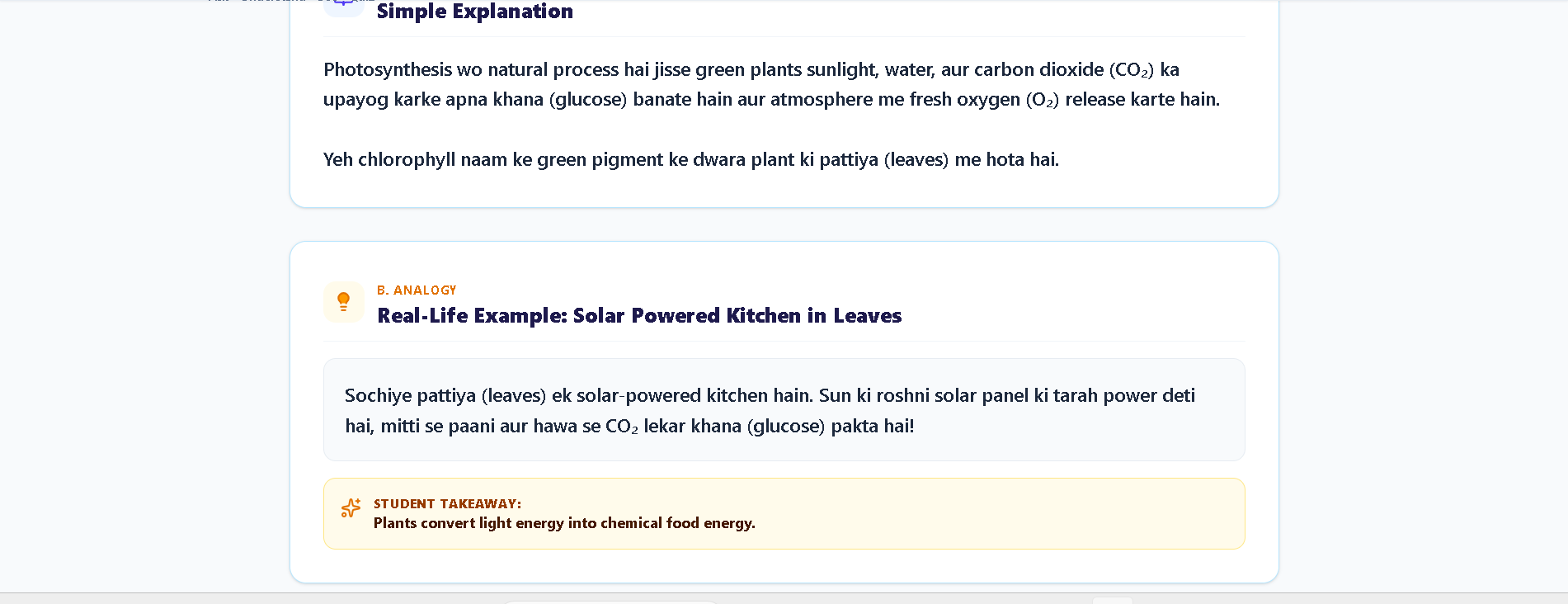
Questions based on the topic
-
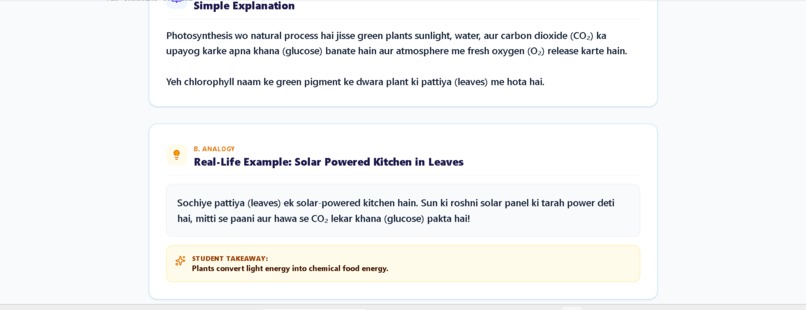
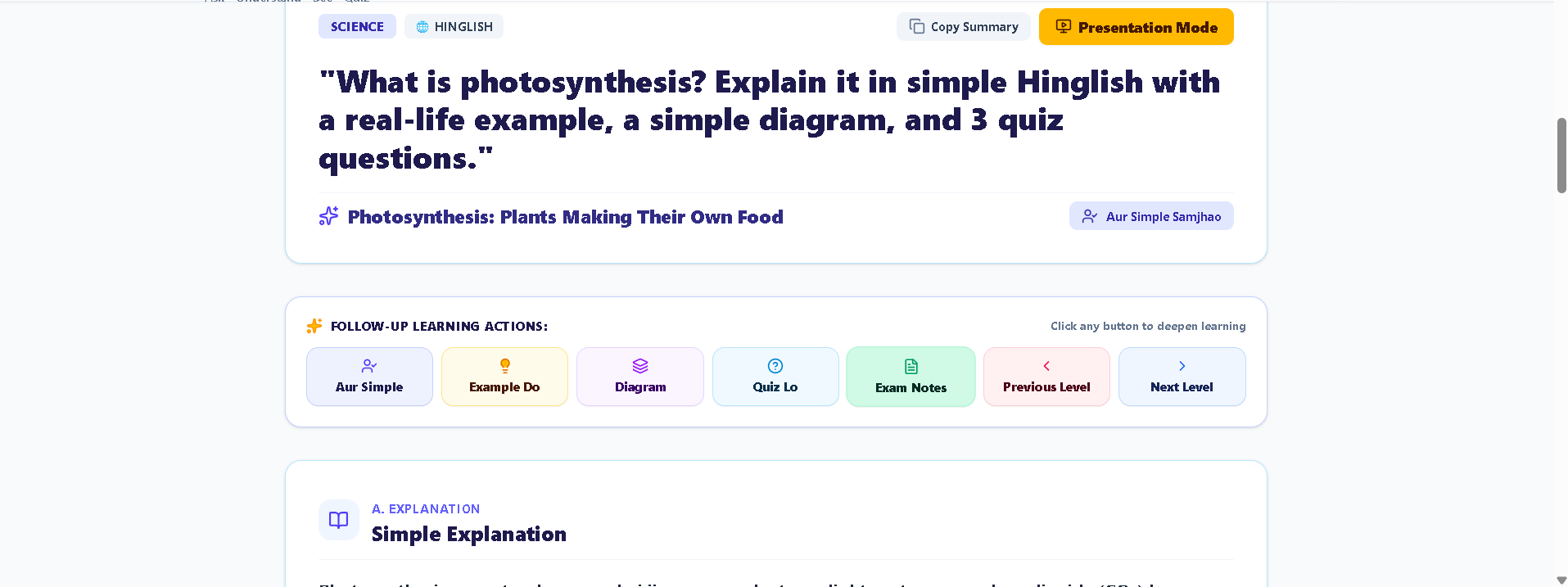
Clear and helpful answers to user questions
-
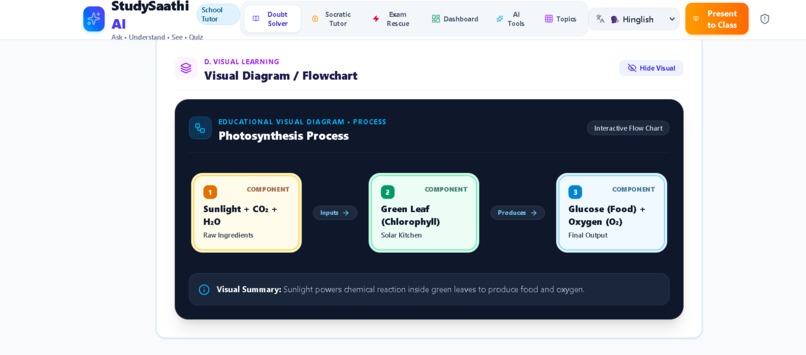
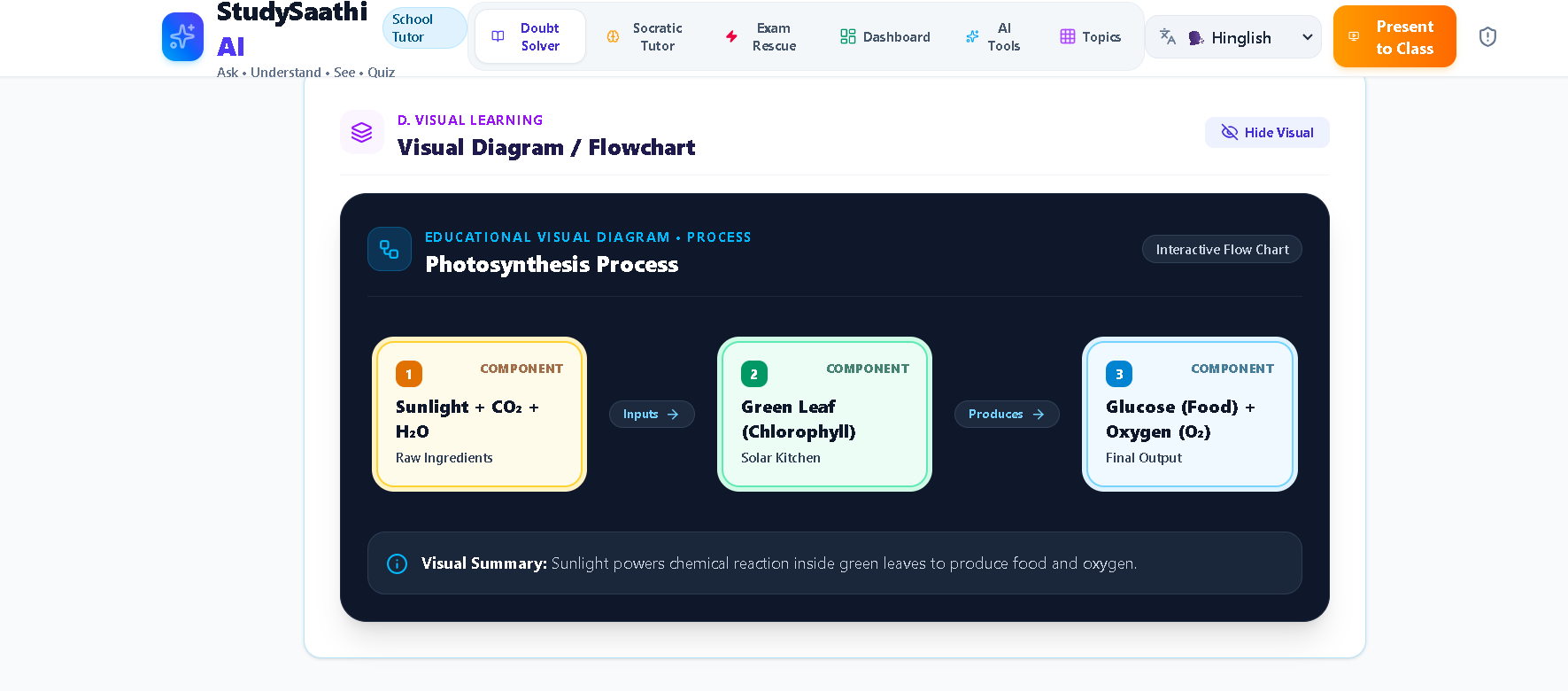
Interactive presentation of the topic
-
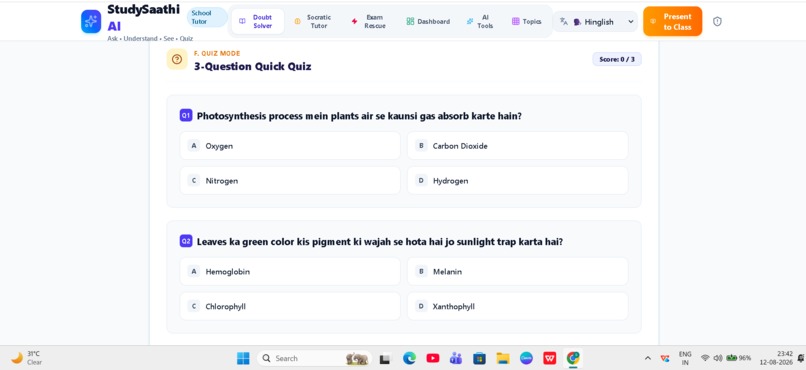
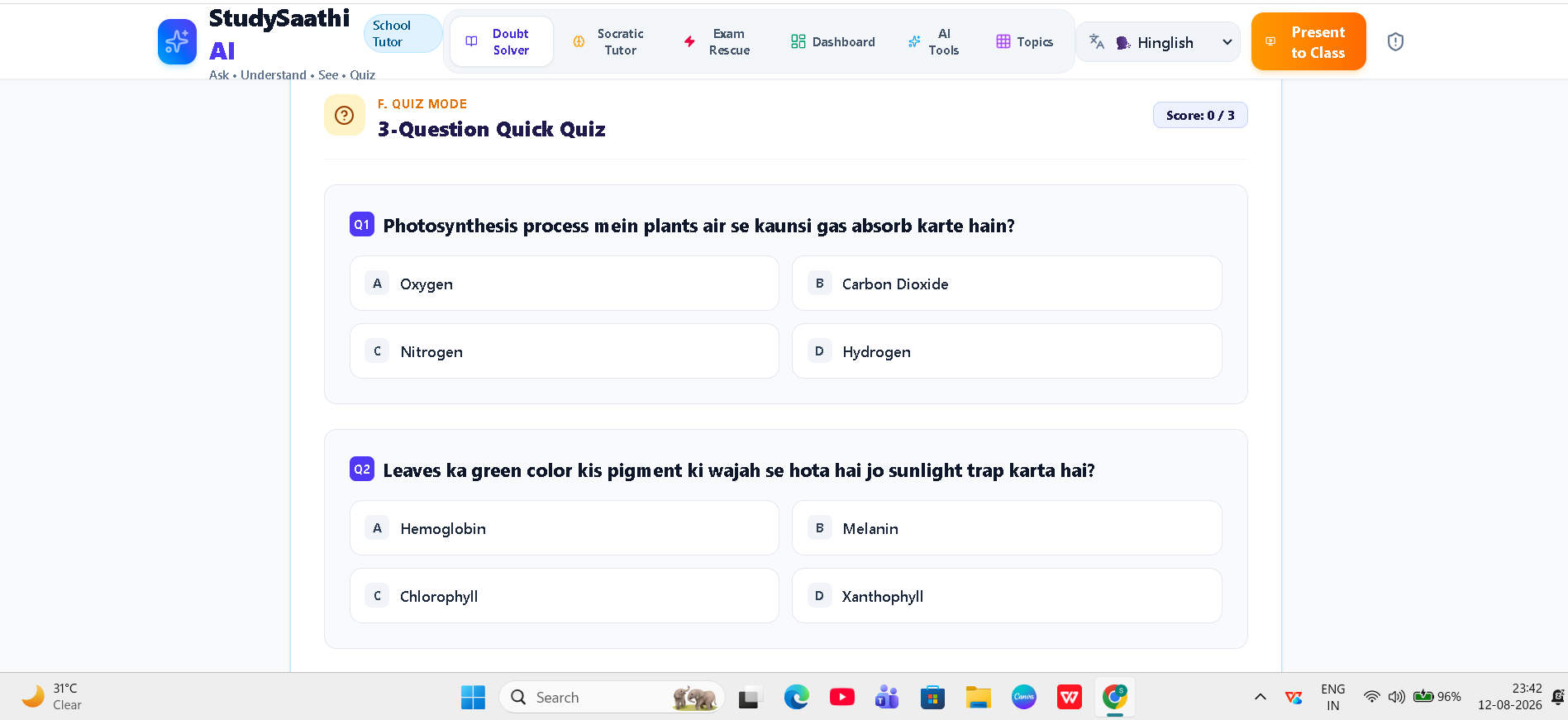
Interactive quiz to test understanding
-
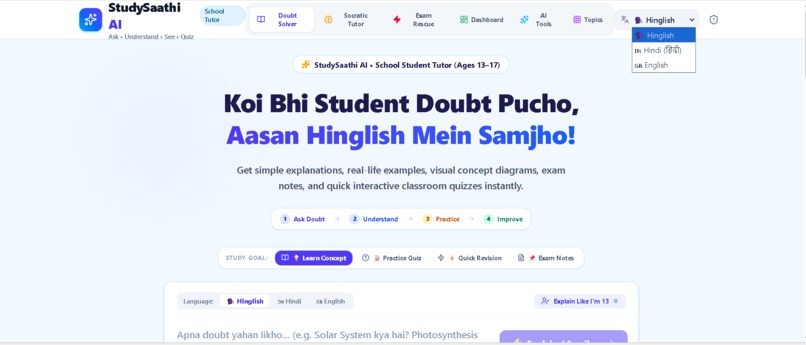
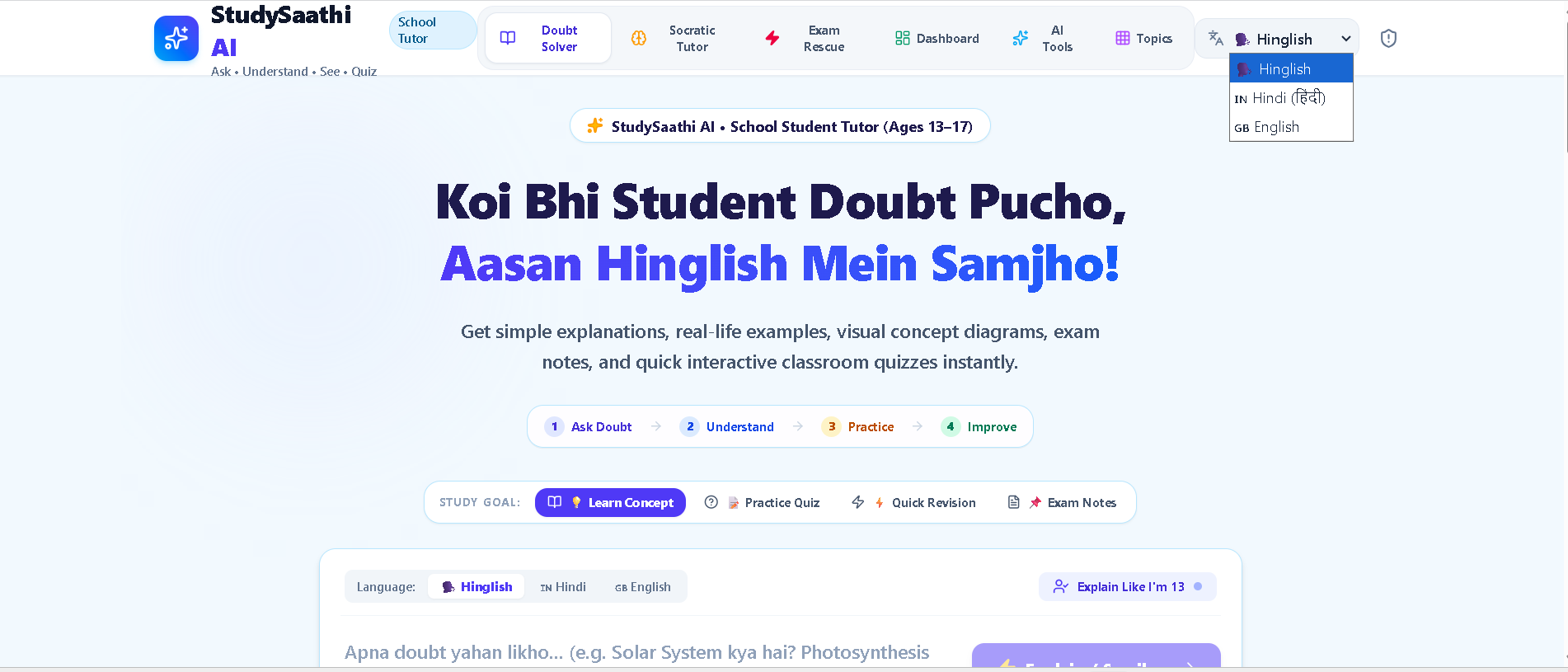
Multilingual language feature for an inclusive user exoeriance
Inspiration
Students often get answers to their questions, but an answer alone does not always mean learning. Difficult concepts, complicated explanations, language barriers, and exam pressure can make learning frustrating.
I wanted to build a learning companion that does more than simply give answers. The idea behind StudySaathi AI is simple: help students understand a concept, practice it, identify their weaknesses, and improve.
What it does
StudySaathi AI is an AI-powered learning companion designed for school students aged 13–17.
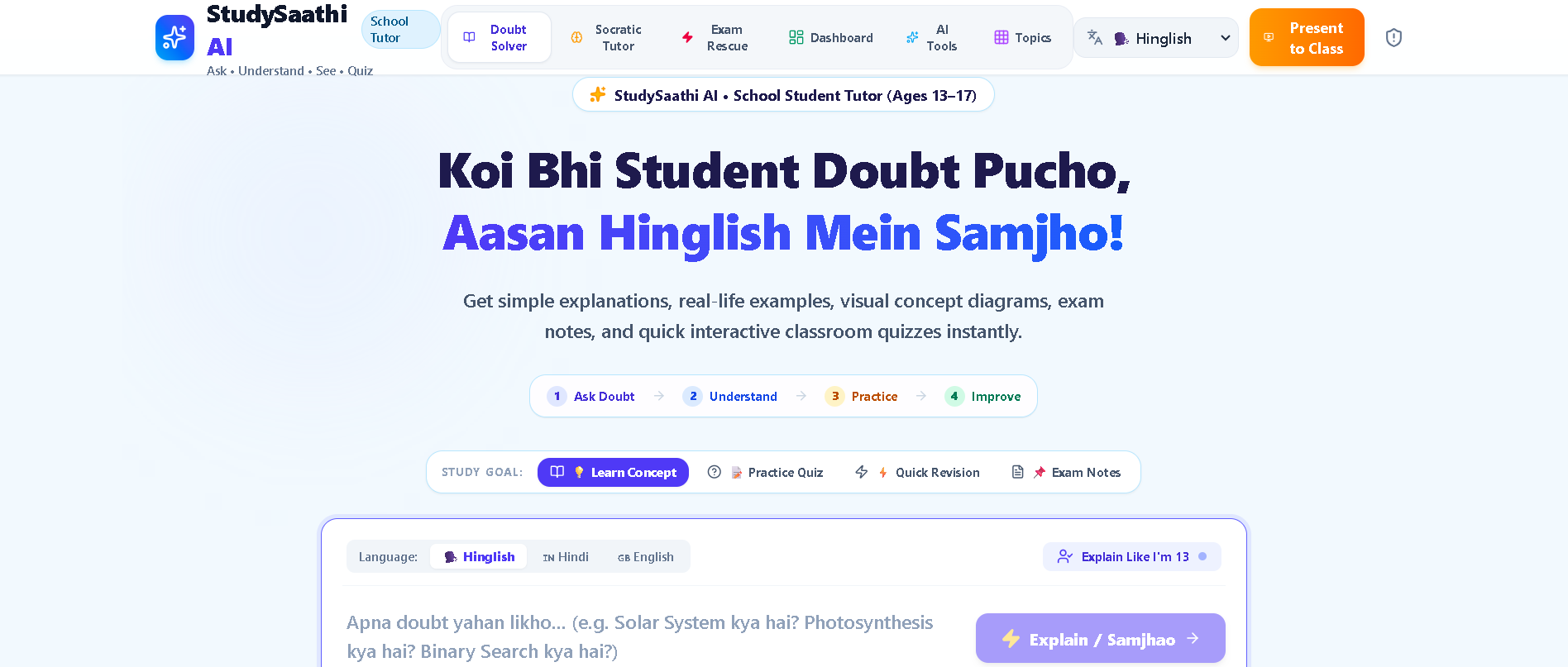
Students can ask doubts and get explanations in Hinglish, Hindi, or English. The app includes:
- Doubt Solver – simple, student-friendly explanations with examples.
- Socratic Tutor – guides students through questions instead of immediately giving away the answer.
- Adaptive Quiz – creates practice questions and adjusts the learning experience based on performance.
- Learning Dashboard – helps students understand their progress, strengths, weaknesses, and mistake patterns.
- Exam Rescue – provides quick revision support with key points, summaries, formulas, visual explanations, and rapid-fire questions.
The overall learning journey is:
Ask → Understand → Practice → Find Weakness → Improve
How I built it
I built StudySaathi AI as an AI-first educational web application using Google AI tools and Gemini-powered capabilities.
The interface was designed around a simple student workflow so that important learning actions are easy to discover. Different learning modes were connected into one experience instead of treating them as separate tools.
I also focused on reliability and usability by testing common student questions, improving unclear responses, and adding fallback behavior where appropriate.
Challenges I ran into
One of the biggest challenges was making AI explanations useful for students rather than simply making them longer.
I had to think about:
- Keeping explanations simple without losing accuracy.
- Making the AI adapt to different learning levels.
- Preventing students from becoming dependent on direct answers.
- Designing multiple learning modes without making the interface confusing.
- Handling unexpected or unclear questions gracefully.
Testing real student-style questions helped identify and improve these issues.
Accomplishments that I'm proud of
I am proud that StudySaathi AI became more than a basic AI chatbot.
It combines doubt solving, guided learning, practice, progress tracking, and exam revision into one student-focused experience.
I am especially proud of the Socratic learning approach because it encourages students to think instead of simply copying an answer.
The multilingual experience also makes the tool more approachable for students who are more comfortable learning in Hinglish or Hindi.
What I learned
This project taught me that building an AI application is not only about connecting an AI model to a user interface.
The quality of the experience depends on how the AI is guided, how the user interacts with it, how errors are handled, and whether the product actually solves a real problem.
I also learned the importance of iterative testing: asking realistic questions, finding weak points, improving the experience, and testing again.
Most importantly, I learned to design AI around the user's learning journey rather than around the AI itself.
What's next for StudySaathi AI
The next goal is to make StudySaathi AI even more personalized.
Future improvements could include stronger learning analytics, better personalization based on individual progress, broader subject coverage, richer visual learning, and more reliable academic verification.
The long-term vision is to make StudySaathi AI a friendly digital study companion that helps students become independent learners, not dependent answer-seekers.
Built With
- css
- gemini
- googleaistudio
- html
- javascript

Log in or sign up for Devpost to join the conversation.