-
-
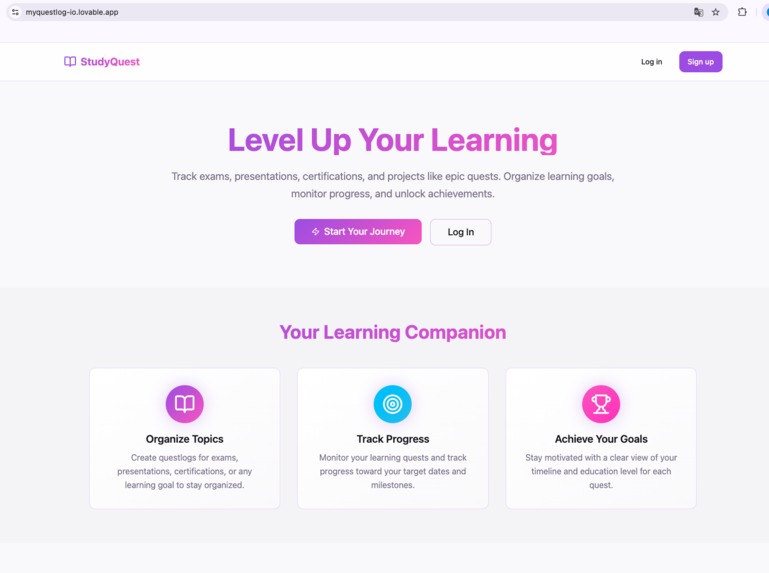
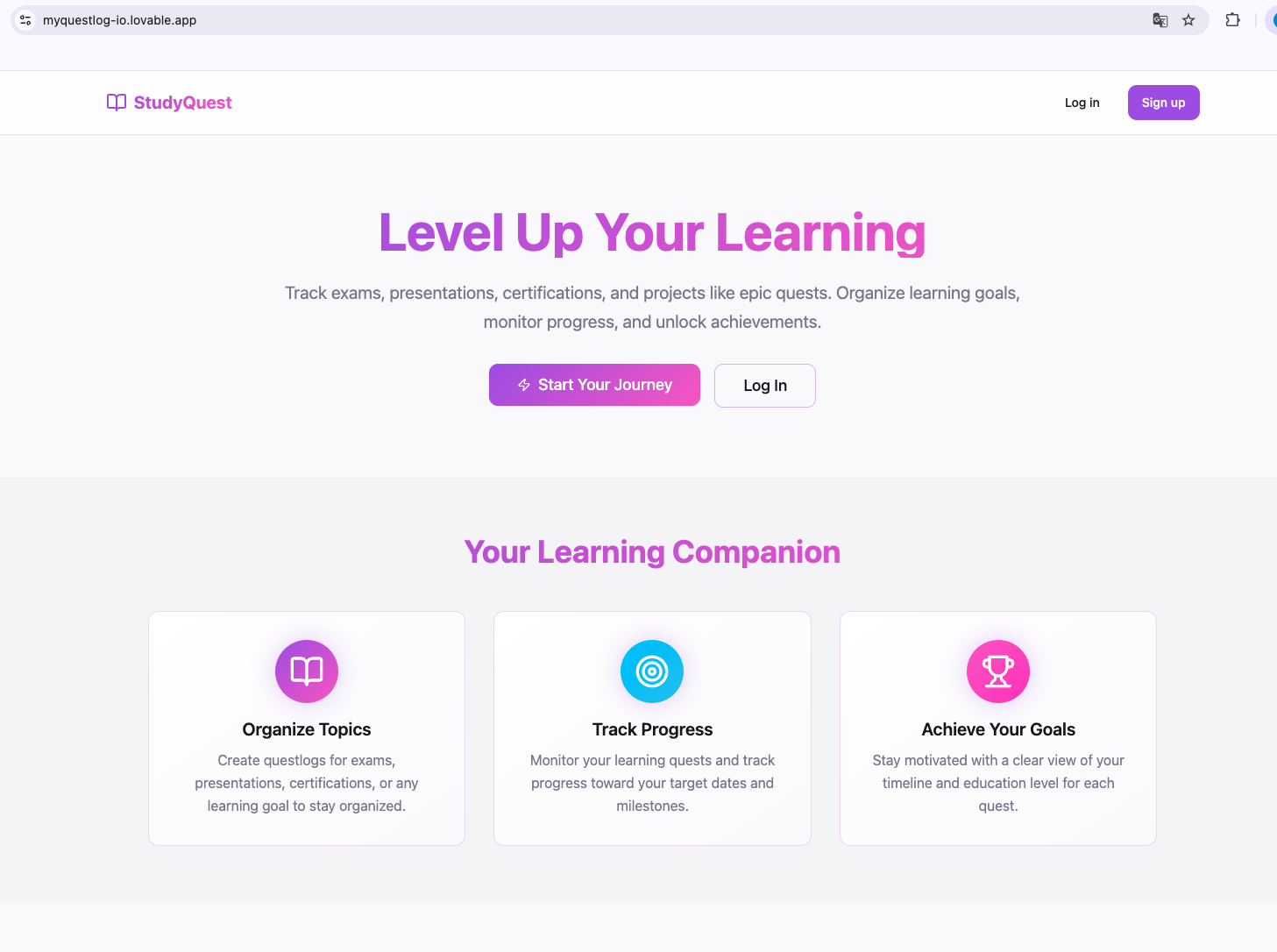
Start on our landing page and kick off your StudyQuest adventure.
-
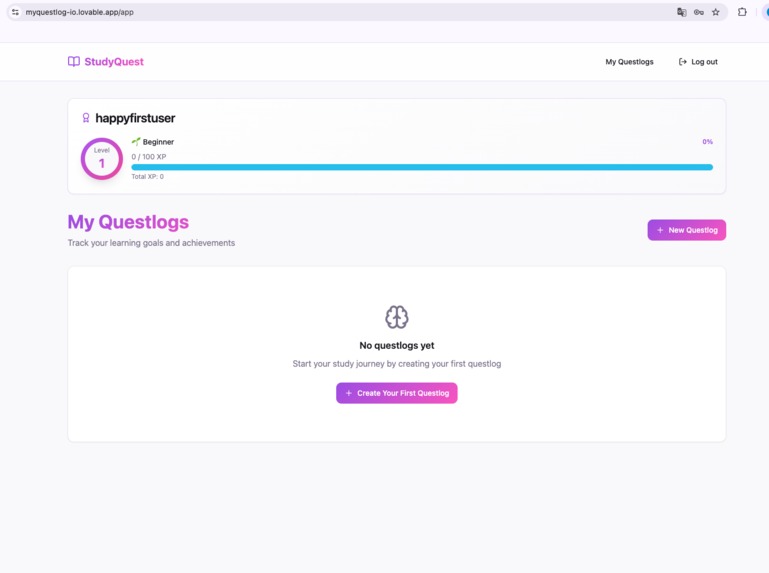
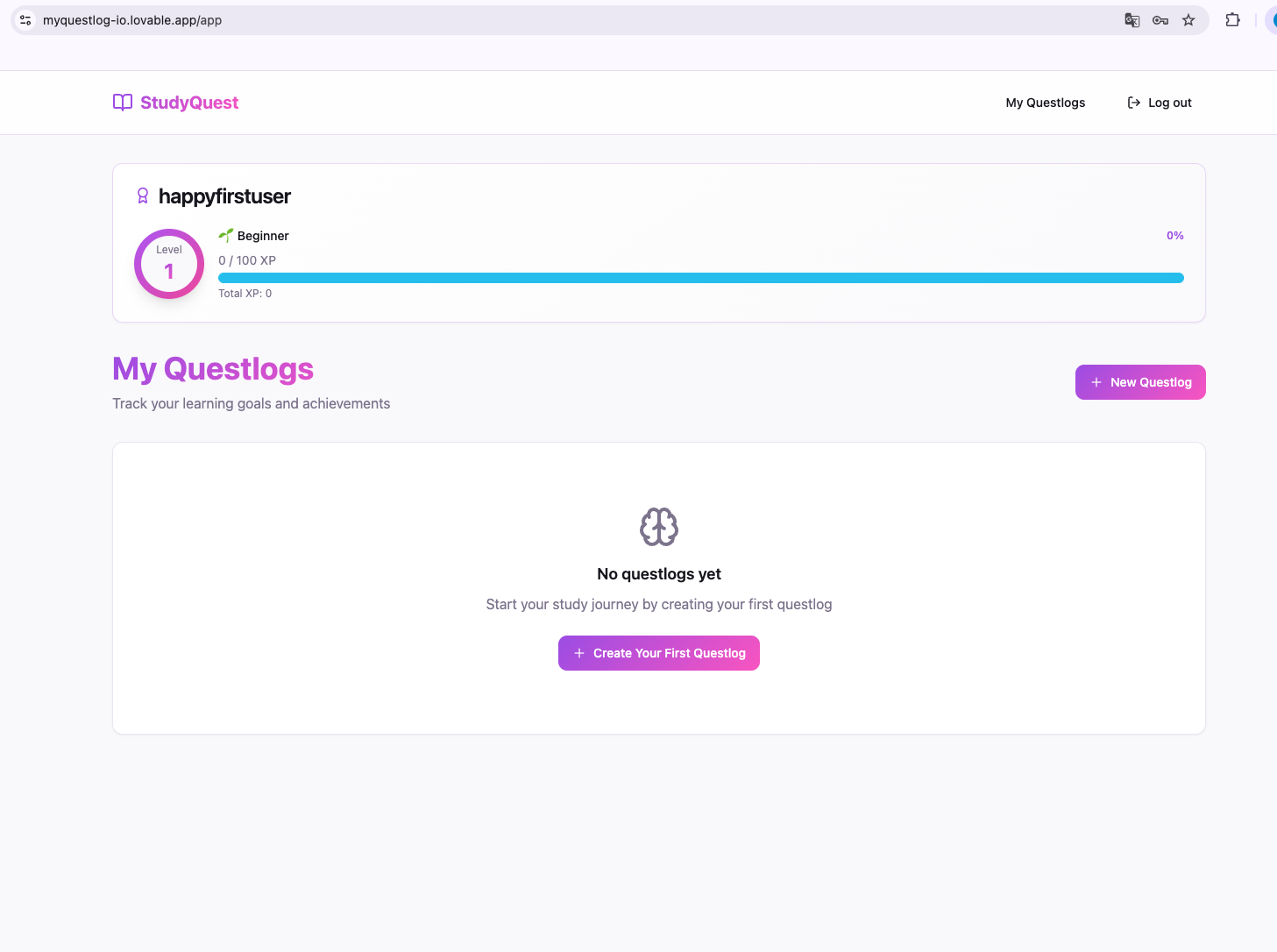
Logged in? Great—welcome to your personal learning hub.
-
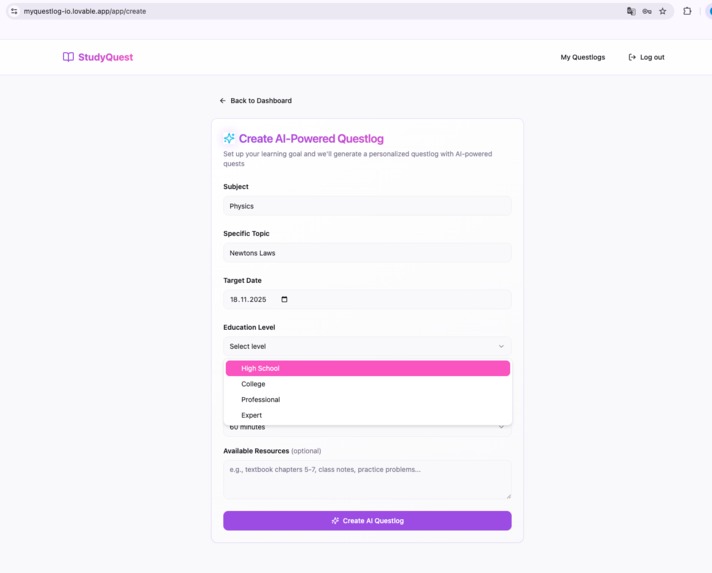
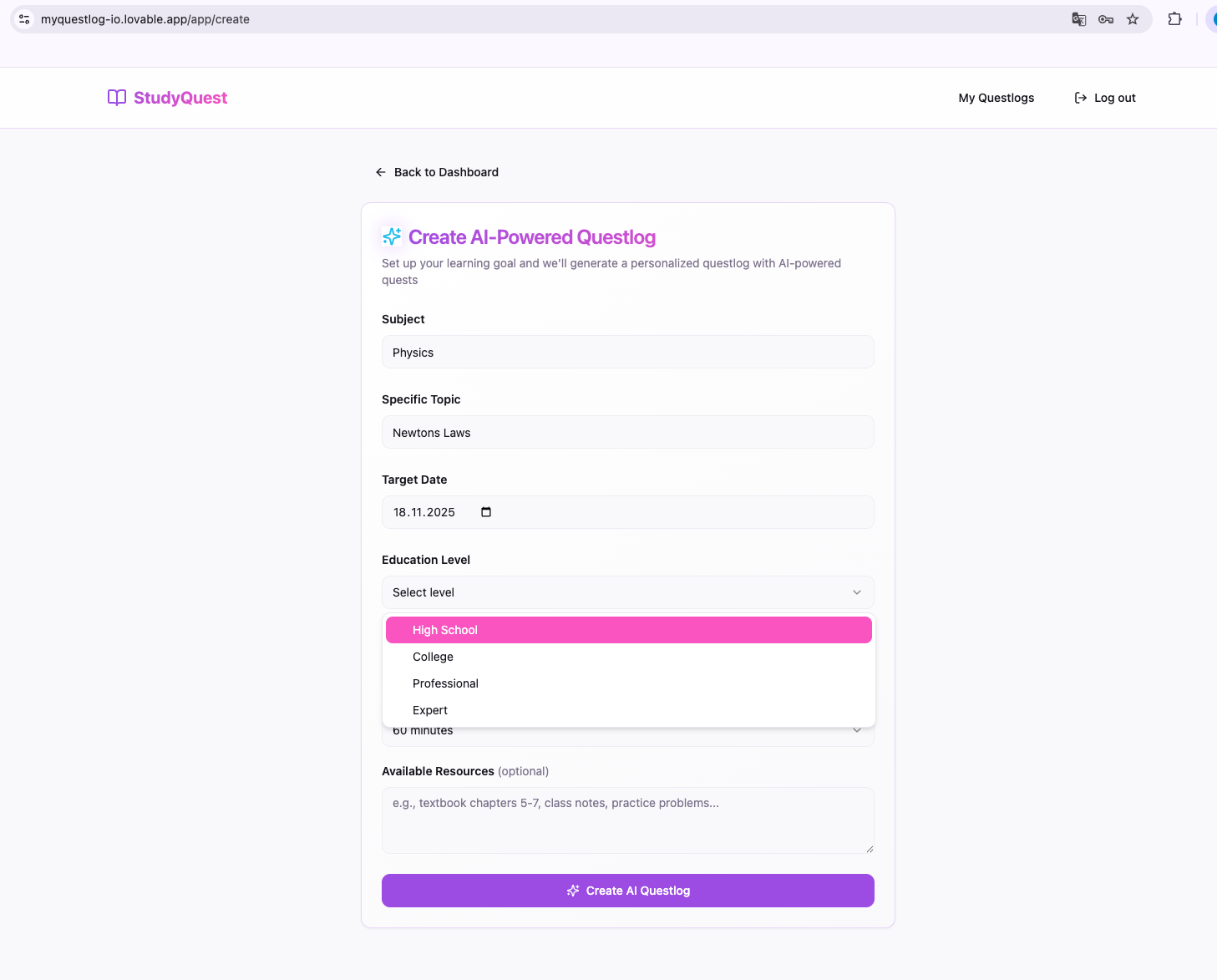
Create your first AI-powered questlog by setting subject, level, and target date.
-
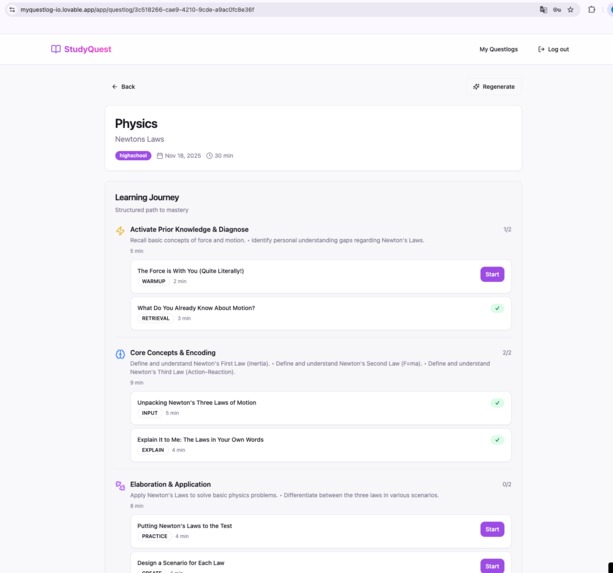
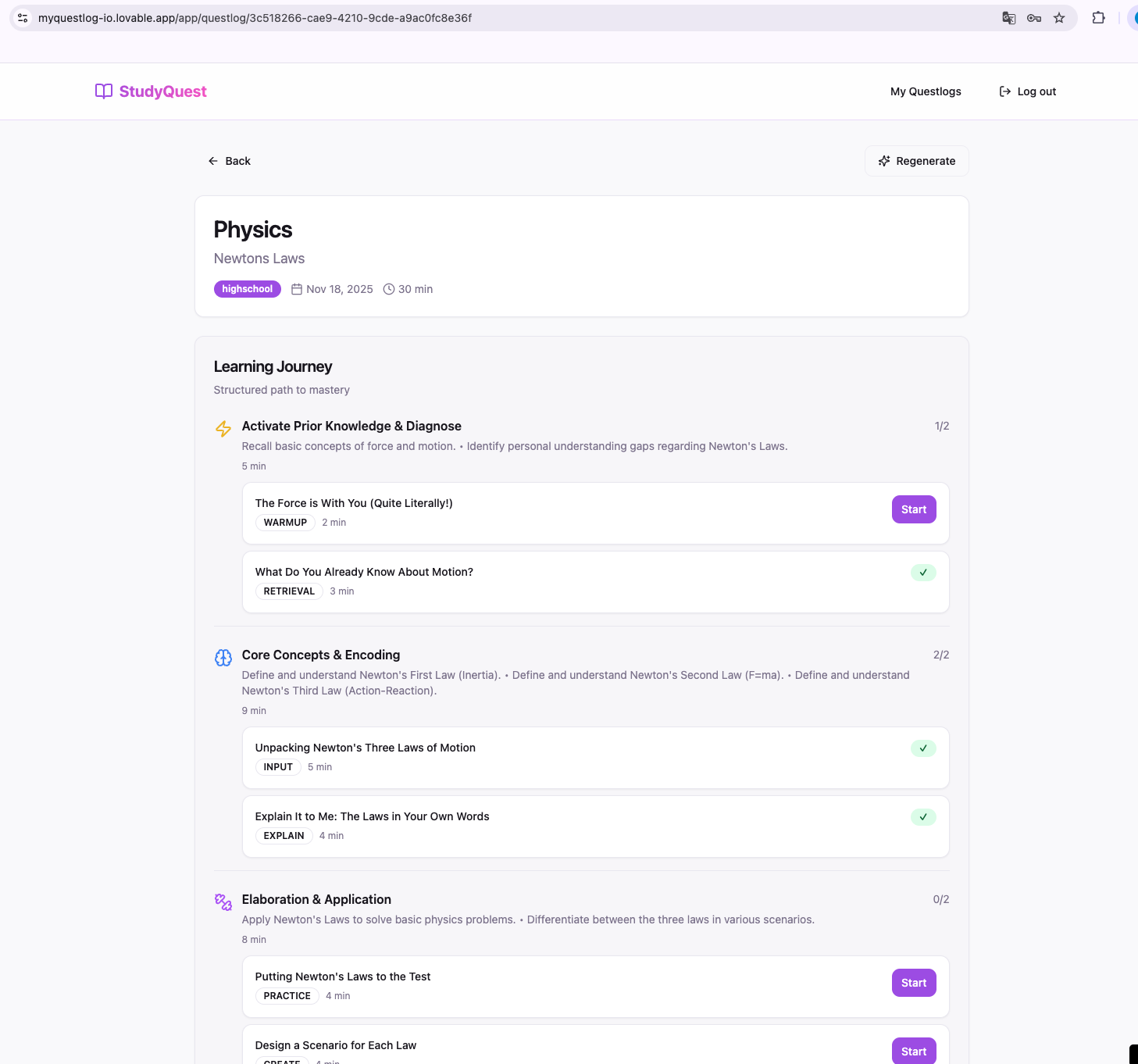
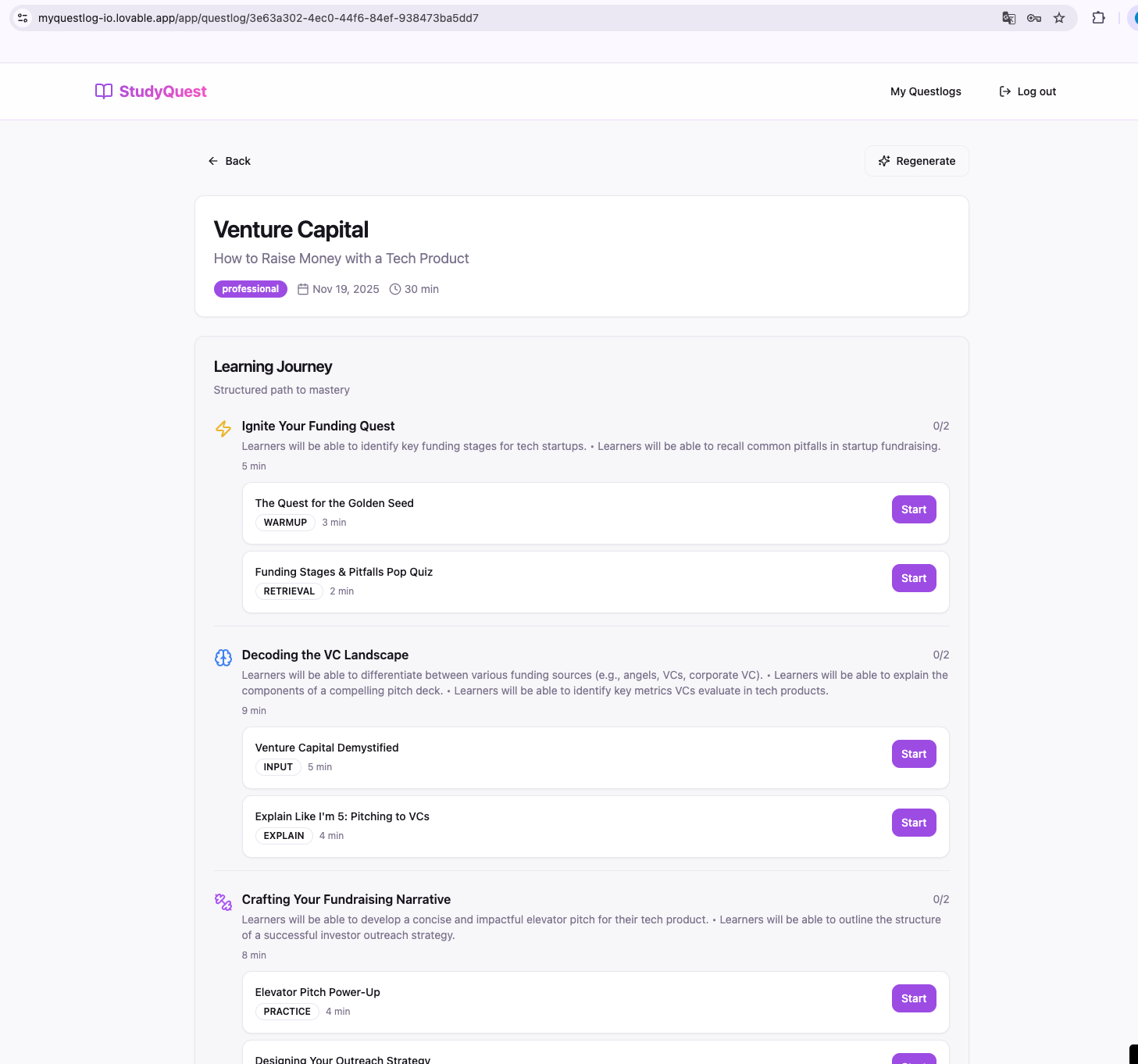
Explore your structured learning journey, with quests organized into clear phases.
-
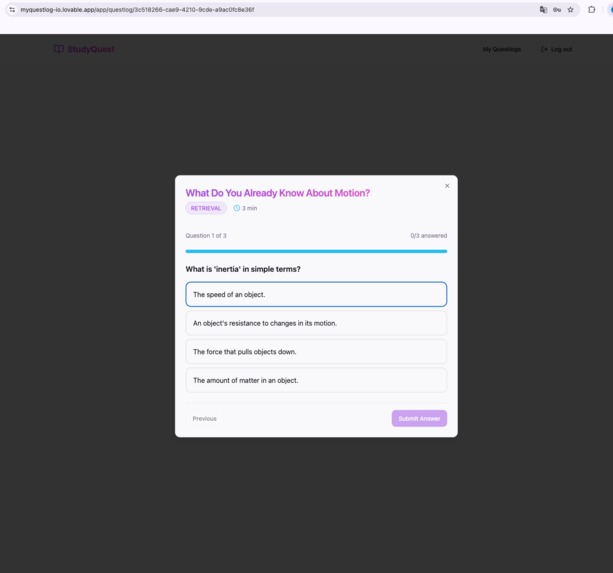
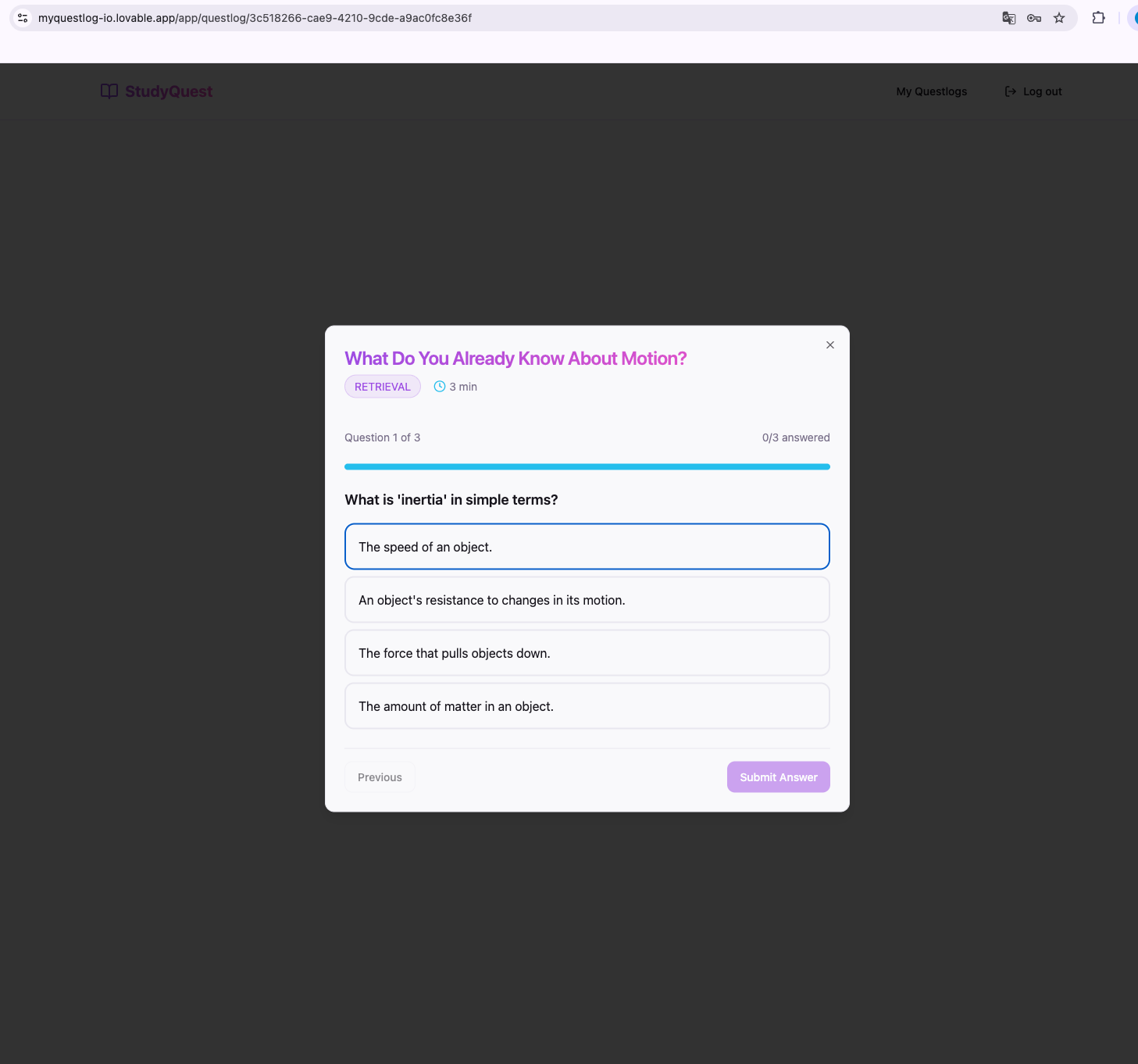
Jump into a retrieval quest to check what you already know about the topic.
-
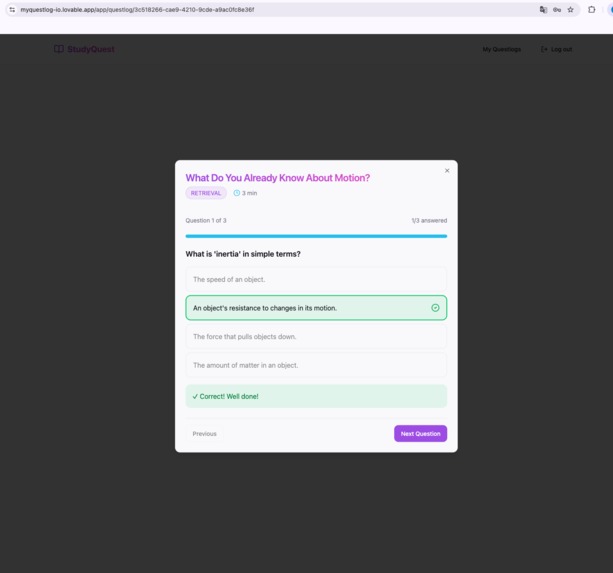
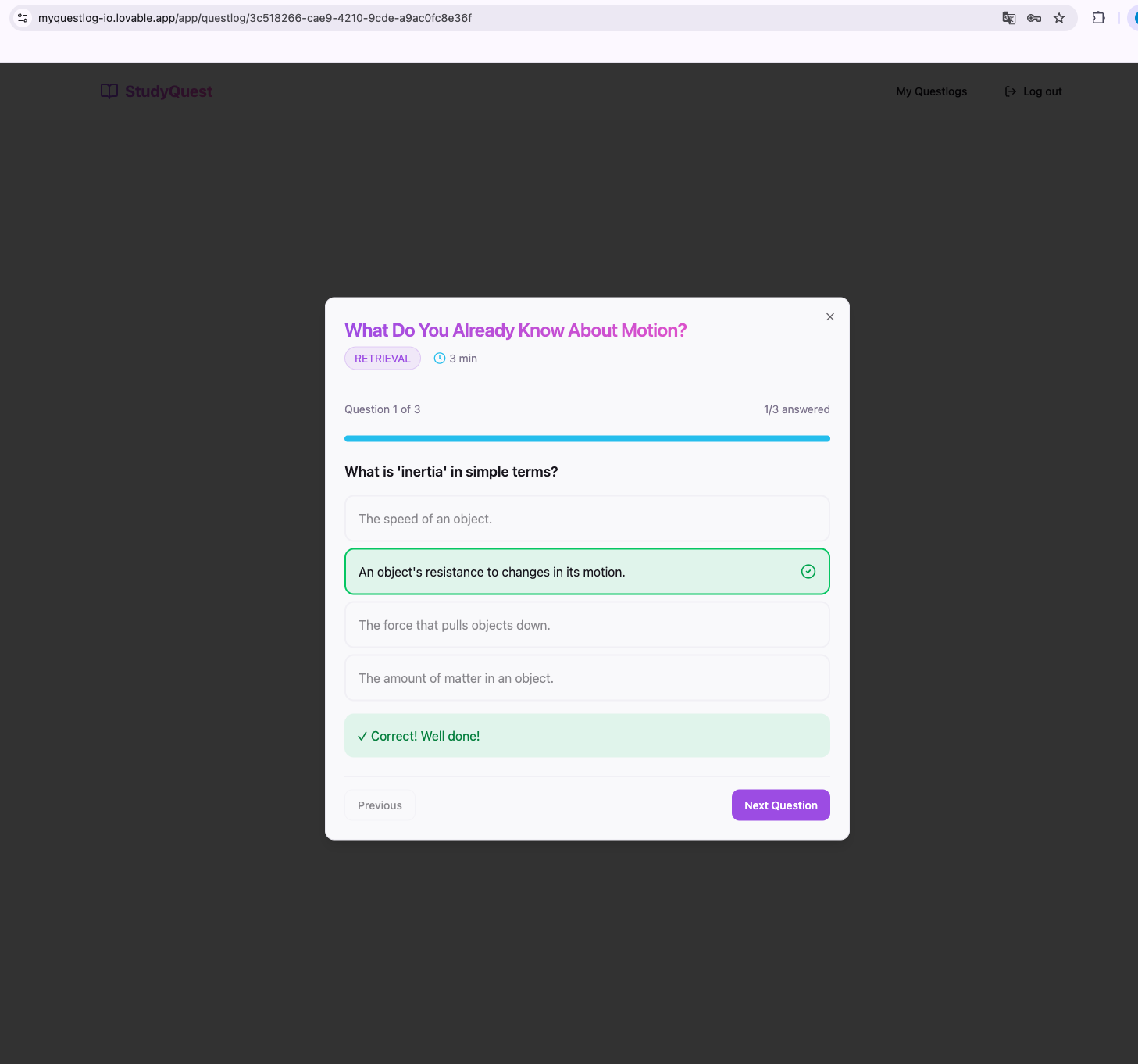
Get instant feedback as you choose the right answer and move to the next question.
-
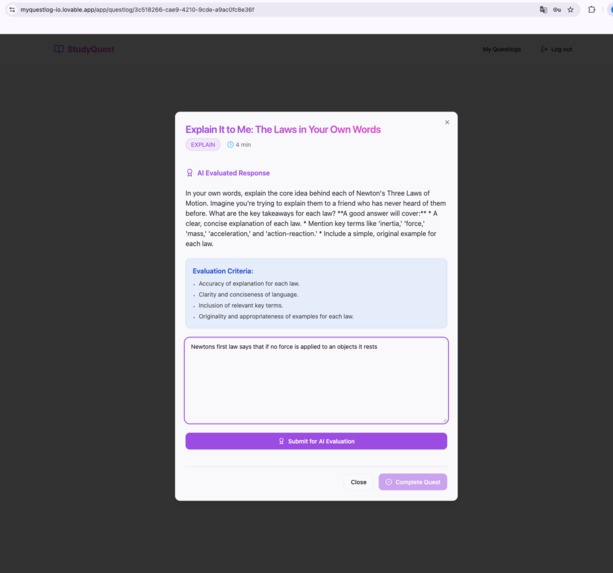
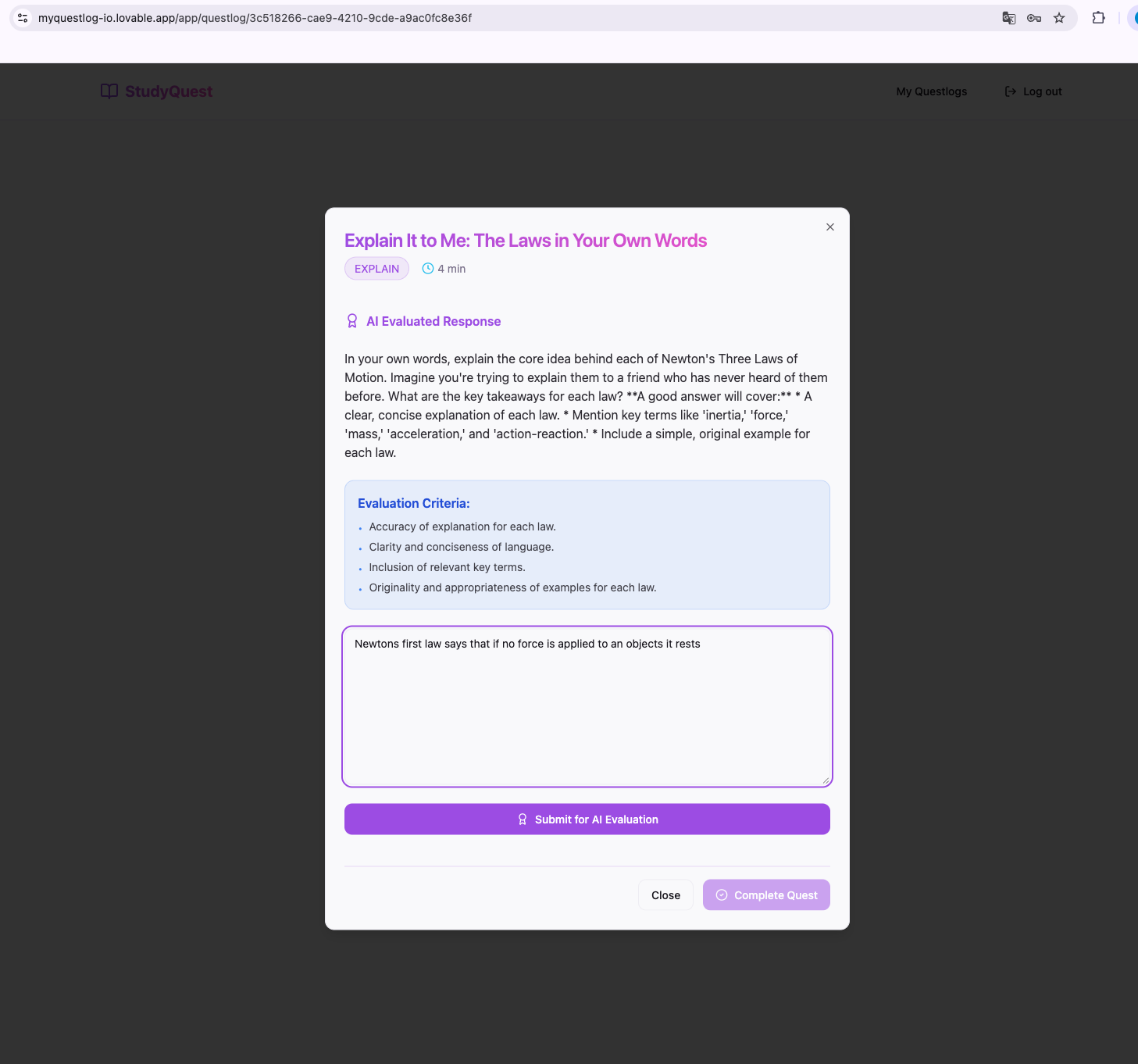
Tackle an explain quest where you write out big ideas in your own words.
-
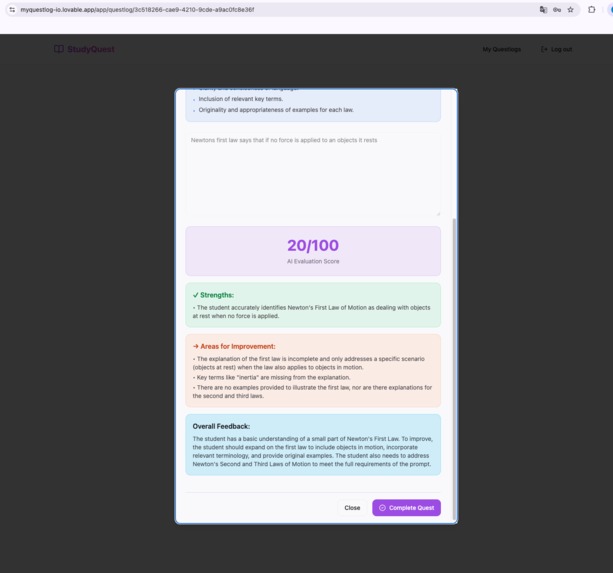
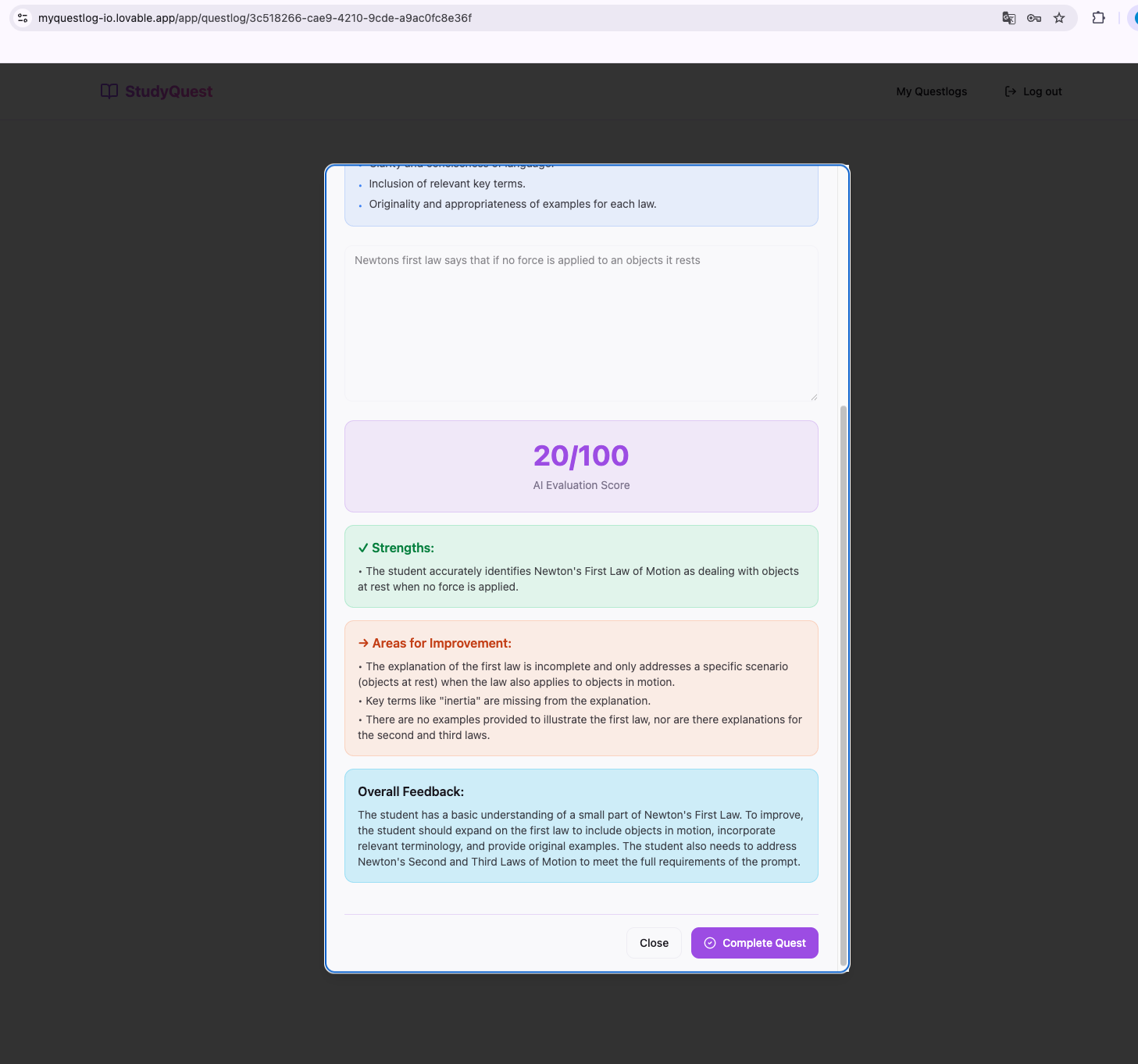
Receive detailed AI feedback with a score, strengths, and areas to improve.
-
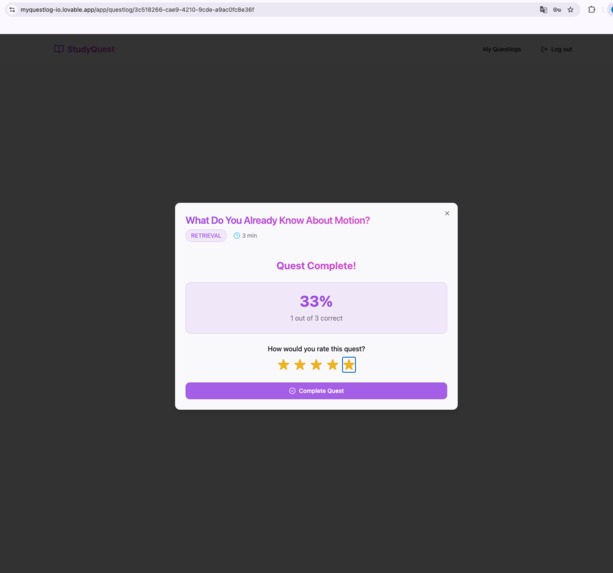
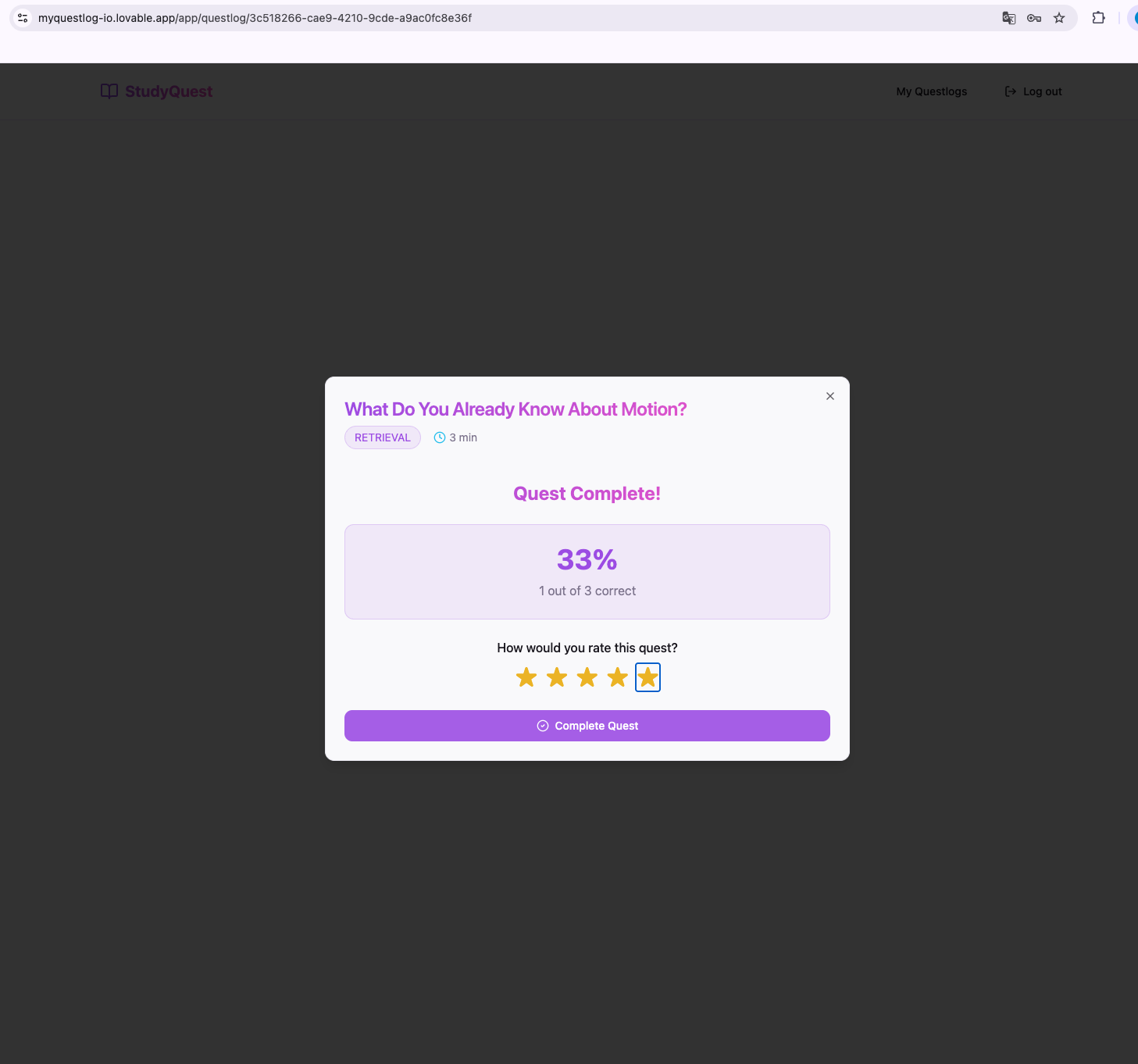
Finish the quest, see your results, and rate how helpful it was.
-
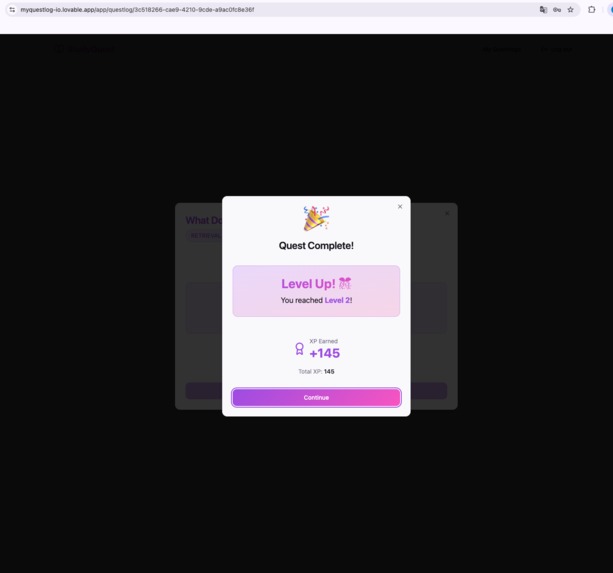
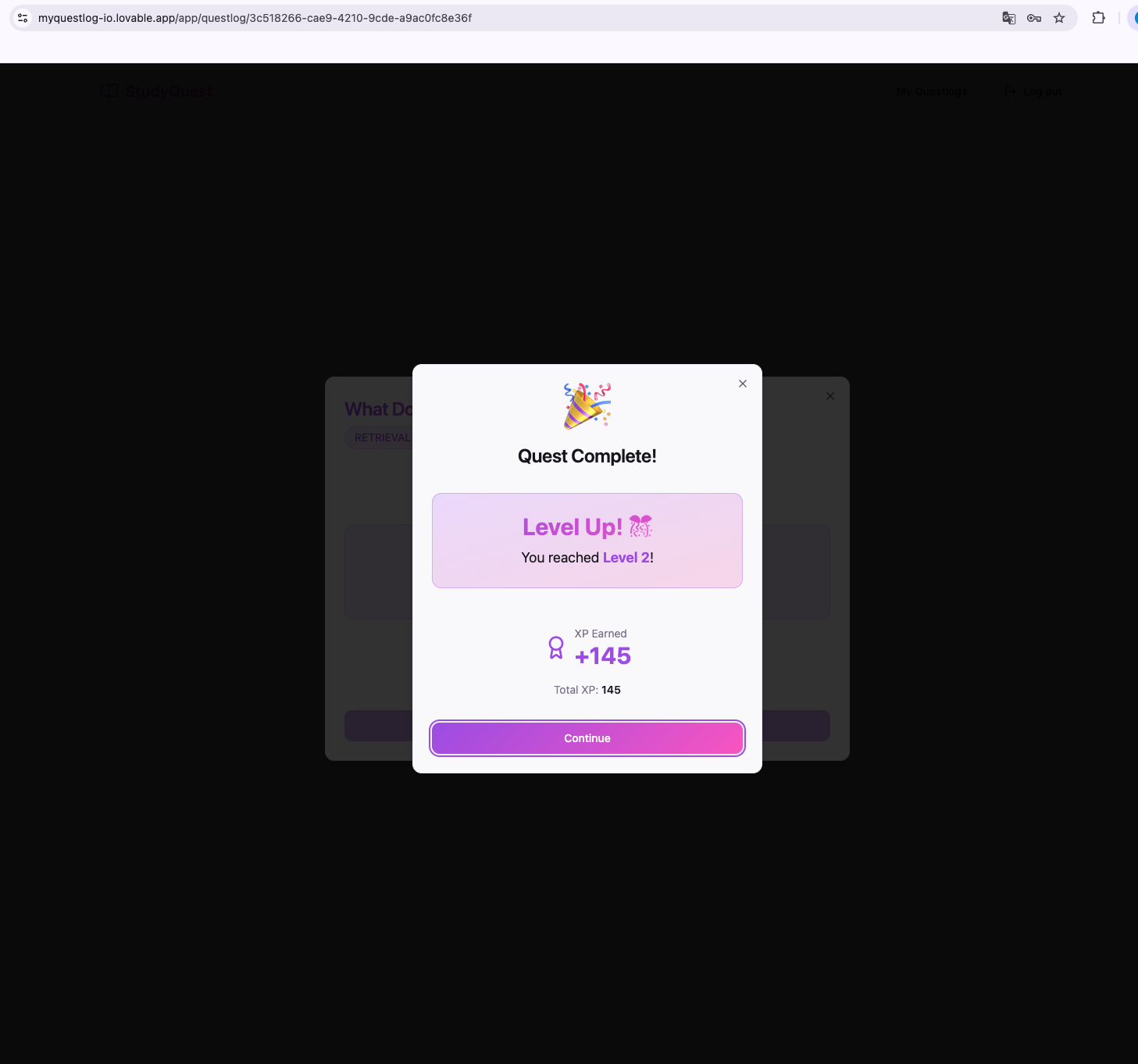
Level up, earn XP, and celebrate your progress as you complete more quests.
-
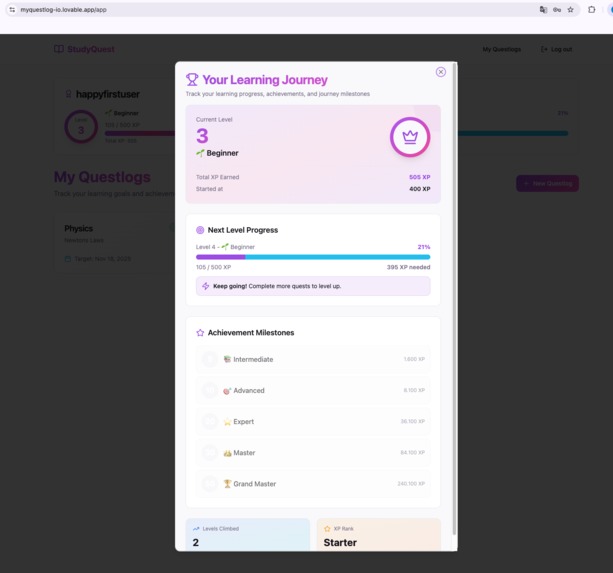
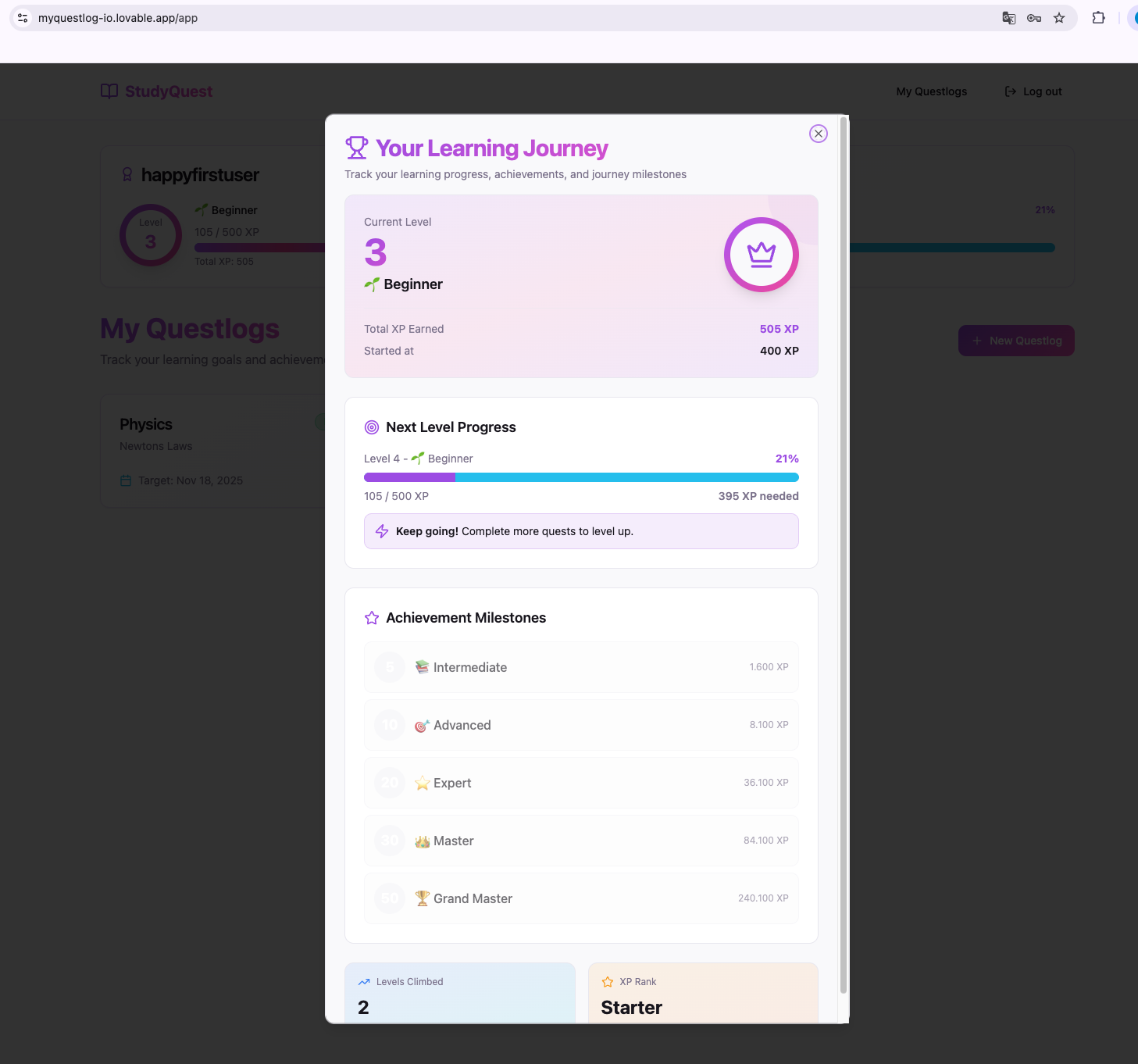
Check your Learning Journey to see your current level, XP, and next big milestones.
-
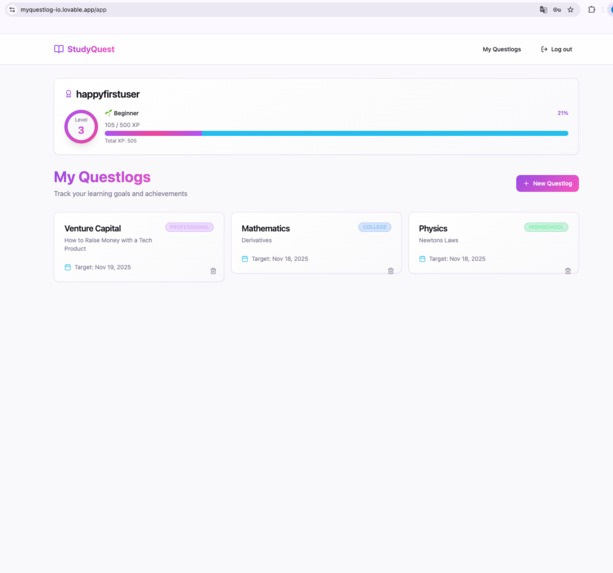
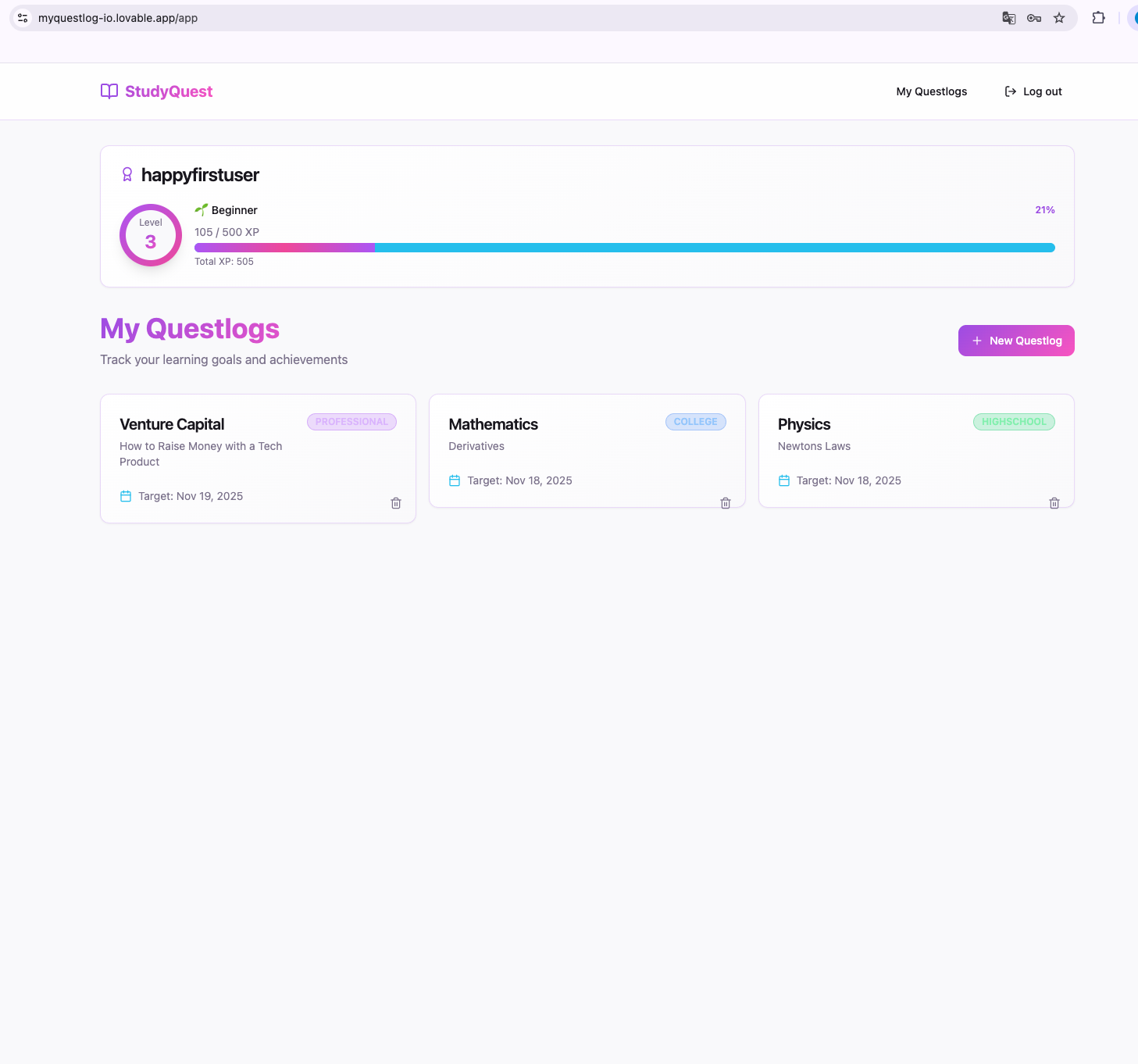
View all your questlogs at a glance and juggle multiple learning goals in one dashboard.
-
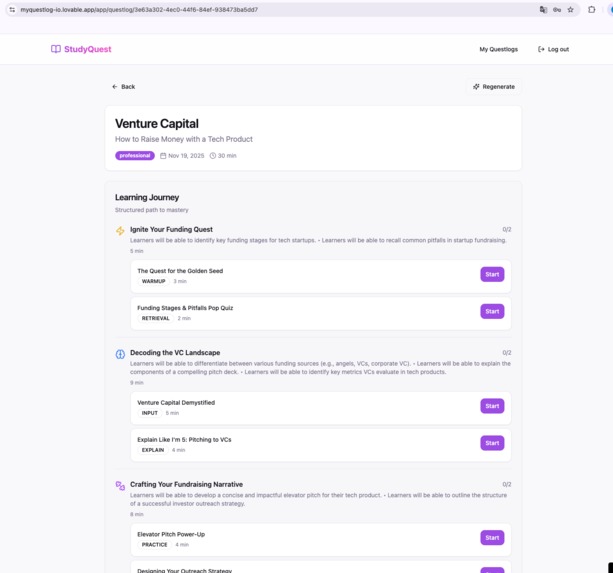
Dive into an AI-built Venture Capital journey and level up your fundraising skills step by step.
-
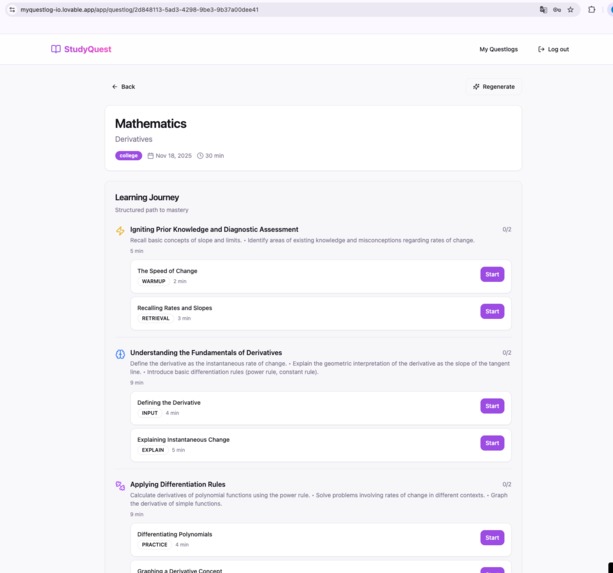
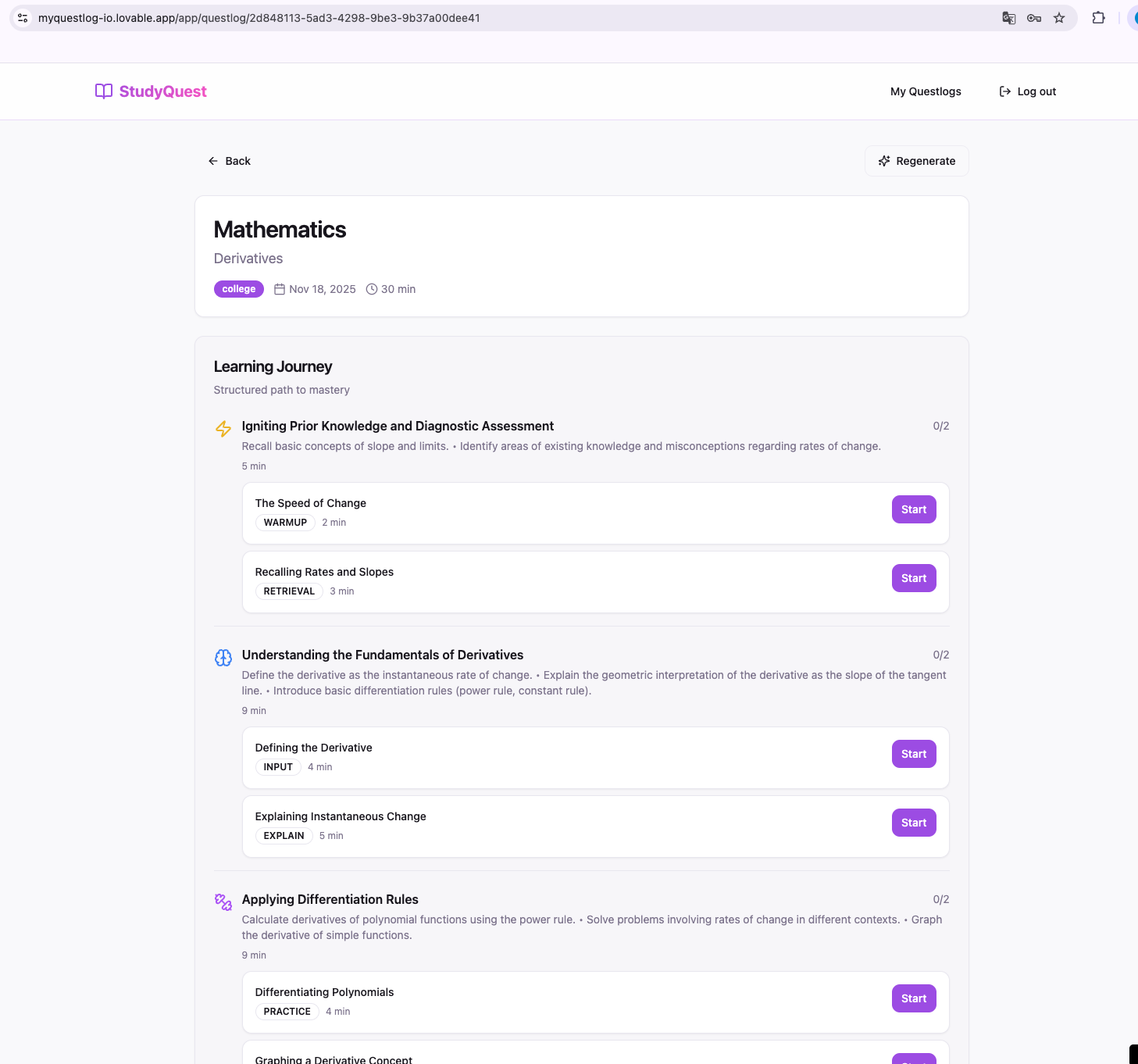
Switch to your Math questlog and conquer derivatives through structured, bite-sized quests.
StudyQuest – Stop cramming. Start questing.
Inspiration
Studying often feels like grinding alone through endless notes and videos with no real sense of progress until exam day. Meanwhile, games make even simple tasks feel meaningful with levels, XP, and smart progression systems.
With StudyQuest, I wanted to combine those two worlds: solid learning science (active recall, spaced practice, scaffolding) wrapped in the motivational loop of a quest log. Instead of “I should study more”, you get “I’m on Quest 7 of my journey to master Linear Algebra” – a clear path, visible progress, and a reason to come back.
What it does
StudyQuest turns any topic into a structured, gamified learning journey.
You tell StudyQuest what you want to learn and your goal (e.g. exam date or skill level), and it:
- Generates an AI-crafted learning journey using a 5-phase model: Activate → Input → Practice → Consolidation → Mastery
- Breaks the journey into bite-sized quests instead of overwhelming “study sessions”
- Uses multiple activity types: warmups, retrieval tasks, explanations, practice, creation tasks, reflections, and exam simulations
- Lets you answer via multiple choice, open questions, checklists, and (planned) voice input
- Wraps everything in XP, levels, milestones and progress stats, so you always see where you are on your journey
In short: you tell StudyQuest what you want to master, and it forges a complete learning adventure from zero knowledge to exam-ready.
How we built it
On the frontend, StudyQuest is a modern web app built with:
- React + TypeScript for a robust, component-based UI
- Vite for a fast development experience
- TailwindCSS / modern UI components for a clean, responsive interface
On the backend / data side, StudyQuest uses:
- A database to store users, quests, attempts, XP logs, and progress
- Authentication so each learner has a private profile and journey
- AI integration (LLMs) to:
- Generate the full learning journey and its phases
- Create individual quests and tasks
- Evaluate open-ended answers and give feedback
The architecture is designed so everything can be scaled or self-hosted later (e.g. for schools or organizations) without changing the core product idea.
Challenges we ran into
Designing a generic learning model
Building a 5-phase structure that works for any subject (math, programming, history, languages, etc.) was tricky. The model had to be flexible but still produce coherent learning journeys.Balancing gamification and seriousness
We wanted XP, levels and quests to be fun and motivating, but not childish. Hitting the right tone for university students and adult learners took iteration.Prompt engineering and structure
Getting the AI to reliably generate structured quests (with different activity types, difficulty levels and time estimates) required careful prompt design and post-processing.User experience of quests
Breaking study time into quests is powerful, but only if each quest feels manageable and meaningful. Designing lengths, difficulty, and wording so it never feels like “more homework” was a challenge.
Accomplishments that we're proud of
End-to-end journey generation
You can start from a simple goal (“I need to pass X”) and get a full, structured questline—no manual setup needed.A rich but coherent quest system
StudyQuest supports different activity types and phases, but they all tie into one XP and progress system instead of being random mini-games.A clean, production-ready foundation
Modern React + TypeScript frontend, a structured data model for learning journeys, and an AI integration that can be extended with new activity types, feedback modes, and difficulty logic.Learning science + gamification working together
The game layer (quests, XP, levels) is not just cosmetic. It’s aligned with good learning practices so “grinding XP” actually means “doing meaningful practice”.
What we learned
Structure beats raw generation
Telling an LLM “generate 20 questions” is easy – but structuring everything into meaningful phases with clear goals massively improves the usefulness of the output.Gamification is numbers + psychology
Small changes in XP curves, level thresholds, or quest sizes can make the product feel either rewarding and addictive or flat and frustrating.Scope is everything in a hackathon
Focusing on a solid learning journey + quests + basic XP system was way more valuable than trying to build every possible feature (friends, leaderboards, full mobile app, etc.) at once.UX matters as much as AI
Even the smartest AI-generated content fails if the user experience feels confusing or heavy. Making quests feel light, clear, and “doable right now” is crucial.
What’s next for StudyQuest – Stop cramming. Start questing.
To turn StudyQuest into a truly addictive learning companion, the next steps are:
Spaced repetition & smart scheduling
Automatically resurface quests based on performance and time (not just a linear storyline), so hard topics get more practice and easy ones don’t waste your time.Adaptive difficulty
Use performance data to adjust quest difficulty, XP rewards and activity types. If you’re crushing a topic, StudyQuest should push you; if you’re struggling, it should slow down and scaffold more.Voice and multimodal learning
Make speaking answers and using audio/video fully supported, so you can practice languages, presentations and explanations more naturally.Collaboration & classrooms
Teacher dashboards and shared questlines for classes and study groups: one person creates a journey, many learners play through it, and progress can be tracked.Template library & community quests
Ready-made questlines for popular exams and skills (e.g. Abitur, language levels, coding fundamentals) plus a way for the community to share and remix them.
The vision: whenever someone thinks “I need to learn this”, the default next step isn’t opening a blank document or random YouTube search—it’s launching StudyQuest and starting a new learning adventure.
Built With
- auth
- edge-functions-with-deno)
- lovable
- openai-gpt-4
- react
- react-router
- rls
- shadcn/ui
- sql
- supabase
- supabase-(postgresql
- tailwind-css
- tanstack-query
- typescript
- vite
- whisper-api


Log in or sign up for Devpost to join the conversation.