-
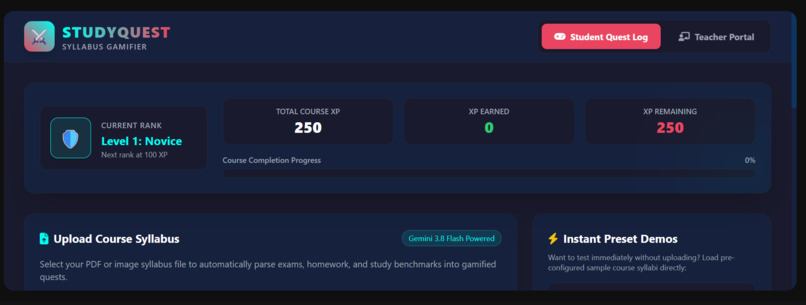
the student view
-
-
-
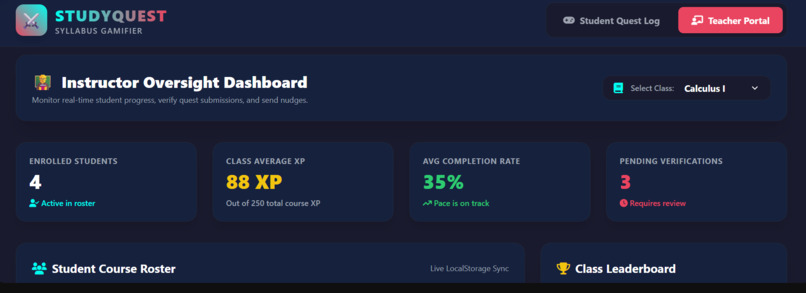
teachers dashboard
-
Inspiration
Every semester, students are handed dense, text-heavy syllabus PDFs filled with countless dates, homework assignments, and exam windows. The sheer volume of information causes immediate academic overwhelm and procrastination. We asked ourselves: Why do video games make tracking difficult missions so addictive, while school syllabi feel like an unrewarding chore? That question sparked StudyQuest—a platform designed to bridge the gap between static course outlines and daily student motivation by turning coursework into an interactive RPG quest log.
What it does
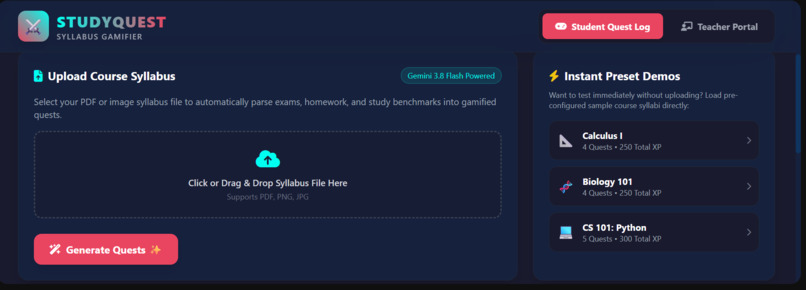
StudyQuest transforms boring syllabus documents into an immersive, gamified RPG experience using Google Gemini AI.
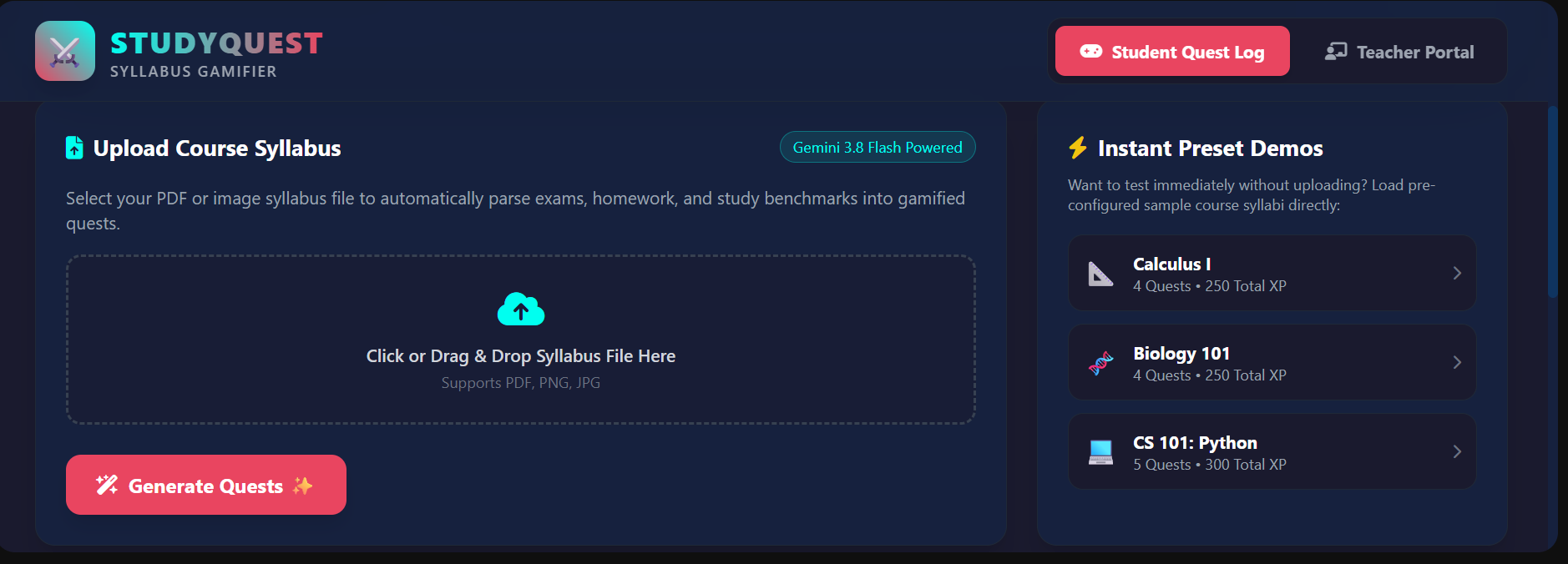
- Quest Generation: Upload a PDF or image of a syllabus, and Gemini parses it to automatically build a structured schedule of tasks.
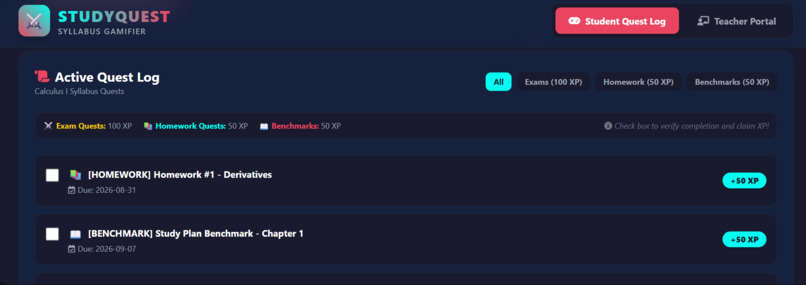
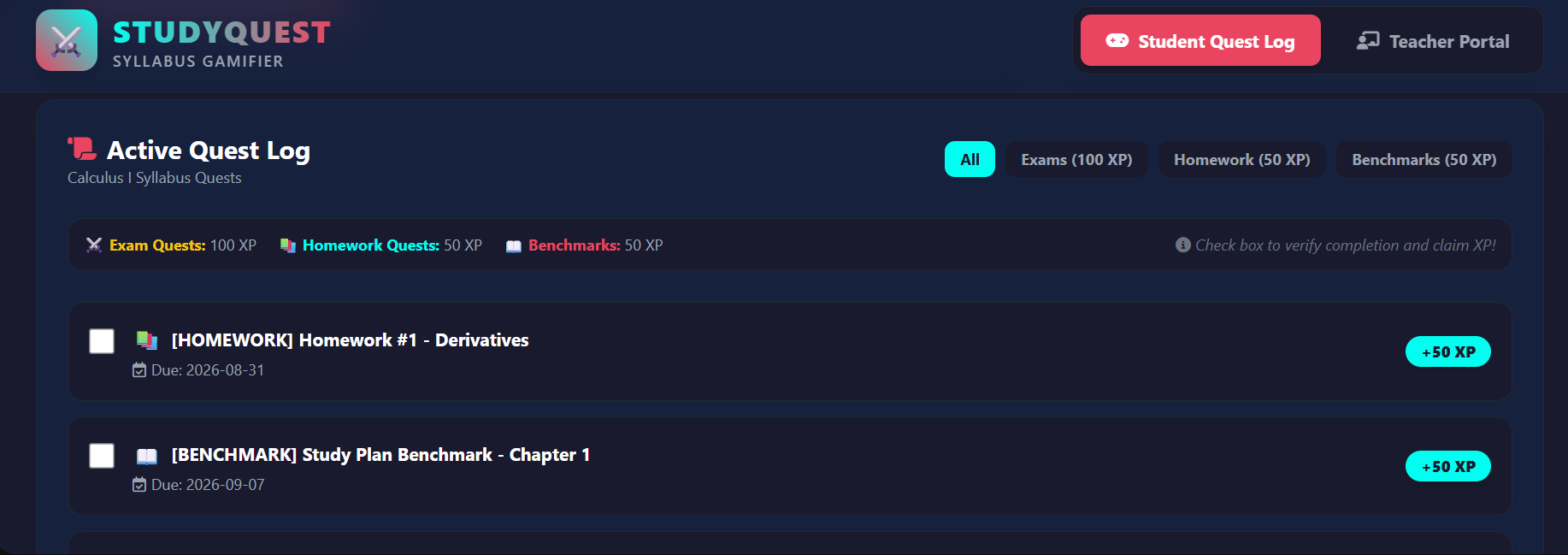
- Dynamic XP System: Major exams act as high-stakes 100 XP Boss Battles, while homework assignments and study benchmarks serve as 50 XP Side Quests.
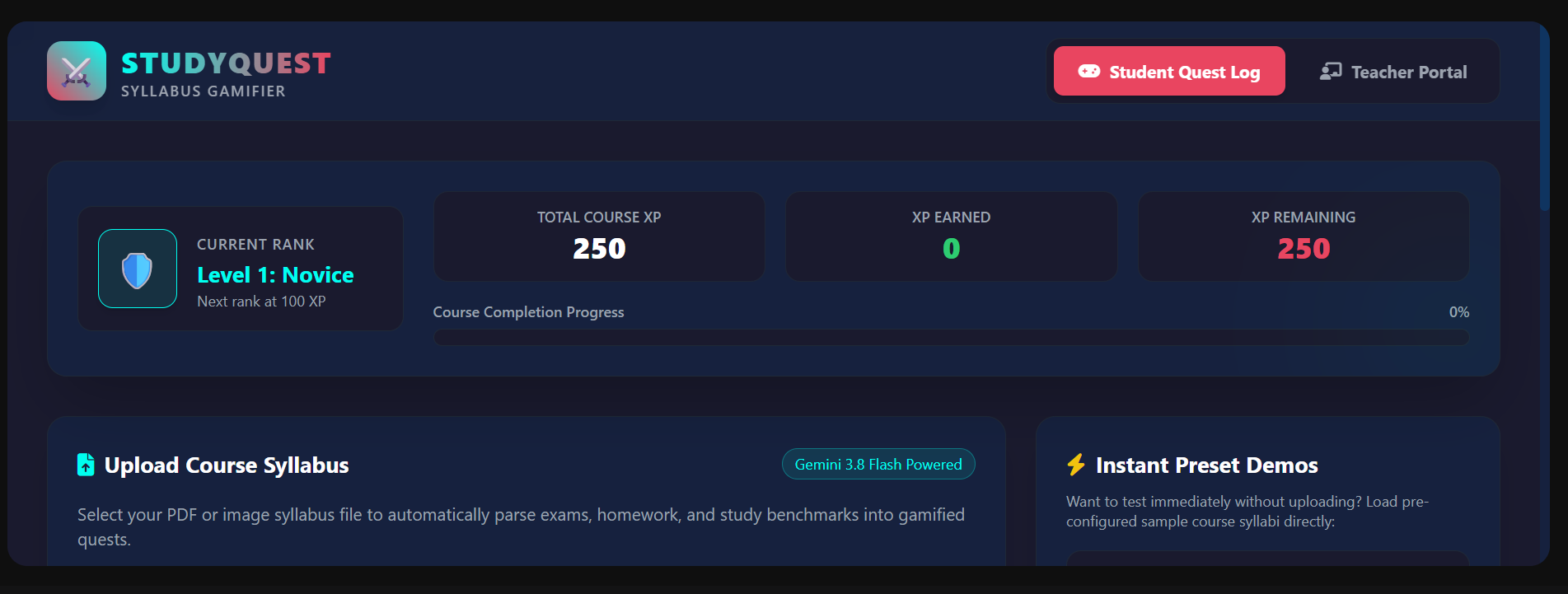
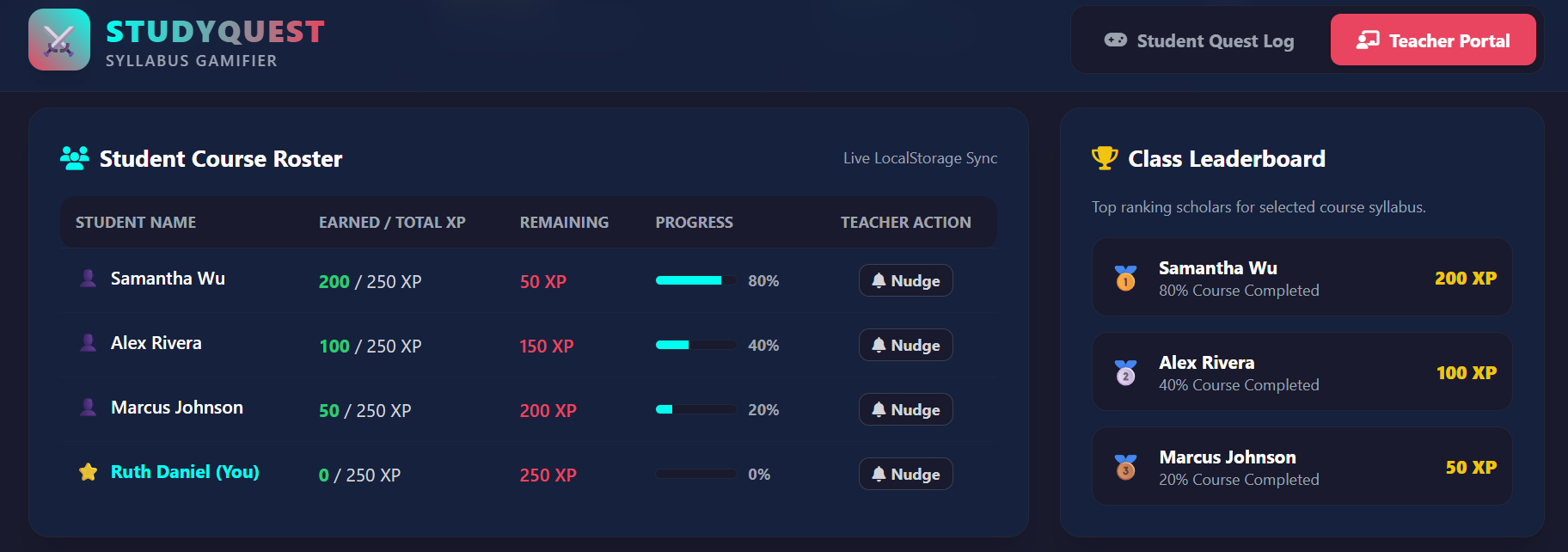
- Progress Countdown: As students complete and confirm submissions, they earn XP, level up, and watch their remaining course XP count down toward zero: Total XP Remaining = Total Course XP - Earned XP
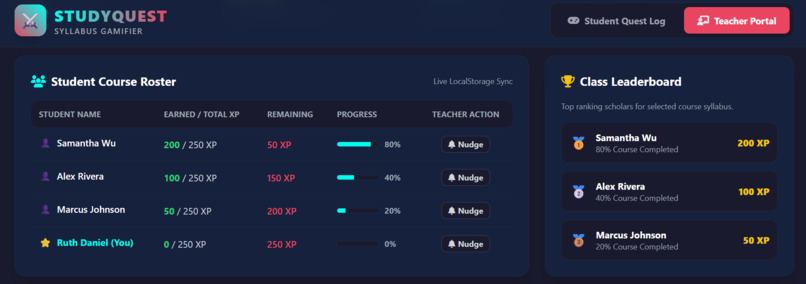
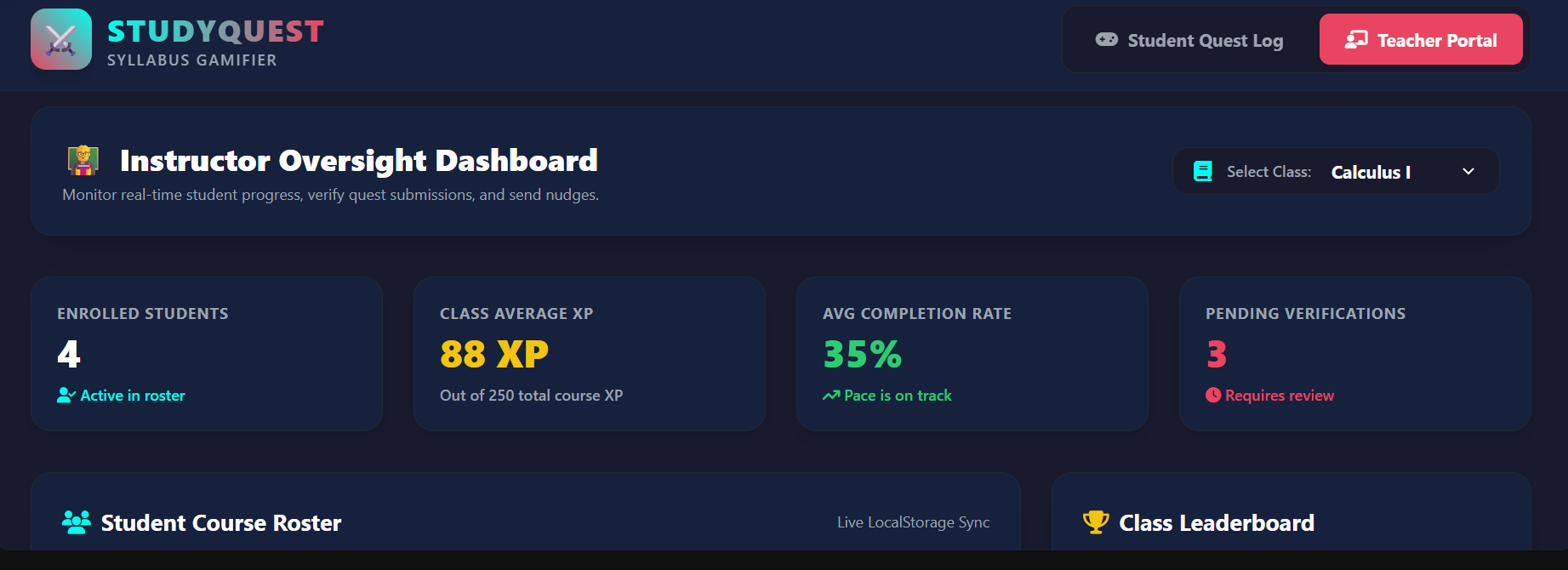
- Teacher Dashboard: Provides educators with real-time class analytics, tracking student progression, total accumulated XP, and completion verifications.
How I built it
Frontend: Built with responsive HTML5, CSS3, and JavaScript, featuring an immersive cyber-RPG dark theme, live XP tracking metrics, and dynamic completion verification modals.
Backend: Powered by Python Flask to handle file uploads, route requests, and manage data flow.
AI Engine: Integrated directly with the Google Gemini API (gemini-3.8-flash) to parse complex course outlines and extract clean, structured JSON quest data.
Challenges I ran into
File Handling Paths: Early on, the backend encountered FileNotFoundError exceptions trying to write uploaded files to temporary directories (/tmp) on Windows. I resolved this by streamlining our local file-saving logic in Flask.
API Adjustments & Traffic: Adapting to real-time model version updates required swift code adjustments. Additionally, handling temporary high-demand server traffic spikes taught me the importance of graceful error handling during AI processing.
Accomplishments that I proud of
Successfully integrating the Gemini API to reliably turn unstructured PDF layouts into clean, actionable gaming quests.
Developing a dual-interface MVP that serves both students (interactive task tracking and XP countdowns) and teachers (class oversight).
Transforming a dry academic problem into an engaging, motivational experience.
What we learned
Prompt Engineering is Key: Crafting precise prompts for Gemini allowed us to reliably extract structured JSON schedules straight from messy syllabus layouts.
Gamification Psychology: We saw firsthand how visual countdowns, XP badges, and completion milestones drastically shift user perception from feeling overwhelmed to feeling motivated.
Rapid Prototyping: Connecting a Python backend to an interactive front-end dashboard sharpened our collaborative debugging and full-stack problem-solving skills.
What's next for StudyQuest Application
Cloud Database Integration: Moving from local file persistence to a cloud database (like Firebase or PostgreSQL) for seamless cross-device student tracking.
User Authentication & Roles: Secure login portals distinguishing between student accounts and teacher accounts.
Automated Reminders: Integrating email or push notifications to nudge students before major "Boss Battle" exam deadlines.
Guild Study Groups: Allowing students to team up with classmates to tackle course quests cooperatively!


Log in or sign up for Devpost to join the conversation.