-
-
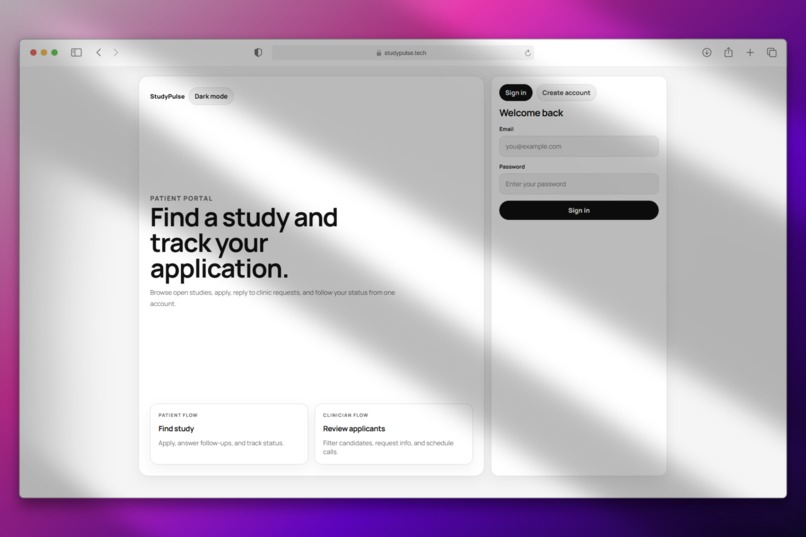
Landing Page
-
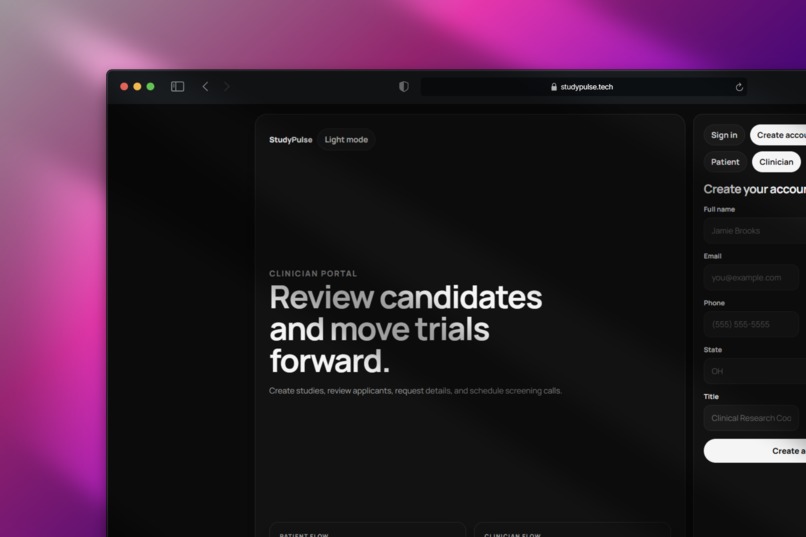
Landing Page (Dark Mode)
-
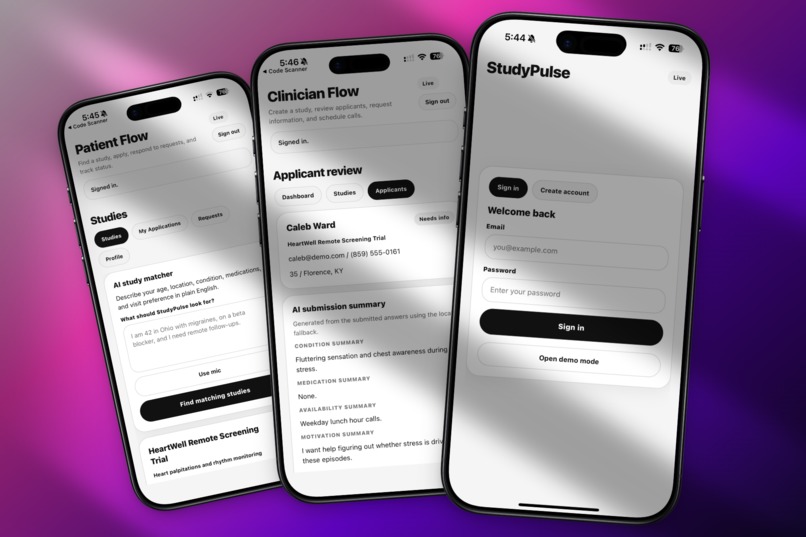
Mobile App (All Portals)
-
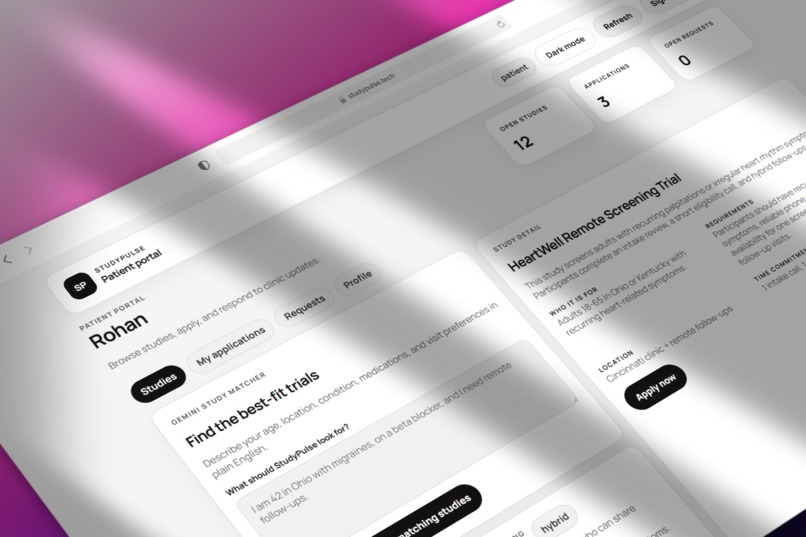
Patient Portal
-
Clinician Portal
Inspiration
Clinical trial recruitment is notoriously slow, fragmented, and bogged down by manual administrative work. Patients struggle to find studies that fit their specific needs, while coordinators drown in manual application reviews, chase missing information, and manage followups through disconnected tools. Built for the Medpace challenge, we wanted to fix the front door of the clinical trial process. We built StudyPulse to be a cohesive digital ecosystem that radically streamlines patient intake, pre screening, and coordinator review, removing the friction that typically slows down medical research.
What it does
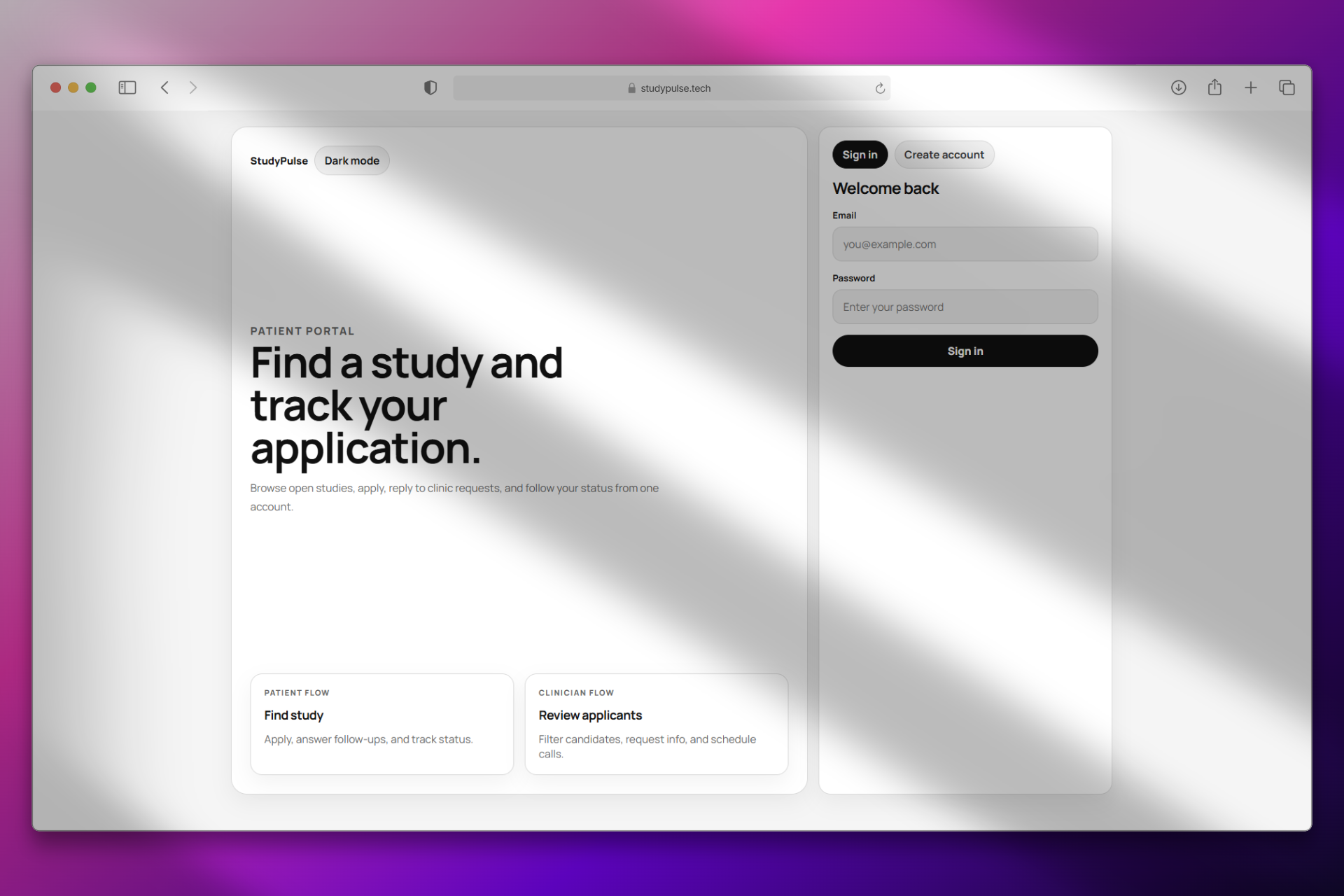
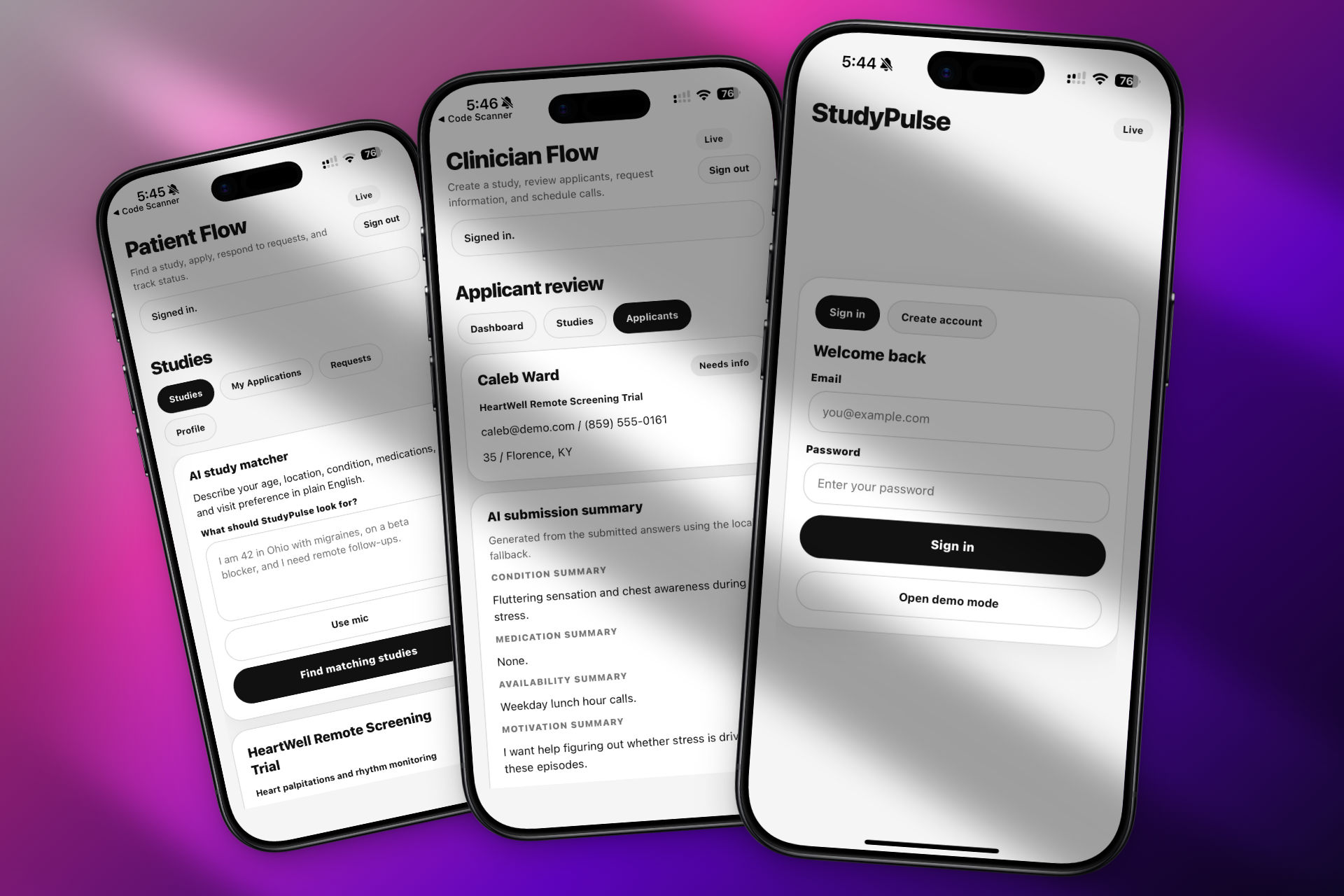
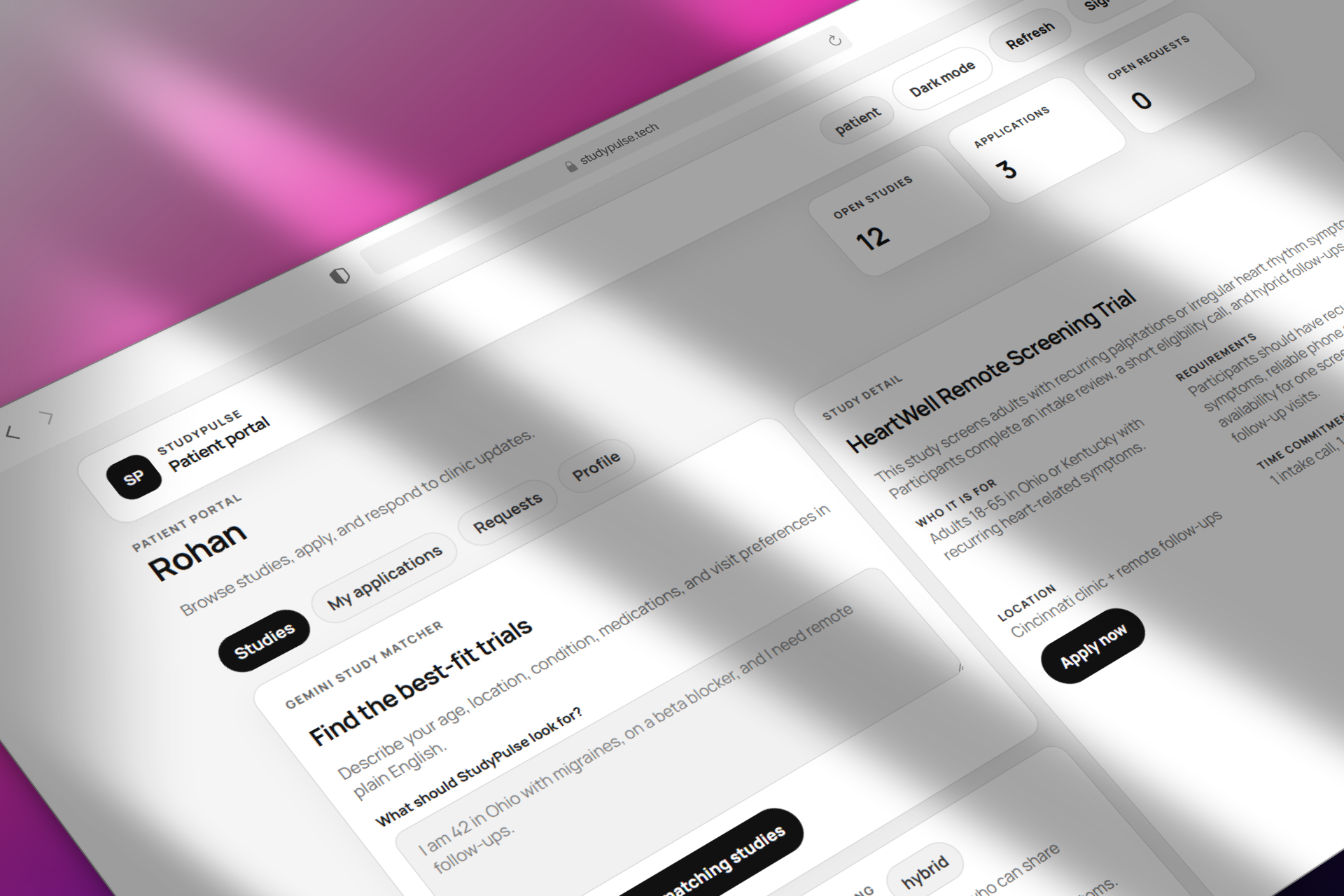
StudyPulse is a cross platform clinical trial recruitment engine featuring two distinct but deeply connected user experiences backed by a single live database. For patients on the mobile app, they can use conversational search through typing or voice to find highly relevant trials based on personal criteria like conditions, medications, or location. They can apply to studies through an intuitive multi step form, securely respond to clinician requests for additional details, and monitor their application status in real time from initial submission to a scheduled call.
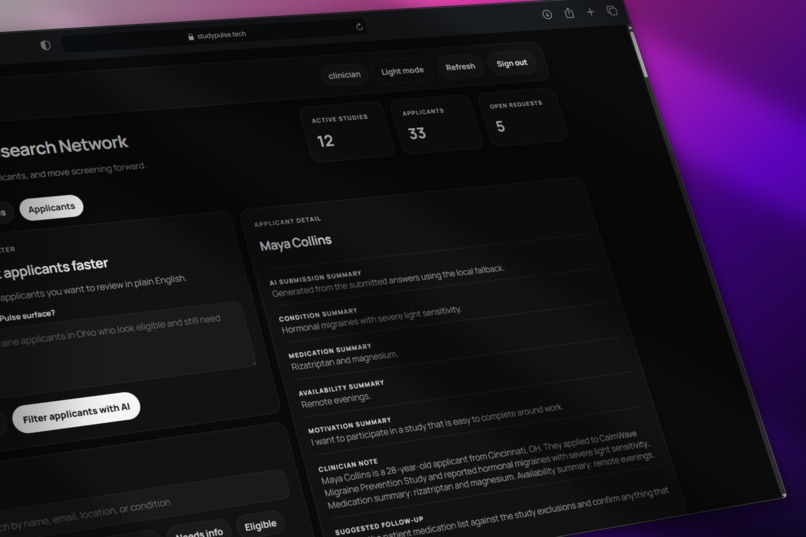
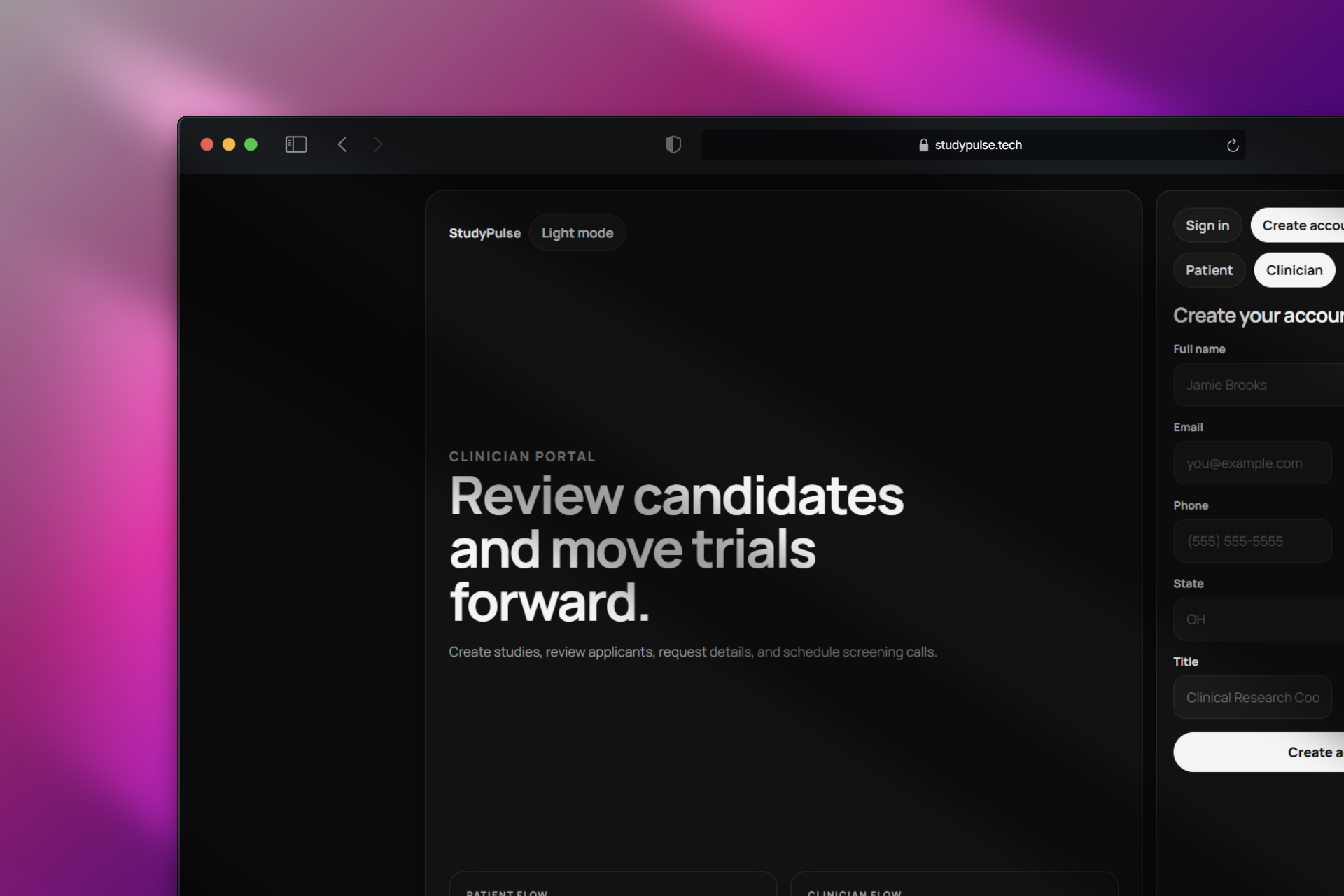
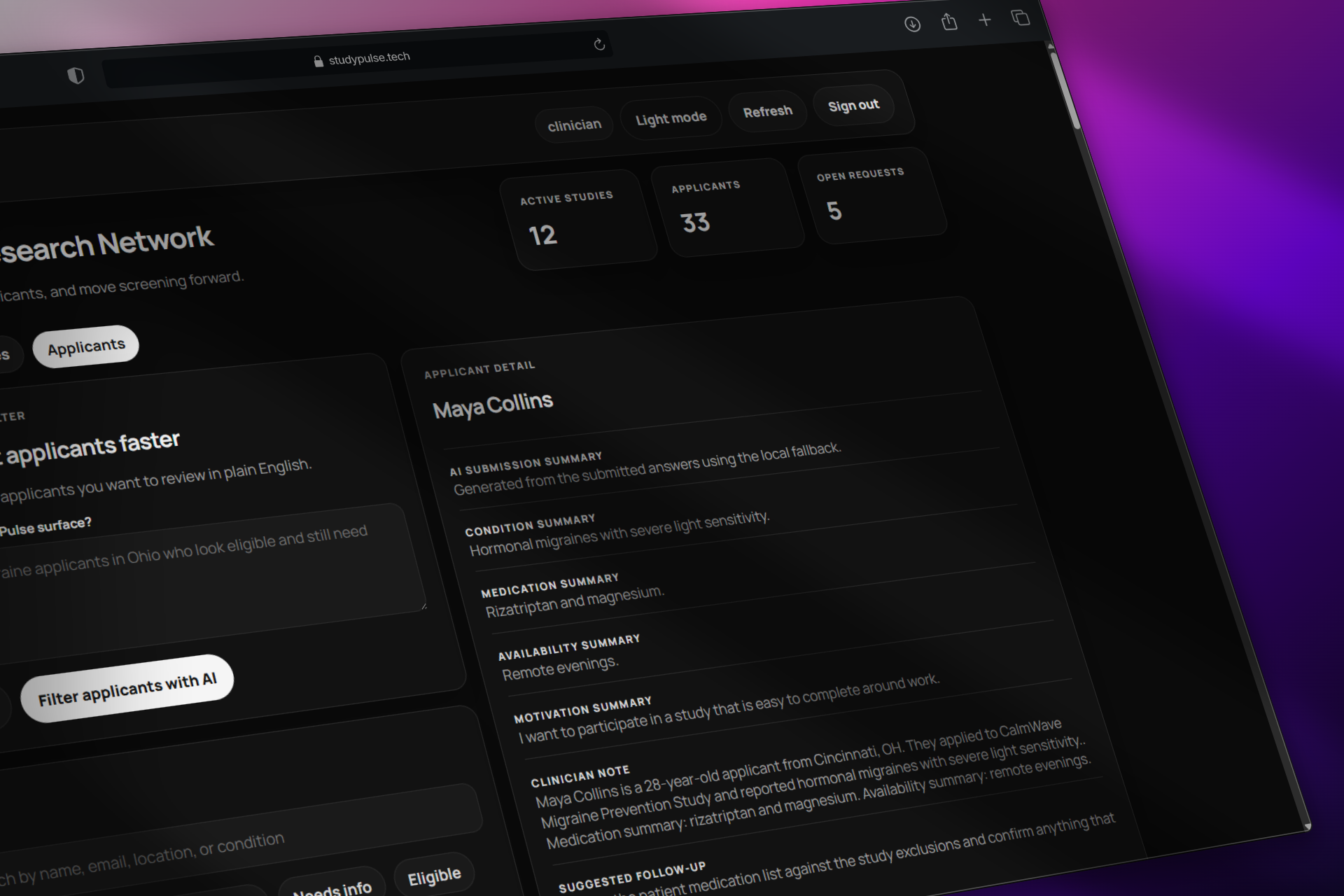
For clinicians on the web dashboard, they get a centralized triage center to publish studies and monitor incoming applicants. They can surface the best candidates instantly using structured filters and natural language queries, read clean AI generated summaries of patient free text responses for much faster decision making, and easily manage workflows by requesting missing information and updating candidate statuses. The core innovation is unification. We eliminate disjointed third party tools by bringing patients and clinicians onto the exact same system.

How we built it
We built StudyPulse using a modern and cohesive cross platform architecture. The frontend uses Expo React Native for the patient facing mobile app and React alongside Vite for the clinician facing web portal. For the backend and database, we used Supabase and PostgreSQL to maintain a single source of truth, along with Supabase Auth for secure role based access. For AI integration, the Gemini API handles intelligent study matching, semantic applicant filtering, and submission summarization. We also incorporated ElevenLabs and Expo Audio to power the speech to text functionality for hands free interaction, and styled everything with CSS and React Native StyleSheet. Because both platforms share a unified Supabase architecture, data syncs in real time. When a patient applies on mobile, it instantly populates the clinician's web dashboard. We also seeded realistic study and applicant data to ensure the platform is fully demonstrable.

Challenges we ran into
Clinical software can easily balloon into full scale analytics, patient tracking, and study operations platforms. We had to strictly narrow our focus to the exact bottleneck where we could deliver the highest immediate value, which is recruitment and early screening. Designing two distinct user experiences while maintaining a deeply connected shared backend also required careful handling of role based routing, session recovery, and cross platform data syncing. Additionally, ensuring our AI acted as a reliable operational assistant rather than attempting to make medical decisions required careful prompt engineering and workflow constraints to maintain user trust.
Accomplishments that we are proud of
We successfully built a true end to end workflow that does not just list clinical trials, but actively moves users through the entire early stage lifecycle from finding and applying to reviewing, requesting info, triaging, and scheduling. By implementing AI summarization, we dramatically reduced coordinator review time, creating massive efficiency gains through automated data structuring and semantic filtering.
We are also incredibly proud of the seamless cross platform syncing we achieved by bridging a React Native mobile app and a React web portal with a single Supabase backend so patient updates appear instantly for clinicians. Most importantly, we implemented practical AI. We avoided the trap of building AI for the sake of AI and instead deployed it specifically to solve operational bottlenecks while keeping the human coordinator firmly in the driver's seat.
What we learned
We learned a massive amount about designing for real world operational workflows rather than just stringing together isolated features. Technically, we mastered sharing a single backend across mobile and web, implementing role based authentication, and structuring a dual sided marketplace. Crucially, we learned that when building high stakes healthcare applications, UX clarity, simplicity, and trust matter just as much as the technology itself.
What is next for StudyPulse
We plan to connect third party calendar APIs like Calendly or Google Calendar so patients can book their initial screening calls directly within the app once marked eligible. We are also exploring ways to securely pull in existing patient health records with consent to pre fill application data and further speed up the screening process. Implementing SMS and push notifications to alert patients the moment a clinician requests more information or updates their application status is another major priority. Finally, we want to harden the infrastructure to meet full HIPAA and SOC2 compliance standards for real world clinical deployment.
Built With
- css
- elevenlabs
- expo.io
- gemini
- postgresql
- react
- react-native
- supabase
- supabase-auth
- typescript
- vite

Log in or sign up for Devpost to join the conversation.