-
-
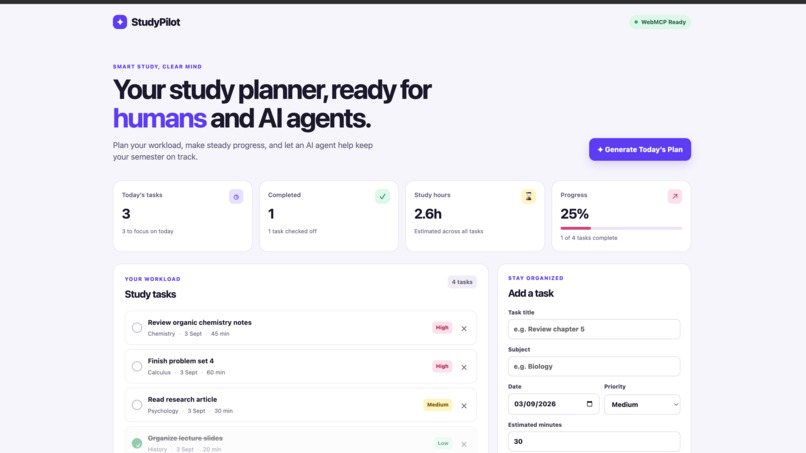
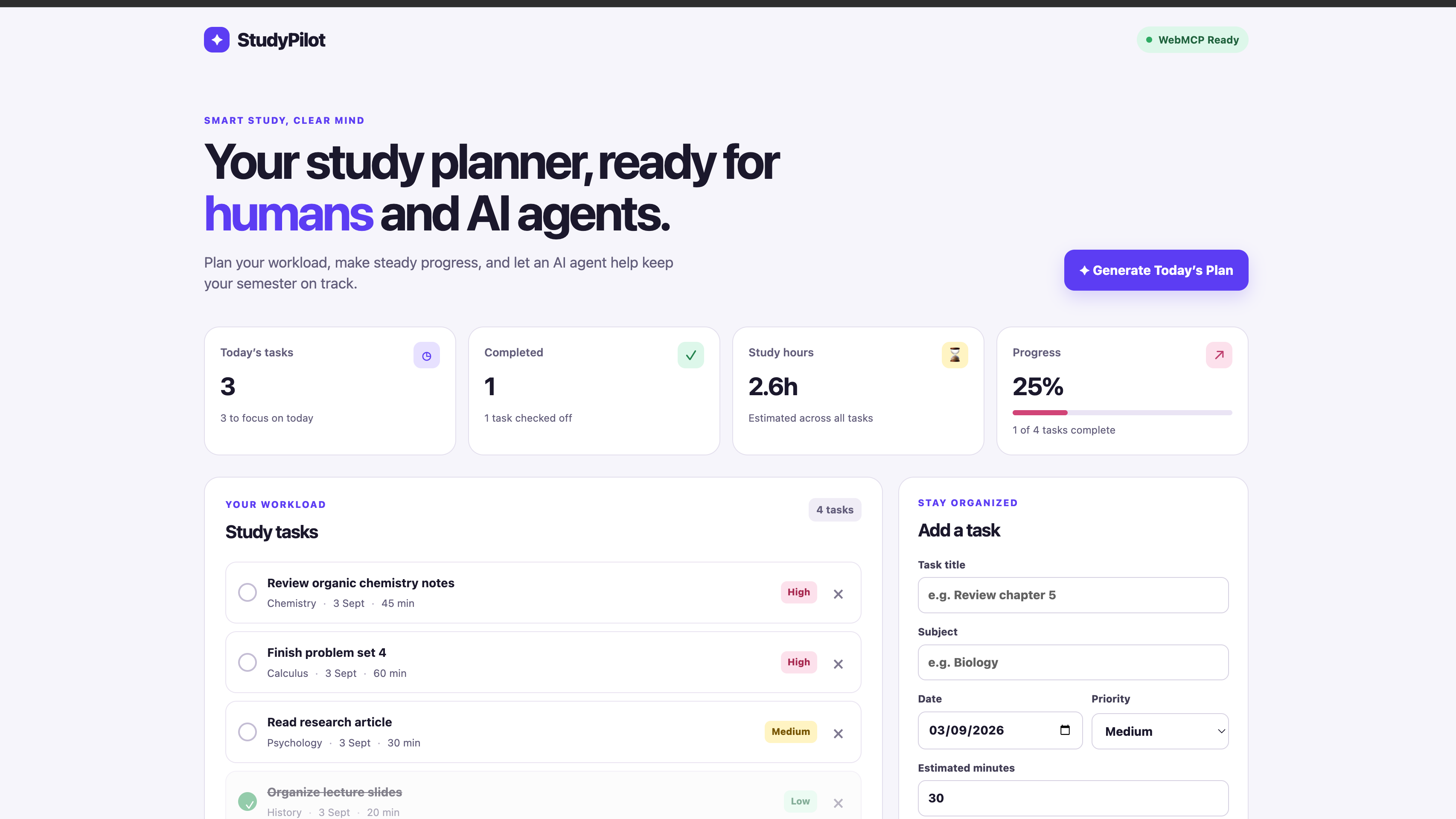
Main dashboard
-
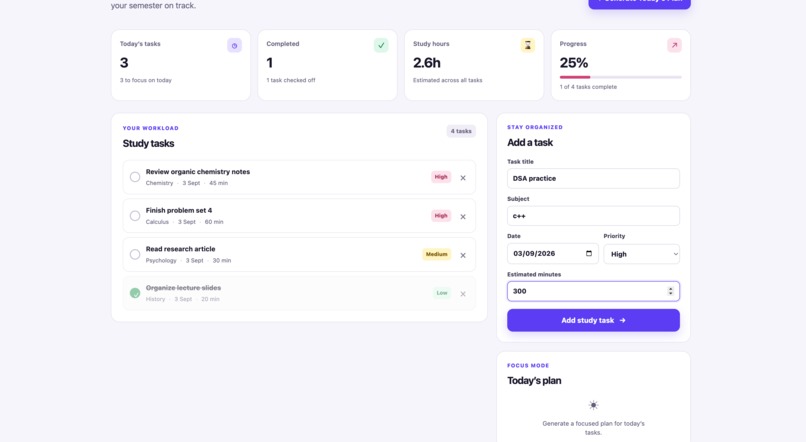
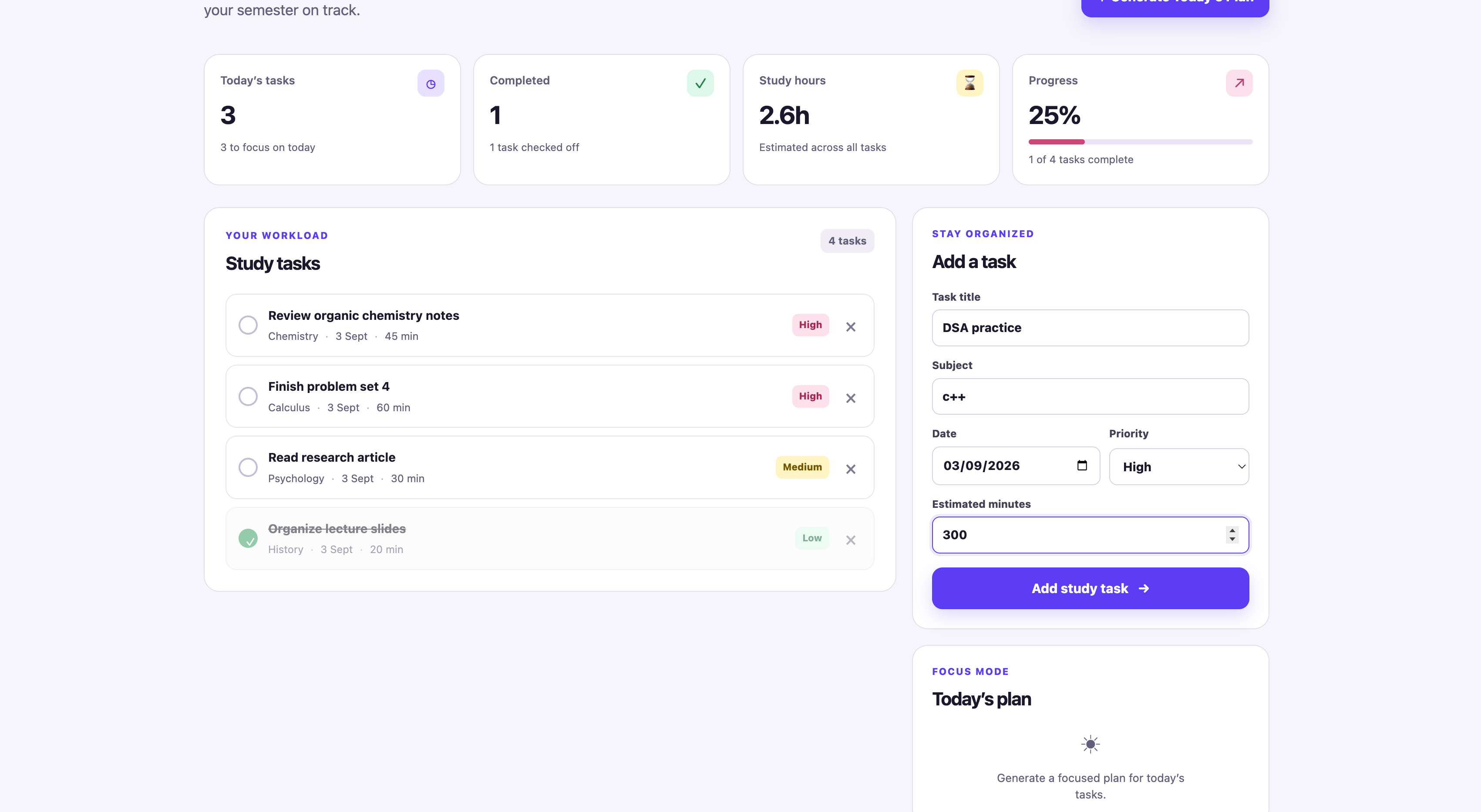
Add Task
-
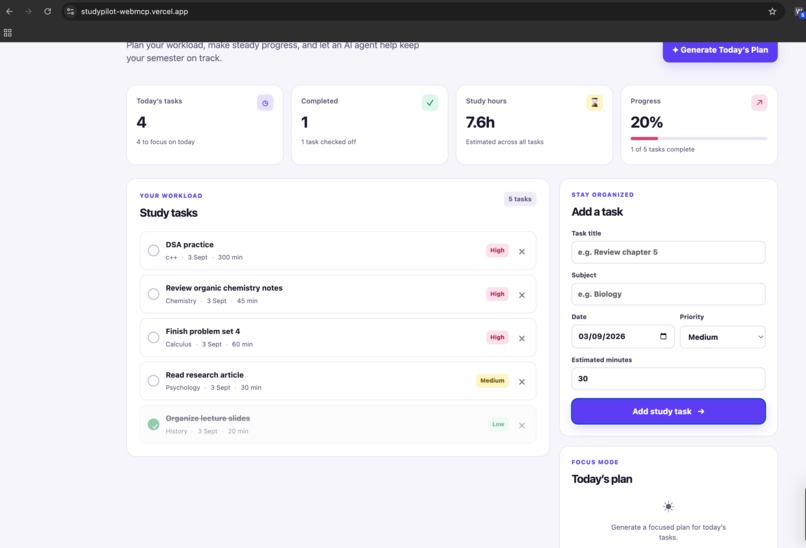
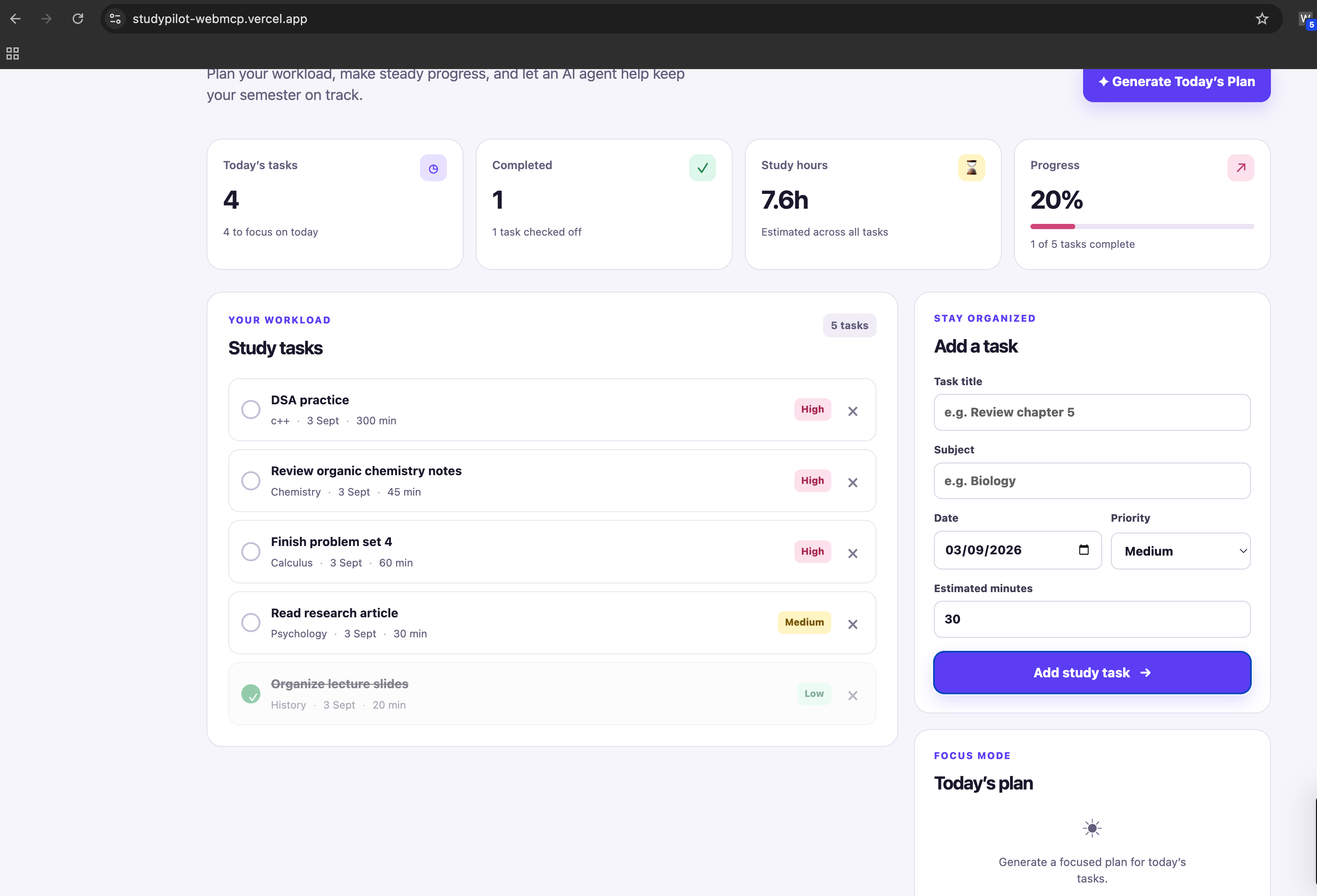
Tasks after adding DSA practice
-
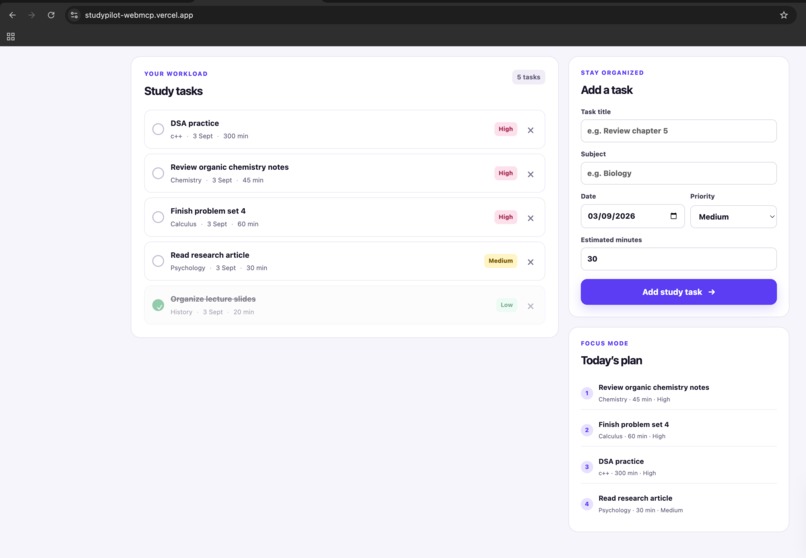
Today's Plan
-
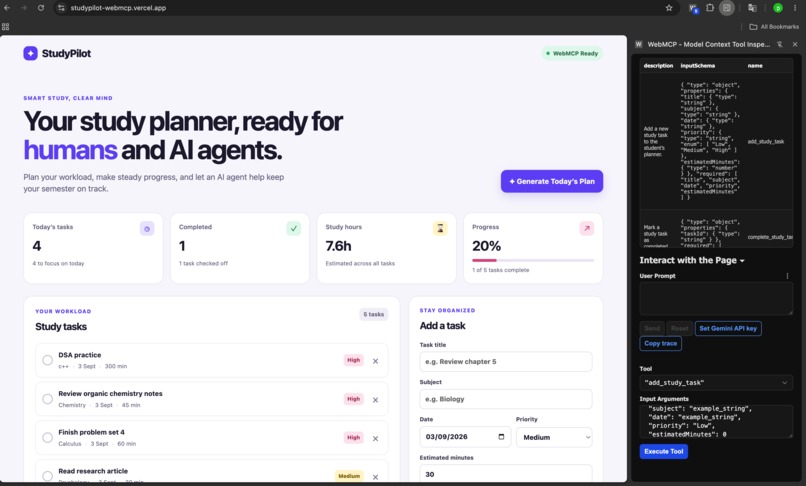
WebMCP/tool interaction
Inspiration
As students, managing assignments, revision, practice, and deadlines can quickly become overwhelming. Most study planners are designed primarily for humans to interact with through buttons and forms, but we wanted to explore a different approach: what if an AI agent could work with the same study planner alongside the student?
This idea led us to build StudyPilot, a study planner designed from the beginning to support both human users and AI agents.
The WebMCP Challenge gave us the opportunity to explore how websites can expose structured capabilities to AI agents instead of forcing agents to rely only on traditional UI interaction.
What it does
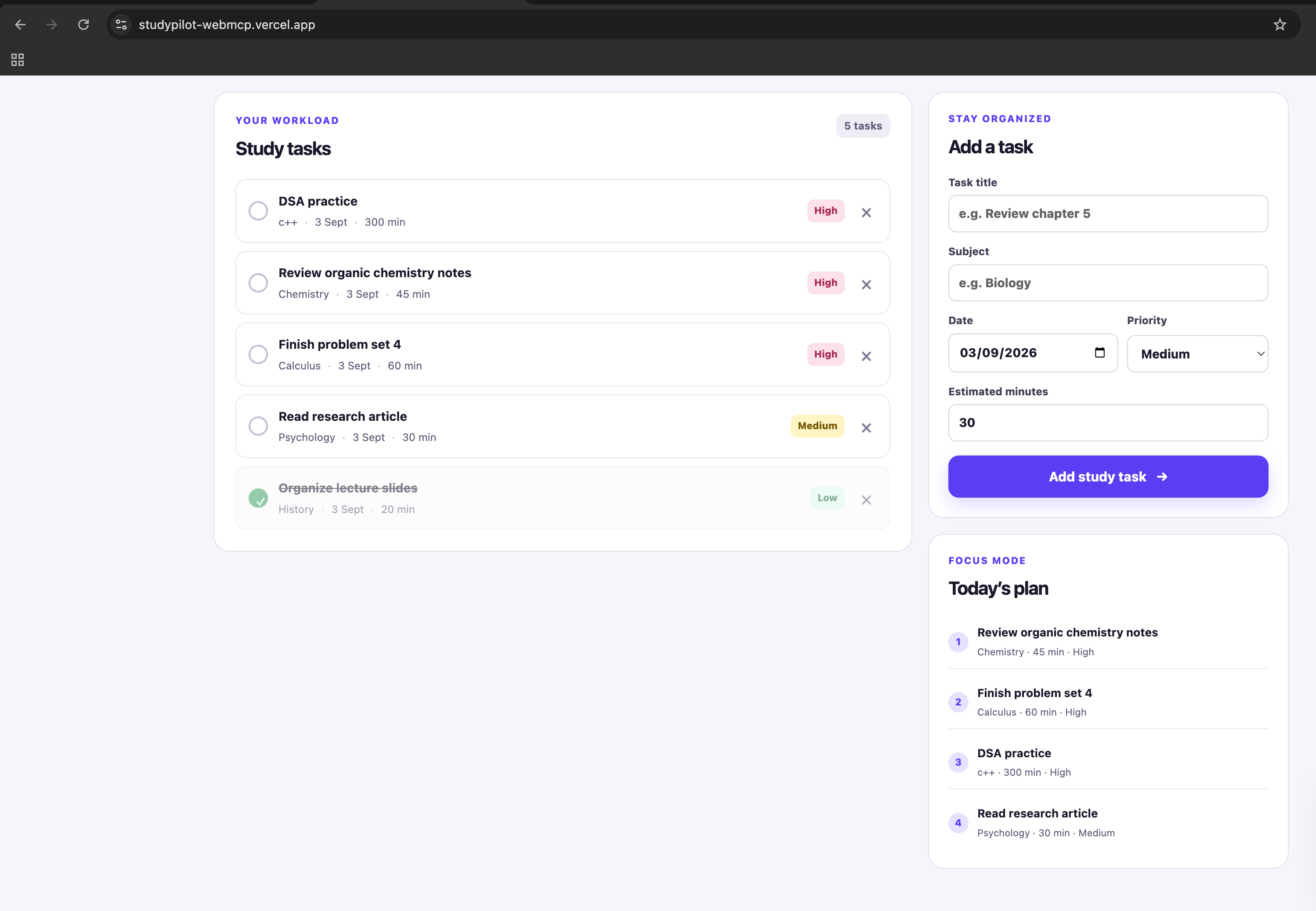
StudyPilot is an AI-agent-ready study planner that lets students organize and manage their academic tasks.
Through the normal web interface, students can:
Add study tasks with subjects, priorities, dates, and estimated time View their study tasks Mark tasks as completed Delete tasks Generate a prioritized study plan
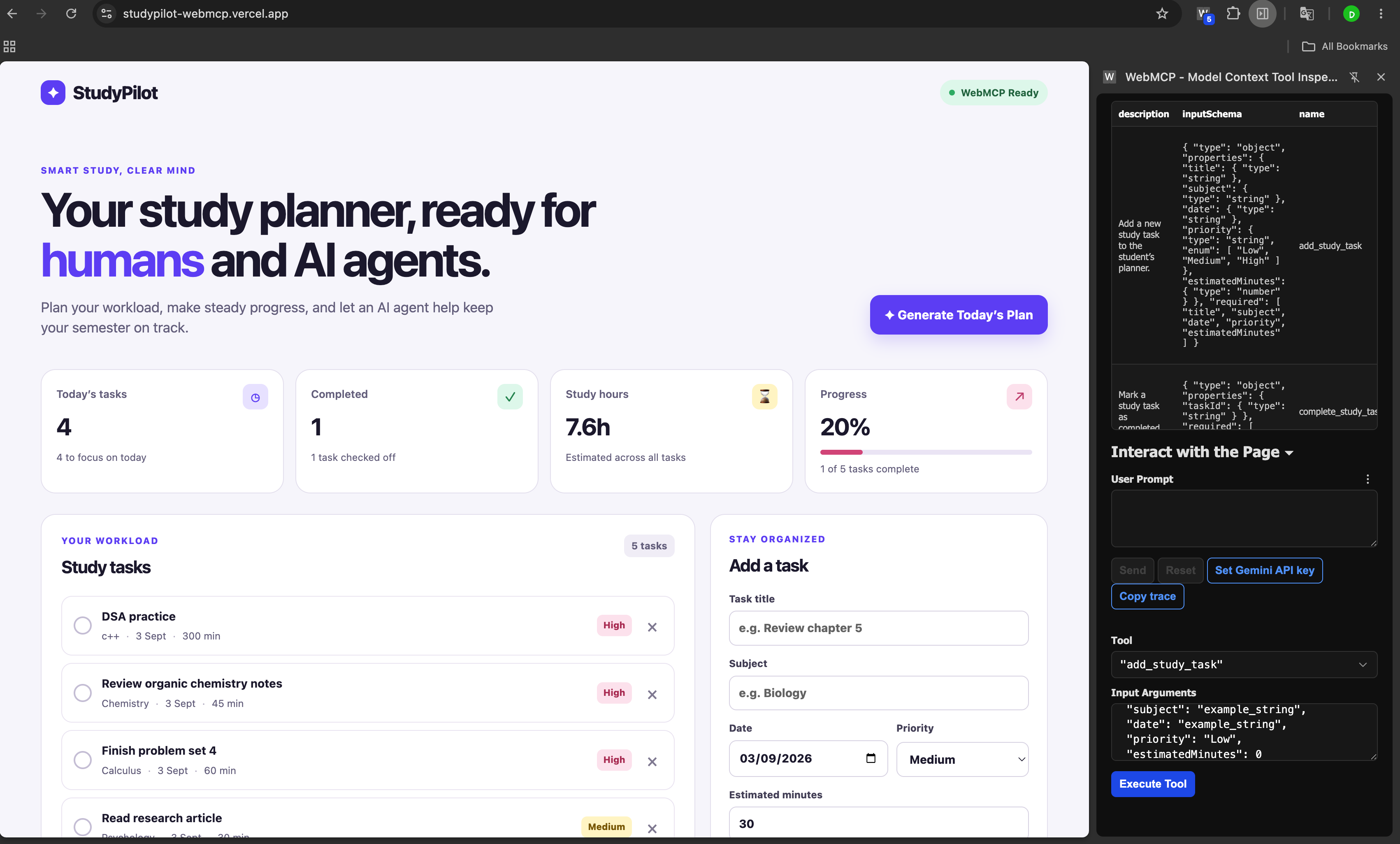
The same functionality is also exposed through WebMCP tools, allowing compatible AI agents to interact with the application programmatically.
StudyPilot currently provides five WebMCP tools:
add_study_task get_study_tasks complete_study_task delete_study_task generate_study_plan
This creates a simple human + AI collaboration model where the student can use the interface directly while an AI agent can use structured tools to help manage their study workflow.
How we built it
We built StudyPilot as a lightweight web application using:
HTML — application structure CSS — responsive interface and visual design JavaScript — application logic and task management WebMCP — exposing StudyPilot functionality to AI agents LocalStorage — persistent task data in the browser
The application uses WebMCP's document.modelContext.registerTool API to register the five tools.
We designed each tool with clear inputs and outputs so that an AI agent can understand what the tool does and interact with StudyPilot without needing to manually navigate the UI.
We also deployed the application publicly so the project can be tested as a live web application.
Challenges we ran into
One of our biggest challenges was understanding how to design a normal web application while also making its functionality accessible to AI agents.
We had to think beyond traditional button-based interactions and define structured tools, parameters, and tool responses that an agent could reliably understand.
Another challenge was making sure that actions performed through WebMCP stayed synchronized with the user interface and persisted correctly using LocalStorage.
We also had to test each WebMCP tool individually and fix issues such as parameter naming and ensuring the tools were correctly registered and discoverable.
Accomplishments that we're proud of
We are proud that we turned a simple study planner into an application that can be used by both humans and AI agents.
Some accomplishments we're particularly proud of:
Built and deployed a complete working study planner Implemented five functional WebMCP tools Made the same underlying study data accessible through both the UI and WebMCP Added persistent task storage using LocalStorage Implemented automatic prioritized study-plan generation Tested all WebMCP tools successfully Created a public live demo and open-source repository
Most importantly, StudyPilot helped us move from simply building a website to thinking about how websites can become usable interfaces for AI agents.
What we learned
This project taught us that building for AI agents requires a different way of thinking about web applications.
Instead of only asking "What buttons should the user click?", we also had to ask:
"What capabilities should an AI agent be able to discover and use?"
We learned how WebMCP tools can expose specific application capabilities in a structured way and how human interfaces and agent interfaces can coexist within the same application.
We also gained practical experience with JavaScript, browser storage, tool registration, debugging, deployment, and testing an AI-agent-ready web application.
What's next for StudyPilot
StudyPilot is currently a lightweight prototype, but we see several possibilities for expanding it.
Future versions could include:
AI-powered personalized study recommendations Automatic task creation from assignments or syllabi Calendar and reminder integration Progress tracking and analytics Cloud synchronization across devices More advanced AI-agent workflows Collaboration between students and AI agents for long-term study planning
Our long-term goal is to make StudyPilot more than just a task manager — a study companion where students stay in control while AI helps them plan, organize, and execute their learning goals.
Built With
- css3
- github
- html5
- javascript
- localstorage
- vercel
- webmcp


Log in or sign up for Devpost to join the conversation.