-
-
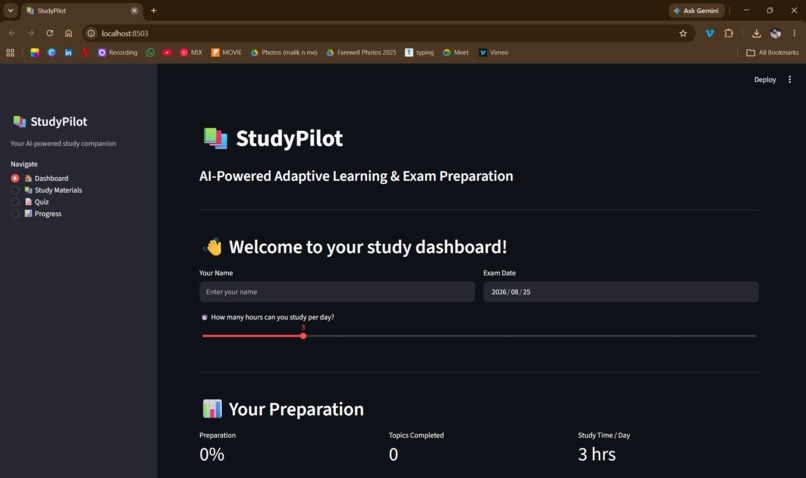
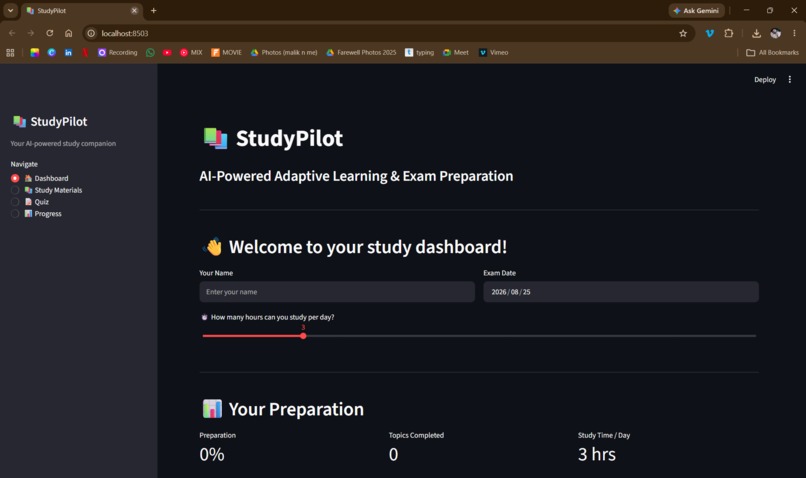
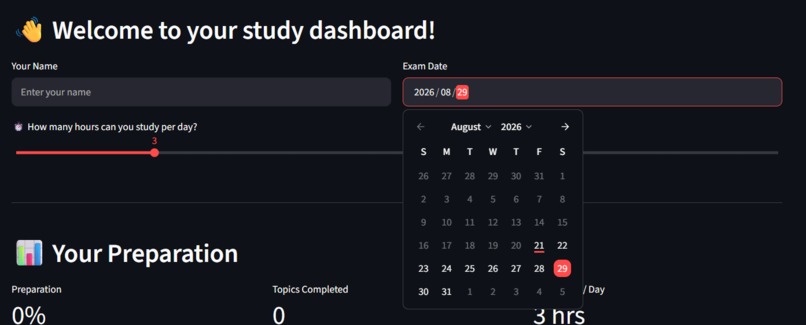
Dashboard
-
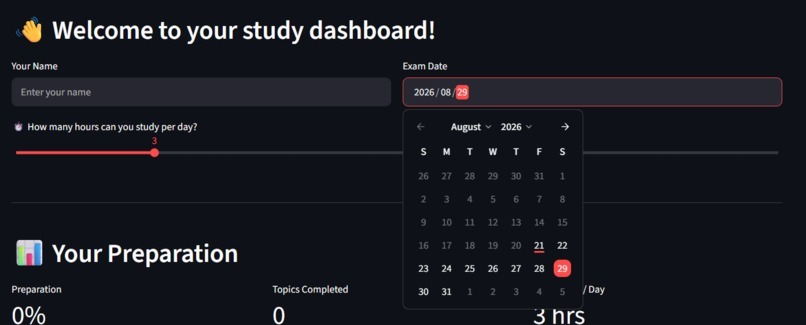
Examination Dates Selection
-
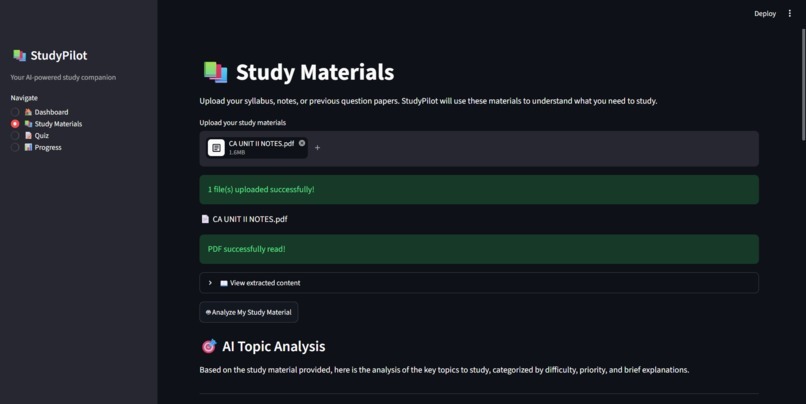
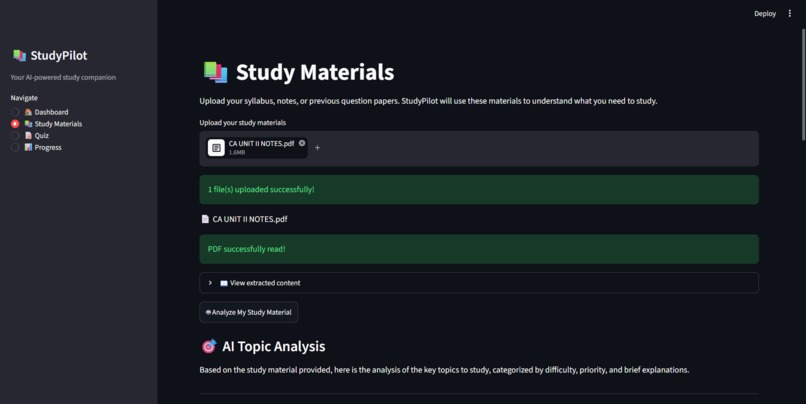
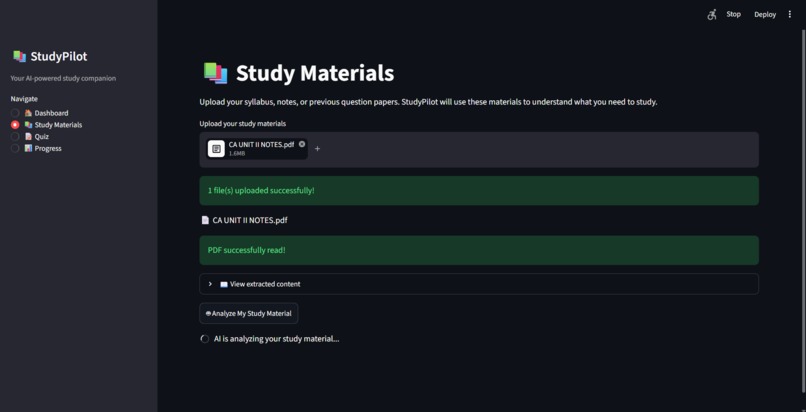
Study Materials
-
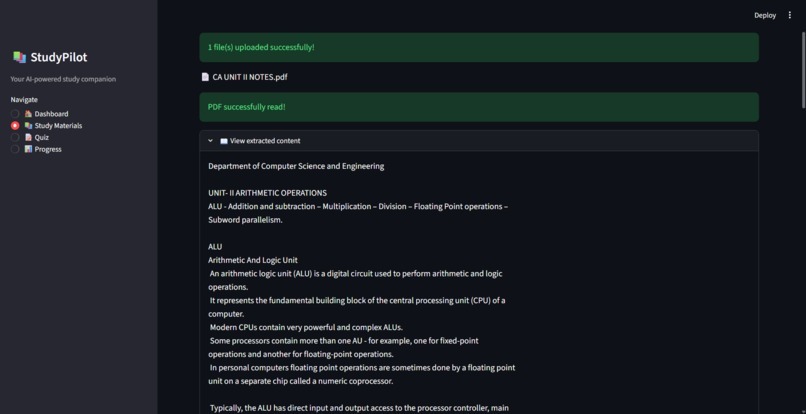
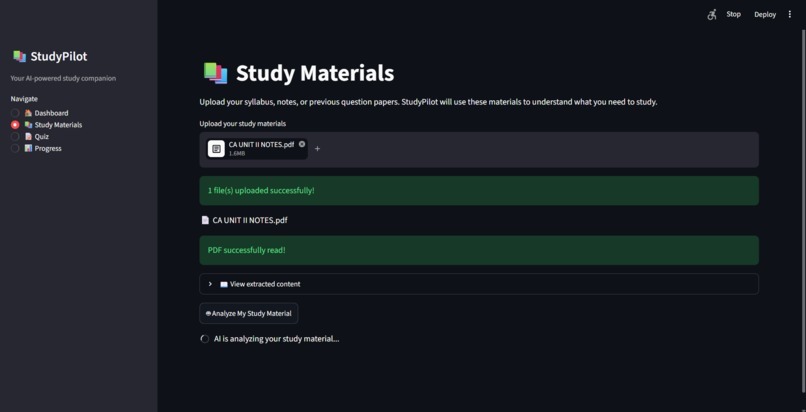
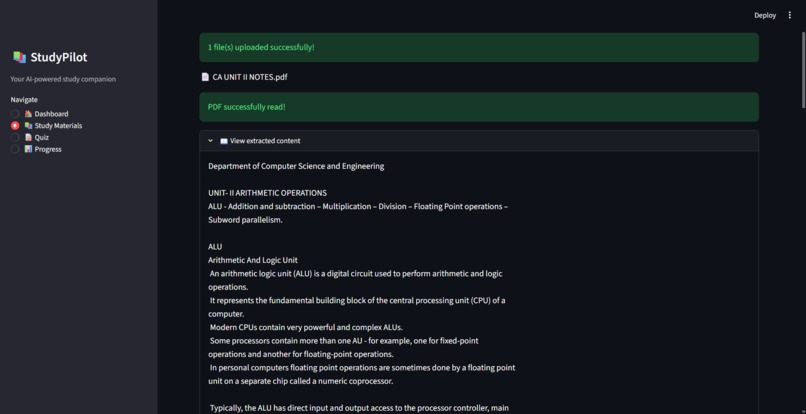
Notes Extraction
-
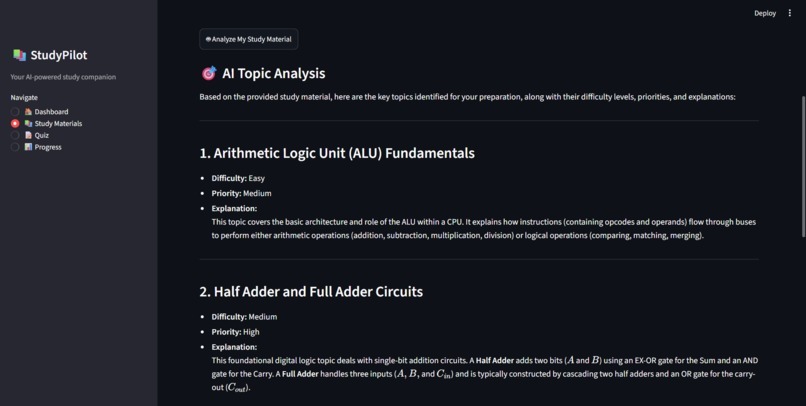
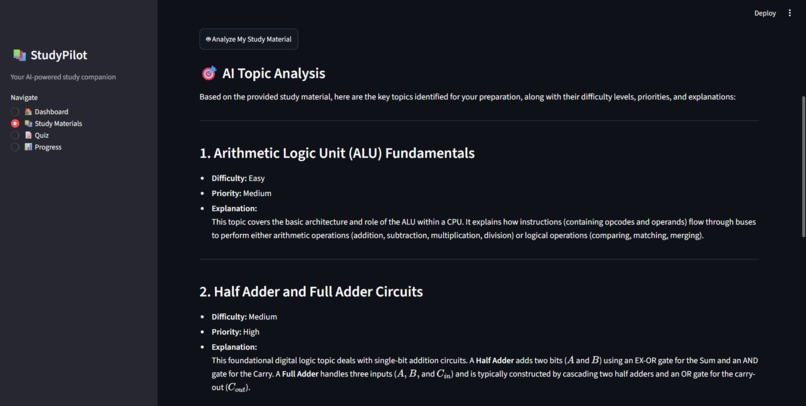
AI Analyzer
-
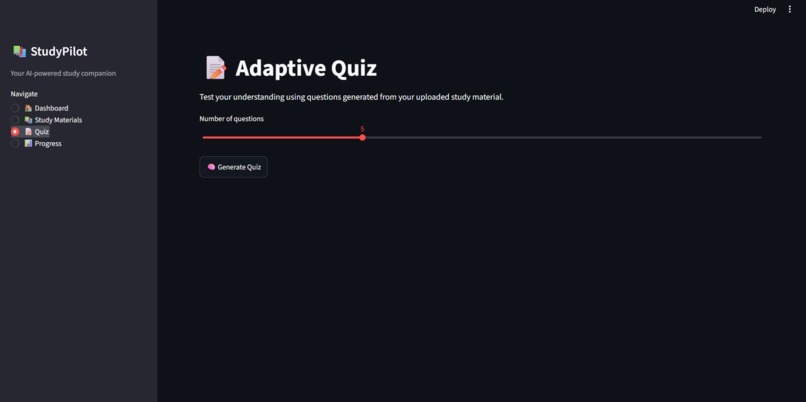
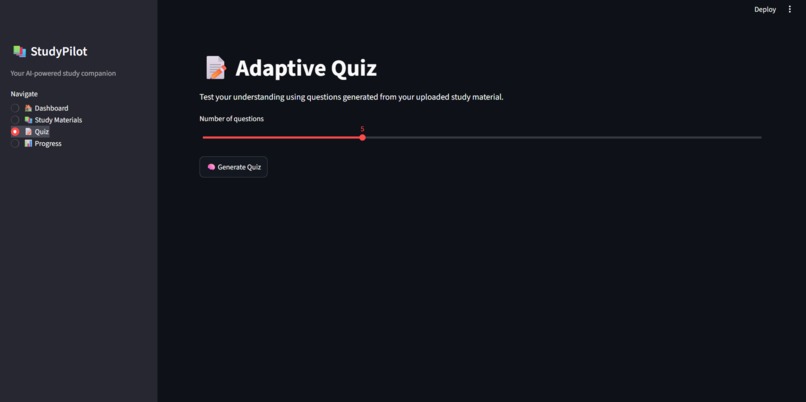
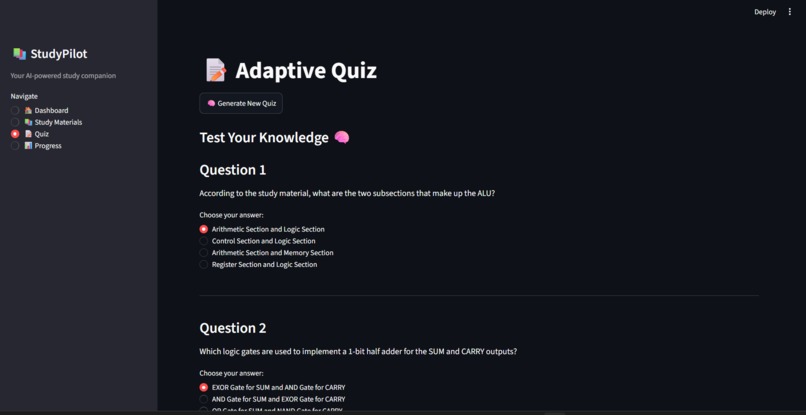
Quiz
-
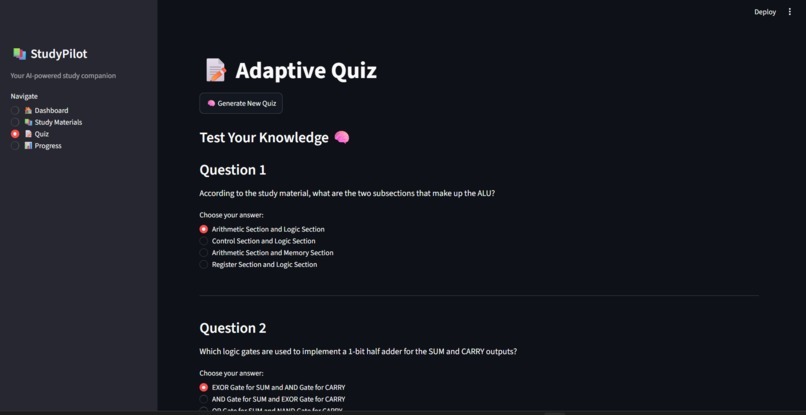
Quiz Generation
-
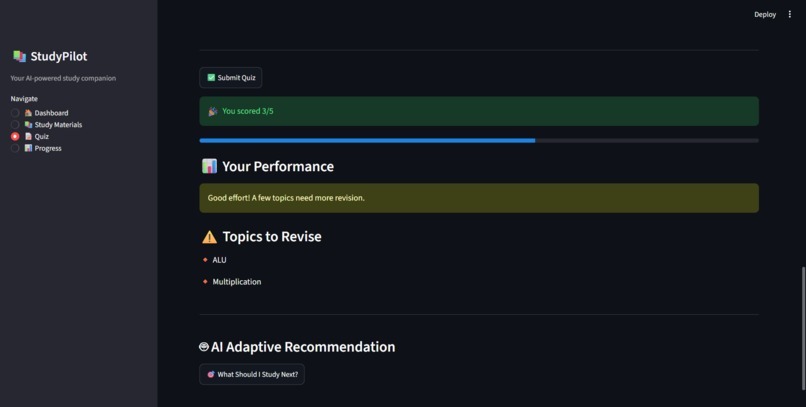
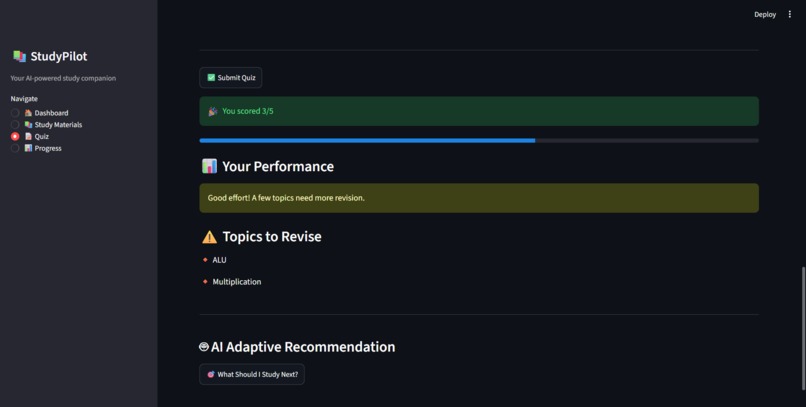
Quiz Results
-
AI Adaptive Recommendation
-
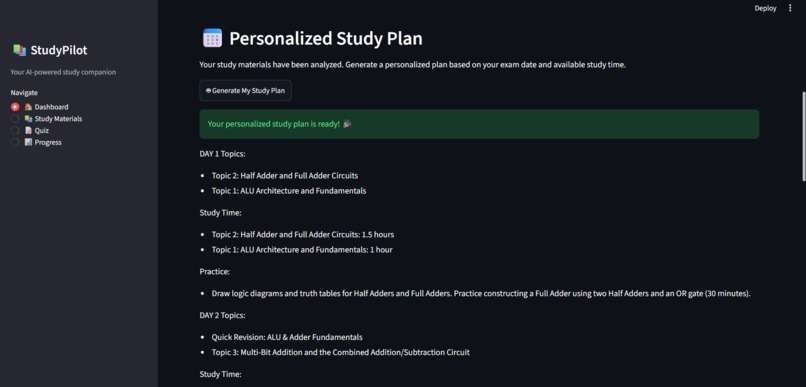
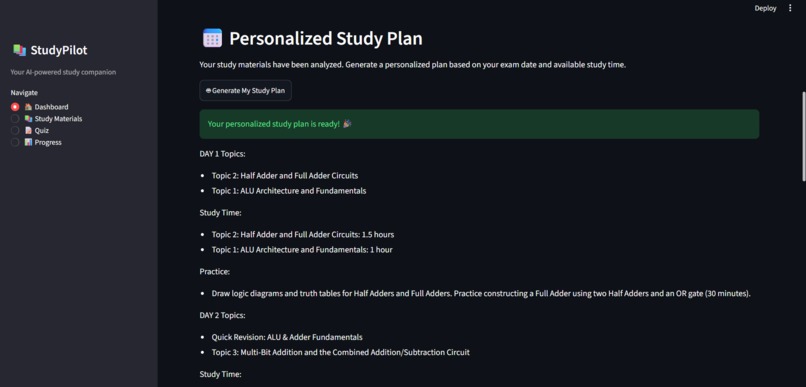
Personalised Study Plan
-
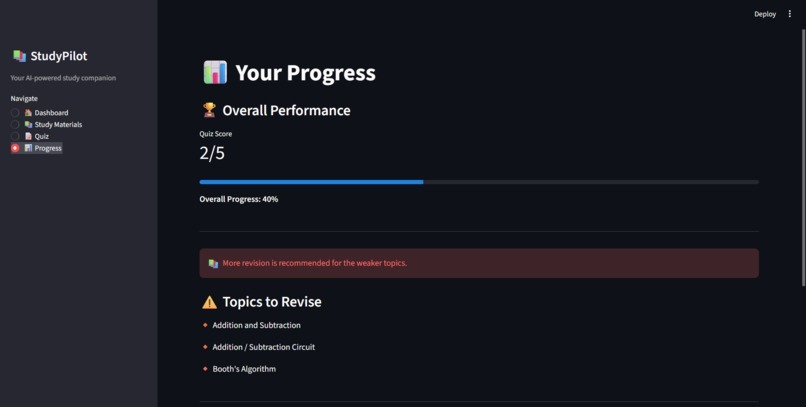
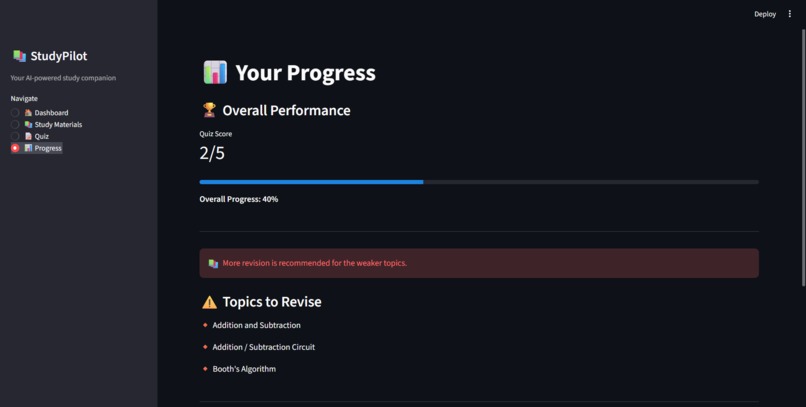
Progress
Inspiration
Students often spend a lot of time deciding what to study, how much to study, and what to revise next. Traditional study methods usually provide the same learning path to everyone, even though students have different strengths and weaknesses.
We were inspired to build StudyPilot as an AI-powered study companion that makes exam preparation more personalized and adaptive. Instead of simply providing study material, StudyPilot analyzes what a student is learning, creates a personalized plan, tests their understanding, and uses their performance to recommend what they should focus on next.
What it does
StudyPilot converts a student's study material into a personalized learning cycle:
Study Material → AI Analysis → Study Plan → Quiz → Performance Analysis → Adaptive Recommendation
Students can upload their study materials as PDFs. StudyPilot extracts the content and uses AI to identify important topics and their priorities. Based on the topics, exam date, and available study time, it generates a personalized study plan.
The AI then generates a quiz based on the uploaded material. After the student completes the quiz, StudyPilot calculates their score and identifies weak topics. It then provides an adaptive recommendation suggesting what the student should revise and what to do next.
How we built it
We built StudyPilot using Python and Streamlit for the application interface and integrated Google Gemini AI for intelligent analysis and recommendations.
The main components include:
- PDF text extraction using pypdf
- AI topic analysis to identify important study areas
- Personalized study planning based on exam date and available study hours
- AI-generated quizzes based on uploaded study material
- Quiz performance analysis to identify weak topics
- Adaptive recommendations based on quiz performance
- Streamlit for the interactive web application
- The application is organized into separate modules for PDF processing, AI interaction, topic analysis, study planning, quiz generation, and adaptive recommendations.
Challenges we ran into
One of our main challenges was making the AI output reliable enough for an interactive application. We needed structured quiz data so that questions and answers could be displayed correctly and evaluated automatically.
We also faced challenges with API availability, handling AI-generated responses, connecting different components of the application, and maintaining the student's data between different pages of the Streamlit app.
Another challenge was designing the system so that quiz performance could actually influence the next recommendation rather than simply showing a static result.
Accomplishments that we're proud of
We successfully developed a working end-to-end adaptive learning prototype.
The most important accomplishment is the adaptive learning loop: StudyPilot does not stop after generating a study plan or quiz. It uses the student's quiz performance to identify weak areas and provide a personalized recommendation for what to study next.
This allows the project to demonstrate how AI can support a more personalized approach to exam preparation.
What we learned
Through this project, we learned how to integrate generative AI into a real-world application and how to design an application around an AI-driven workflow.
We gained practical experience with:
- Python and Streamlit application development
- PDF processing and text extraction
- Prompt engineering with Gemini
- Structured AI outputs and JSON
- Session state management
- Quiz evaluation and performance analysis
- Building adaptive recommendation systems
- Connecting multiple software components into one working application
Most importantly, we learned that an effective AI application is not just about generating content — it is about using user input and feedback to continuously improve the next action.
What's next for StudyPilot: AI-Powered Adaptive Learning
We plan to make StudyPilot more intelligent and personalized by adding long-term progress tracking, improved performance analytics, spaced repetition, topic-wise progress visualization, and more adaptive study plans.
Future versions could also integrate additional learning resources and provide continuous recommendations based on a student's performance over time.
Built With
- .env
- ai
- geminiapi
- github
- machine-learning
- pypdf
- python
- streamlit

Log in or sign up for Devpost to join the conversation.