-
-
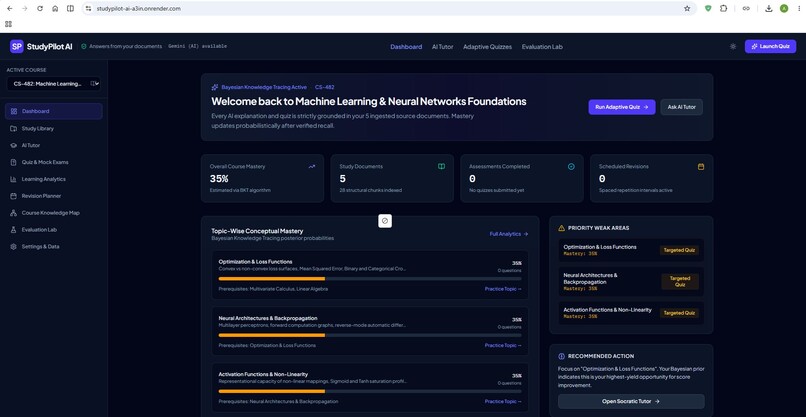
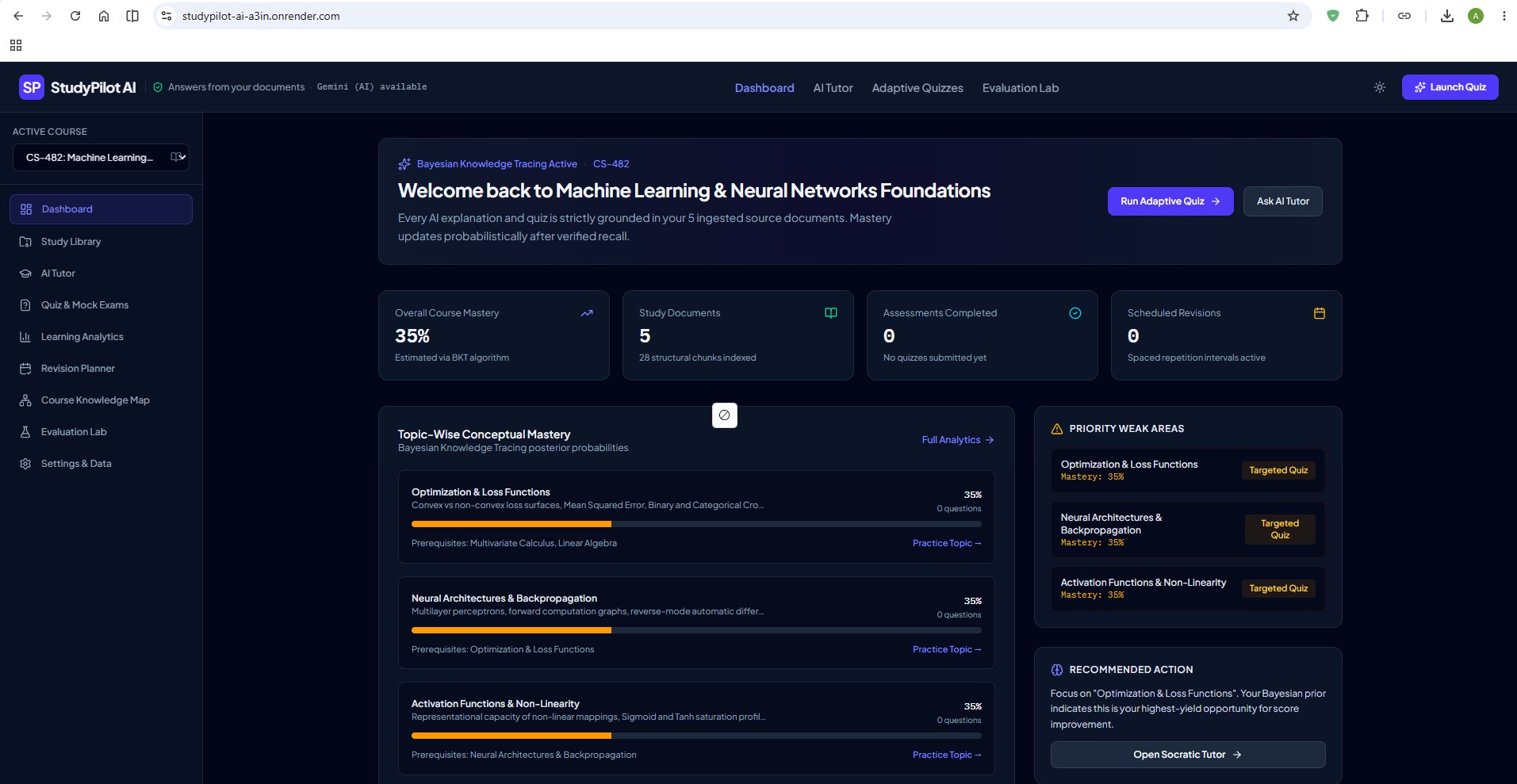
Dashboard
-
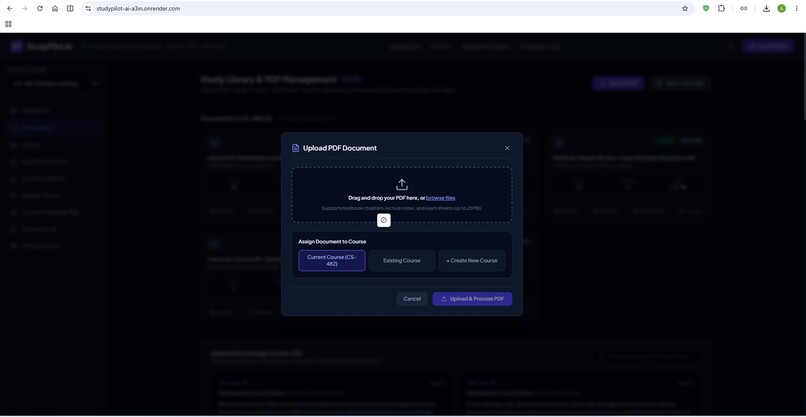
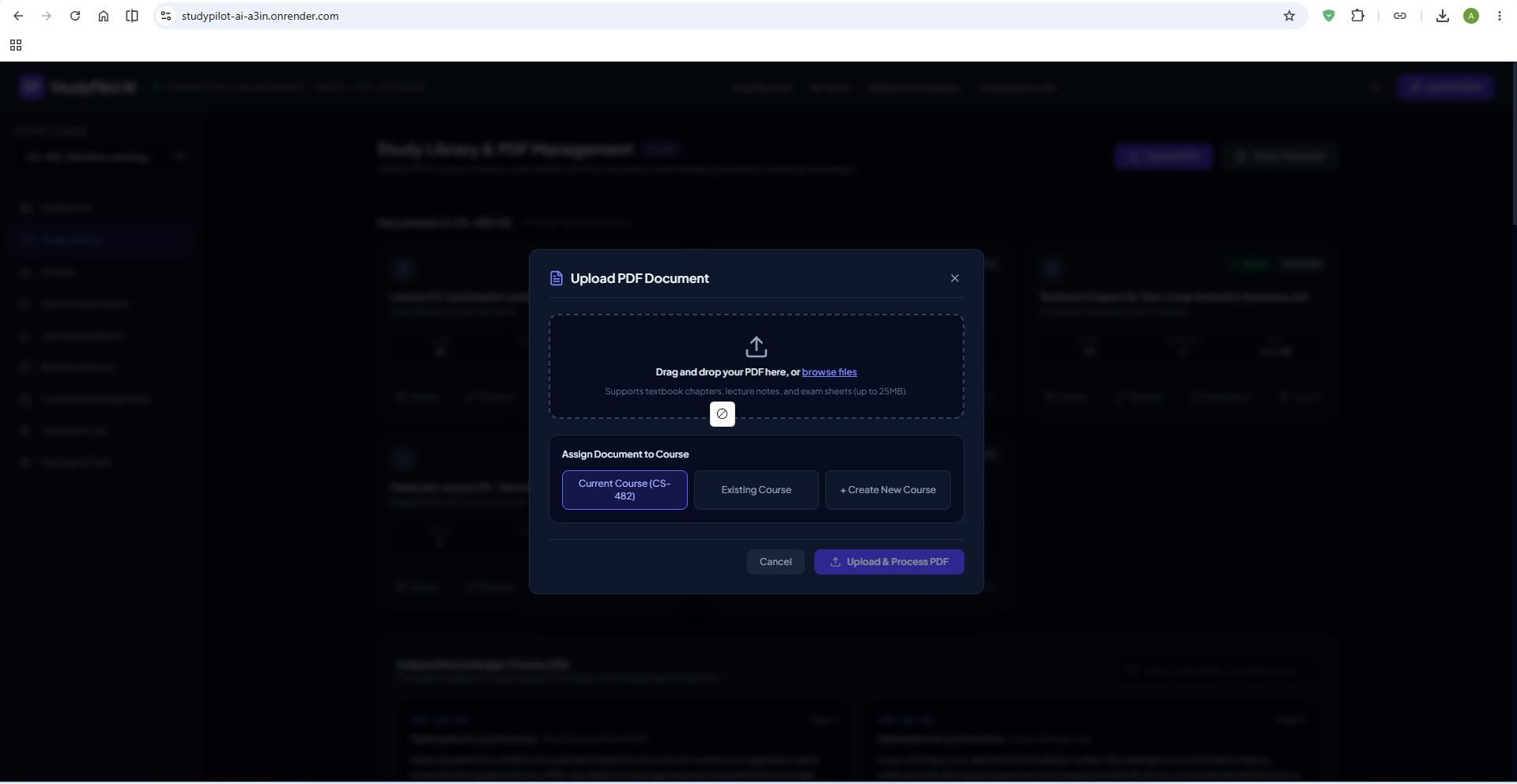
Upload pdf Notes
-
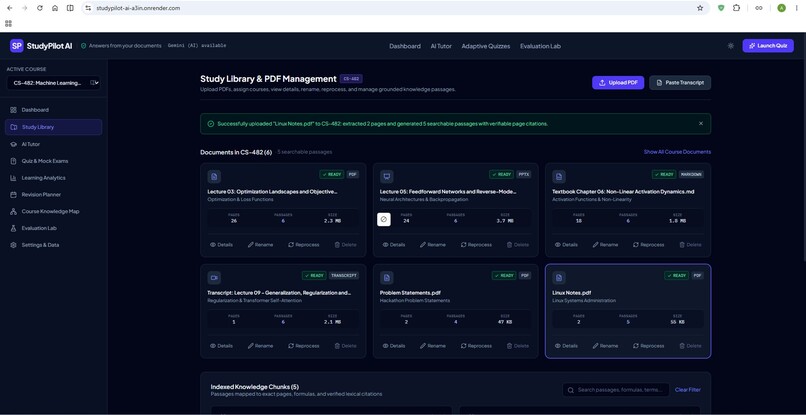
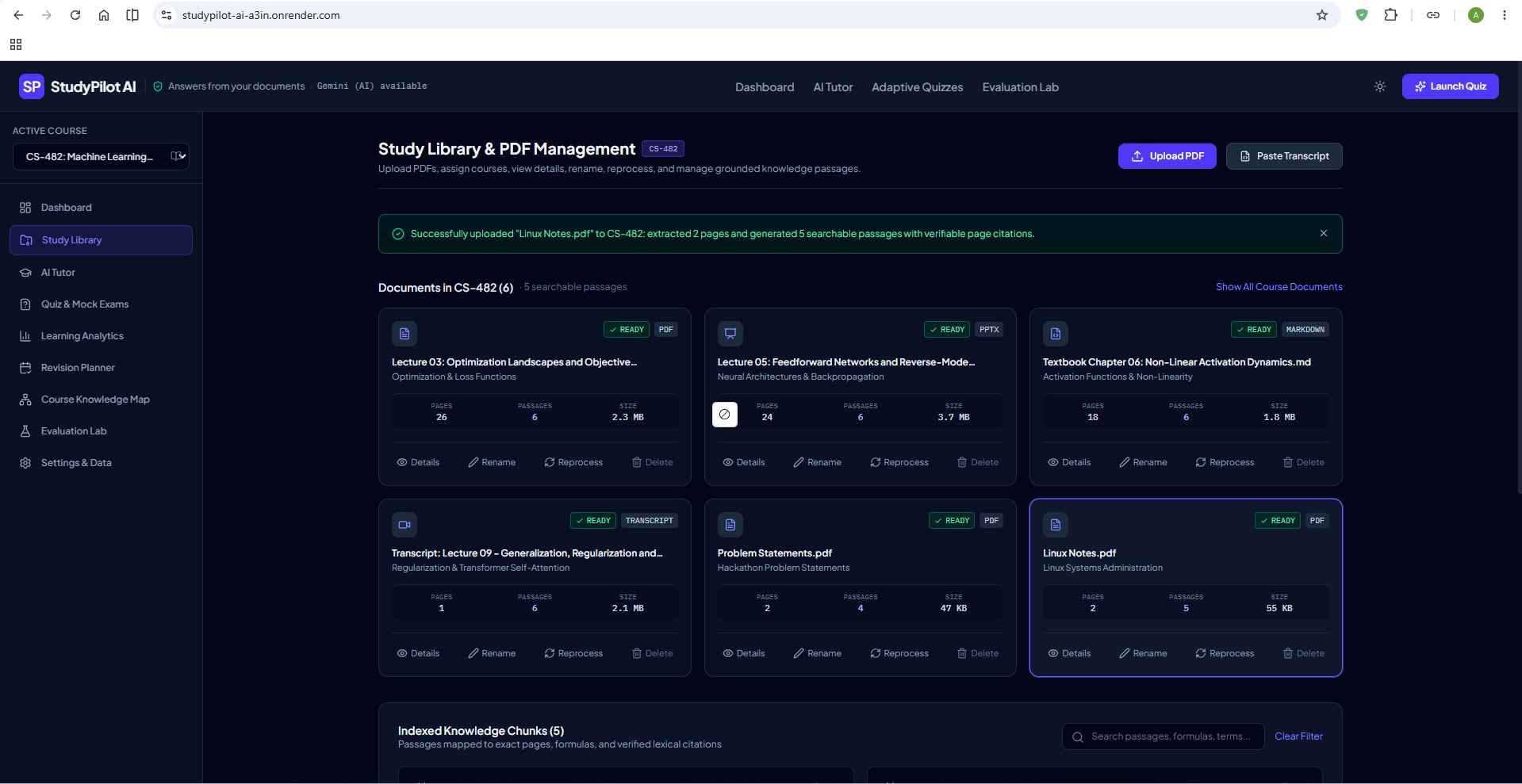
Study Library and pdf Management
-
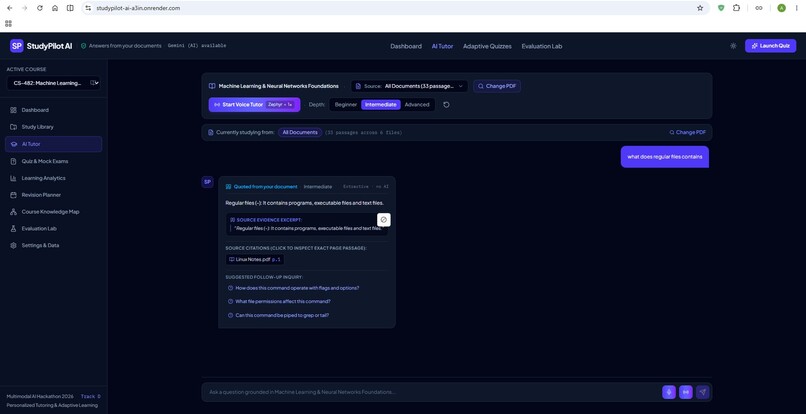
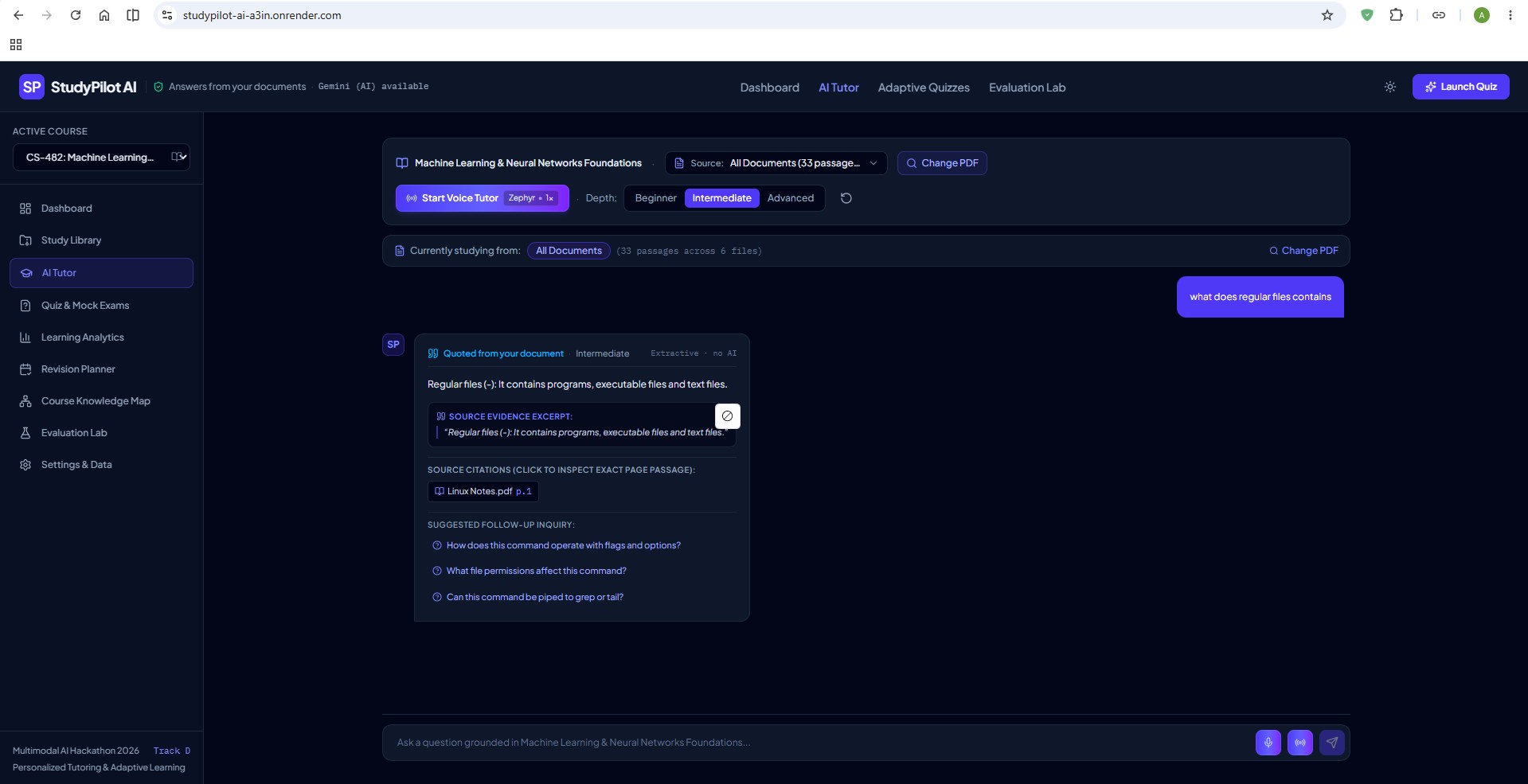
AI Tutor
-
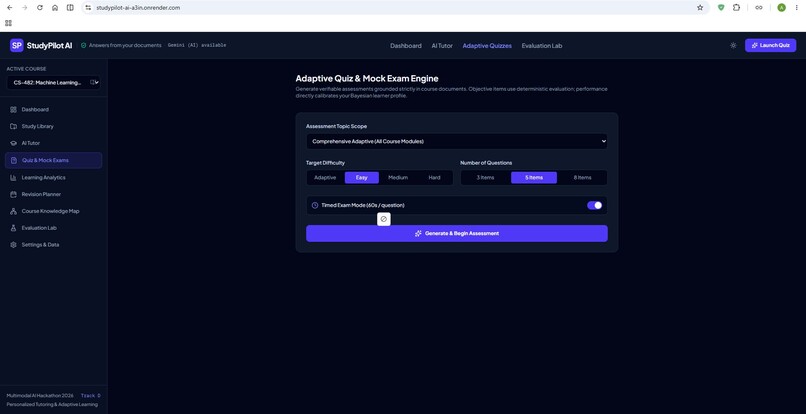
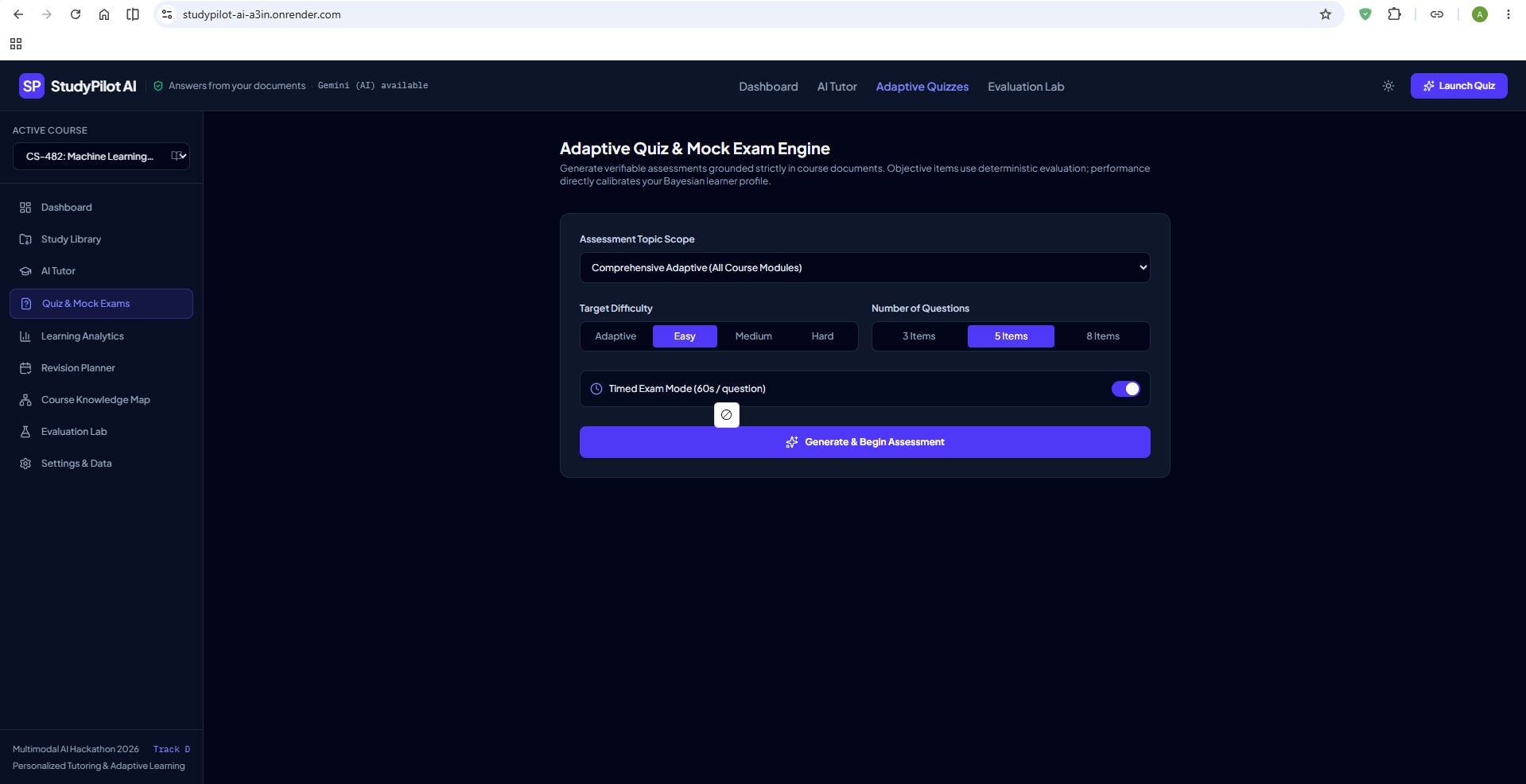
Quiz
-
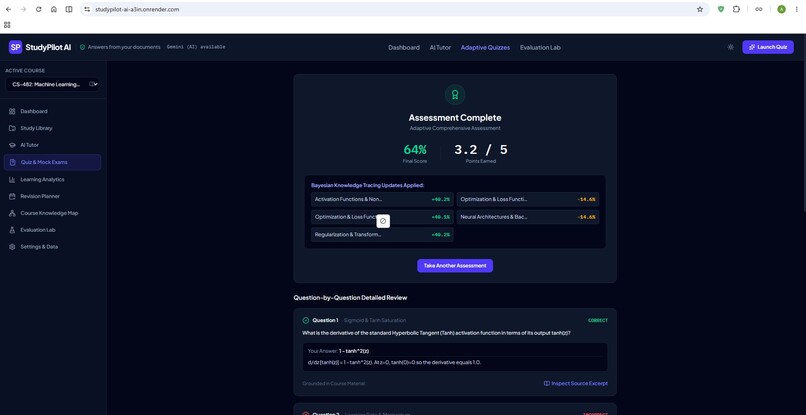
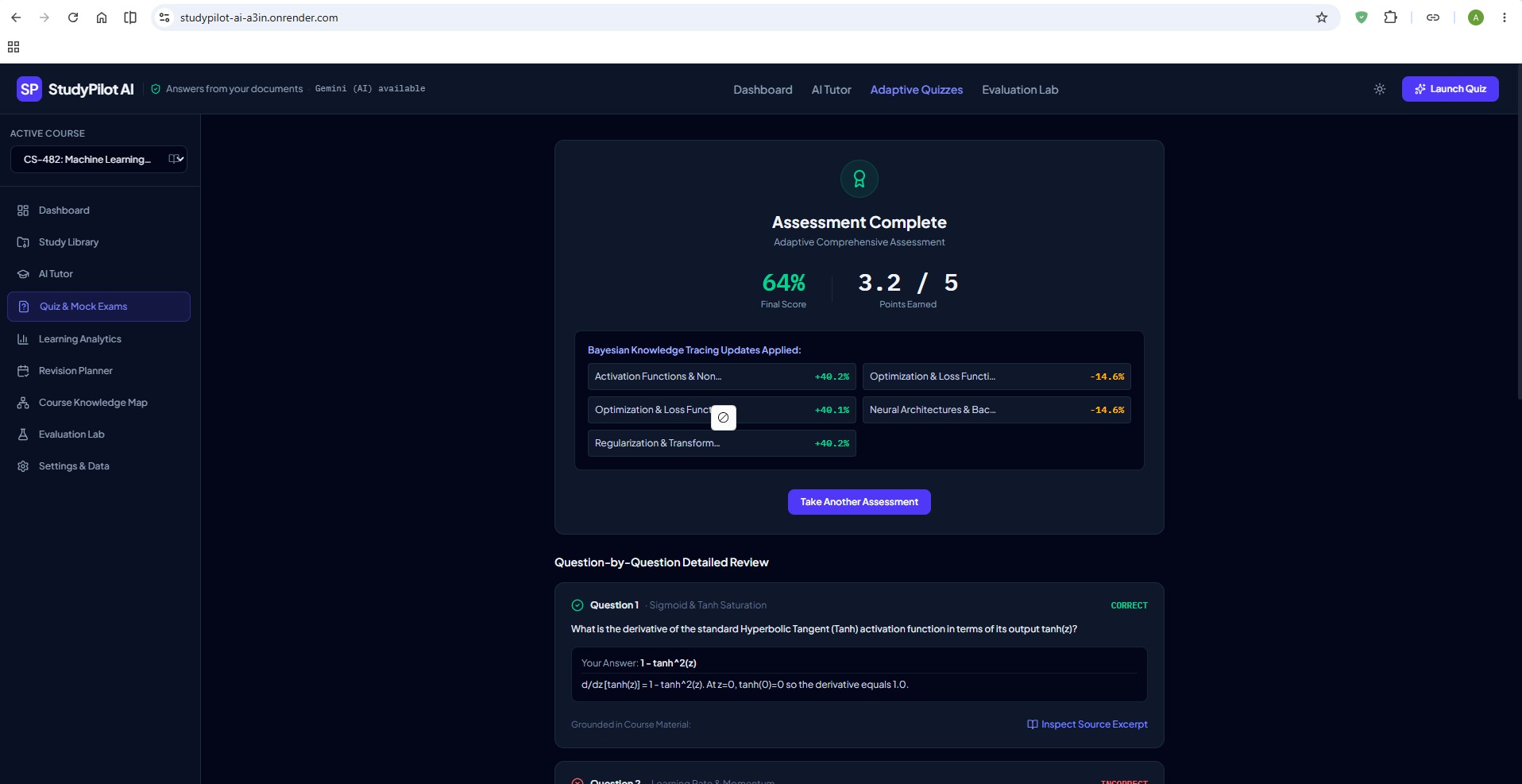
Quiz Assessment Detailed Result
-
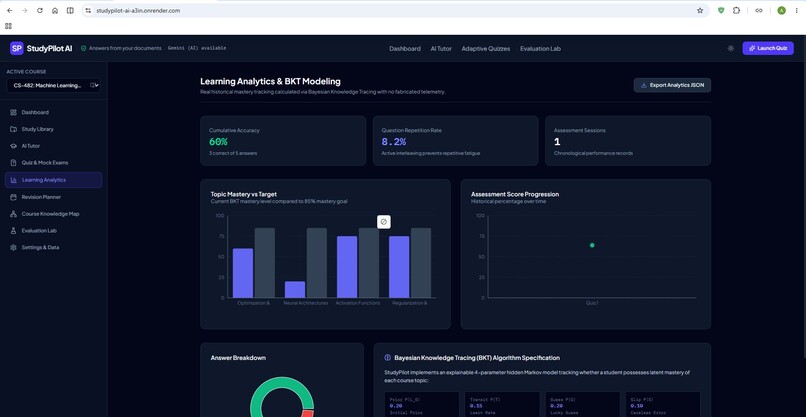
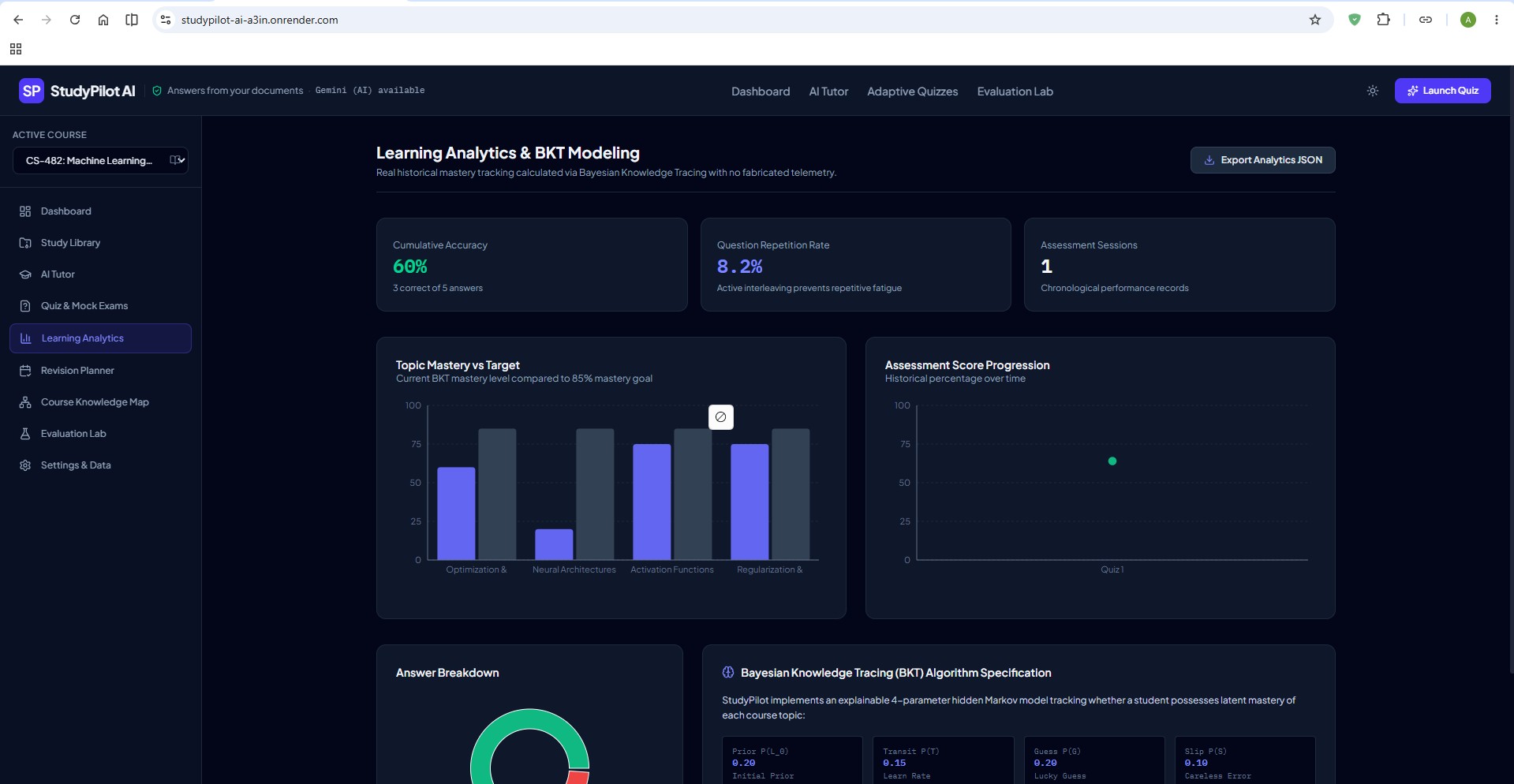
Learning Analytics and Insights
-
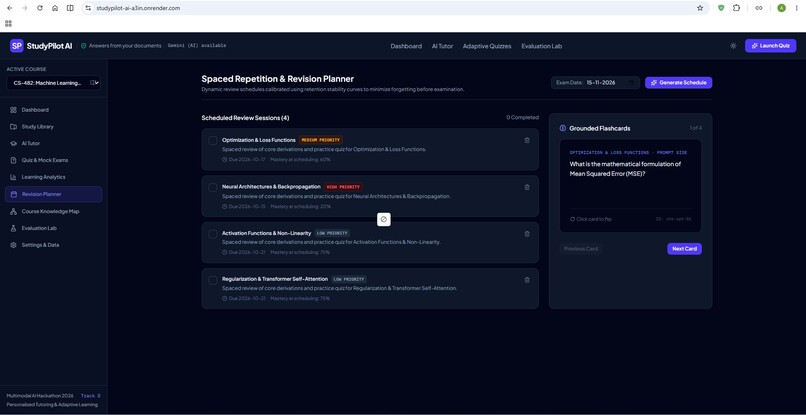
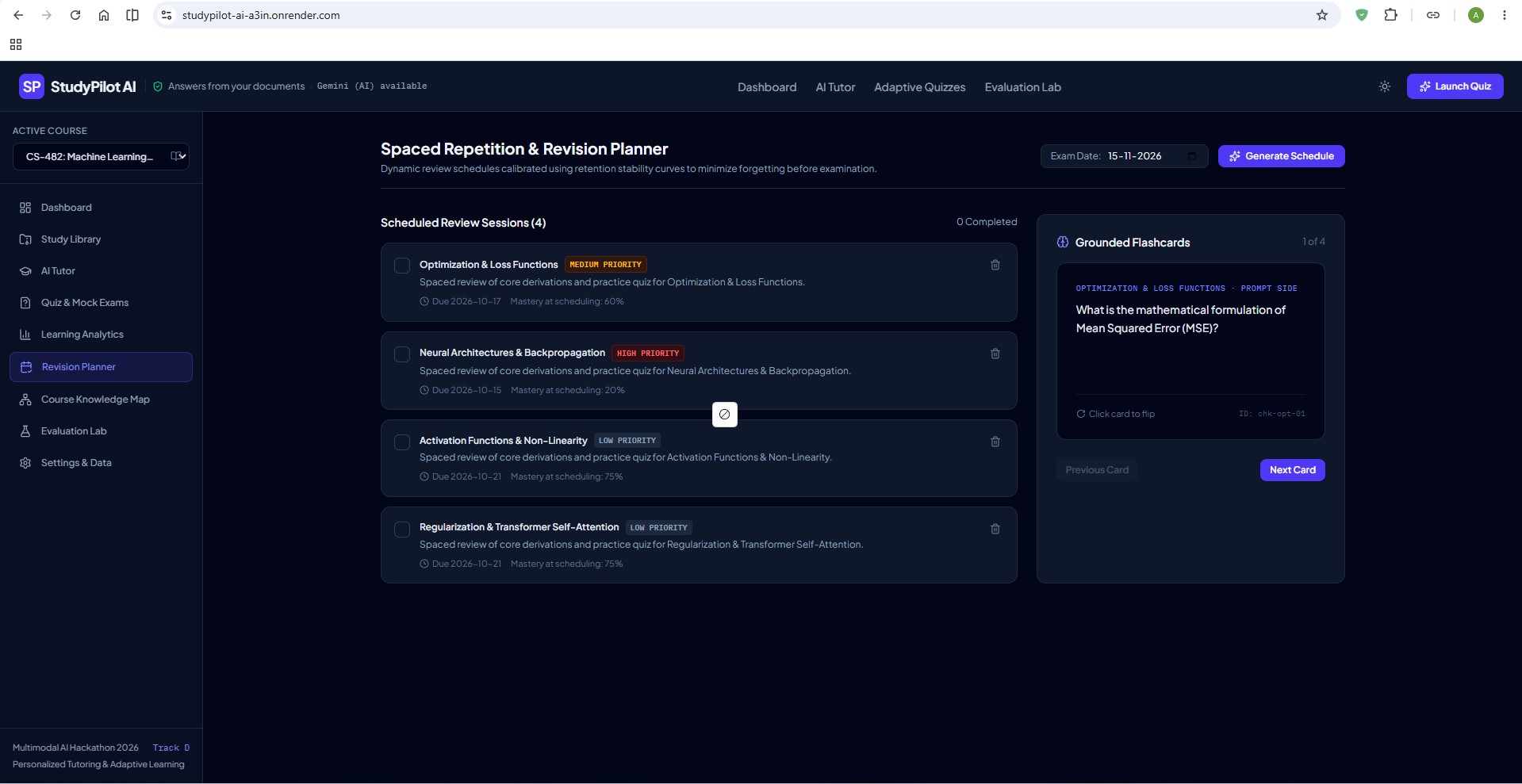
Revision Planner
-
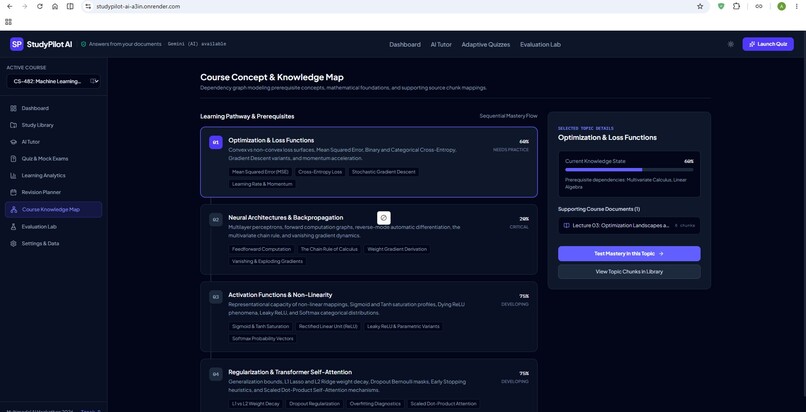
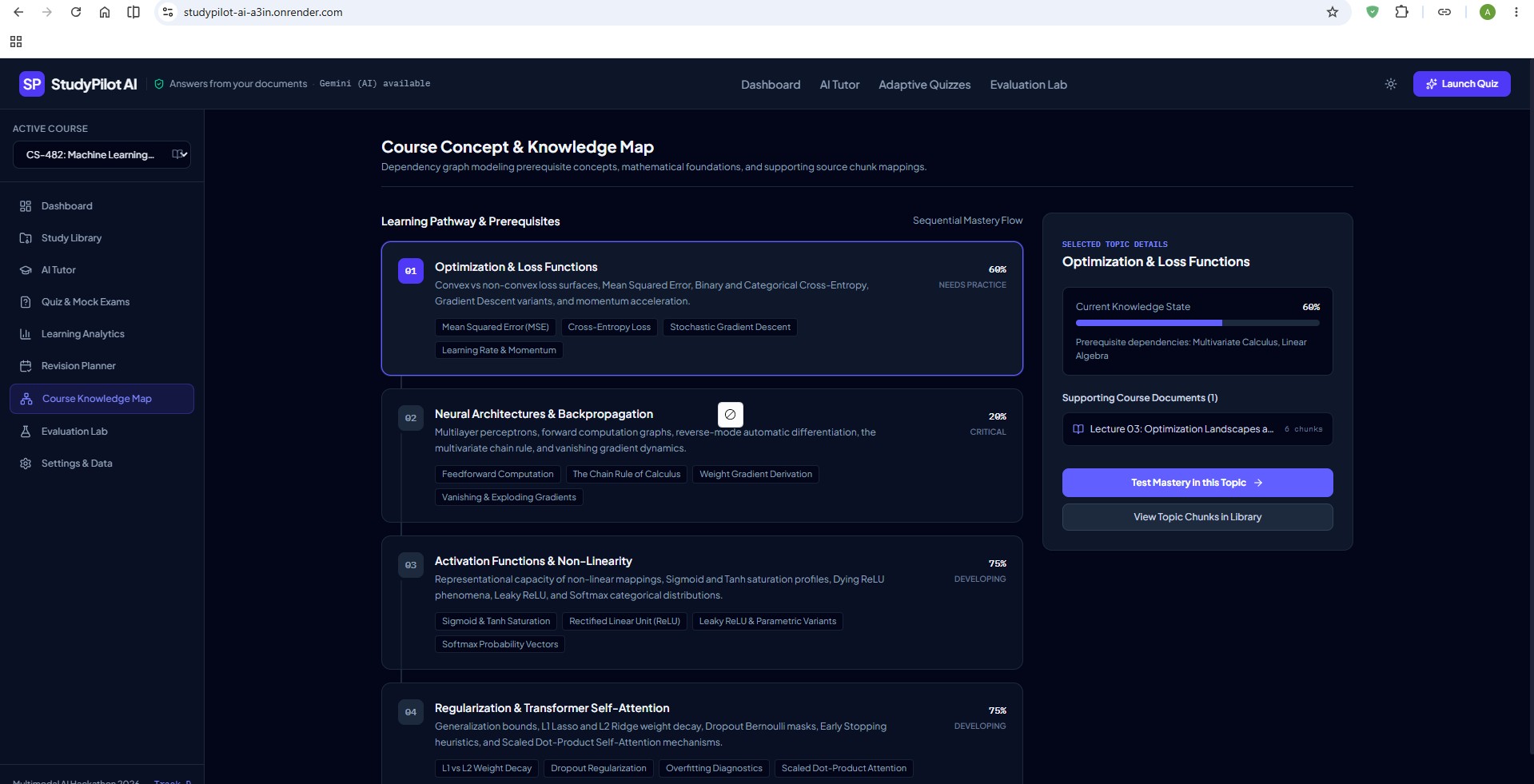
Knowledge Map
-
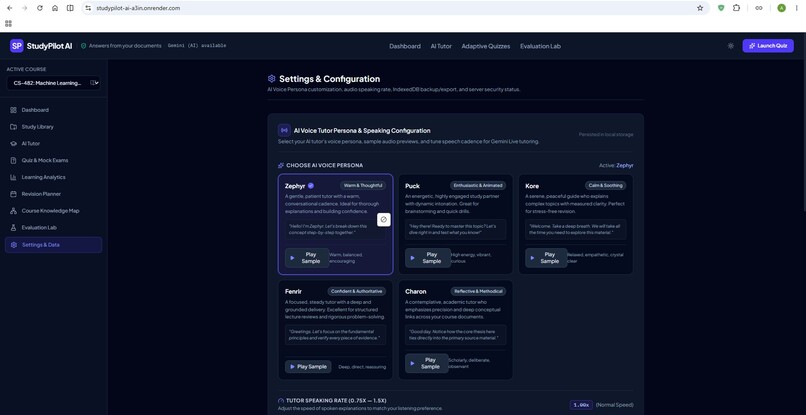
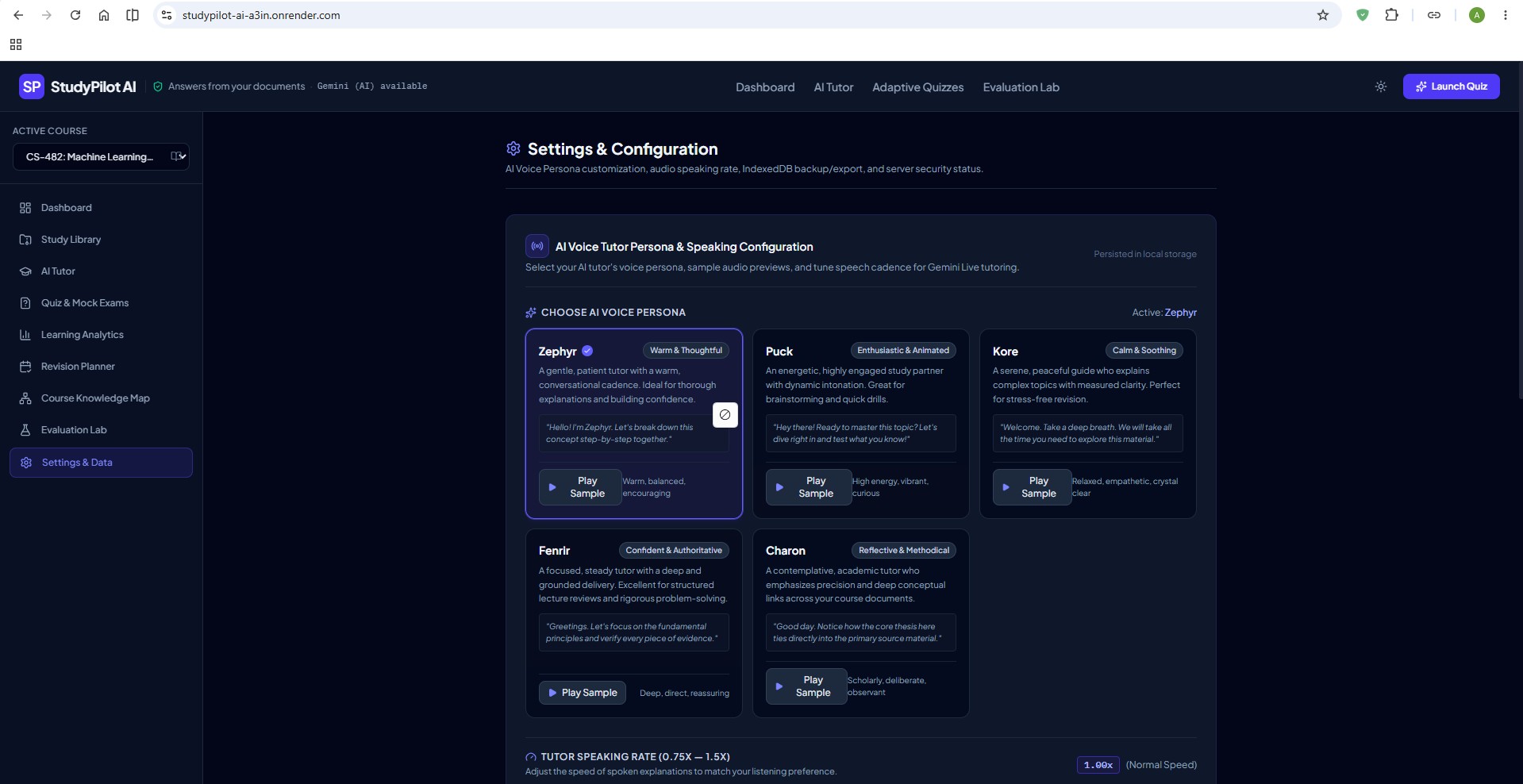
Settings and Voice Configuration
Inspiration
Students often study using lecture slides, textbooks, PDFs, and video lectures scattered across different platforms. General-purpose AI chatbots may provide answers that are not sufficiently grounded in a student's actual course materials. Students also need better ways to identify weak topics, practise effectively, and plan revisions.
This inspired me to build StudyPilot AI, a personalized study companion designed to make AI-assisted learning more grounded, adaptive, and explainable.
What it does
StudyPilot AI brings supported learning materials into one platform and provides:
- Source-grounded AI tutoring: Answers questions using retrieved course materials and provides citations for verification.
- Course library: Organizes supported PDFs, slides, notes, and video transcripts.
- Adaptive quizzes: Helps students practise and review their understanding.
- Learner modeling: Uses Bayesian Knowledge Tracing (BKT) to estimate topic-level mastery.
- Personalized revision: Helps identify weaker topics and focus future practice.
- Evaluation Lab: Supports benchmark testing and simulated learning experiments.
How we built it
The frontend uses React 19 and TypeScript, with a Node.js and Express backend integrated with Vite. Gemini-powered functionality is integrated through Google's GenAI SDK.
The retrieval workflow uses BM25-based text retrieval to find relevant course excerpts. The learner-modeling component uses a four-parameter Bayesian Knowledge Tracing approach to estimate changes in topic mastery. The application also brings together quizzes, learning analytics, revision planning, and evaluation tools.
Challenges we ran into
One of our main challenges was integrating document retrieval, AI-generated explanations, adaptive assessments, and learner modeling into a single learning experience. Maintaining useful source citations while making the interface easy to navigate was another important challenge.
We also had to consider how to handle unsupported questions, maintain consistency across application features, and evaluate the quality of generated answers rather than relying on their appearance alone.
Accomplishments that we're proud of
We brought several important learning workflows together in one application: source-grounded tutoring, course material management, adaptive practice, learner mastery tracking, and an Evaluation Lab.
We are also proud of developing the project as a full-stack AI learning platform and deploying a working prototype that can be explored through a live web interface.
What we learned
Building StudyPilot AI helped us explore full-stack development, Gemini integration, retrieval-augmented generation concepts, Bayesian Knowledge Tracing, and evaluation methodology.
We learned that useful educational AI needs more than fluent answers. It also needs traceable sources, meaningful feedback, appropriate assessments, and honest evaluation of its limitations.
What's next for StudyPilot AI — Personalized Tutoring & Adaptive Learning
Our next goals are to improve citation accuracy, document extraction, question quality, and the reliability of evaluation results. We also want to strengthen testing across multiple learning sessions to understand whether adaptive practice produces measurable improvements in student mastery.
Our vision is to make AI-assisted education more grounded, personalized, and transparent—helping students understand not only what an answer is, but also where it comes from and what they should learn next.
Built With
- bm25
- express.js
- lucide
- node.js
- react
- recharts
- typescript
- vite

Log in or sign up for Devpost to join the conversation.