-
-
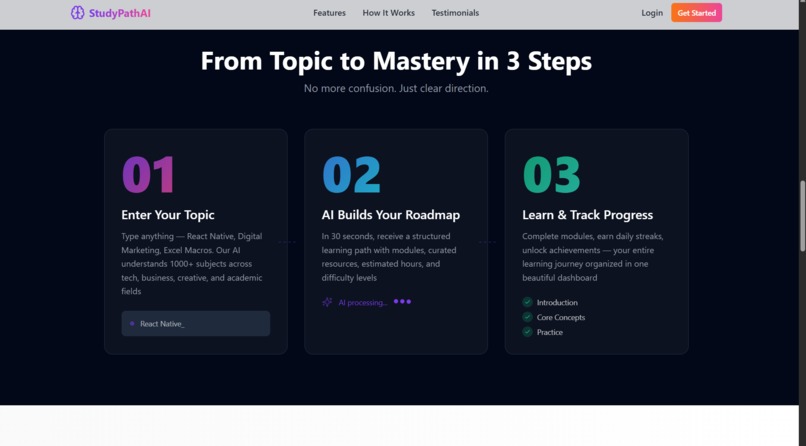
homepage
-
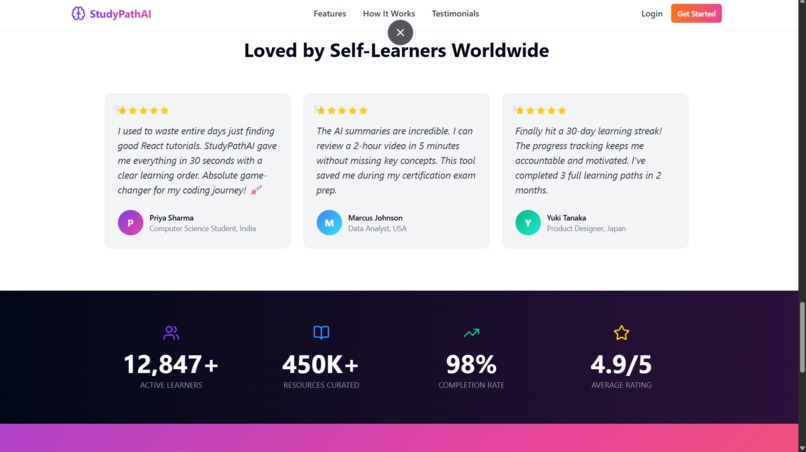
homepage
-
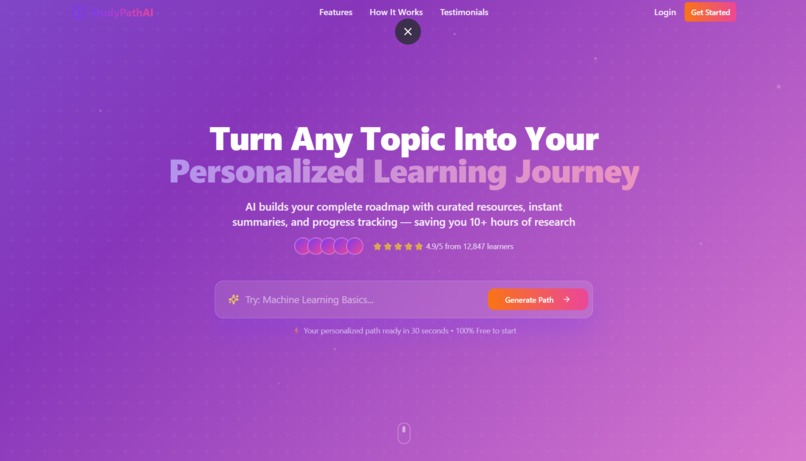
homepage
-
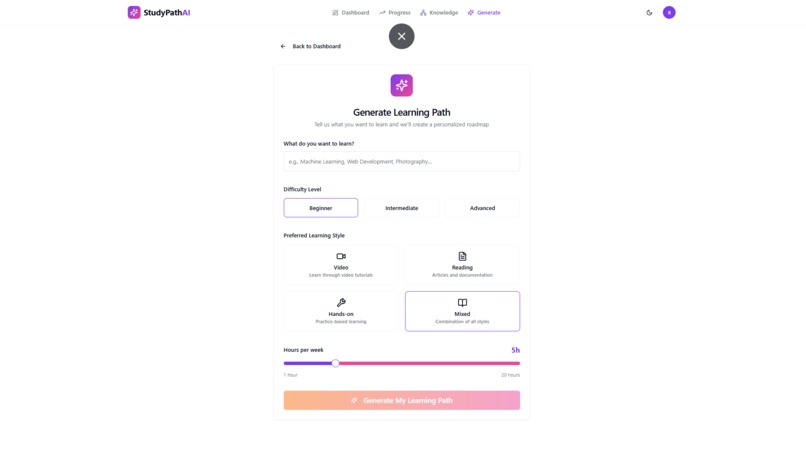
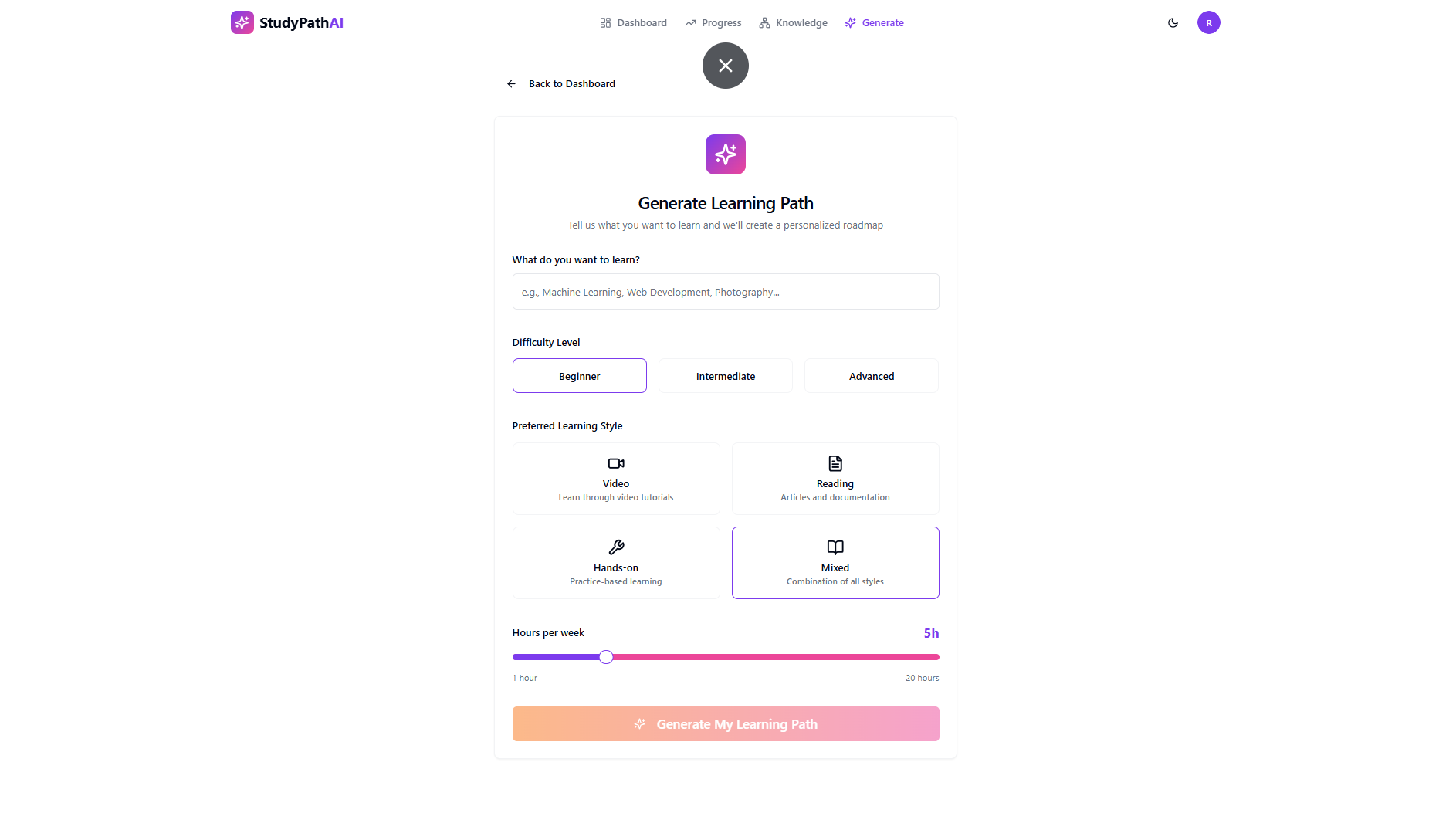
Generate Path Page
-
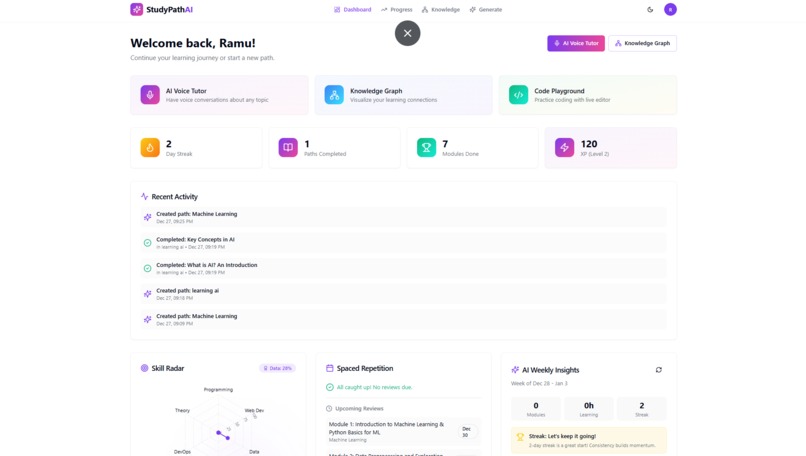
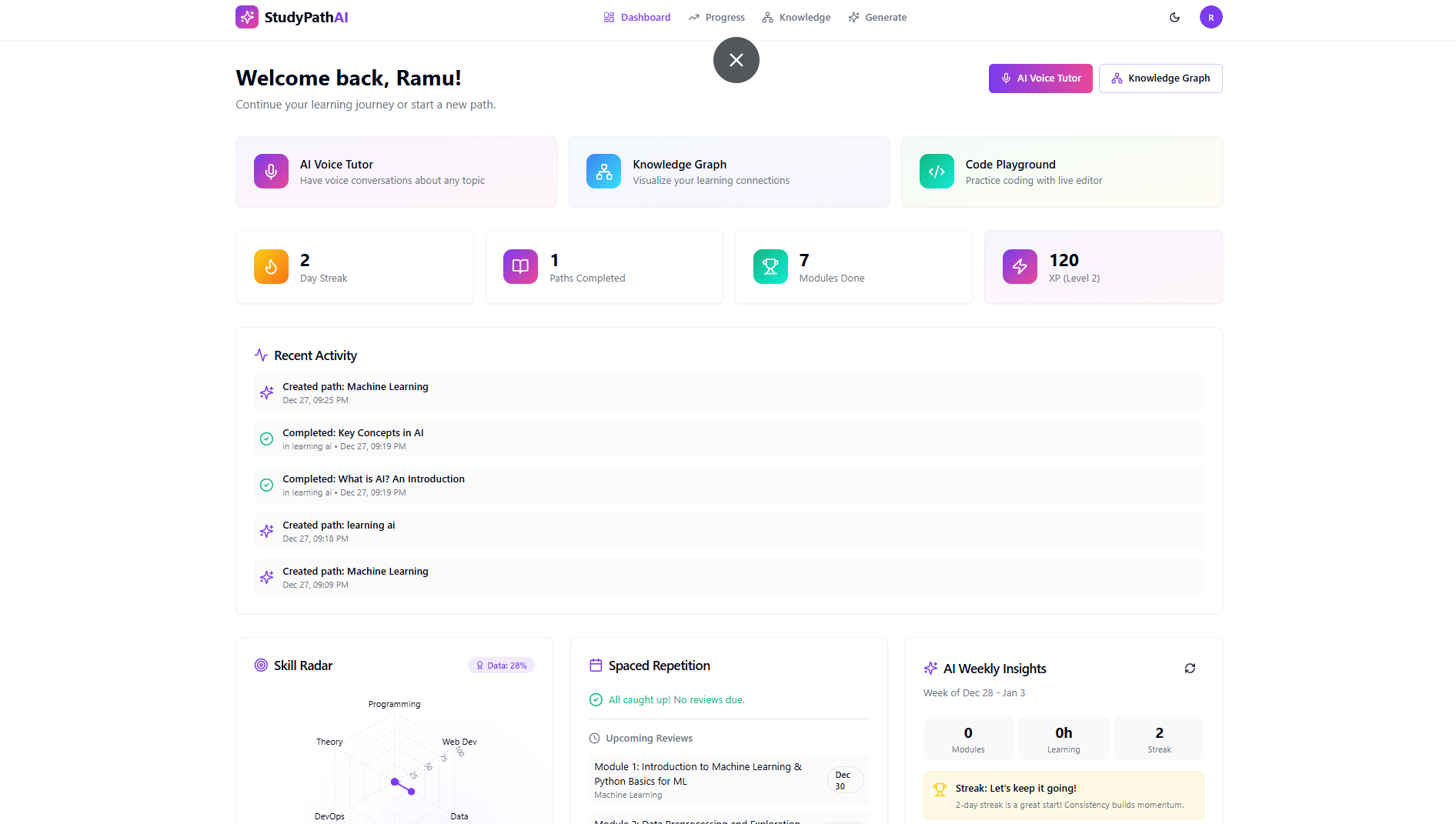
Dashboard
-
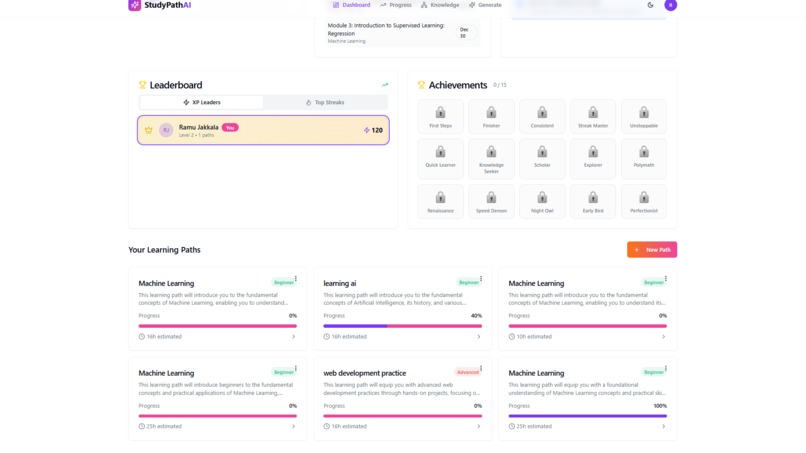
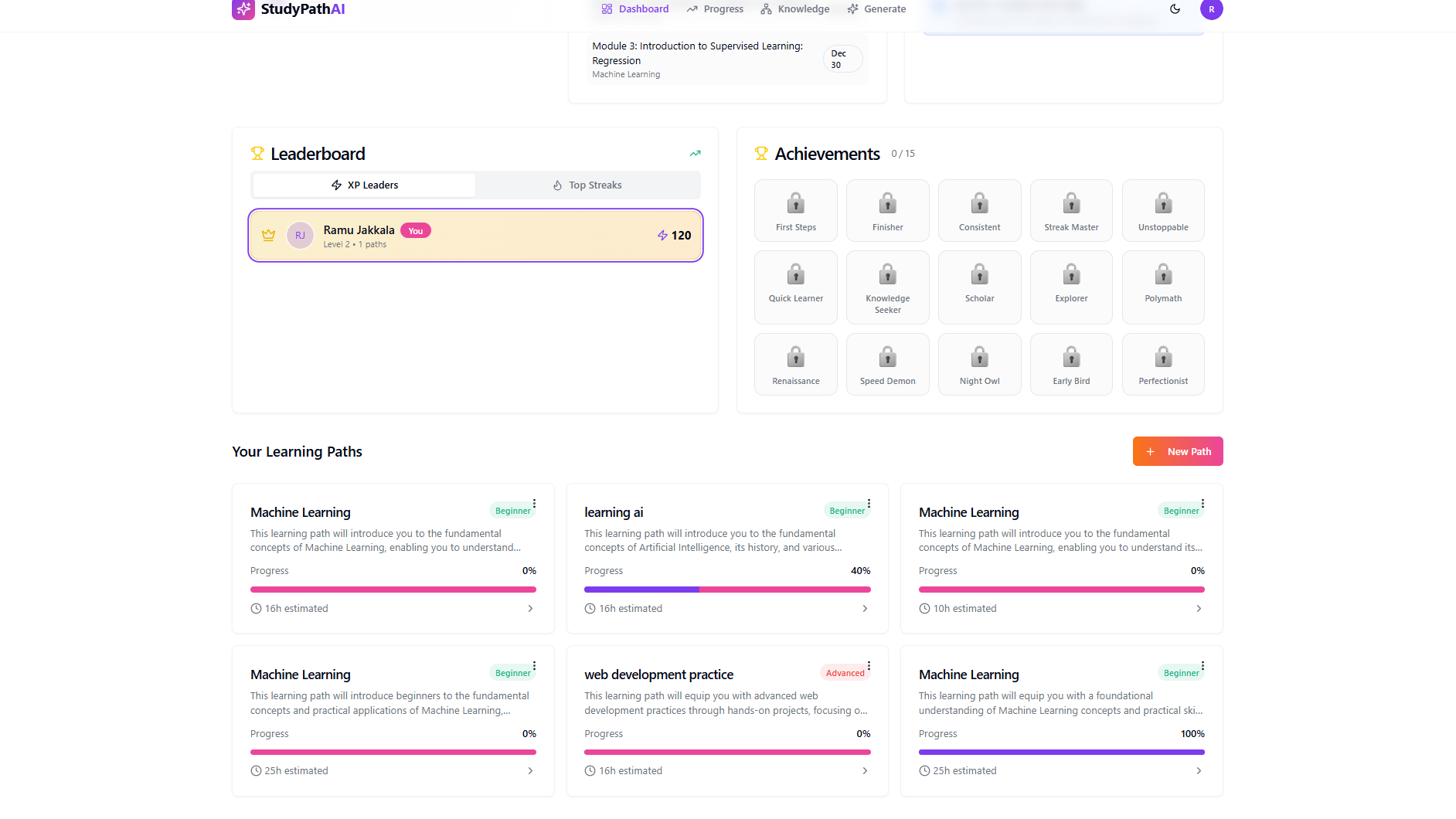
Dashboard Learning Path
-
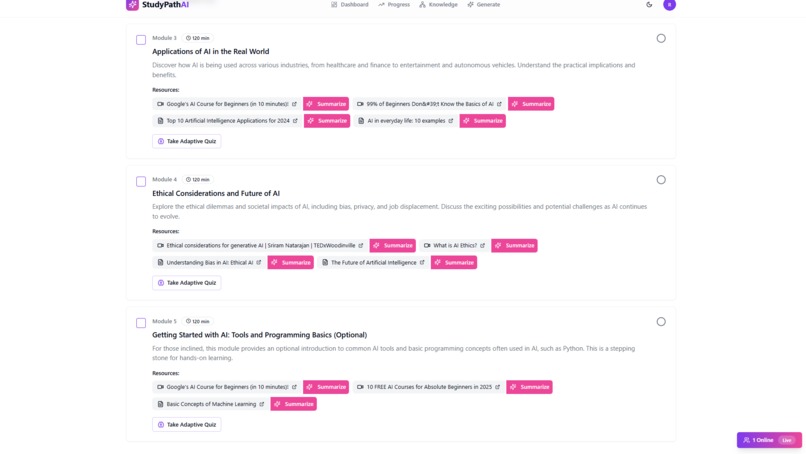
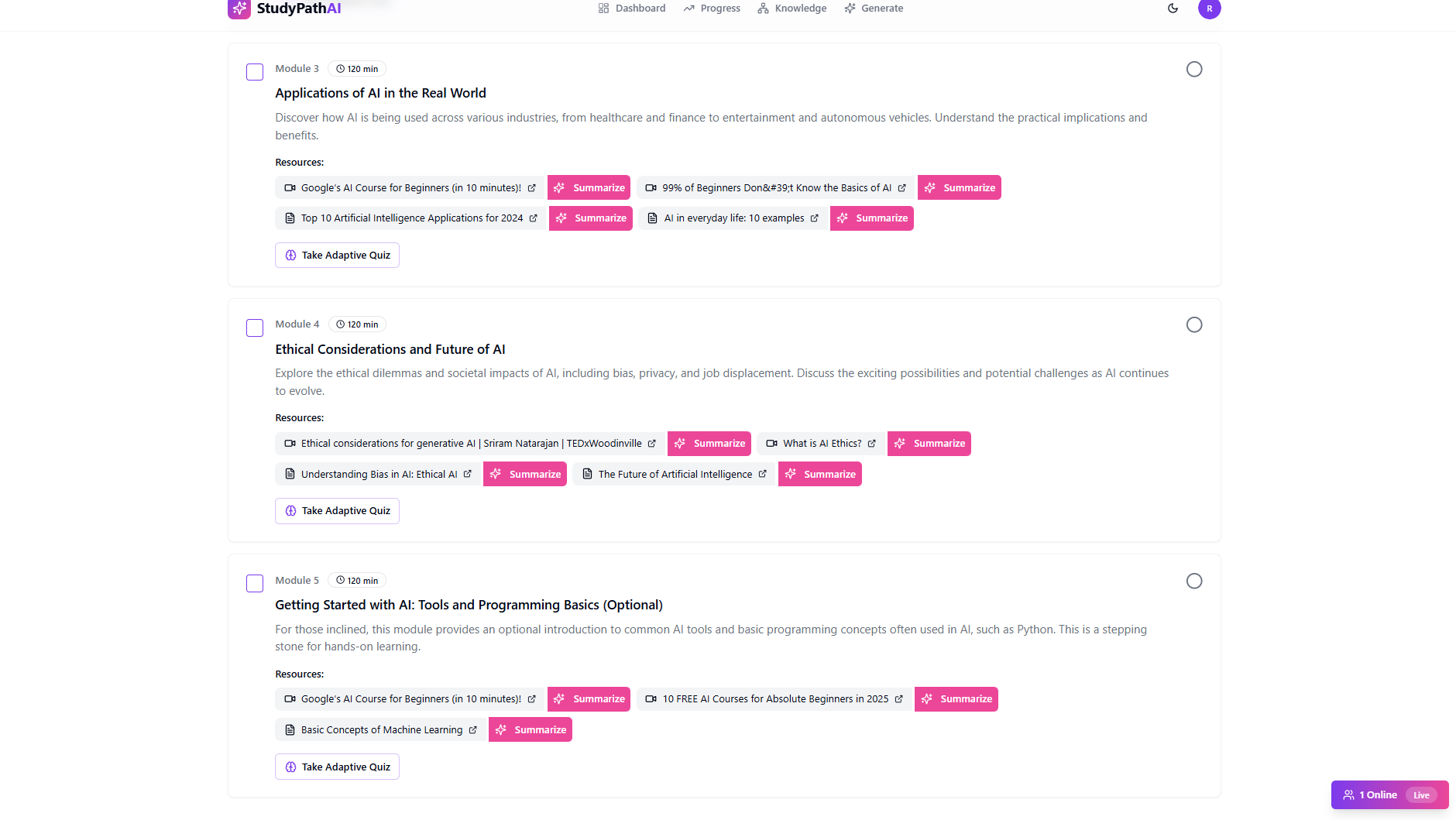
Generated Path Modules
-
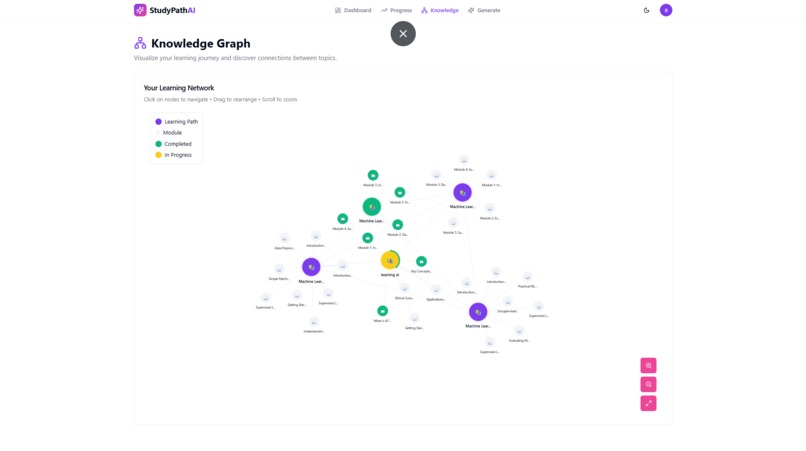
Knowledge
-
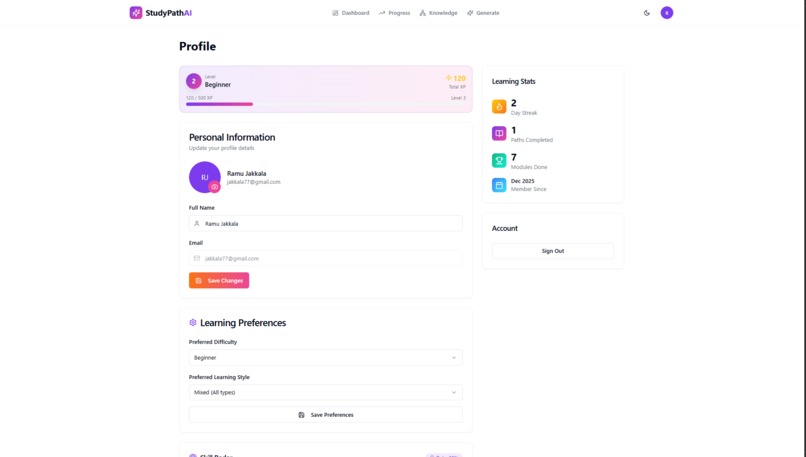
Profile-section
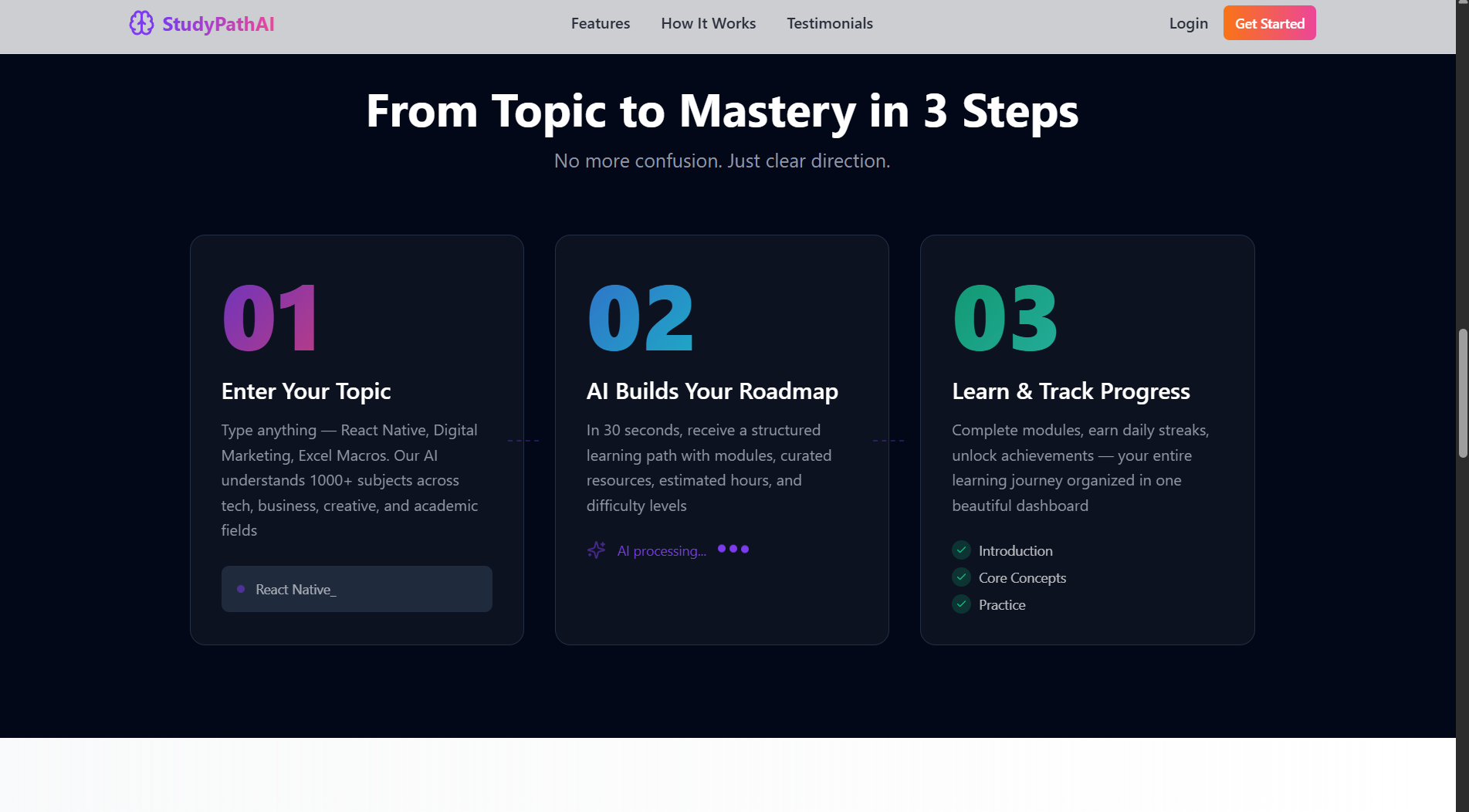
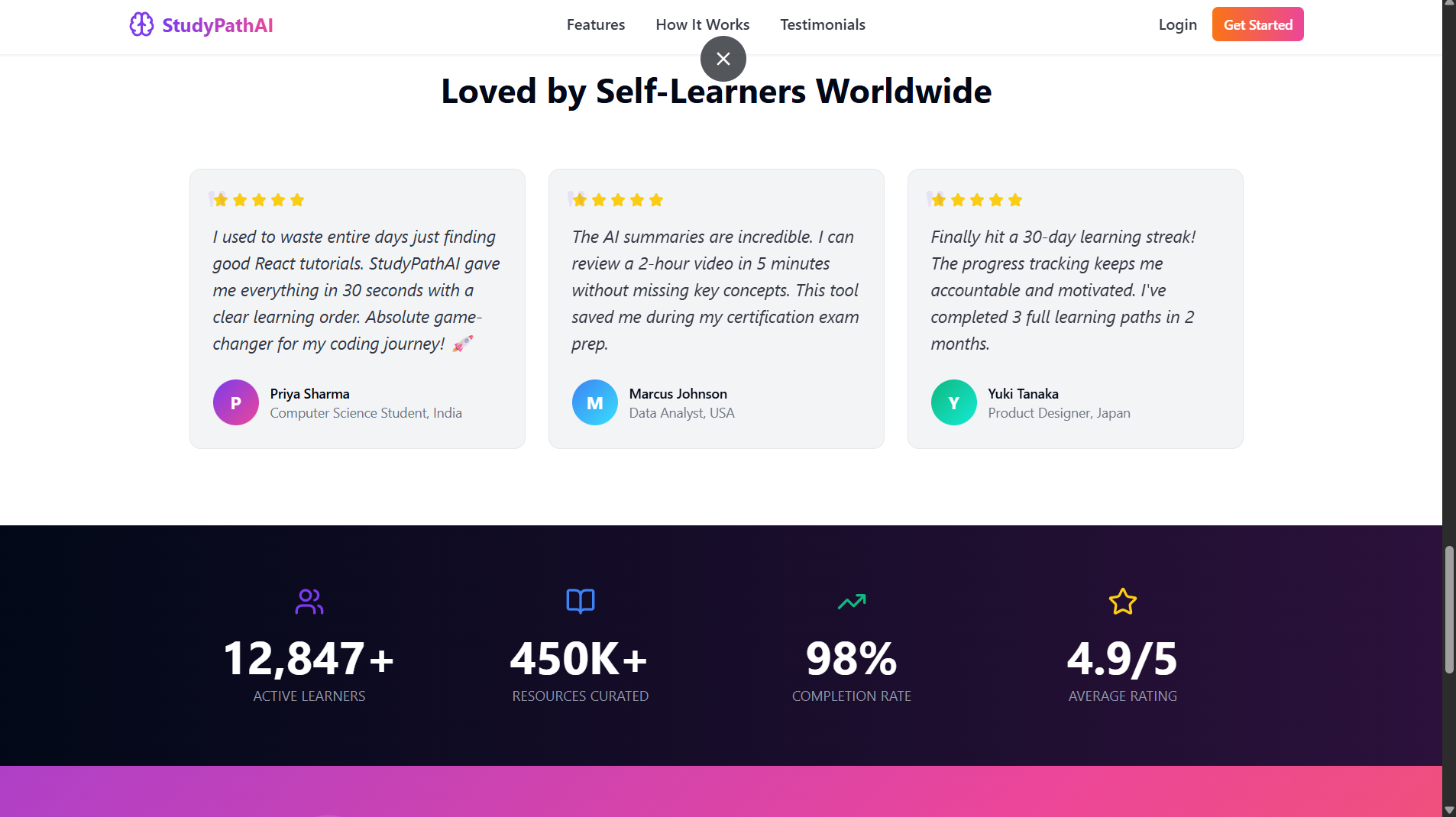
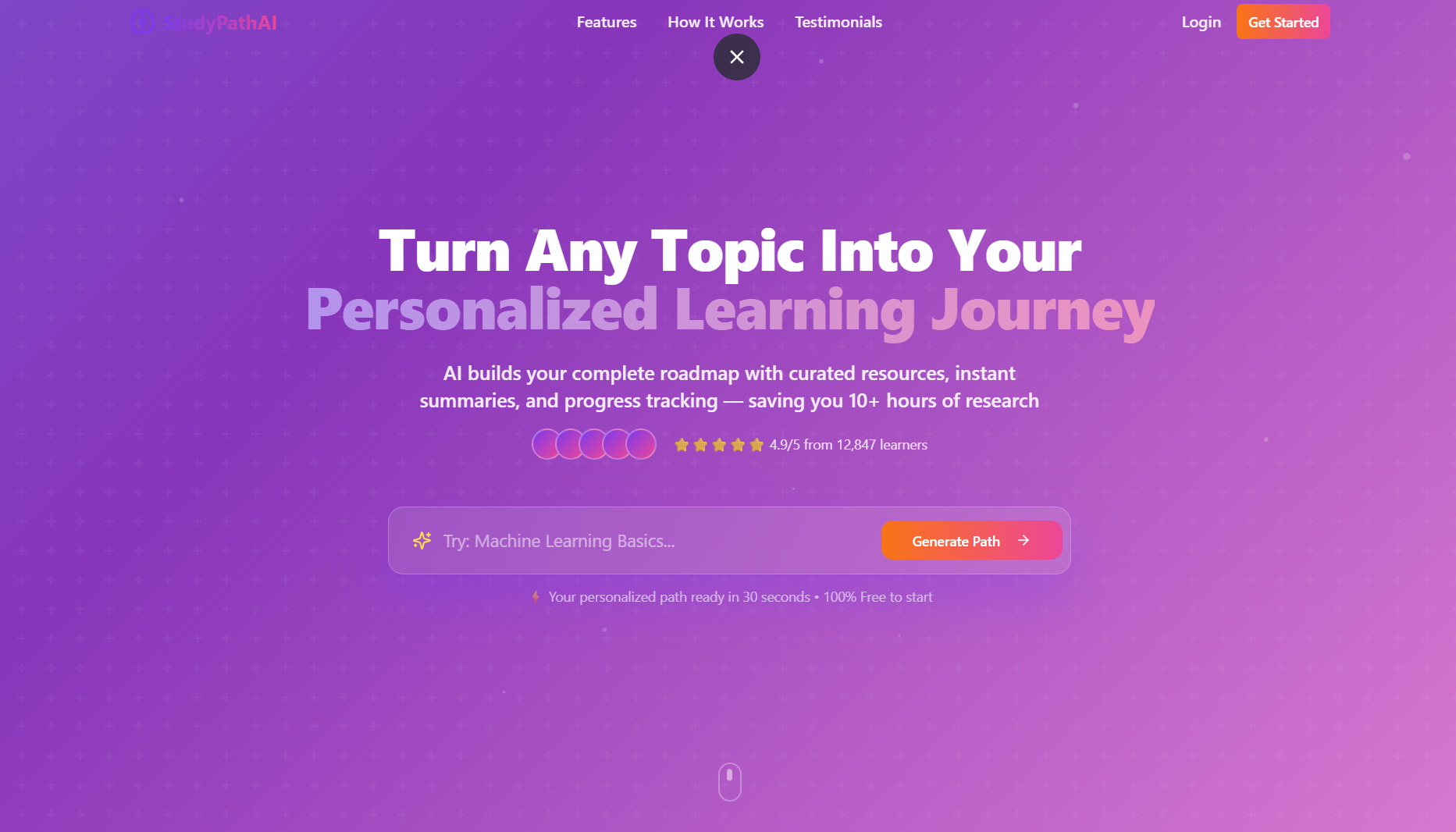
🎯 Inspiration Traditional learning platforms treat every student the same—but we all learn differently. We were inspired by the frustration of ineffective study methods and the potential of AI to revolutionize education. What if learning could adapt to YOU in real-time? What if an AI could understand your strengths, weaknesses, and learning pace to create the perfect study path?
StudyPath AI was born from the vision of democratizing personalized education—making the kind of adaptive learning previously only available in expensive tutoring accessible to everyone.
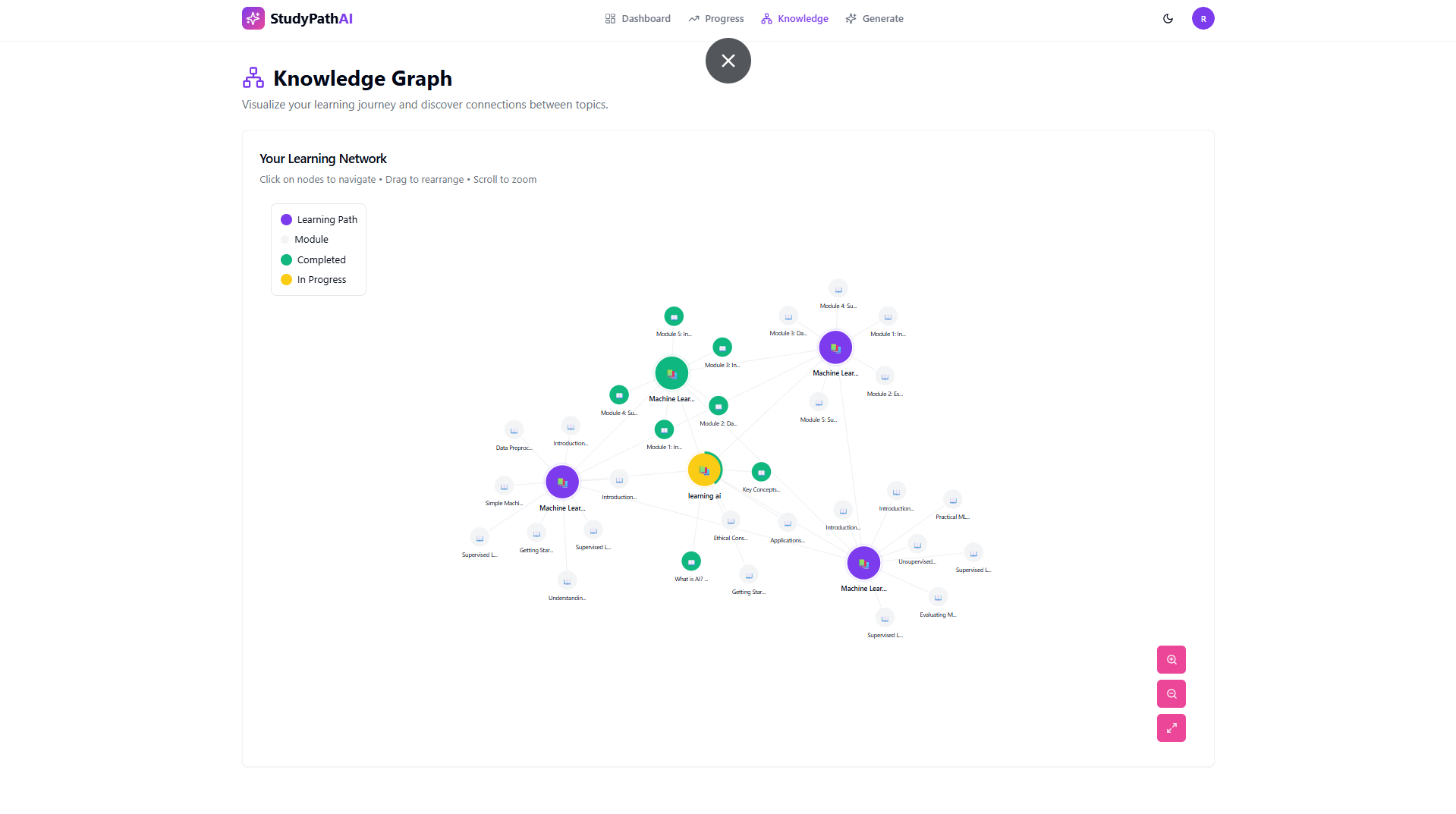
💡 What We Learned AI Integration at Scale: Implementing real-time AI that generates learning paths, adapts quiz difficulty, and provides personalized insights taught us the art of prompt engineering and efficient API usage Learning Science: Deep diving into spaced repetition algorithms (SM-2), cognitive load theory, and gamification psychology PWA Architecture: Building an installable, offline-capable app that feels native on any device Real-time Data Visualization: Creating an interactive knowledge graph with D3.js to visualize learning relationships 🛠️ How We Built It Frontend: React + TypeScript + Vite for a blazing-fast, type-safe experience with Tailwind CSS and shadcn/ui for beautiful, accessible components
Backend: Supabase for authentication, PostgreSQL database, and Edge Functions running serverless AI logic
AI Features:
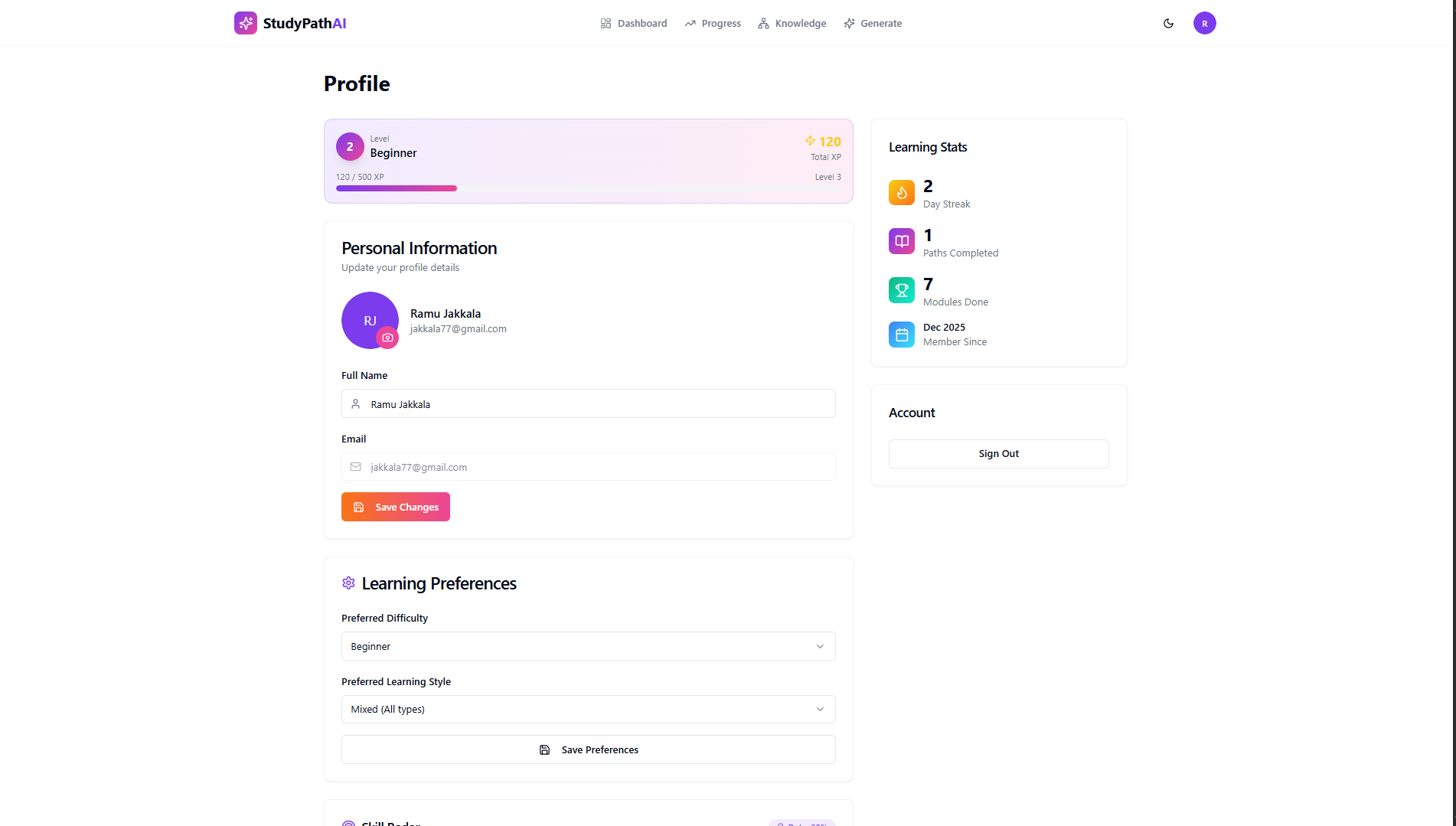
🧠 AI-generated personalized learning paths based on goals and experience 📊 Adaptive quizzes that adjust difficulty using performance analytics 🎯 Spaced repetition system using the scientifically-proven SM-2 algorithm 💬 AI Voice Tutor for conversational learning 📈 Weekly AI insights analyzing learning patterns Gamification: XP system, achievements, leaderboards, streak tracking, and confetti celebrations
PWA: Installable app with offline caching, push notifications, and native-like experience
🚧 Challenges We Faced Real-time Difficulty Adaptation: Balancing quiz difficulty without frustrating users required careful algorithm tuning and fallback mechanisms
Knowledge Graph Performance: Rendering hundreds of interconnected nodes with D3.js force simulation while maintaining 60fps required optimization and smart data structures
AI Response Consistency: Ensuring AI-generated content was always properly formatted and educationally sound required robust validation and fallback content
PWA Caching Strategy: Deciding what to cache offline while keeping the app lightweight was a delicate balance—solved with smart workbox runtime caching
Security Without Friction: Implementing authentication on all edge functions while maintaining a smooth user experience required careful token handling
Built With
- edgefunctions
- postresql
- react
- shadcn/ui
- supbase
- tailwindcss
- typescript

Log in or sign up for Devpost to join the conversation.