-
-
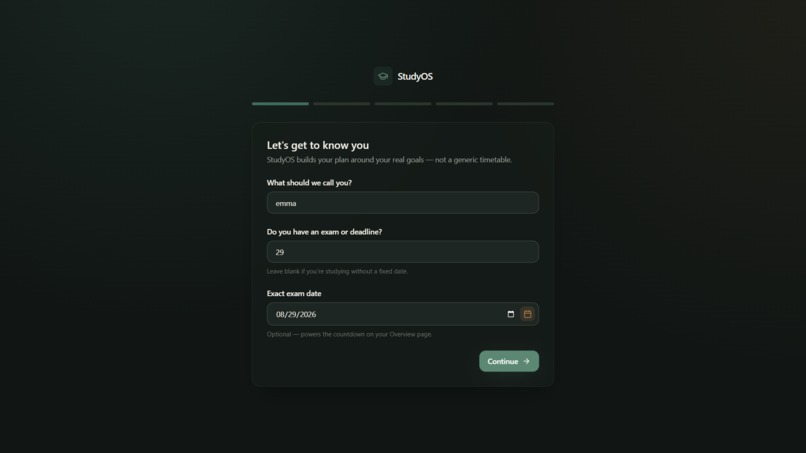
A clearer way to study—built around the student, not the workload.
-
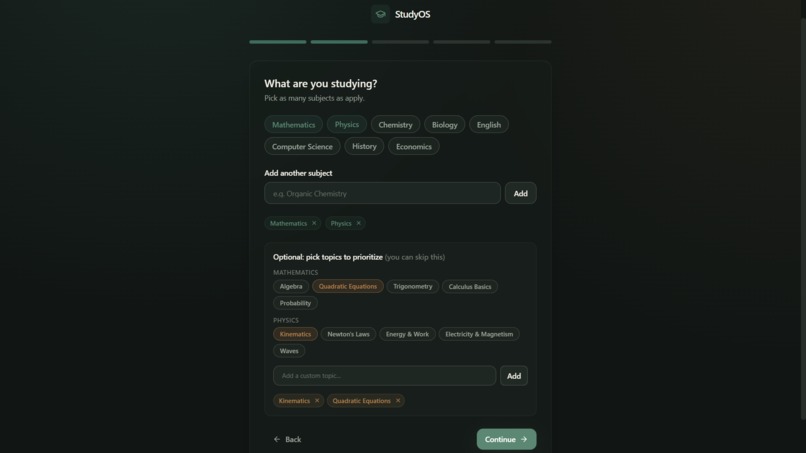
Start with your goals, constraints, and priorities—not a generic study plan.
-
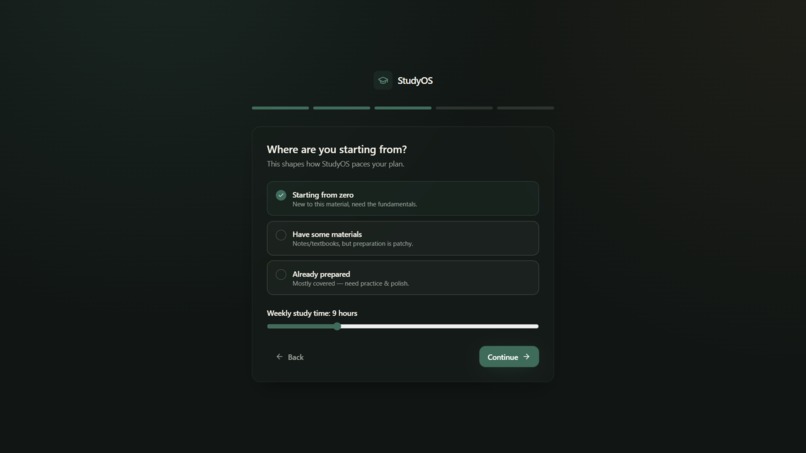
Start with your goals, constraints, and priorities—not a generic study plan.
-
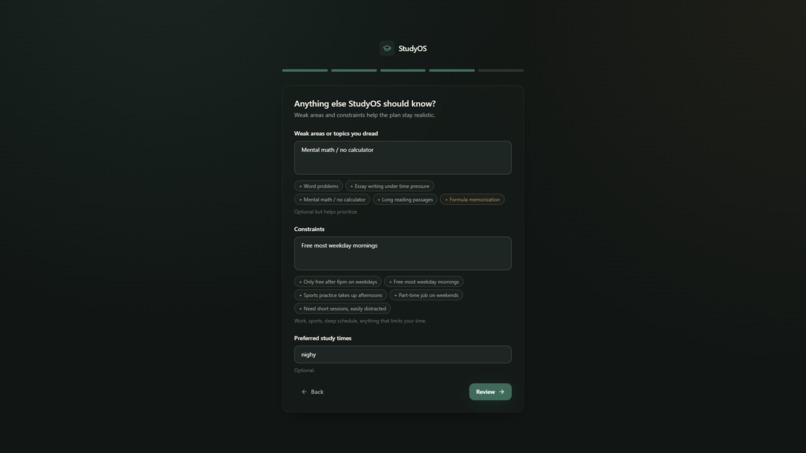
Start with your goals, constraints, and priorities—not a generic study plan.
-
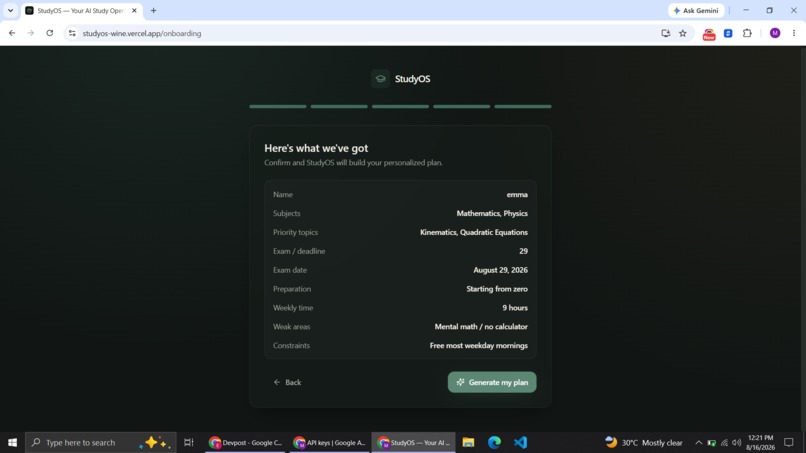
Turn a broad academic goal into a structured path forward.
-
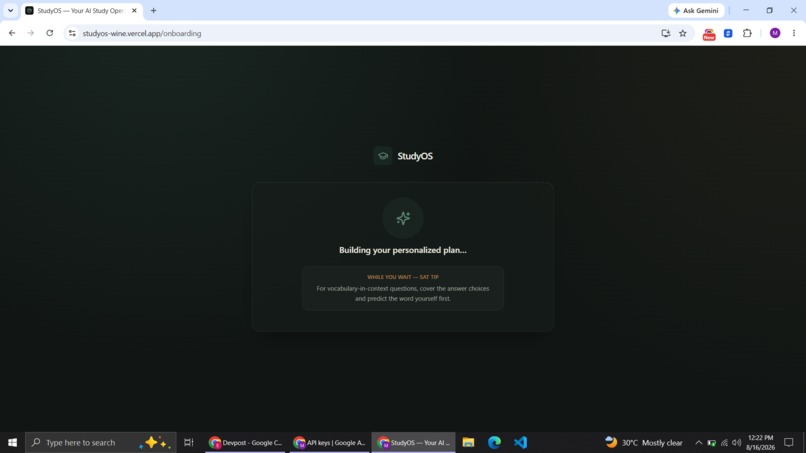
From uncertainty to a personalized plan built around what each student actually needs.
-
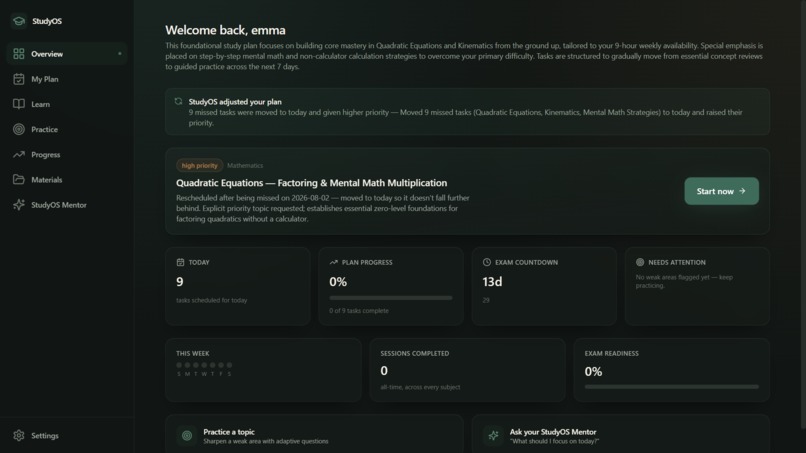
One place to see what matters now, so students spend less time planning and more time learning.
-
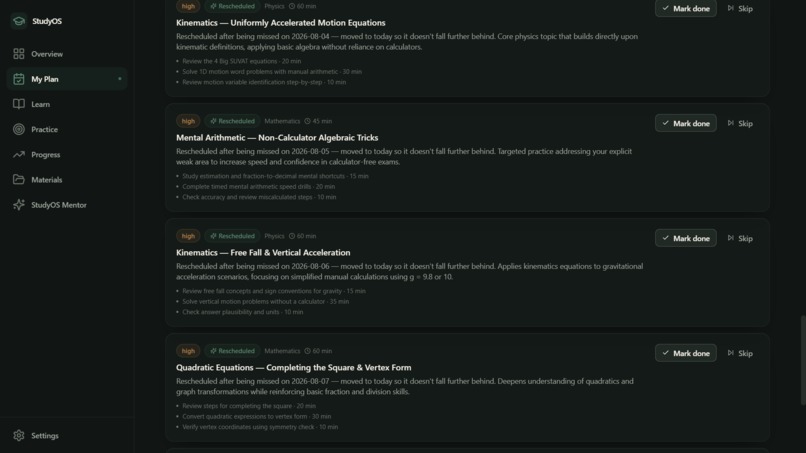
Personalized guidance helps students focus their limited time where it matters most.
-
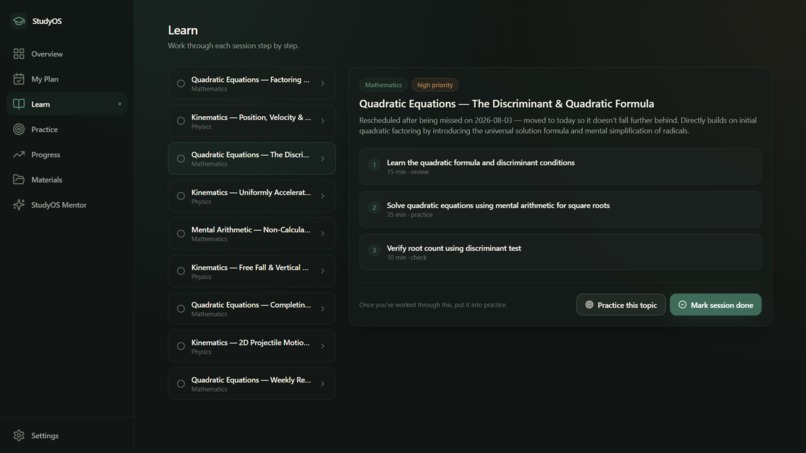
Break complex learning into clear, manageable steps.
-
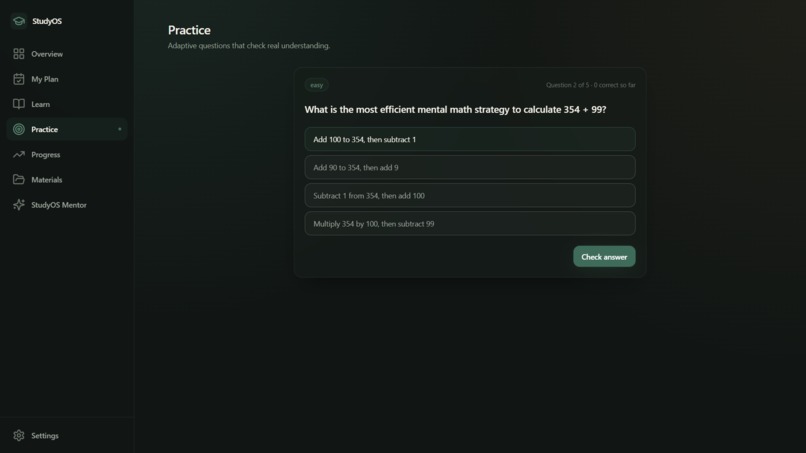
Practice with purpose—not simply more questions.
-
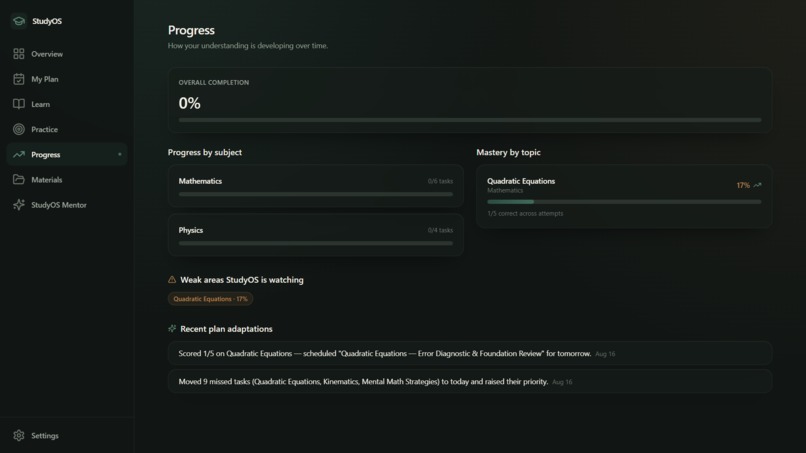
Make progress visible so students can see that their effort is moving somewhere.
-
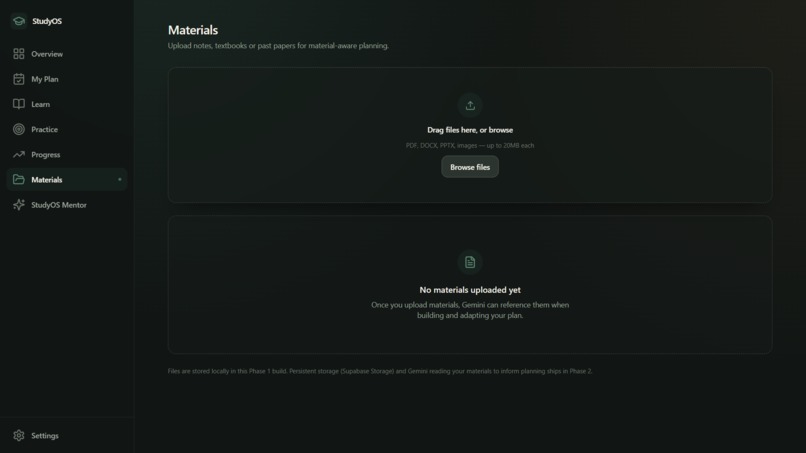
Bring the right learning support closer to the student when they need it.
-
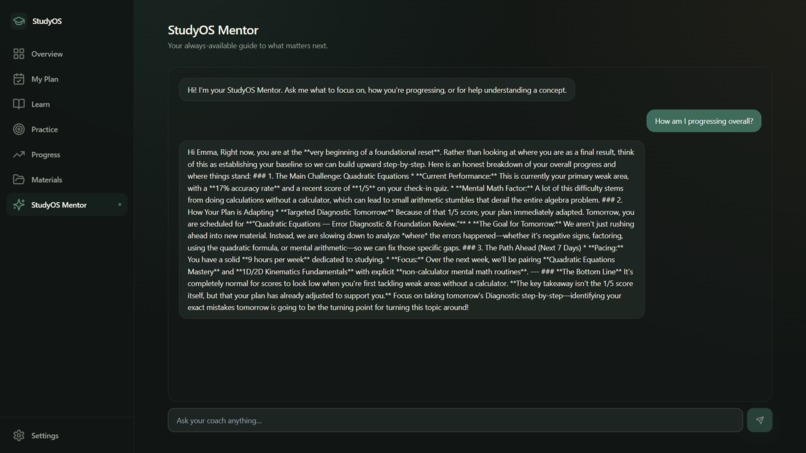
AI guidance turns uncertainty into a clear next step.
-
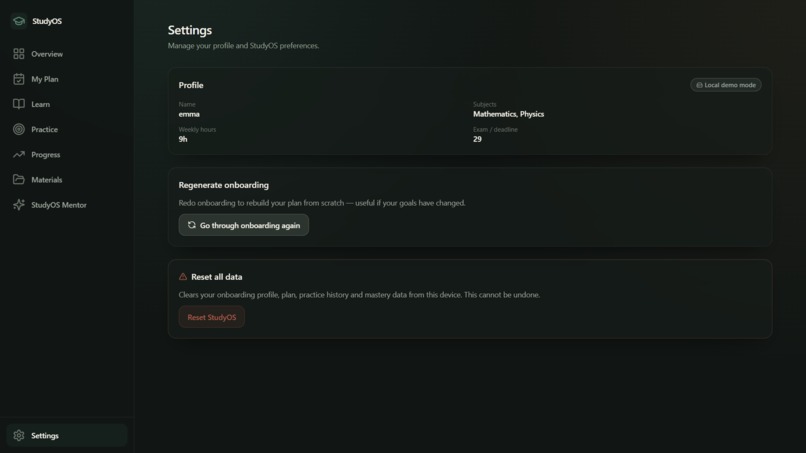
A learning system that adapts to the student—not the other way around.
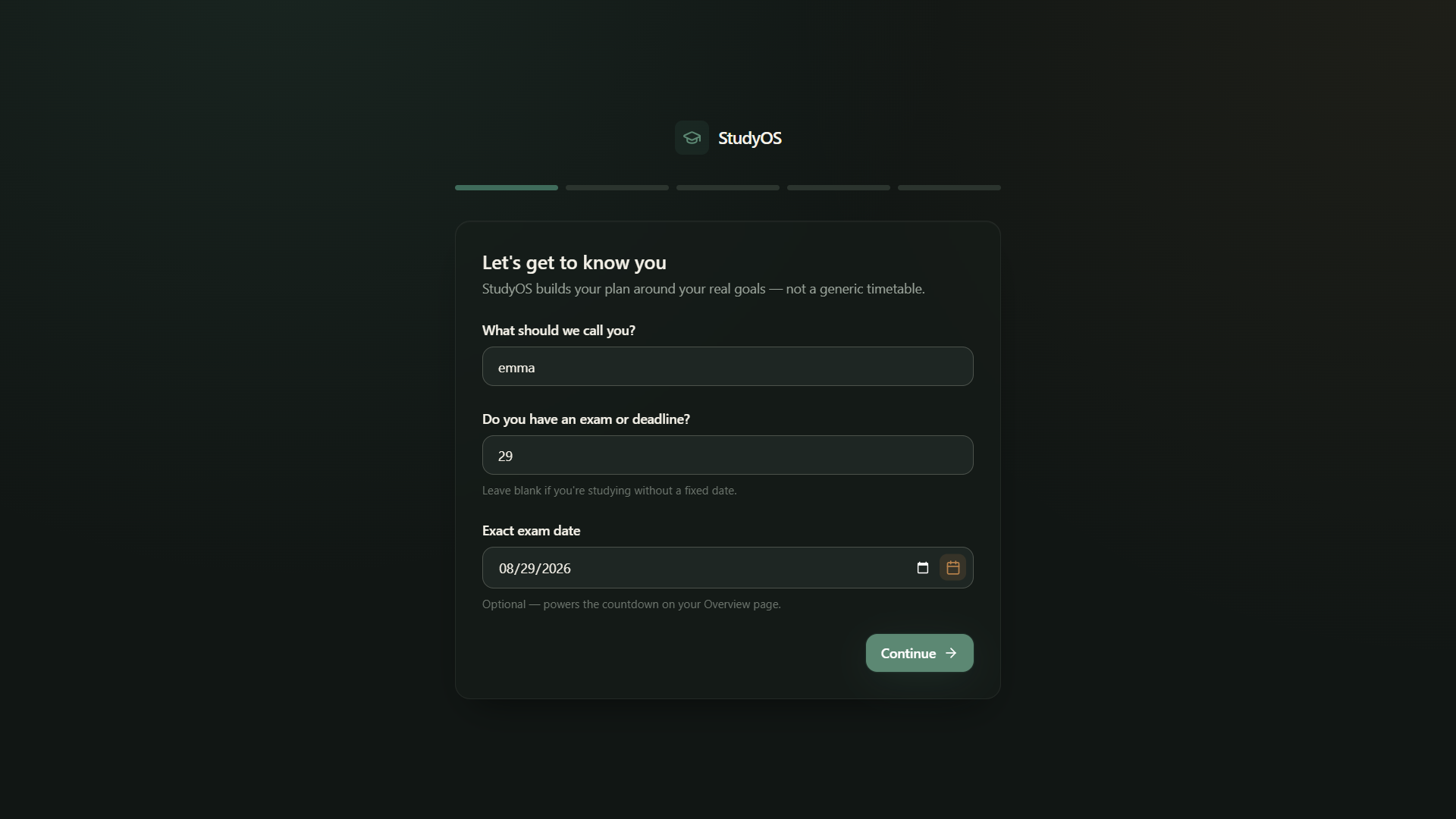
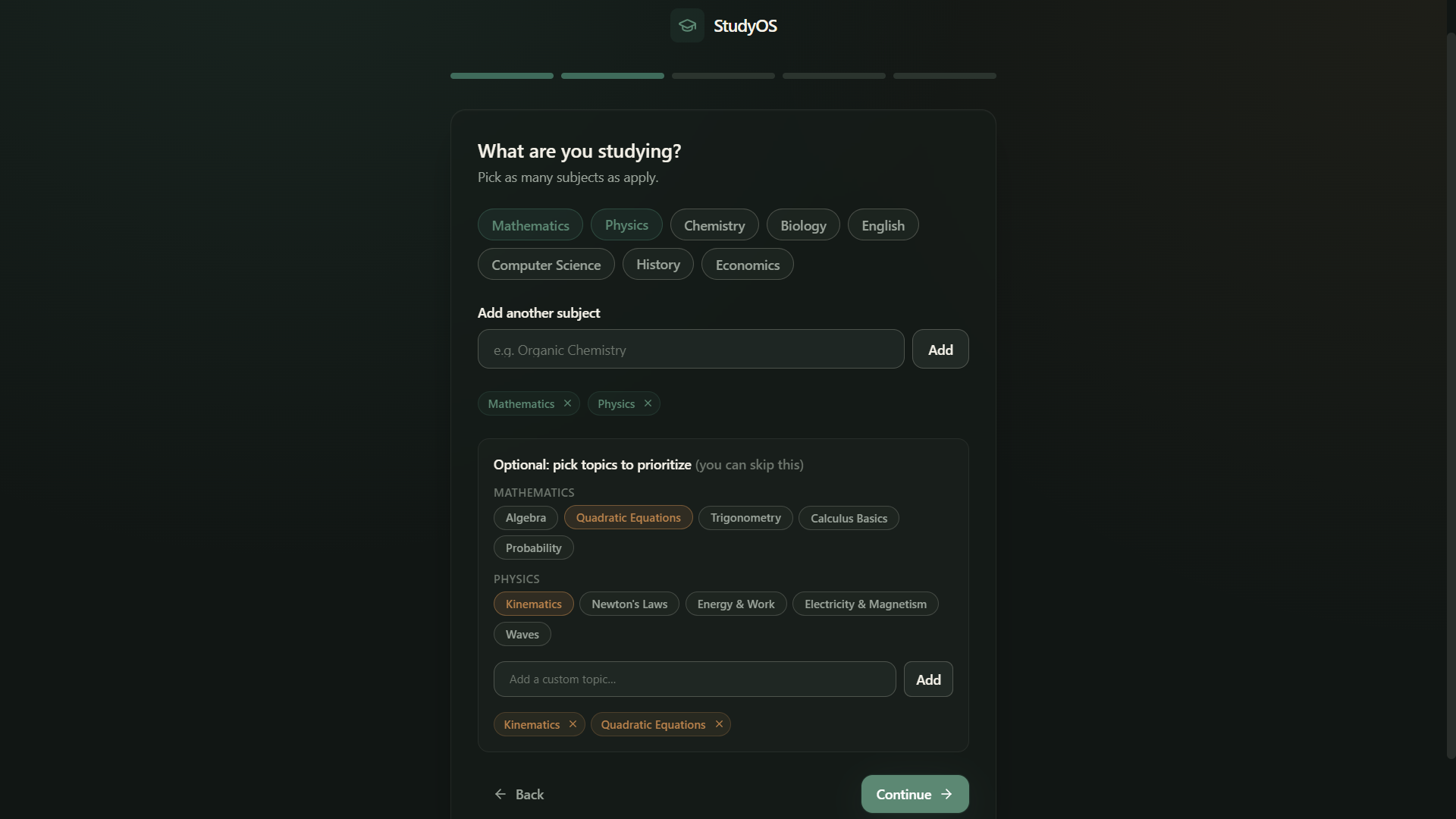
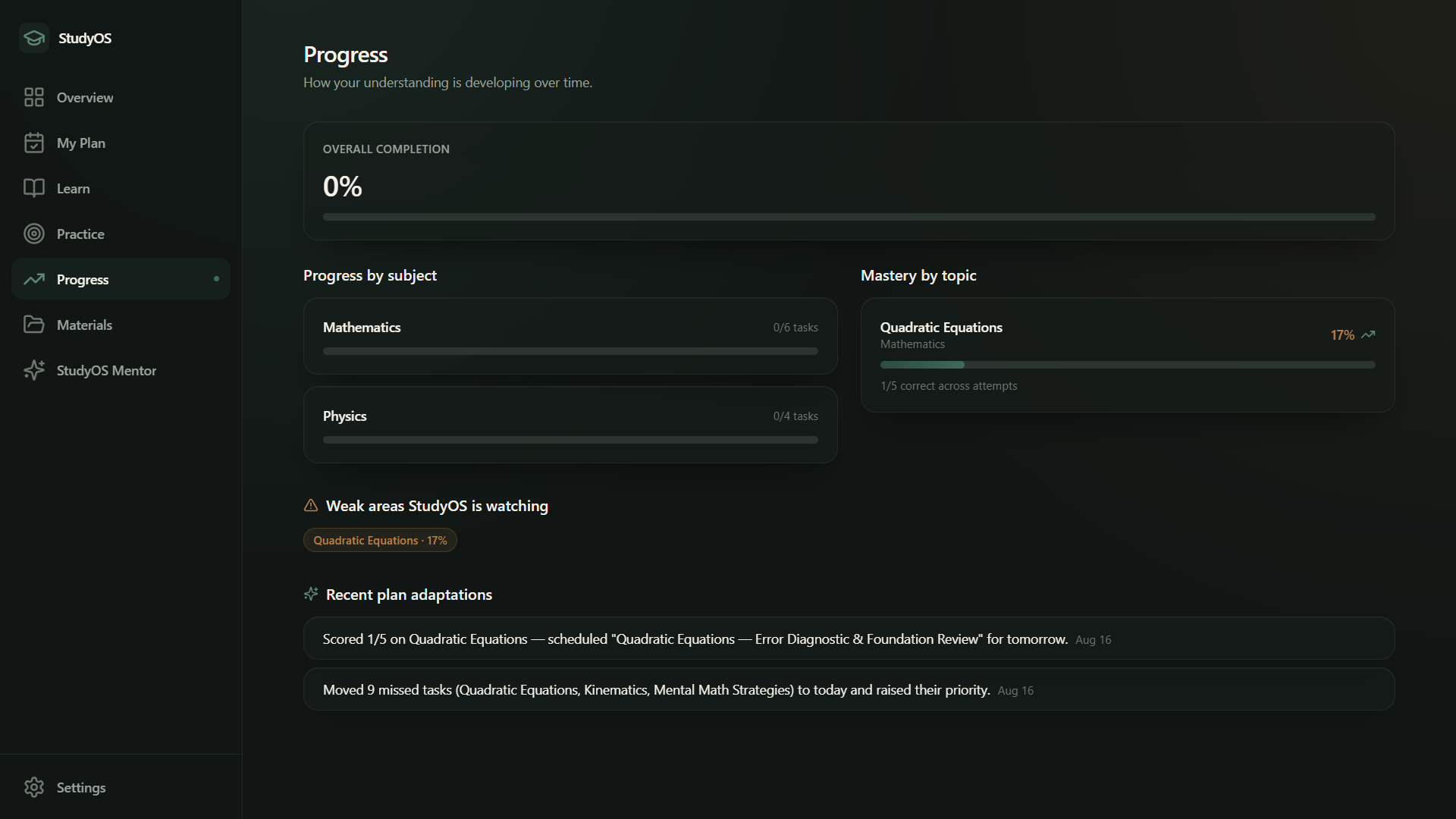
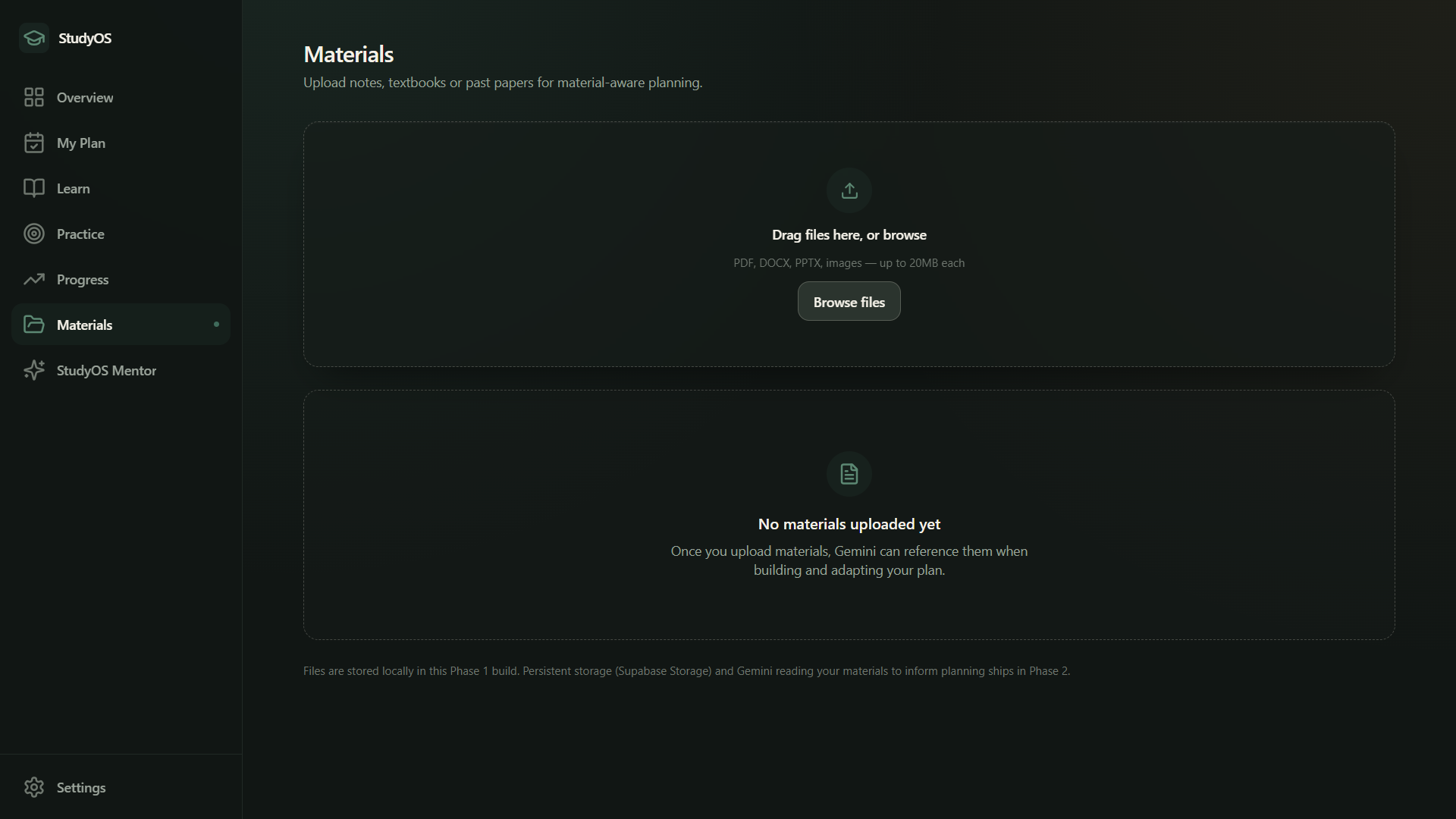
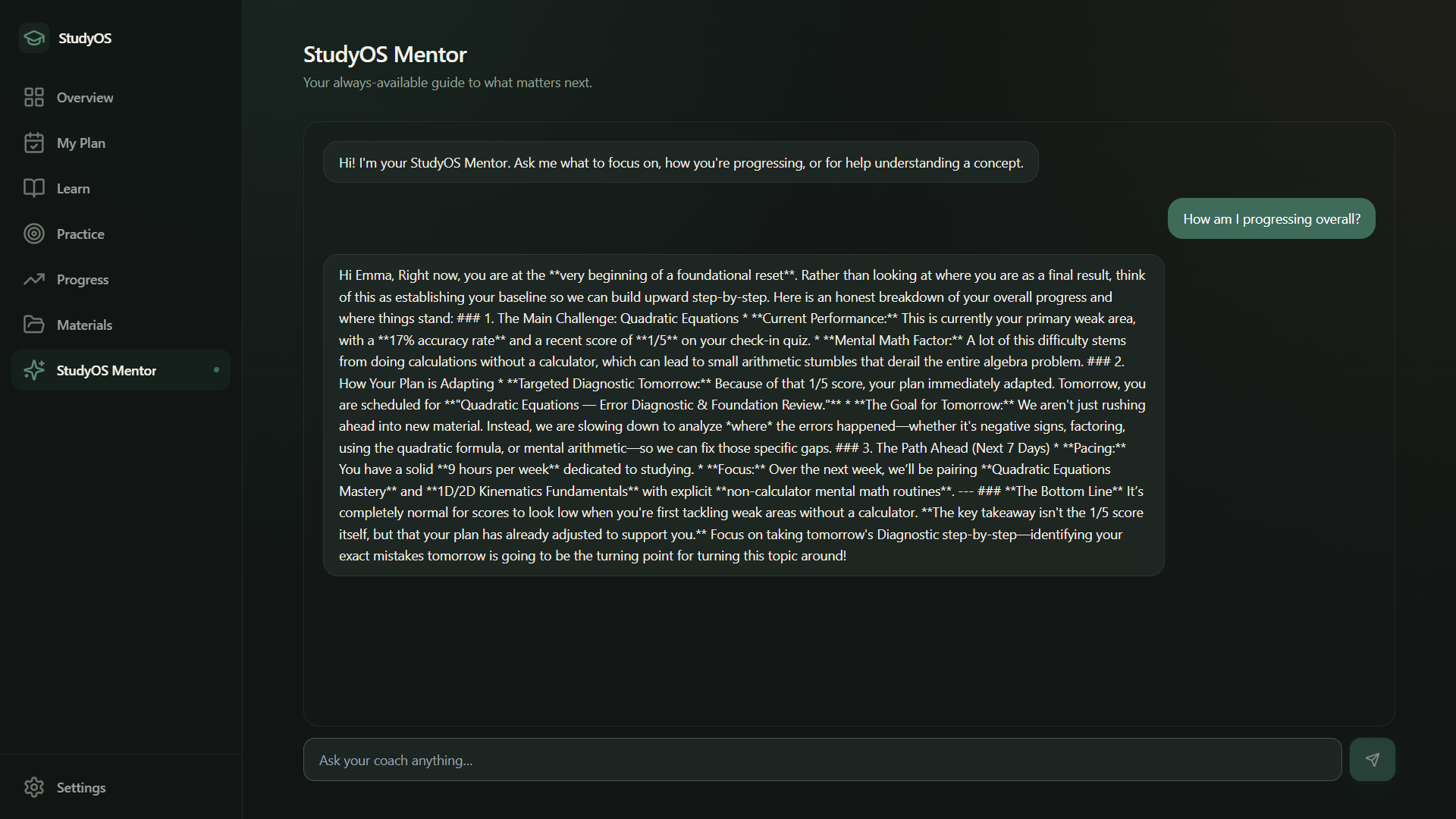
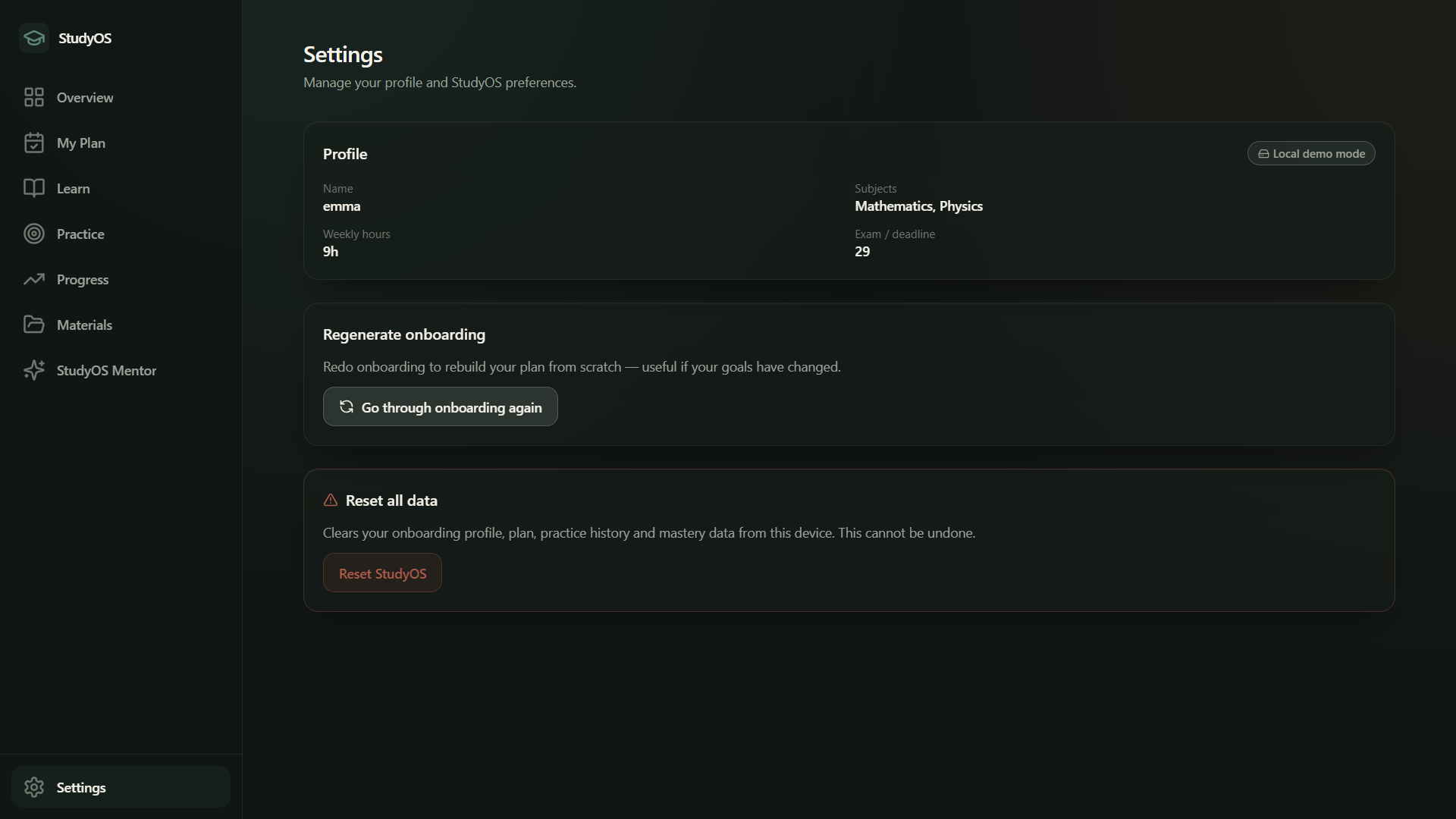
Inspiration
Students are surrounded by information, but having more resources does not always mean learning better.
StudyOS was built around a simple problem: students often know they need to study, but they do not know what to study, how to prioritize it, or whether their effort is actually helping. Between classes, assignments, exams, and limited time, planning itself can become another source of stress.
We wanted to build something that treats studying as a process that can be understood and improved—not simply a list of tasks to complete.
What it does
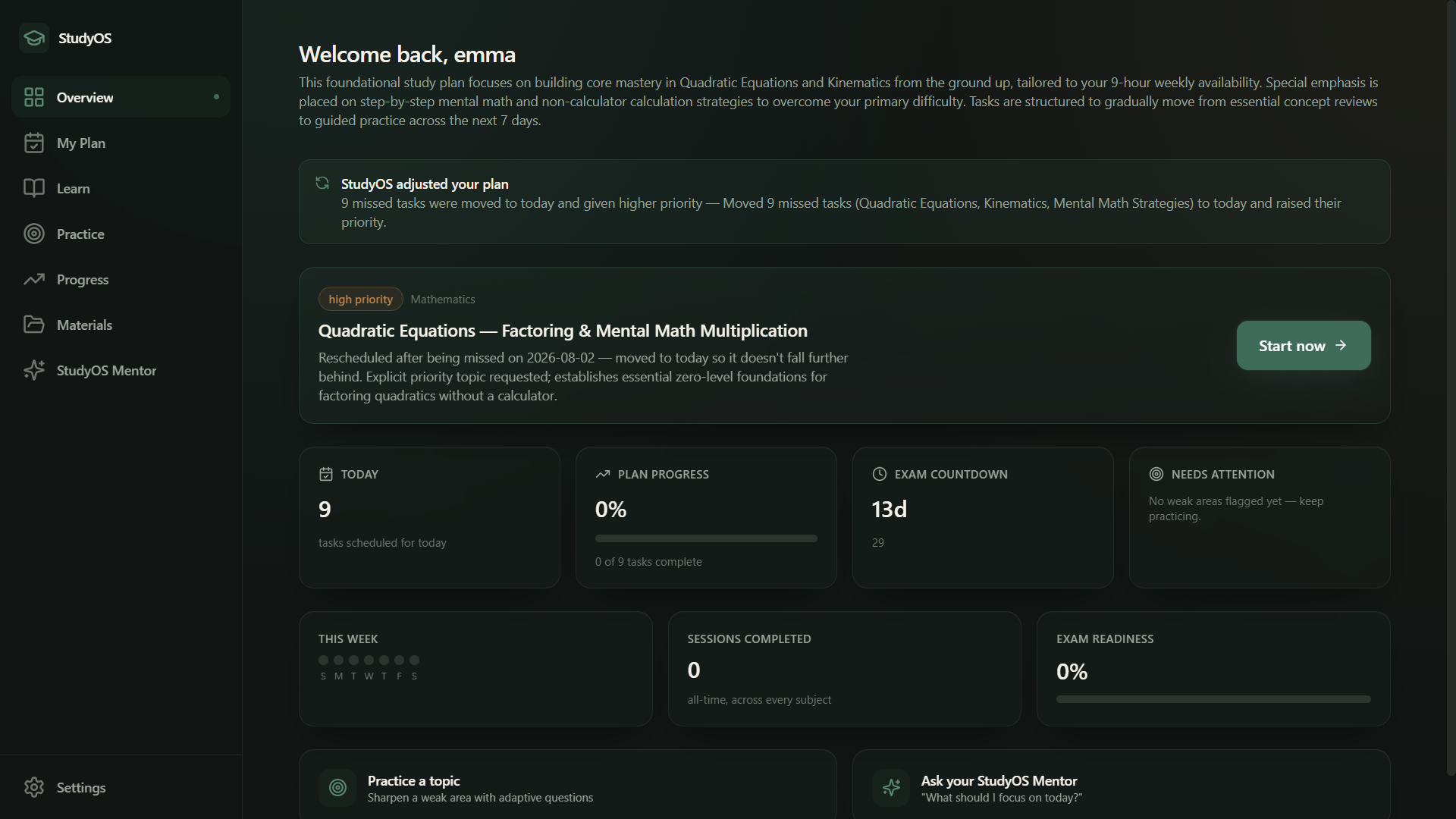
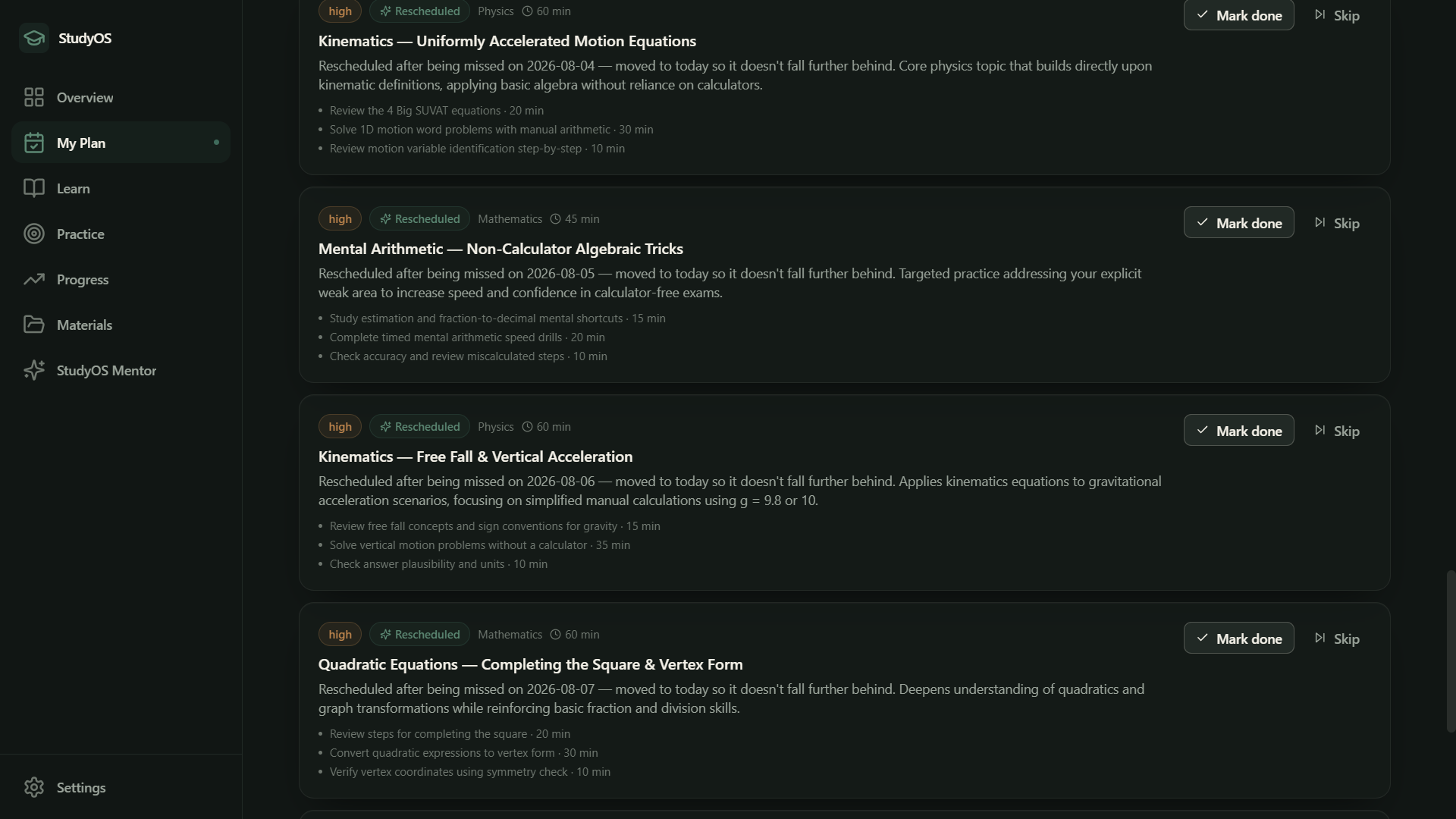
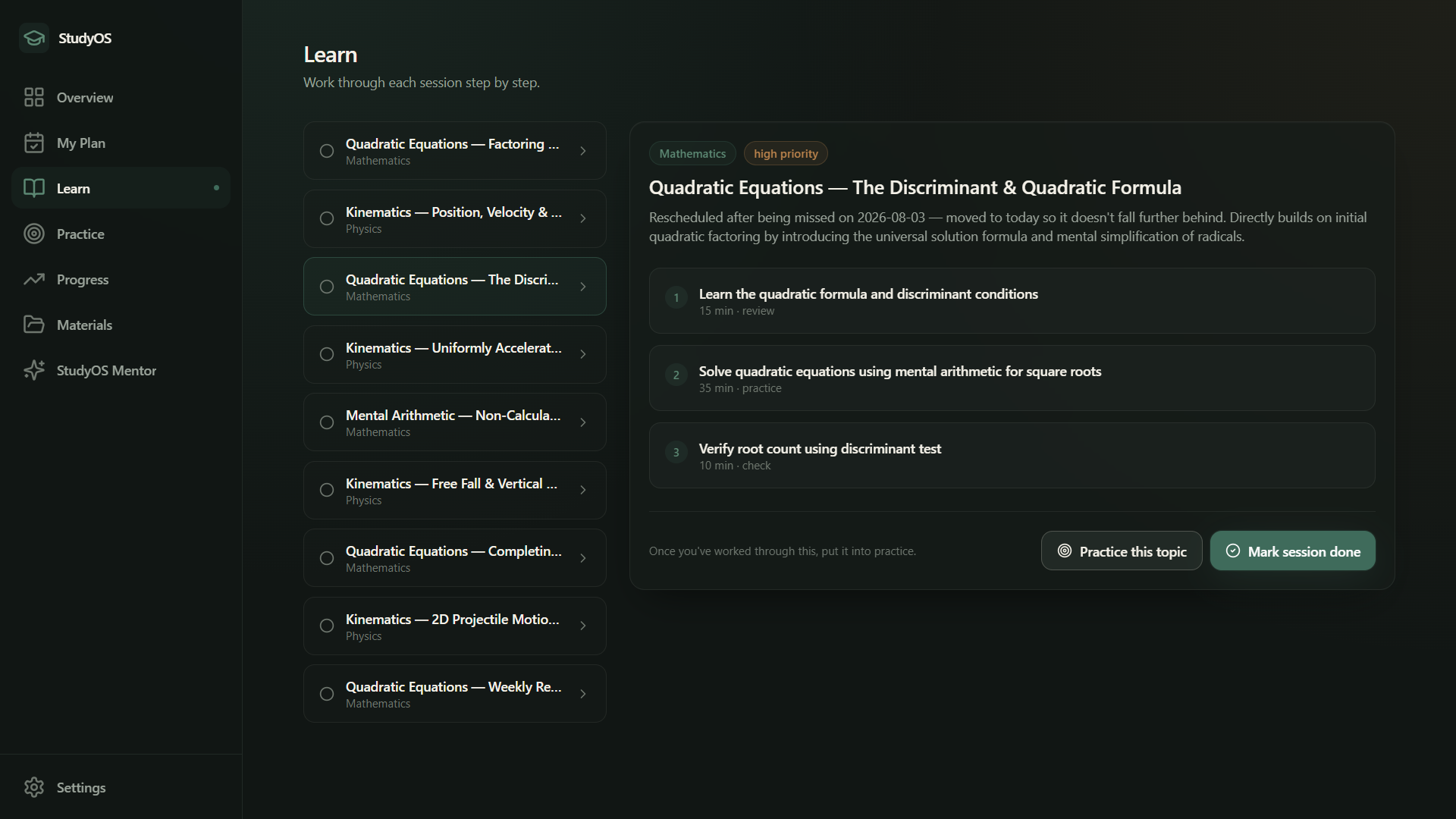
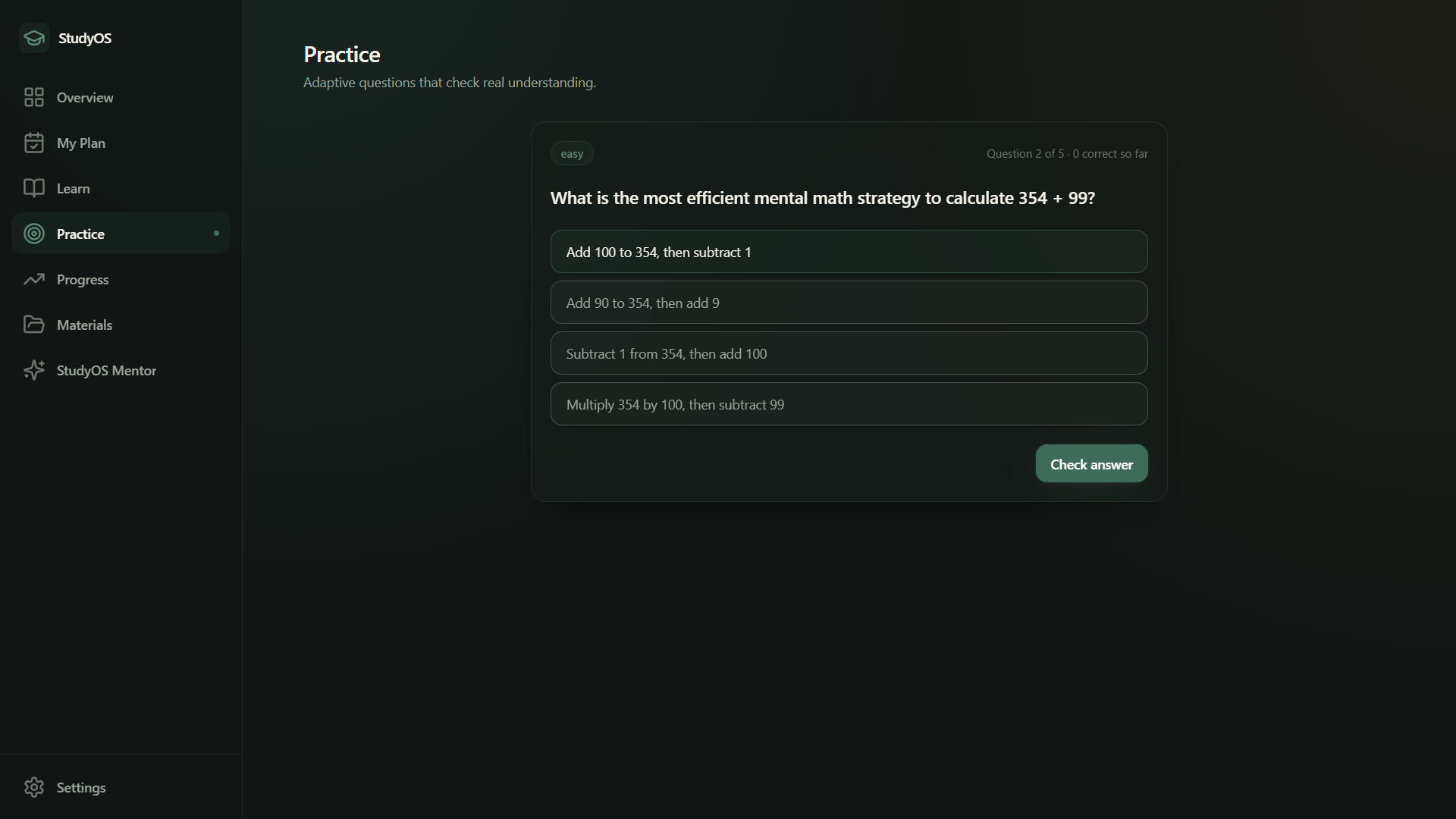
StudyOS turns scattered study needs into a structured, personalized learning workflow.
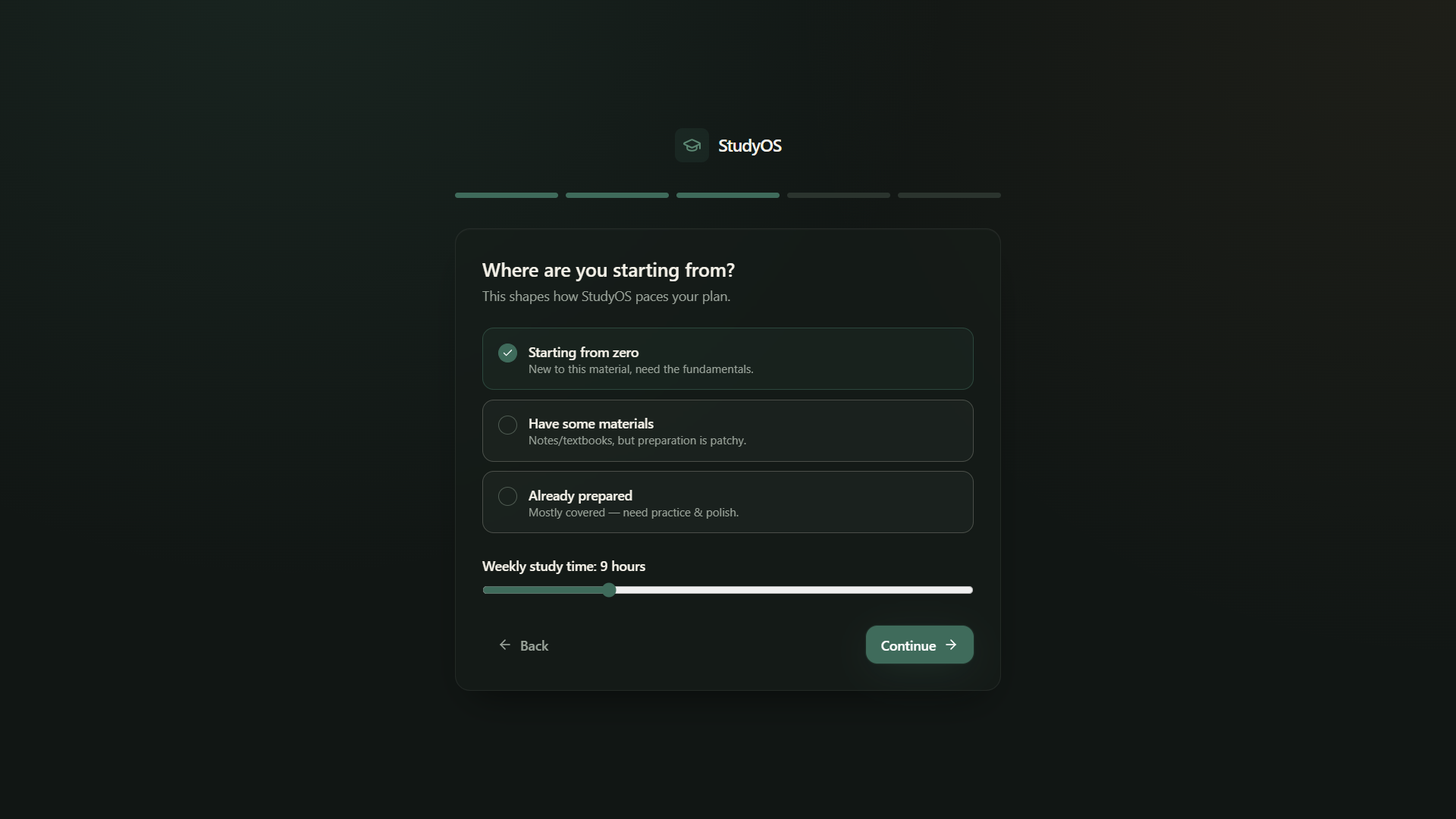
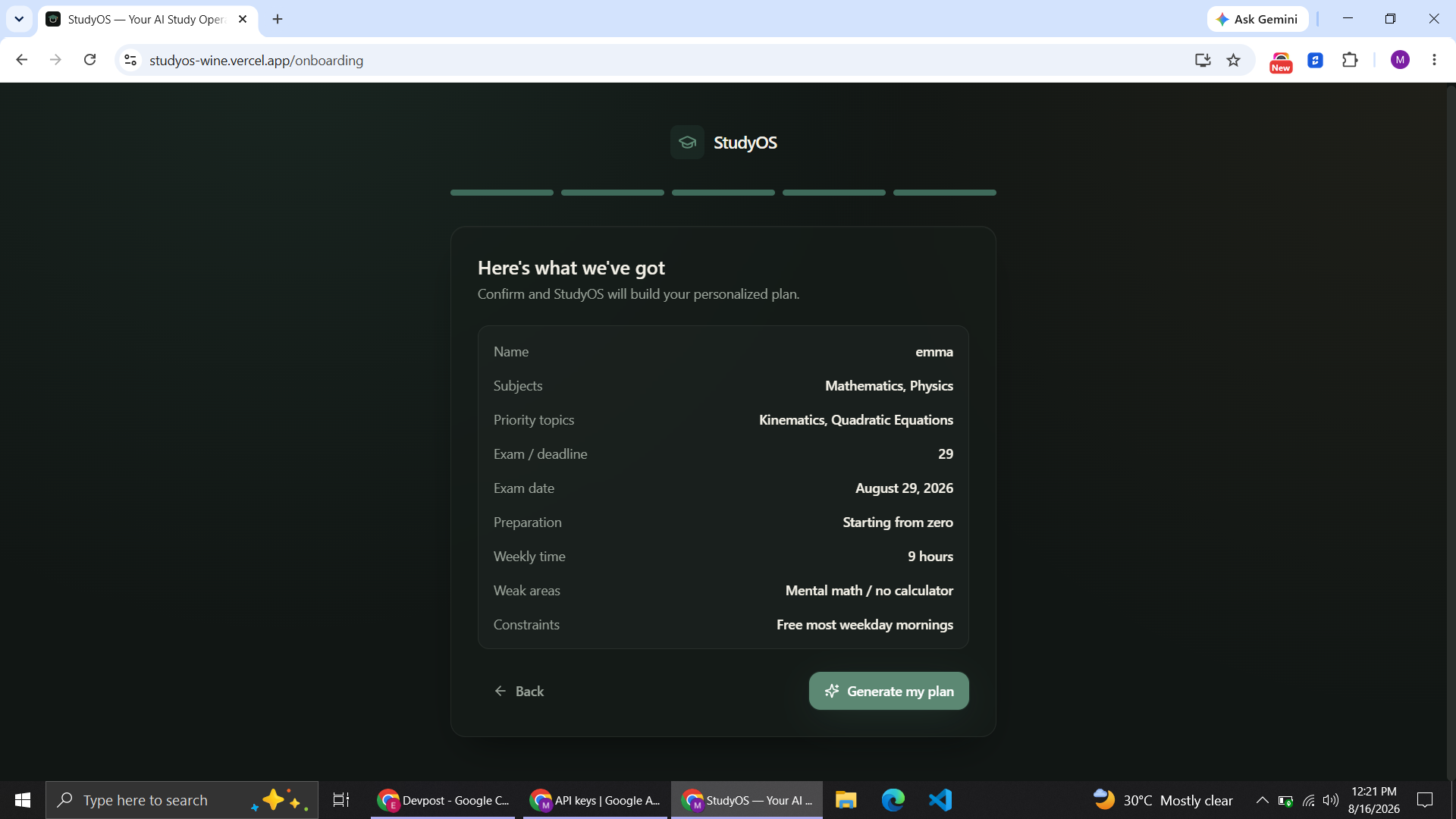
Instead of giving students another static planner, it helps them understand their goals, organize what needs to be learned, and decide what deserves attention next.
The experience is designed to reduce the friction between “I need to study” and “I know exactly what I should do next.”
The goal is not to make students spend more time studying. It is to help them make better use of the time they already have.
How we built it
StudyOS was built as a full-stack web application with an AI-powered learning layer.
The frontend was built with Next.js and React, with a responsive interface designed to keep the experience lightweight and easy to navigate. We used Tailwind CSS for the UI and interaction design.
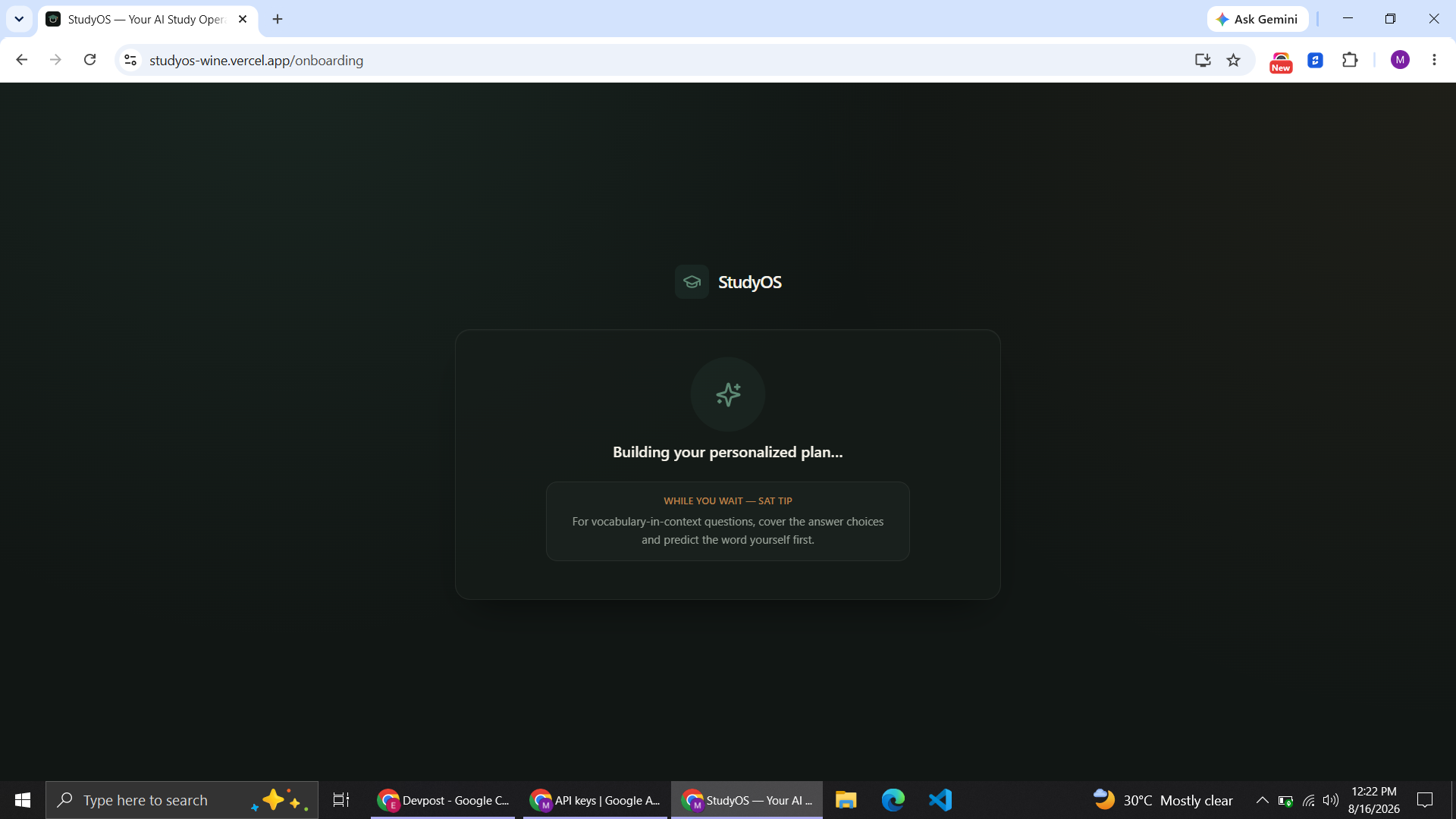
For the intelligence layer, we integrated Groq-powered AI to generate personalized learning guidance and recommendations. The application combines structured student information, learning goals, study planning, and AI-generated guidance into a single workflow.
We deliberately used AI as more than a question-and-answer tool. It supports planning, prioritization, and personalized learning decisions, helping turn a student's goals and constraints into actionable next steps.
The result is a system where the technology stays in the background while the student gets a clear, practical learning experience.
Challenges we ran into
One of the biggest challenges was designing an experience that was powerful without becoming another overwhelming productivity tool.
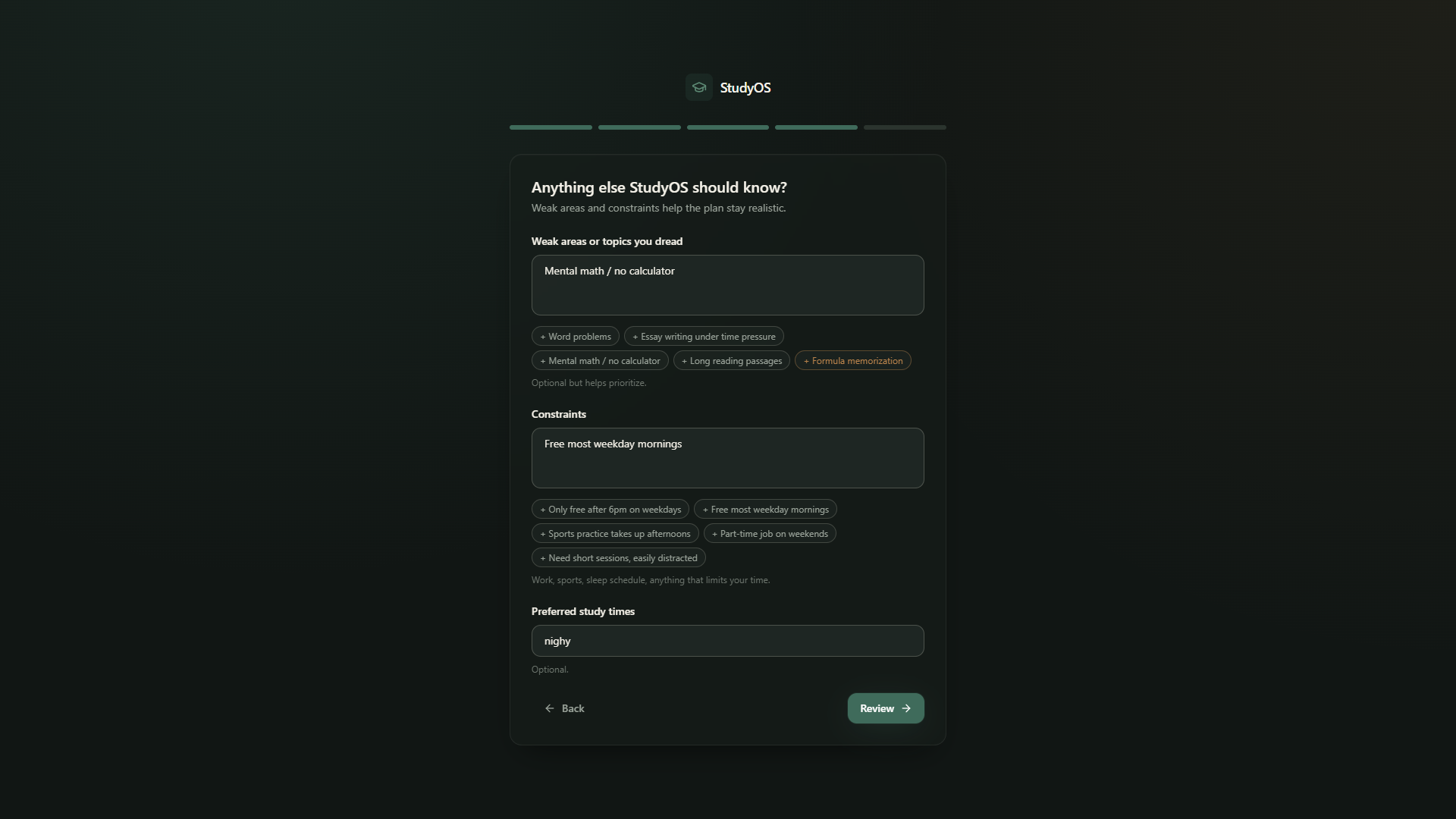
Students have different goals, schedules, workloads, and levels of understanding, so a useful system cannot assume that the same study plan works for everyone.
We also had to balance AI flexibility with a predictable user experience, making sure the student always understands what the system is recommending and why.
Accomplishments we're proud of
We are proud that StudyOS focuses on the decision-making layer of studying, rather than simply adding another place to store notes or tasks.
The system brings planning, learning, and prioritization together so students can move from uncertainty to a clearer next action.
Most importantly, we built the experience around a real constraint: time is limited. A student should not have to spend half of their available study session figuring out how to use it.
What we learned
Building StudyOS taught us that educational AI is most useful when it reduces cognitive load rather than adding more information.
The value is not simply in generating an answer. It is in helping a student make a better decision about what to do next.
We also learned that accessibility is more than making an interface simple. It means designing around the reality that students have limited time, different learning needs, and unequal access to traditional academic support.
What's next for StudyOS
StudyOS is designed with a much bigger vision than being another study planner.
We see it evolving into a personal learning layer that stays with a student throughout their education—understanding their goals, progress, strengths, challenges, available time, and changing priorities.
Over time, we want StudyOS to become increasingly adaptive: continuously learning from a student's progress, identifying where their attention has the highest value, adjusting learning strategies, and helping them make better decisions before they fall behind.
We also want to expand its ability to support different subjects, learning styles, academic goals, and resource constraints, while making the experience practical for students who may not have access to private tutors, expensive preparation platforms, or extensive academic support.
The long-term vision is not simply to build a smarter study tool.
It is to build an intelligent learning layer that can make personalized academic guidance more accessible—regardless of a student's resources, schedule, or starting point.
A future where a student does not have to figure out the entire learning process alone, and where better guidance is not something reserved for those who can afford it.
Built With
- academic
- accessibility
- adaptive
- agent
- analytics
- app
- artificial
- assistant
- edtech
- education
- generative
- intelligence
- machine
- personalized
- planning
- platform
- productivity
- success
- support
- technology
- tutor
- web

Log in or sign up for Devpost to join the conversation.