-
-
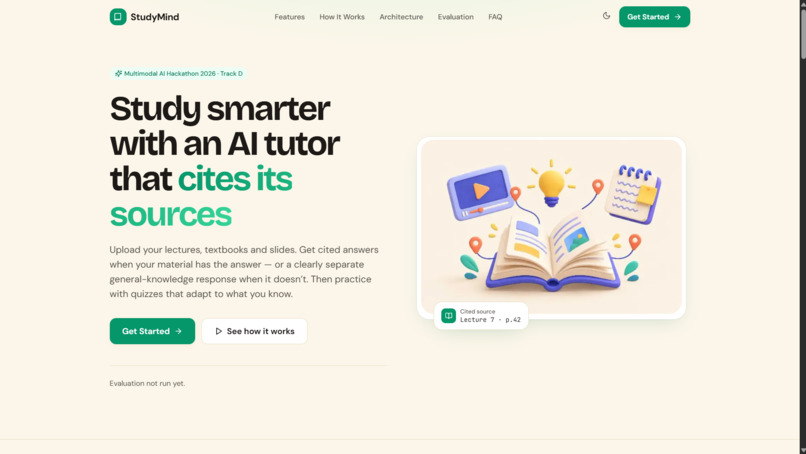
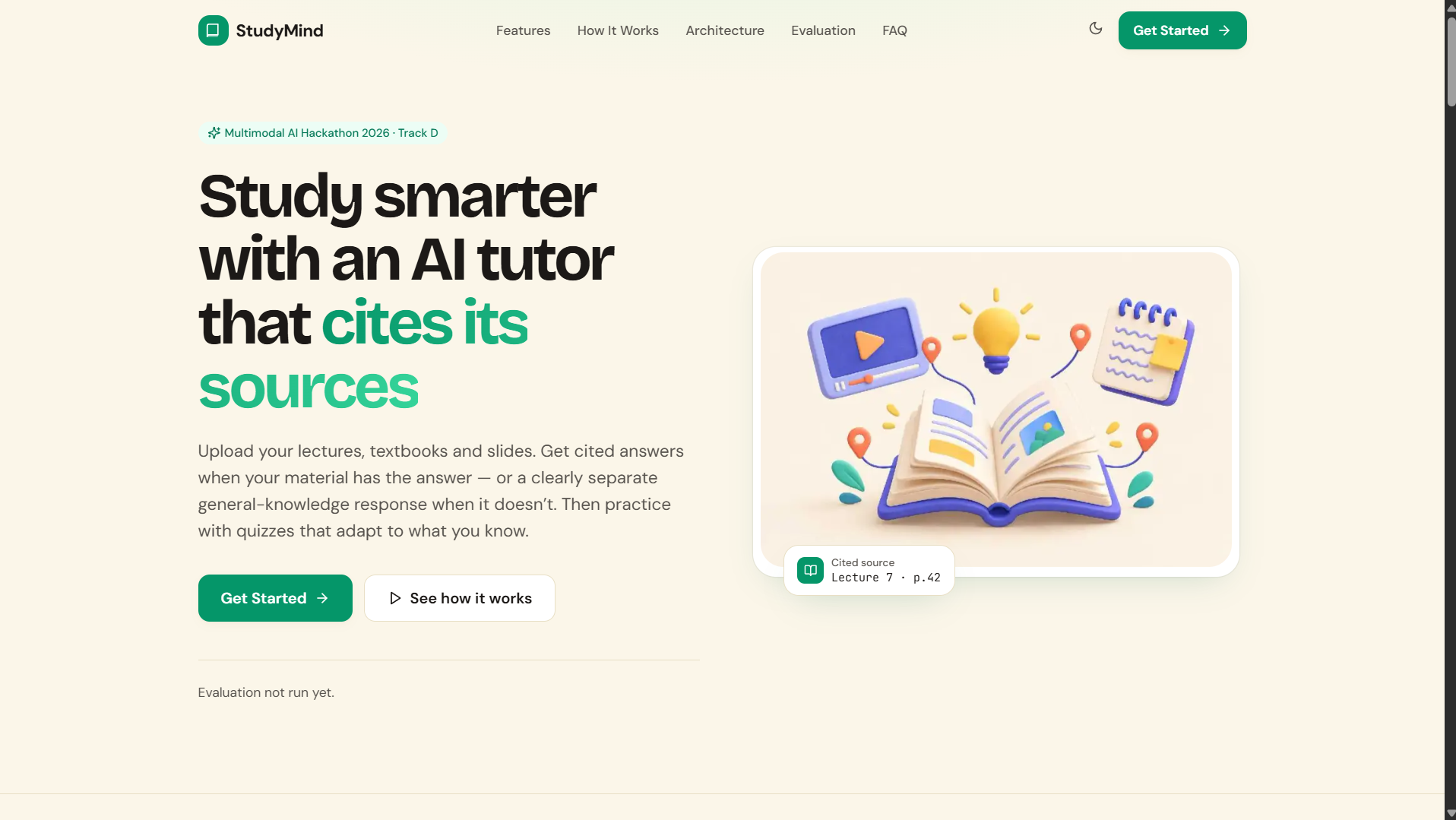
Get Started page
-
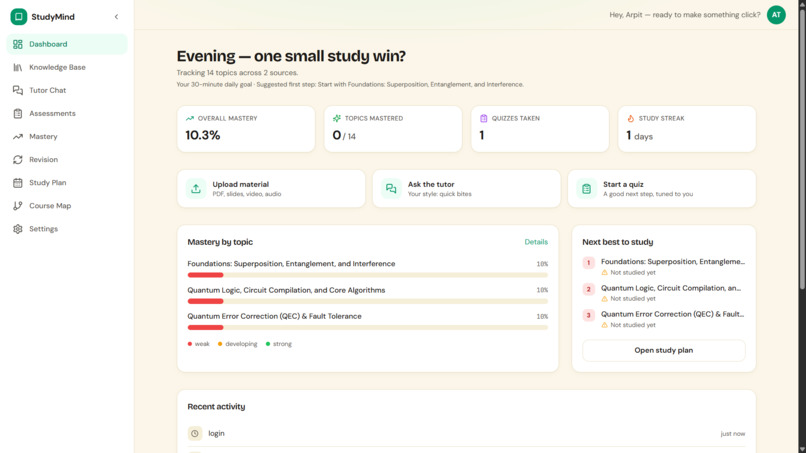
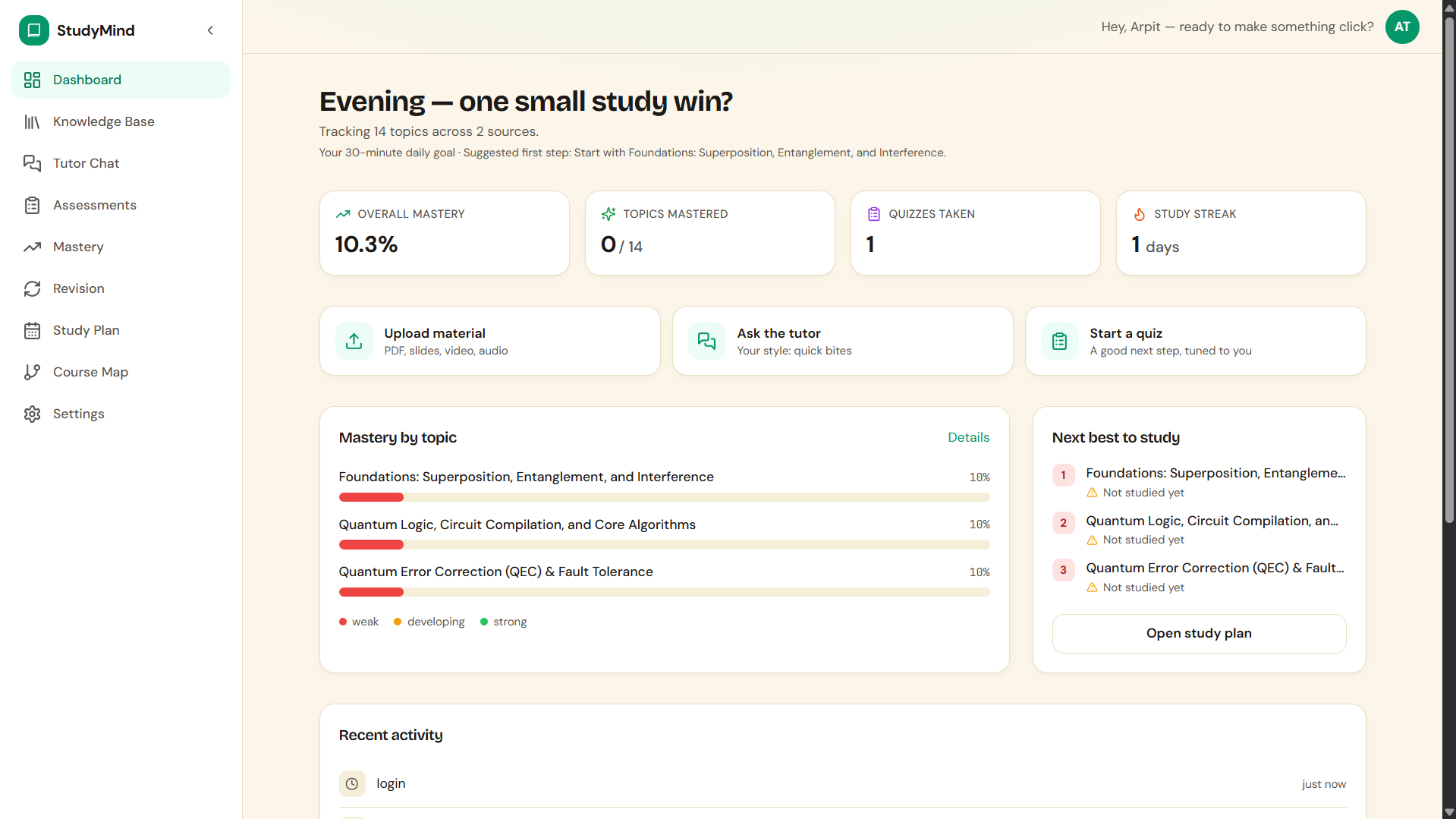
Dashboard page
-
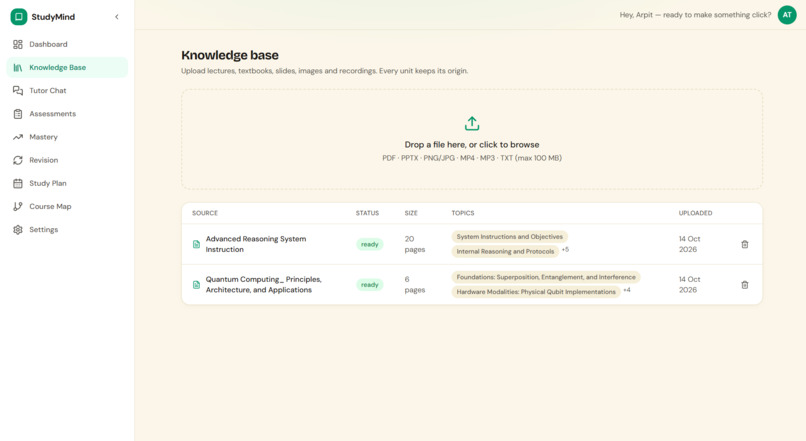
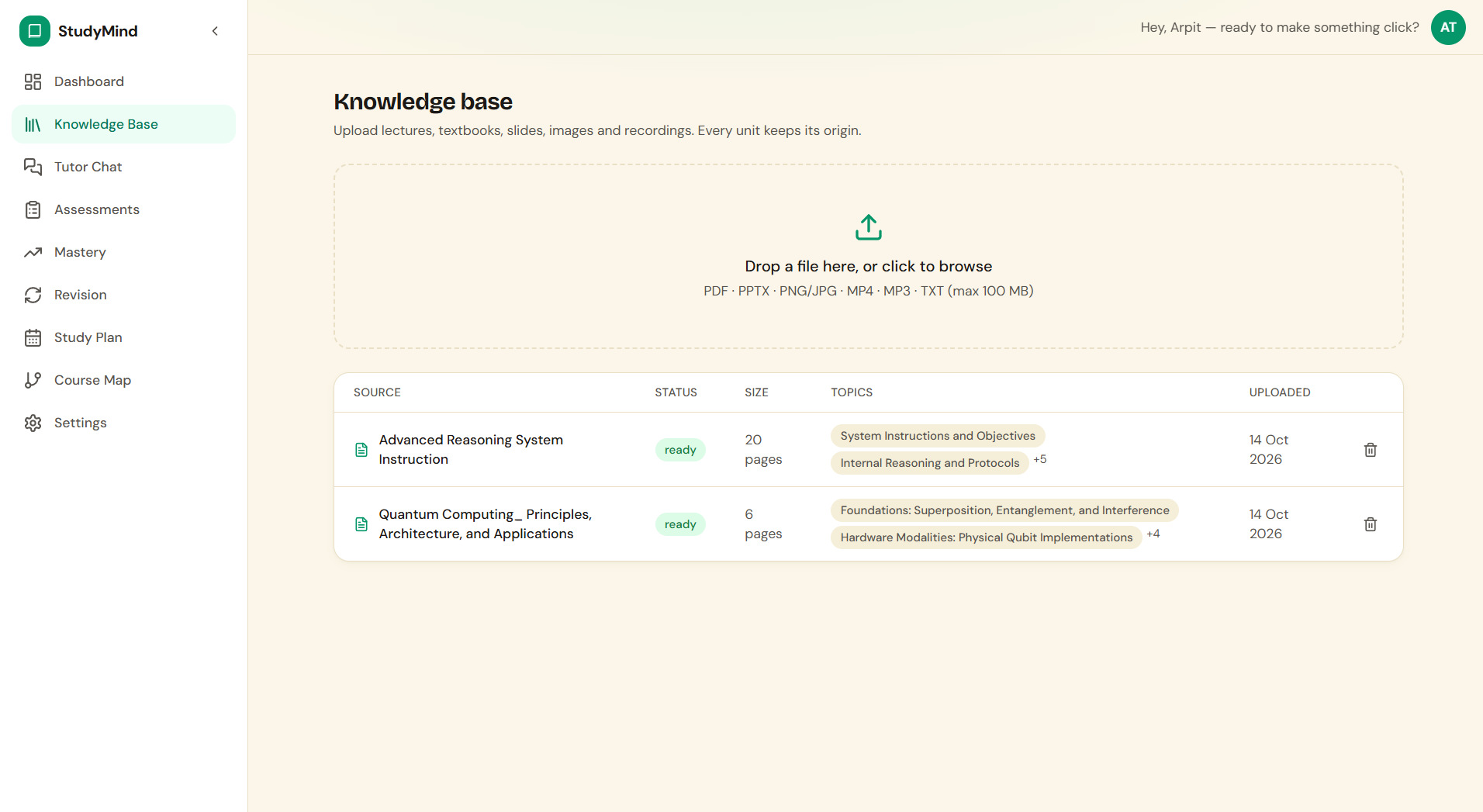
You can upload your own knowledge
-
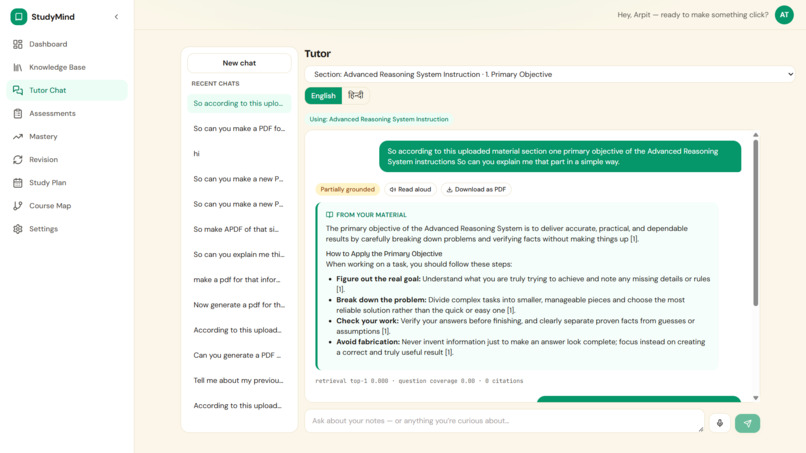
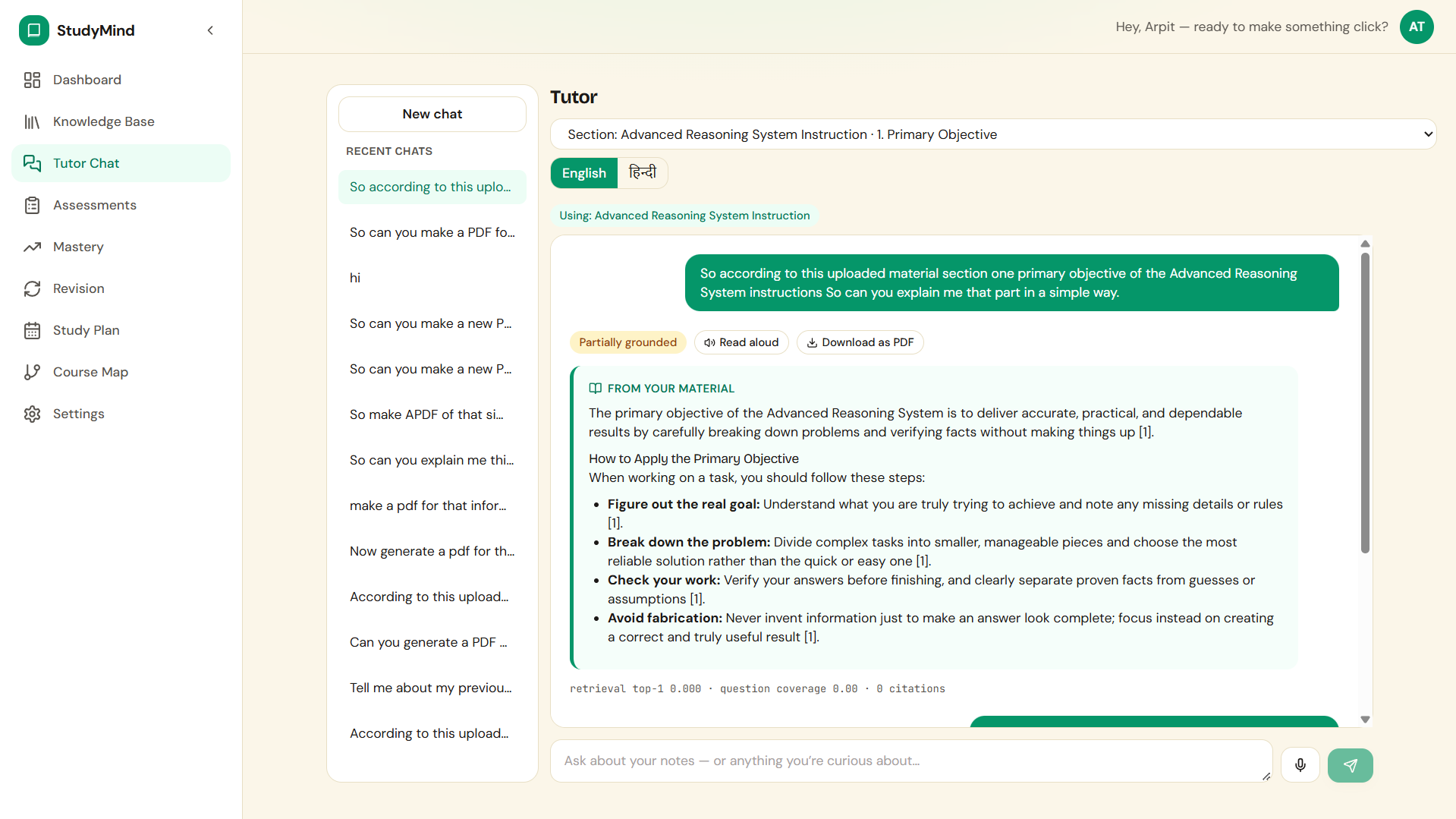
You can even question the tutor for your specific work
-
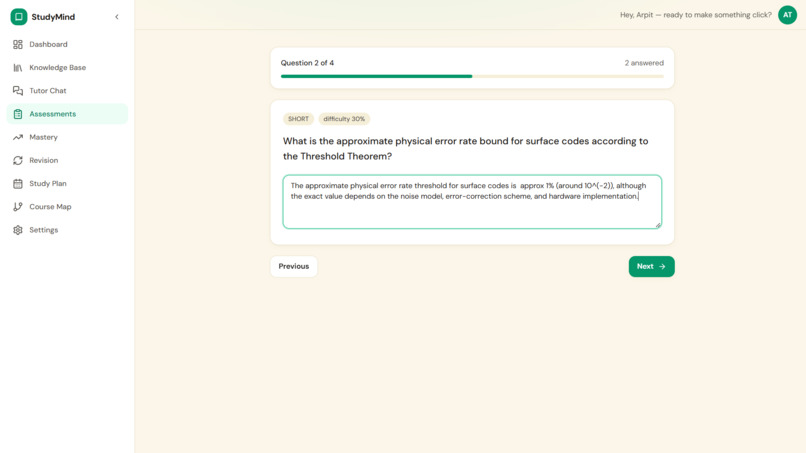
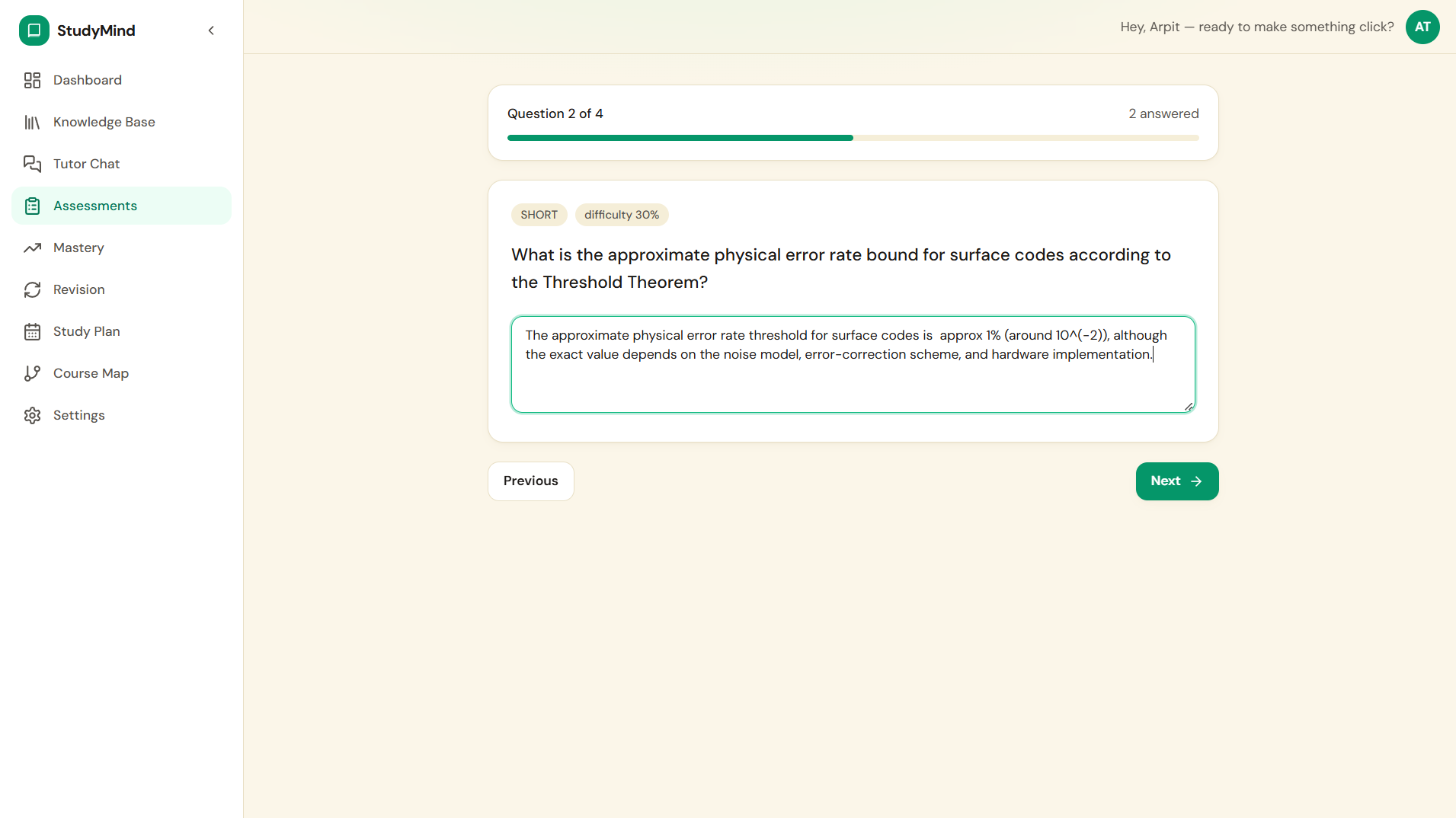
You can also text yourself by Getting a quiz by our tutor
-
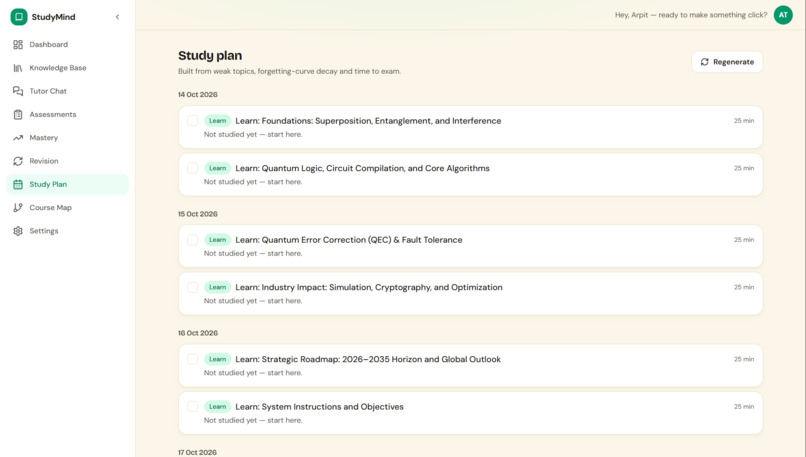
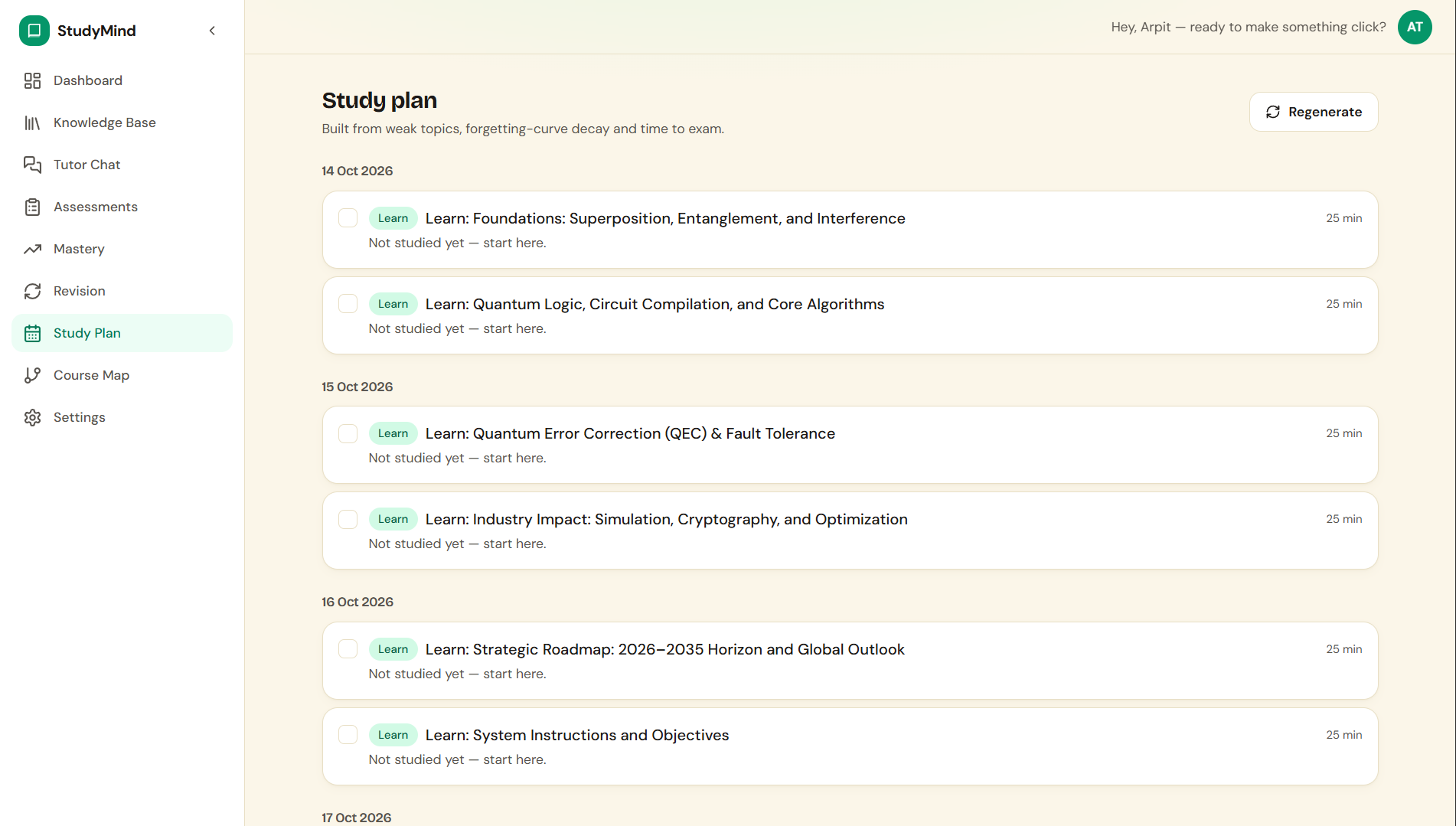
Our tutor can even get the best schedule for your study plan
StudyMind Rethinking the Way Students Learn
---- Inspiration -----
Every student learns differently. Some understand concepts by asking questions, some prefer reading notes and PDFs, while others learn best by solving questions and testing their knowledge. However, students often need to switch between different platforms for explanations, study materials, and assessments.
We wanted to bring these learning activities together into one unified experience.
That idea inspired StudyMind, an AI powered learning platform built to help students understand concepts, work with study materials, and evaluate their progress without unnecessary complexity.
---- What We Built ----
StudyMind combines several essential learning features into one platform.
AI Tutor. Helps students explore concepts, ask questions, and get contextual explanations.
PDF Based Learning. Supports working with study documents and using learning context to generate useful PDF study materials.
AI Powered PDF Generation. Allows students to request learning documents based on a topic or their study needs.
Timed Assessments. Provides a structured assessment experience with a countdown timer, answer submission, and result evaluation.
Progress and Performance Tracking. Organizes assessment responses and helps students review their performance.
Unified Learning Experience. Brings tutoring, study materials, and assessments together instead of treating them as separate activities.
Our focus was not simply to add AI to an education website. We wanted to create a practical learning workflow in which students can ask, learn, practice, and evaluate.
---- How We Built It ----
We developed StudyMind as a full stack web application, combining a responsive frontend, a backend API, database persistence, and AI powered functionality.
The frontend provides the main learning interface, including the tutor and assessment experience. The backend manages application logic, tutor requests, PDF workflows, and assessment operations. Database models are used to organize learning related data and assessment responses.
We also focused on the reliability of important user interactions. For example, timed assessments need to save answers before final submission, while concurrent answer submissions should not create duplicate response records. PDF generation also needs clear request handling, useful error responses, and sensible limits.
We used automated tests to cover critical assessment and PDF related behavior, alongside deployment workflows to make the application accessible through the web.
---- What We Learned ----
Building StudyMind helped us understand that developing an AI powered application involves much more than connecting a language model to a user interface.
We learned how to connect frontend interactions with backend services, manage persistent application data, structure AI powered workflows, and design features around real user needs.
We also learned the importance of handling asynchronous operations carefully. A countdown timer, a database write, or an AI generated document may involve several steps, and the application must handle failures and repeated requests without leaving users with incomplete results.
Most importantly, we learned that a useful AI product must combine intelligent features with a reliable user experience. AI can help explain concepts and prepare learning materials, but the surrounding software must make those capabilities practical to use.
---- Challenges We Faced ----
One of our main challenges was coordinating multiple features that have different requirements.
- Reliable assessment submission
A timed assessment must not lose answers when the timer expires. We worked on ensuring that non empty answers are saved before the assessment is finalized and that repeated submission attempts do not unnecessarily create duplicate responses.
- PDF generation and request handling
PDF creation involves more than generating content. The application must interpret the user's intent, handle clarification requests, prepare the content, generate the document, and communicate failures clearly. We improved the flow to handle these steps more carefully.
- AI integration and contextual responses
An AI tutor needs to understand what the student is asking and use the appropriate learning context. Designing the interaction between tutor requests, study materials, and document generation was an important part of the development process.
- Full stack integration and deployment
Connecting the frontend, backend, database, and AI services introduced integration challenges. We had to consider configuration, API communication, persistent data, and the difference between code that works during development and software that behaves reliably after deployment.
These challenges taught us to approach problems systematically, test critical workflows, and treat reliability as part of the product rather than an afterthought.
---- What's Next? ----
We see StudyMind as a foundation that can grow into a more personalized learning environment. Future improvements could include adaptive learning recommendations, more detailed progress insights, expanded document understanding, and learning paths tailored to each student's strengths and weaknesses.
Our long term vision is to help students spend less time switching between tools and more time understanding what they learn.
---- Our Vision ----
StudyMind brings asking, learning, practicing, and evaluating together in one AI powered platform.
We believe technology should support the learning process, not make it more complicated. StudyMind is our step toward a more connected, accessible, and personalized learning experience.
Built With
- artificial-intelligence
- automated-testing
- express.js
- generative-ai
- large-language-models
- mongodb
- mongoose
- node.js
- pdf-generation
- react
- rest-api
- typescript
- vercel
- vite
- web-development

Log in or sign up for Devpost to join the conversation.