-
-
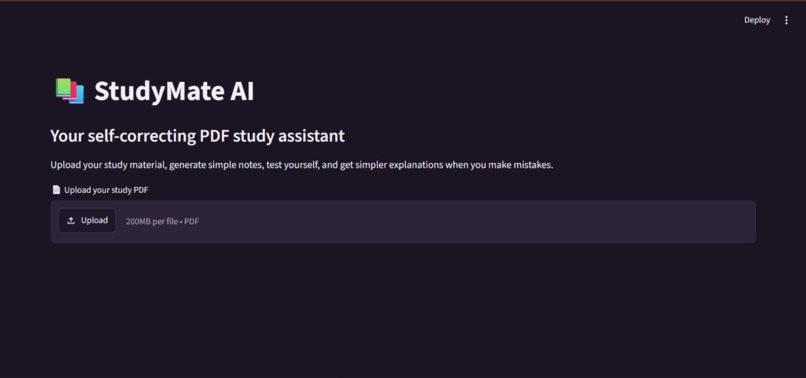
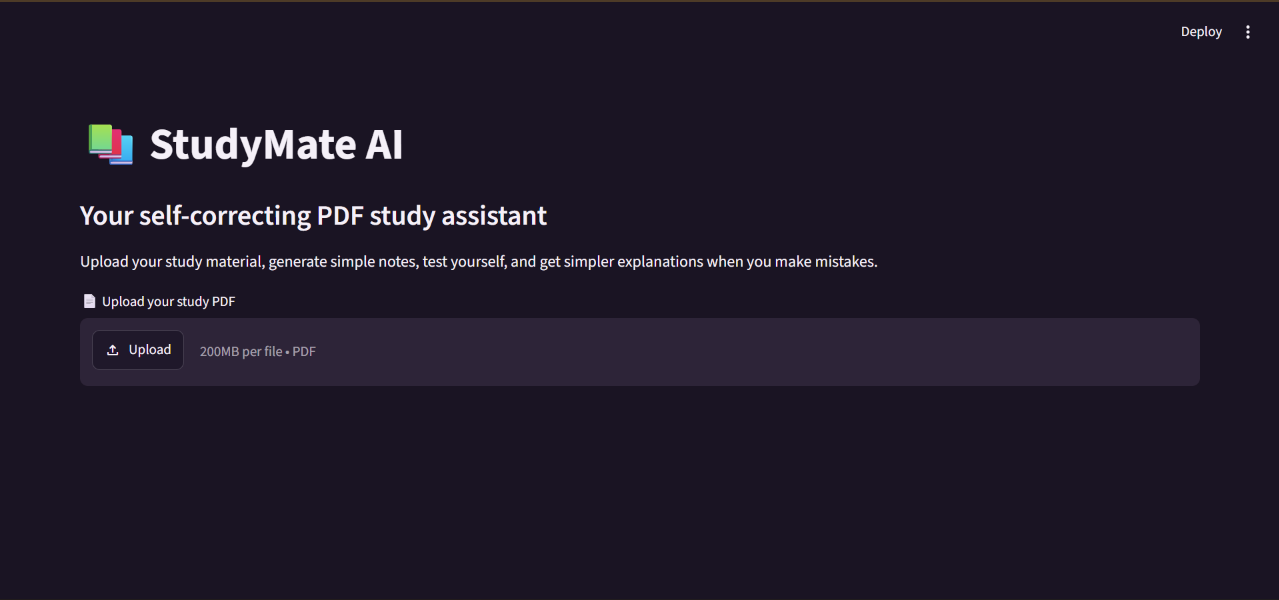
Landing screen to upload study PDFs
-
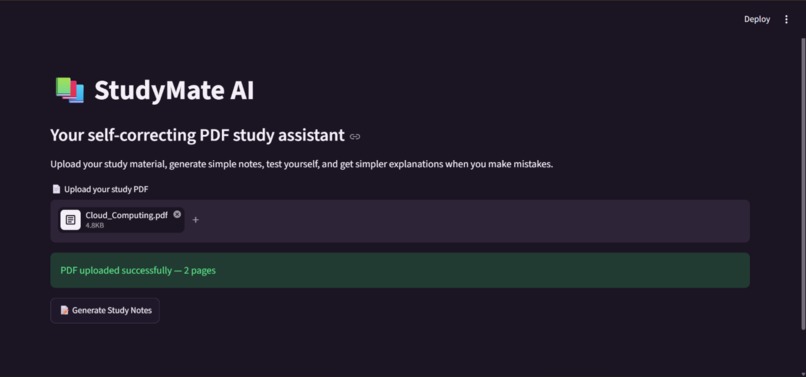
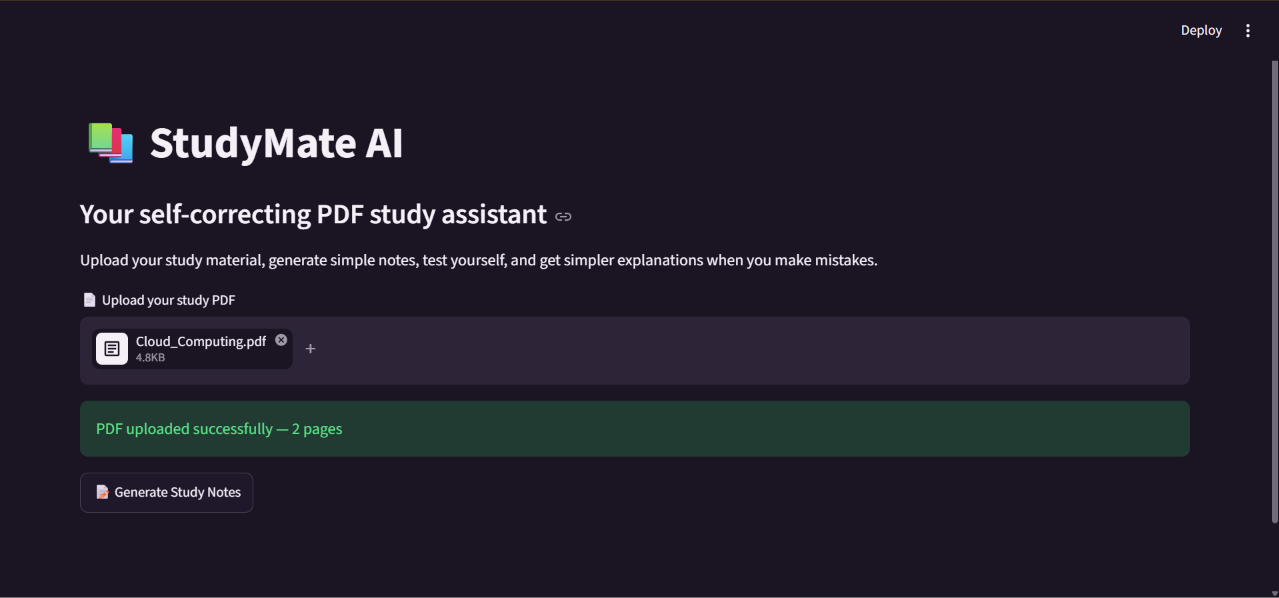
Successful PDF upload confirmation
-
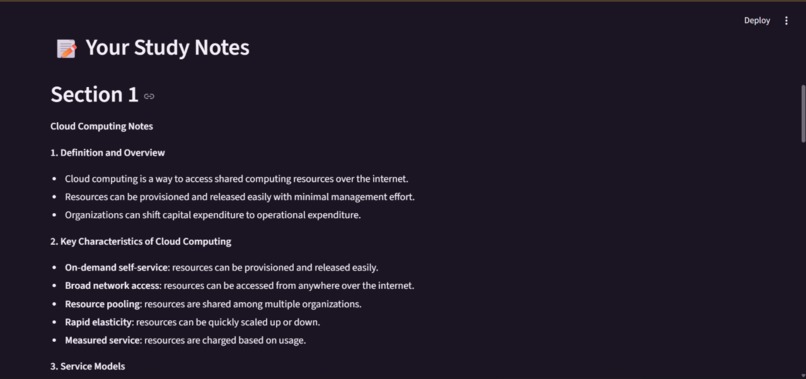
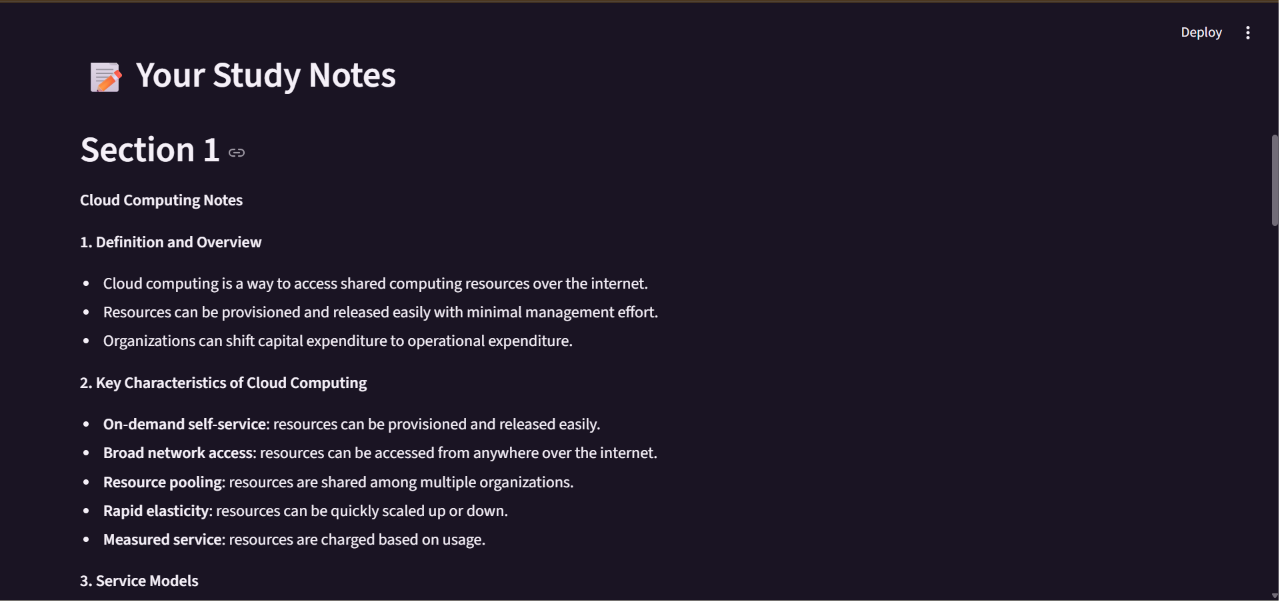
Generates AI study notes
-
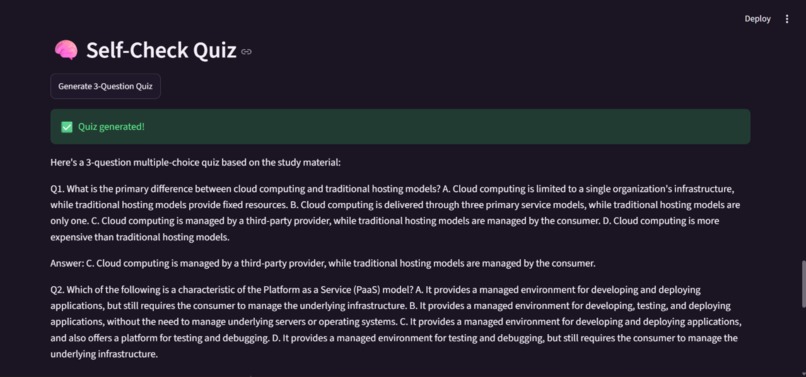
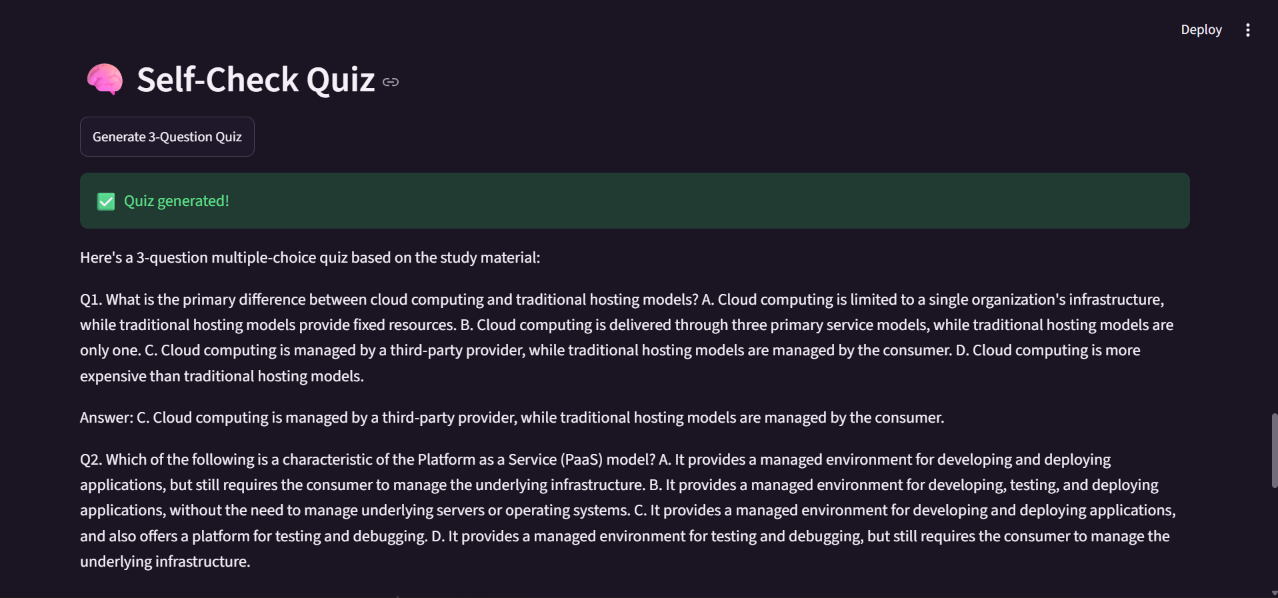
Generates a 3-question multiple-choice quiz
-
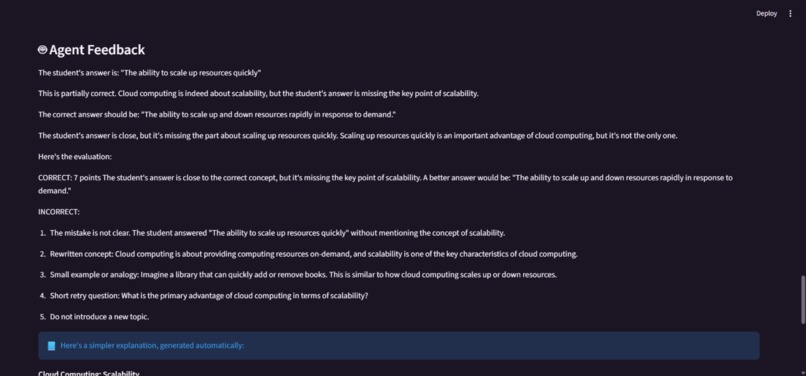
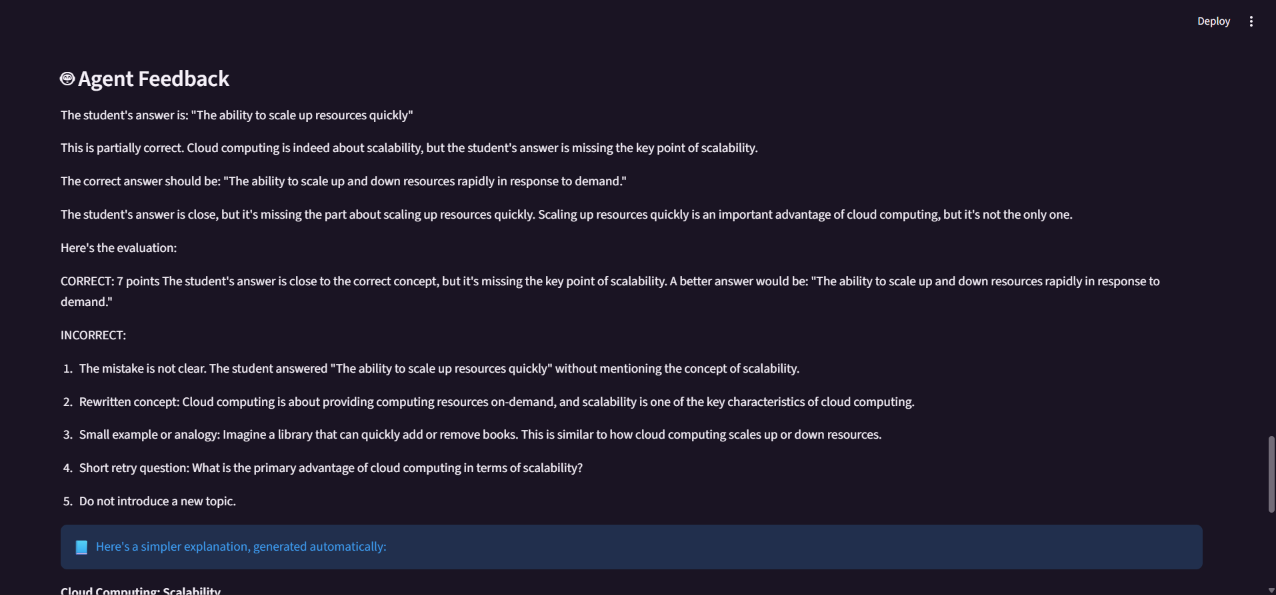
Displays an incorrect answer with an AI breakdown of the mistake, an analogy, and a retry question
-
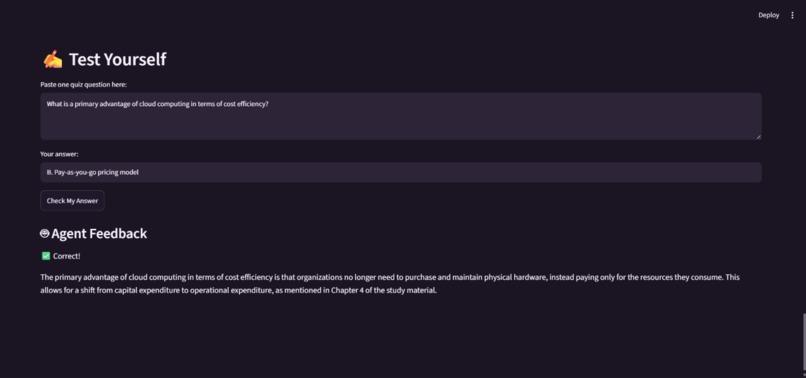
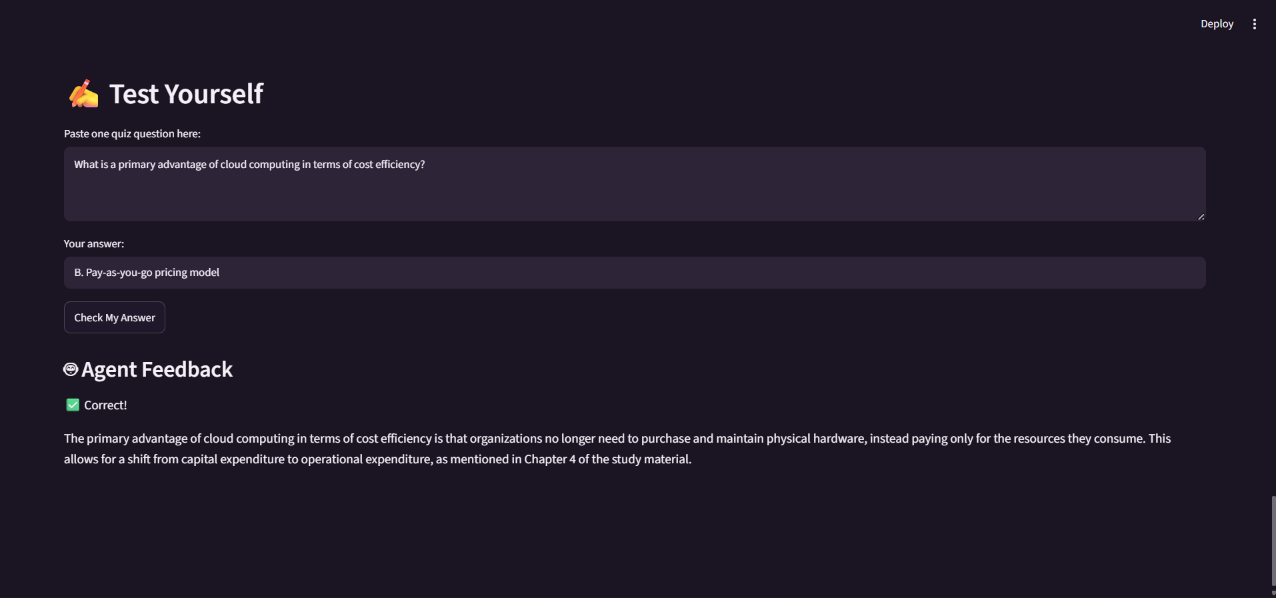
Displays a correct answer confirmation along with an AI explanation of why the user's choice was right
Inspiration
As a student, I’ve seen how difficult it can be to study from the long, technical PDFs and presentations shared by professors. Many students at my university, including me, spend a lot of time turning this material into understandable notes instead of actually learning it.
That inspired StudyMate AI — a study agent that not only simplifies study material, but also adapts when a student doesn't understand something.
What it does
StudyMate AI turns dense PDFs into simple, exam-friendly notes and generates a short self-check quiz.
Its key feature is the self-correction loop:
PDF → Notes → Quiz → Student Answer → AI Evaluation → Simpler Explanation → Retry
If a student gets a question wrong, the agent identifies the mistake, explains the concept more simply with an example or analogy, and provides a retry question — without the student having to ask for help.
How we built it
We built StudyMate AI using Python, Streamlit, Strands Agents SDK, Ollama, Llama 3.2, and pypdf.
The PDF is extracted and processed in sections. Separate agent responsibilities handle note generation, quiz generation, and answer evaluation/self-correction.
The student's response influences what the agent does next, making the workflow more adaptive than a simple PDF summarizer.
Challenges we ran into
Processing large PDFs with a local language model was one of our biggest challenges. We solved this by extracting and processing the document in smaller sections.
Designing the self-correction loop was another challenge — we wanted the agent to actually respond to a student's misunderstanding rather than simply marking an answer wrong.
Accomplishments that we're proud of
We're proud of turning a real student problem into a working agentic workflow.
The biggest accomplishment is the self-correcting learning loop, where the agent uses a student's answer to decide how to explain the concept next.
What we learned
We learned how to build agentic workflows with the Strands Agents SDK, work with local language models, process PDFs, and design AI systems that respond to user feedback instead of following only a fixed sequence.
Most importantly, we learned that a useful AI agent isn't just about generating an answer — it's about deciding what to do next.
What's next for StudyMate AI
We want to make StudyMate AI faster and better at handling large PDFs, with improved chunking and topic detection.
Future improvements include personalized quizzes based on previous mistakes, stronger adaptive retry loops, grounded doubt-solving, progress tracking, and support for additional document formats such as PPTs.
Our goal is to make StudyMate AI a study companion that adapts to how a student learns, rather than simply summarizing what they upload.
Built With
- adaptivelearning
- aiagents
- edtech
- generativeai
- llama3.2
- ollama
- pypdf
- python
- strandsagentssdk
- streamlit


Log in or sign up for Devpost to join the conversation.