-
-
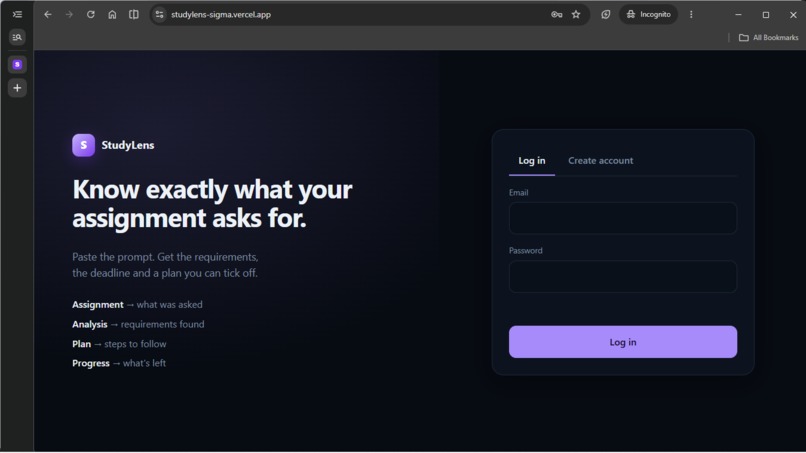
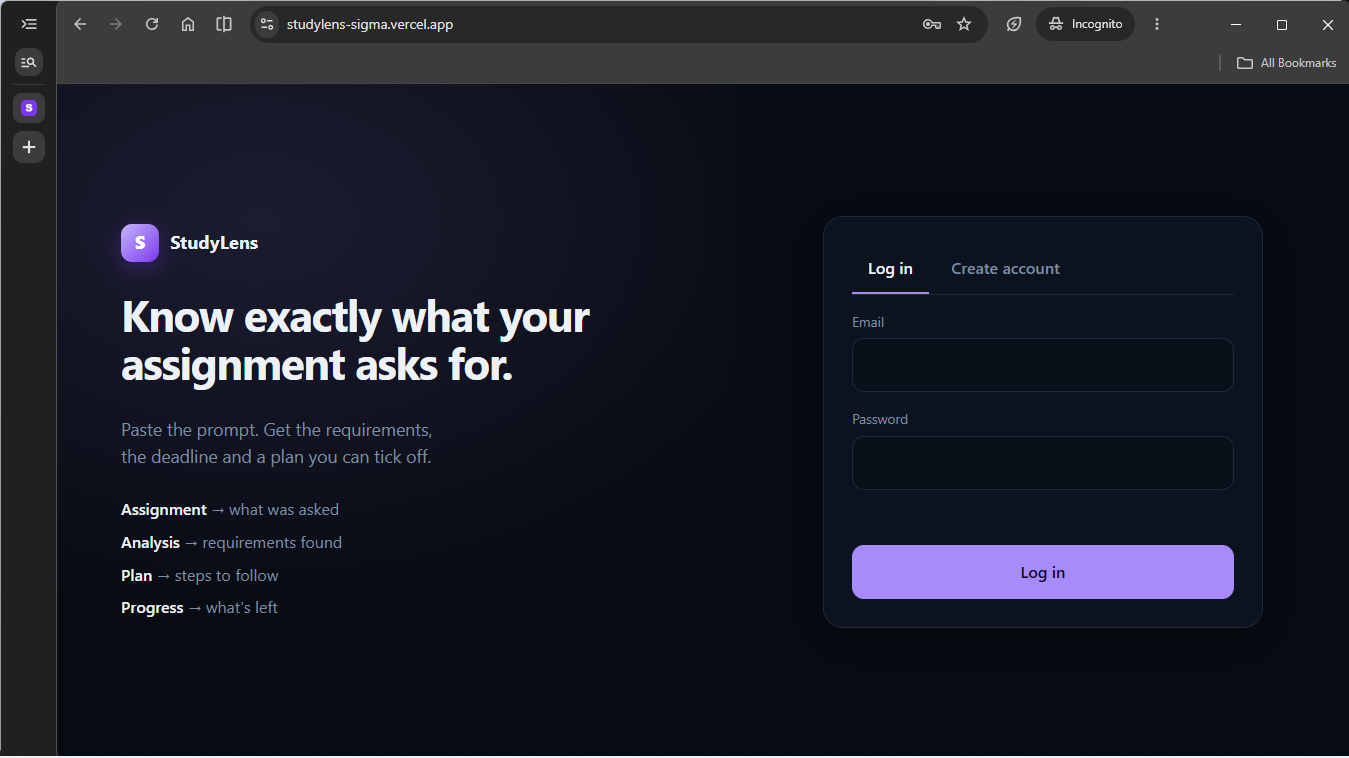
login page
-
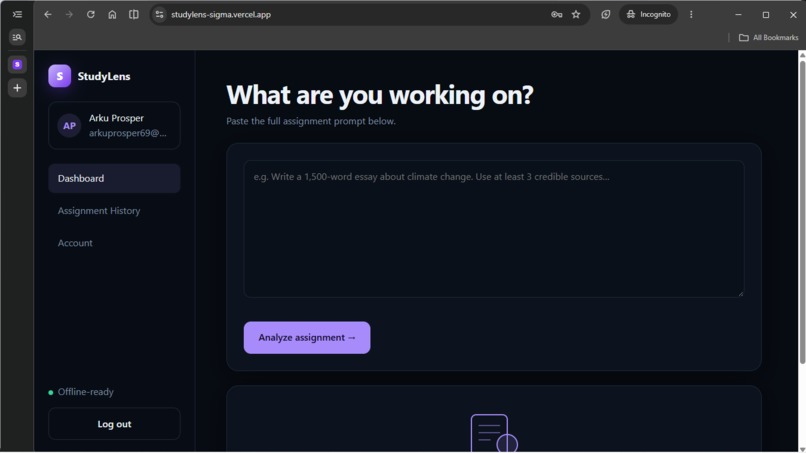
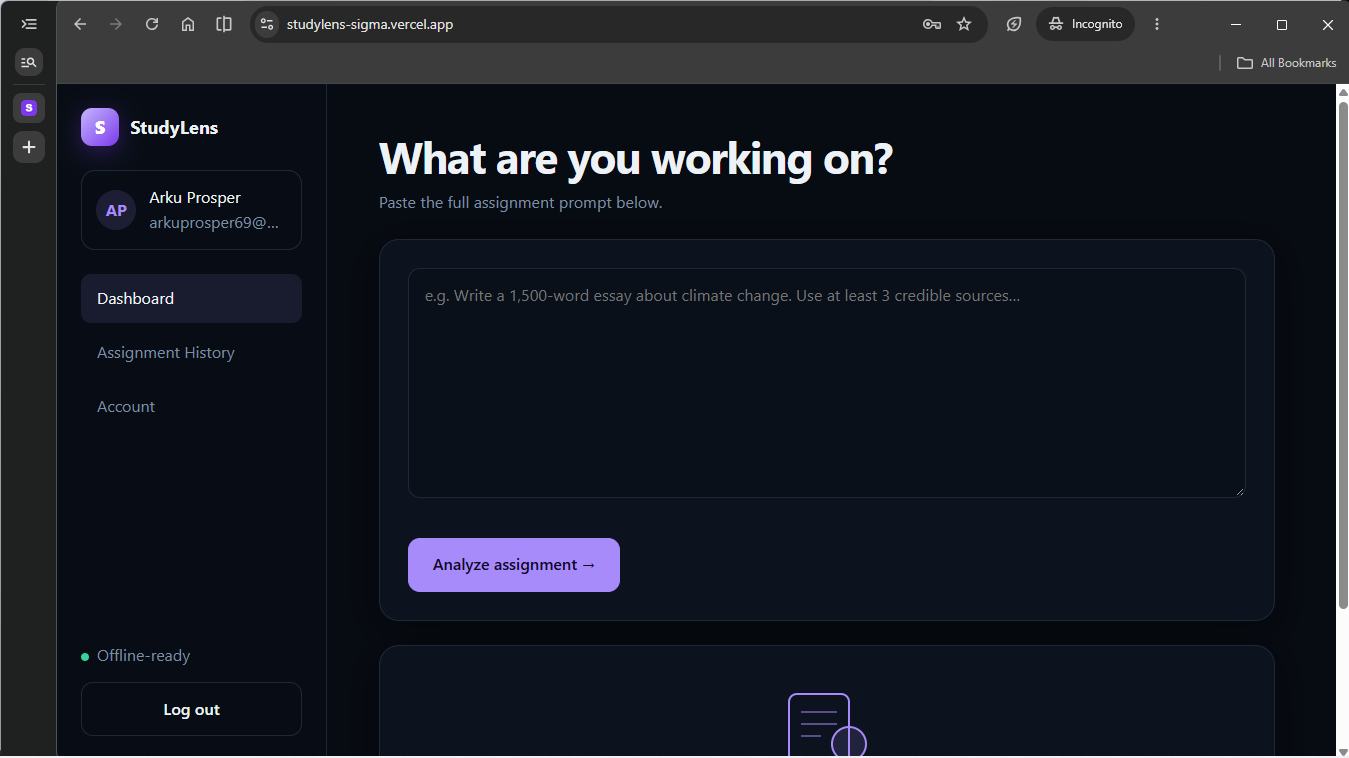
User Dashboard
-
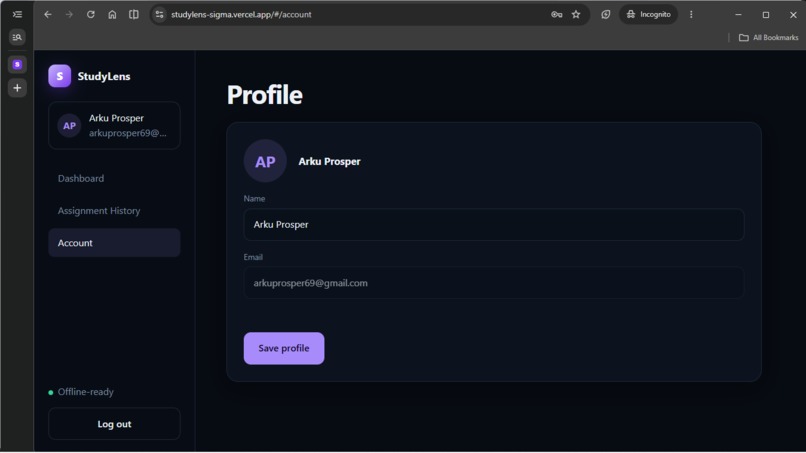
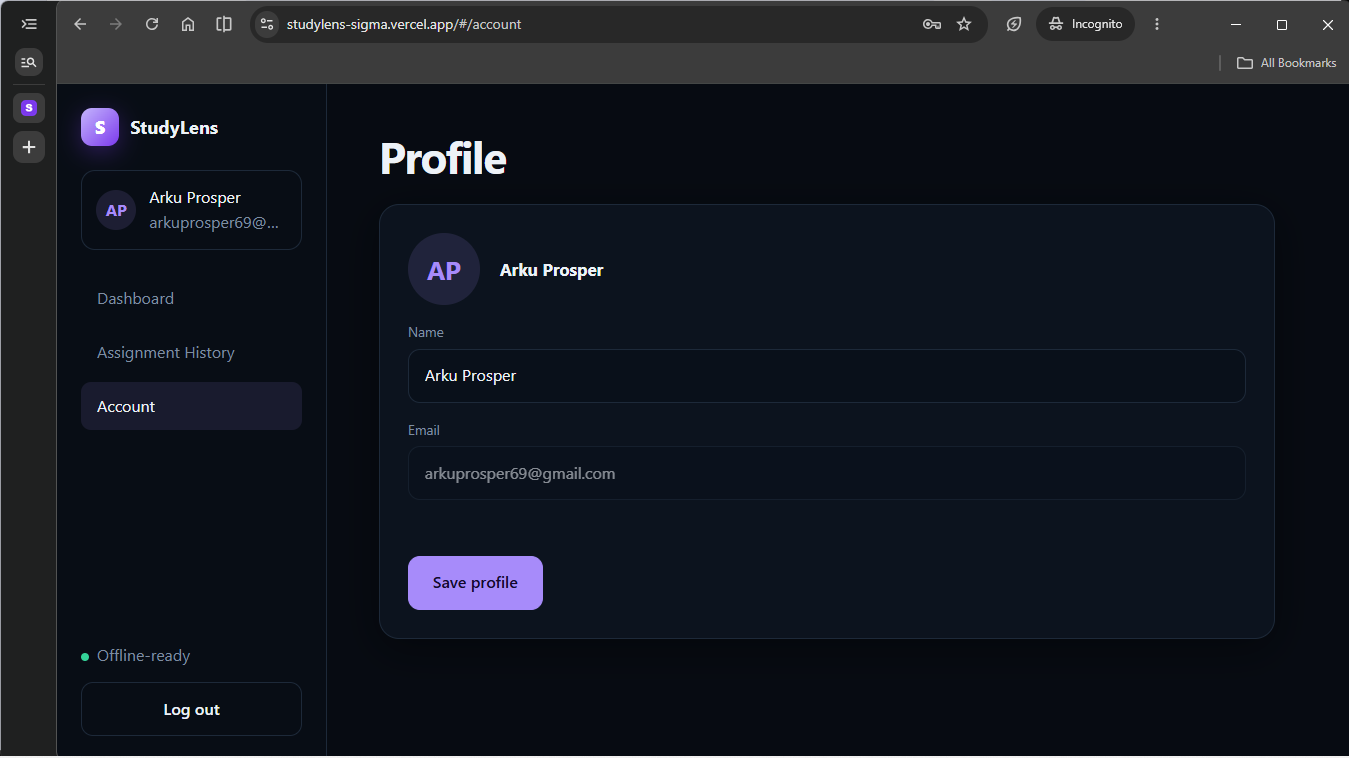
user profile
-
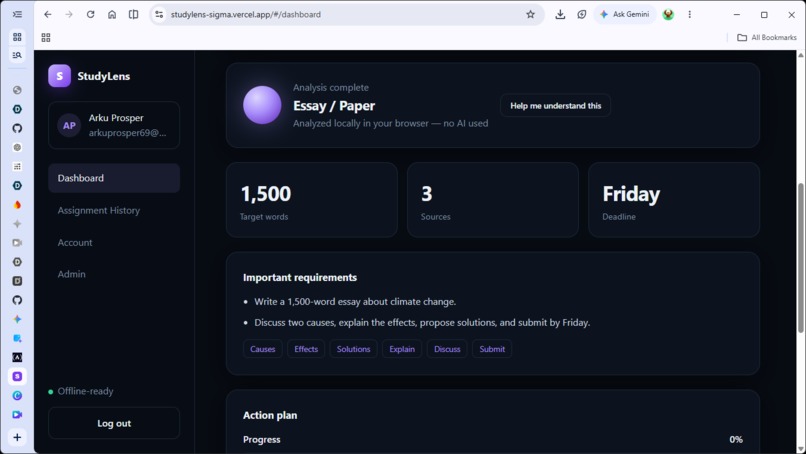
Assignment demo
-
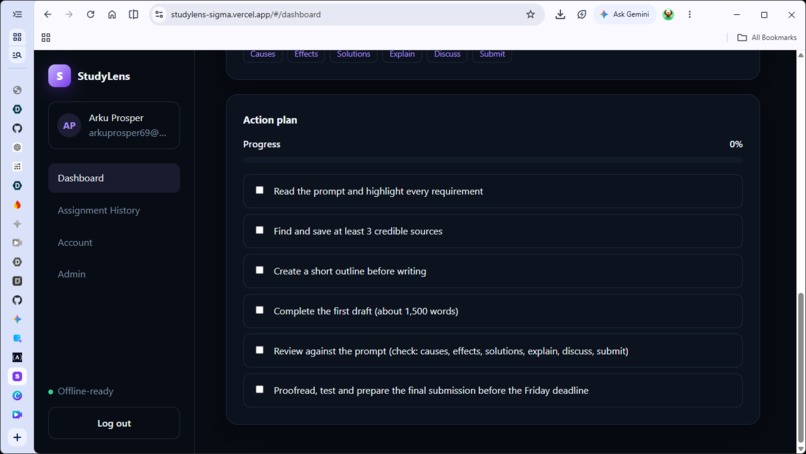
Checklist
Inspiration
Students often receive assignments filled with requirements, deadlines, word counts, and research expectations, but the hardest part can be figuring out where to start. We wanted to build a simple tool that turns that initial confusion into a clear, manageable plan.
What it does
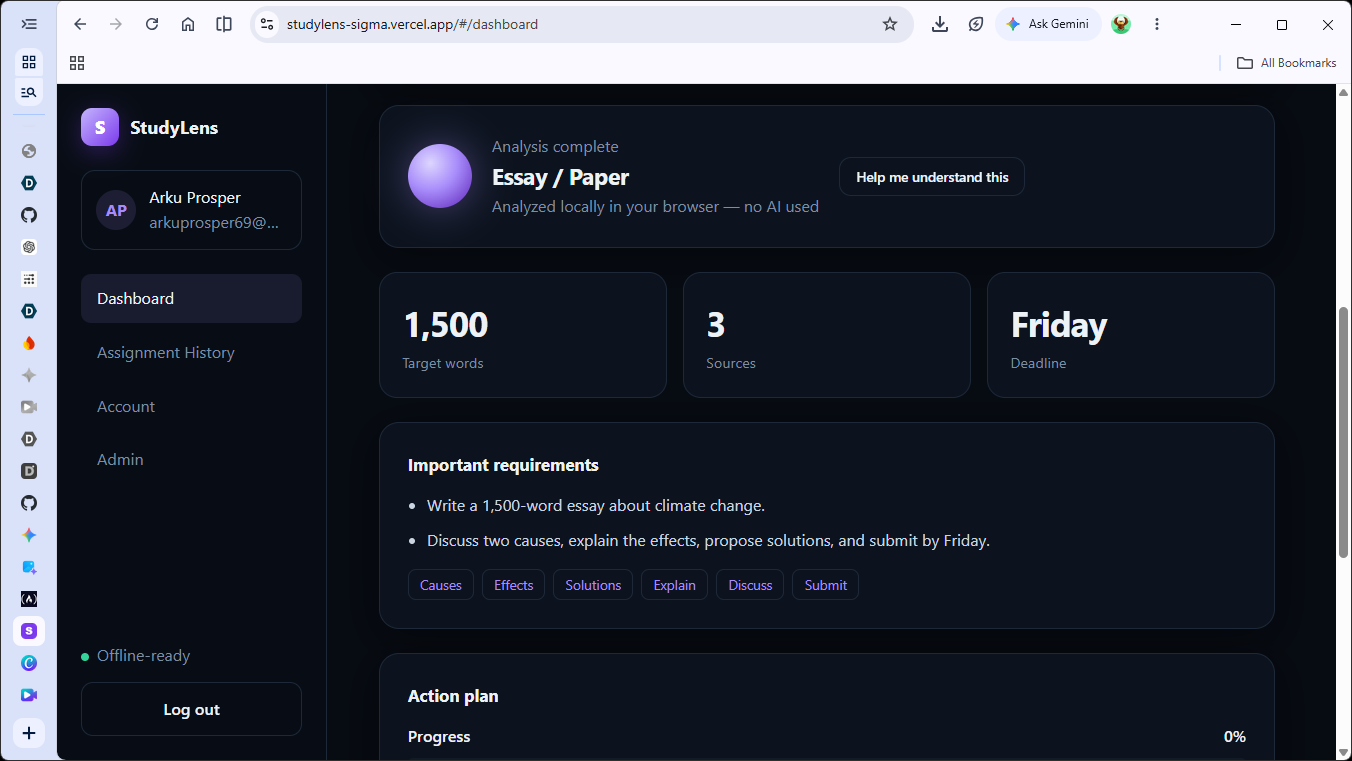
StudyLens transforms assignment instructions into an actionable workflow. Students paste an assignment prompt, and StudyLens identifies details such as the assignment type, word count, source requirements, deadline, and key requirements.
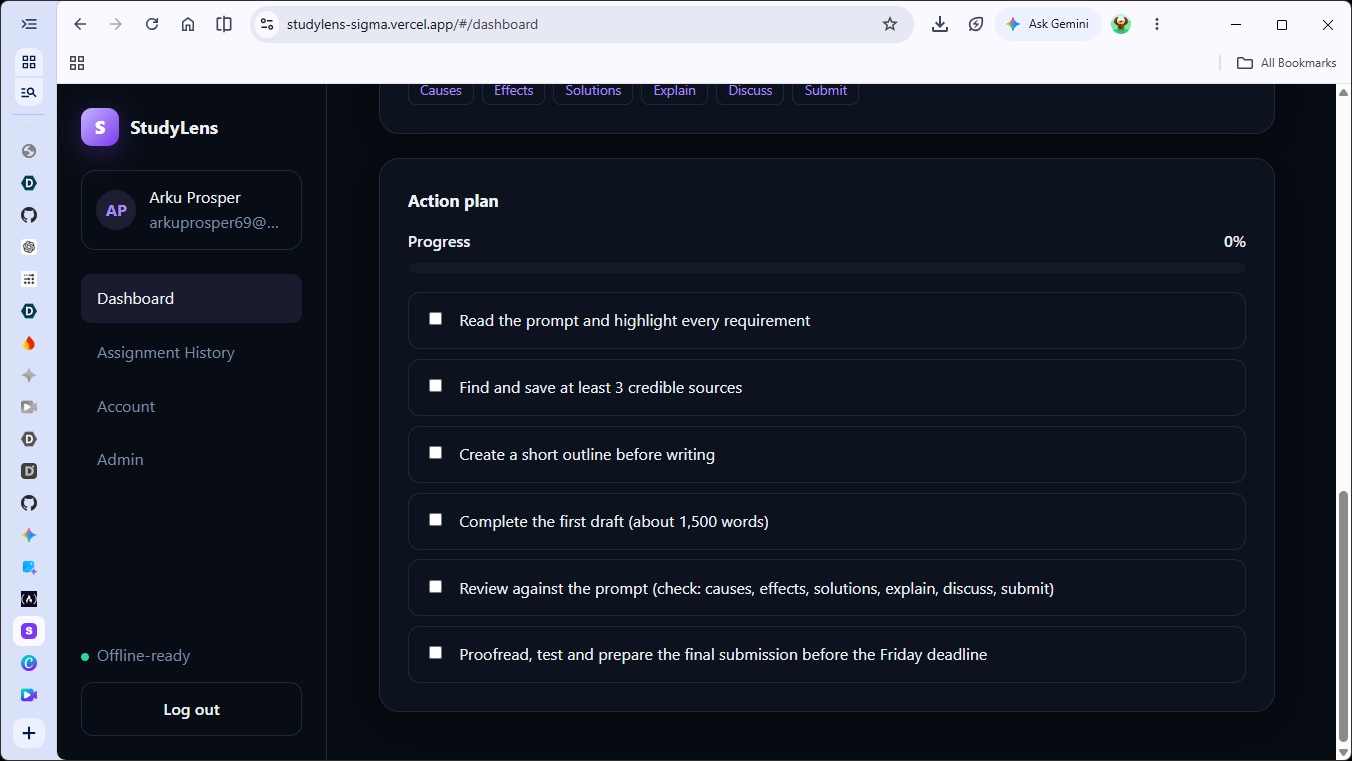
It then turns those requirements into an interactive checklist so students can work through the assignment step by step while tracking their progress.
The core experience works without an AI API key, making the application easy to run and demo without relying on an external AI service.
How we built it
StudyLens was built as a lightweight web application using HTML, CSS, and vanilla JavaScript.
The browser-based analysis engine uses text parsing, keyword detection, pattern matching, and requirement extraction to analyze common assignment instructions.
The application follows a simple workflow:
Assignment → Analysis → Action Plan → Progress
We also use browser storage to preserve user data and assignment progress during the prototype experience.
Challenges we ran into
One of our biggest challenges was creating useful assignment analysis without requiring a paid AI service or API key.
We had to design rules that could recognize common requirements such as deadlines, word counts, sources, and assignment types while avoiding inventing information that wasn't present in the original prompt.
We also had to balance functionality, visual design, and development time while making sure the application remained easy to use.
Accomplishments that we're proud of
We're proud that StudyLens turns a plain assignment prompt into an actionable workflow instead of simply displaying information.
The interactive checklist and progress tracking make the result immediately useful, while the local analysis engine allows the core experience to work without an external AI dependency.
We're also proud of creating a polished interface around a relatively simple idea and keeping the architecture lightweight enough to deploy easily.
What we learned
We learned that solving a focused problem well can be more valuable than trying to build a huge application with too many features.
We also learned the importance of designing for reliability. By keeping a local analysis engine at the center of the prototype, StudyLens can continue working even when an external AI service or API key isn't available.
Most importantly, we learned how to turn a real student problem into a complete product workflow—from input and analysis to planning and progress tracking.
What's next for StudyLens
The next major step is optional AI-powered assignment analysis while keeping the local engine as a fallback.
Future versions could include:
- Deeper AI-powered assignment understanding
- PDF and image assignment import
- Personalized study schedules
- Calendar integration
- Smarter deadline planning
- Teacher/student collaboration
- Cross-device synchronization
- Advanced progress insights
- Personalized recommendations
Our long-term goal is for StudyLens to become the place students go when they receive an assignment and need to quickly understand what they need to do, when they need to do it, and how to get started.

Log in or sign up for Devpost to join the conversation.