Inspiration
As a lifelong learner who’s struggled with online course burnout, I noticed how lonely self-study can be—even with endless resources, motivation fades without community. I wanted to build something that fixes the high dropout rate of online learning by turning isolated learners into connected study groups, rooted in the belief that peer accountability makes learning stick.
What it does
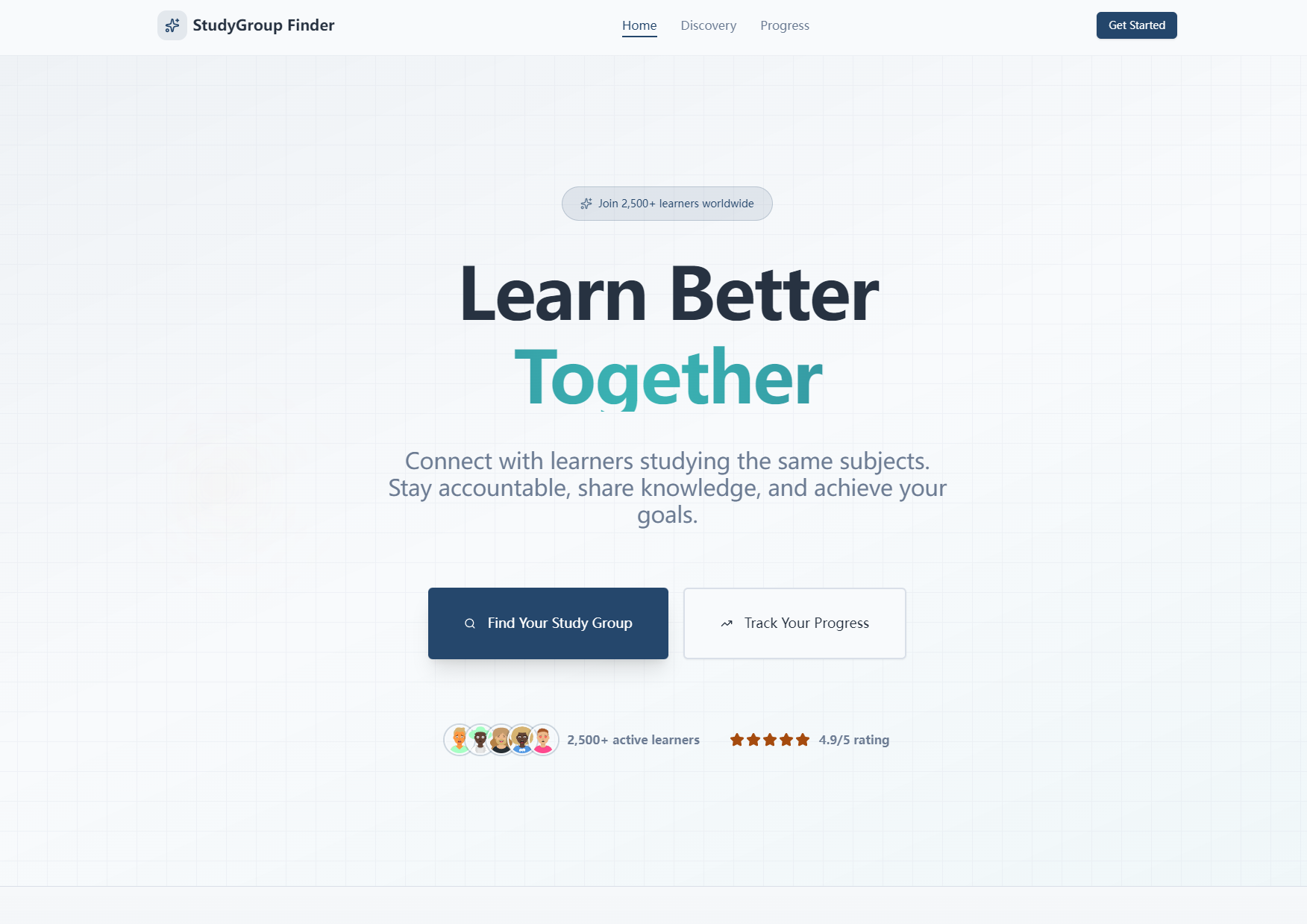
StudyGroup Finder lets learners find and join small study groups (2–6 members) around shared topics—from Python to IELTS prep. Users set weekly goals, check in on progress, take peer quizzes, and track individual/group milestones through visual dashboards—no login needed, just instant access to community.
How we built it
I started by mapping core user needs (finding groups, tracking progress, staying accountable) and designing a mobile-first UI with a calm, accessible color palette. I built the frontend with React and TailwindCSS for responsiveness, used Node.js/Express for backend logic (group matching, progress calculations), and integrated Chart.js for progress visualizations. Firebase handled real-time data sync for group membership and goal updates.
Challenges we ran into
Balancing group size limits (2–6 members) while keeping the matching logic simple was tricky—too strict, and users couldn’t join; too loose, and groups lost intimacy. I also struggled with making progress tracking intuitive without overwhelming users, iterating 3x on the dashboard layout to strike the right balance of data and simplicity.
Accomplishments that we're proud of
Creating a seamless, login-free experience that puts usability first—users can join a group in one click and start tracking progress immediately. The non-competitive leaderboard (focused on participation, not "winning") also feels meaningful; it encourages effort without discouraging those who learn at their own pace.
What we learned
I deepened my understanding of user-centric design—small choices (like warm, encouraging status messages instead of generic alerts) make a huge difference in engagement. I also learned that "less is more" with features: skipping login walls and complex onboarding boosted perceived value far more than adding bells and whistles.
What's next for this project
First, I want to add peer messaging to let group members coordinate study sessions. Next, integrate with popular learning platforms to auto-sync course goals (e.g., Coursera module deadlines). Finally, roll out a feedback system so users can refine group matching—prioritizing learning style and weekly availability for even better pairings. Long-term, I hope to add live check-in reminders and a resource-sharing hub for study materials.

Log in or sign up for Devpost to join the conversation.