Inspiration
I have always noticed something strange about how most students think and answer questions — including me. We often know the answer in our minds, but when we try to type it or say it in a “perfect” way, our performance drops.
Most AI learning tools only accept answers if you speak clearly, robotically, and without emotion. But real students don’t talk like that. We laugh. We ramble. We correct ourselves mid-sentence. We blurt things out.
And yet, the meaning is still correct.
This inspired me to build StudyFlow AI — an AI that listens like a friend, understands like a teacher, and judges based on your ideas, not your tone.
What it does
StudyFlow AI helps students learn without pressure. Instead of forcing them to answer in “perfect sentences,” it listens for keywords and core meaning. Students can talk the way they normally think — laughing, pausing, rambling — and the system still evaluates correctly.
It also lets students:
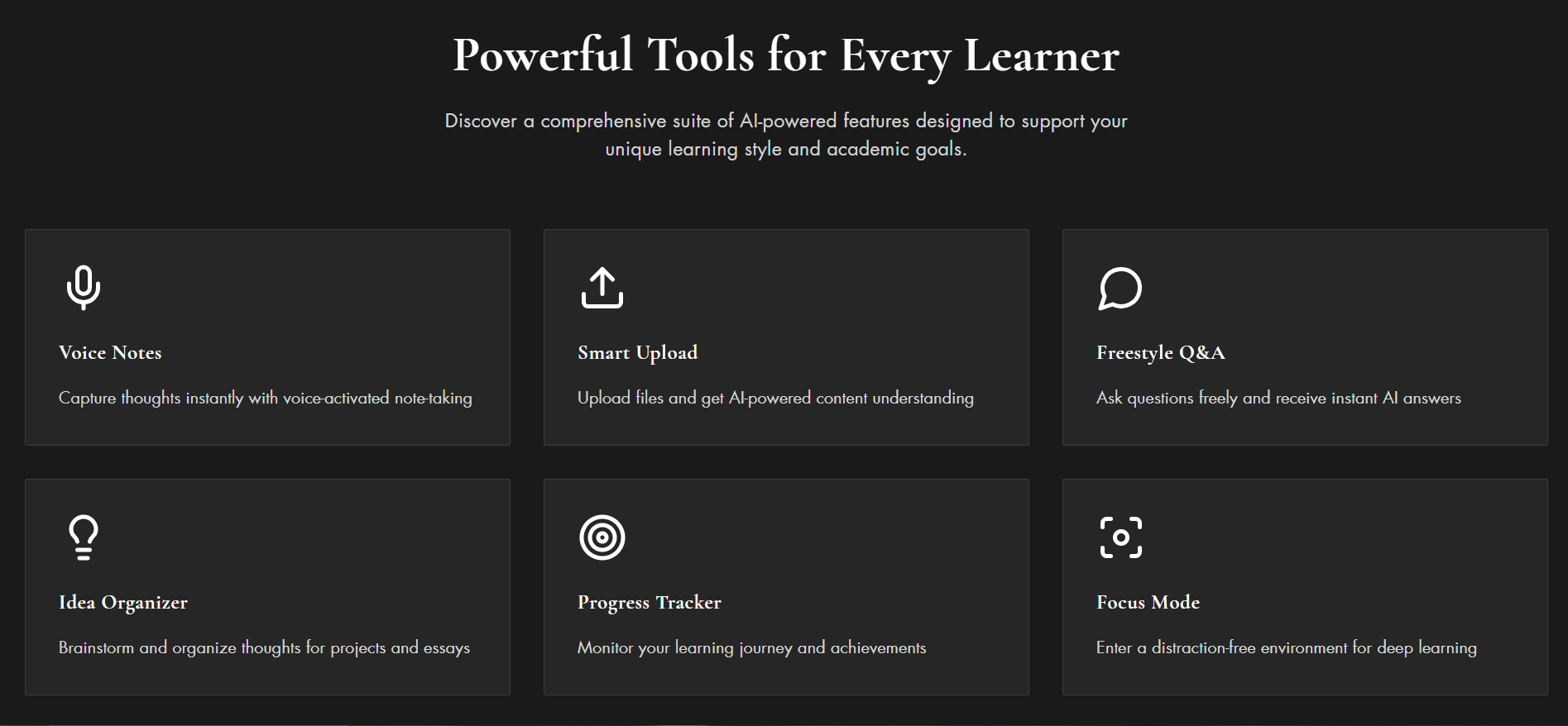
-Upload any file (notes, PDFs, chapters, images-to-text)
-Auto-generate 50–200+ MCQs from their own material
-Create custom question papers
-Practice with unlimited quizzes
-Receive instant feedback based on concepts, not tone
StudyFlow AI creates a learning flow that adapts to the student instead of making the student adapt to the system.
How we built it
We combined:
-A voice module trained to extract keywords and concepts from speech
-File-reading and parsing tools to handle PDFs, notes, and text
-A question-generation engine for MCQs and custom tests
-A feedback layer that compares the student’s spoken answer to concept-maps
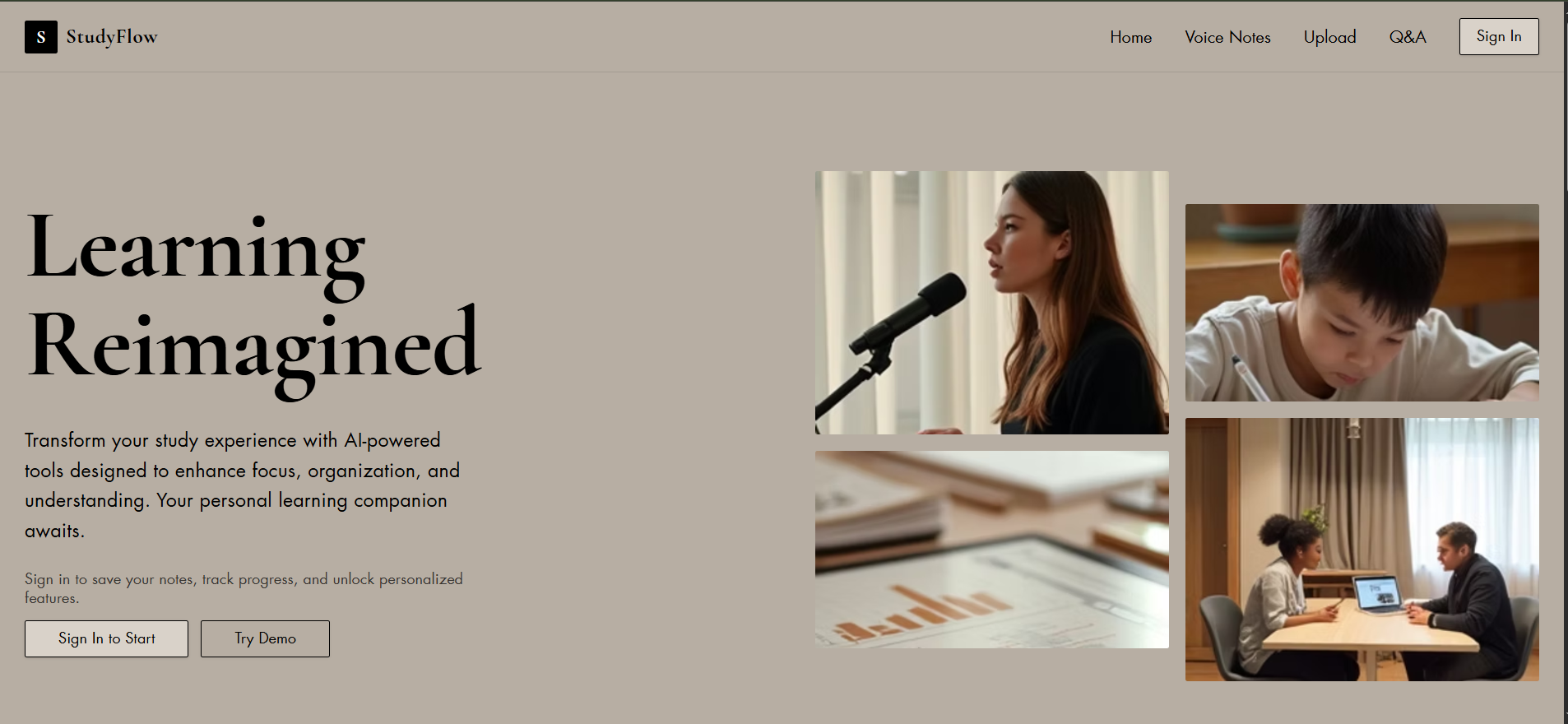
-Front-end UI focused on calm colors and distraction-free design
The focus throughout was building an environment where students can learn in their own natural thinking style.
Challenges we ran into
-Making the voice system ignore tone and pick only intent + meaning
-Ensuring MCQs generated from files remain factually correct
-Handling large files and different formats
-Keeping the interface smooth during heavy question generation
-Calibrating the “keyword accuracy” model so it’s fair but still strict
-Designing a UI that keeps students focused instead of overwhelmed
Accomplishments that we're proud of
-Creating a voice system that understands real student speech, not scripted sentences
-Building a multi-step learning flow (upload → generate → answer → feedback)
-Making studying feel lighter and more natural
-Designing an interface that students genuinely enjoy using
-Developing a scalable question engine capable of generating hundreds of high-quality MCQs
-Turning a simple idea into a functional AI study assistant
What we learned
We learned that students don’t struggle because they’re unprepared — they struggle because tools don’t understand how they think. By focusing on concept-recognition, we discovered how important it is to:
-Prioritize meaning over perfect phrasing
-Build for real human behaviour, not ideal behaviour
-Keep the UI psychologically calming
-Test features repeatedly with actual user speech, not synthetic samples
What's next for StudyFlow AI
-More advanced voice understanding with deeper semantic checks
-Long-form answer evaluation (not just MCQs)
-Personalized study plans based on student weaknesses
-Gamified streaks, levels, and rewards
-AI-generated notes and summaries from uploaded content
-Live “study buddy mode” for rapid revision
-A more polished UI and stronger performance across devices


Log in or sign up for Devpost to join the conversation.