-
-
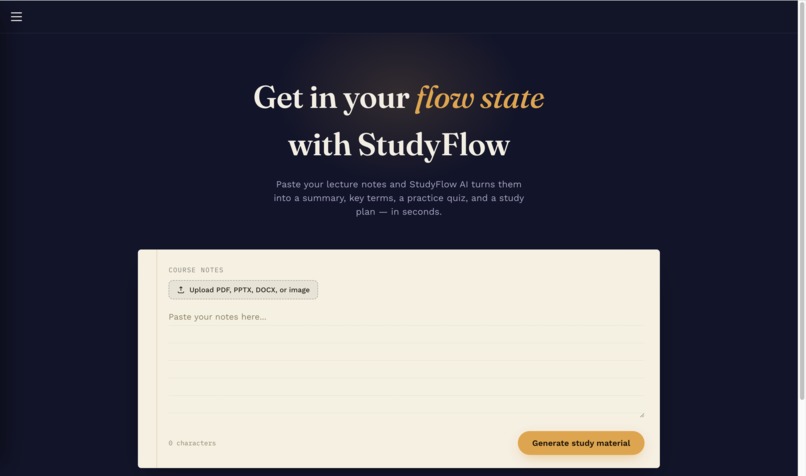
Project front end
-
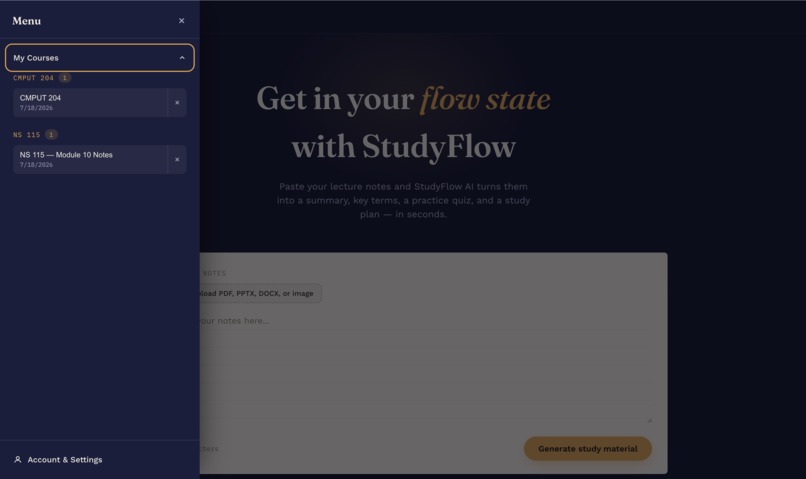
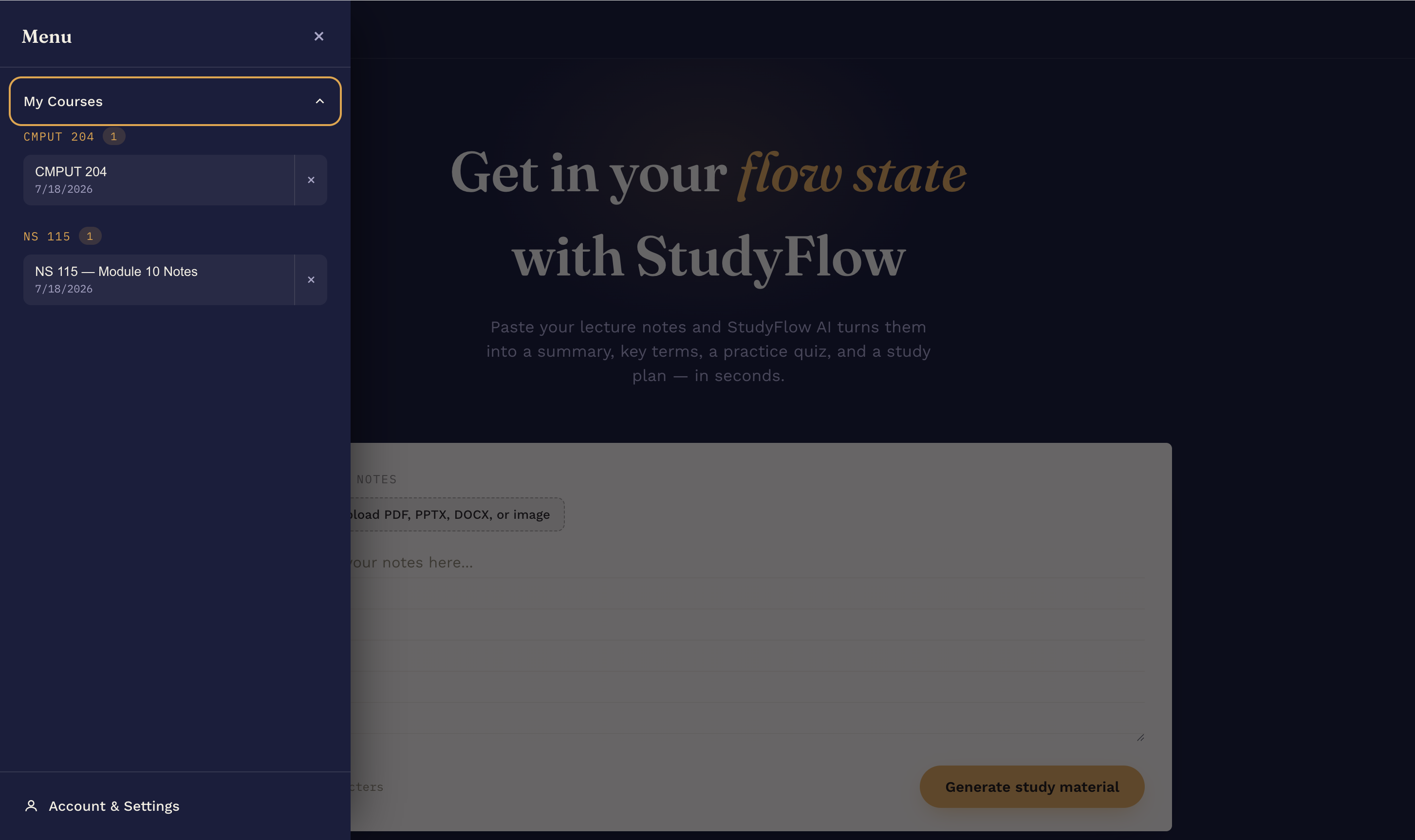
Menu
-
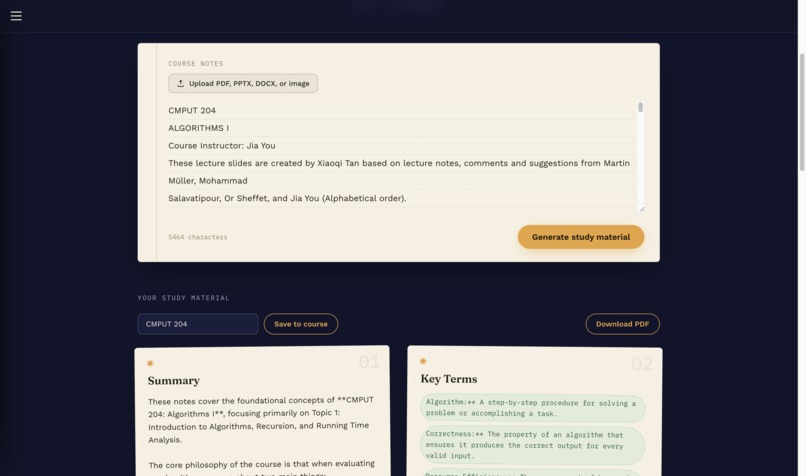
Notes Display - Option to Download Generated Notes as PDF
-
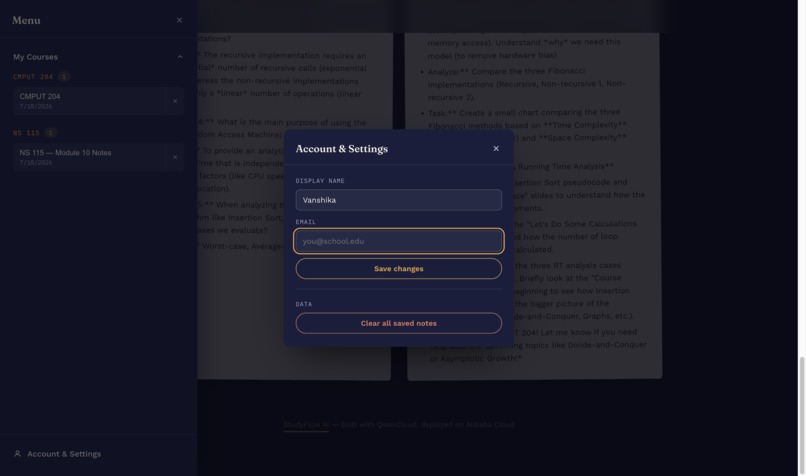
User Account Page
-
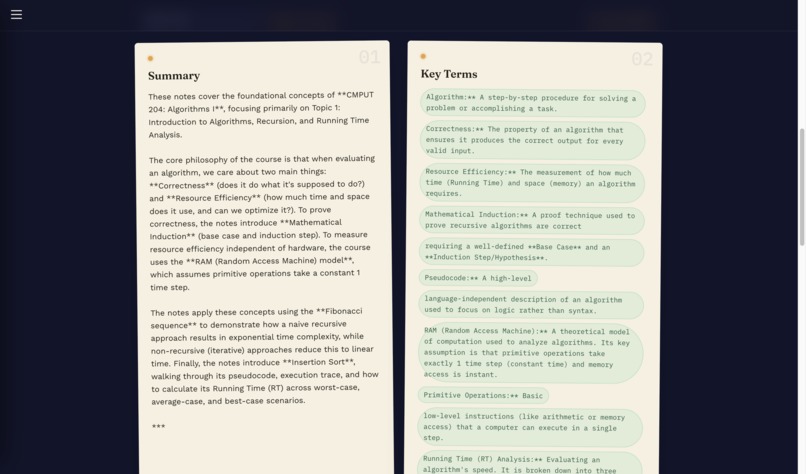
Notes Display
-
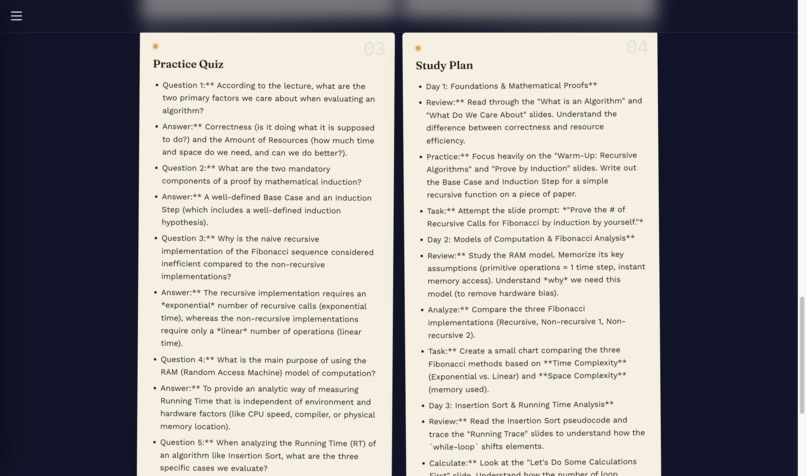
Notes Display
Inspiration
As a university student, I've experienced how time-consuming studying can be. Before I can even begin reviewing for an exam, I often spend hours organizing lecture notes, creating summaries, and writing practice questions. I wanted to build something that could eliminate that repetitive work and let students focus on actually learning instead of preparing study materials.
With the growing capabilities of generative AI, I saw an opportunity to create an intelligent study assistant that could transform raw lecture notes into organized, easy-to-understand study resources in seconds. That idea became StudyFlow AI – Autopilot Agent.
What it does
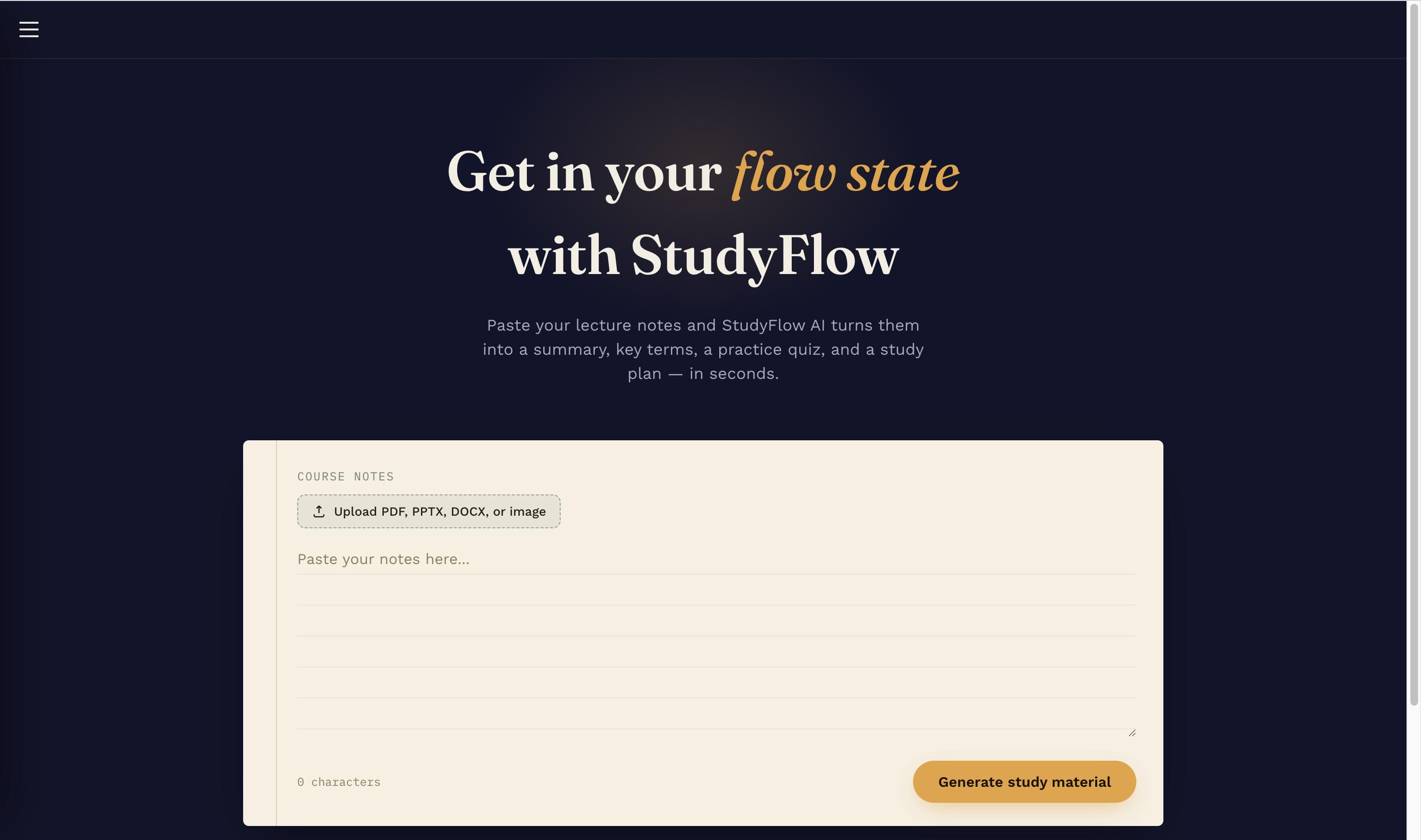
StudyFlow AI is an AI-powered study assistant that helps students turn their lecture notes into organized learning materials with just a few clicks.
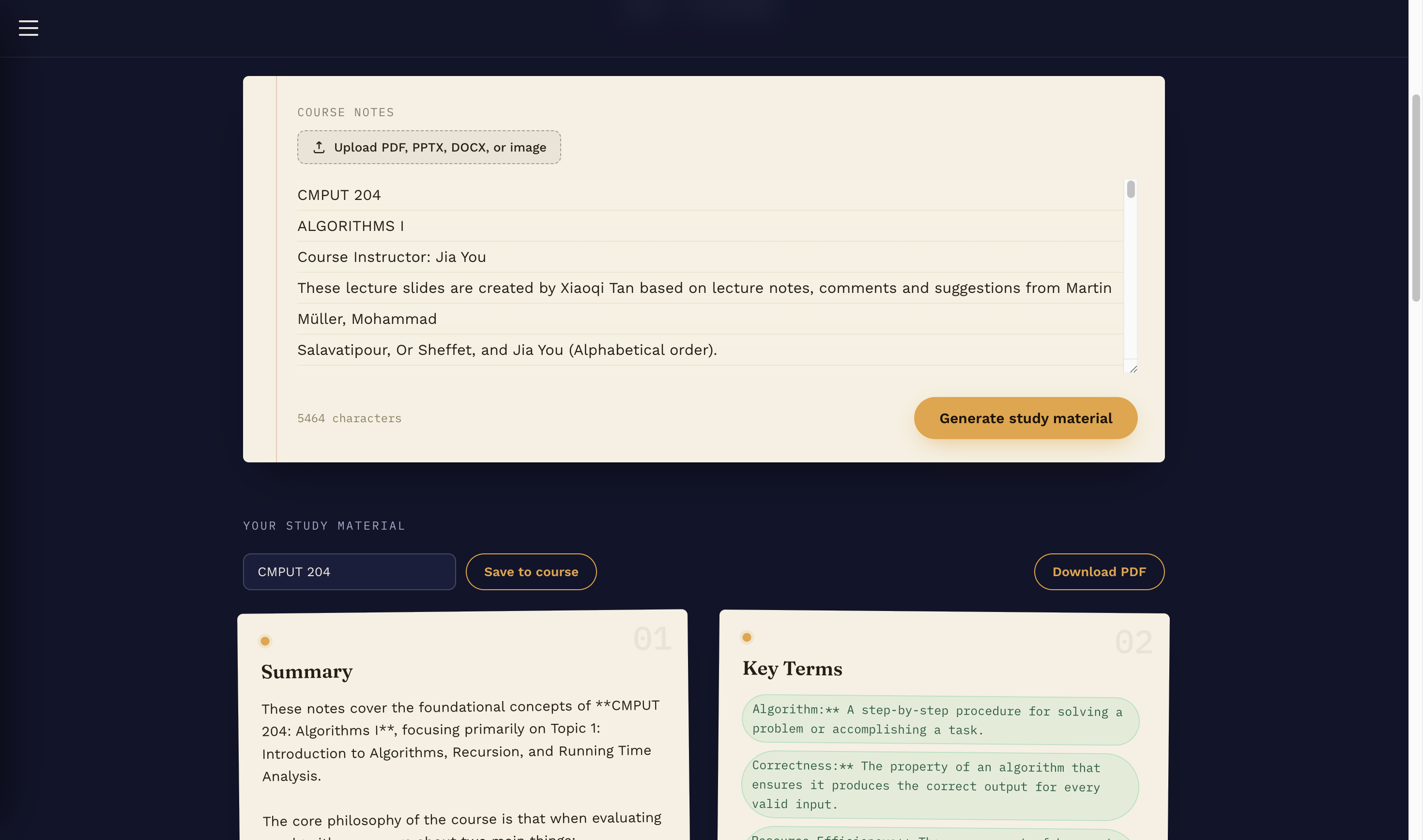
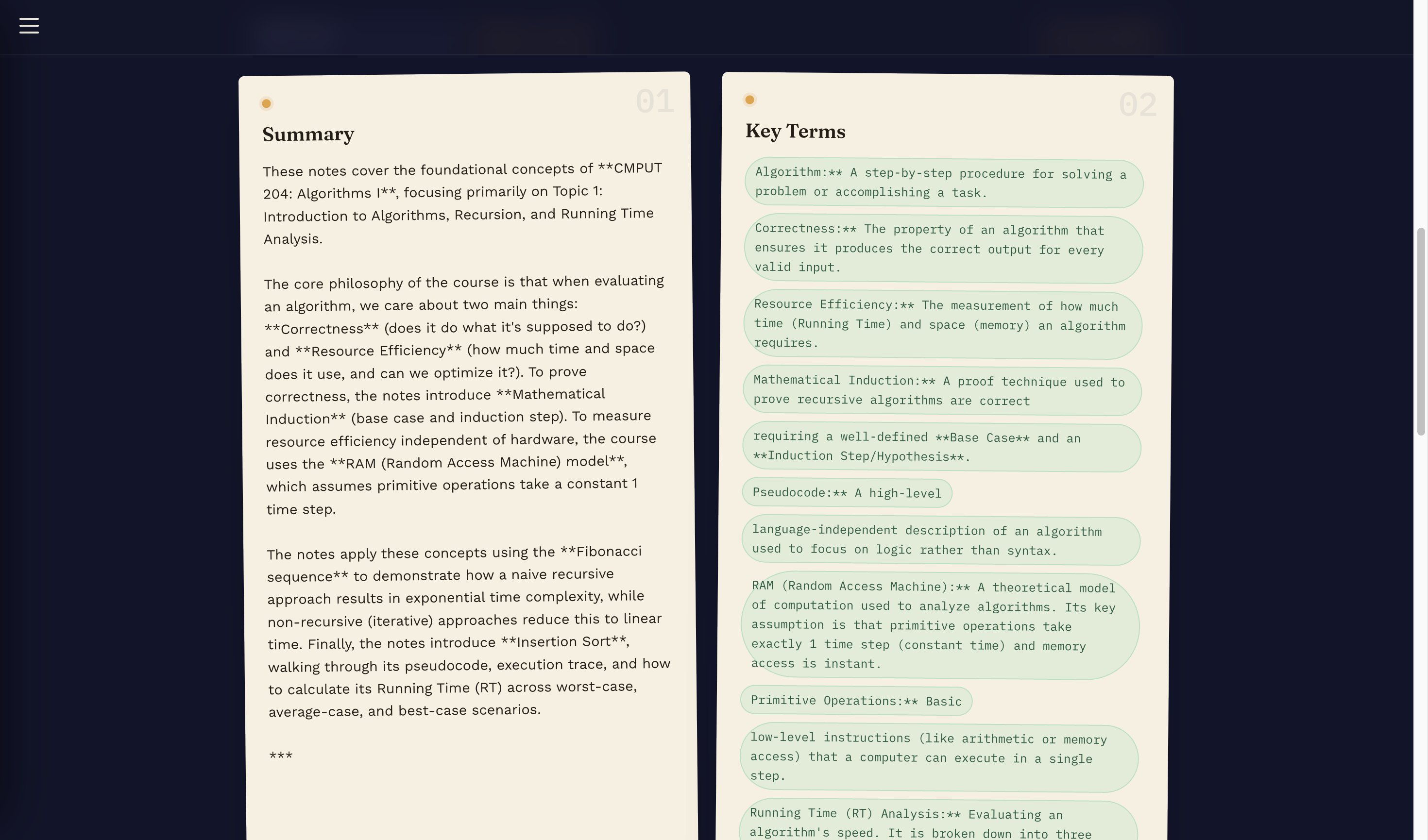
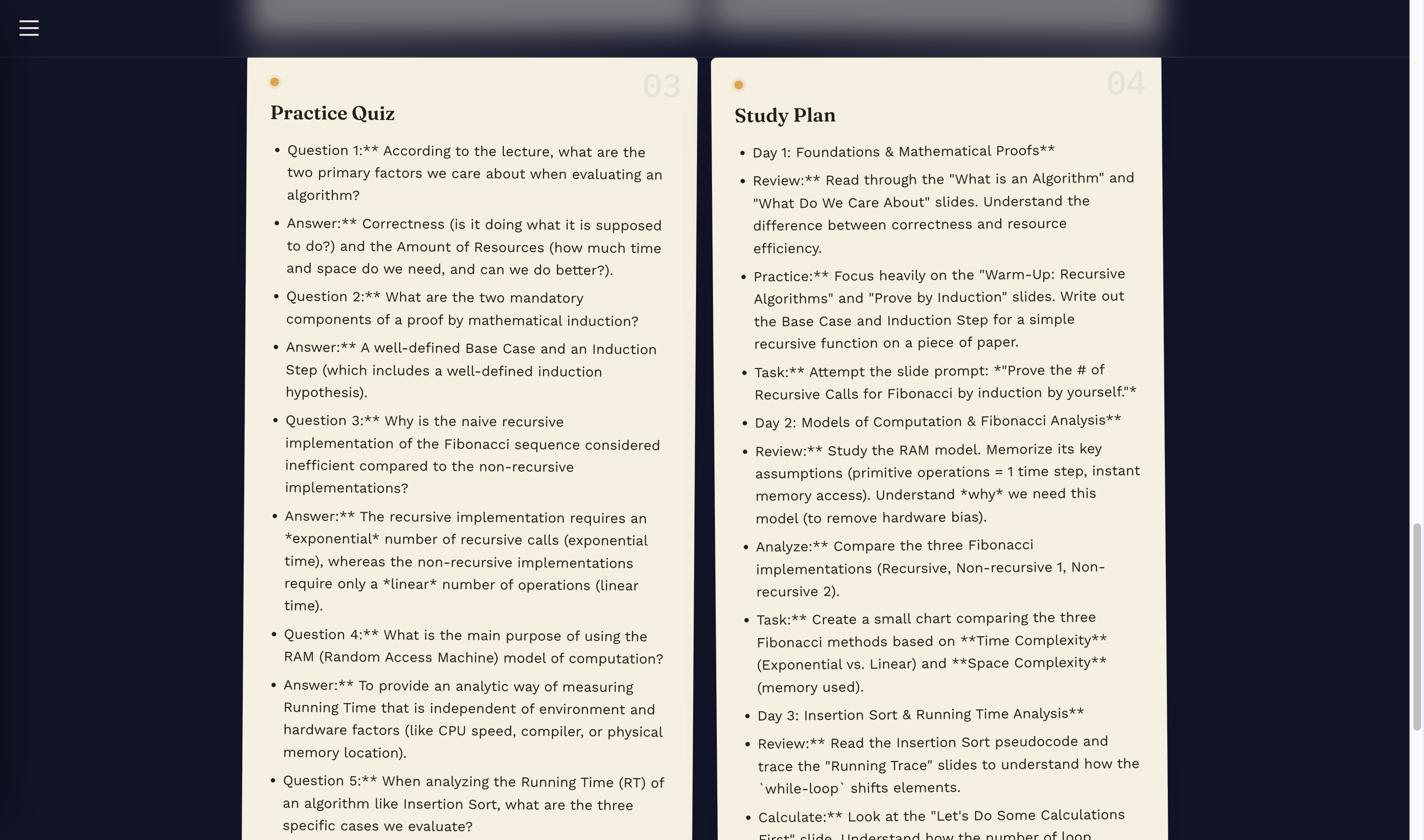
Users can paste or upload their notes, and the application uses Alibaba Cloud's Qwen model to analyze the content and generate structured study guides, summaries, and key concepts. The generated material can also be exported as a PDF, making it easy to save or print for studying later.
The goal is to reduce the amount of time students spend organizing information so they can spend more time actually understanding and retaining it.
How I built it
I built StudyFlow AI as a full-stack web application.
For the frontend, I used HTML, CSS, and JavaScript to create a clean and simple user interface where users can input their notes and view the AI-generated results.
For the backend, I used Python with Flask to create API endpoints that communicate with Alibaba Cloud's DashScope API. I integrated the Qwen 3.7 Plus model to process the notes and generate high-quality study materials.
I also used python-dotenv to securely manage API keys and jsPDF so users can export their generated study guides as PDF files.
Git and GitHub were used for version control throughout development.
Challenges I ran into
One of the biggest challenges was learning how to integrate a large language model into a full-stack application. Although I had experience programming, working with cloud APIs, authentication, and backend development introduced a lot of new concepts.
I also ran into issues configuring Python virtual environments, installing dependencies correctly, debugging API requests, handling Git merge conflicts, and connecting the frontend to the backend. Learning how to securely store API keys and structure the project into separate frontend and backend components also took some trial and error.
Each challenge pushed me to research, experiment, and improve my understanding of full-stack AI development.
Accomplishments that I'm proud of
I'm proud that I was able to build an end-to-end AI application entirely on my own. This project challenged me to step outside of my comfort zone and learn technologies I hadn't worked with before.
Some accomplishments I'm especially proud of include:
Successfully integrating Alibaba Cloud's Qwen model into my application. Building both the frontend and backend from scratch. Creating a tool that solves a real problem students face. Implementing PDF export functionality for generated study materials. Learning how to use APIs, Flask, Git, and cloud AI services in a real-world project.
Most importantly, I'm proud that I created something that has the potential to genuinely help students save time and study more effectively.
What I learned
This project taught me much more than just how to call an AI model.
I learned how frontend and backend applications communicate through APIs, how to build REST endpoints with Flask, how to securely manage environment variables, and how to integrate cloud-hosted AI models into a real application.
I also improved my debugging skills, became more comfortable using Git and GitHub, and gained a much better understanding of prompt engineering and designing AI-powered user experiences.
Overall, this project gave me valuable hands-on experience building a complete AI application from idea to implementation.
What's next for StudyFlow AI – Autopilot Agent
This project is just the beginning. I have a lot of ideas for expanding StudyFlow AI into a more complete learning platform.
Some of the features I'd like to add include:
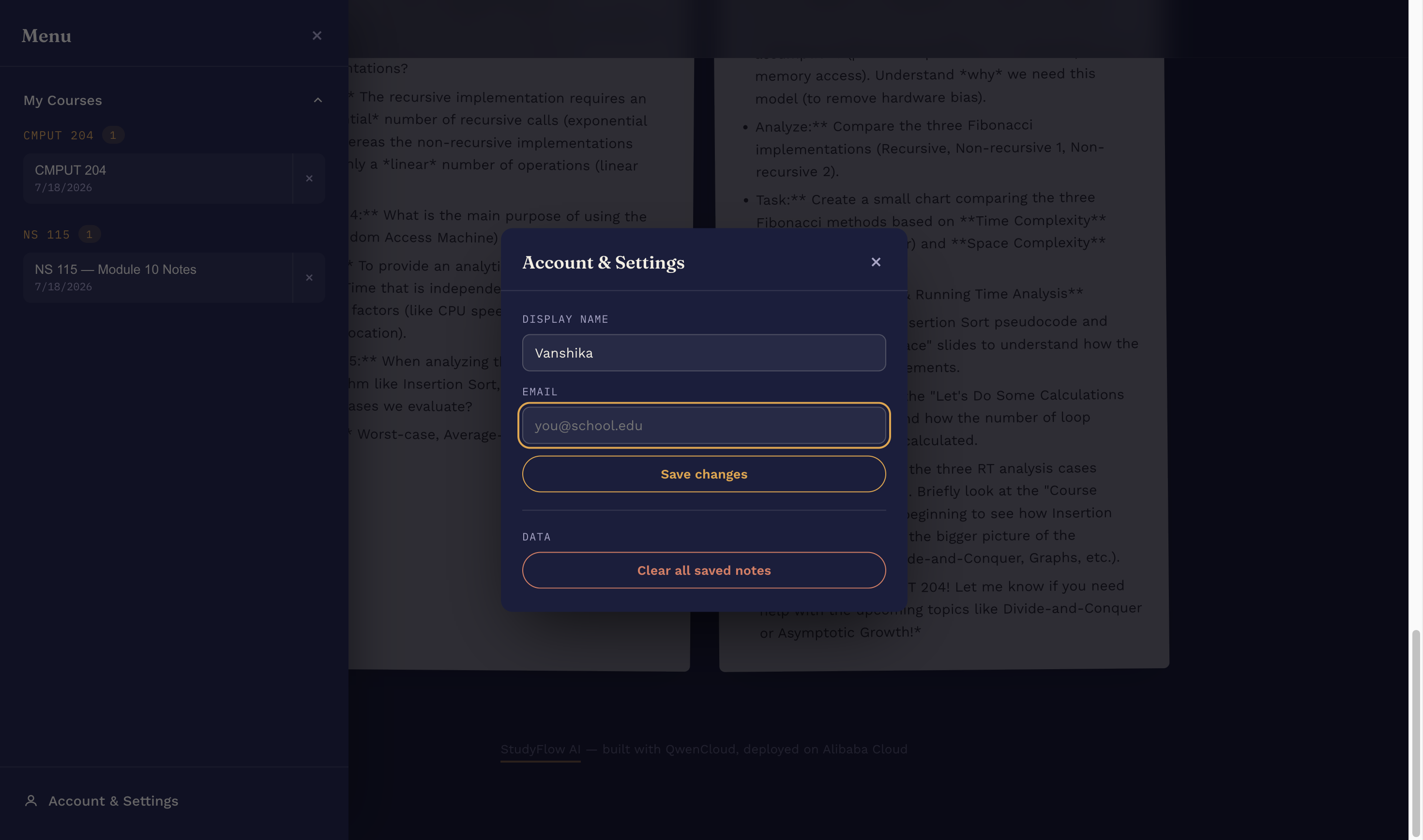
Support for uploading PDF lecture notes, PowerPoint presentations, and Word documents. AI-generated flashcards and adaptive quizzes. A conversational AI tutor that can answer questions based on uploaded course materials. Personalized study plans that adapt to upcoming exams and deadlines. Progress tracking so students can monitor their learning over time. Integration with learning platforms like Canvas, Moodle, and Google Classroom. User accounts so students can save and organize their study sessions. Mobile support and a more polished, responsive interface.
My long-term vision is to make StudyFlow AI a personal AI study companion that helps students learn more efficiently, stay organized, and spend less time preparing study materials so they can focus on understanding the content.
Built With
- alibaba
- brewery-db
- html
- python


Log in or sign up for Devpost to join the conversation.