Inspiration
During exam season, students rarely suffer from a lack of study materials—they suffer from cognitive overload and decision paralysis. Between dense lecture slides, multi-unit syllabi, upcoming deadlines, and looming exam questions, students constantly ask themselves: "What should I actually study right now to get the maximum grade improvement?"
Most AI study tools function merely as passive chatbots that require students to know exactly what prompt to write. We wanted to build something proactive: an action-oriented academic copilot that closes the loop between reading notes, structuring revision, diagnosing weaknesses, and continuously recommending the single highest-yield study sprint.
What It Does
StudyFlow AI executes a complete continuous learning lifecycle:
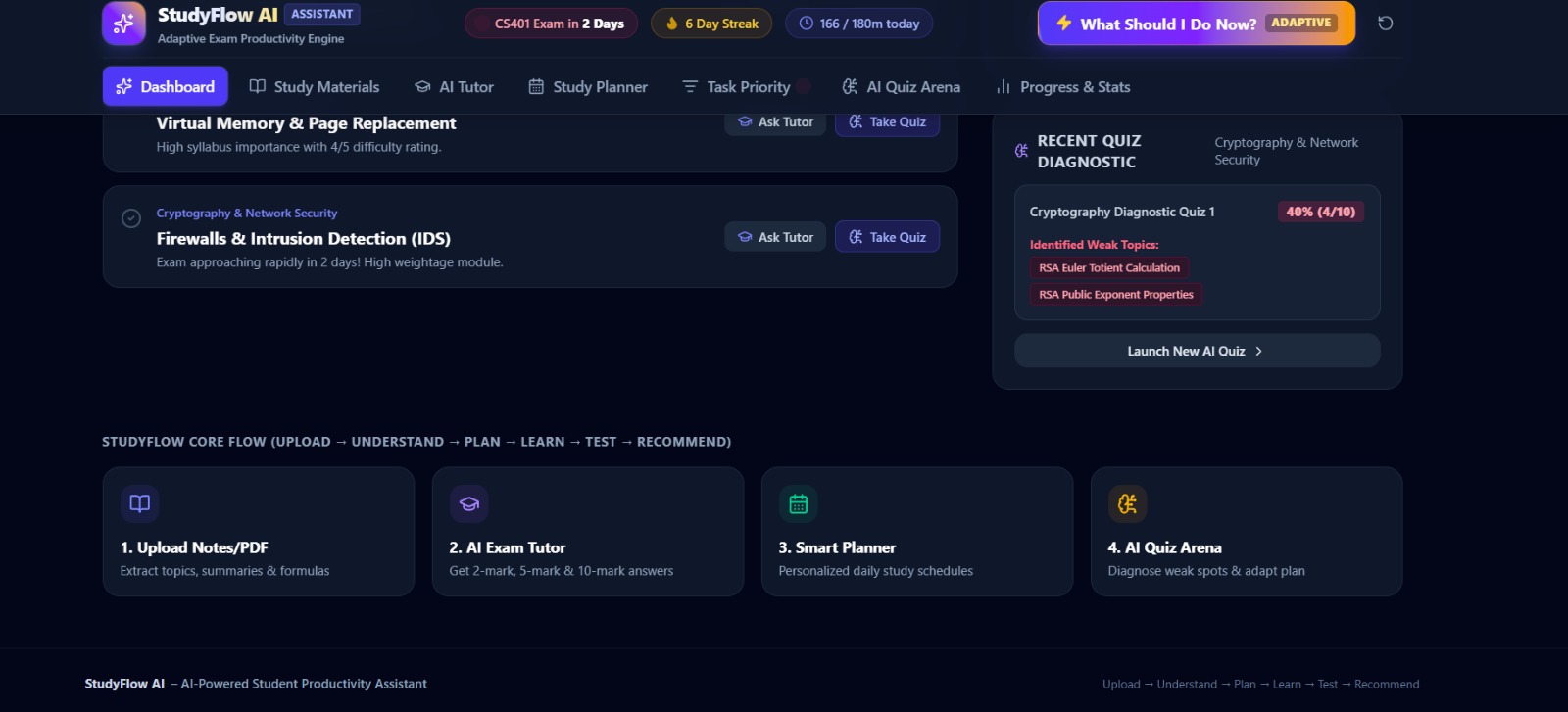
$$\text{Upload} \longrightarrow \text{Understand} \longrightarrow \text{Plan} \longrightarrow \text{Learn} \longrightarrow \text{Test} \longrightarrow \text{Track} \longrightarrow \text{Adapt} \longrightarrow \text{Recommend}$$
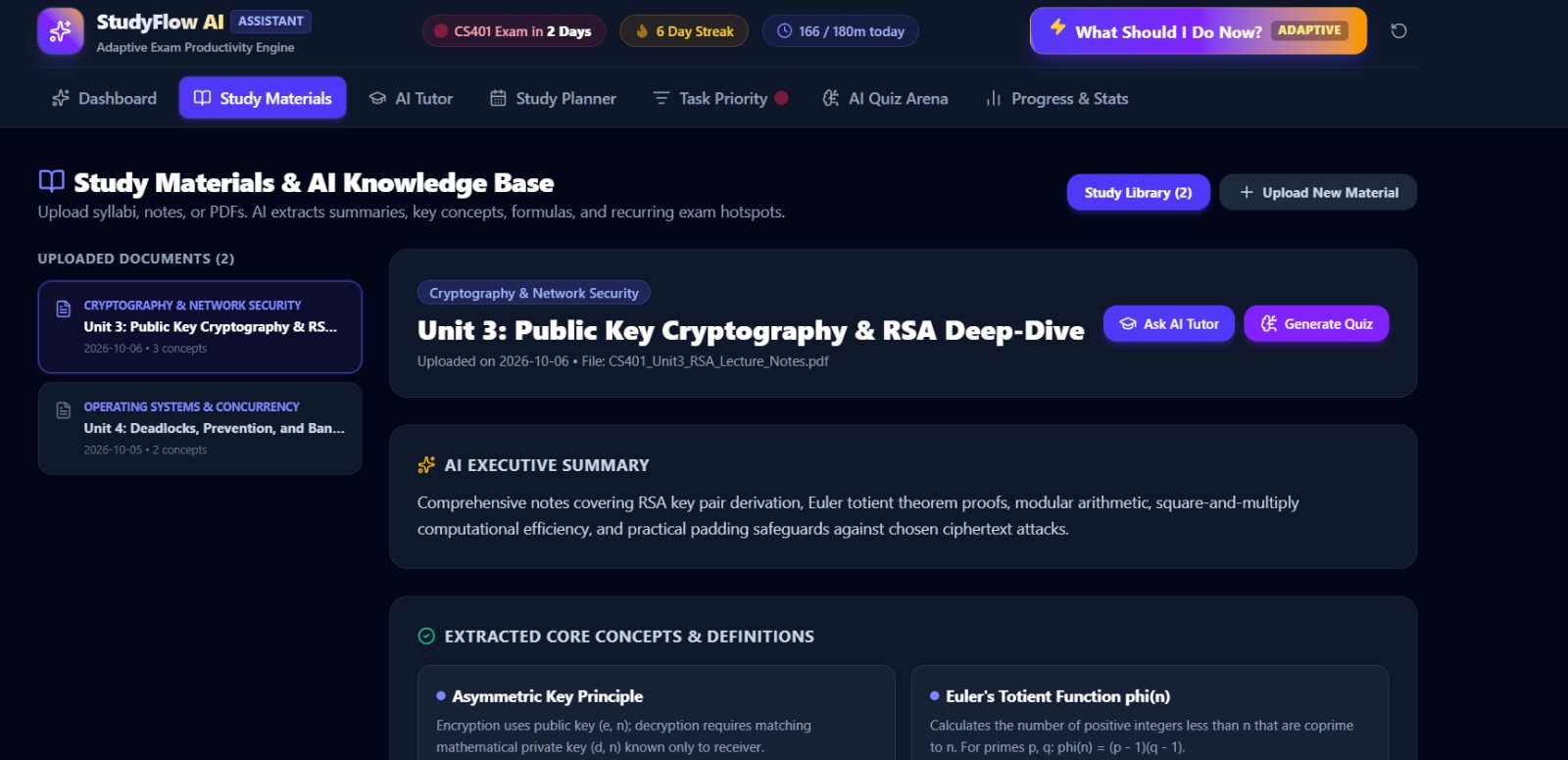
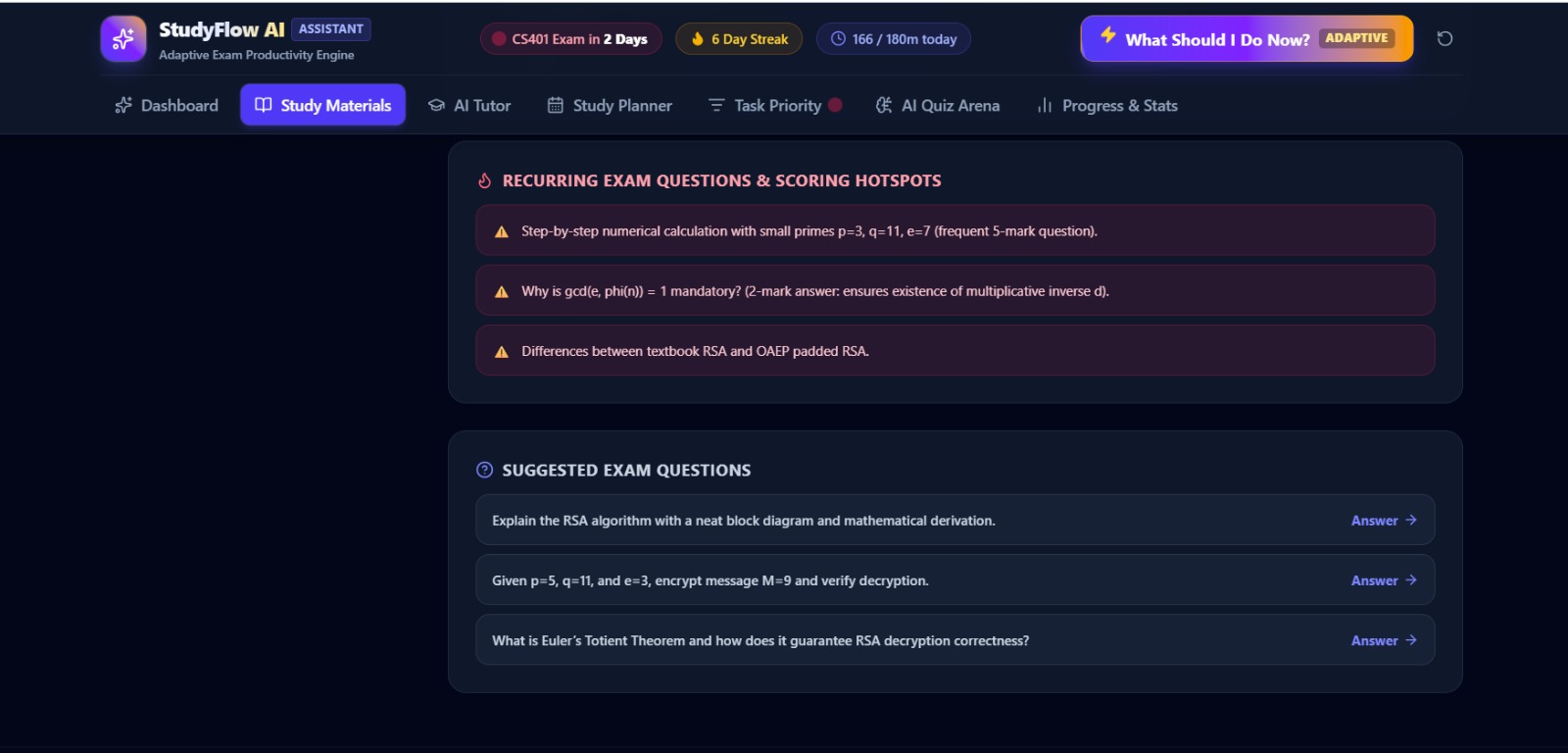
- Document & Notes Extraction: Students upload PDFs, lecture notes, or syllabus excerpts. Multimodal Gemini extracts executive summaries, core concepts, formulas, and recurring exam hotspots.
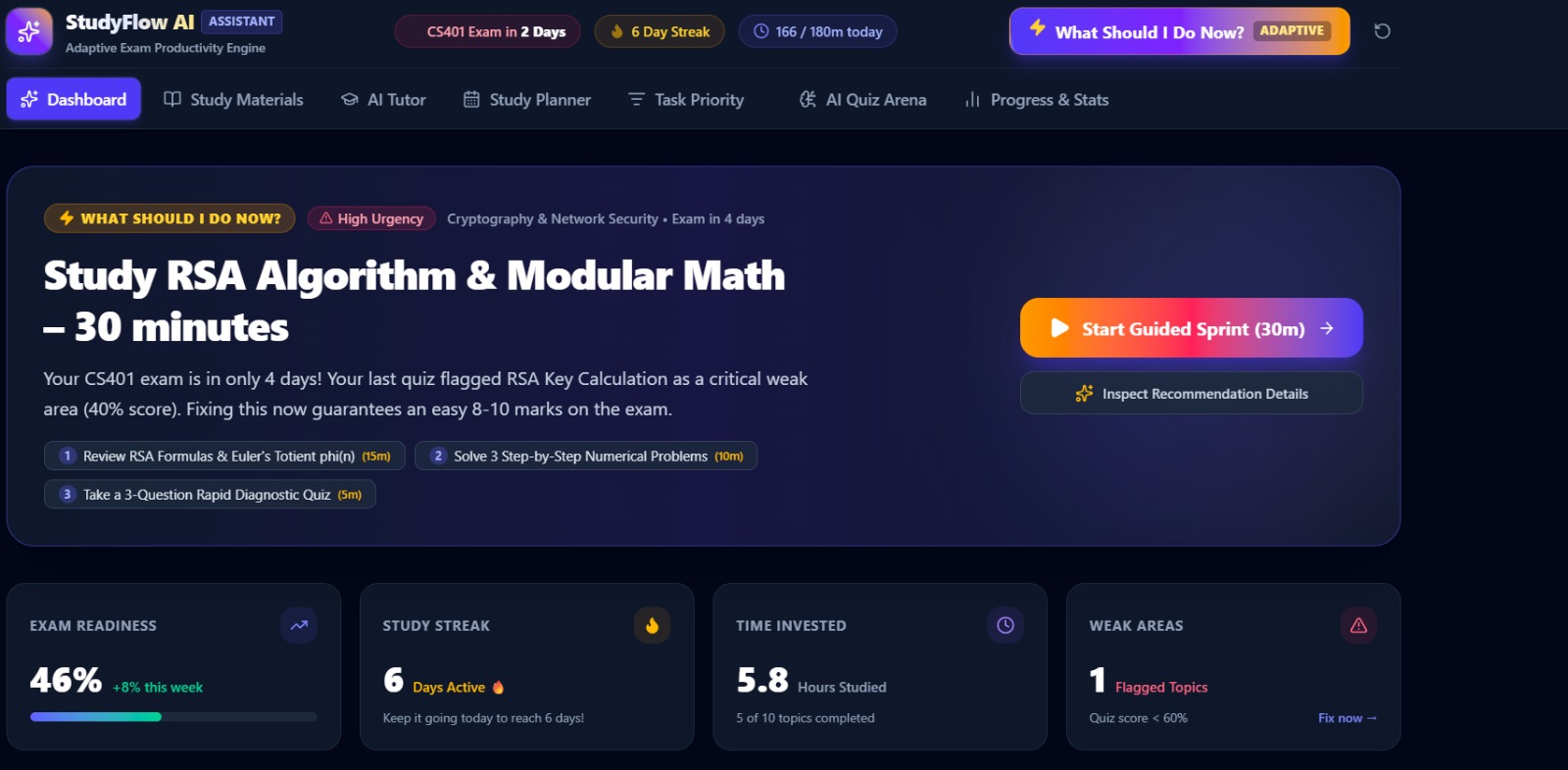
- "What Should I Do Now?" (Flagship Engine): Analyzes upcoming exam deadlines, current mastery, and quiz error diagnostics to recommend the exact next 30-minute micro-sprint (e.g., 15 min concept review $\rightarrow$ 10 min problem solving $\rightarrow$ 5 min check quiz), paired with a live interactive focus timer and checklist.
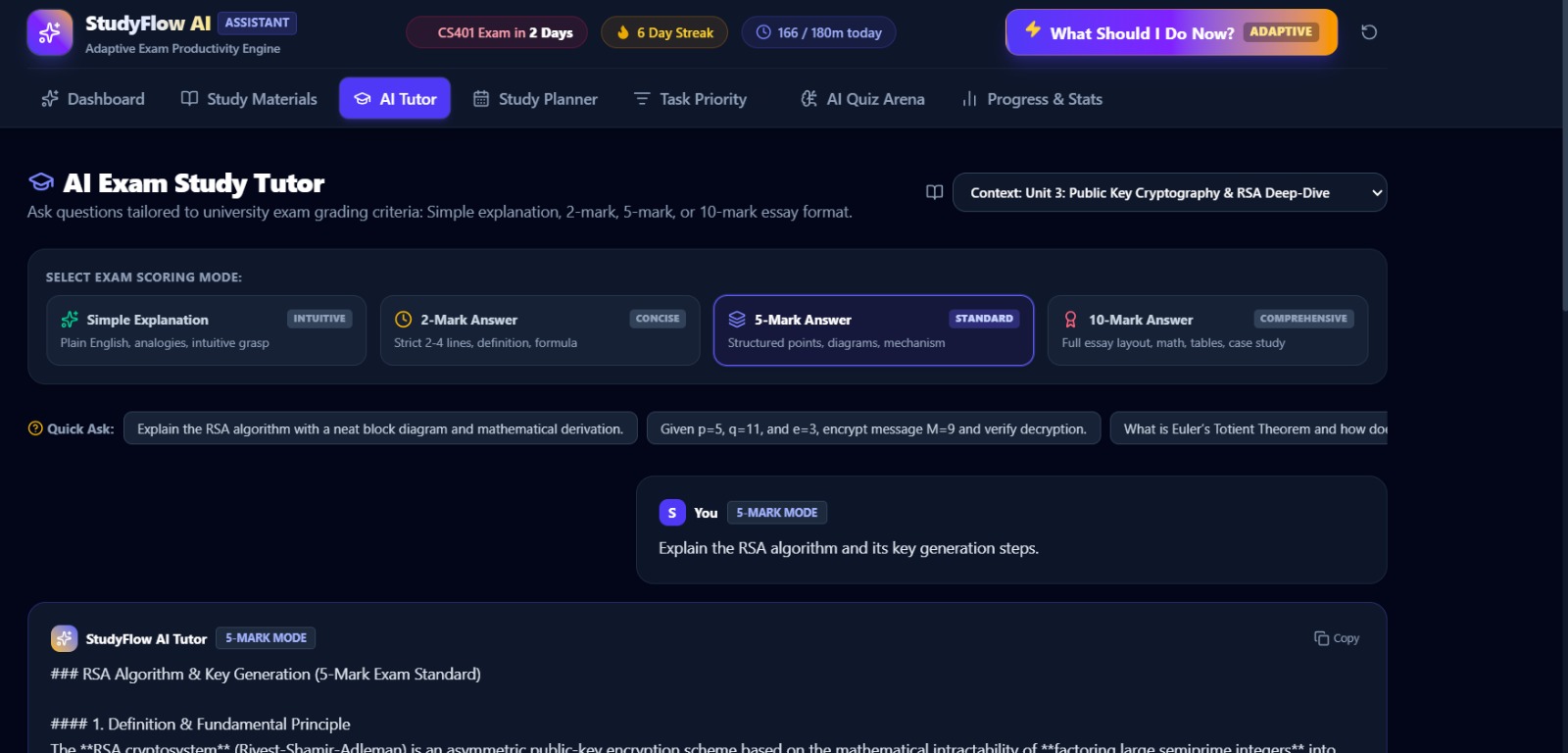
- University Rubric AI Tutor: Answers student questions according to standard university scoring criteria:
- Simple Explanation: Intuitive analogies and everyday examples.
- 2-Mark Answer: Strict 2–4 line definitions with mandatory formulas and keywords.
- 5-Mark Answer: Structured bullet points, described block diagrams, and operational mechanisms.
- 10-Mark Answer: Full university essay structure with Introduction, Architectural Workflow, Mathematical Derivations, Comparative Tables, and Evaluator Highlight Checklists.
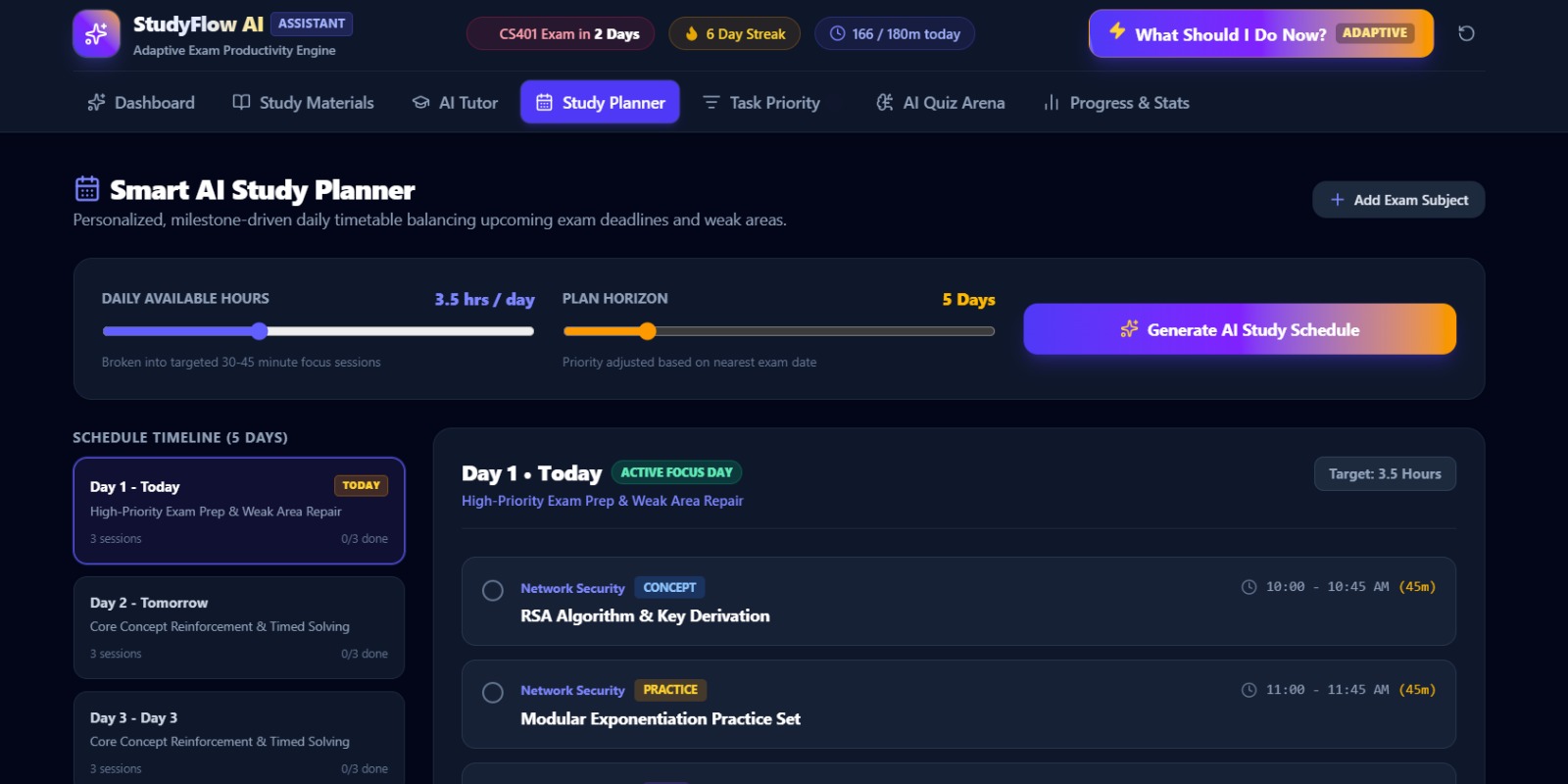
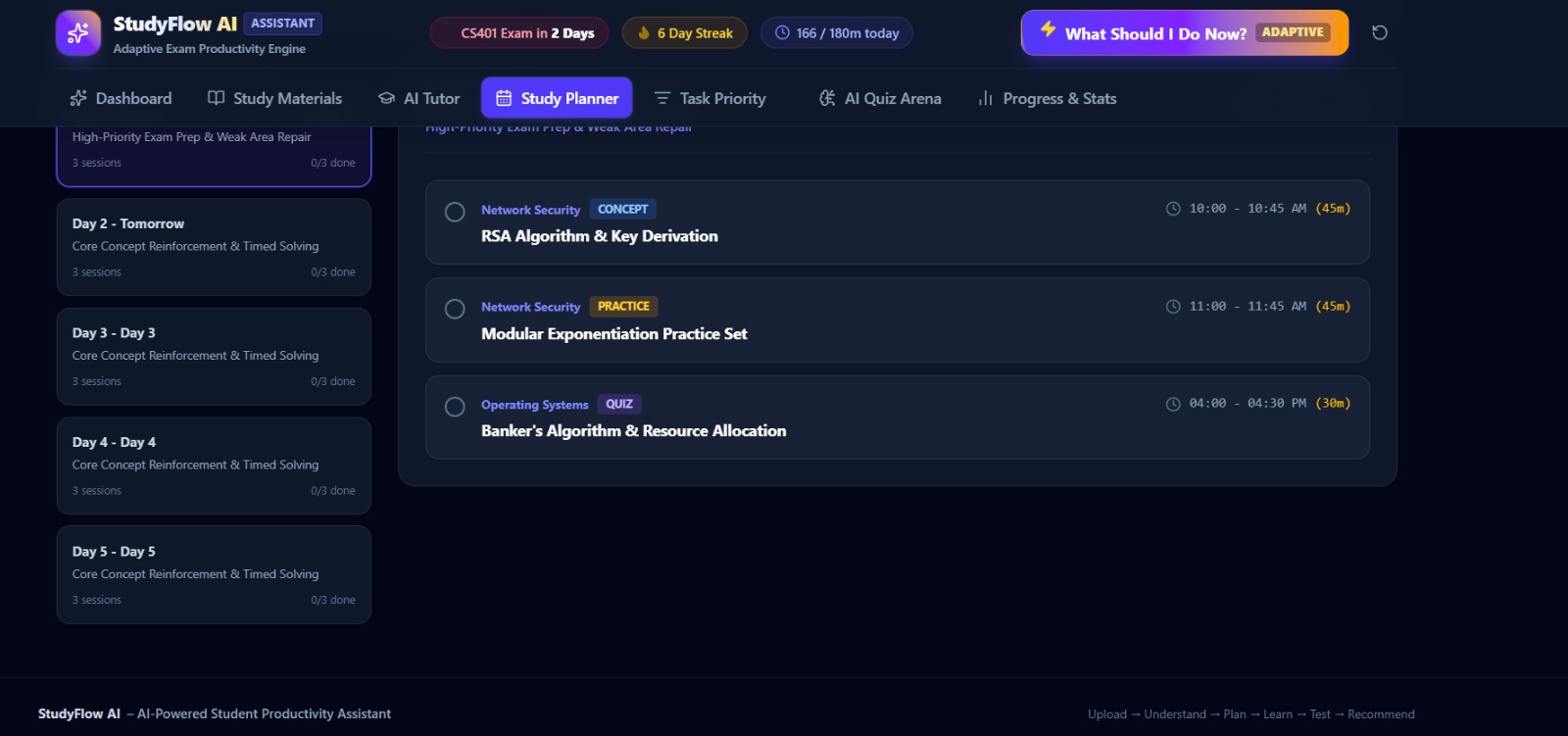
- Smart Study Planner: Generates realistic, balanced day-by-day and session-by-session schedules based on daily study hour targets and exam dates.
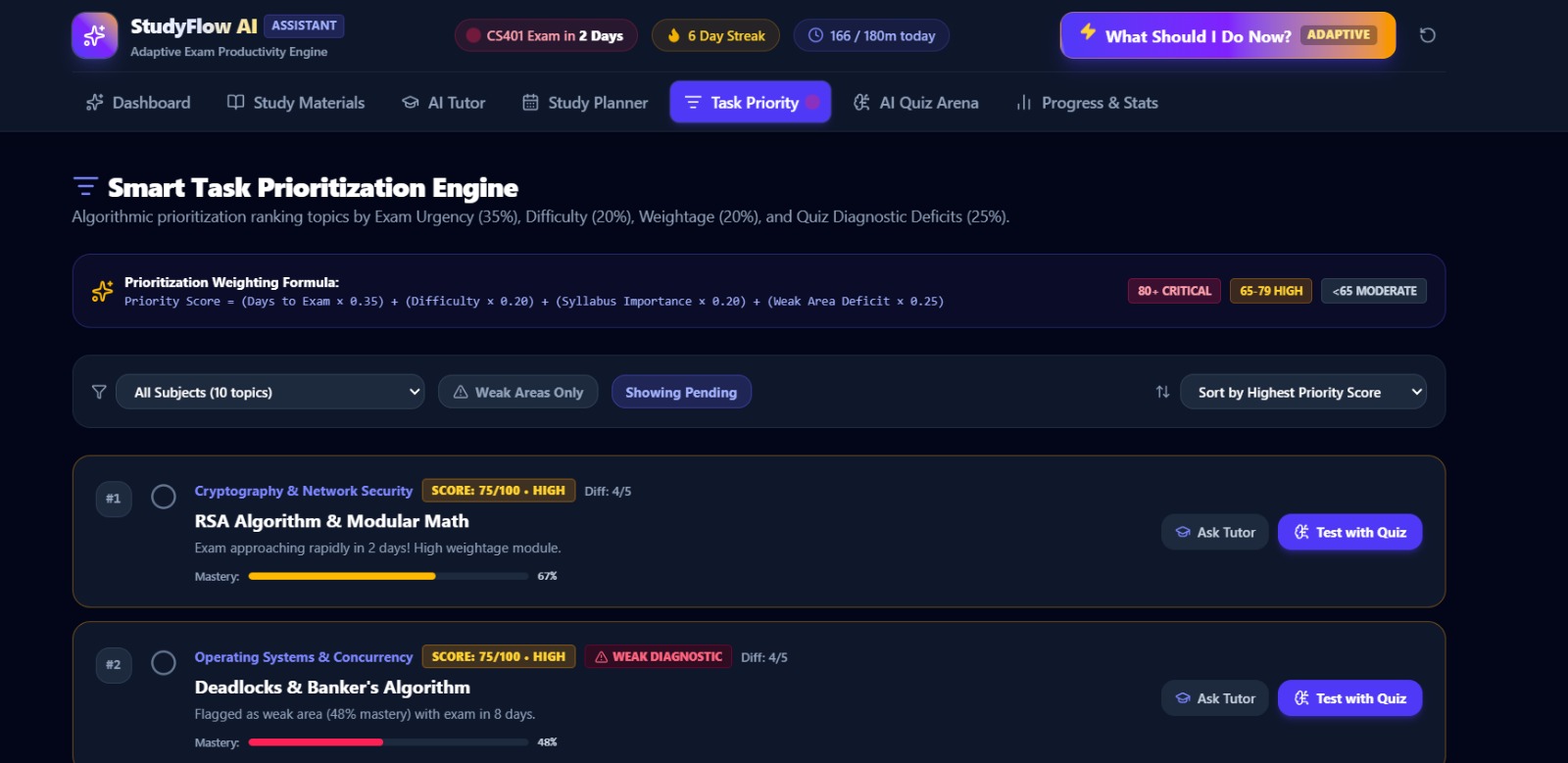
- Smart Task Prioritization: Dynamically ranks topics using an algorithmic weighting formula: $$\text{Priority Score} = (\text{Urgency} \times 0.35) + (\text{Difficulty} \times 0.20) + (\text{Weightage} \times 0.20) + (\text{Deficit} \times 0.25)$$ where: $$\text{Deficit} = (100 - \text{Mastery}) + (\text{Weak Area Penalty})$$
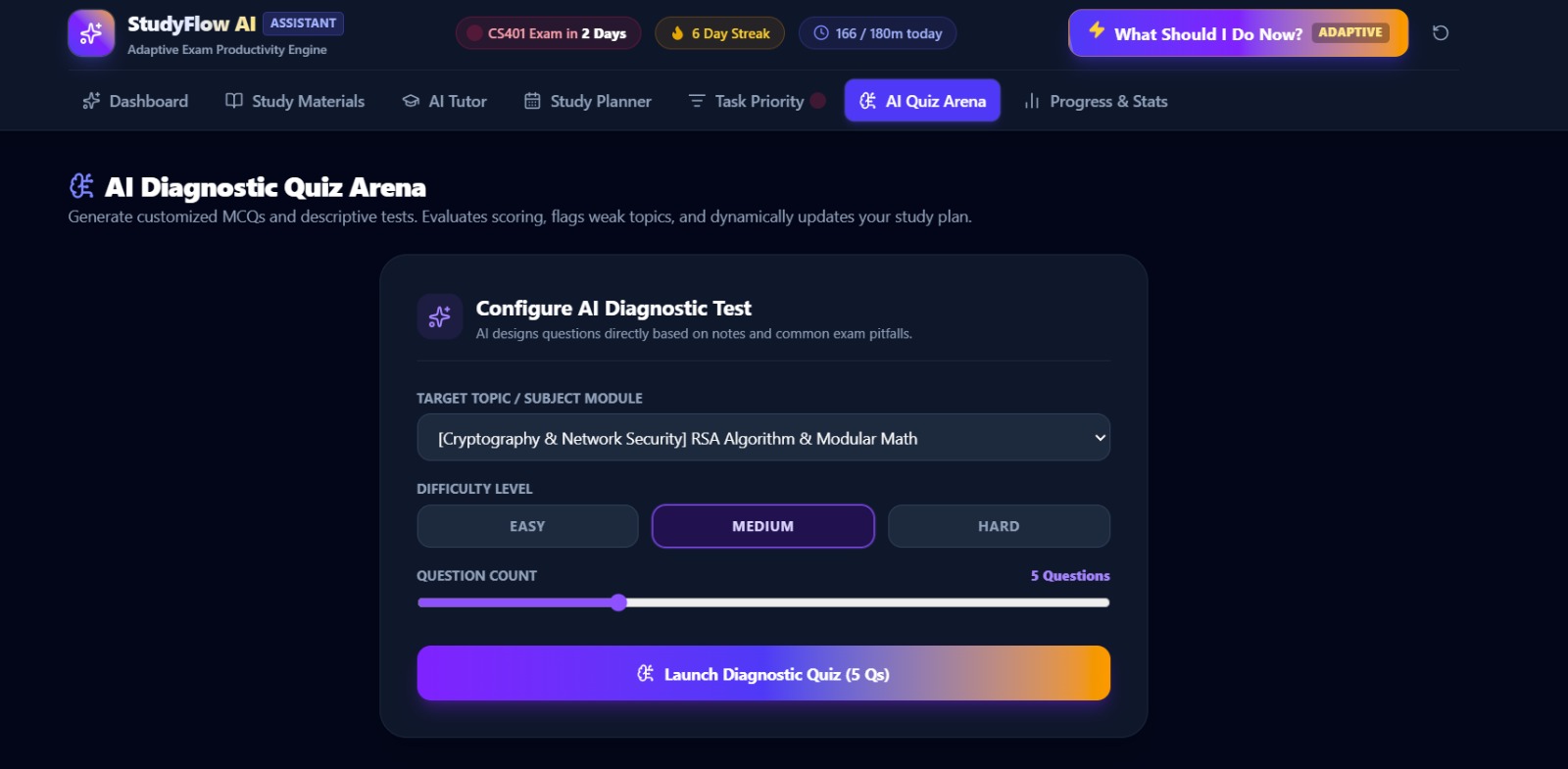
- AI Quiz Arena & Diagnostic Feedback: Generates MCQs and conceptual questions from lecture notes, tests comprehension, flags weak sub-topics ($<60\%$ accuracy), and automatically recalculates study priorities.
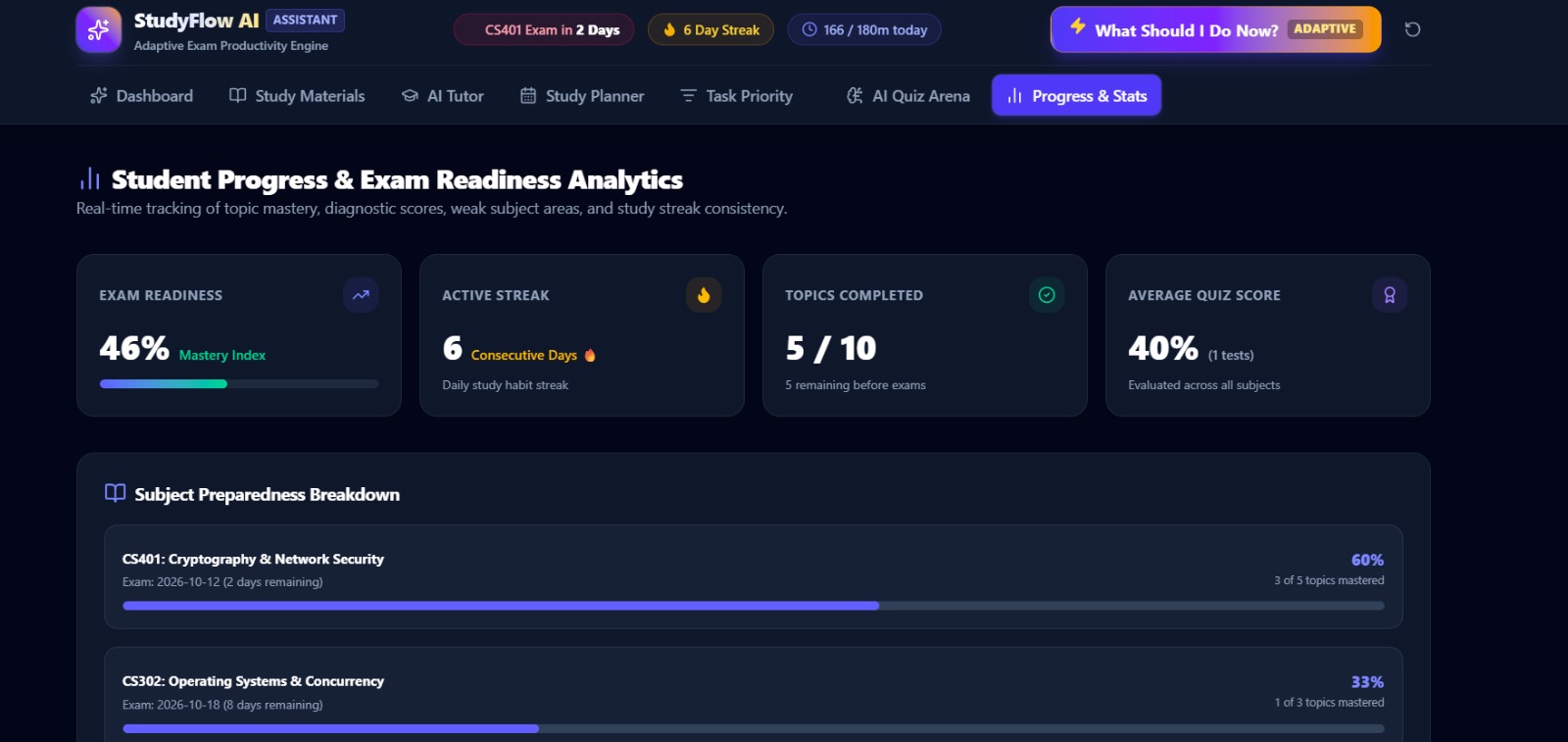
- Readiness Analytics: Displays real-time exam readiness percentages, study streak counters, hours invested, and topic remediation logs.
How We Built It
- Frontend: Built with React 19, TypeScript, and Vite, styled with Tailwind CSS for a clean, responsive student dashboard. Interactive celebratory feedback is powered by
canvas-confetti. - Backend & Middleware: An Express.js full-stack server mounted with Vite middleware for unified local development and production serving.
- AI Intelligence: Powered by Google's
@google/genaiSDK usinggemini-3.8-flashwith structured JSON schema outputs (responseMimeType: "application/json") and temperature-optimized prompt engineering. - Adaptive Persistence: Local storage state synchronization paired with resilient fallback generators to ensure 100% uptime and instant interactivity even during network spikes.
Challenges We Faced
- Calibrating Exam Answering Formats: Standard LLM responses are often either too conversational or too verbose. Designing prompt guidelines that enforce strict exam mark constraints (such as concise 2-mark definitions versus exhaustive 10-mark essay structures) required rigorous rubric tuning.
- Dynamic Schedule Adaptation: Connecting quiz mistakes directly back to the study plan required an algorithmic feedback loop so that performing poorly on a topic immediately recalculates task priority scores and surfaces that topic in the "What Should I Do Now?" banner.
- API Reliability: We designed a resilient fail-safe architecture with domain heuristics so the dashboard and interactive study timers remain fluid and operational under any network condition.
What We Learned
- How to build agentic, recommendation-first software that guides users through actionable sprints rather than waiting passively for conversational prompts.
- How to structure strict JSON schemas and multimodal document parsing using Gemini 3.8 Flash.
- How to mathematically model academic urgency, difficulty, and diagnostic deficits into a transparent prioritization score.
Built With
- adaptive-learning
- artificial-intelligence
- edtech
- express.js
- gemini-3.8-flash
- gemini-api
- google-genai
- latex
- node.js
- react
- rest-api
- student-productivity
- tailwindcss
- typescript
- vite

Log in or sign up for Devpost to join the conversation.