-
-
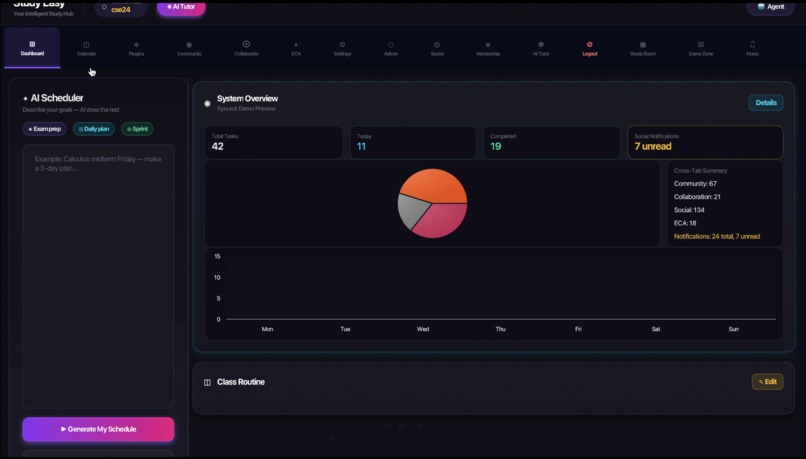
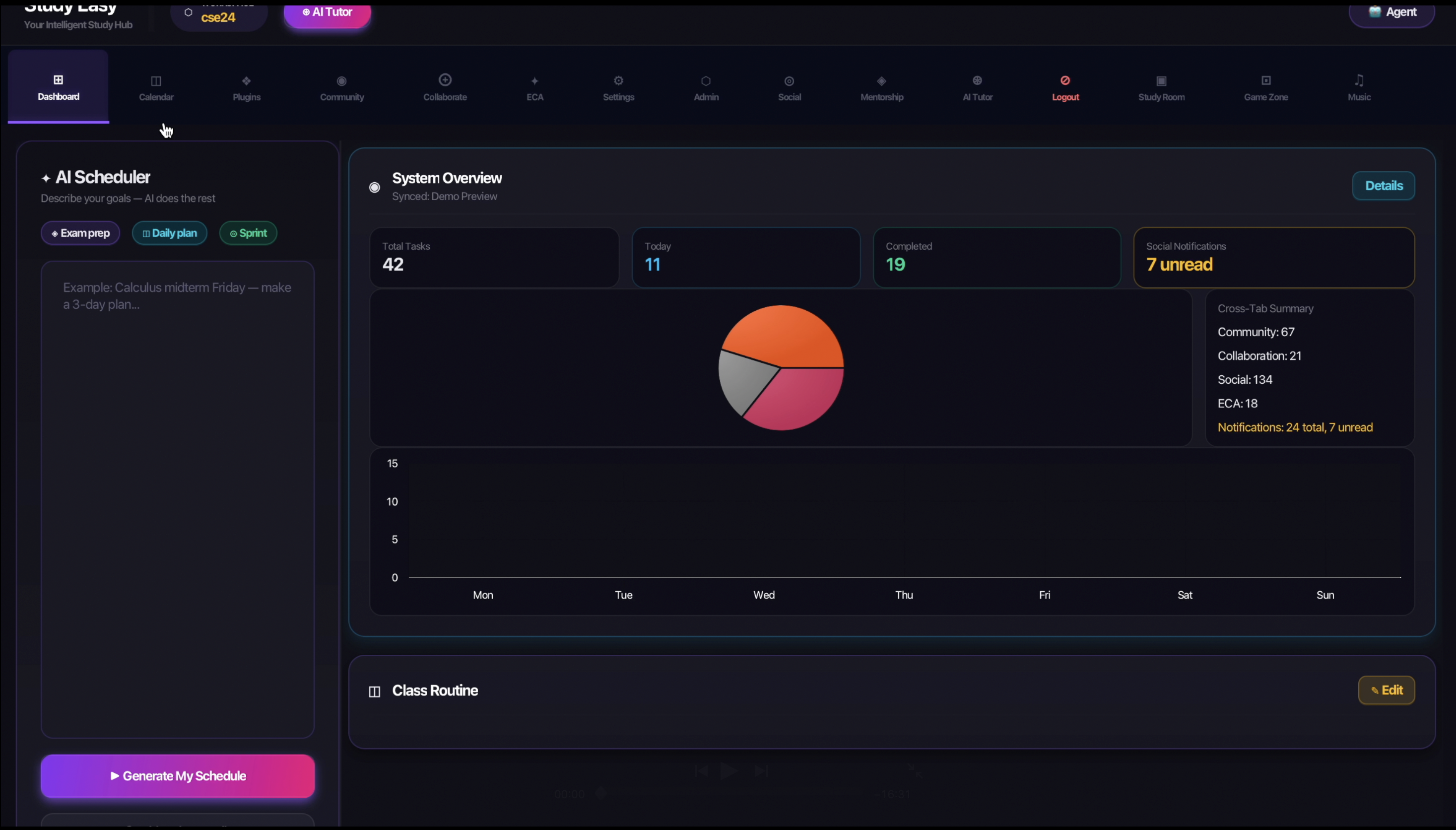
This is the dynamic dashboard of Java Software
-
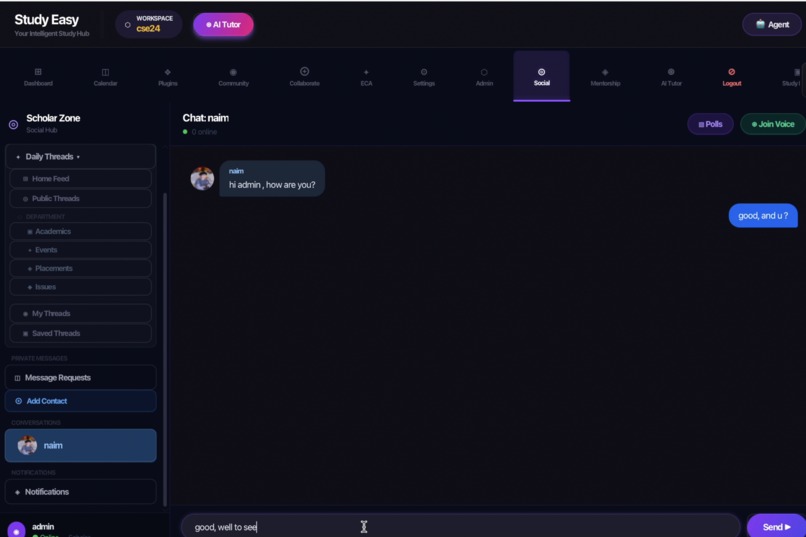
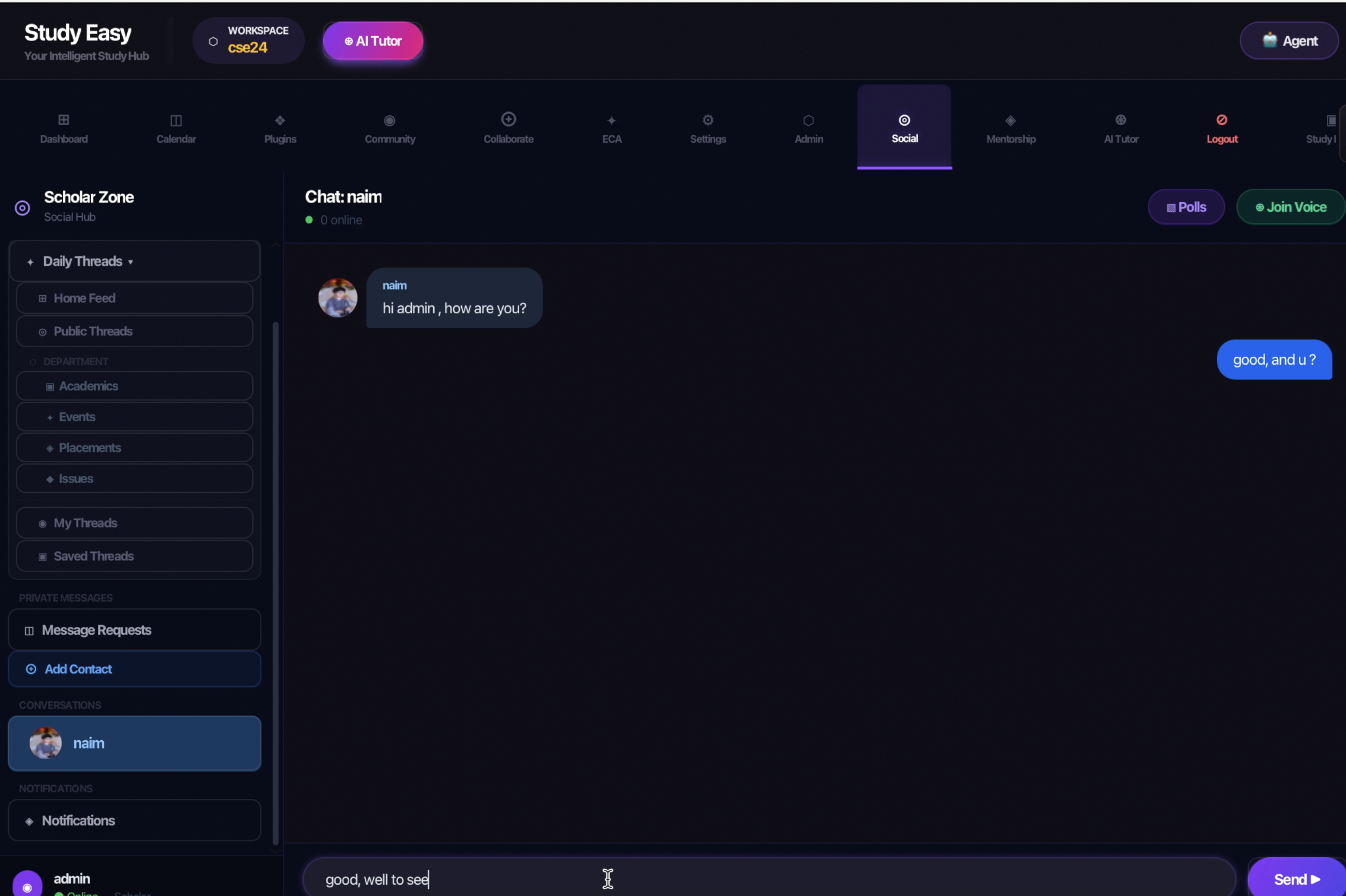
A social tab with public chat, one to one chat , thread and voice chat, poll system. They are useful to student community
-
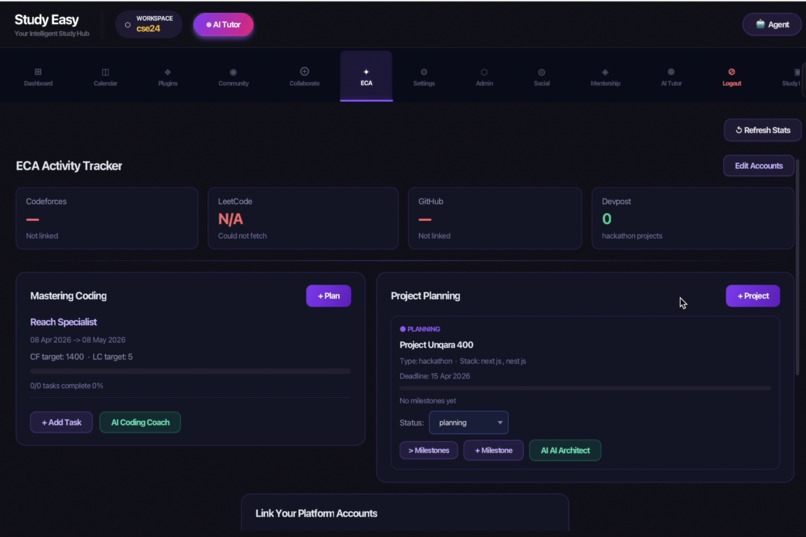
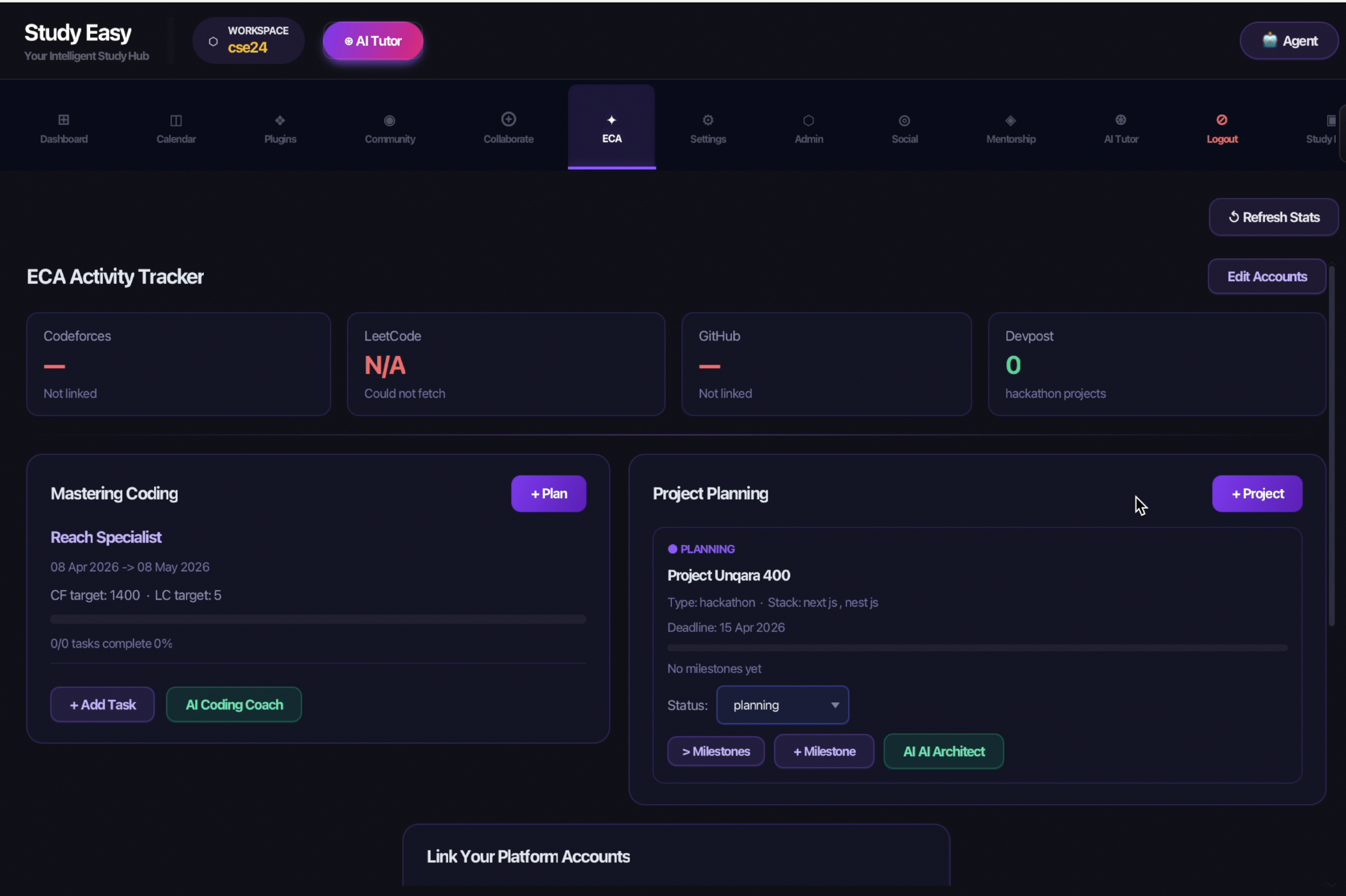
ECA, like projects , competitive programming tracing system. They can take AI consultancy and make proper plans.
-
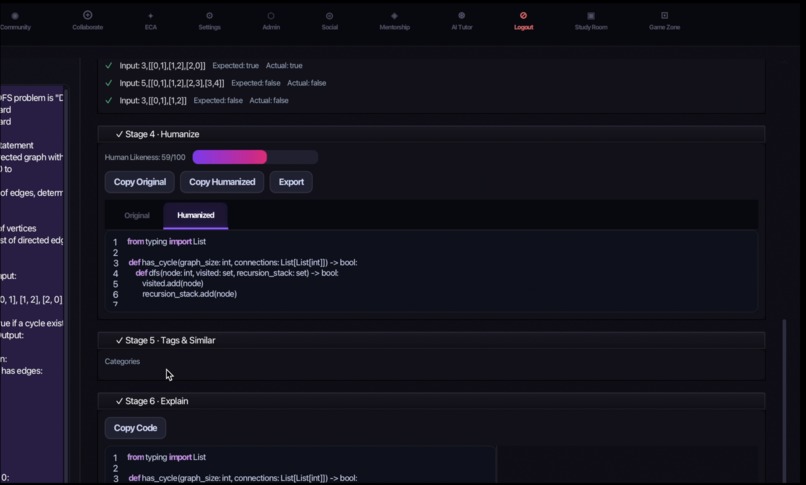
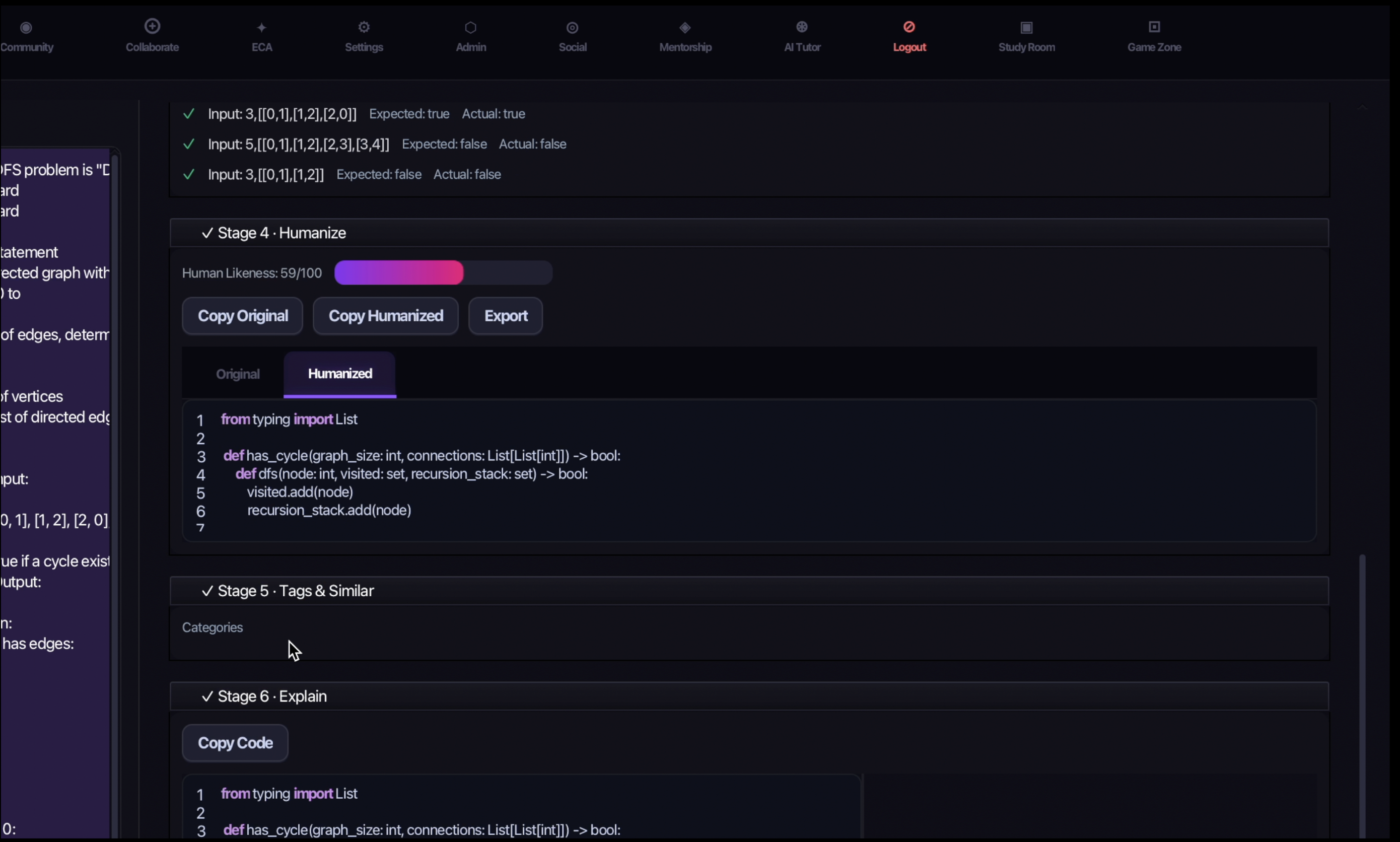
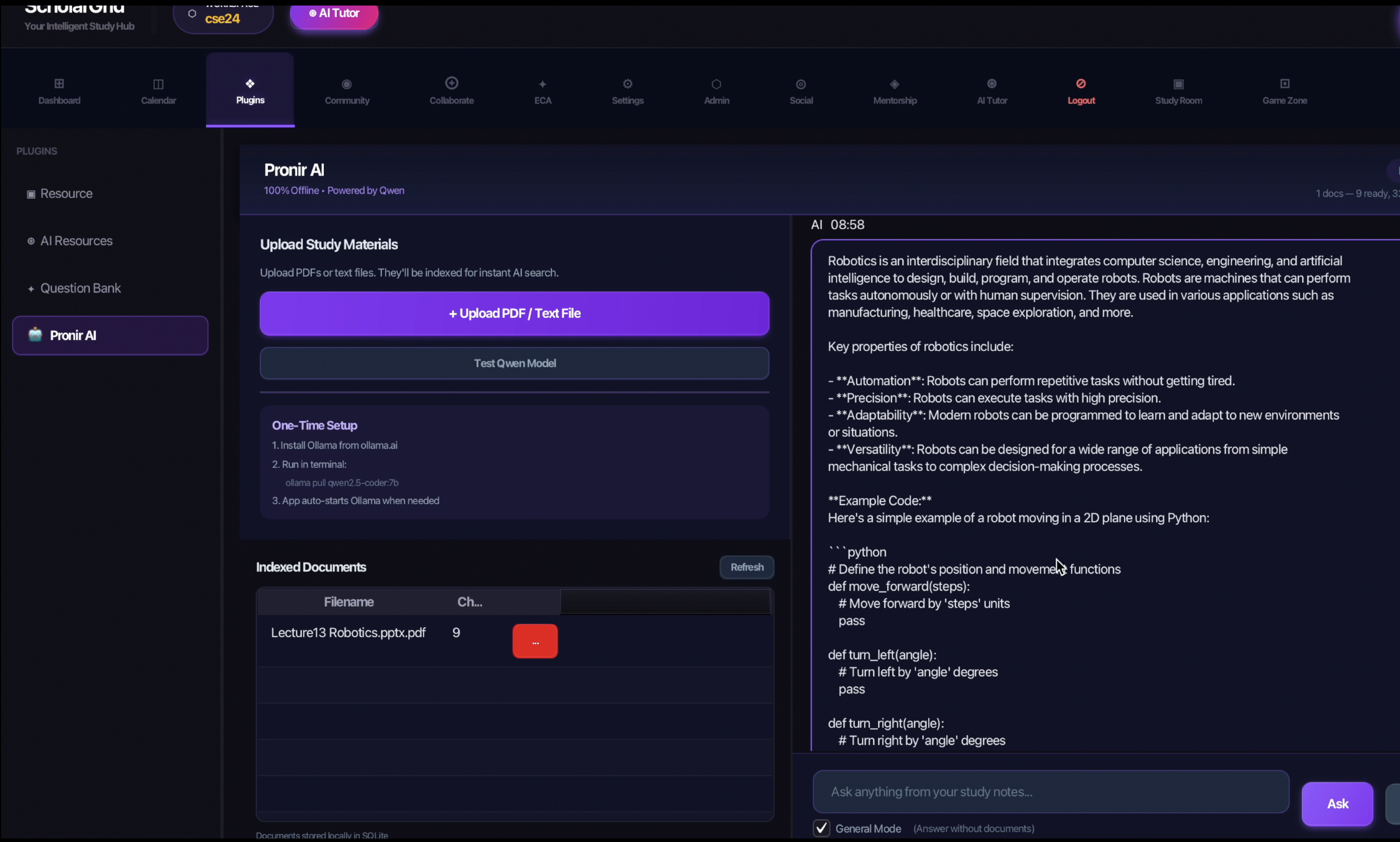
Offline AI pipelines for solving any CS problem.
-
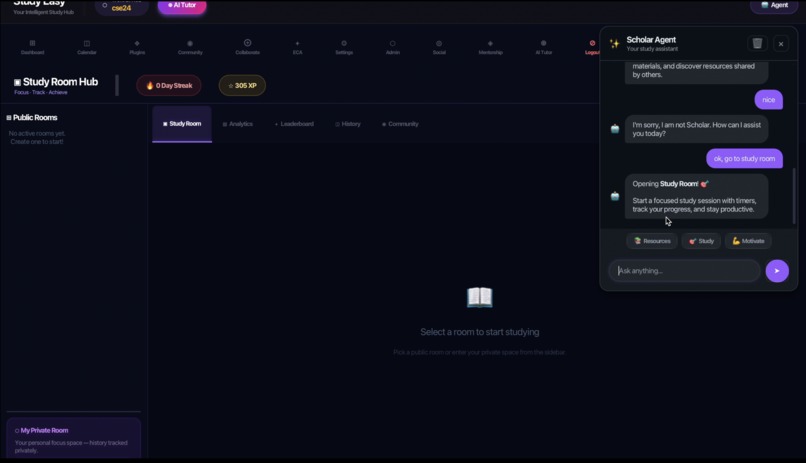
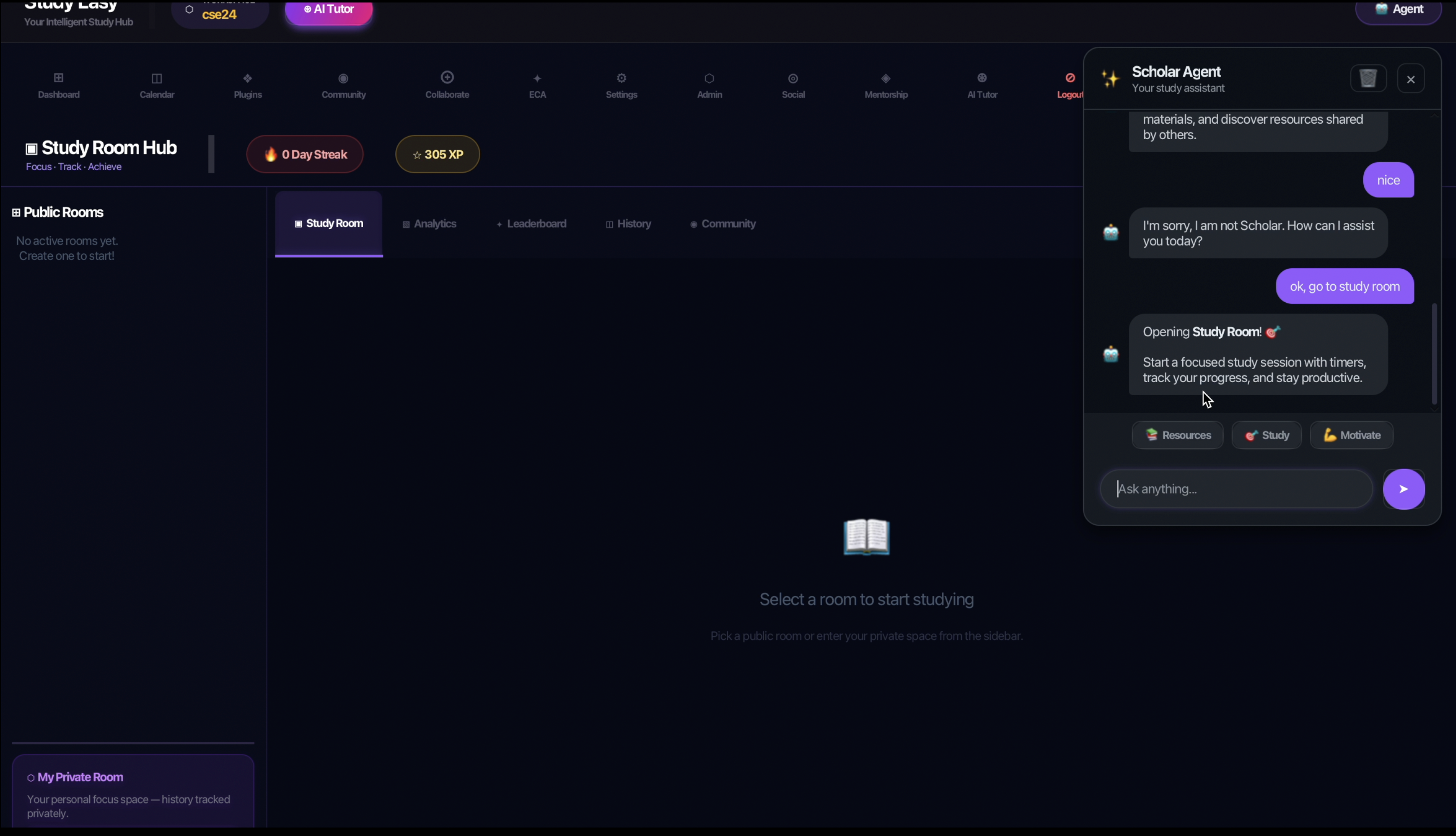
An agent using LangChain4j is built there, it can do some tasks automatically.
-
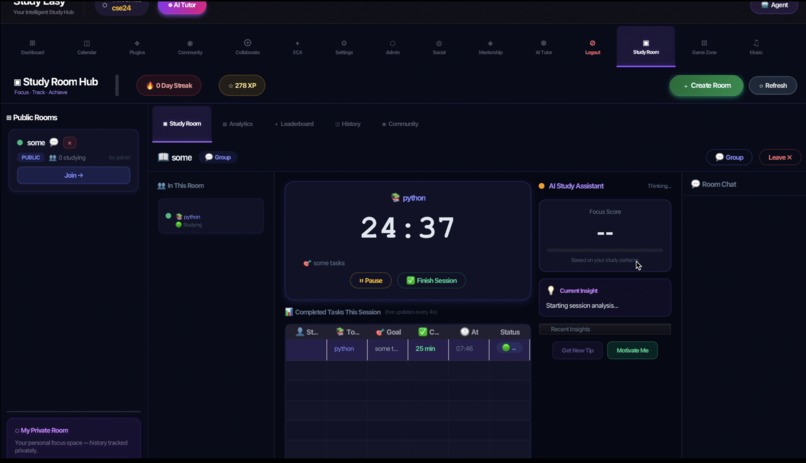
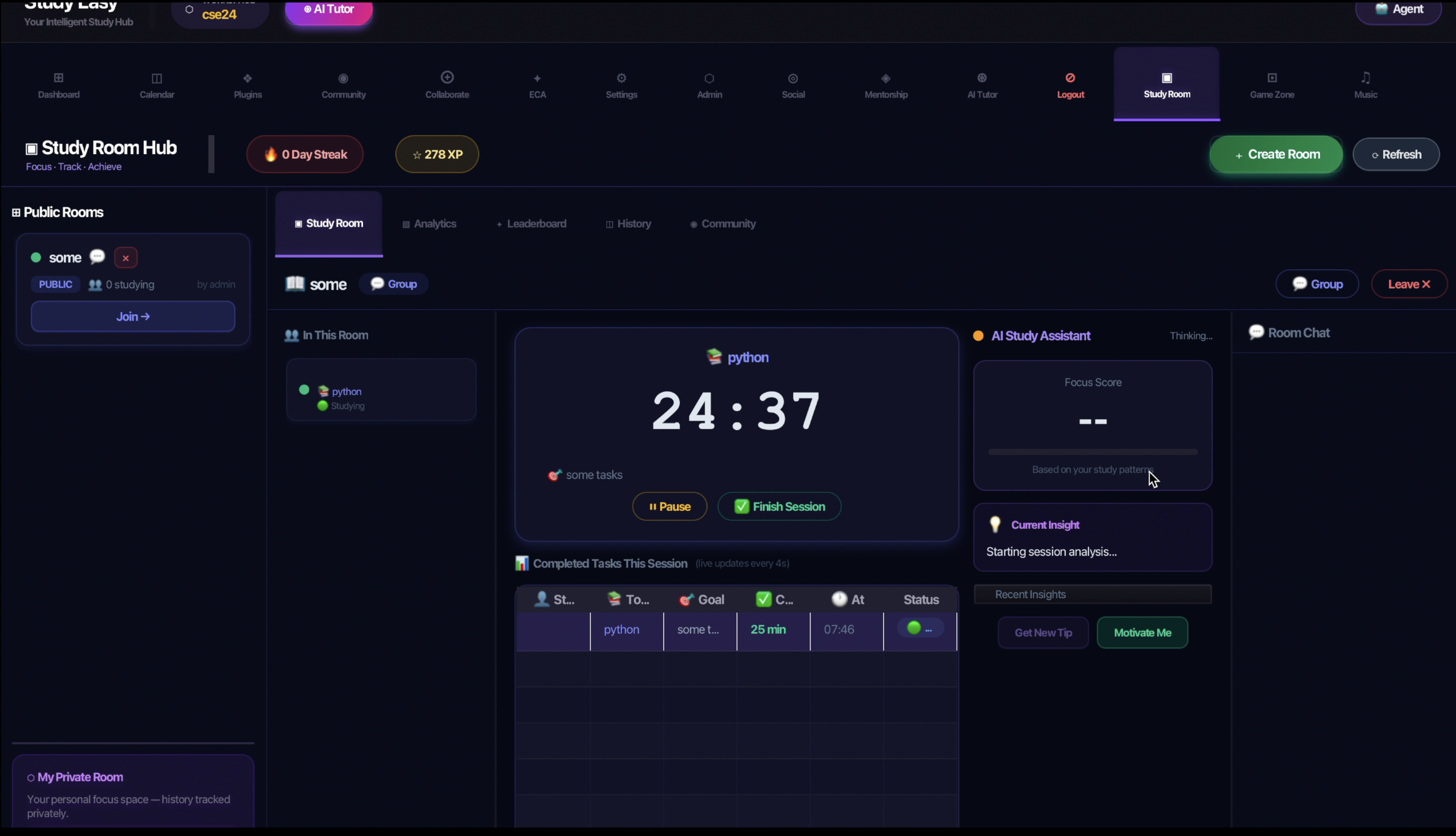
This is a study room , the best effective study room with agent, resources, leaderboard, history etc.
-
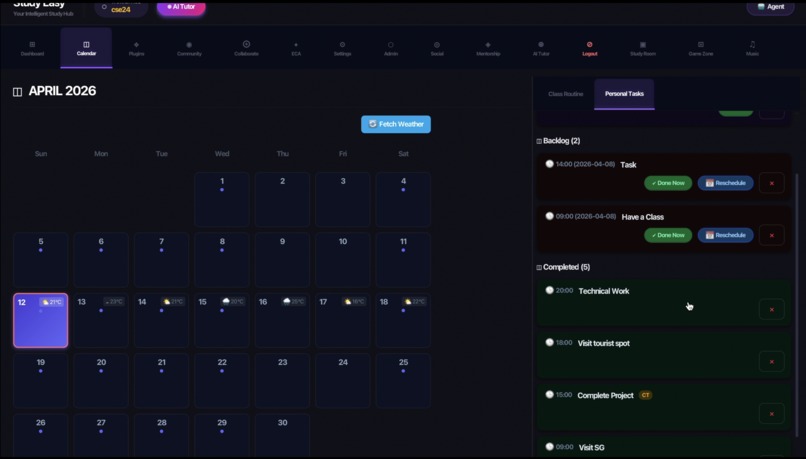
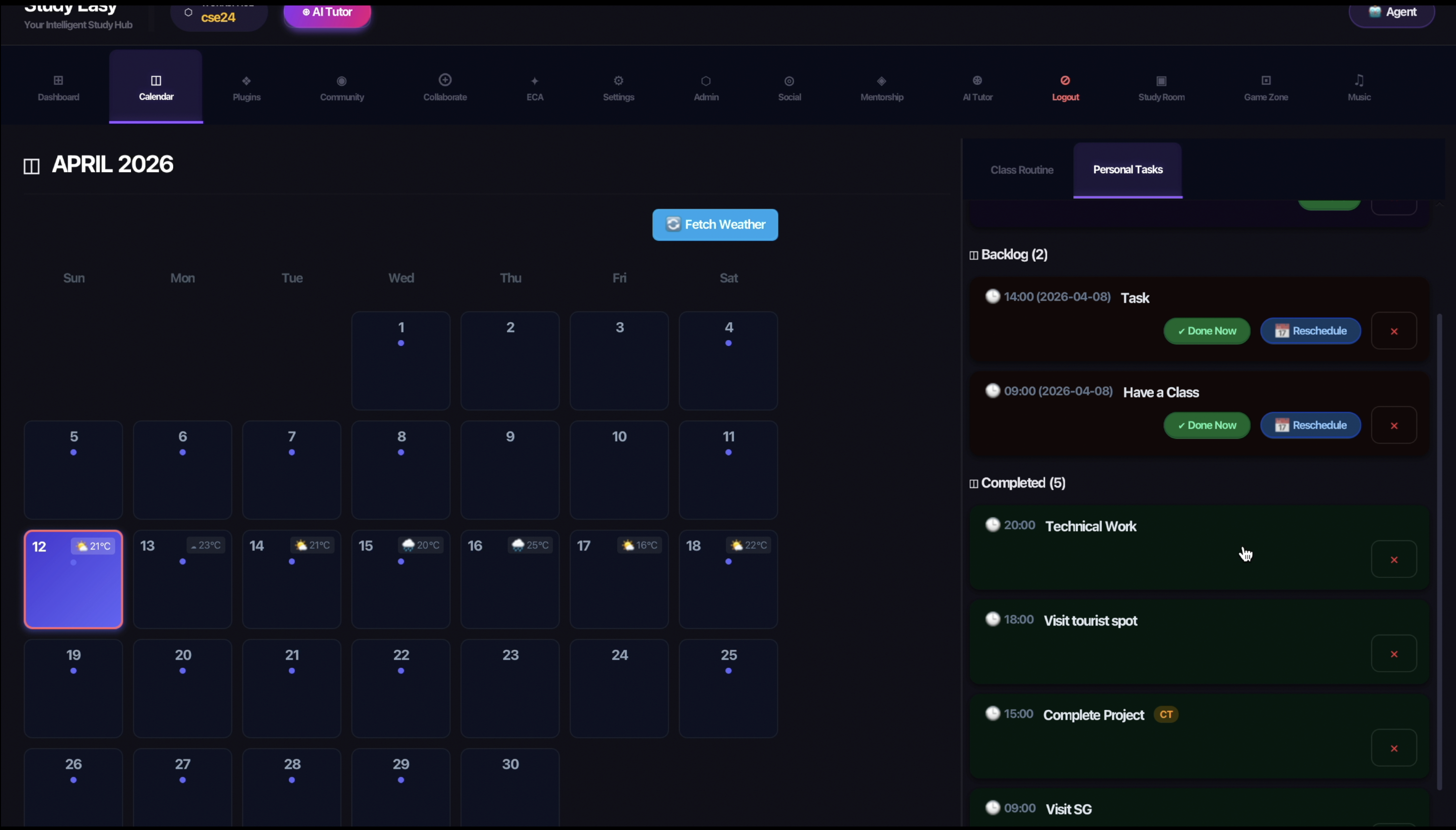
Here I can see all the tasks of day to day life, from class routine to tasks, backlog and completed item.They can be created by prompting
-
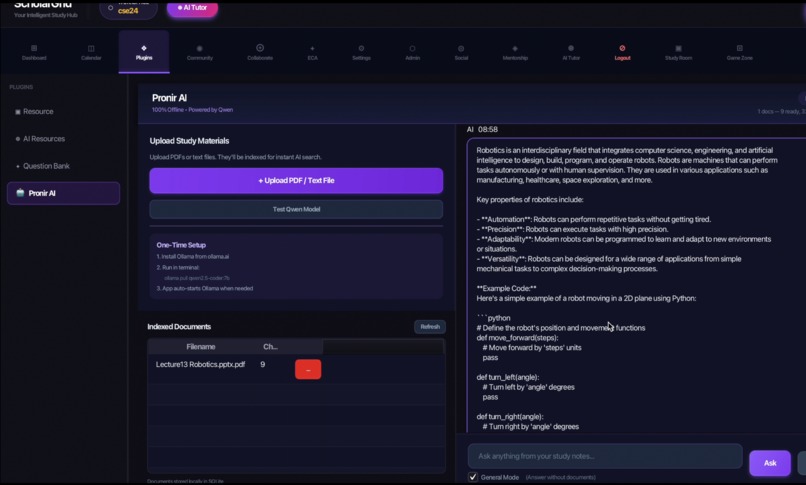
An offline AI is being maanged to like answering students resource based answer.
-
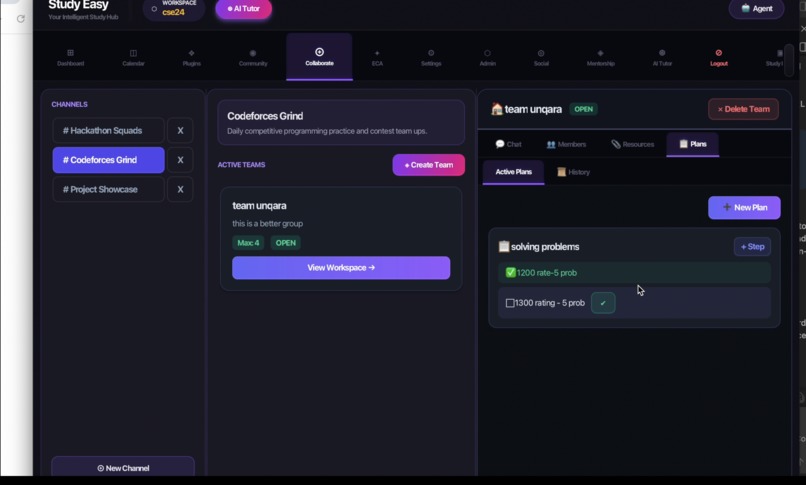
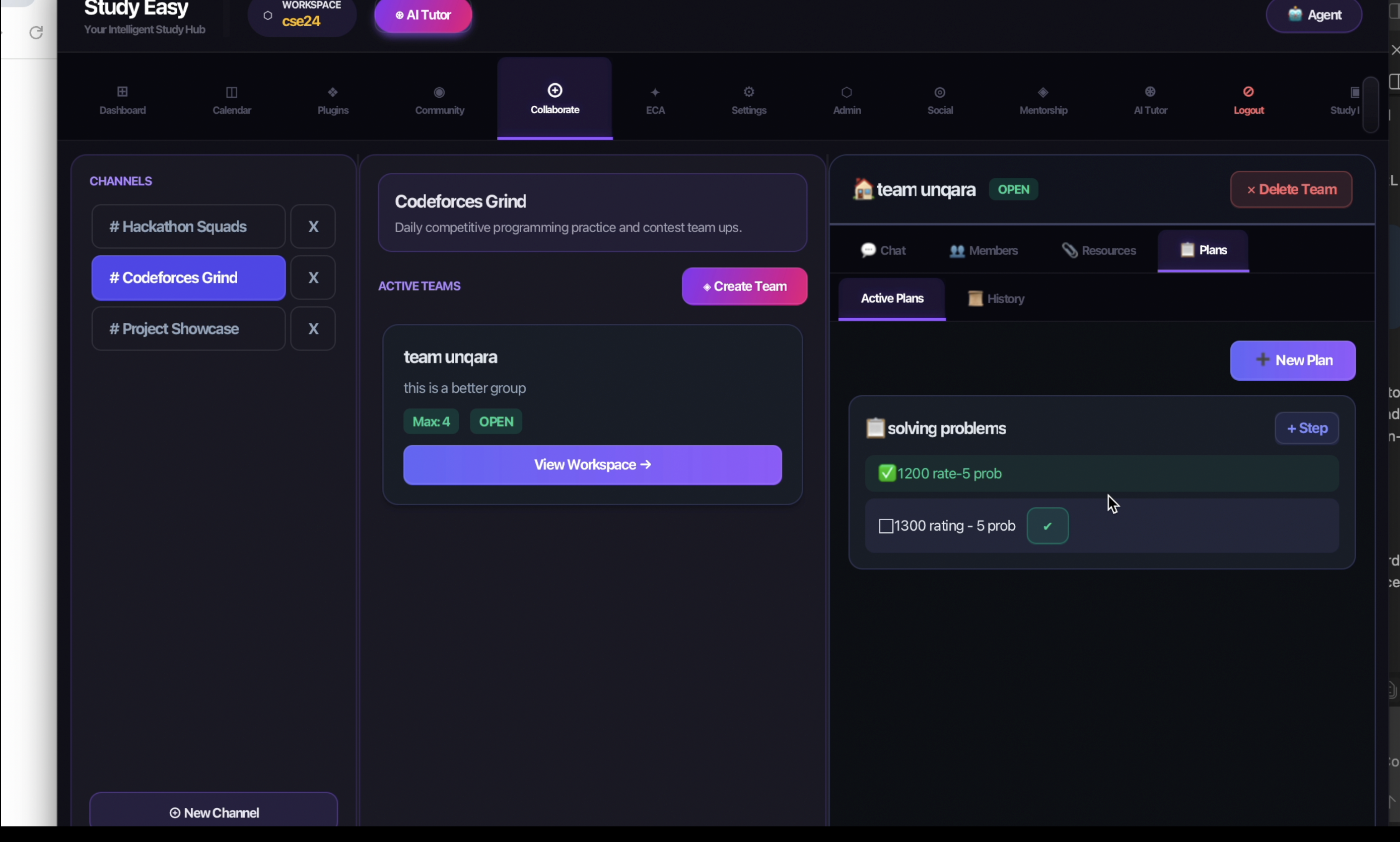
Users can collaborate to a team. Every team has chat, unlimited resource upload on telegram, and planning of tasks.
-
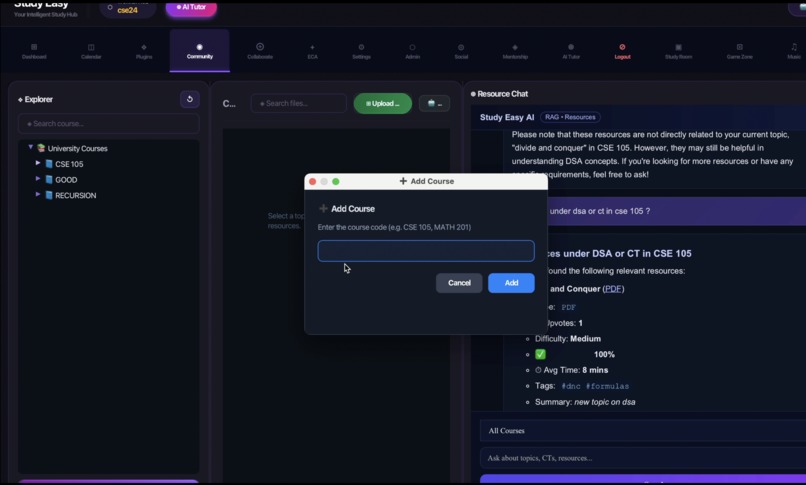
Here is the helping AI based on cloud AI. Supabase's a row has RAG
-
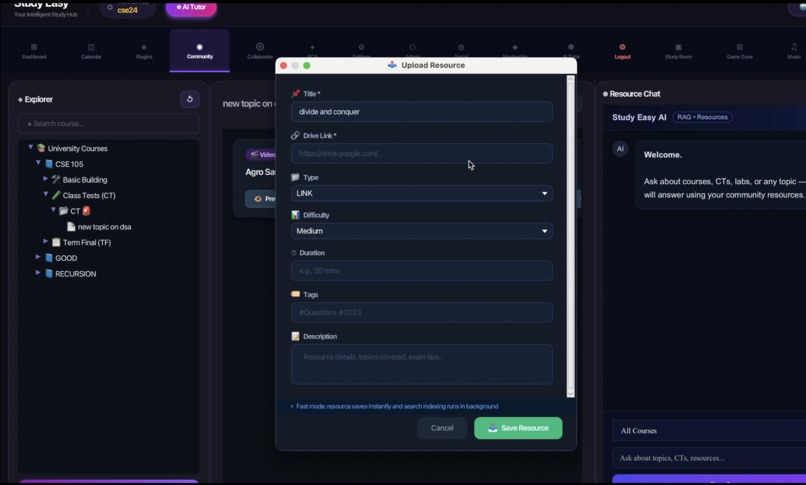
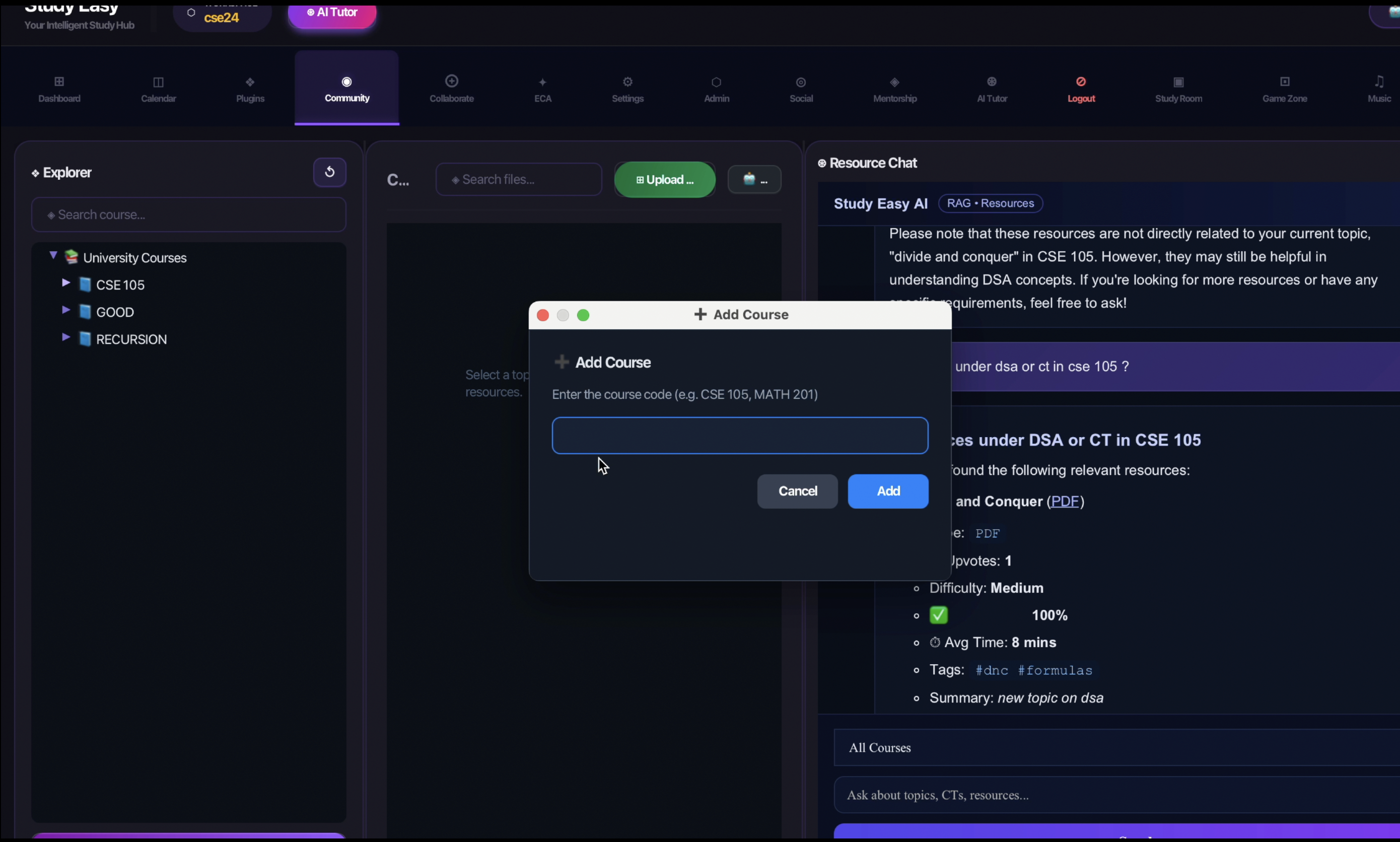
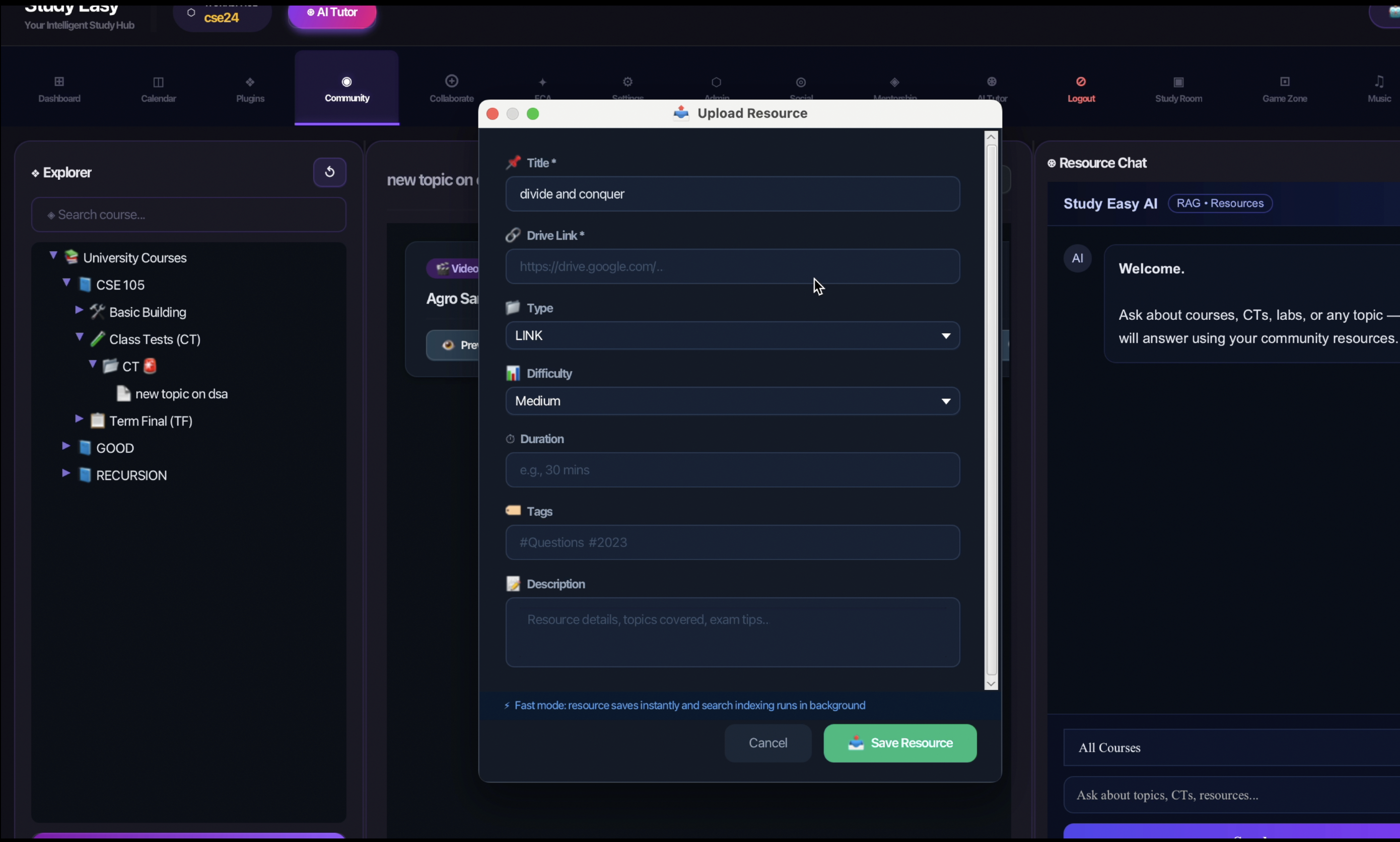
Here is community resources, they can managed by users and channel's admin. Here they can vote, mark note, see stats and discuss with AI.
-
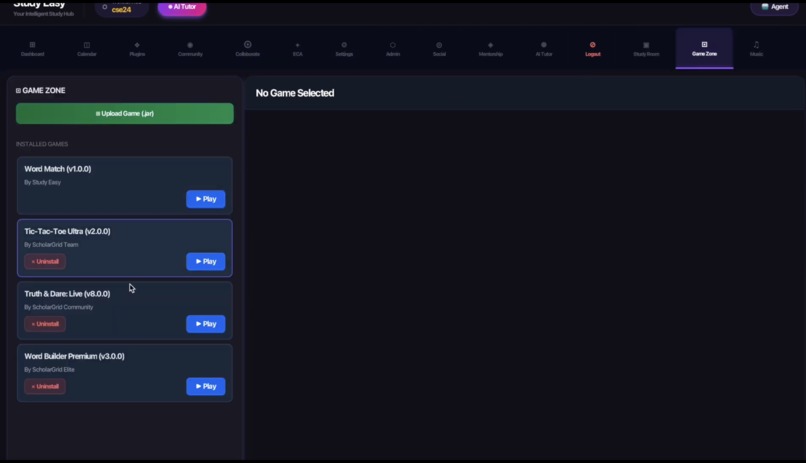
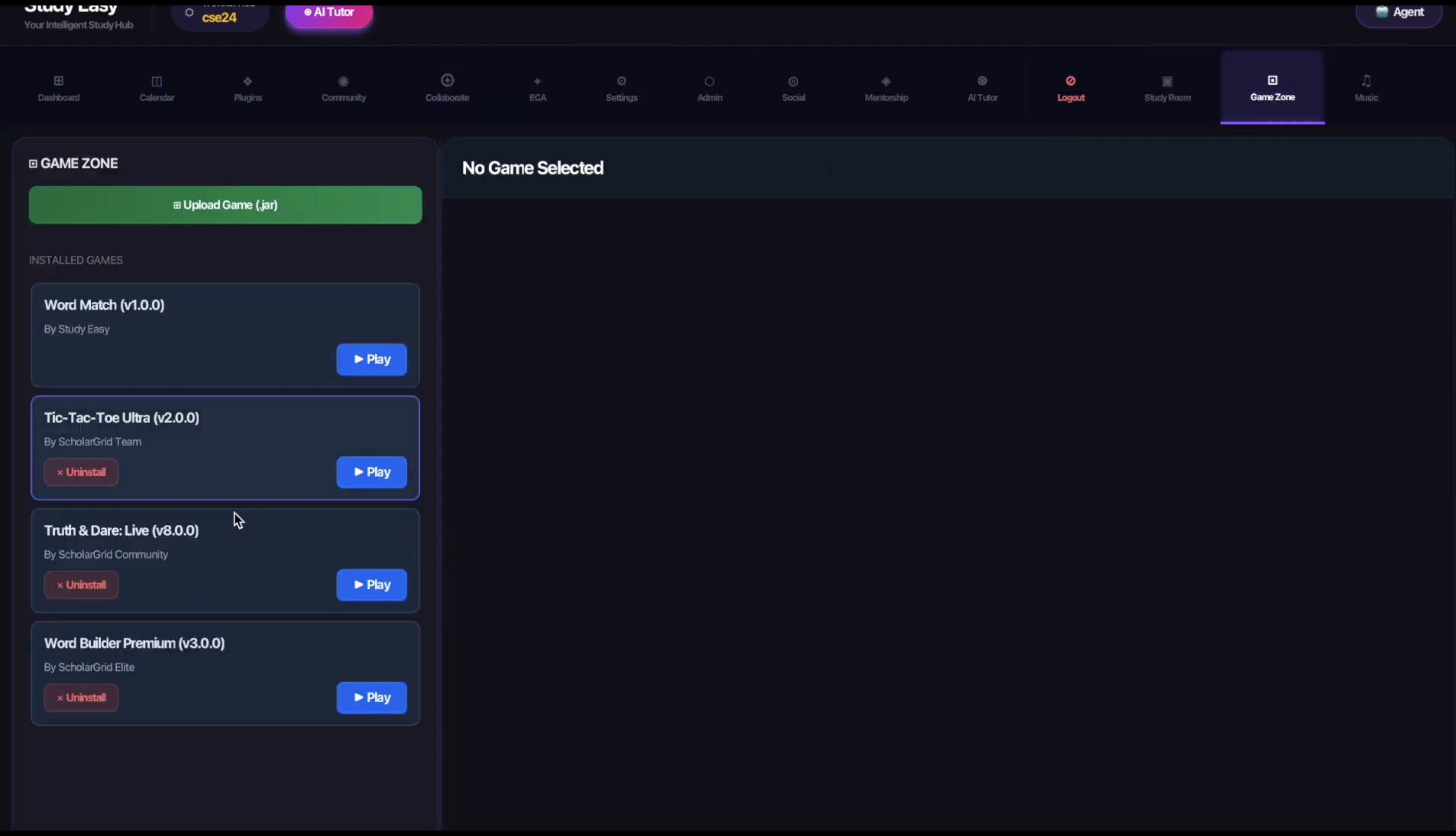
A game zone for refreshing students, this zone can be paused by admin. Here users can be java game developer, they can upload games.
Inspiration
Today’s students are trapped in a web of context switching. They use Discord for collaboration, Notion for scheduling, ChatGPT for questions, and local folders for PDFs. Furthermore, relying entirely on cloud-based AI tools means that the moment the internet drops—or a subscription limit is hit—productivity halts.
We wanted to build an agent-first"Academic Operating System." I believe this era is only for the AI agents! Our inspiration was to create a frictionless, distraction-free, all-in-one ecosystem that combines the community feel of Discord, the organization of Notion, and the intelligence of a private, offline-first AI tutor. We wanted to build something that isn't just a weekend prototype, but an enterprise-grade, hybrid study hub ready for production.
What it does
StudyEasy: AI Empowered Next Gen Study Hub is a massive desktop-first application that unifies learning, collaboration, and AI into a single workspace. Every portal in the app operates like its own parallel world:
100% Private Offline AI Tutor: Uses local LLMs to answer questions based entirely on your uploaded textbooks and notes (Local RAG) without sending sensitive data to the cloud.
Deep Collaboration (The Hub): Features Discord-style channels, threads, and team workspaces. Admins can even dynamically "merge" channels (e.g., bridging an AUST EEE channel with a RUET EEE channel) to expand networking.
Gamified Focus Rooms: Dedicated study rooms with timers, streak tracking, and XP to build engagement loops.
All-in-One Utilities: Built-in dynamic dashboards, extracurricular (ECA) tracking, peer-to-peer mentorship zones, and even integrated Game and Music zones for study breaks.
Extensible Plugin System: Users can switch workspaces dynamically, utilizing built-in tools like a LaTeX/AI content studio, Code analyzers, and Question Bank generators.
How we built it
We didn't just build an app; we built an enterprise-grade layered architecture. Knowing that frontend UI trends change, we focused heavily on building a bulletproof backend.
The Core Engine: We utilized a deadly combo of Java 21 and Spring Boot for the backend logic, wired directly into a JavaFX frontend UI. This layered MVC architecture (Controllers, Services, Models, Repositories) makes the app highly scalable and team-friendly.
Hybrid Dual-Database: We utilized PostgreSQL (Supabase) for cloud-syncing community features and SQLite for rapid, frictionless local storage.
The AI Agent Stack: We utilized LangChain4j to transition from a standard chatbot to an Agentic Workflow. For hyper-secure, offline RAG, we run Qwen 7B via Ollama locally. For community searching and advanced generation, we integrated an army of specialized cloud models (DeepSeek R1 for logic, Nebius/Cloudflare for image generation, Groq for speed).
The "Telegram Storage Hack": To bypass expensive AWS S3 costs for large student PDFs, we engineered a real-time CDN using the Telegram Bot API. We upload files (up to 2GB) to Telegram and instantly fetch the direct download links for our database!
Challenges we ran into
UI Thread Freezing: Generating vector embeddings for 1500+ page PDFs locally is incredibly resource-intensive. We had to carefully implement JavaFX concurrent threading and background tasks to ensure the main dashboard never froze.
AI Provider Unpredictability: Handling rate limits (429 errors), downtime (400 errors), and latency across multiple cloud providers. We had to engineer robust fallback and retry logic to ensure the system behaves reliably like an enterprise app.
Dual-Database Sync: Keeping local SQLite offline data perfectly synchronized with the cloud PostgreSQL database without causing merge conflicts when the user reconnects to the internet
Accomplishments that we're proud of
LangChain4j Implementation: Successfully exploring and implementing LangChain4j for the first time to bring true, autonomous Agentic workflows to a desktop Java environment.
Enterprise Fault Tolerance: Building a resilient system that doesn't crash when an API fails, but gracefully degrades or switches to an offline local model.
Admin Governance: Implementing a massive role-based access control (RBAC) system allowing admins to moderate, broadcast, and dynamically merge separate community channels.
The Backend-First Design: By decoupling our logic with Spring Boot, our backend is so strong that we could completely rip out the JavaFX UI tomorrow and plug in a web UI without touching the core business logic.
Project Overview: Enterprise-Grade AI Study Hub
While the JavaFX frontend was a smaller portion of our work, we pushed the backend and architecture to their absolute limits. Since we started the UI just two days before the deadline, we encountered some CSS bugs and cascading overlaps (mostly because the UI was largely AI-generated under time pressure). However, we managed to build a fully functional interface. After 'Agro Sentinel,' this is the most complex system design I’ve ever architected. The backend structure and architecture are entirely enterprise-inspired and easily one of my strongest creations to date.
Why is this project so powerful?
Secure Local LLM: We integrated Qwen 7B (via Ollama) in the most protected and structured way possible. Cloud models were used only for community resource searching or deep embedding. Everything else—from generating small resources to providing reference-based answers for 1500+ page documents—is handled entirely by the self-hosted Qwen model in a highly structured manner. As offline models become stronger (like Gemma-4), this system will only become more accurate and seamless.
A Perfect Hybrid Database: We used what was needed, where it was needed. Local SQLite was used for file-based, localized resource centering, while Supabase handles cloud syncing. It’s a proper, frictionless hybrid system.
The Telegram Storage Hack: I’m honestly surprised at how stable this is! Thanks to the Telegram Bot API, we can upload any file up to 2GB in real-time, grab the content ID, and generate a bot-made direct download link. It’s a brilliant, zero-cost cloud storage solution.
LangChain4j Implementation: I explored LangChain4j for the first time for this project. My curiosity drove me to make this project more enterprise-grade than a typical submission. Since the backend was already rock-solid, implementing true "AI Agent" workflows became a natural progression.
A Unique Hybrid Ecosystem: Instead of building a generic clone of an existing app, we envisioned a hybrid system. It includes:
Discord-style community channels.
Drive-like resource centering and Notion-style routine management.
Devpost-style project planning and API-driven ECA tracking.
Quora-style resource tabs and a distinct "Study Room" feature.
Feature-rich threads (not Java threads!), organized public/1-to-1 communication, and Microsoft Teams-style planning with file attachments.
Dynamic dashboards, broadcasted music zones, and game zones. Every portal is its own parallel world, and the Admin has absolute control (On/Off/Block) over every tab. It’s an incredibly complex architectural achievement.
Plugin Architecture: We included a dedicated system for uploading extensions/plugins, voice control toggles, and Spring Boot extensions.
A Powerful Backend: We utilized the deadly combination of Spring Boot and Node.js.
Solving a Real Problem: Students desperately need an evolving, all-in-one study system. JavaFX might not be the most popular choice today, and frontends can always be replaced. That's exactly why we focused so heavily on the backend—because Spring Boot will always remain powerful. Our goal was to create a community-driven, distraction-free, and comfortable local workspace that can offer full production-level support. Furthermore, implementing offline AI models in such a structured way on high-configured hardware is the future.
Advanced Channel Merging: We have separate workspaces and unique code names. We even built the complex logic to dynamically merge two active channels (e.g., AUST EEE and RUET EEE) into a single networking workspace based on specific contexts.
Best-in-Class Cloud Models: We handpicked and integrated over 10 stable, free-tier cloud models into the chat interface (via Cloudflare, Nebius, Hugging Face, OpenRouter). This includes DeepSeek R1 (the best for logical contradiction), Nebius's strongest image generation model (using an Nvidia Dev Key for premium results), and Cloudflare's high-capacity image models.
Technology Stack & APIs: Java 21, Spring Boot, Node.js, LangChain4j, Ollama, SQLite, Supabase, PostgreSQL, Open Meteo, CSS, Scene Builder, Gradle/Maven, and REST APIs.
Why is it Enterprise-Ready? (In Short)
Layered Architecture: Clean separation of Controller, Service, Model, Repository, Util, and Config layers. This makes the system easy to maintain, scale, and supports seamless teamwork.
Multi-Domain System: Includes Auth, Admin, Community, AI, Scheduling, and Resources—cross-functional capabilities typical of enterprise apps.
Desktop Integration: Combines JavaFX (UI) with Spring Boot (backend) for strong UI and service logic.
External Integrations & Resiliency: Integrates OpenRouter, Groq, Ollama, etc., with robust HTTP error handling (e.g., 400/429 fallback and retry logic), mimicking real-world enterprise behavior.
Advanced Data Handling: Features SQLite, vector stores, document indexing, and caching. It’s not just basic CRUD; it’s an AI workflow-ready architecture.
Role & Admin Control: Includes Admin-only features, moderation, broadcasting, and a strict permission/governance system.
Scalable Codebase: Future-extension-friendly structure supporting multiple developers.
Professional Engineering Process: Structured project using Gradle/Maven, with tests and documentation.
Fault Tolerance: Capable of handling system failures through model fallbacks and retry logic.
Future Plans
This project was built specifically for the Enterprise category on Devpost and is already eligible for that tier.
We tried our best to make the project entirely "Agent-First," as we believe this is the era of agents, not just software or web apps. Since we implemented JavaFX very selectively (with the intention of replacing it eventually), our next major step is to rebuild the frontend UI/UX using Electron + React/Vue.
What we learned
Offline-first is the ultimate feature: True productivity requires a system that works perfectly even when the Wi-Fi is down. Local AI (Ollama) combined with local vector storage (SQLite) is a game-changer for privacy.
Agents > Chatbots: The current era of software requires AI that can execute workflows, not just generate text.
Architecture saves lives: Building a clean, layered architecture early on made it incredibly easy to continuously add new plugins and features without breaking existing code.
What's next for StudyEasy: AI Empowered Next Gen Study Hub
We believe the future of software is Agent-First. Next, we plan to deeply expand our LangChain4j agents so they can autonomously manage a student's entire schedule and proactively suggest study materials.
Because we engineered the Spring Boot backend to be frontend-agnostic, our next major milestone is to deprecate the JavaFX UI and rebuild the frontend using Electron + React/Vue. This will allow us to deploy StudyEasy as a modern, lightweight, cross-platform client, opening the doors to a mobile companion app, seamless B2B institutional integration, and eventually scaling it into a global EdTech startup.
Built With
- apache-pdfbox
- atlantafx
- bootstrapfx
- cloudflare
- flexmark
- gradle
- groq
- itext
- java-21
- javafx-21
- jpackage
- katex
- langchain4j
- maven
- nebius
- node.js
- nomic-embed-text
- ollama
- open-meteo-api
- openrouter
- pgvector
- postgresql
- qwen-2.5-coder
- richtextfx
- spring-boot-3.4.0
- sqlite
- supabase
- telegram-api
- websockets

Log in or sign up for Devpost to join the conversation.