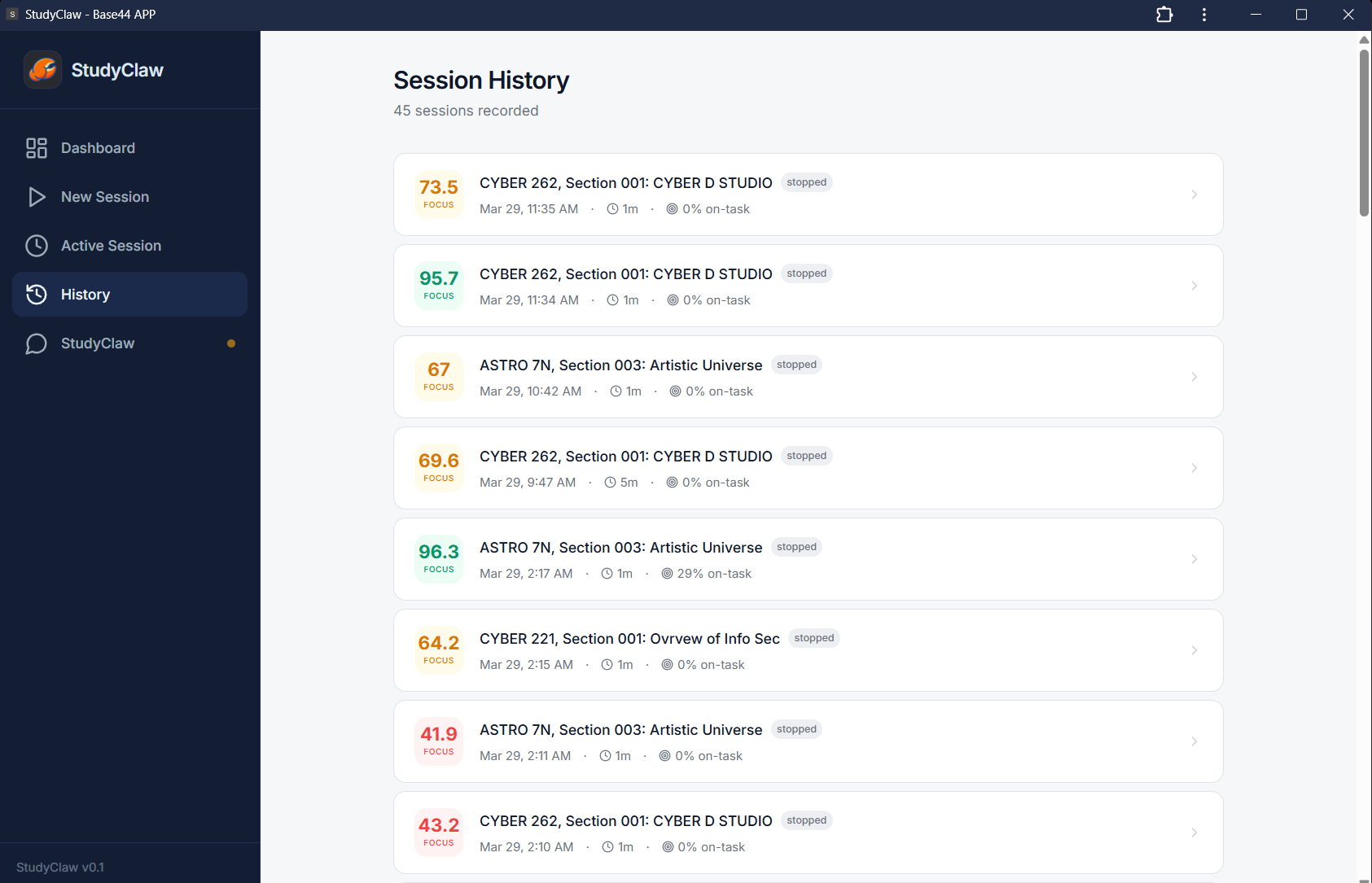
StudyClaw was inspired by a simple problem we all face as students: we spend hours “studying” but don’t actually know how focused we were. It’s easy to get distracted by switching tabs, checking random websites, or just zoning out, and most tools don’t capture that realistically. We wanted to build something that measures focus based on real behavior instead of guesses, which led us to create a system that combines browser activity and computer vision to give a clear picture of how productive a study session actually was.
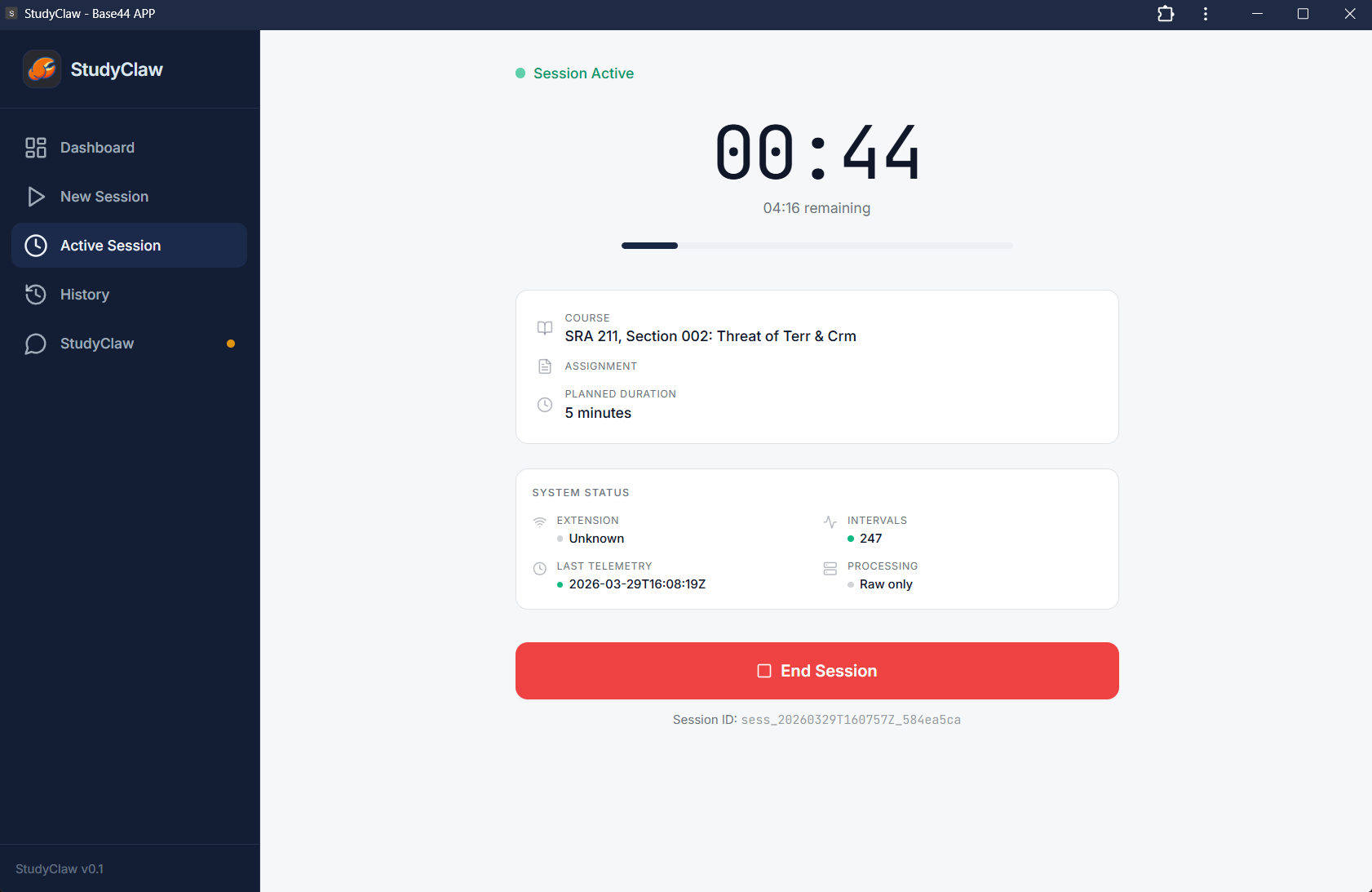
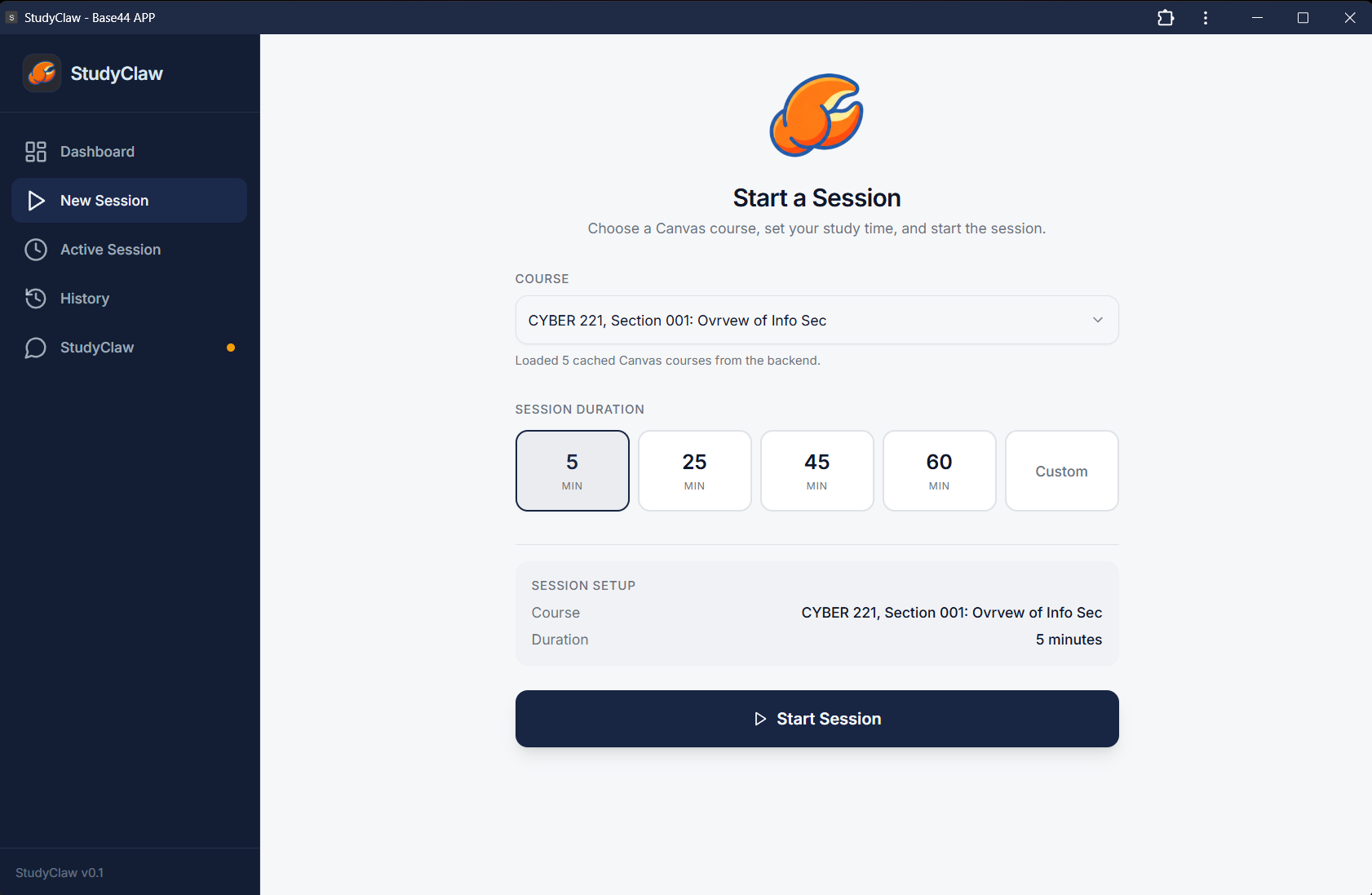
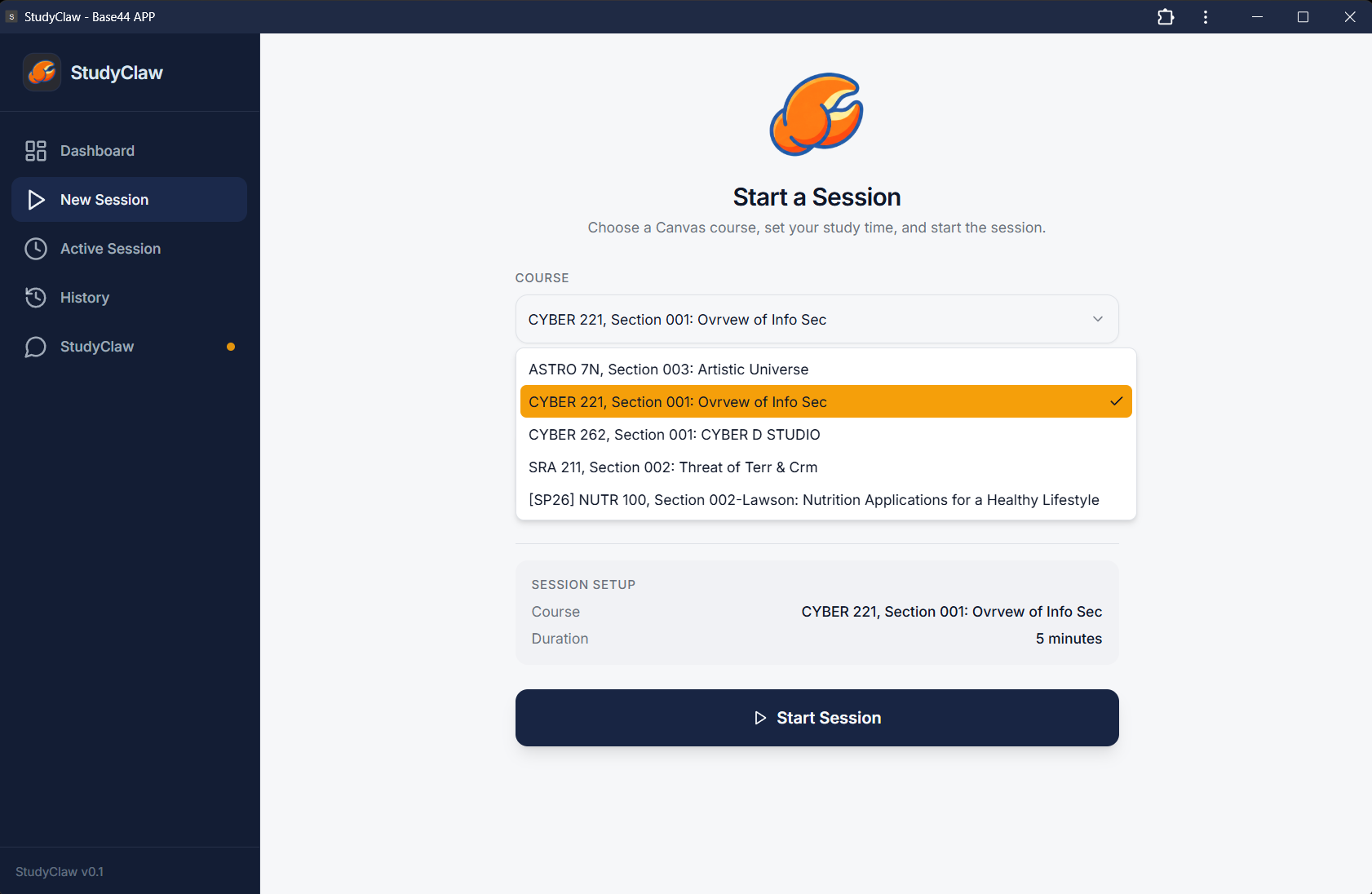
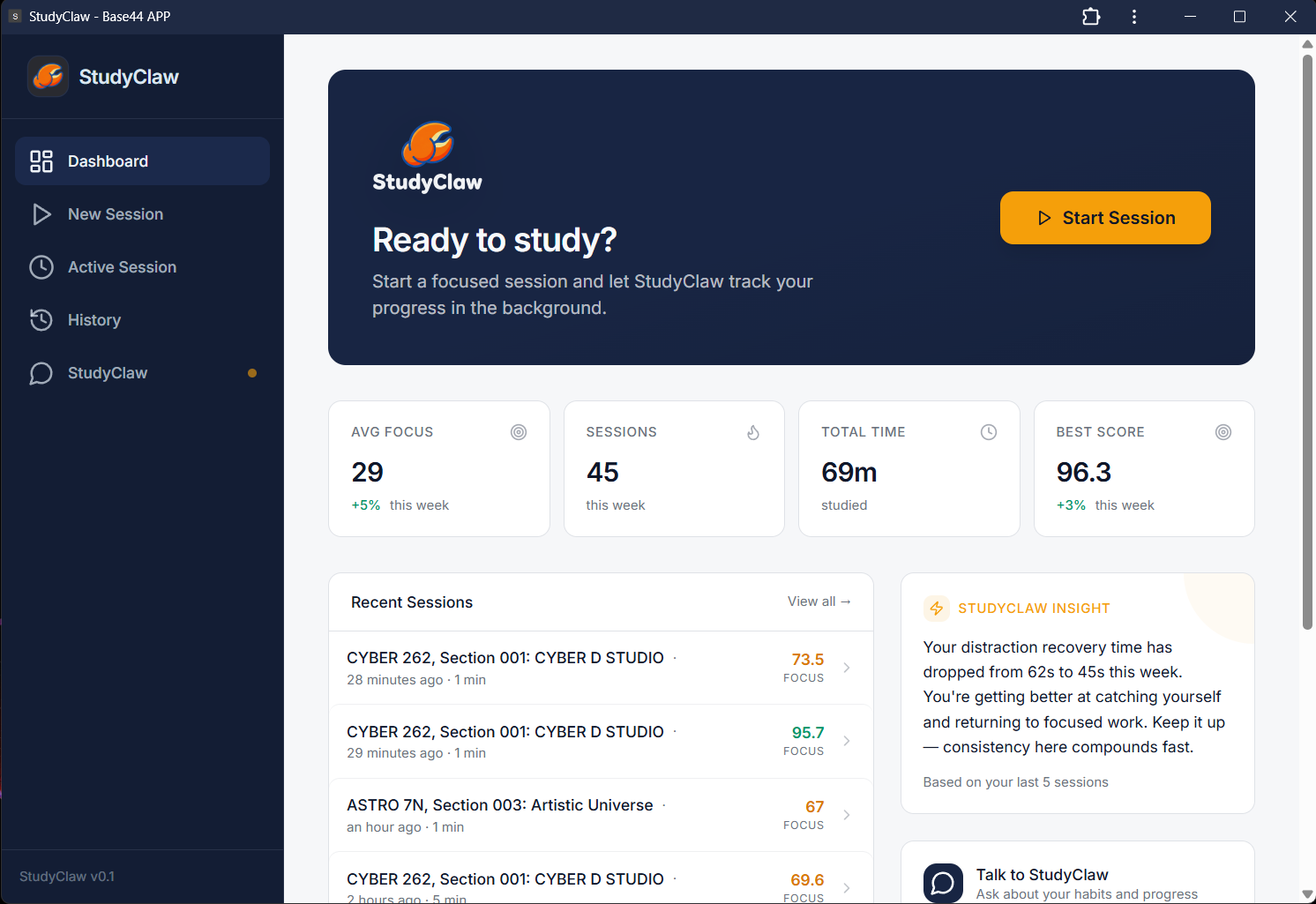
We built StudyClaw as an AI-powered study tracker that connects to Canvas through a Chrome extension, allowing users to import their classes and start structured study sessions in our Base44 app. During a session, the extension tracks browser activity such as clicks, tab switches, and off-task behavior, while the laptop camera uses computer vision to estimate attention based on whether the user is looking at the screen. A session can be ended manually or through a gesture like a double thumbs up. Once the session ends, the system generates structured data (JSON and CSV) combining both browser and camera inputs, which is then processed through OpenClaw. Users can interact with a GPT-based agent to get insights about their session, including focus percentage, distractions, most visited sites, tab switches, and a timeline of focus over time, along with visual snapshots of distracted moments.
From a technical standpoint, we designed the system as a pipeline that collects, structures, and combines data from multiple sources. Each event is timestamped so we can align browser activity with camera-based attention and analyze patterns over time. This allows us to move beyond simple tracking and actually interpret behavior. We learned that raw data alone is not useful unless it’s translated into meaningful feedback, and that combining multiple signals gives a much more accurate representation of focus than relying on just one.
One of the biggest challenges we faced was defining what “focus” actually means and synchronizing different data sources in real time. We also had to deal with noise in computer vision data, since looking away doesn’t always mean being distracted, and think carefully about privacy when using camera input. Balancing simplicity and accuracy was another challenge, as we wanted the system to be powerful but still easy to understand. Overall, StudyClaw turns study behavior into measurable data and then into actionable insights, helping students understand not just how long they studied, but how well they actually focused.
Built With
- chrome
- internal
- javascript
- languages:-python
- local-backend-cloud-services:-none-database:-sqlite-api/integrations:-canvas-api
- node.js
- studyclaw
- tailwind-css-platforms:-web
- typescript-frameworks/libraries:-react
- vite


Log in or sign up for Devpost to join the conversation.