-
-

Our logo!
-
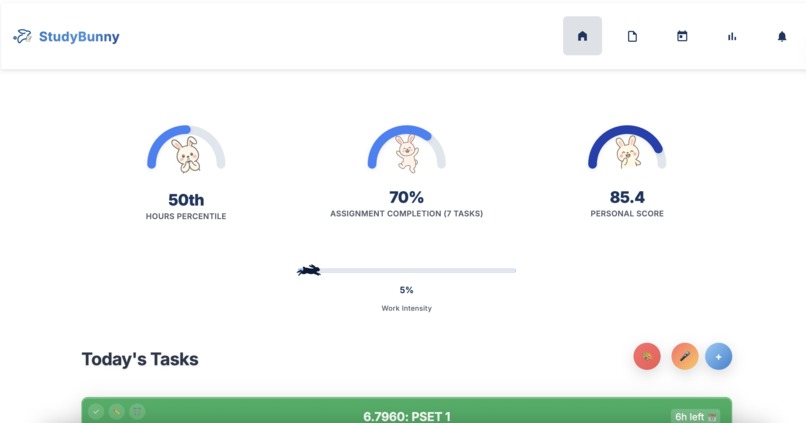
Our Task bar
-
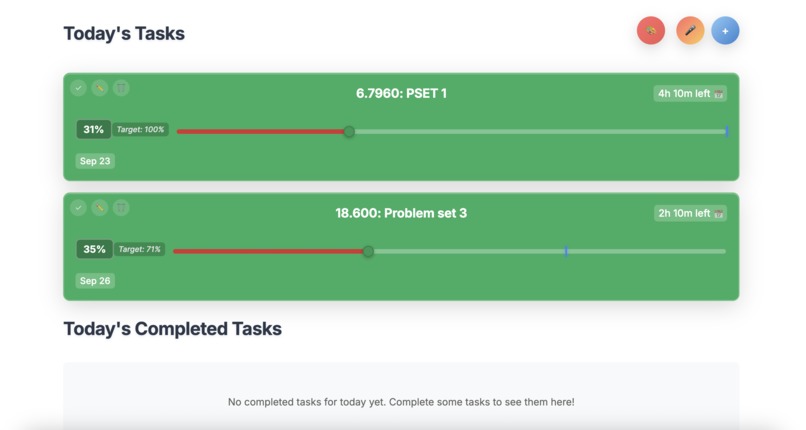
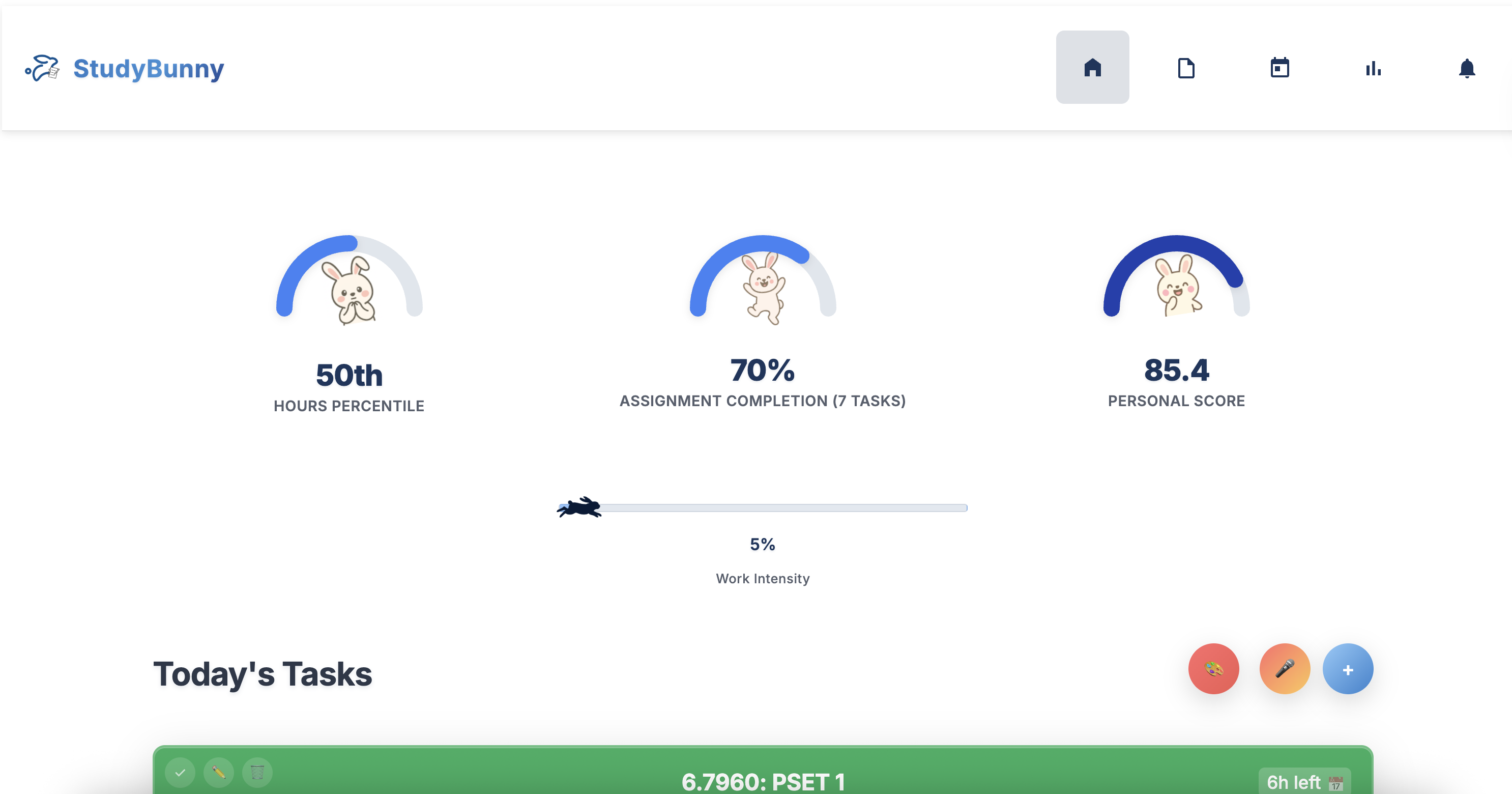
Daily Task Routine Recommendation via our algorithm
-
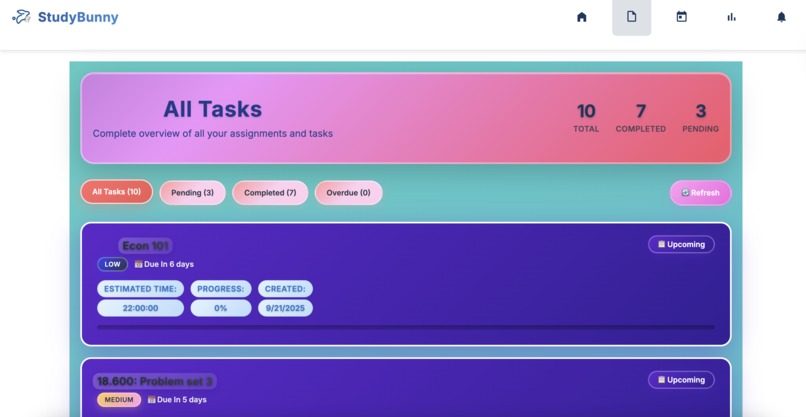
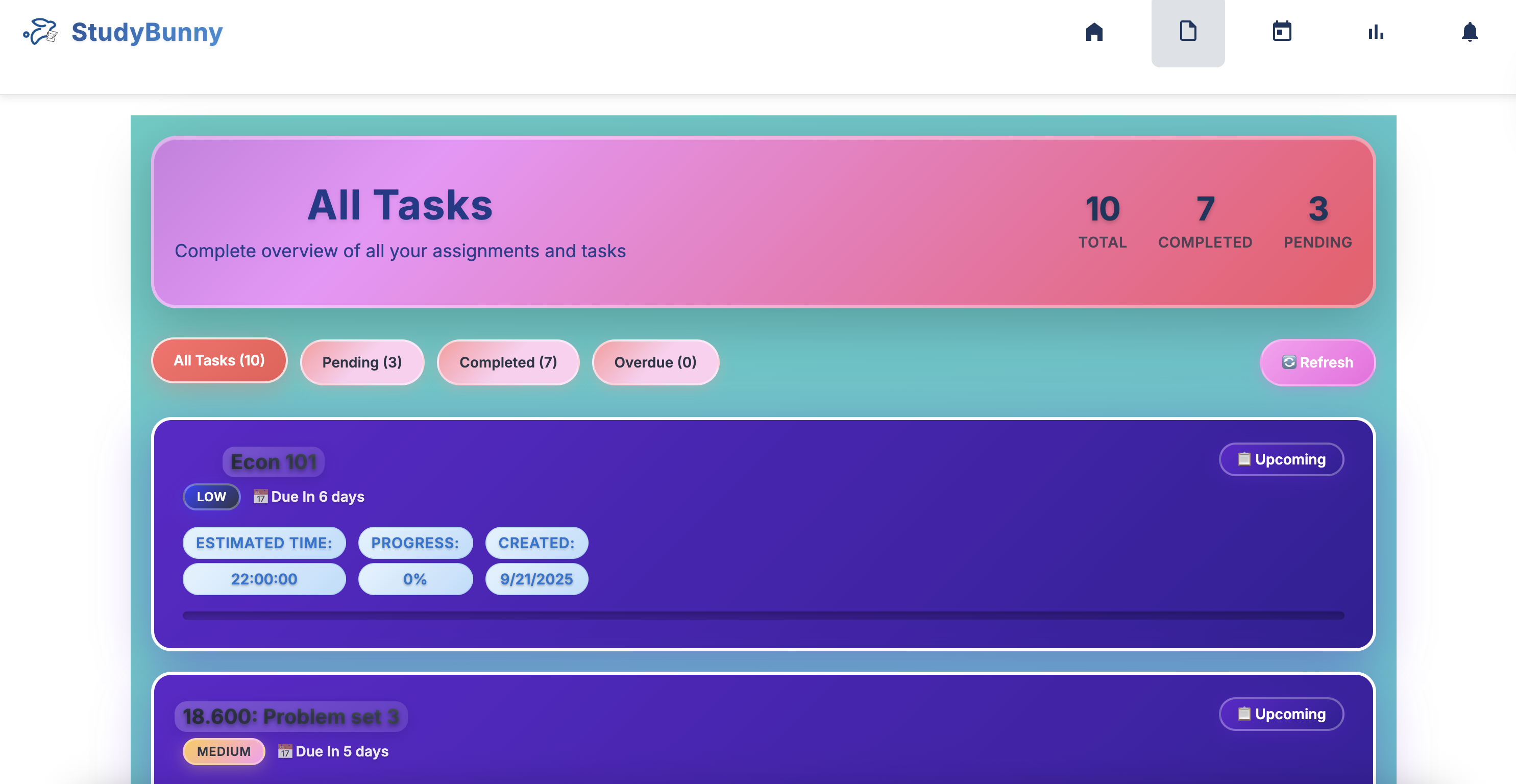
All tasks in one place!
-
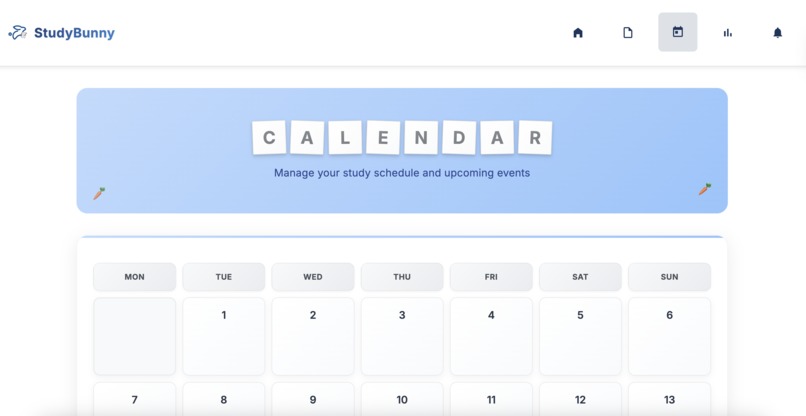
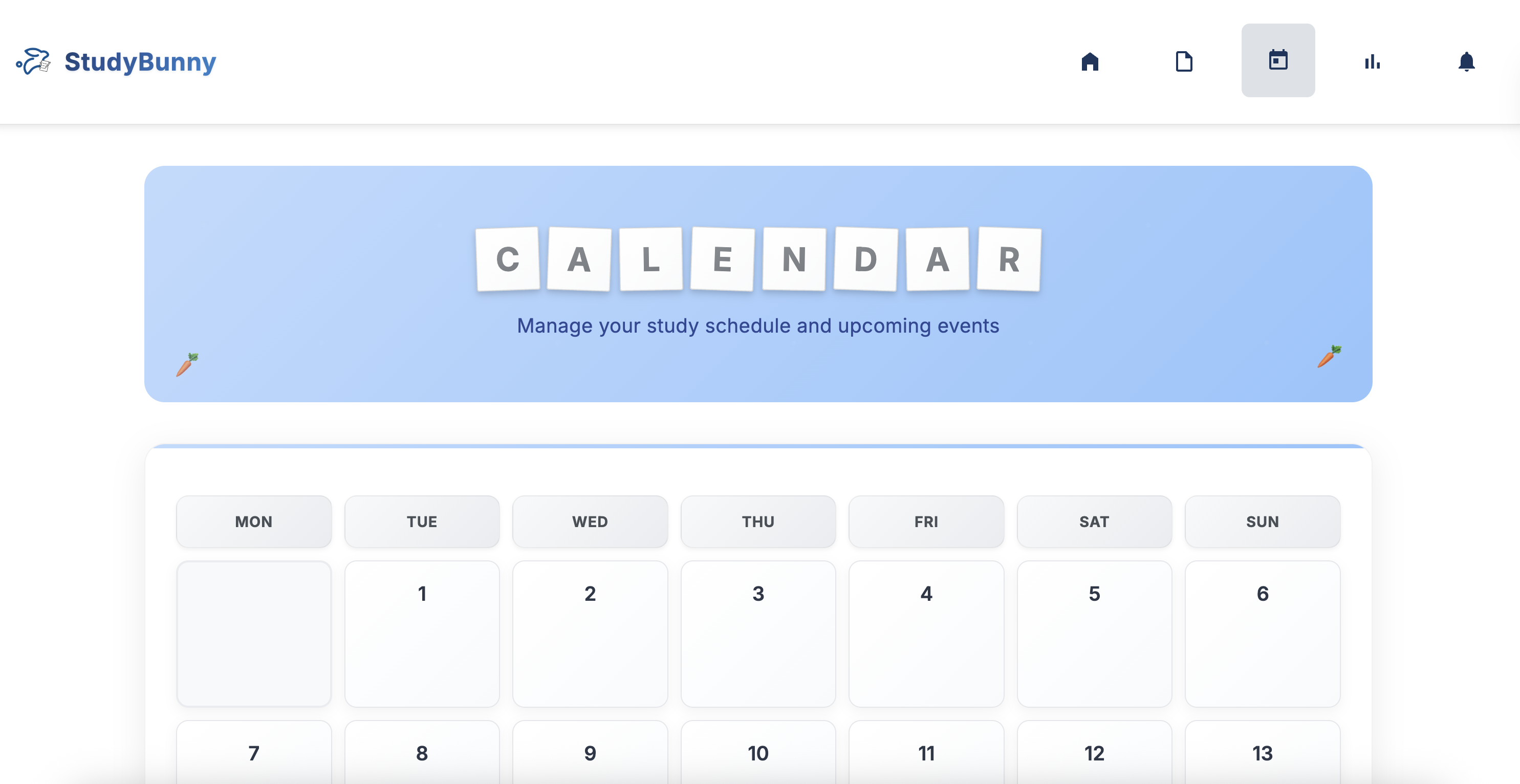
Calender!
-
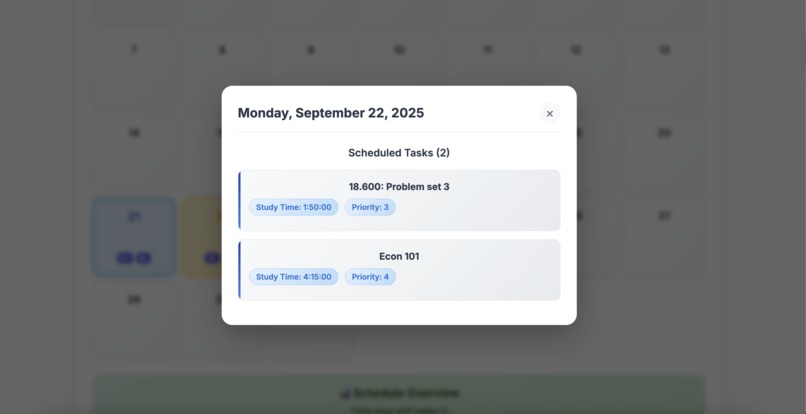
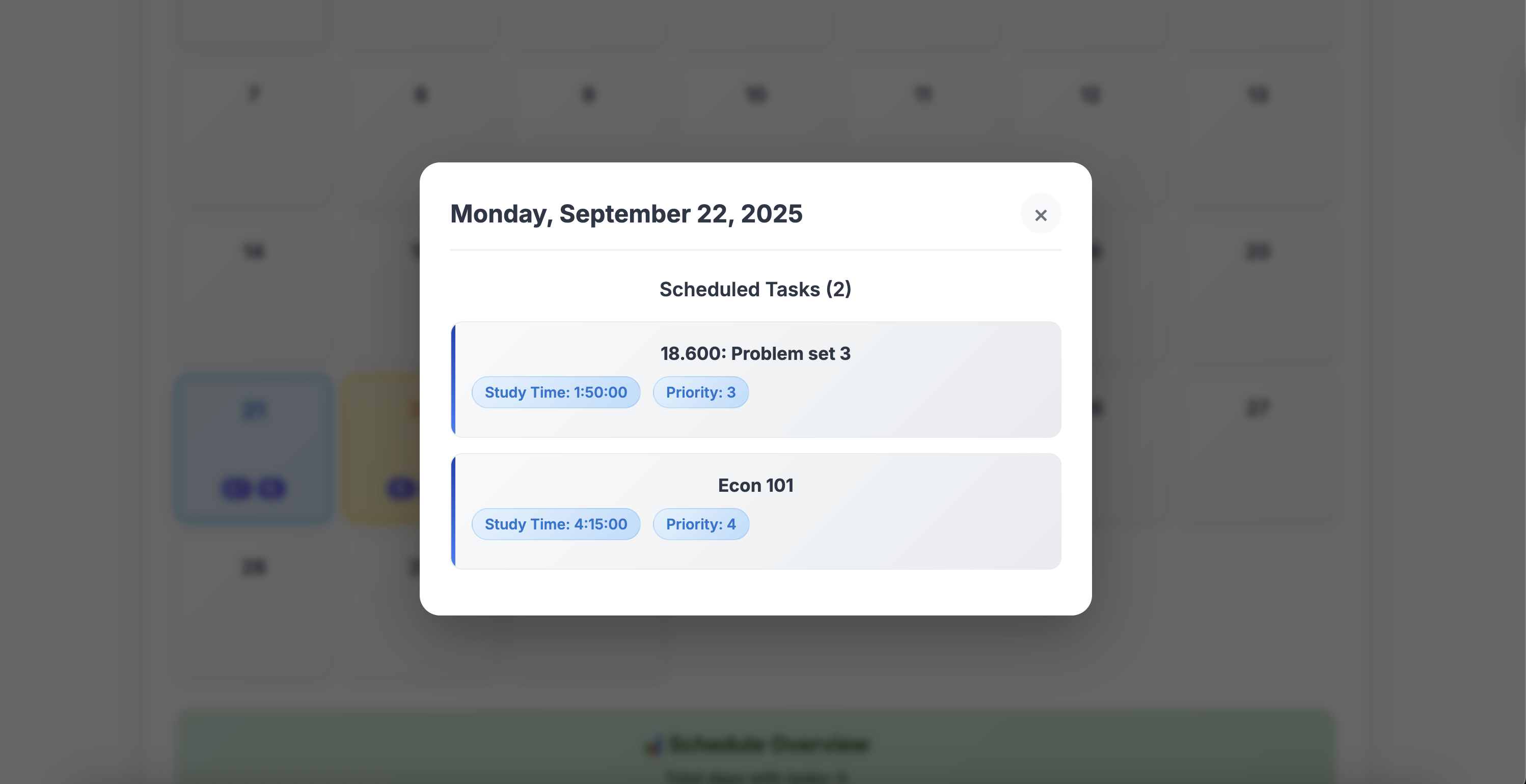
Optimized routine per day!
-
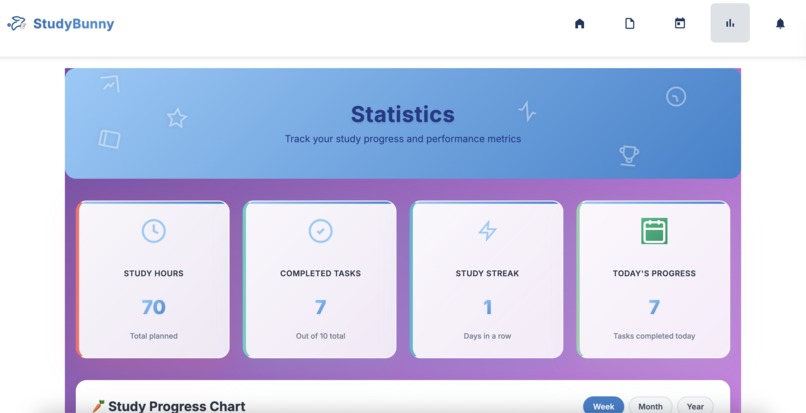
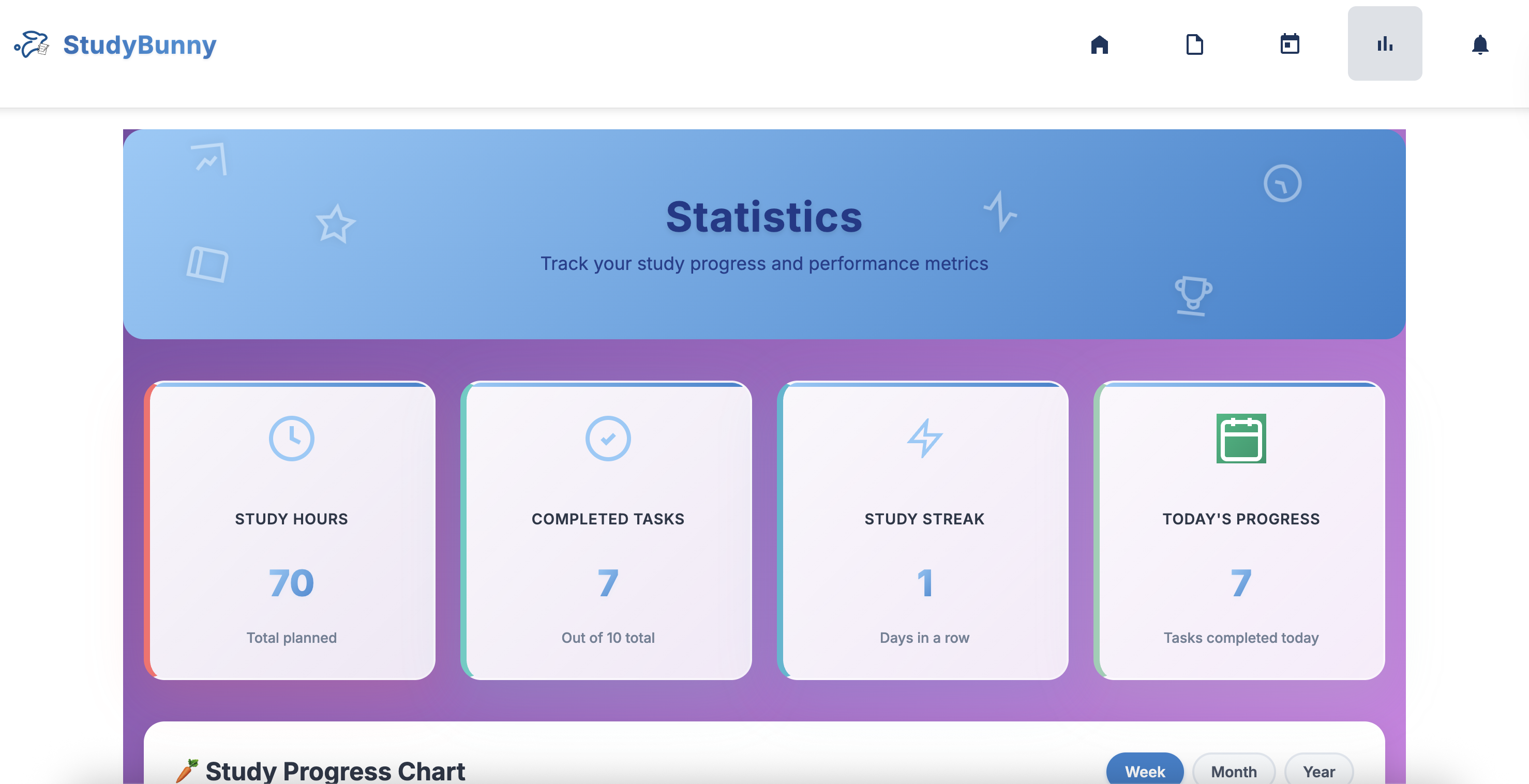
Some Statistics
-
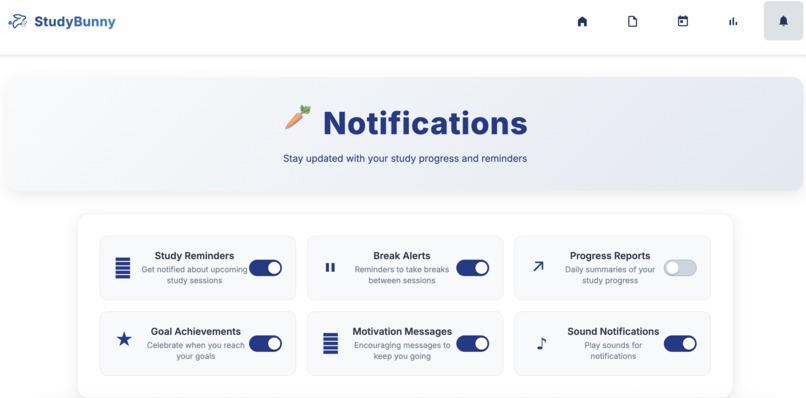
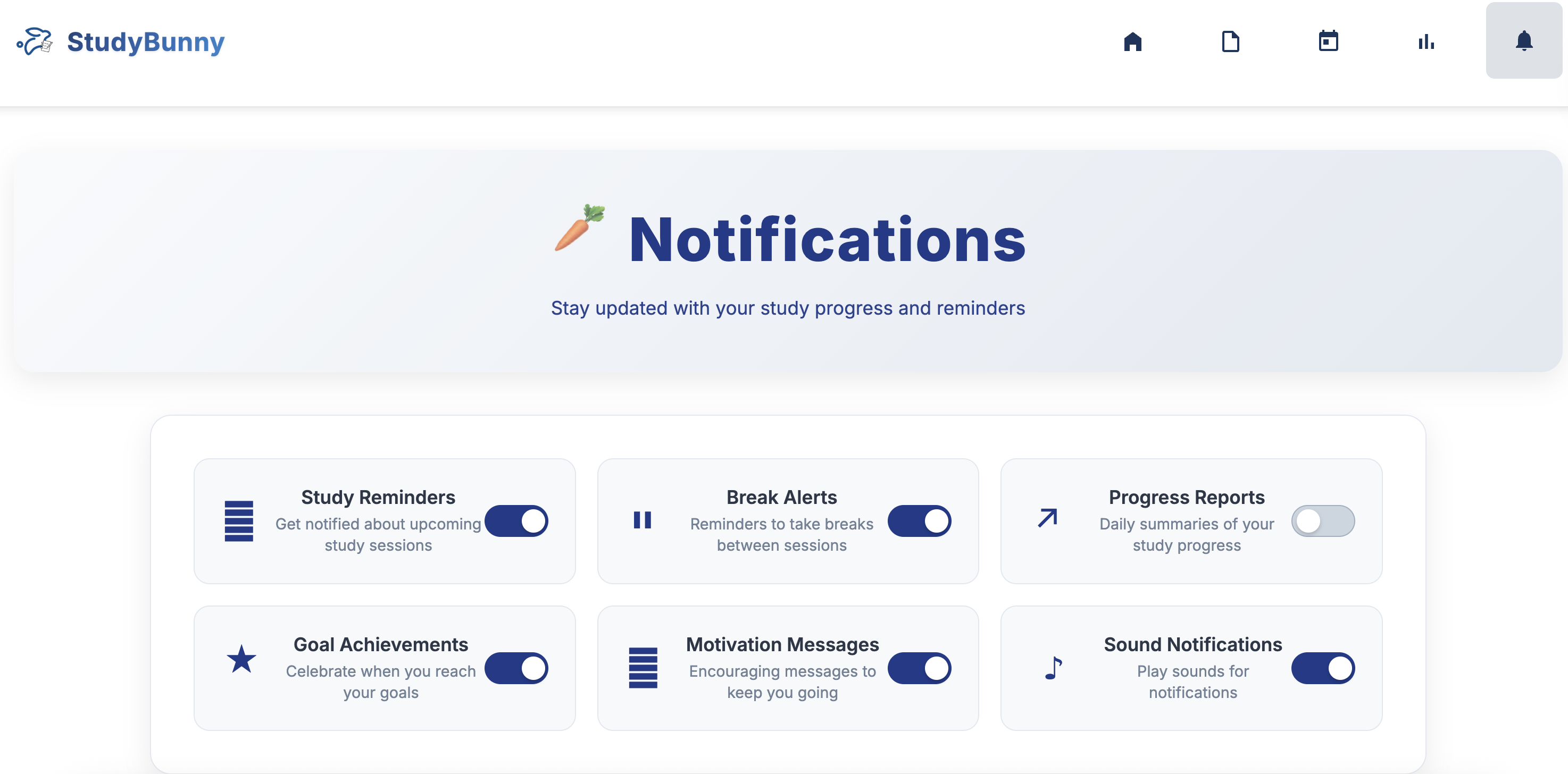
Notification page!
-
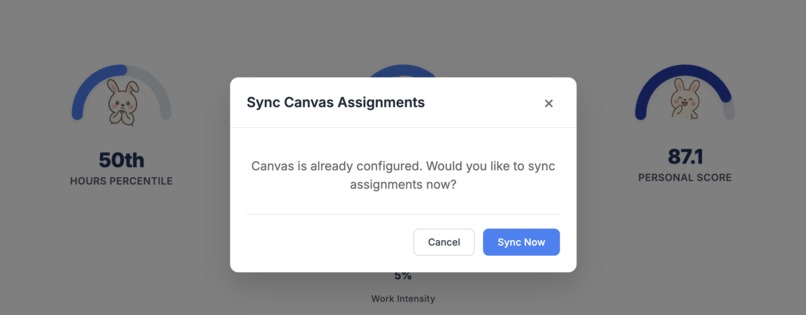
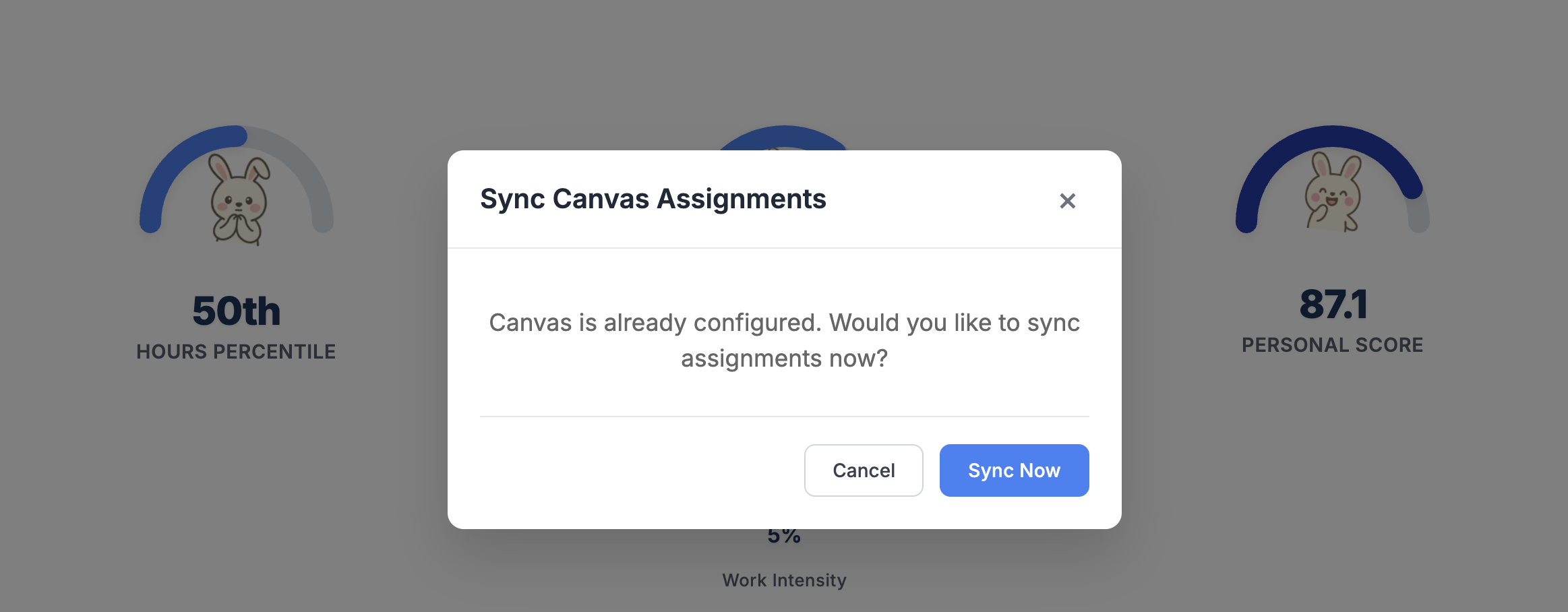
Our canvas connection!
-
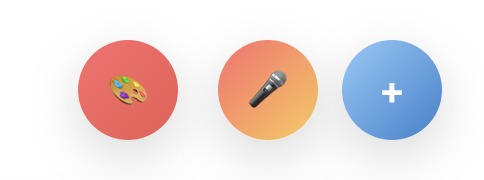
Canvas and gemini voice agent
-
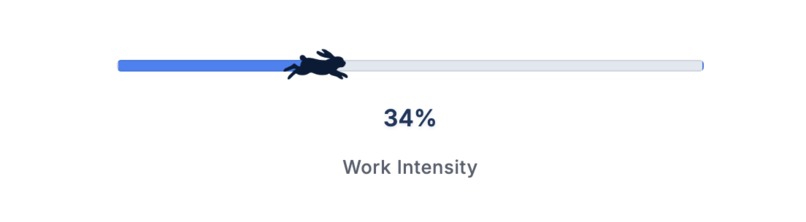
Intensity slide!



Inspiration
College students are constantly pressed for time and oftentimes struggle to prioritize the right assignments, sometimes rushing to complete everything on time. Ironically, students have to spend time scrolling through Canvas to figure out what to do before they even start working! Our website automatically looks through Canvas, adjusts the intensity level, and figures out a study plan that is customized to the user’s needs. Additionally, an AI voice assistant can take your verbal updates to your assignments (e.g. if you've completed an assignment) and automatically adjust your tasks.
Our goal is to create a smart, AI-powered tool that can benefit any student anywhere across the country, no matter where they are, so long as they use Canvas.
Our name, StudyBunny, was actually a happy accident—it was a typo of "StudyBuddy," which is far more generic! But after we realized the potential of the name, we ran with it, and have fully incorporated bunnies as our mascot and as your study buddy throughout the website!
What it does
Our project is designed to help students manage and prioritize their assignments more effectively. We built an algorithm that evaluates tasks using factors such as due dates, intensity of work required, and estimated completion time, as well as automatically view Canvas assignments and directly incorporate them into the calendar and "To-Do List". Based on these automatic inputs and the user's own personal preferences of intensity, the system generates an optimized study plan tailored to their needs. The goal is to ensure students can work more efficiently, stay organized, and maximize productivity.
How we built it
We split into two teams: two members worked on the backend while the other two focused on the frontend. The frontend was built using JavaScript, CSS, and React to create the user interface, while the backend was developed with Python and Django. Finally, we integrated both parts to form our final project.
Challenges we ran into
One of the biggest challenges was integration of frontend and backend, as well as getting our voice assistant to work properly. It was difficult to connect our individual components and ensure that the parameters aligned properly.
What we learned
We learned a lot about the high-level design of websites suited for user interfaces. Whether it was through trying to add real assignments that were due next week for us or experimenting with different UI layouts, we gained a stronger understanding of how design choices impact usability. On the backend, we also learned how important it is to structure our code cleanly so that integration with the frontend is seamless. Overall, this project taught us not only technical skills in React and Django but also collaboration skills in dividing tasks and merging our work into a cohesive final product.
What's next for StudyBunny
In the future, we have a far-reaching goal of Google Calendar into the website, allowing StudyBunny to be fully informed of the student's responsibilities so that it could do all of the homework planning for them. Instead of having to manually add assignments to a planner, StudyBunny could automatically do the integration of assignments for them! Google Calendar would also show StudyBunny where the student would have free time to work on their project.


Log in or sign up for Devpost to join the conversation.