-
-
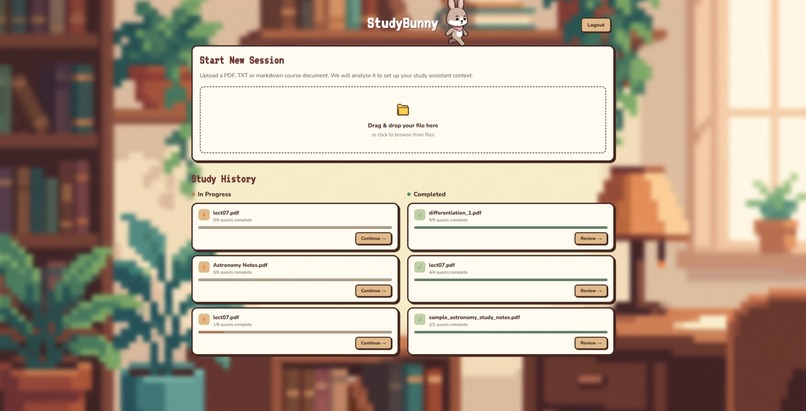
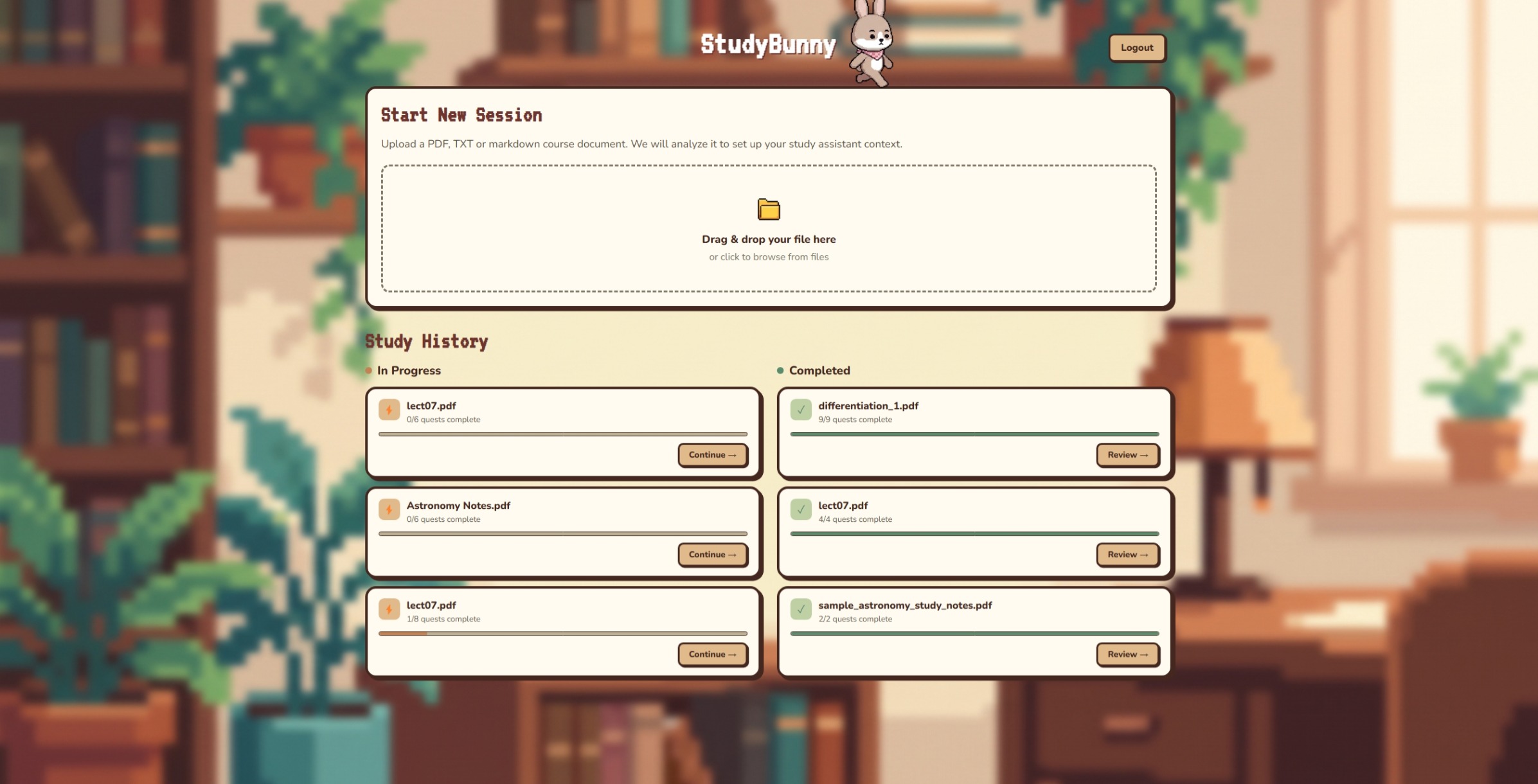
Home Page
-
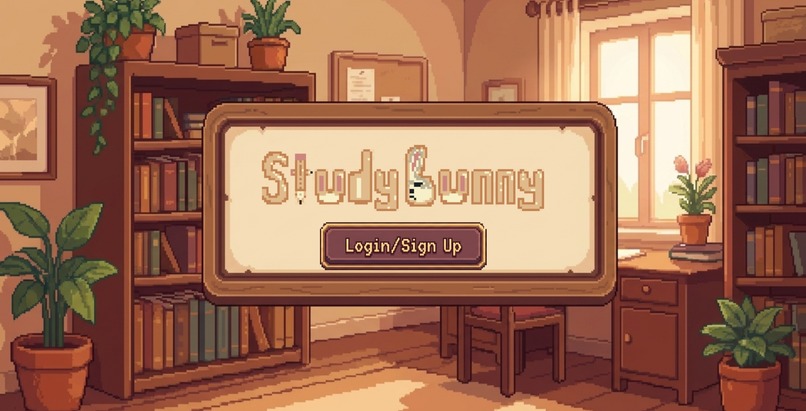
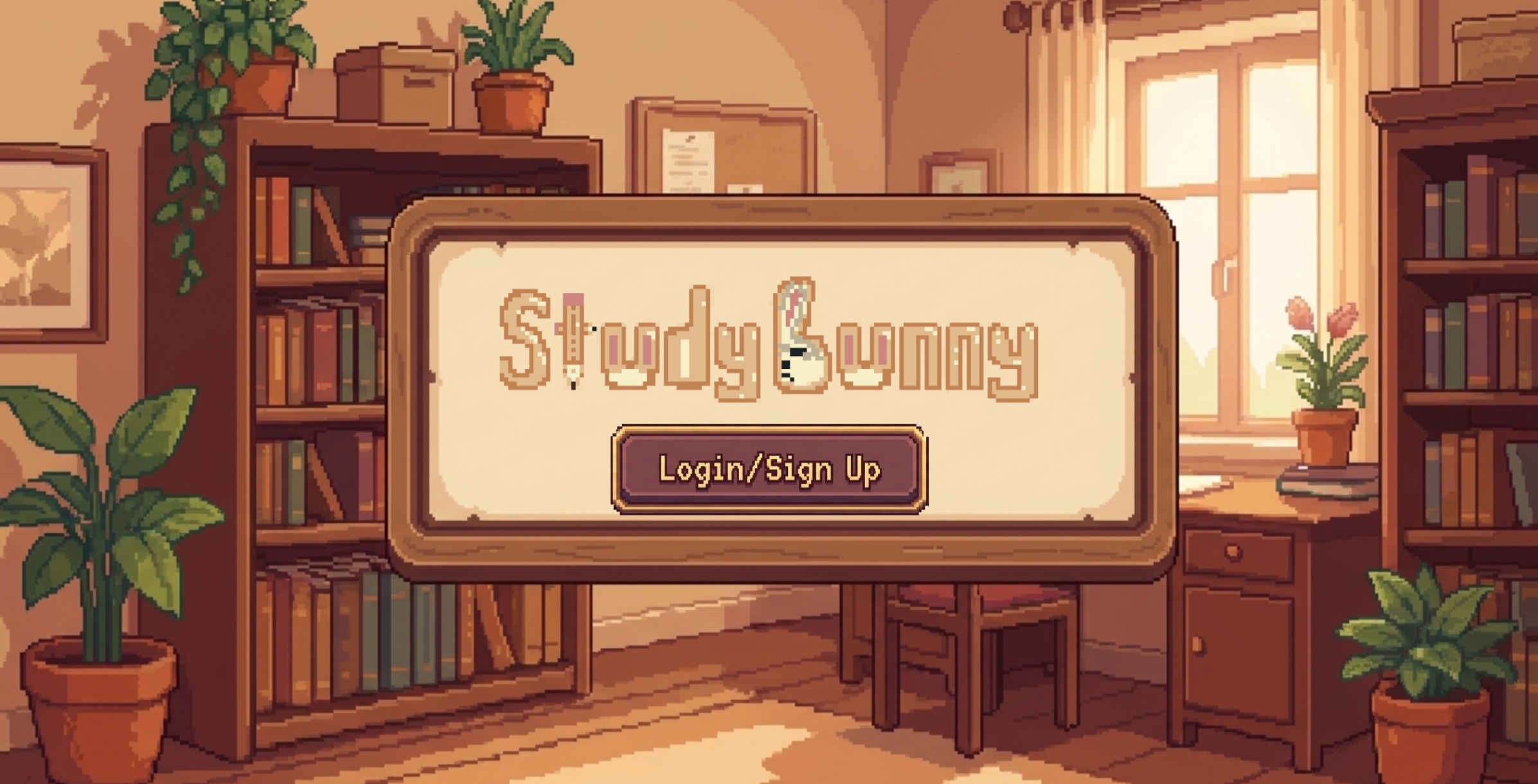
Hero Page
-
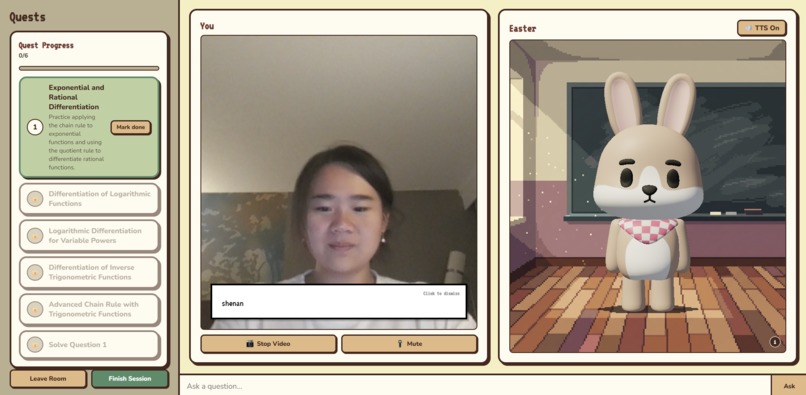
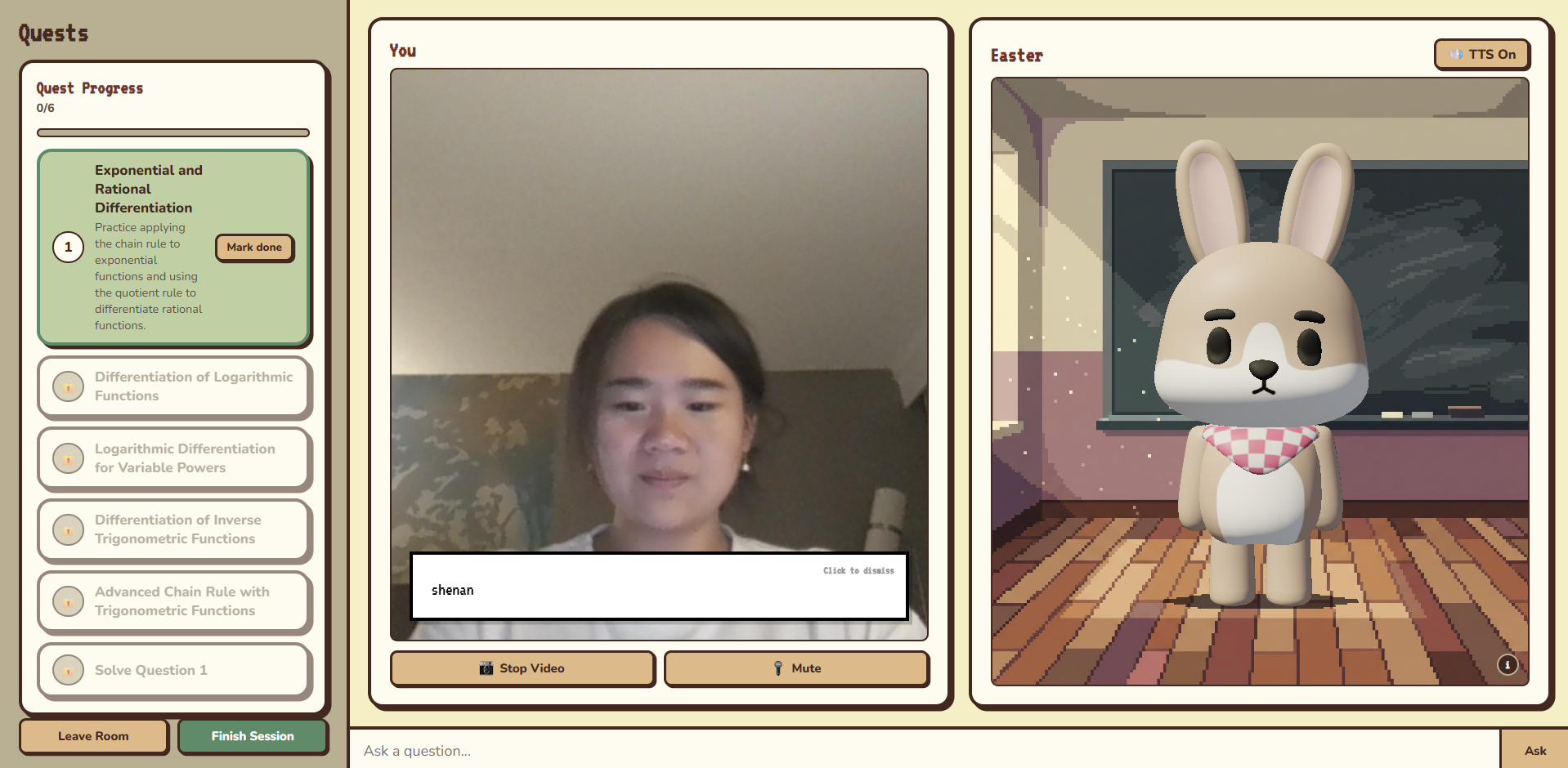
Study Room
-
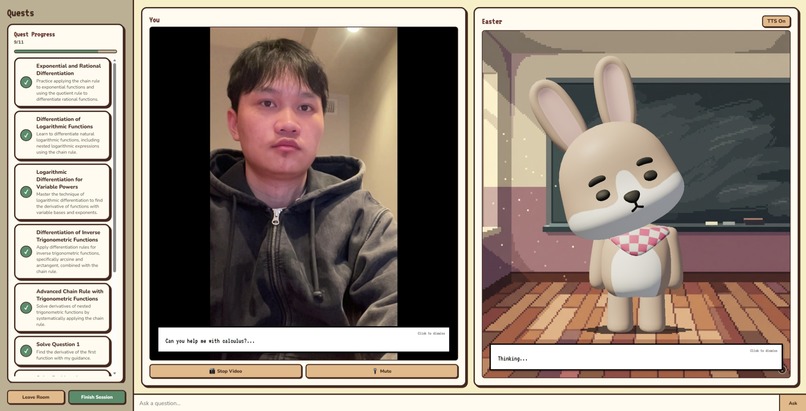
Talking
-
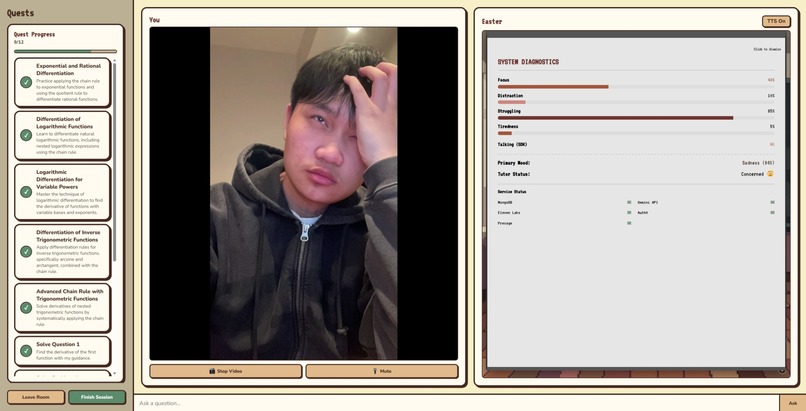
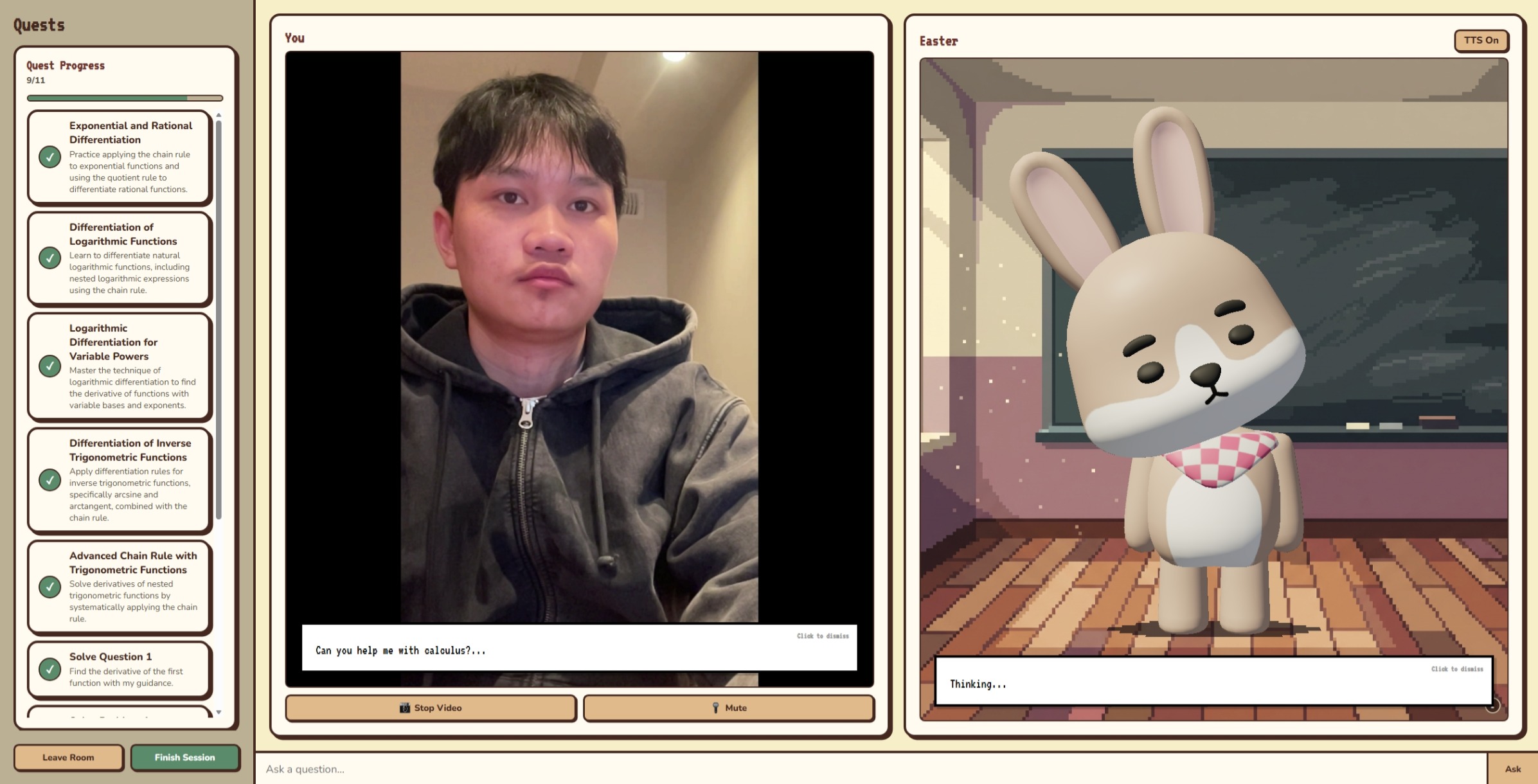
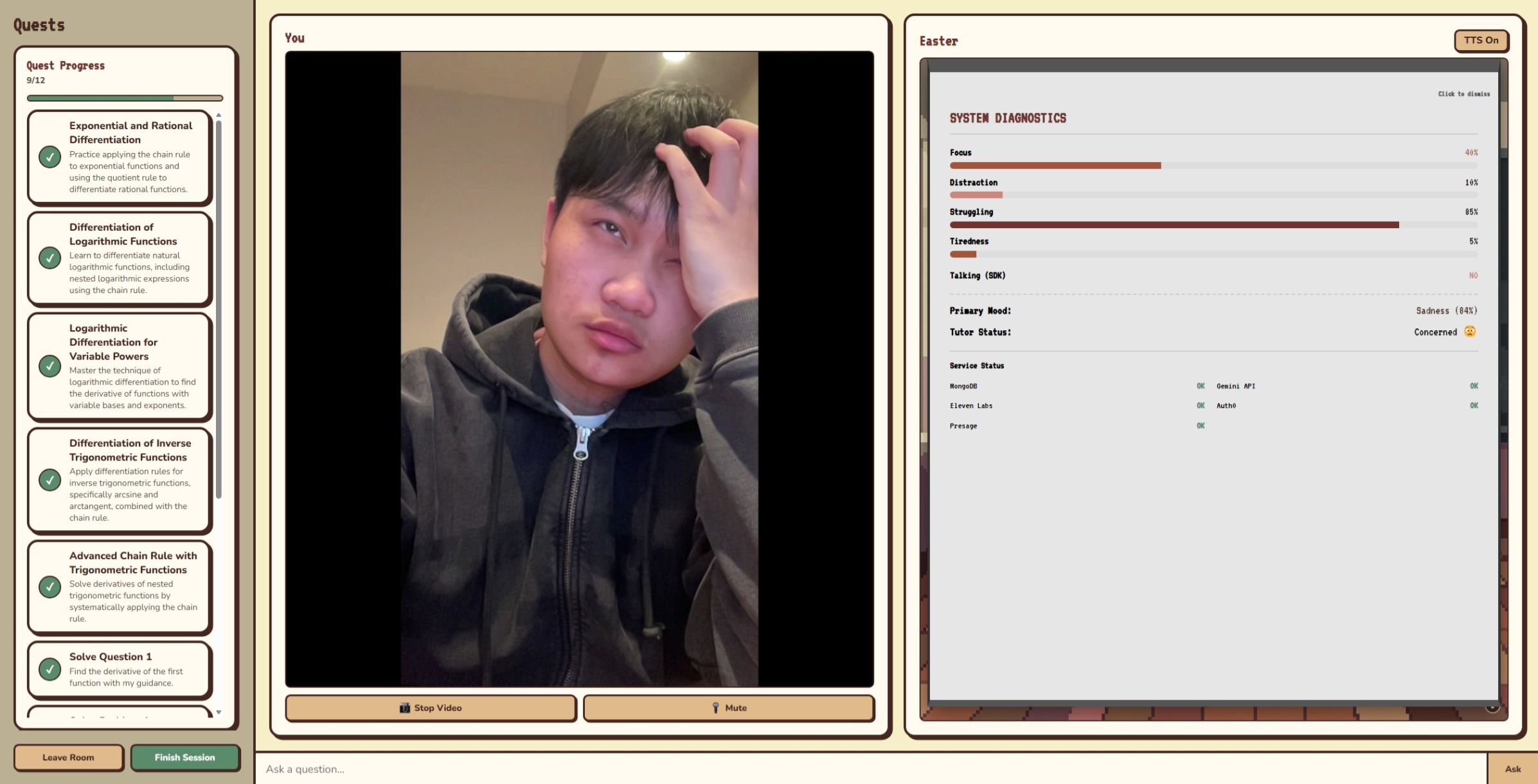
Struggling and Detection
-
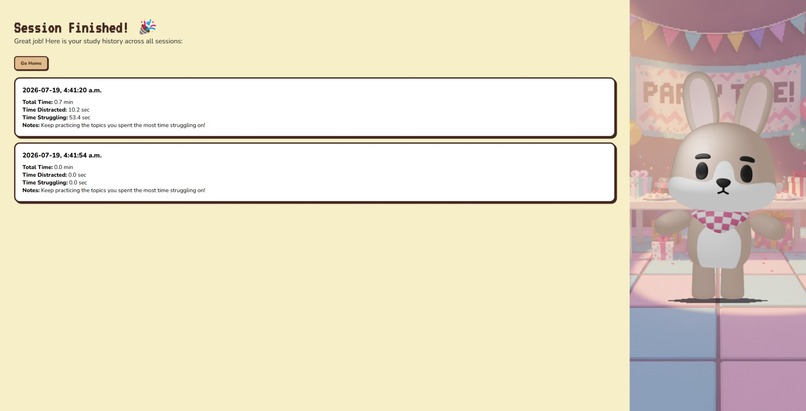
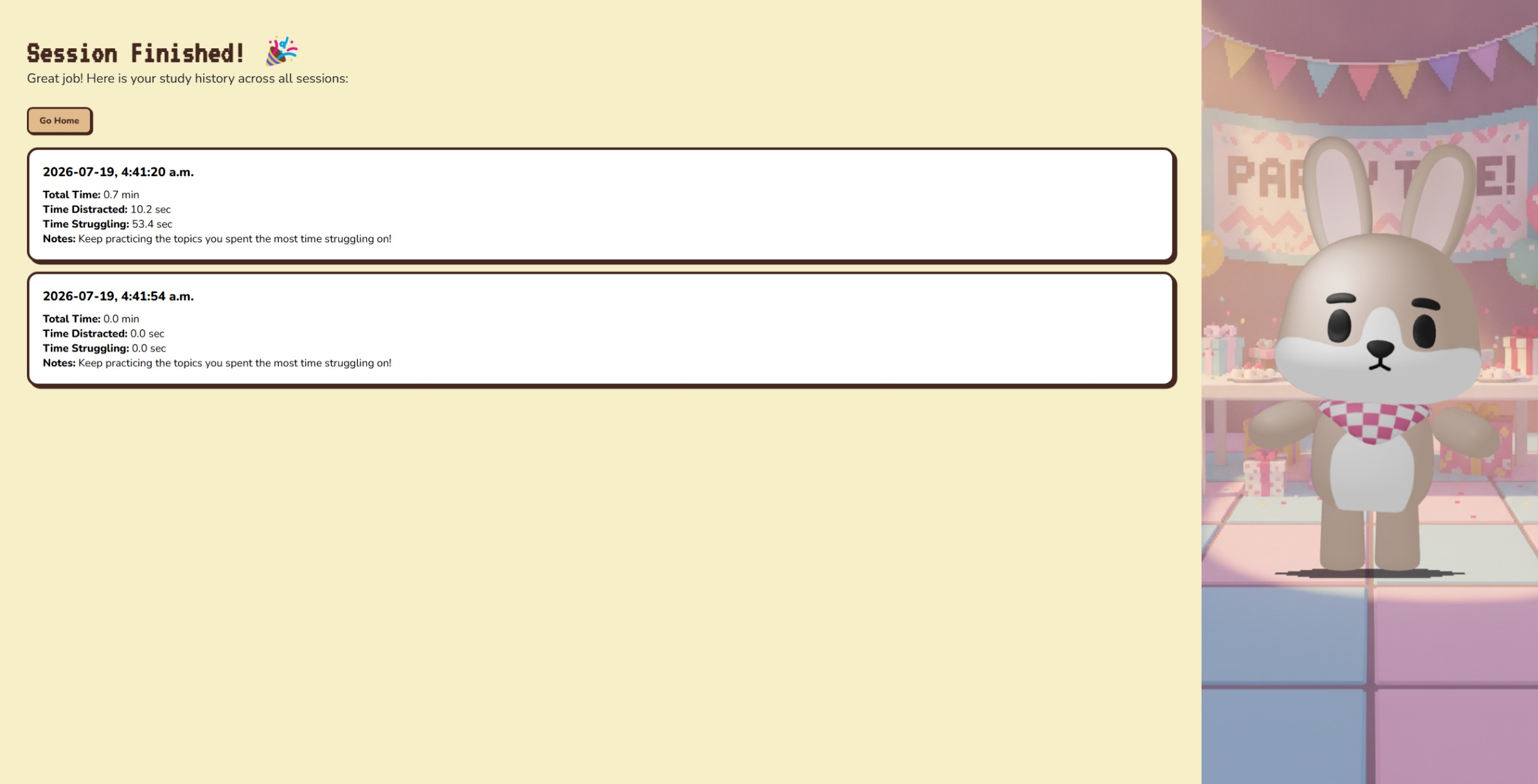
Session Complete + Dance
StudyBunny
Studying can feel isolating, especially when focus and motivation are hard to hold onto. As someone who is neurodivergent, I know how quickly a study session can turn into rereading the same page while feeling stuck.
StudyBunny came from that frustration. It is a virtual study companion that turns notes into adaptive quests, answers questions from your material, and reacts when your attention and emotions change. We wanted to make studying feel less like doing it alone and more like having someone beside you.
Inspiration
We were inspired by the way games make progress feel rewarding through small interactions and a sense of companionship. Animal Crossing showed us how comforting a virtual presence can feel, and Minecraft showed us how motivating it is to break a big goal into smaller, manageable steps.
We wanted to bring that feeling into education, especially for neurodivergent students and anyone who studies better with a little support.
What it does
StudyBunny combines AI, computer vision, voice interaction, and a 3D character into a single study experience.
- Adaptive Quest Generation: Users upload notes or documents, and StudyBunny transforms them into smaller learning quests. The LLM continuously adapts the learning path by adding, removing, or modifying quests based on the user's progress, struggles, and understanding.
- Live AI Conversation: Users can speak directly with the bunny through their microphone. Using Retrieval-Augmented Generation (RAG), StudyBunny answers questions based on uploaded materials and provides explanations in real time.
- Focus & Emotion Tracking: Using webcam input, StudyBunny analyzes attention patterns and emotional cues to detect when a user may be distracted, frustrated, or struggling.
- Proactive Support: Instead of waiting for the user to ask for help, the bunny reacts through expressions, animations, voice, and encouragement based on the user's current state.
- Quest Progress & Cloud Storage: Completed quests, active learning paths, and session history are saved to the cloud, allowing users to continue their progress across sessions.
- Detailed Learning Summaries: After completing their quests, users receive a detailed breakdown of their session, including how long they studied, where they struggled, moments where focus dropped, and areas they should continue improving.
How we built it
We built StudyBunny using:
- Frontend: React, Vite, and TypeScript
- 3D Character: React Three Fiber
- Backend: FastAPI with Python
- RAG Pipeline: Document parsing, chunking, embeddings, ChromaDB, and Google Gemini
- Computer Vision: Presage SmartSpectra SDK for focus and emotion analysis
- Voice: OpenAI Whisper for speech-to-text and ElevenLabs for the bunny’s voice
- Authentication & Cloud Storage: Auth0 and MongoDB Atlas for user accounts, quests, progress, and session data
Challenges we faced
The hardest part was making everything feel connected.
The bunny took a lot of work to make feel alive, especially with rigging and animation. We spent a significant amount of time refining movements, expressions, and timing because small details changed whether the bunny felt like a real companion or just another animated model.
We also had to build a Node.js wrapper for Presage SmartSpectra so it could communicate with our Python backend. Our first version was unreliable and inconsistent, which made real-time focus and emotion tracking difficult. After multiple iterations, we rebuilt the communication layer into a stable and dependable service.
The RAG pipeline was another major challenge. Retrieving information from documents was only the beginning. We experimented with chunking strategies, embeddings, retrieval methods, and prompts before the bunny could consistently provide useful answers grounded in the user's own material.
What we are proud of
We are proud of how personal the final experience feels.
The pixel-art inspired UI, custom iconography, and overall flow were designed to feel welcoming instead of overwhelming. We carefully shaped the experience from uploading materials, receiving adaptive quests, interacting with the bunny, and reviewing progress so studying felt like a journey rather than a checklist.
We are also proud that we turned difficult technical problems into reliable features. Transforming an unstable SDK integration into a dependable system allowed real-time focus tracking and emotional feedback to become possible.
Most of all, we are proud of the bunny itself. The animation, voice, and personality came together in a way that made it feel less like a chatbot and more like a companion. Seeing the bunny react naturally, encourage users, and feel alive was the moment our original idea became real.
What we learned
This project taught us that building something meaningful takes more than making features work.
We learned how to connect multiple AI services, build a RAG pipeline, bridge Python and Node.js, process real-time computer vision data, manage cloud user data, and bring a 3D character into a web application.
We also learned that reliability and user experience matter just as much as the idea itself. The details users notice are often the hardest parts to build.
What’s next
We want to continue making StudyBunny a more supportive and inclusive learning companion.
Future improvements include multiplayer study rooms, more personalization options, and a deeper progression system with unlockable customization and achievements. We also want to improve accessibility for different learning needs and continue making our computer vision system more reliable across diverse users.
StudyBunny started from a personal frustration with studying, but we hope it can help anyone who has ever felt overwhelmed trying to learn alone.
Built With
- elevenlabs
- gemini
- mongodb
- presage
- python
- react
- typescript

Log in or sign up for Devpost to join the conversation.