Inspiration
Studying today is overwhelming. Students collect PDFs, messy class notes, YouTube tutorials, Notion pages, screenshots, and random web articles, but turning all of this raw information into clean, structured, digestible study material is time-consuming. We wanted a tool that instantly transforms any learning content into slides, quizzes, flashcards, and summaries, so students can focus on learning, rather than formatting. That idea became StudyBuddy.
What it does
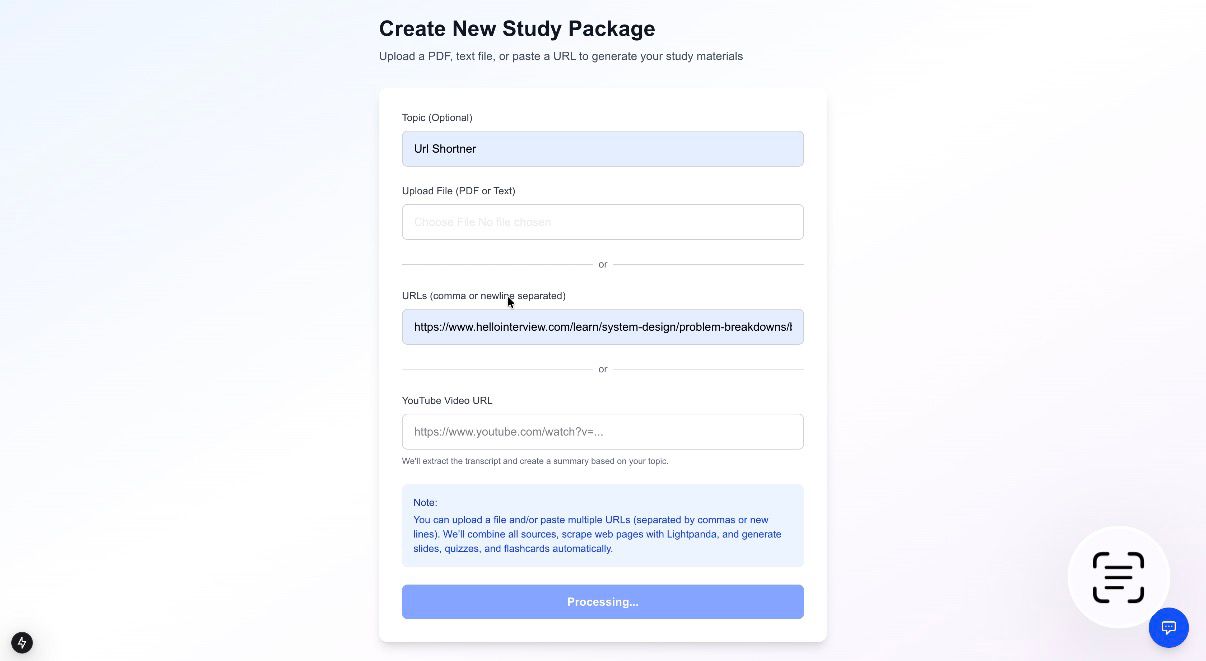
StudyBuddy converts any study input, PDFs, YouTube links, Notion pages, URLs, or raw text into a complete AI-powered learning package: 📊 Auto-generated slide deck with clean layouts and AI visuals ❓ Interactive quizzes with explanations 🃏 Flashcards for revision 📚 Personalized learning using Redis (your history influences difficulty & selection) 🔗 Notion Integration (via MCP) saves organized content directly into your Notion workspace 🎥 YouTube transcript support extracts content from long lectures instantly 💬 Context-aware chatbot that answers questions using your uploaded material
StudyBuddy turns messy notes + long videos into structured learning instantly.
How we built it
StudyBuddy is built as a multi-agent AI pipeline that deeply integrates Postman MCP, Notion, Sanity, Redis, and LLM reasoning. Every part of the system is powered by a sponsor tool.
1) Sanity CMS - Content Operating System
Sanity acts as the content backbone of StudyBuddy, storing all generated learning materials in a clean, structured, and scalable way.
✅ What we store in Sanity Sanity houses every part of the learning package: Slides, Title, Bullet points, AI-generated diagrams, Associated images, Flashcards, Front (question or concept), Back (answer or explanation), Quizzes, Multiple-choice questions, Options, Correct answer, index, Explanations, Study summaries, Topic summaries, Chapter breakdowns, Assets, Images(generated diagrams, visual examples), Uploaded files, Reference media
🚀 Why Sanity? Sanity gives us: Flexible schemas perfect for representing slides, quizzes, and flashcards Automatic hosting for images & files Real-time querying for fast retrieval Scalable structure for multi-format learning content Portable APIs that work seamlessly with our AI agents
🔍 Sanity’s Role in StudyBuddy
Sanity becomes the long-term memory of the system: Raw notes → AI → structured content → stored in Sanity → synced to Notion via MCPTotal. It ensures that everything StudyBuddy generates is: Organized, Versioned, Searchable, Reusable across, sessions
2) Redis RAG, Personalization & Chat Memory Engine
Redis powers three core systems inside StudyBuddy: retrieval-augmented generation (RAG), personalized learning analytics, and our context-aware chat assistant. Every piece of study material whether it comes from PDFs, YouTube transcripts, Notion pages, or URLs, is chunked, embedded, and stored in Redis. When the AI agents generate slides, quizzes, or flashcards, they fetch the most relevant embedding matches from Redis to ensure the output stays grounded in the original content. Beyond RAG, Redis also tracks the learner’s progress: quiz accuracy, flashcard difficulty, and which topics they struggle with. This allows the system to personalize future learning packages based on what the user truly needs to improve.
Redis also powers our AI chat assistant, which lets users ask questions about their notes, videos, or study packages. We store message history, topic context, and retrieved embeddings in Redis so the chatbot can maintain continuity across the conversation and deliver accurate, context-aware answers. With Redis acting as the memory layer for both learning progress and conversational context, StudyBuddy becomes an adaptive, intelligent, and deeply personalized study companion.
3) MCPTotal Core Integration Layer
MCPTotal serves as the central integration layer that connects StudyBuddy’s AI engine with external information sources, especially Notion. It provides a streamlined Model Context Protocol (MCP) interface that allows our backend to fetch, process, and write data without dealing with complex API authentication or manual token handling. MCPTotal essentially becomes the “connector brain” of our system enabling StudyBuddy to pull raw, unstructured study material and send back clean, AI-generated learning packages in real time. With MCPTotal, we transformed our multi-agent pipeline into a fully connected, intelligent workspace capable of integrating seamlessly with the user’s existing knowledge environment.
🔹 Notion Integration via MCPTotal Using MCPTotal’s Notion MCP server, StudyBuddy can retrieve full Notion pages including raw blocks, headings, lists, and embedded content and use them as input for slide, quiz, and flashcard generation. Our AI agents read the user’s messy or unorganized notes directly from Notion, process them through RAG + LLM pipelines, and then push back the final structured learning package (slides, quizzes, flashcards, summaries) into the user’s Notion workspace. This creates a loop where the user’s Notion becomes both the source and the storage vault for all learning materials turning Notion into a dynamic, AI-powered study hub.
🔹 YouTube Transcript Extraction Integration Alongside Notion, MCPTotal also supports our ingestion layer by handling URL-based content retrieval. When the user submits a YouTube link, our pipeline fetches the full transcript of the video, cleans and chunks the text, stores embeddings in Redis, and uses them to generate accurate slides, quizzes, and flashcards grounded in the video content. This makes StudyBuddy ideal for long video lectures, tutorials, or educational channels instantly converting them into structured, high-quality study material without requiring the user to manually take notes.
Challenges we ran into
Notion MCP integration: Understanding how MCP tools interact with Notion pages required debugging through MCPTotal Embedding storage & retrieval speed when using Redis for large documents Fragmented YouTube transcripts are causing inconsistent chunk boundaries Time constraints, balancing a multi-agent architecture within the hackathon time
Accomplishments that we're proud of
Built a full multi-agent learning pipeline end-to-end Successfully integrated Notion + MCPTotal MCP into our app Created beautifully structured auto-generated slides & quizzes Designed a clean UI that feels like a real product Built a scalable and modular architecture for future growth Integrated YouTube → Transcript → Learning package flow Achieved usable personalization with Redis RAG
What we learned
How powerful MCP workflows become when paired with Notion How to integrate multiple sponsor tools into a single ecosystem Efficient prompt engineering for multi-agent systems Structuring long PDFs into meaningful chunks for RAG Building real-time pipelines between front-end, backend, Sanity, Redis, and MCPTotal How to turn raw content into digestible study material using AI
What's next for StudyBuddy
Adding full audio narration for each slide Export to PowerPoint, Quizlet, and Anki A mobile app version for on-the-go studying Support for GPT-based tutoring mode Multi-user workspaces + collaborative studying Chrome extension → “Convert this page to slides” LMS integrations (Canvas, Moodle, Blackboard)


Log in or sign up for Devpost to join the conversation.