-
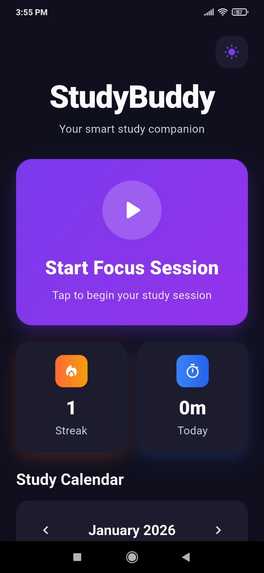
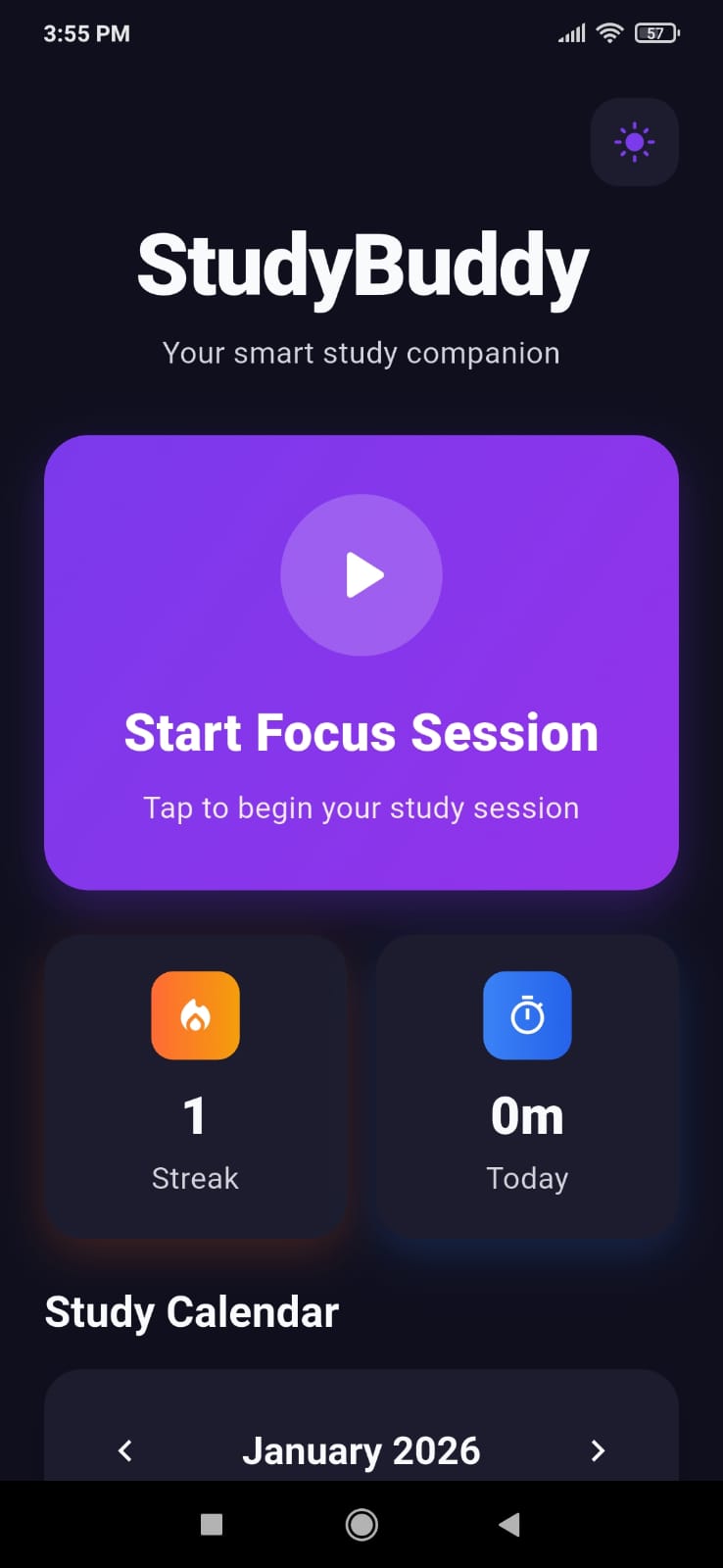
Dark mode of the Applicatioon
-
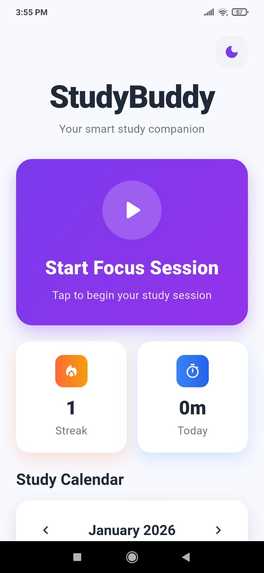
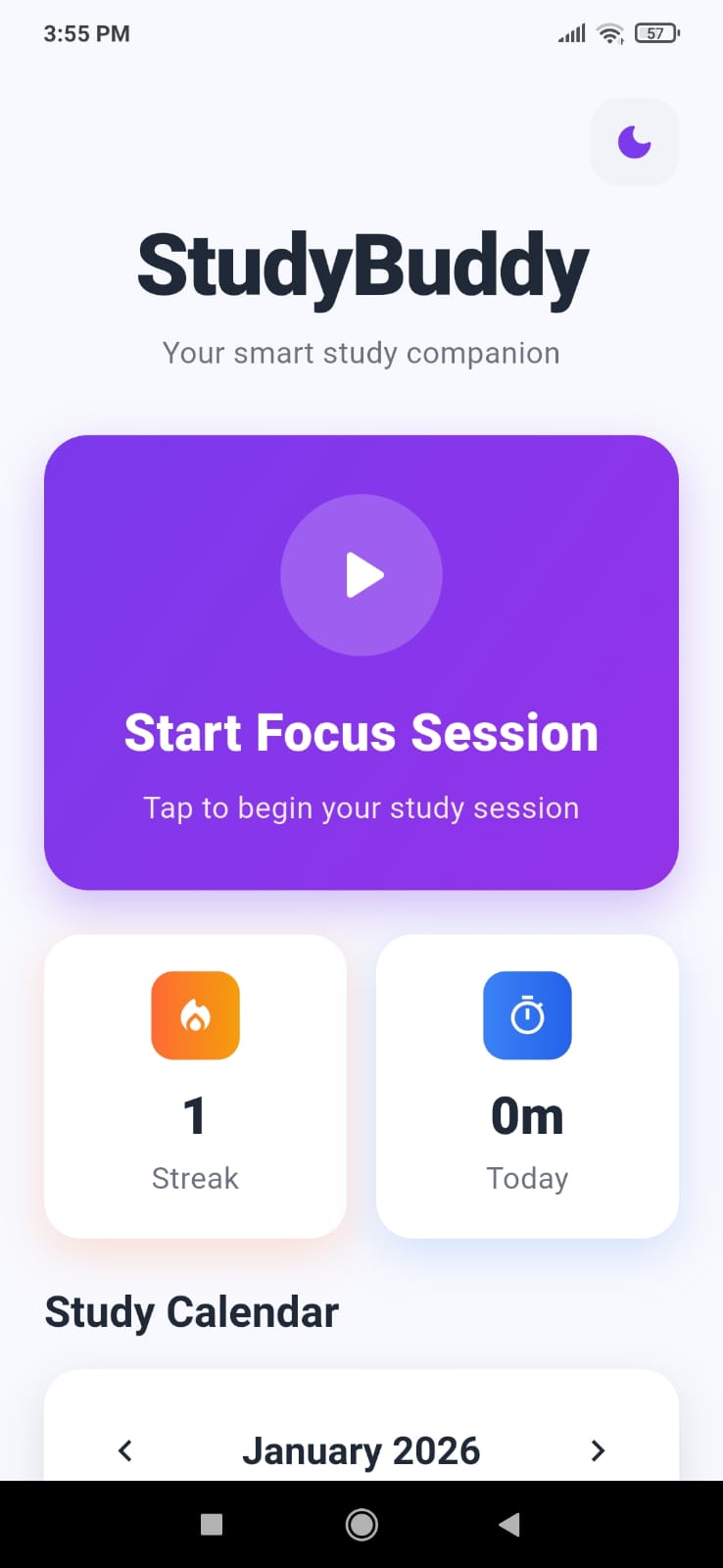
Light mode of the Application
-
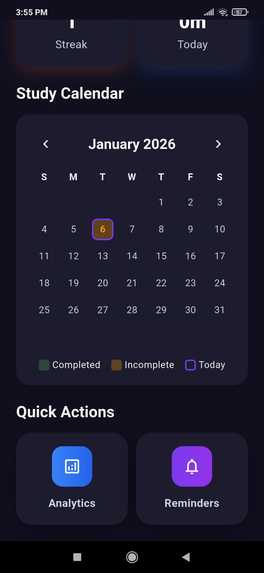
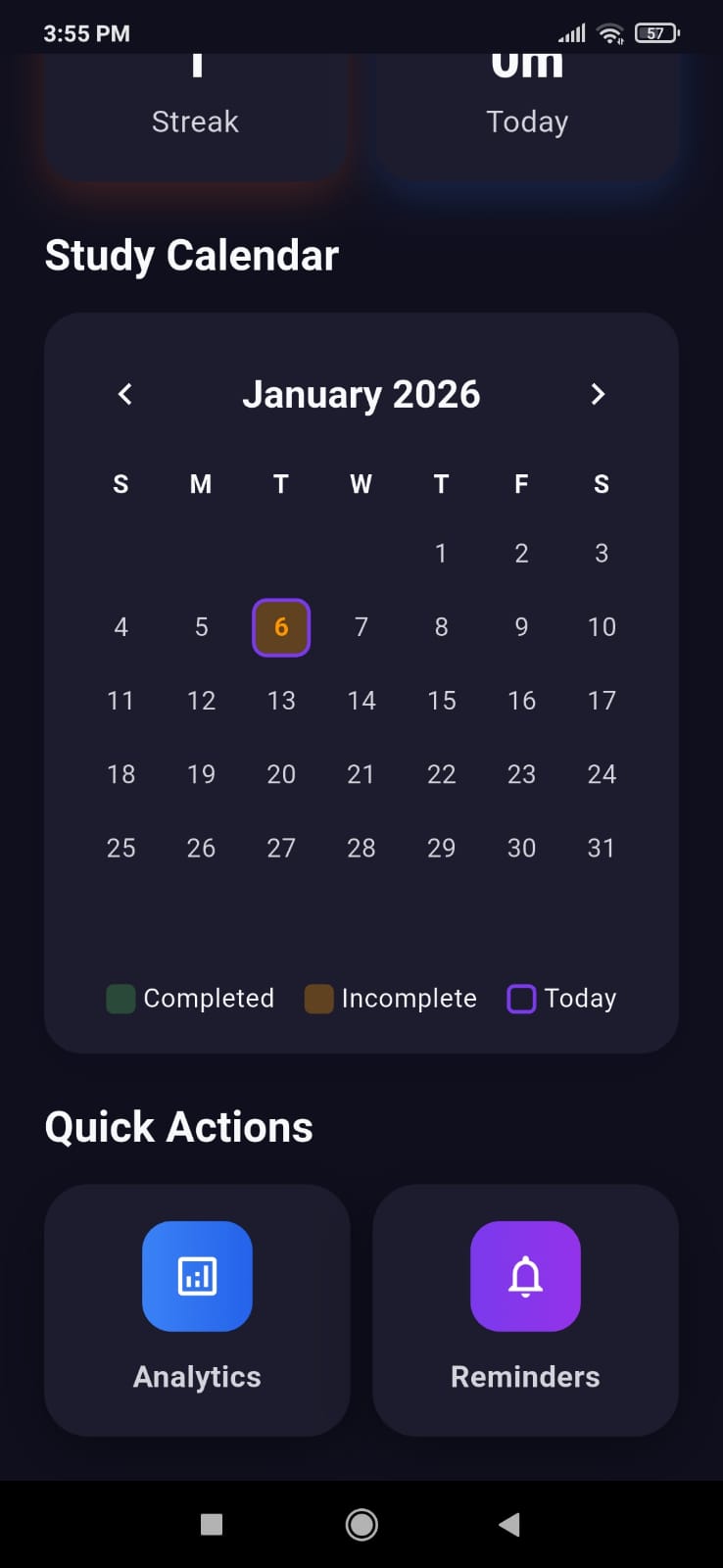
Landing Screen with everyday Calendar and streak tracker
-
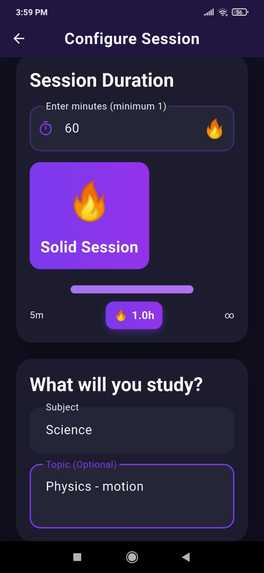
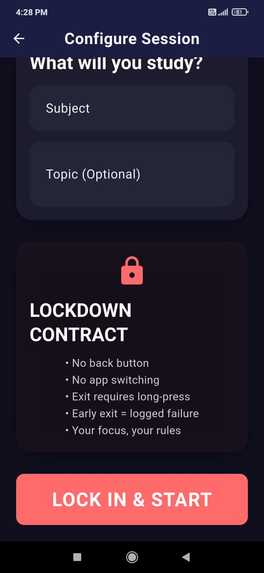
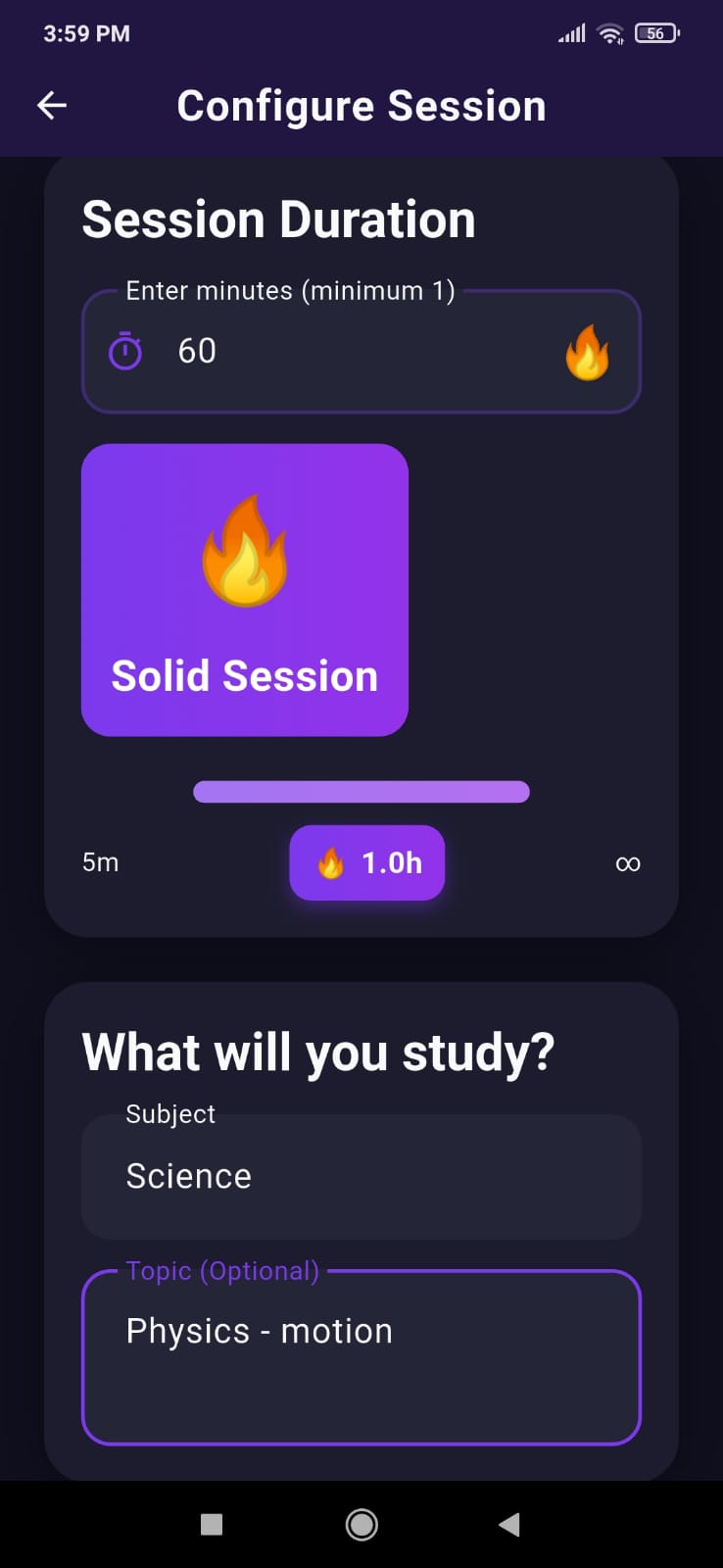
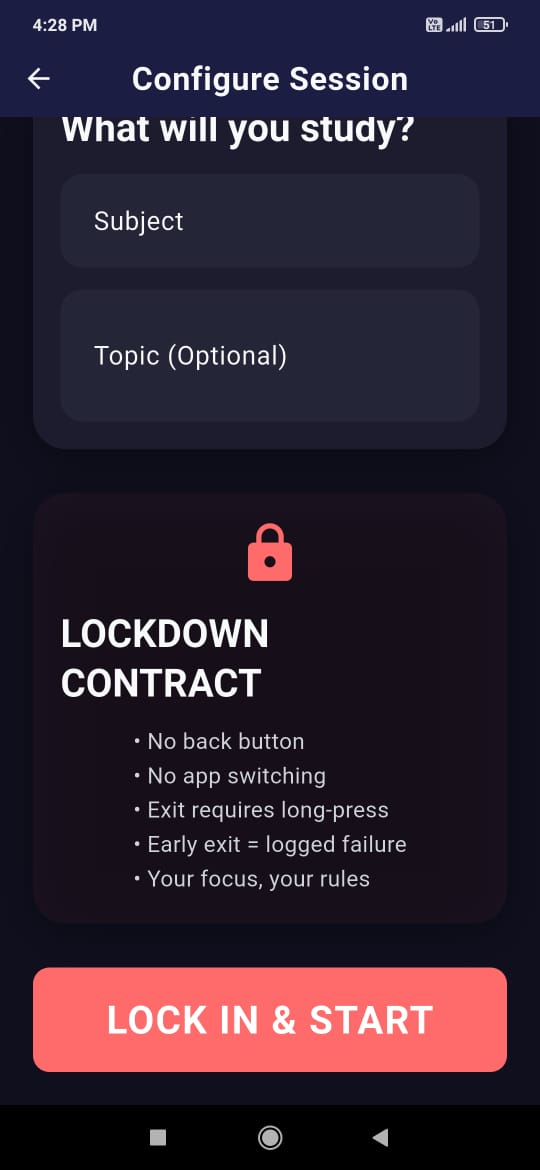
Setting up the session
-
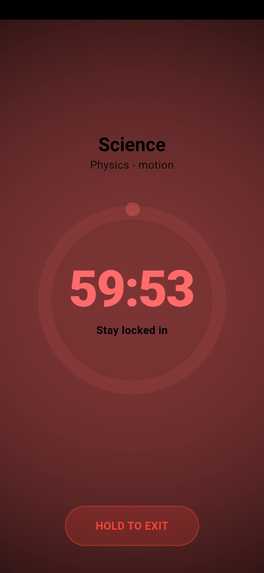
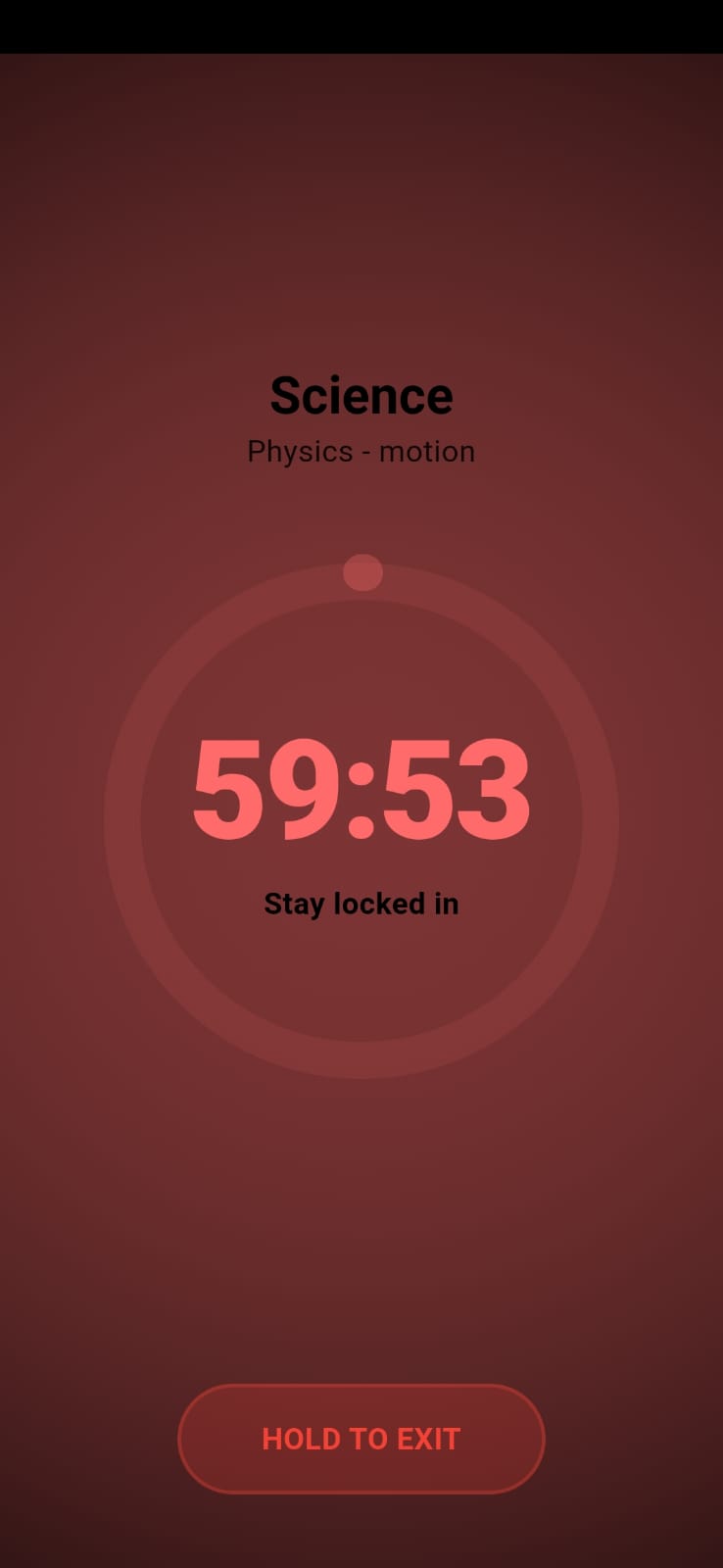
Focus Session
-
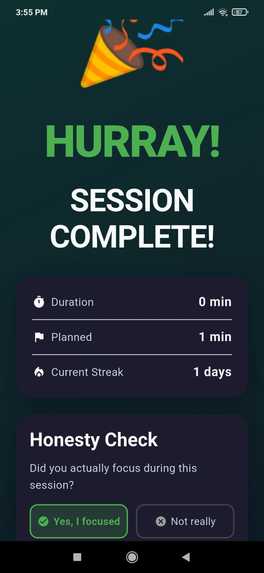
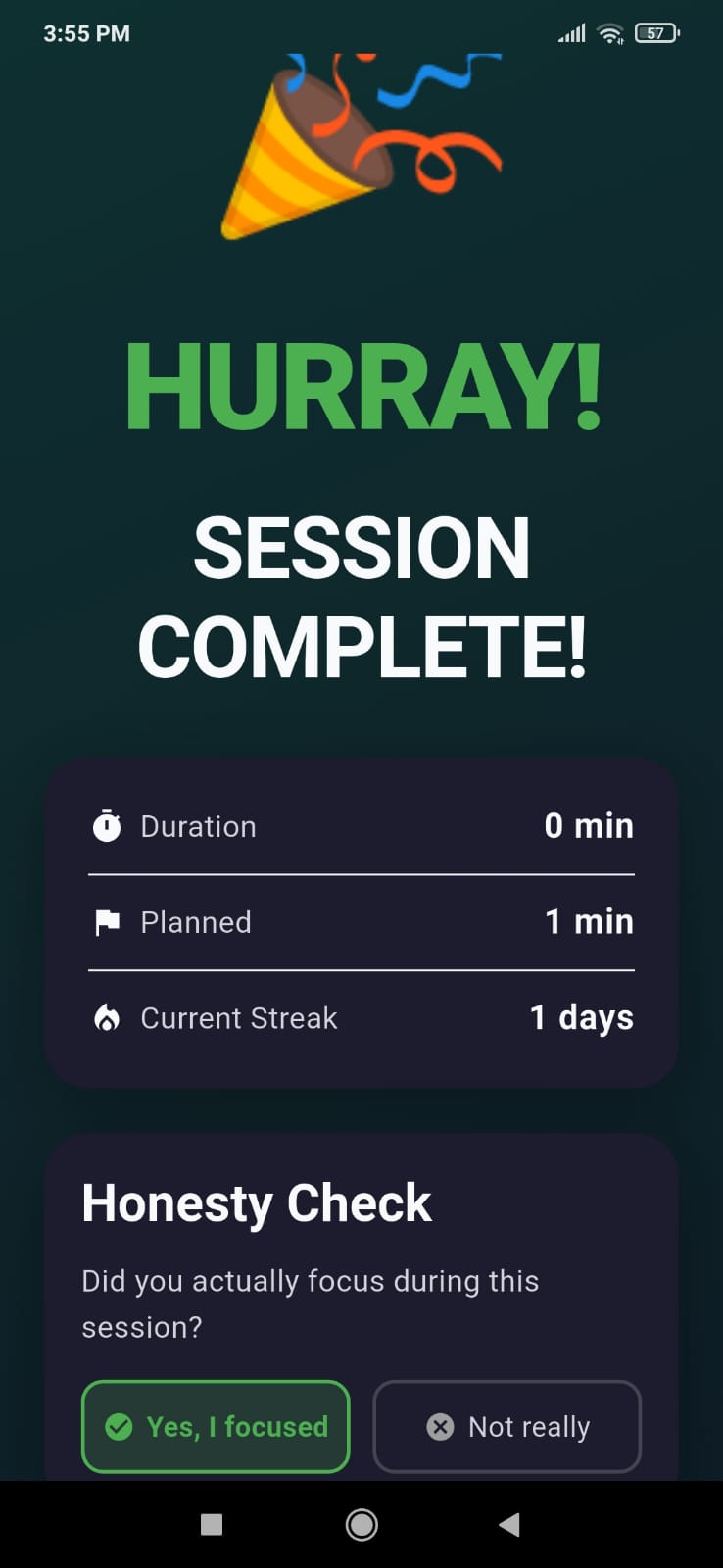
Completed a session
-
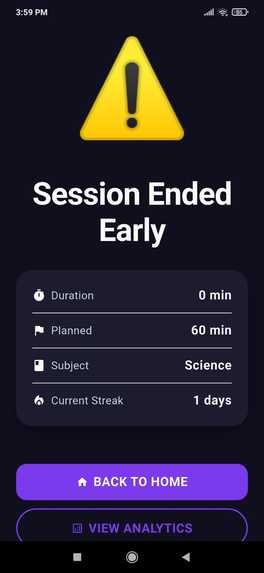
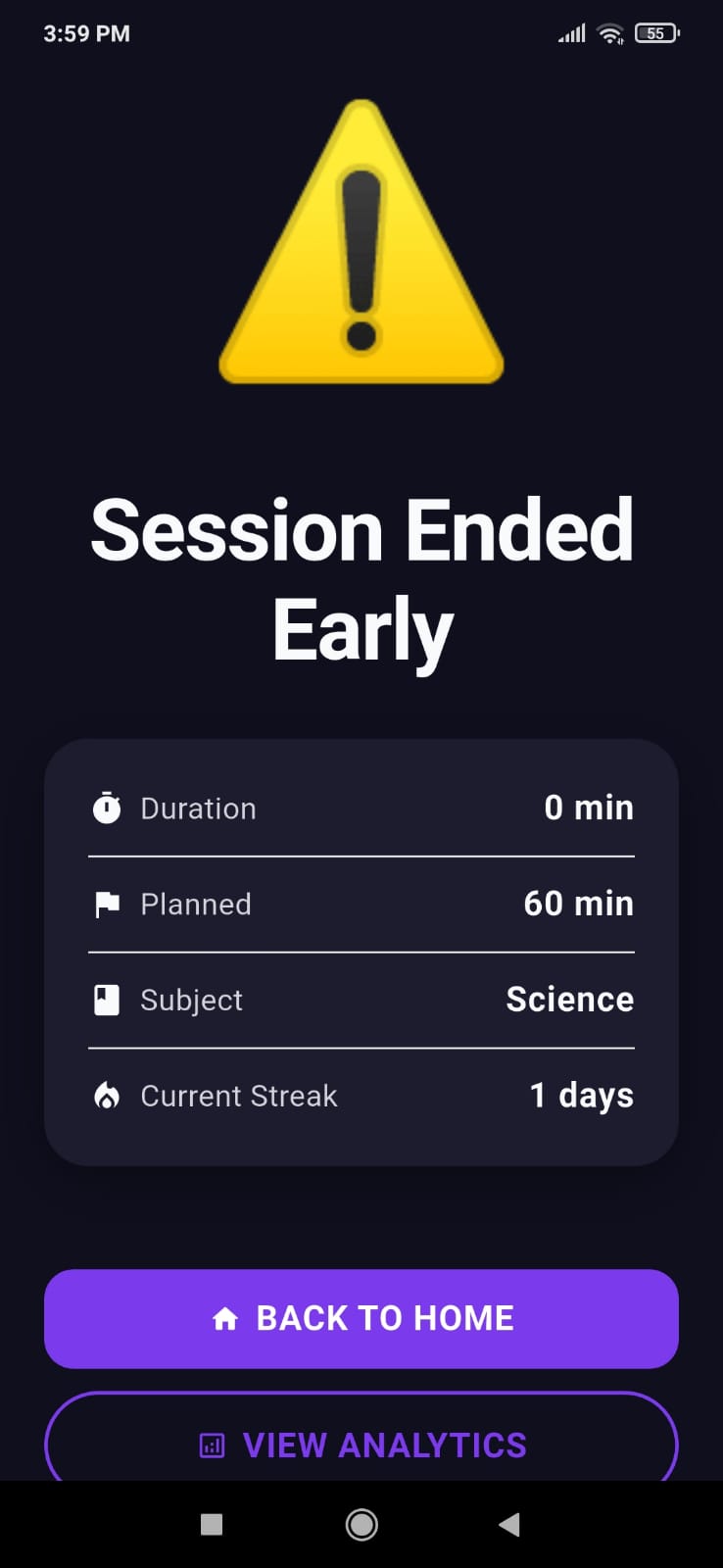
Closed Session before time
-
The App starts in full screen and doesnt allow the user to access and sort of distracting apps during a focus session
-
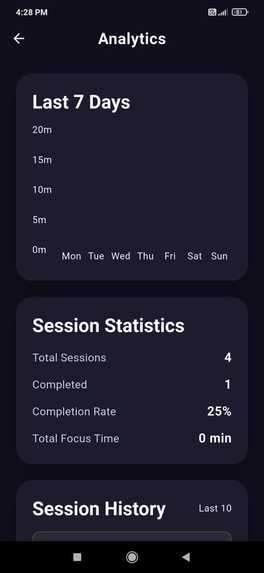
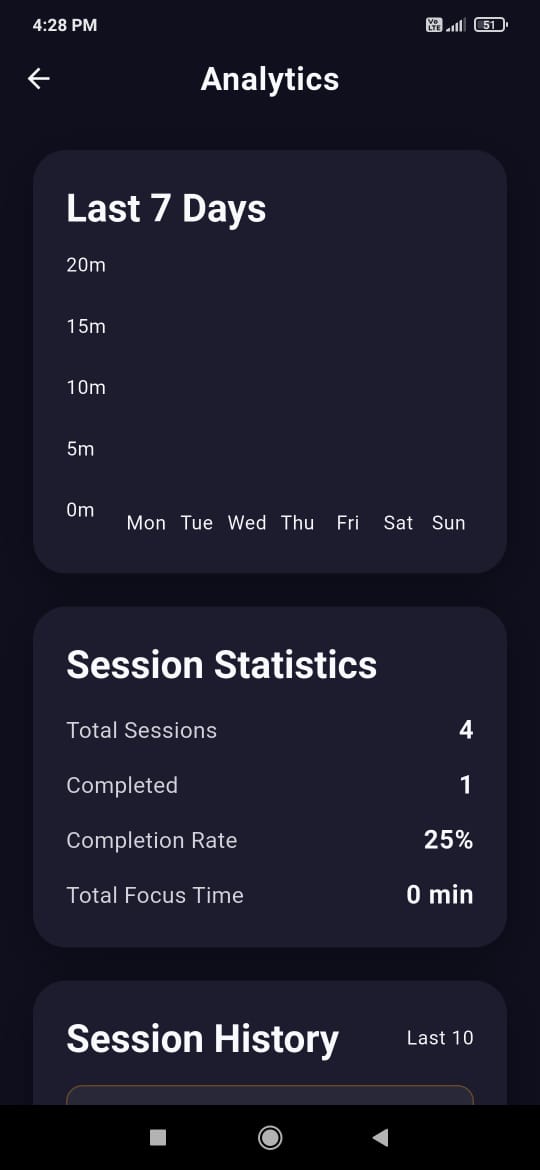
Personalized Analytics
-
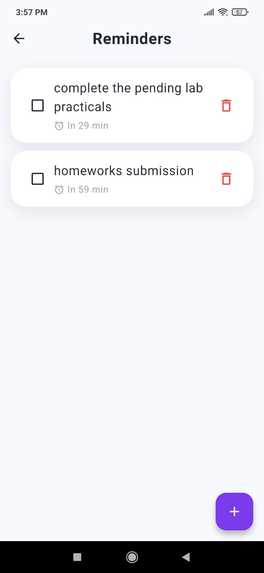
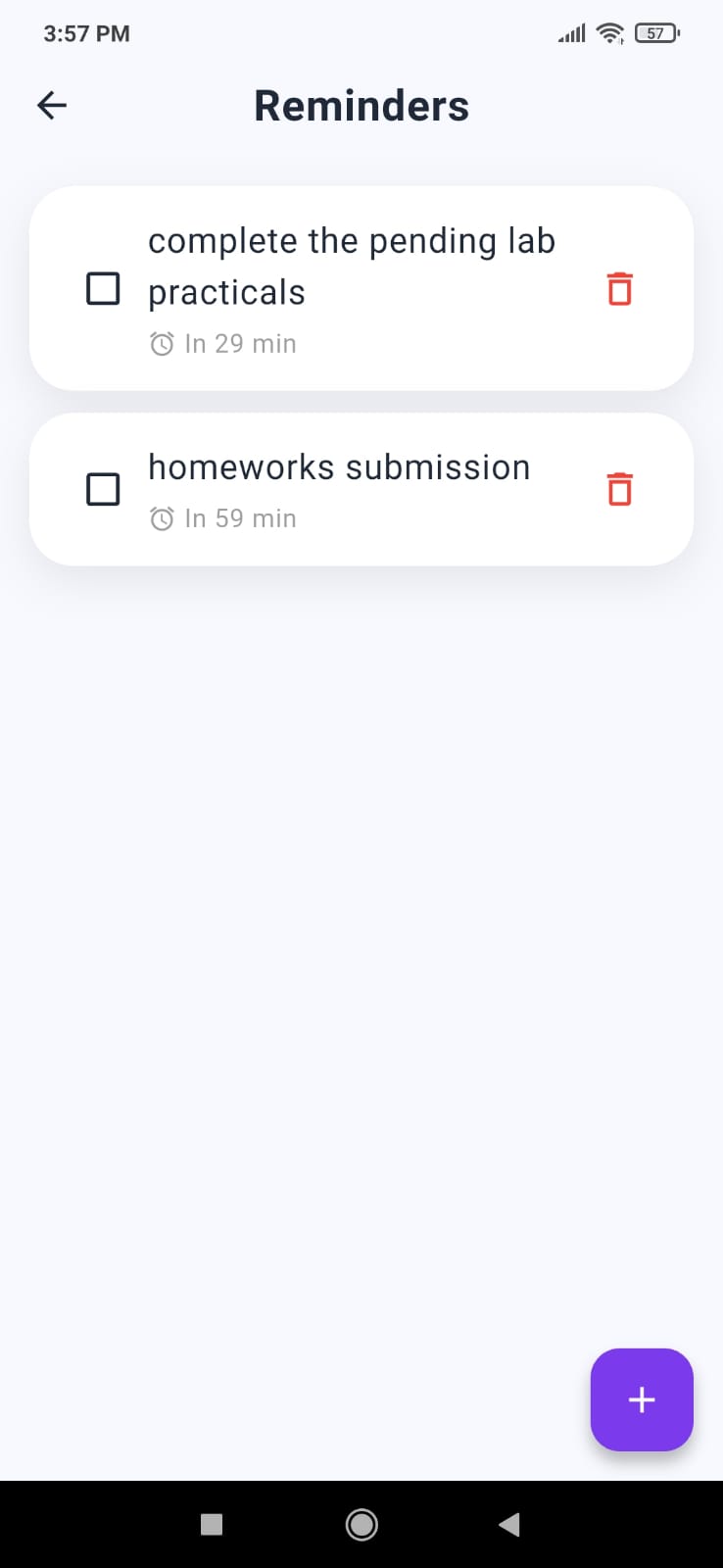
Reminder Function for more effective time management during study
Inspiration: Many students struggle not because of a lack of study material, but due to constant distractions, mental overload, and inconsistent routines. Most existing study apps depend on motivation or AI-driven suggestions, which often fail when users are already stressed or overwhelmed. StudyBuddy was inspired by the idea that structure and behavioural design can be more effective than motivation alone, especially in low-connectivity or high-distraction environments.
What it does: StudyBuddy is an offline, mobile-first study companion that helps students focus by creating a controlled and distraction-free study environment. It adapts study sessions based on the user’s mental state, enforces focus periods with structured timers and lockdown modes, provides built-in ambient audio for concentration, and encourages consistency through reflections and non-toxic streaks.
How we built it: The app was built using Flutter and Dart as a fully offline application with no backend, APIs, or AI services. All functionality—including timers, music playback, state-based session logic, and progress tracking—was implemented using rule-based logic and local storage, with a strong emphasis on clean UI, smooth animations, and a focus-first user experience.
Challenges we ran into: One of the main challenges was balancing strict focus enforcement with a supportive and non-overwhelming user experience. Managing multiple timers, fullscreen focus modes, and audio playback simultaneously in Flutter also required careful state management to ensure reliability and smooth performance on low-end devices.
Accomplishments that we’re proud of: We successfully built a polished, demo-ready Flutter application that works completely offline, implements a distraction-controlled study workflow, and demonstrates how thoughtful UX and behavioral design can replace complex AI systems in productivity tools.
What we learned: This project showed us that effective productivity solutions do not always require advanced intelligence systems; clear structure, intentional constraints, and good design can significantly improve focus and consistency. We also gained valuable experience in Flutter app architecture, local persistence, and designing for real-world user behavior.
What’s next for StudyBuddy: Future plans include optional device-level integrations for stronger distraction control, expanded analytics for long-term habit tracking, accessibility improvements, and greater customization to support different study styles and user needs.


Log in or sign up for Devpost to join the conversation.