-
-
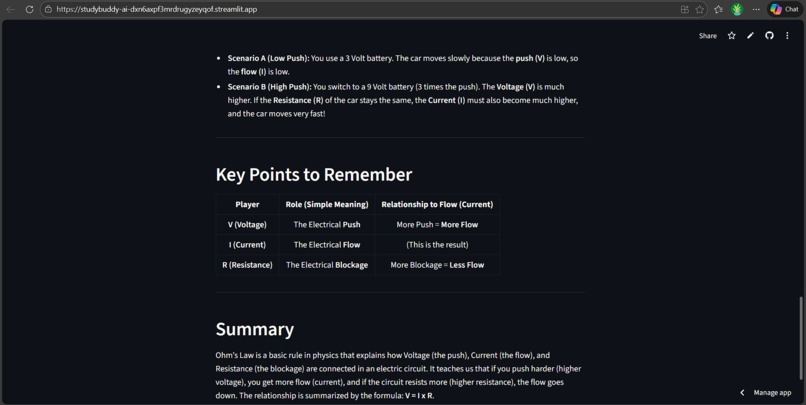
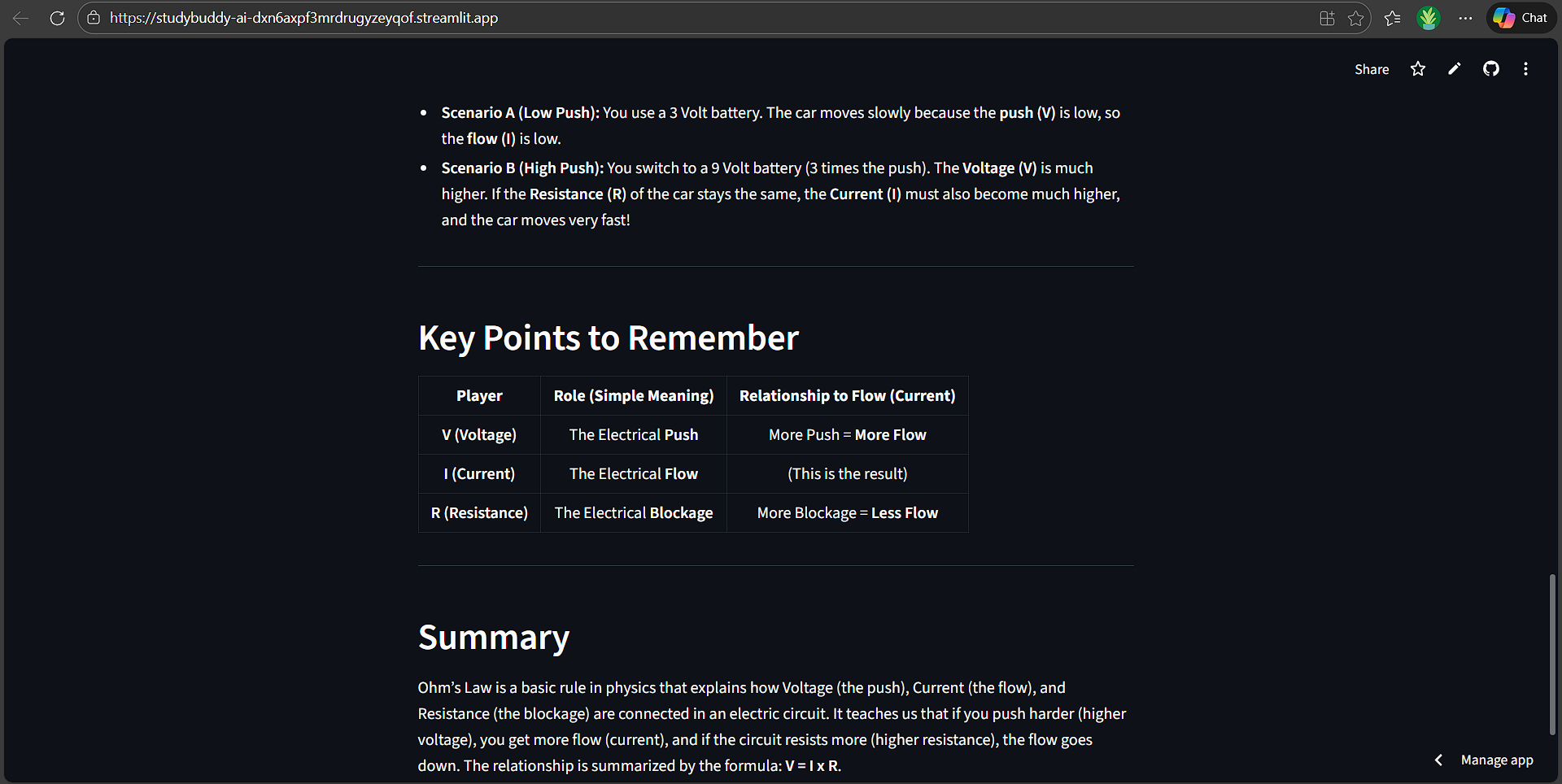
StudyBuddy AI generates a step-by-step and a summary tailored to the selected learning level.
-
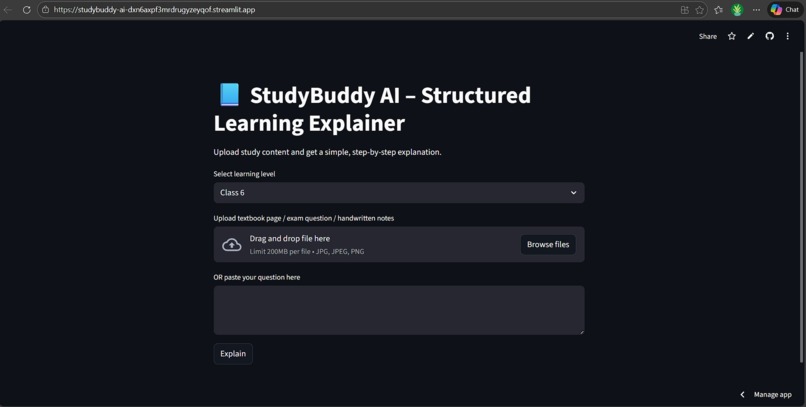
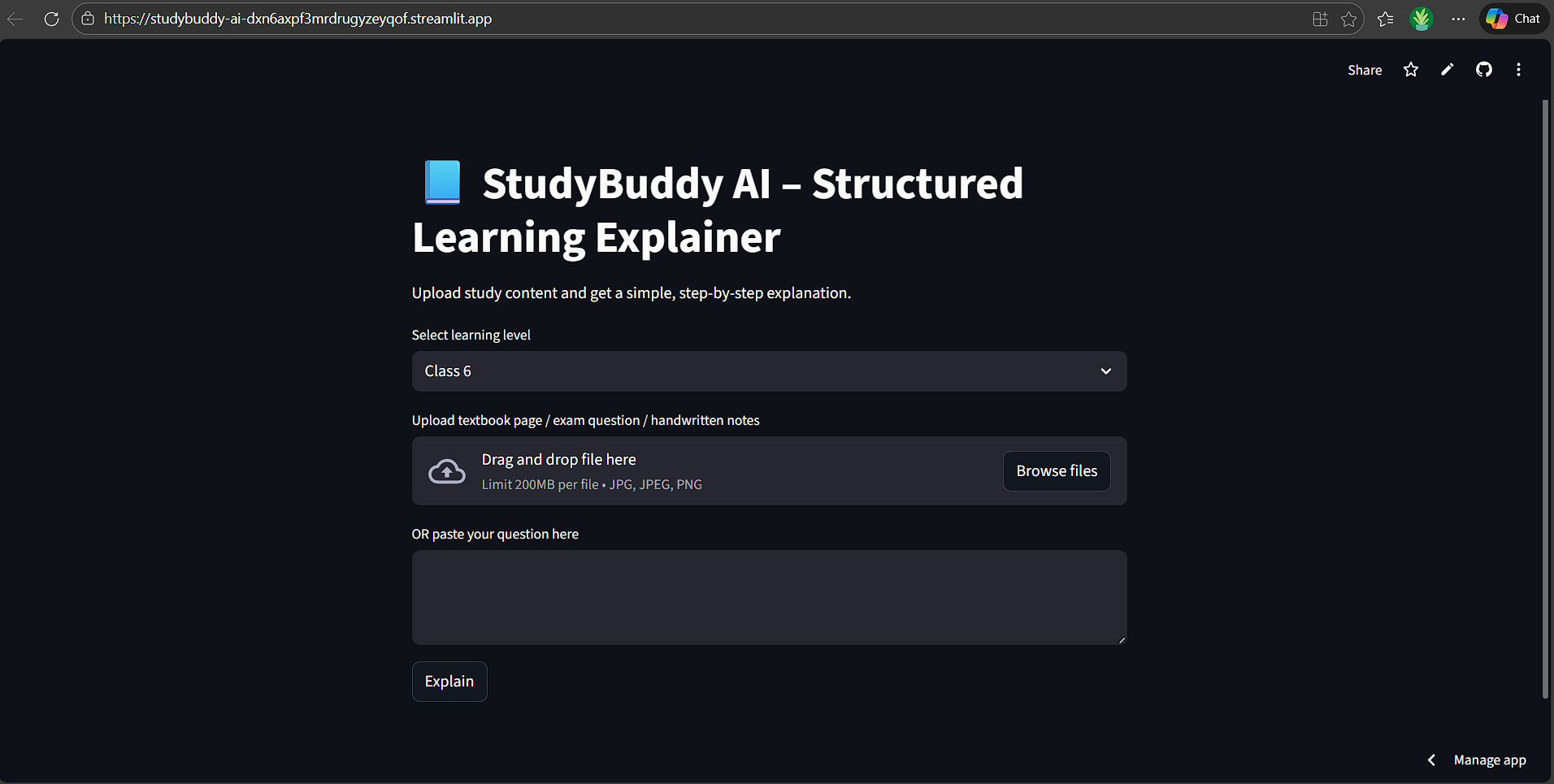
StudyBuddy AI home screen showing a clean interface where students can select their learning level and input questions or study material.
-
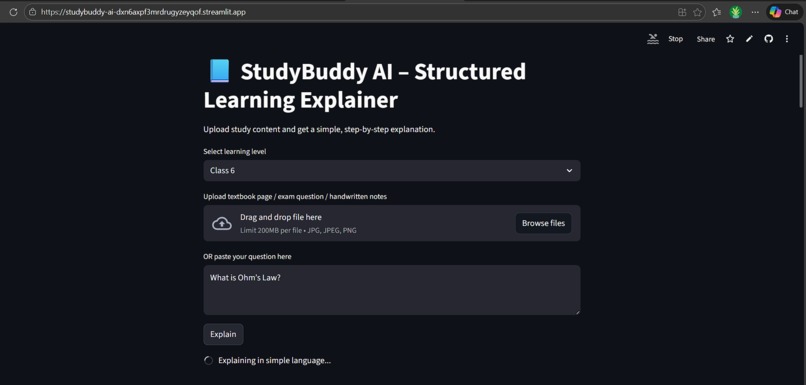
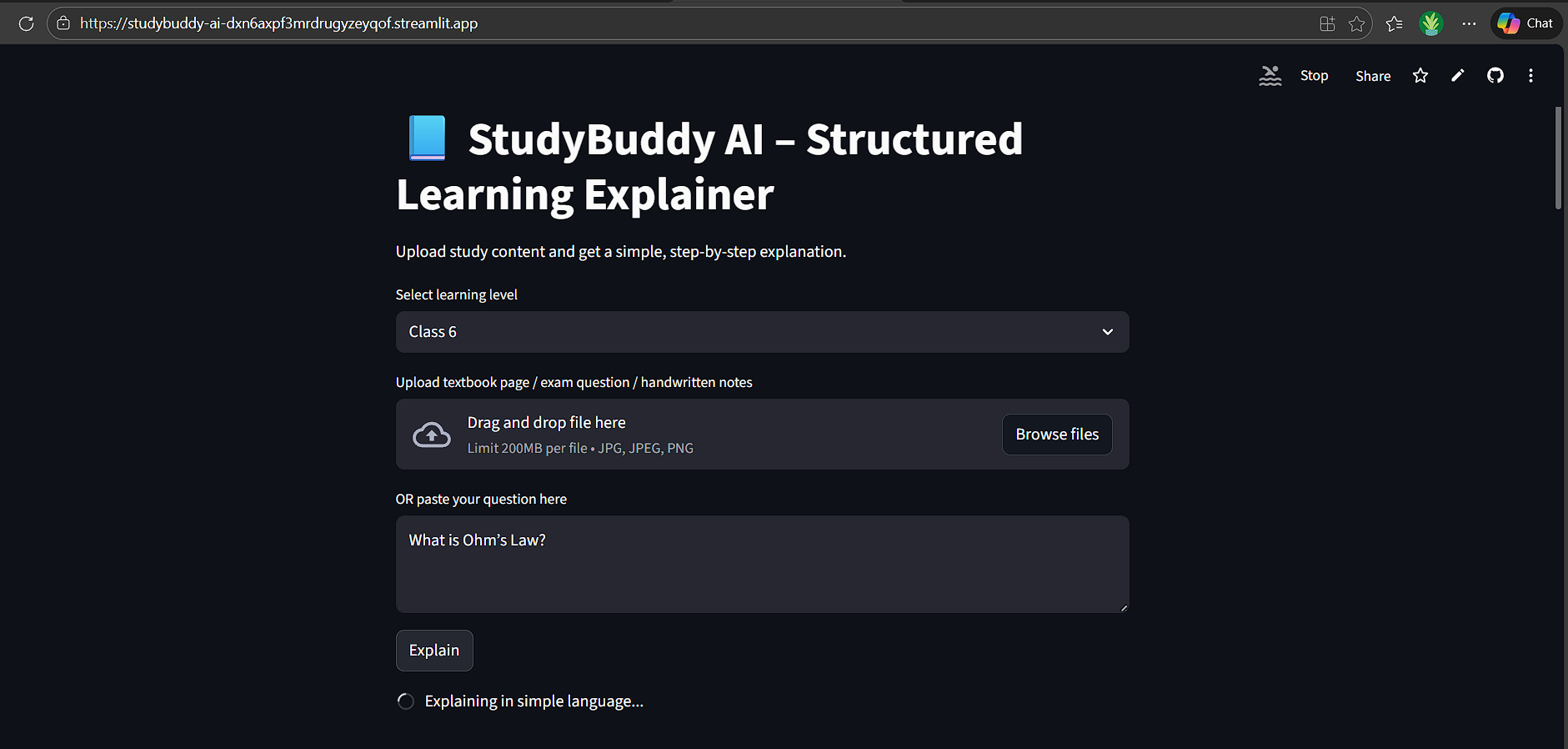
A student enters a concept-based question (“What is Ohm’s Law?”) and requests a structured explanation using Gemini-powered reasoning.
-
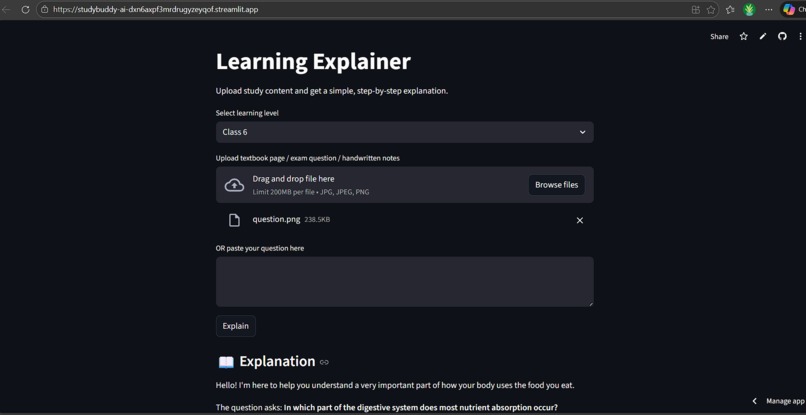
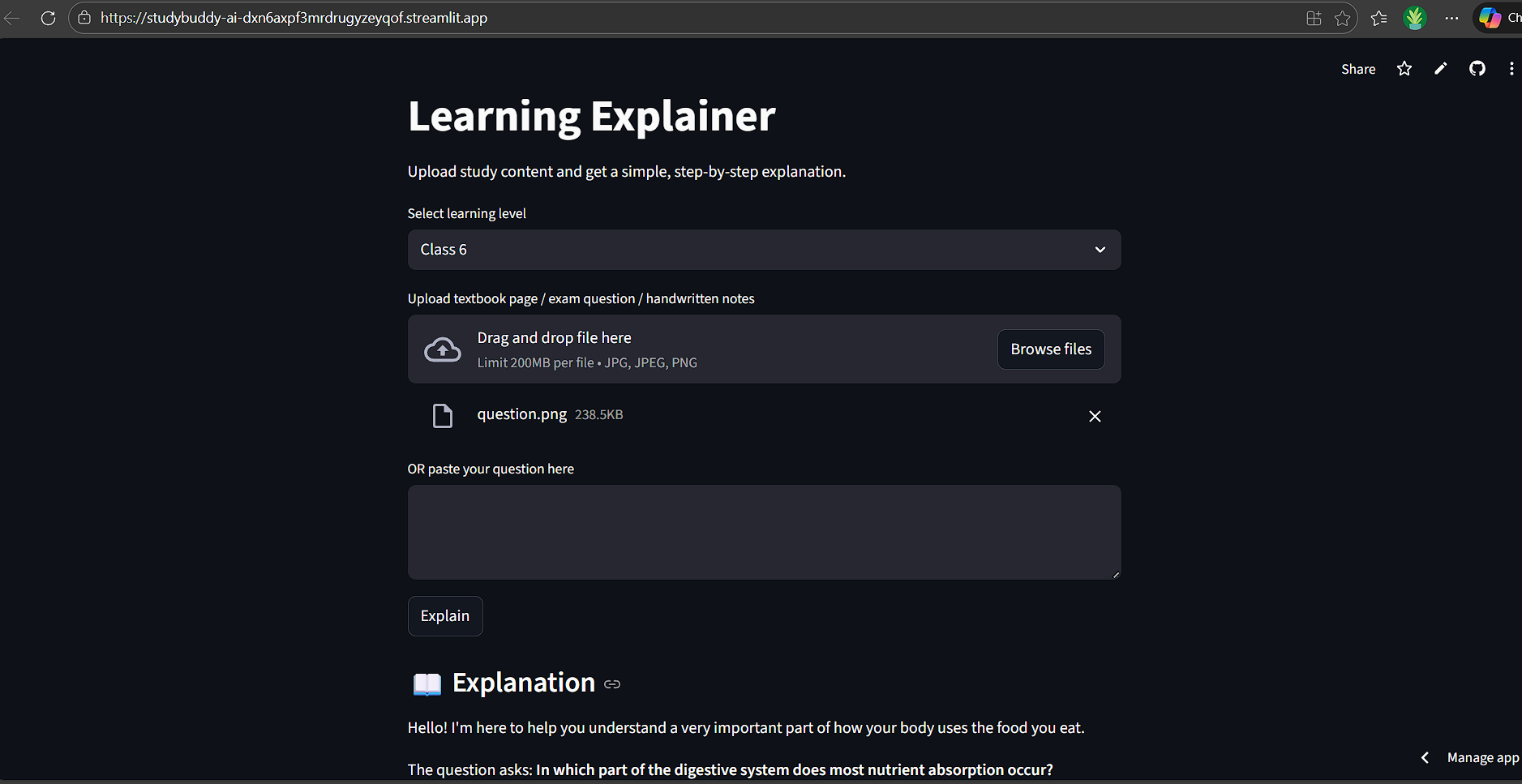
The app supports uploading textbook pages or handwritten notes as images and explains the content using multimodal AI understanding.
Inspiration
As a student, I often noticed that many learners struggle to understand textbooks, exam questions, and handwritten notes—not because the content is impossible, but because explanations are too complex or not adapted to their level. While AI tools can explain content, they usually give generic responses and do not follow a proper teaching structure.
This inspired me to build StudyBuddy AI, a structured learning explainer that focuses on how concepts are taught, not just what is explained. The goal was to make learning more accessible, especially for students preparing for exams or learning independently.
What it does
StudyBuddy AI allows users to upload textbook pages, exam questions, or handwritten notes as images or text. The system then generates:
- A simple explanation adapted to the learner’s level
- Step-by-step reasoning
- Key concepts
- Common mistakes students make
- Exam-oriented tips and a concise summary
Instead of acting like a chatbot, the application behaves like a digital teacher that follows a clear pedagogical structure.
How we built it
How to design AI systems with a clear purpose instead of using models in a generic way.
- Effective prompt engineering to enforce structured, educational outputs.
- Practical use of multimodal AI for learning and explanation tasks.
- End-to-end project development, from idea and implementation to deployment and presentation.
- The importance of simplicity, clarity, and user-focused design in hackathon projects. ## Challenges we ran into One major challenge was ensuring the project did not feel like a simple wrapper around an existing AI model. To solve this, I designed strict output formats and learning-level adaptations so the system consistently behaves like an educational tool rather than a general chat interface.
Another challenge was prompt tuning—balancing simplicity, accuracy, and exam relevance required multiple iterations and testing with real study materials.
Accomplishments that we're proud of
- Successfully built and deployed a complete AI-powered learning application as a solo developer.
- Designed a structured teaching workflow that goes beyond generic AI explanations.
- Integrated Gemini 3’s multimodal reasoning to understand both images and text.
- Created level-wise and exam-oriented explanations that adapt to different learners.
- Delivered a simple, usable interface that clearly demonstrates real-world impact.
What we learned
- How to design AI systems with a clear purpose instead of using models in a generic way.
- Effective prompt engineering to enforce structured, educational outputs.
- Practical use of multimodal AI for learning and explanation tasks.
- End-to-end project development, from idea and implementation to deployment and presentation.
- The importance of simplicity, clarity, and user-focused design in hackathon projects.
What's next for “StudyBuddy AI – Structured Learning Explainer”
- Add multilingual explanations to support regional languages.
- Introduce interactive quizzes generated from the uploaded content.
- Provide personalized revision notes and progress tracking for learners.
- Improve accessibility features for students with learning difficulties.
- Explore integration with school and college learning platforms.

Log in or sign up for Devpost to join the conversation.