Project Story — StudyBuddy AI
Inspiration
During my university years, I struggled with managing multiple assignments, exams, and deadlines. I noticed that most students relied on basic to-do lists or calendars, which were static and didn’t adapt to priorities or workload. I wanted to create a tool that not only tracked tasks but also smartly suggested study plans and priorities using AI, helping students maximize productivity without burnout.
What it does
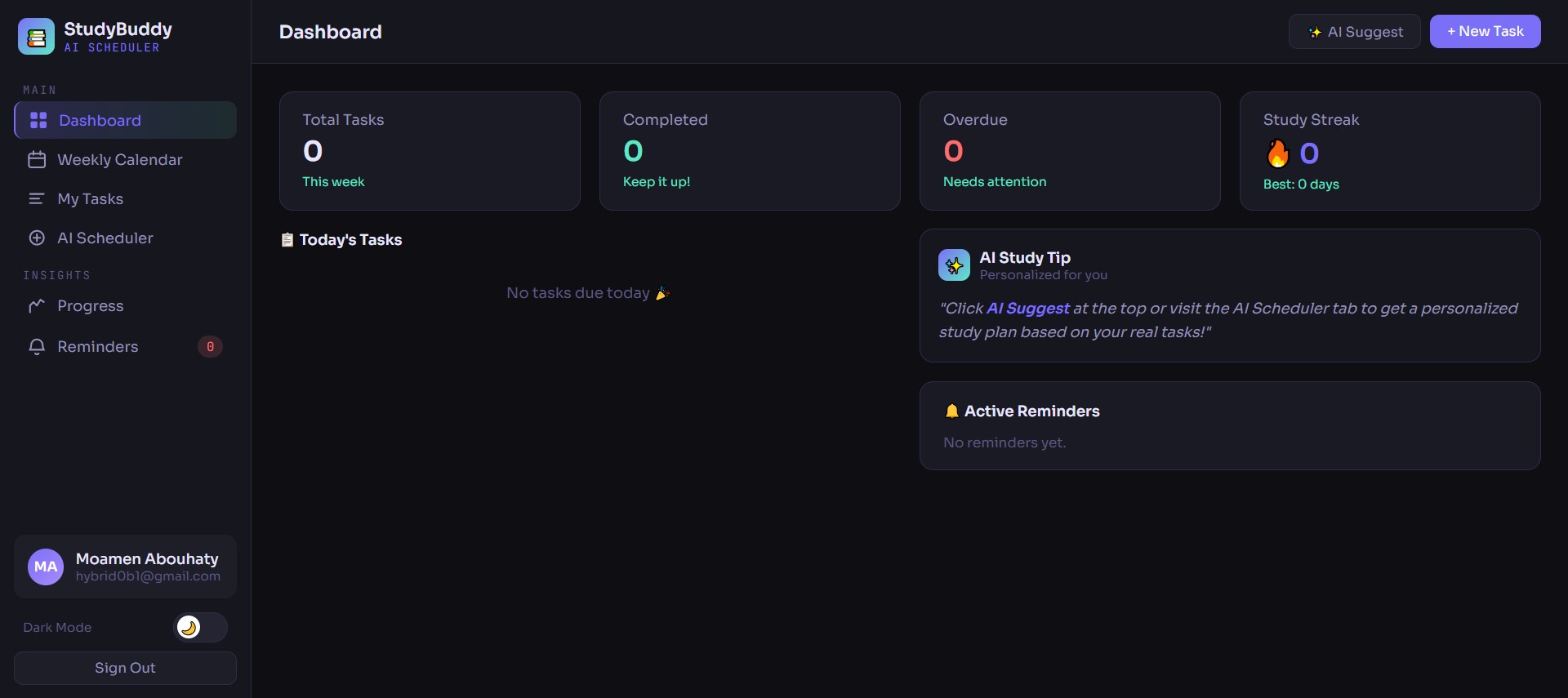
StudyBuddy AI is a full-stack AI-powered study scheduler that helps students:
- Organize tasks, assignments, and reminders in one place.
- Auto-prioritize tasks based on deadlines, subjects, and workload.
- Generate personalized study plans using Google Gemini AI.
- Track progress with completion stats, streaks, and hours studied.
- Receive daily/weekly reminders and auto-overdue task alerts.
It’s essentially a personal AI study assistant available on desktop and mobile.
How we built it
The project is built using a modern web stack:
- Backend: Node.js + Express + MongoDB, with JWT authentication for secure user sessions.
- Frontend: HTML/CSS/JS served statically, fully responsive and mobile-friendly.
- AI Integration: Google Gemini API (1.5 Flash) to suggest personalized study schedules and task prioritization.
- Automation: Cron jobs to mark overdue tasks and repeat reminders.
- Database: Mongoose schemas for
User,Task, andReminderwith validation, virtuals, and helper methods.
The workflow:
- Users register/login → JWT session issued.
- Users add tasks & reminders → tasks auto-checked for overdue status.
- Users request AI suggestions → system calls Gemini API → personalized plan returned.
- Users track progress → stats updated in real-time.
Example: Task Prioritization Formula
We calculate a priority score $P$ for each task:
$$P = \frac{W}{T} \times U$$
where:
- $W$ = workload (estimated hours)
- $T$ = time until deadline (in hours)
- $U$ = user-defined urgency factor
This ensures tasks with less time and higher workload appear first.
Challenges we ran into
- AI Provider Migration: Transitioning from traditional LLM structures to Google Gemini’s content-based API architecture.
- Task Scheduling Logic: Ensuring recurring reminders, overdue updates, and progress tracking worked seamlessly together.
- Authentication: Securing JWTs and password hashing while keeping the user experience smooth.
- Frontend Rendering: Making a responsive calendar view and real-time task updates without heavy frameworks.
Accomplishments that we're proud of
- Successfully integrated Google Gemini 1.5 API for high-speed, personalized study planning.
- Implemented full CRUD + toggle + bulk delete + progress tracking for tasks.
- Achieved real-time reminders and overdue automation via cron jobs.
- Created a light/dark mode feature saved in localStorage.
- Made the app fully responsive for both desktop and mobile.
What we learned
- Full-stack architecture from database to frontend integration.
- Interacting with Google Generative AI services for practical automation.
- Advanced MongoDB/Mongoose techniques: virtuals, population, auto-updates.
- Task scheduling logic, prioritization, and UX for productivity apps.
- Real-world challenges of authentication, error handling, and cron automation.
What's next for StudyBuddy AI
- Mobile app version with offline support.
- Improved AI capabilities: auto-summarize notes, detect procrastination patterns.
- Calendar integrations with Google Calendar / Outlook.
- Gamification features to encourage streaks and achievements.
- Collaborative features: group study plans and shared task boards.

Log in or sign up for Devpost to join the conversation.