-
-
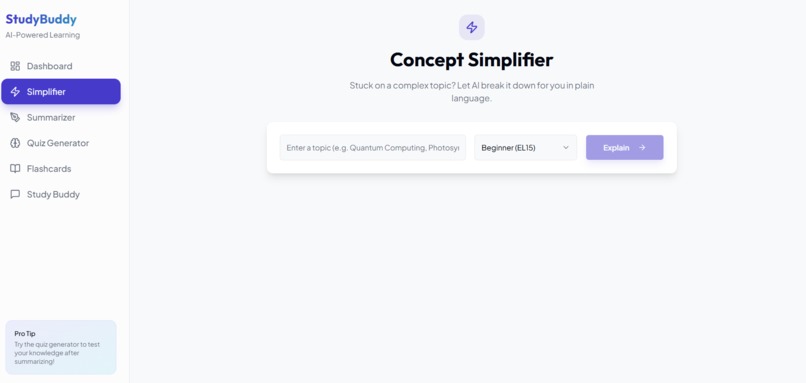
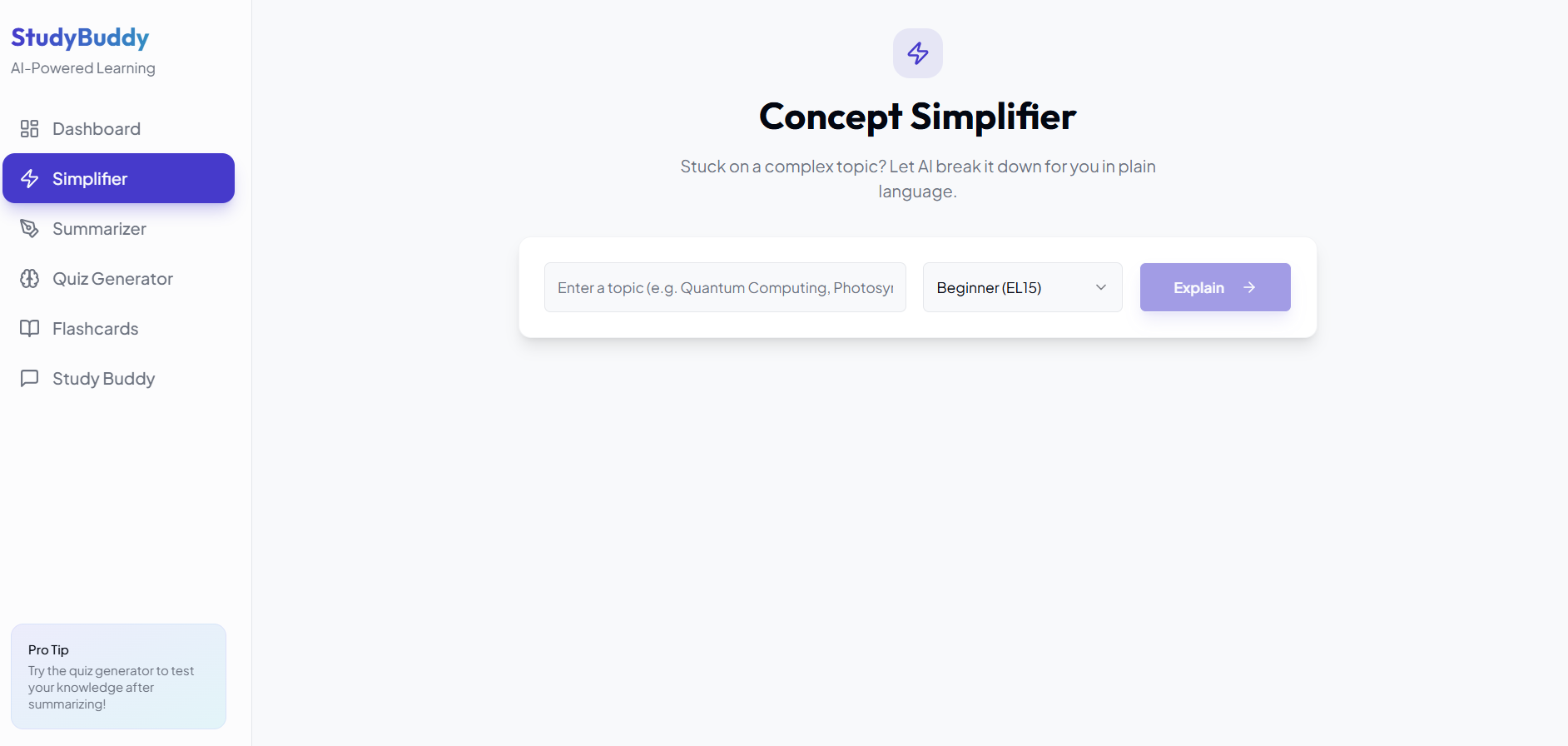
Concept simplifier
-
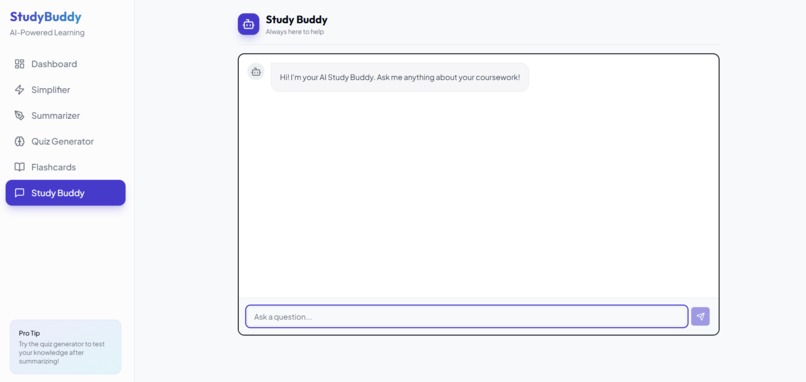
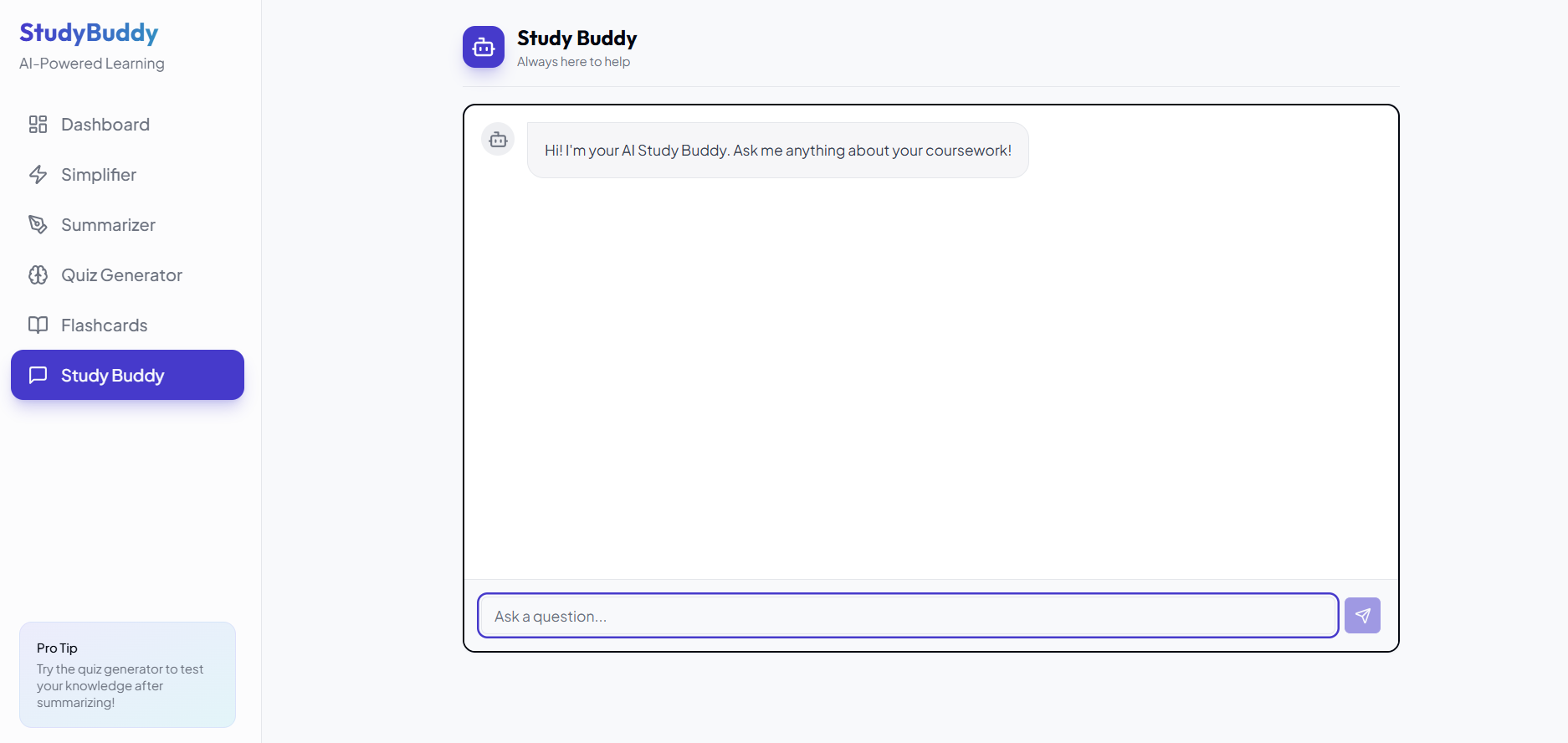
Chatbot
-
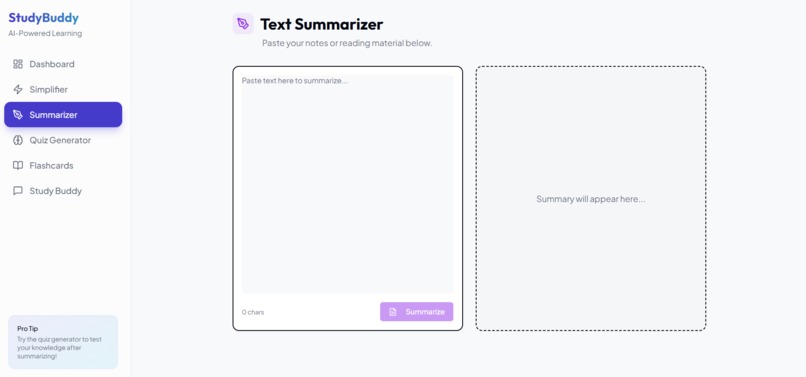
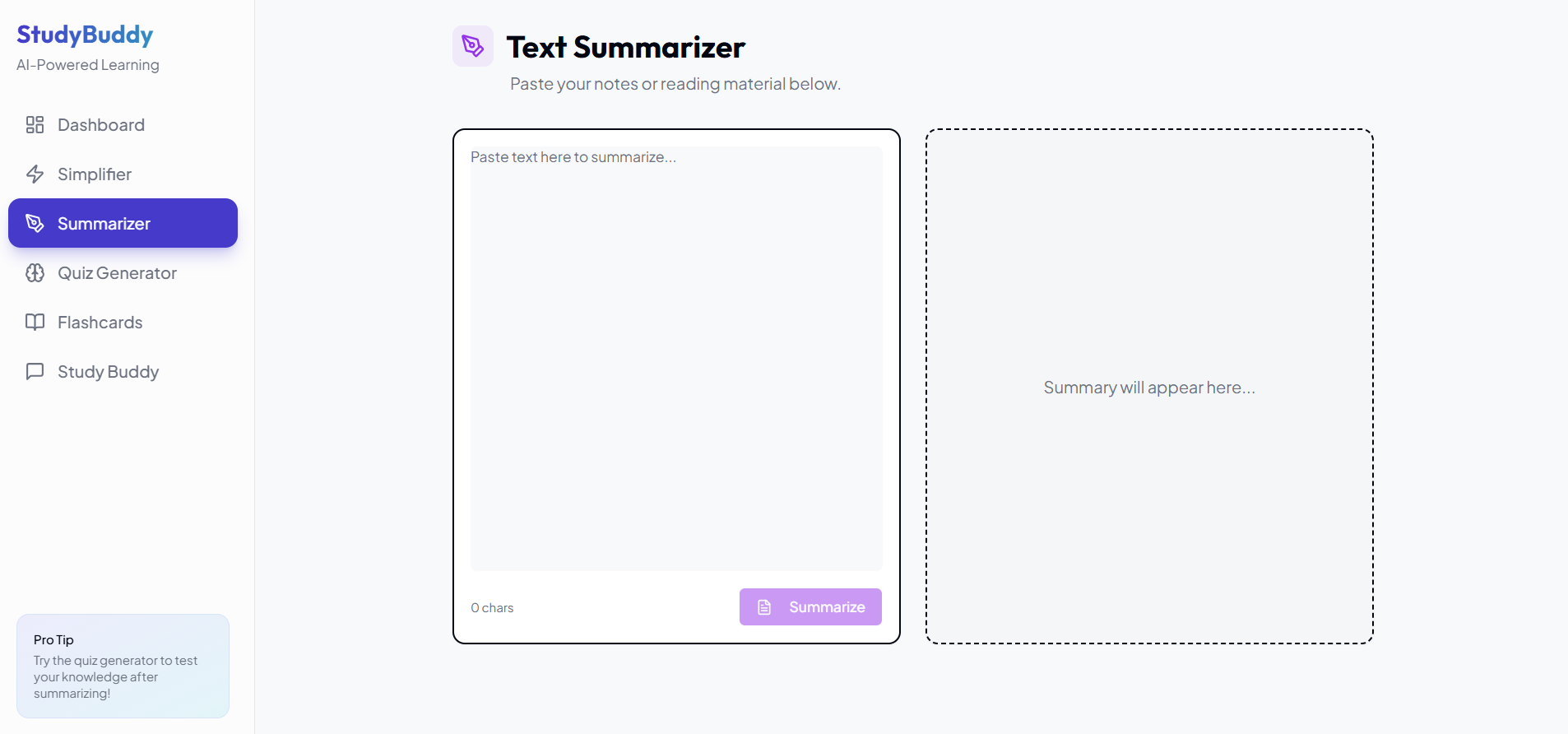
Text summarizer
-
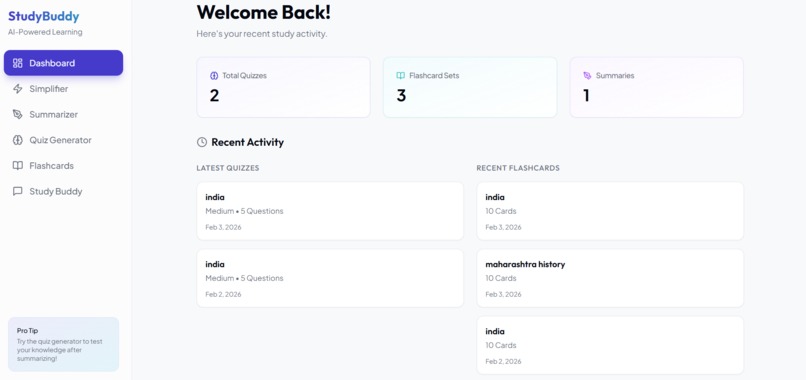
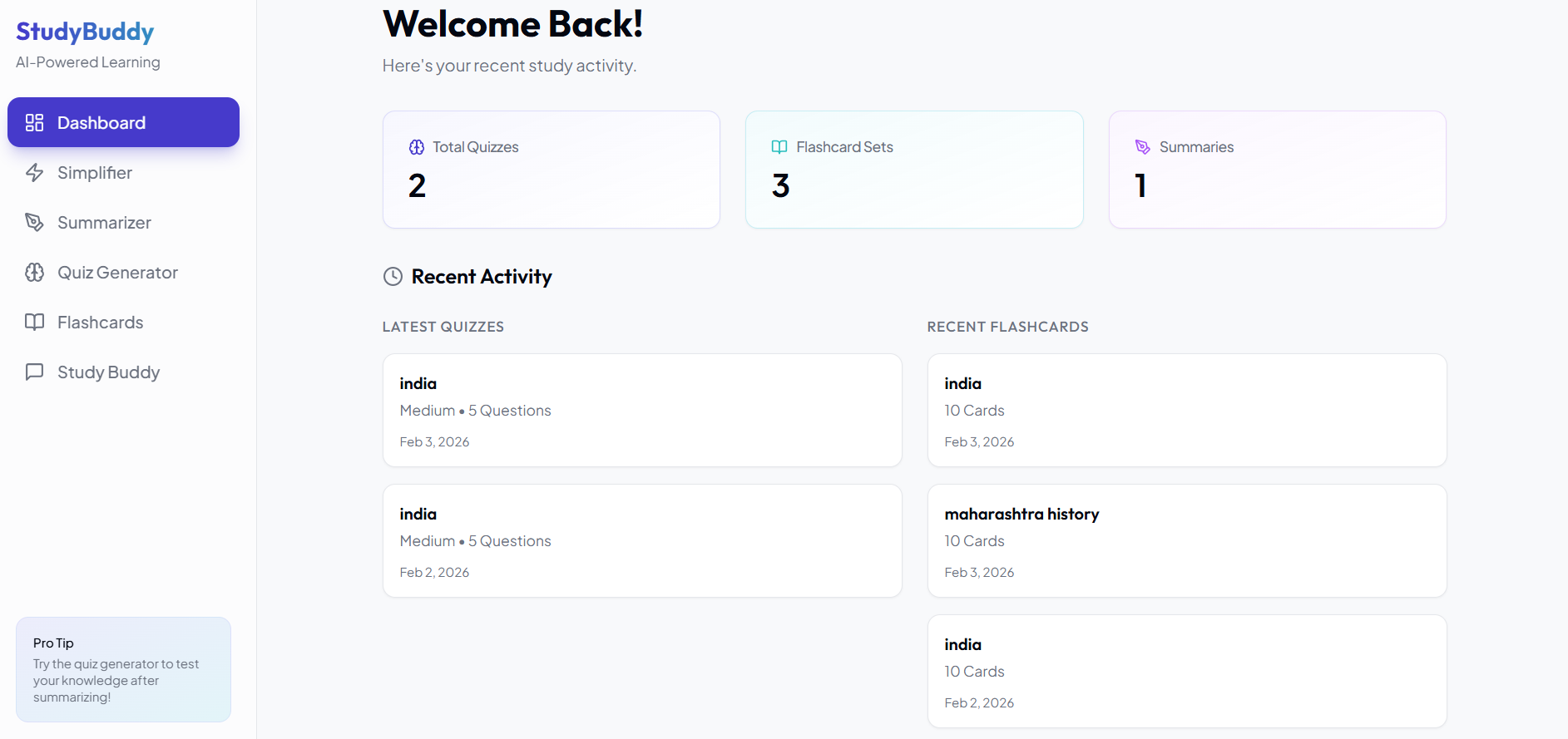
Dashboard
-
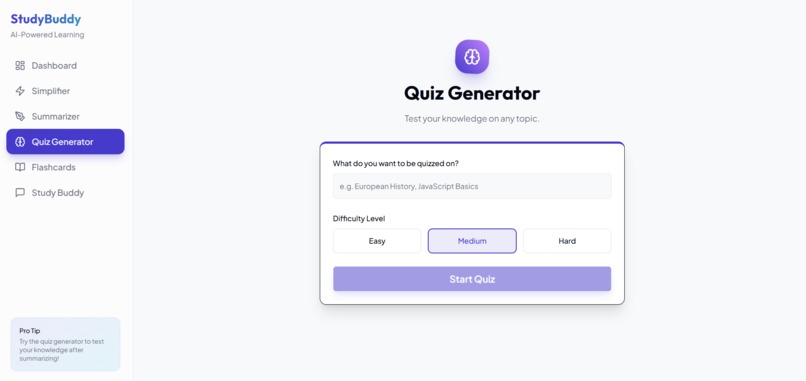
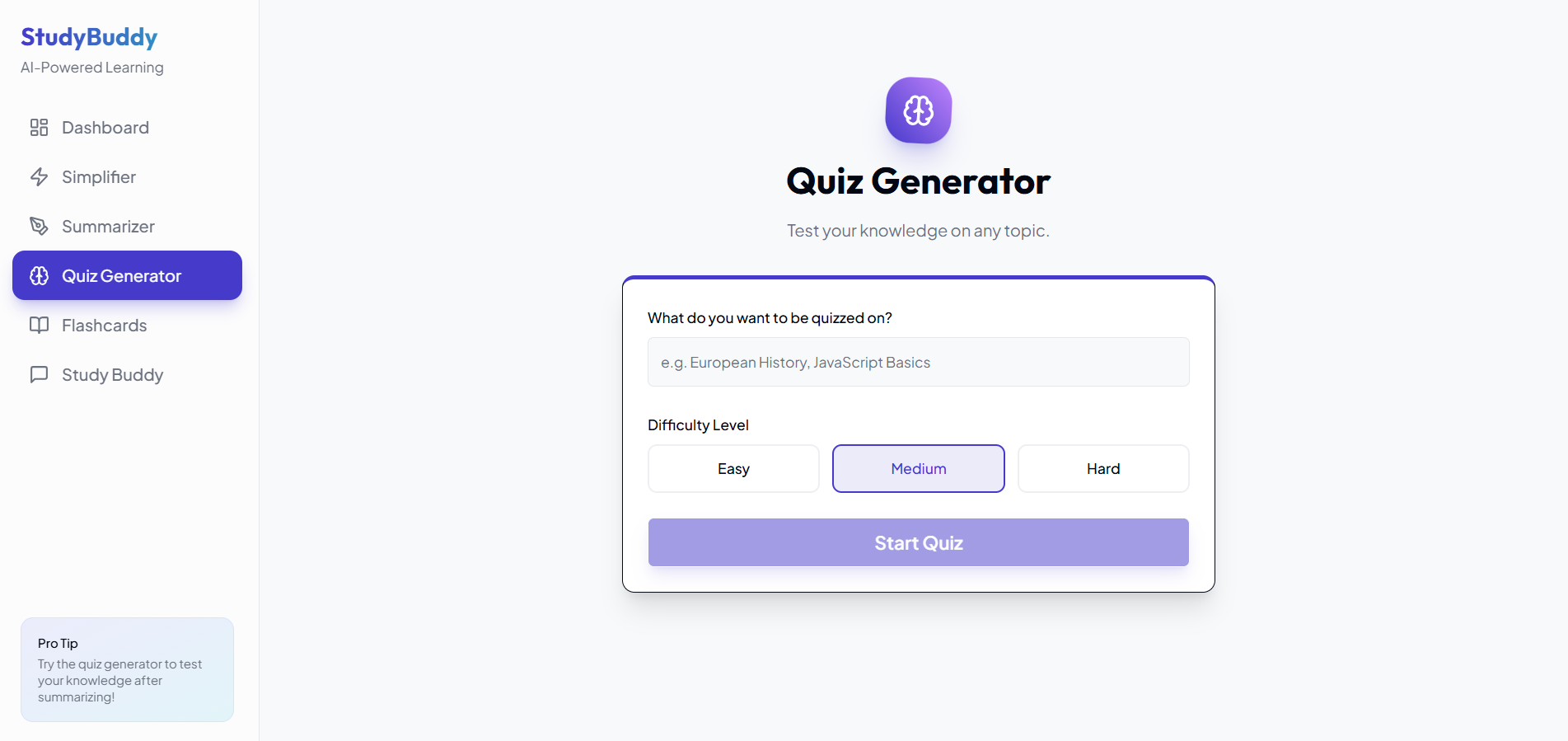
Quiz generator
-
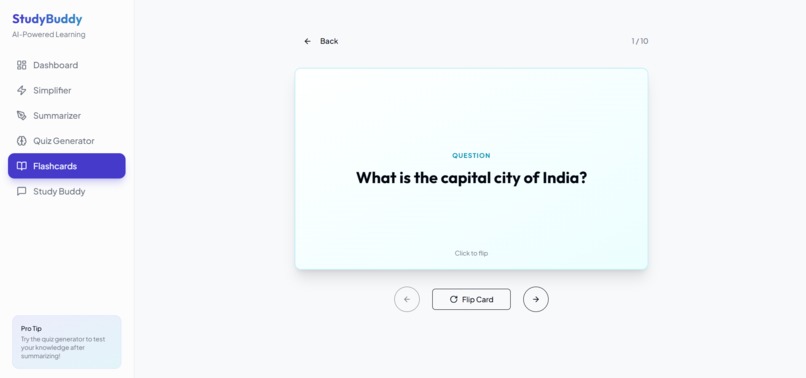
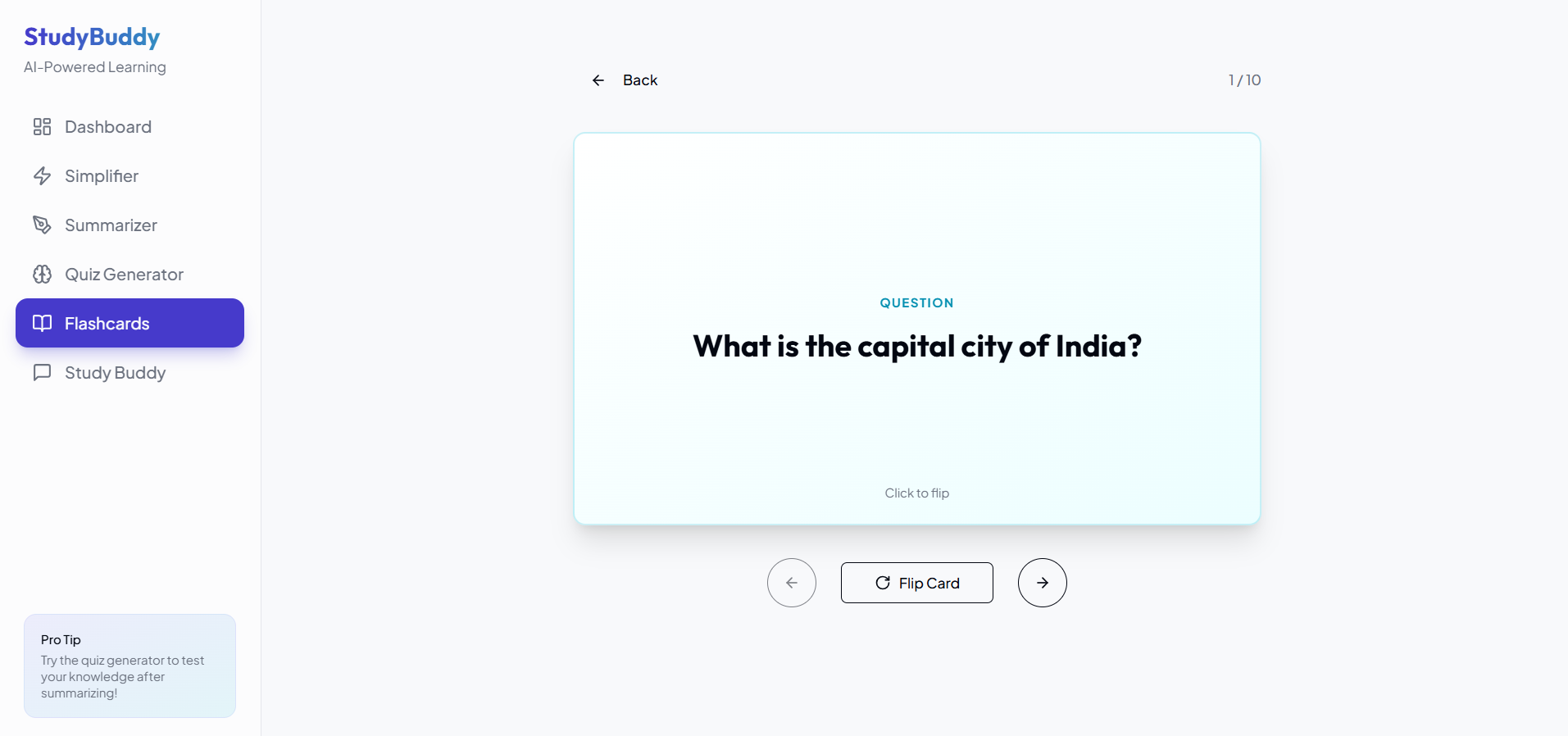
Flashcards
💡 Inspiration
The concept for StudyBuddy emerged from the challenges faced by students in navigating multiple learning resources simultaneously. Traditional study methods often require switching between textbooks, videos, and notes, which can be inefficient. My goal was to create an AI-powered learning companion that could provide instant guidance, explanations, and personalized study support in one unified platform.
This project is motivated by the desire to augment human learning with artificial intelligence, helping students optimize their study sessions, retain information faster, and gain confidence in understanding complex topics.
🛠️ Technical Implementation
Frontend: The user interface was developed using HTML5, CSS3, and JavaScript (ES6+). The design focuses on usability and accessibility, providing clear navigation and responsive layout across different devices. Key frontend features include:
- Dynamic rendering of AI responses
- Interactive input fields for questions or topics
- Real-time updates without page reloads
Backend / AI Integration: The backend relies on AI APIs to generate intelligent, context-aware responses. The system architecture follows a client-server model, where the frontend sends requests to the AI endpoint, and the server processes the response before returning it to the client.
- Request handling:
fetch()API in JavaScript to communicate with AI endpoints - Data processing: JSON parsing and sanitization to ensure consistent responses
- Error handling: Fallback responses for API downtime or invalid input
Deployment / Platform: The application is hosted and deployed on Replit, leveraging its cloud-based environment for live updates and accessibility. Deployment considerations included:
- Ensuring CORS settings allow frontend-backend communication
- Managing API keys securely within Replit secrets
- Optimizing asset loading for minimal latency
Mathematical / Scientific Support: StudyBuddy also supports formula rendering using LaTeX. For example, it can display mathematical equations like the Pythagorean theorem:
[ a^2 + b^2 = c^2 ]
This capability allows students to study STEM subjects more effectively and visualize concepts directly in the app.
📚 Lessons Learned
Building StudyBuddy provided extensive learning opportunities:
- Designing a full-stack web application from scratch
- Understanding asynchronous programming and API integration
- Implementing responsive and interactive UI components
- Handling AI output dynamically while maintaining performance
- Debugging and resolving deployment issues in a cloud environment
Additionally, this project strengthened my software architecture skills, including separating concerns between frontend, backend, and AI services, and managing data flow efficiently.
⚙️ Challenges
Some challenges I encountered:
- Frontend-backend synchronization: Ensuring AI responses appeared in real-time without breaking the UI required careful state management.
- Handling API limitations: Rate limits and latency from AI endpoints necessitated caching strategies and graceful error handling.
- Deployment issues: Configuring Replit hosting correctly, managing secrets securely, and ensuring cross-browser compatibility presented initial hurdles.
- User experience design: Balancing a clean interface with functional complexity was iterative, requiring testing and refinement.
These challenges taught me practical problem-solving skills, improved my debugging abilities, and emphasized the importance of planning and modular code design.
🚀 Future Enhancements
Potential improvements for StudyBuddy include:
- User accounts: Personalized study history, bookmarks, and progress tracking
- Enhanced AI capabilities: Multi-turn conversations for context-aware tutoring
- Interactive exercises: Quizzes, flashcards, and automated summaries
- Analytics dashboard: Insight into study habits and learning efficiency
Built With
- css
- javascript
- replit

