-
-

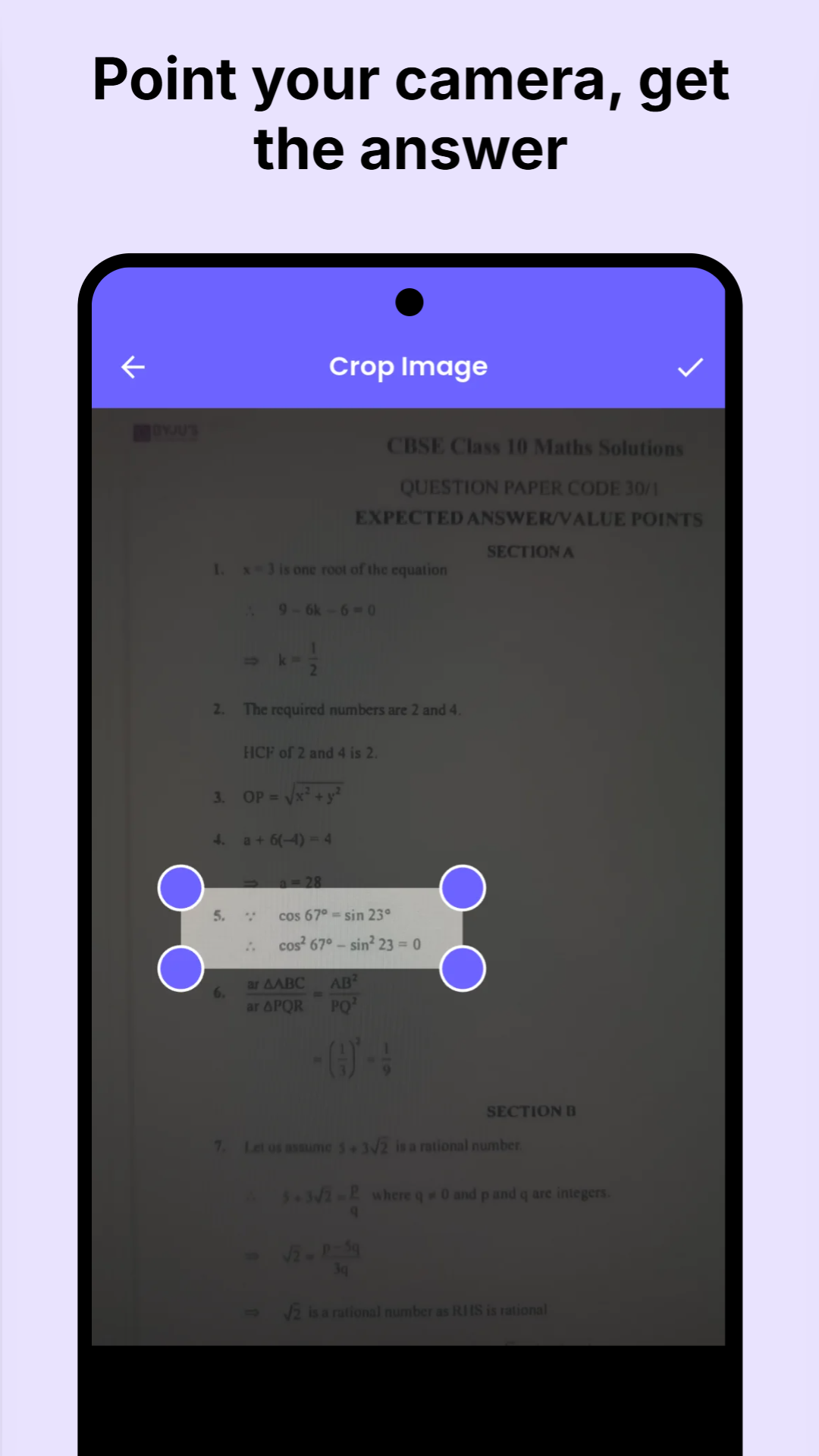
Capture or upload a page, then crop the exact question you want StudyBuddy AI to analyze.
-
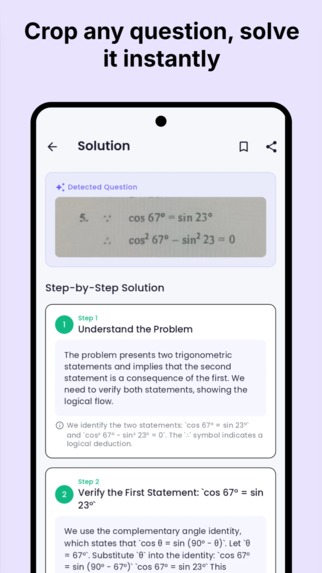
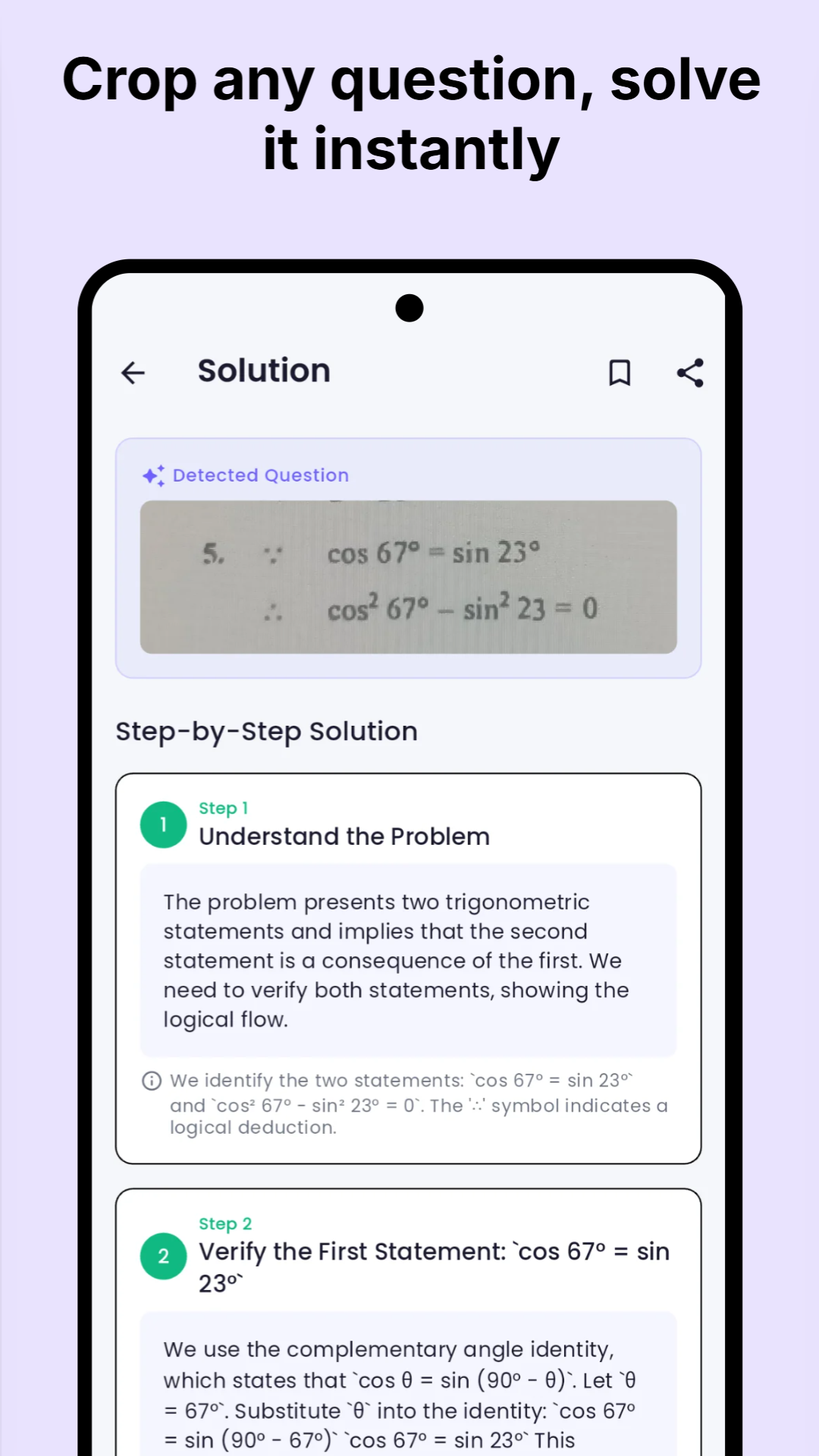
Receive a clear, step-by-step solution that explains the reasoning—not just the final answer.
-
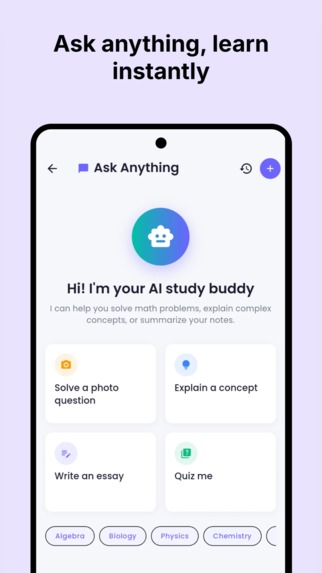
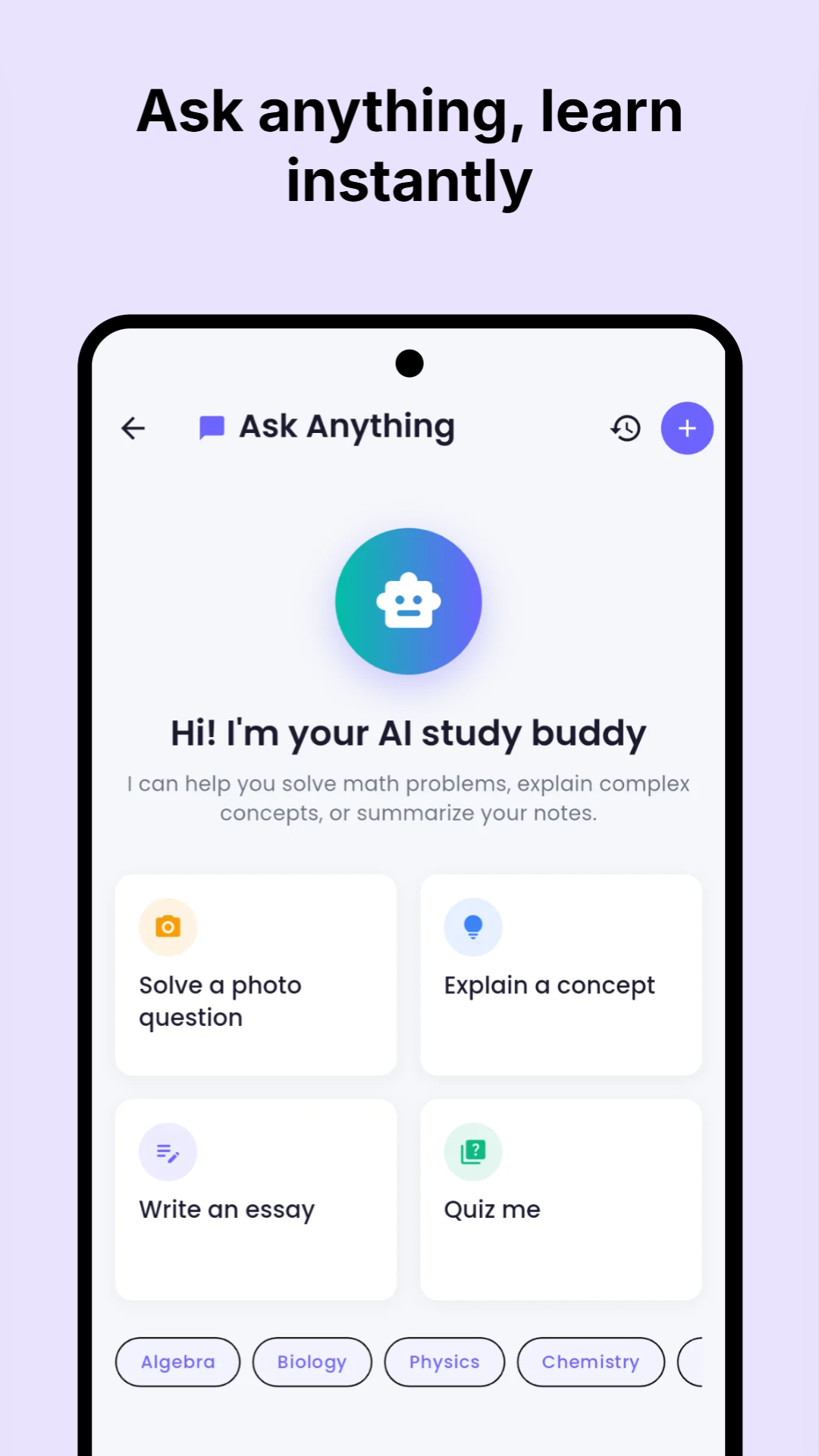
Ask your AI study buddy to solve questions, explain concepts, help with essays, create quizzes, and simplify difficult topics.
-
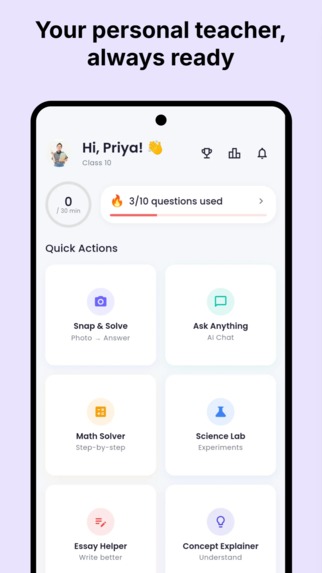
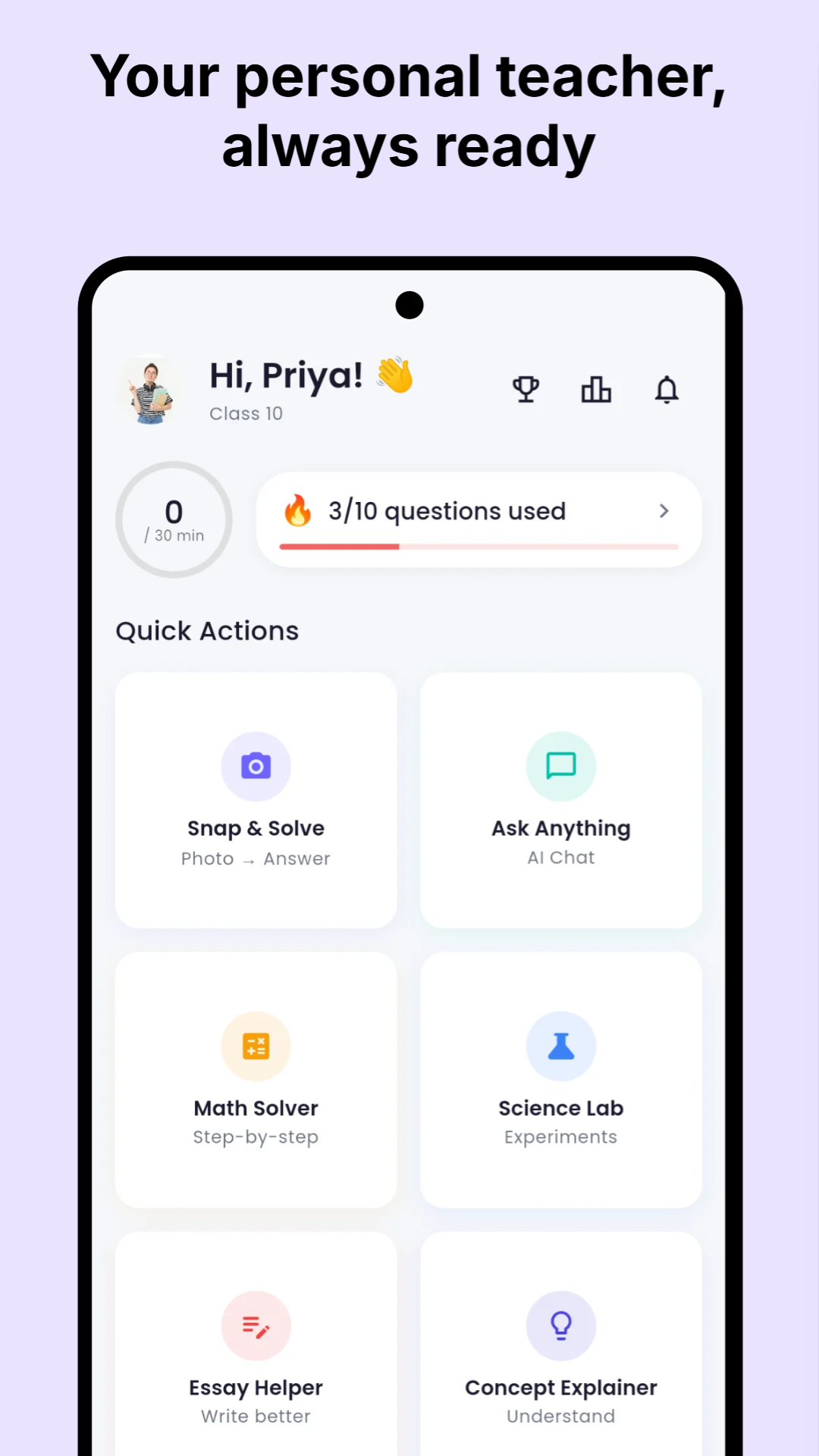
A personalized dashboard with AI chat, Snap & Solve, math help, science tools, essay support, and concept explanations.
-
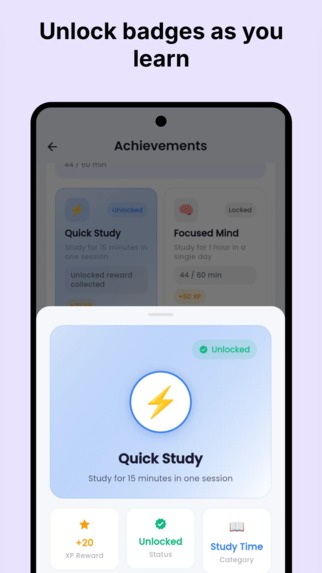
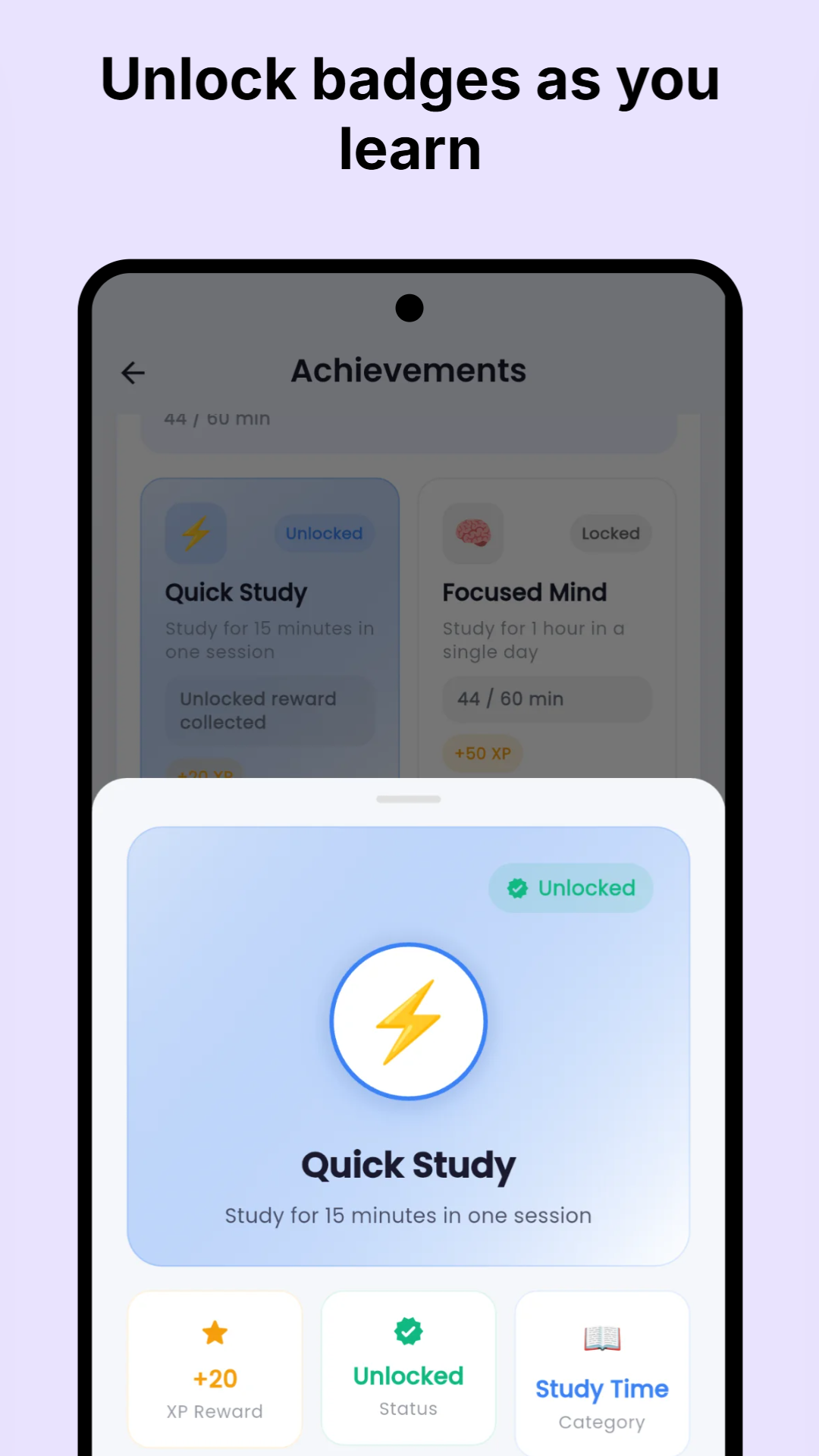
Turn consistent study into progress with achievement badges, XP rewards, goals, and motivating milestones.
-
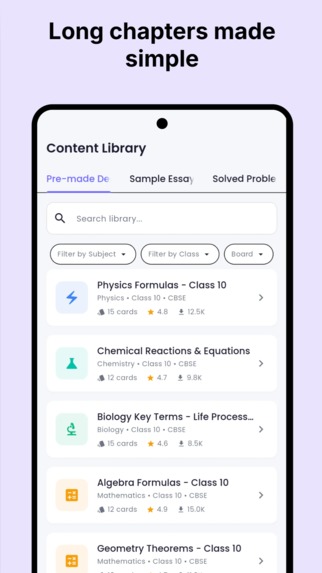
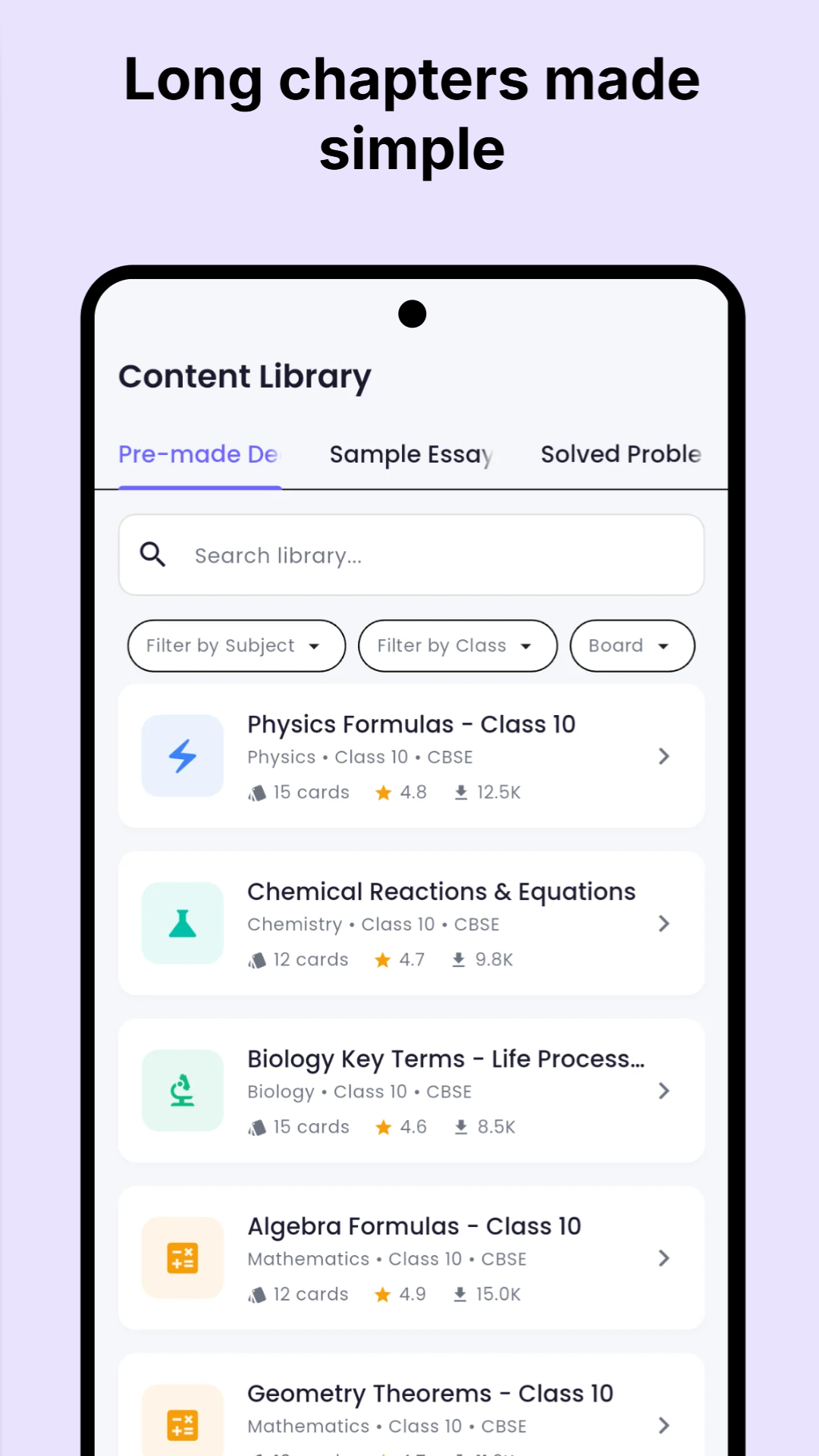
Explore curriculum-aware study decks, formulas, solved problems, and essays filtered by subject, class, and board.
Inspiration
Students often have to switch between multiple disconnected tools to understand concepts, create revision materials, practise questions, plan their studies, and monitor their progress. This fragmentation makes learning harder—especially when educational content does not match the student’s curriculum, grade, or current learning level.
StudyBuddy AI was created as a unified, curriculum-aware learning companion. Its goal is to help students move from “I do not understand this topic” to structured learning, practice, revision, and measurable progress—all within one application.
What it does
StudyBuddy AI provides students with a personalized learning workspace that brings together curriculum content, AI-assisted learning, practice tools, and progress tracking.
Key capabilities include:
- Curriculum, subject, chapter, and topic exploration
- AI-assisted study conversations and concept explanations
- Flashcards, quizzes, practice questions, and revision materials
- Personalized recommendations based on learning progress
- Study planning and revision scheduling
- Weak-area identification and due-review tracking
- Exam-preparation and structured practice experiences
- Image-assisted problem-solving workflows
- Progress tracking, achievements, and gamification
- Secure authentication and synchronized learning data
- Premium learning access and advertising-supported experiences
The Flutter mobile application communicates with an ASP.NET Core backend that manages curriculum content, student progress, recommendations, subscriptions, and AI-assisted services.
How I built it
StudyBuddy AI uses a layered, production-oriented architecture.
The mobile application is built with Flutter and Dart, using the BLoC pattern for state management. The backend is built with ASP.NET Core on .NET 9, while PostgreSQL stores curriculum, account, progress, recommendation, and learning data.
Firebase Authentication provides secure sign-in and token-based API access. Firebase Analytics, Crashlytics, Cloud Messaging, and Remote Config support analytics, stability monitoring, notifications, and controlled configuration. The backend connects to AI services for curriculum-aware explanations and learning assistance.
The backend is containerized with Docker and deployed through Kubernetes. RevenueCat manages premium entitlements, while Appodeal supports advertising for eligible users.
OpenAI Build Week extension
StudyBuddy AI existed before OpenAI Build Week. During Build Week, I used OpenAI Codex with GPT-5.6 to extend its production, privacy, subscription, and release workflows.
The Build Week work included:
- Adding iOS App Tracking Transparency authorization before advertising services initialize
- Creating a reusable subscription and legal-information component
- Adding consistent subscription disclosures to premium and trial-expiration screens
- Validating RevenueCat configuration during production builds
- Creating Fastlane workflows for repeatable iOS release builds and uploads
- Reviewing dependencies and native iOS plugin integration
- Verifying the implementation across Flutter, iOS, and release automation
Codex accelerated repository analysis, cross-platform implementation, and consistency checks. I made the final product and engineering decisions, including where consent should be requested, how subscription information should be presented, and which release settings must be validated.
Build Week commits: 35c42d4d and fc82db52
Codex session ID: 019f65e7-abad-79a0-a336-976f7d9e52bb
Challenges I ran into
One of the largest challenges was extending an established application without destabilizing its existing learning experience.
Advertising initialization had to wait for the appropriate iOS tracking-authorization state while preserving existing Android behavior. Subscription disclosures also needed to remain clear, accessible, and reusable across multiple paywall and trial-expiration experiences.
Another challenge was making the release process safer. Required RevenueCat configuration needed to be validated before creating a production build so that an incorrectly configured application could not be uploaded silently.
Finally, because StudyBuddy AI was a pre-existing project, it was important to maintain a clear and verifiable distinction between the original application and the work completed during Build Week.
Accomplishments that I'm proud of
I am proud that the Build Week work improved StudyBuddy AI as a real production application rather than creating an isolated technical demonstration.
The extension introduced:
- A privacy-aware advertising initialization flow
- Clearer and more consistent subscription information
- Reusable legal and subscription UI components
- Validated production configuration
- A safer and repeatable App Store release workflow
These improvements were integrated into the existing architecture and designed to support the application as it grows.
I am also proud of using Codex as an engineering collaborator across Flutter, native iOS integration, dependency management, and release automation while retaining control over the final product, privacy, and engineering decisions.
What I learned
I learned that improving a mature application is not only about adding visible features. Some of the most important engineering work happens at the boundaries between product behavior, privacy, subscriptions, platform requirements, and deployment.
Codex was especially useful for tracing behavior across a large repository, identifying affected components, and implementing coordinated changes across multiple technical layers.
I also learned the importance of documenting what existed before an event and clearly identifying what was added during it. Dated commits and timestamped Codex sessions make that development process transparent and verifiable.
What's next for StudyBuddy AI
The next steps for StudyBuddy AI include:
- Expanding personalized learning recommendations
- Improving weak-area detection and adaptive revision scheduling
- Adding richer curriculum-aware practice experiences
- Strengthening parent and educator progress insights
- Improving offline learning and synchronization
- Adding more transparent AI explanations and student controls
- Expanding automated testing across AI and entitlement workflows
- Improving accessibility across learning and subscription experiences
- Continuing to strengthen privacy and data controls
- Supporting additional curricula, subjects, languages, and regions
The long-term goal is to make StudyBuddy AI a trusted learning companion that adapts to each student while keeping the experience structured, transparent, and easy to use.
Built With
- .net-9
- app-tracking-transparency
- appodeal
- asp.net-core
- bloc
- c#
- dart
- deepseek-api
- docker
- entity-framework-core
- fastlane
- firebase-analytics
- firebase-authentication
- firebase-cloud-messaging
- firebase-crashlytics
- flutter
- gpt-5.6
- kubernetes
- openai-codex
- postgresql
- rest-api
- revenuecat
- server-sent-events

Log in or sign up for Devpost to join the conversation.