🚀 Inspiration
As students, we realized we spend more time preparing to study than actually learning. Summarizing lectures, creating flashcards, designing quizzes, and planning revision schedules consumes hours every week. Meanwhile, automation is transforming industries everywhere — yet the learning workflow itself remains manual and repetitive.
We asked ourselves:
Why automate businesses, but not learning?
AutoLearn was inspired by the idea of transforming static study materials into an intelligent, adaptive learning system that saves time and improves retention.
🤖 What it does
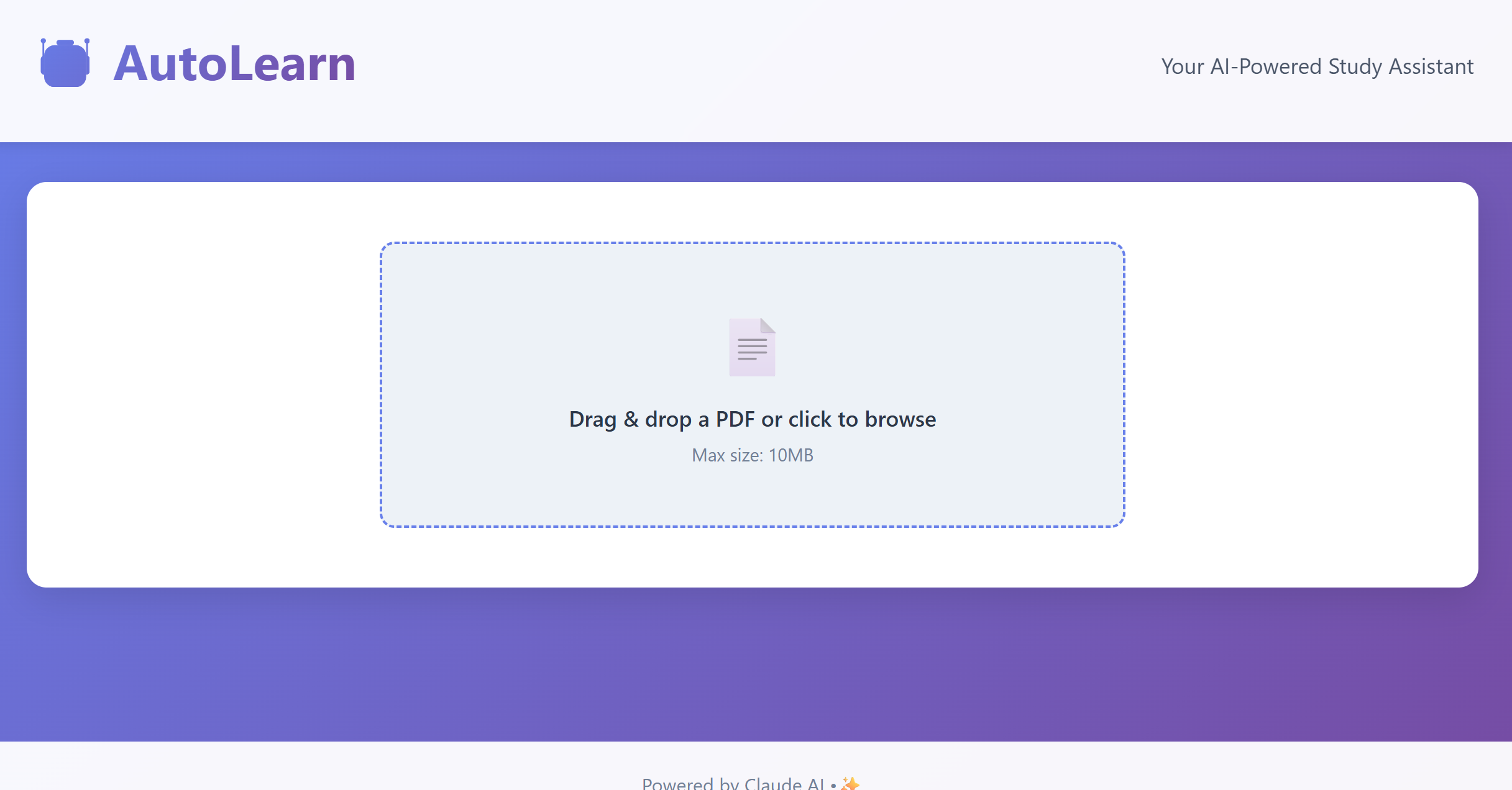
AutoLearn is an AI-powered study automation platform that converts uploaded lecture notes, PDFs, and slides into a personalized learning engine.
Once a document is uploaded, the platform automatically:
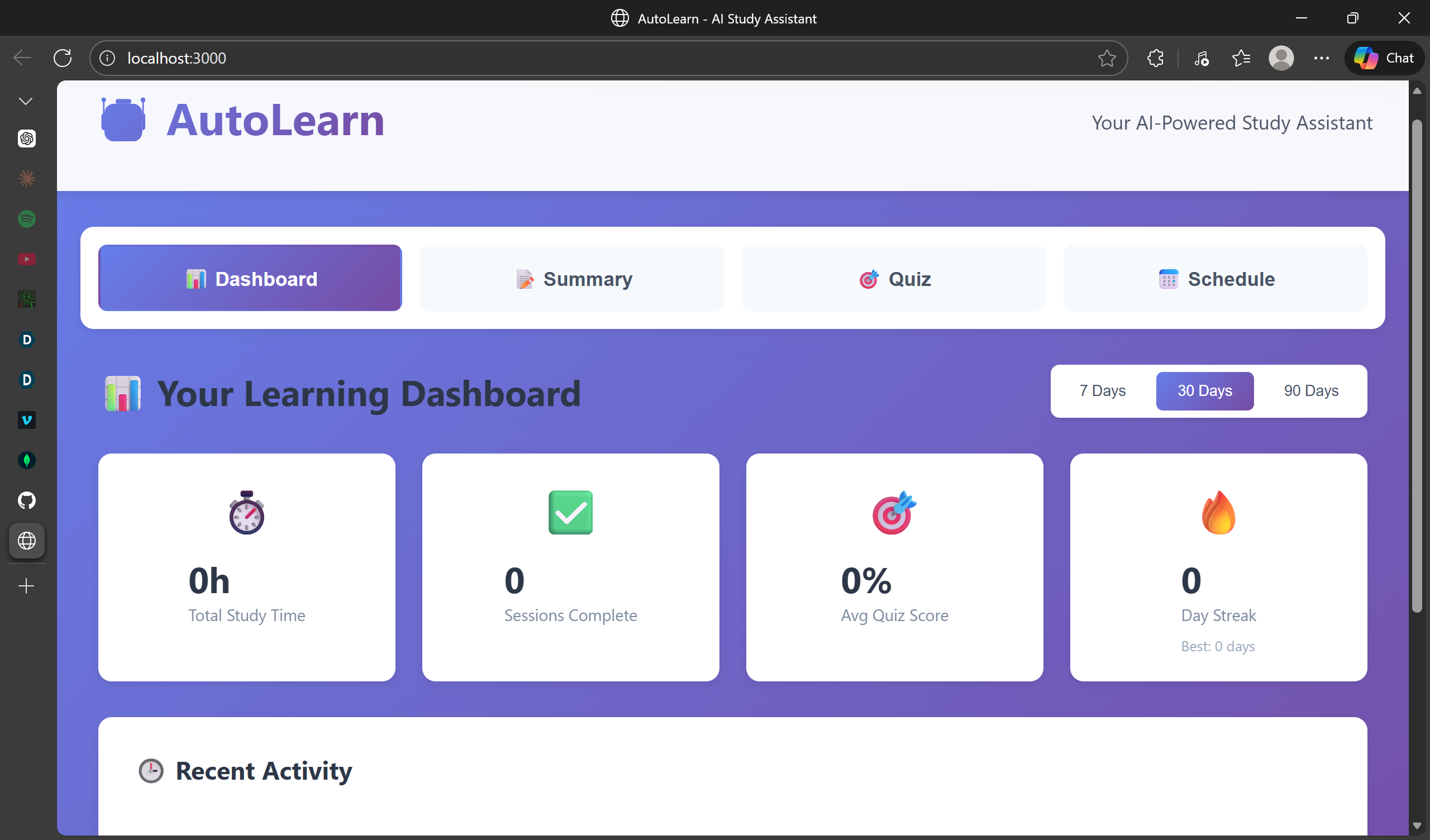
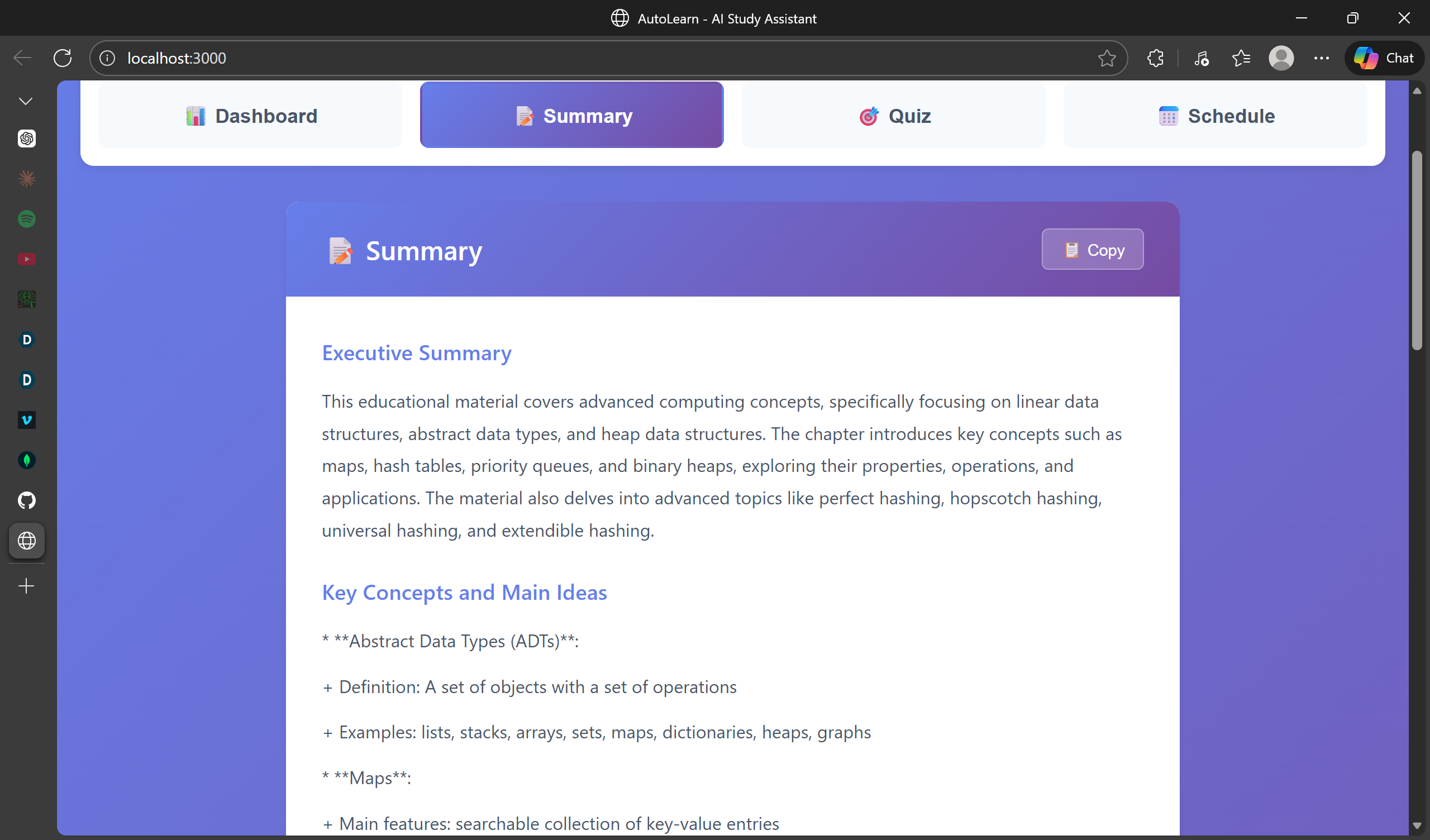
Generates structured summaries
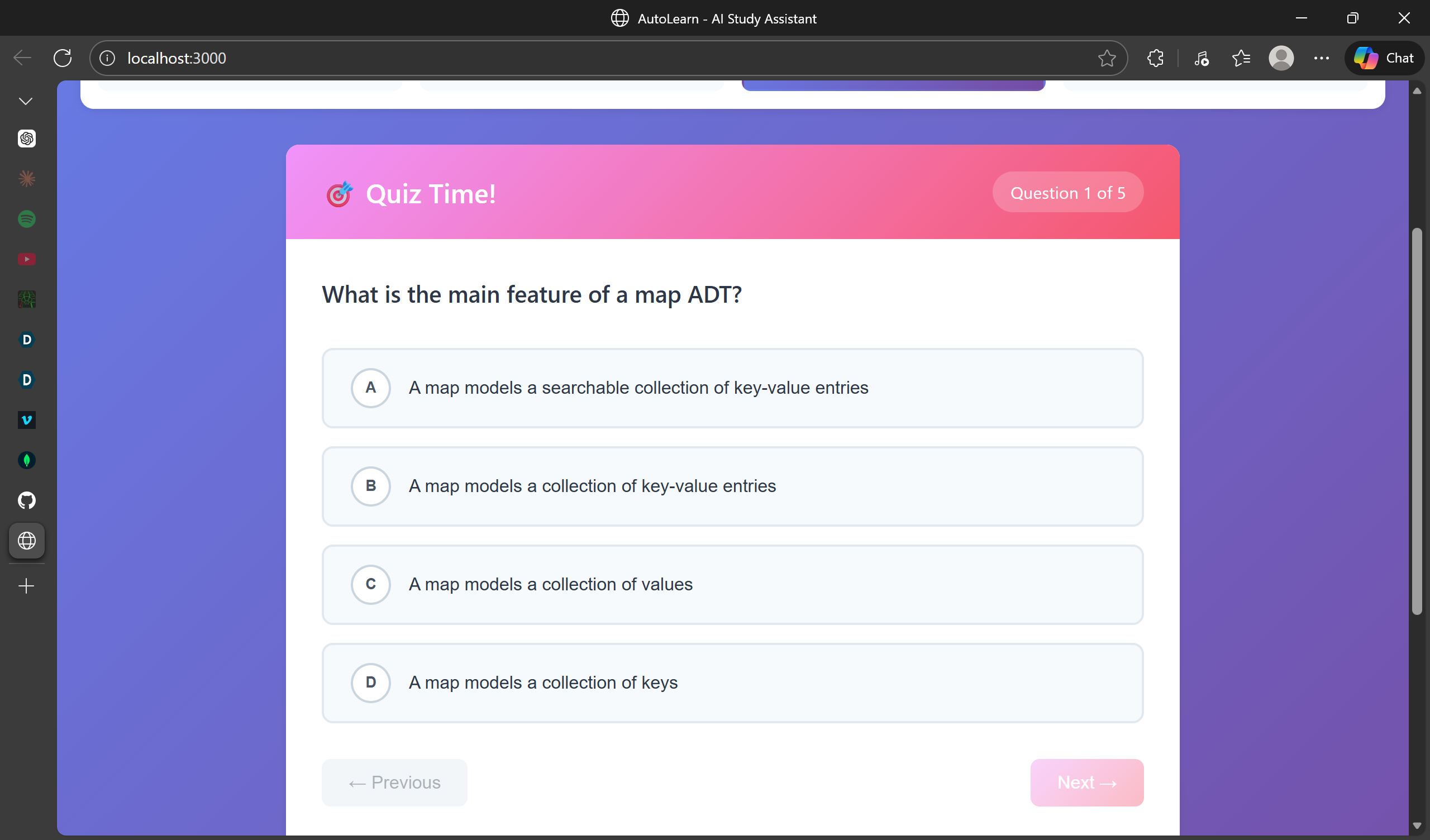
Creates quizzes (MCQs)
Produces flashcards for active recall
Builds a smart study schedule
Tracks weak topics using performance analytics
Instead of passively rereading notes, students get an interactive and adaptive study experience.
🛠 How we built it
We built AutoLearn as a full-stack AI system that processes documents, generates learning content, and adapts based on user performance.
📄 Document Processing
Uploaded documents are parsed and cleaned. To ensure efficient AI processing and avoid context overflow, we chunk large documents into smaller segments.
If a document contains 𝑁 N tokens and each chunk has size 𝑘 k, the number of chunks is:
Chunks
⌈ 𝑁 𝑘 ⌉ Chunks=⌈ k N
⌉
This ensures scalability and stable AI responses.
✨ AI Content Generation
Using structured prompt engineering, we generate:
Hierarchical summaries
Multiple-choice and short-answer quizzes
Flashcards for spaced repetition
Each chunk is processed independently and later aggregated into a cohesive study module.
📊 Weak Topic Detection
We implemented a weakness scoring function based on quiz performance:
Weakness Score
1 − Correct Answers Total Questions Weakness Score=1− Total Questions Correct Answers
Topics with higher weakness scores are prioritized for review.
📅 Smart Study Scheduling
We applied a simplified spaced repetition model to optimize review intervals:
𝐼
𝑛
𝐼 𝑛 − 1 ( 1 + 𝛼 ) I n
=I n−1
(1+α)
Where:
𝐼 𝑛 I n
= next review interval
𝛼 α = performance adjustment factor
If performance is strong, 𝛼 α increases and intervals grow longer. If performance is weak, intervals shorten, reinforcing difficult concepts.
⚡ Challenges we ran into
Handling large PDFs without exceeding AI token limits required designing a chunking and aggregation strategy. Ensuring high-quality summaries and meaningful quiz questions required multiple iterations of prompt refinement. Mapping quiz performance back to specific topics for accurate weakness tracking also required structured tagging and content alignment. Additionally, implementing adaptive scheduling logic within hackathon time constraints was challenging, forcing us to balance sophistication with practicality.
🏆 Accomplishments that we're proud of
We built a complete end-to-end automation pipeline that transforms static documents into interactive learning modules. Implementing adaptive difficulty and weakness detection elevated the project beyond a simple summarization tool. We successfully integrated document parsing, AI generation, analytics, and scheduling into one cohesive platform — all within a limited hackathon timeframe.
📚 What we learned
We learned that prompt engineering significantly impacts AI output quality. Automation is most effective when workflows are clearly structured and measurable. Adaptive learning systems require strong feedback loops to personalize effectively. We also learned that thoughtful overengineering — when aligned with user value — can meaningfully enhance educational outcomes.
Most importantly, we learned that AI should optimize learning, not replace it.
🔮 What's next for AutoLearn
Future improvements include:
Integrating a vector database for semantic document search
Building a concept dependency graph
Generating AI-powered mock exams
Enabling collaborative group study features
Integrating with LMS platforms (Canvas, Moodle, Blackboard)
Launching a mobile version
Our long-term vision is to evolve AutoLearn into an intelligent learning operating system that adapts, tracks, and optimizes how students study.


Log in or sign up for Devpost to join the conversation.