-
-
By
-
-
-
-
Inspiration
Students often struggle to understand complex study materials, identify the most important concepts, and determine whether they truly understand what they have read. General-purpose AI assistants can help, but their answers may not be grounded in the specific materials a student is studying.
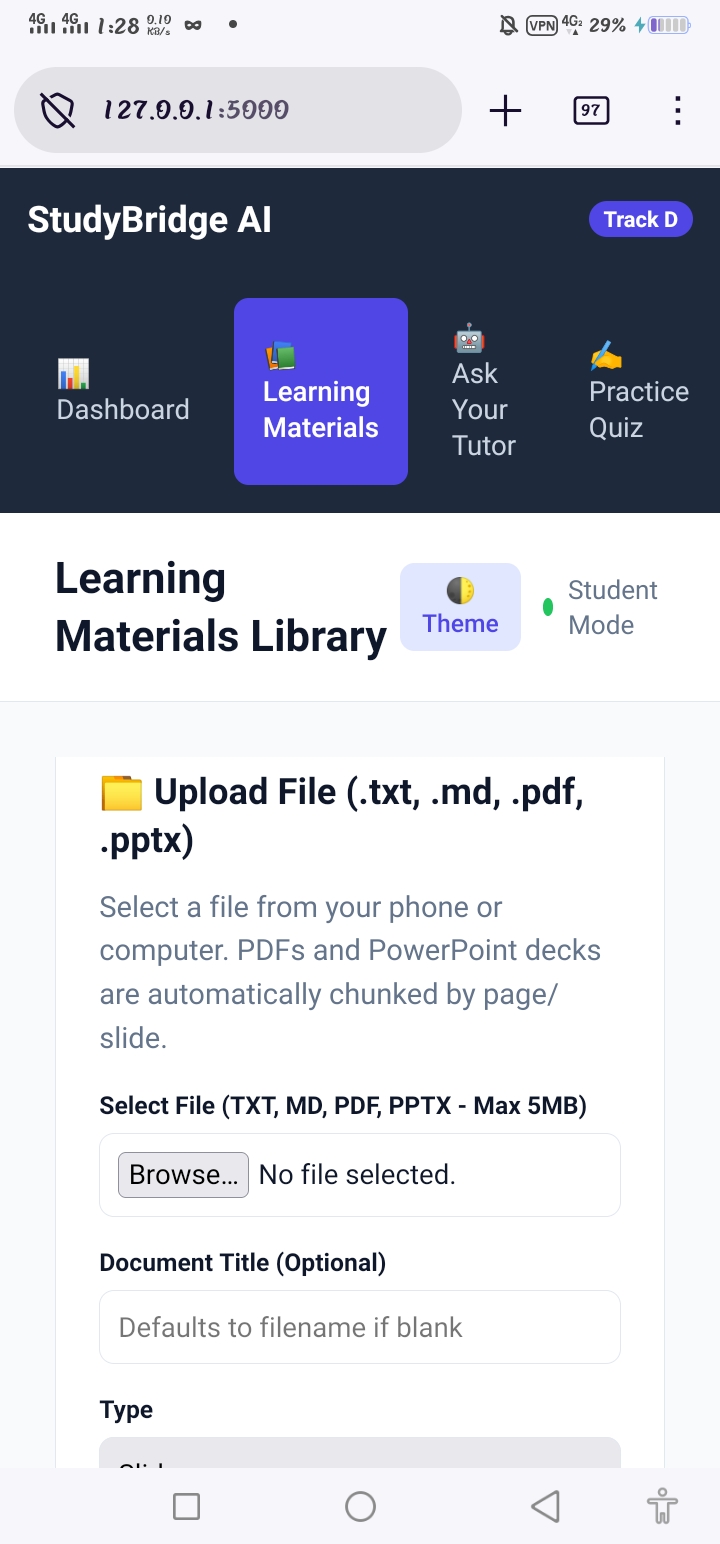
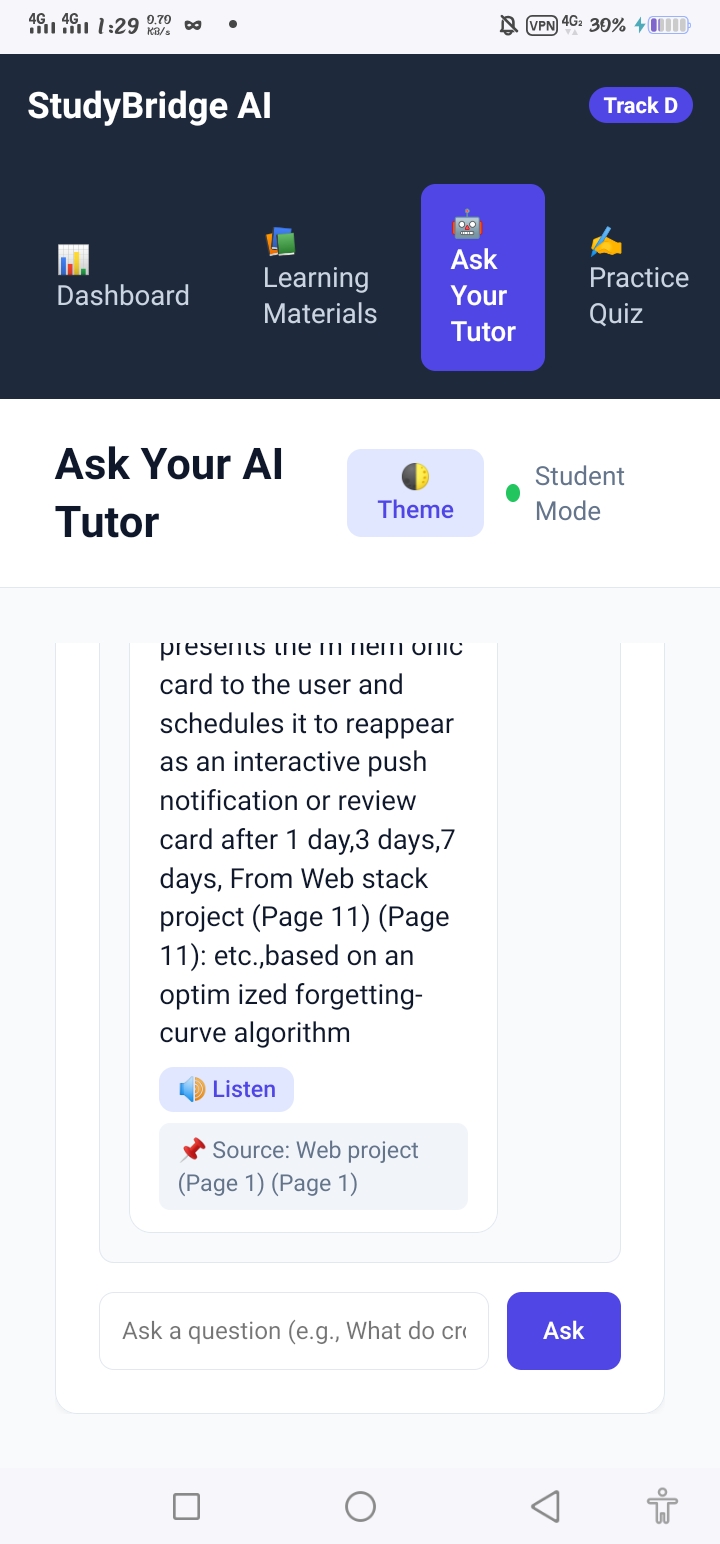
I built StudyBridge AI to explore a more grounded approach to AI-assisted learning: helping students learn from their own study materials while making the sources behind explanations visible.
What It Does
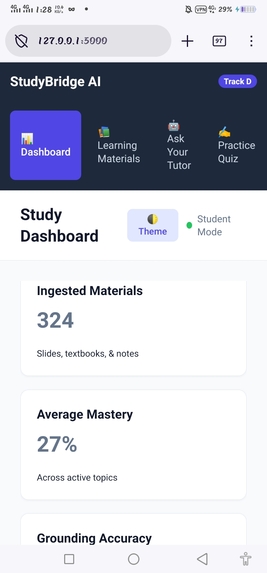
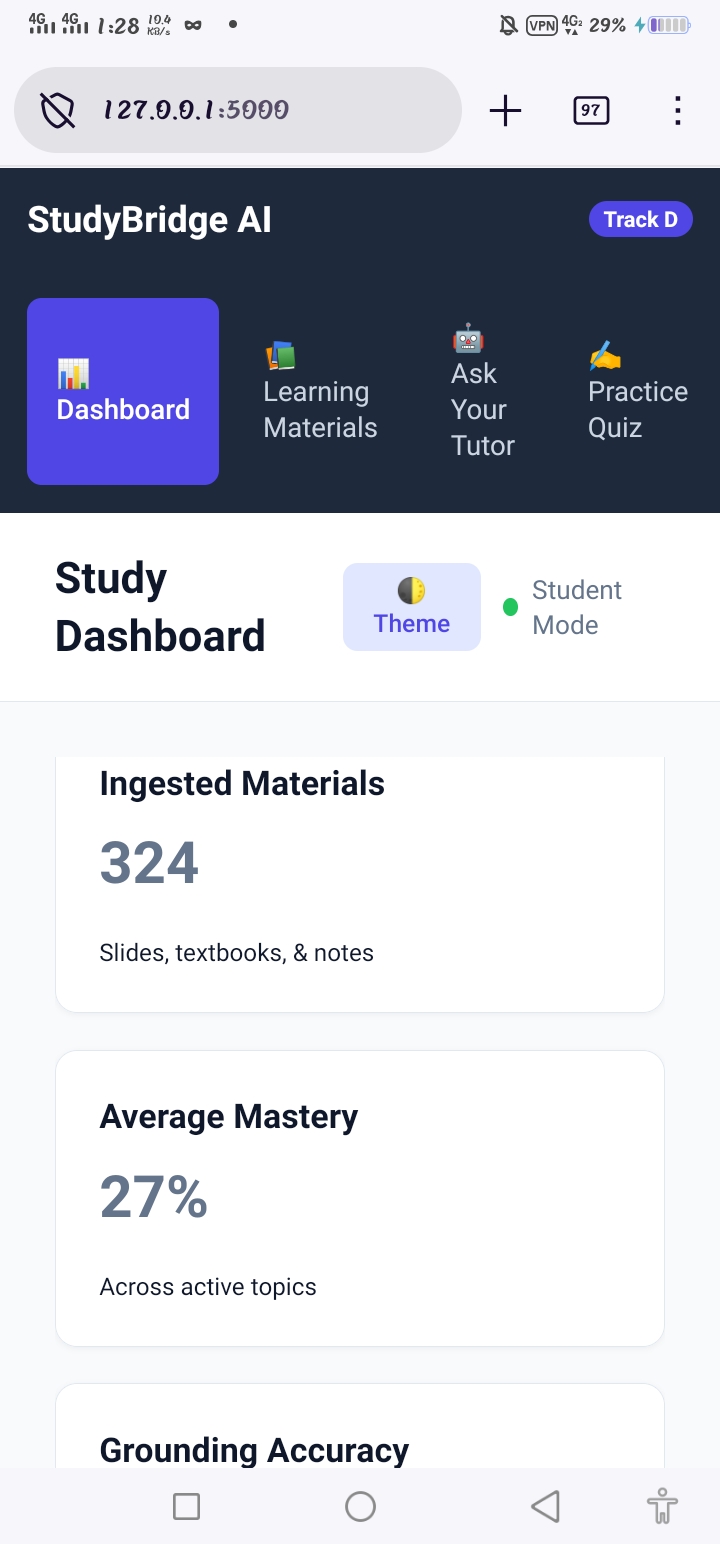
StudyBridge AI is an AI-powered learning assistant designed to help students understand their learning materials through:
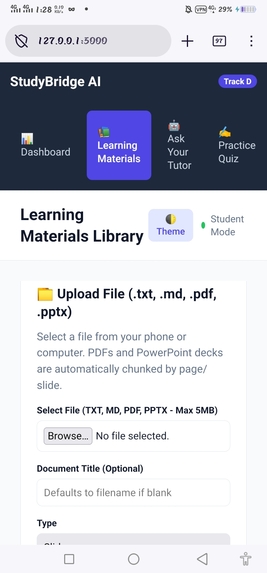
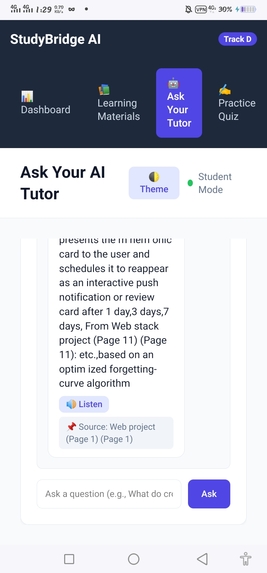
- Document-based retrieval: Finds relevant passages from supplied study materials.
- Grounded explanations: Uses retrieved passages to support explanations generated with Apertus.
- Source citations: Helps learners identify the material supporting an answer.
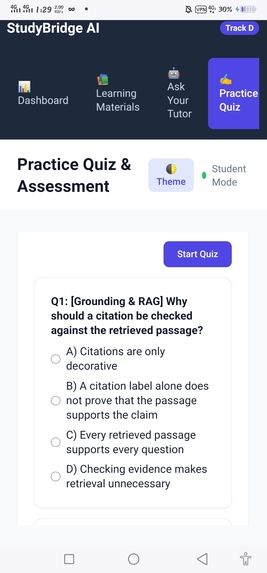
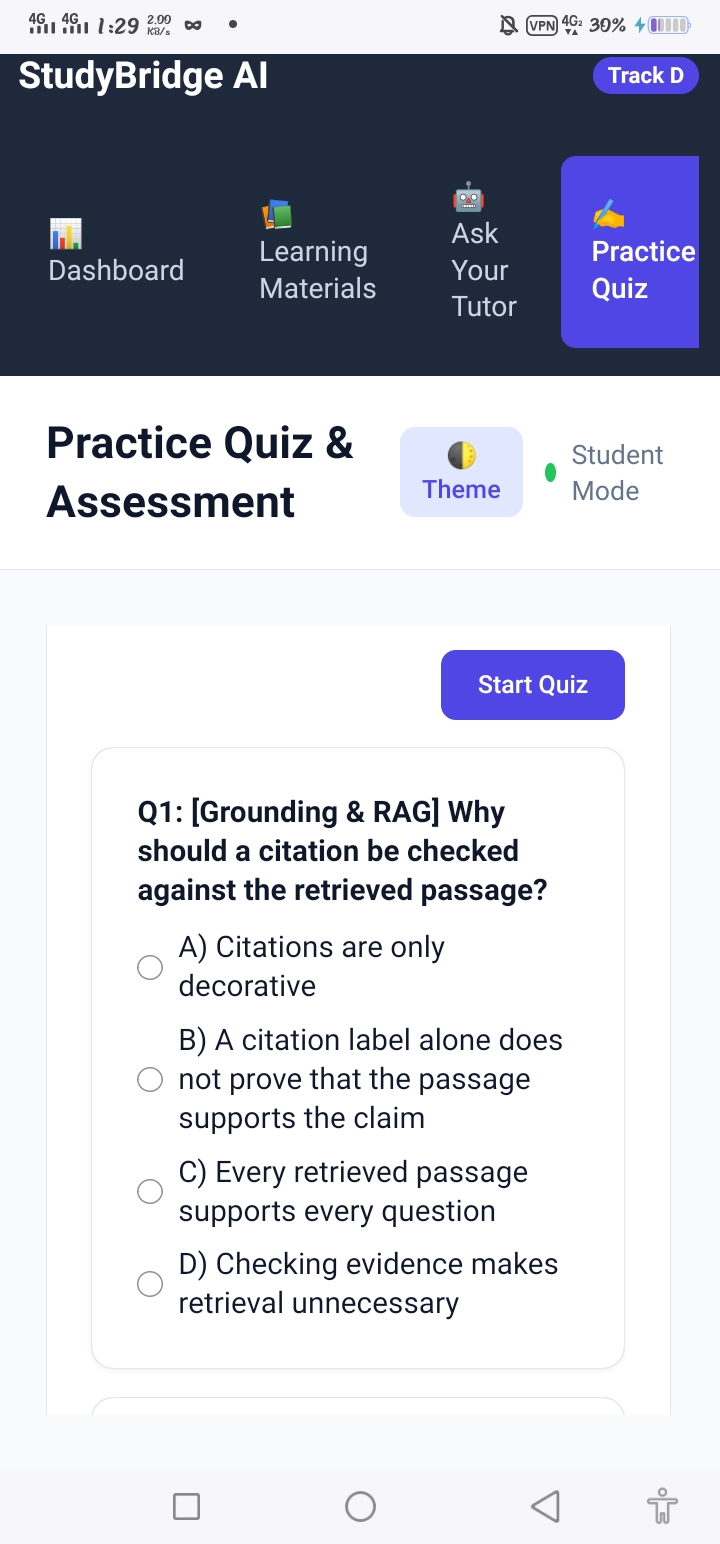
- Learning activities: Includes quiz and assessment functionality.
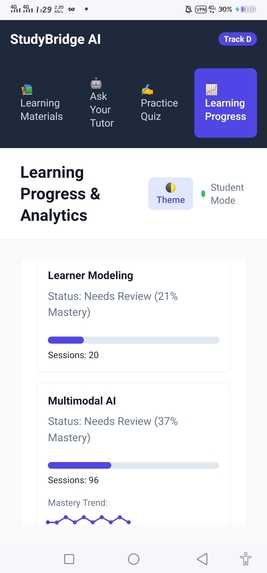
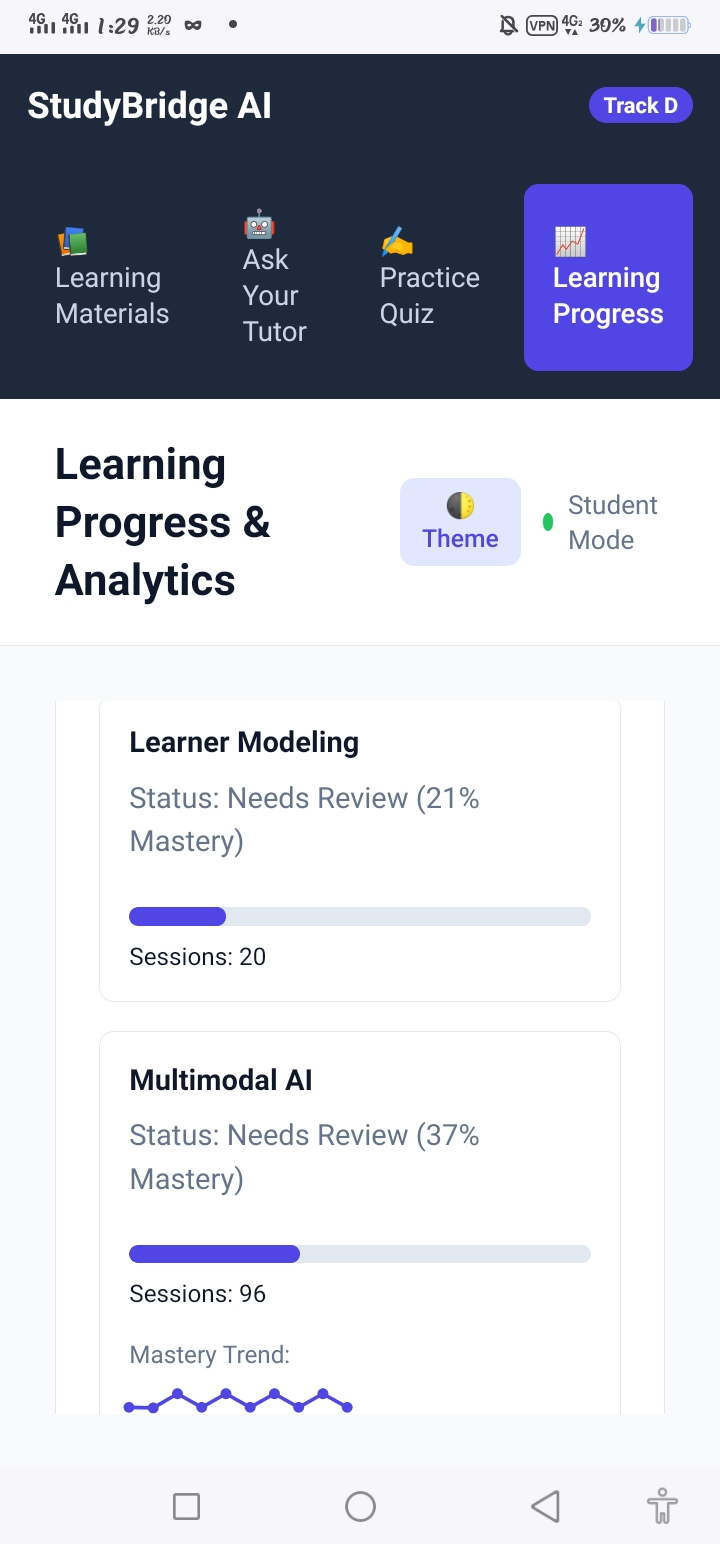
- Learner progress features: Provides a foundation for tracking learning progress and supporting more personalized learning.
The system is designed to recognize the limitations of its available information rather than present unsupported answers as established facts.
How I Built It
I developed StudyBridge AI using Python, with a modular application structure separating tutoring, retrieval, and language-model integration.
The project integrates the Apertus v1.5 8B model through an OpenAI-compatible inference endpoint. Relevant study passages are retrieved and supplied as context for generated explanations.
I also implemented automated tests, documented the system's architecture and limitations, and configured Docker-based deployment and GitLab CI verification.
One distinctive part of this journey was developing and testing the project using my Android phone and Termux. This required working carefully within limited computing resources and dealing with practical development and connectivity constraints.
Challenges I Faced
One major challenge was integrating a hosted language model reliably and ensuring that model responses were grounded in the available study material.
I also had to distinguish genuine model-generated answers from fallback behavior, handle generation failures transparently, and test the application's core functionality.
Automated testing helped me validate the system and improve its reliability. The current Python test suite has 78 passing tests.
What I Learned
This project strengthened my understanding of retrieval-augmented generation, API integration, automated testing, deployment workflows, and responsible AI design.
It also reinforced an important lesson: a useful educational AI system should do more than generate fluent answers. It should connect its explanations to available evidence and acknowledge the limits of that evidence.
What's Next
StudyBridge AI is a working prototype, not a fully validated educational product. Future work includes broader evaluations of answer accuracy, citation quality, latency, and learning outcomes, as well as further improvements to personalization and deployment.
My goal is to continue developing an accessible learning assistant that helps students engage with difficult material more confidently.

Log in or sign up for Devpost to join the conversation.