-
-
Home
-
Login
Inspiration
The inspiration came from the universal struggle of "backbenchers" - students who find themselves cramming in the final hours before an exam. We recognized that last-minute studying is a reality for many students, and instead of judging this behavior, we decided to embrace it and create a tool that maximizes learning efficiency in those crucial final moments. The idea was to build an AI-powered study companion that transforms chaotic last-minute preparation into a focused, distraction-free learning experience.
What it does
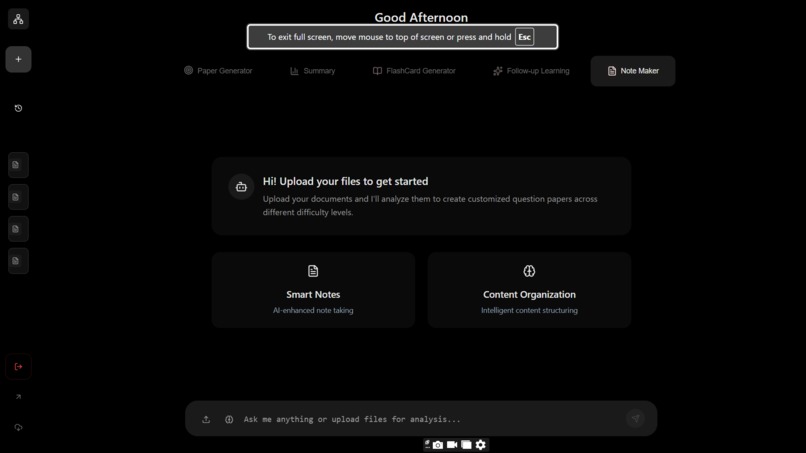
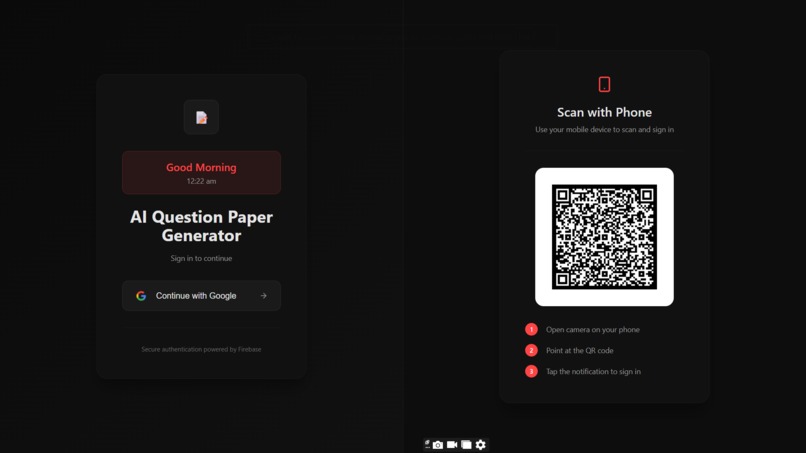
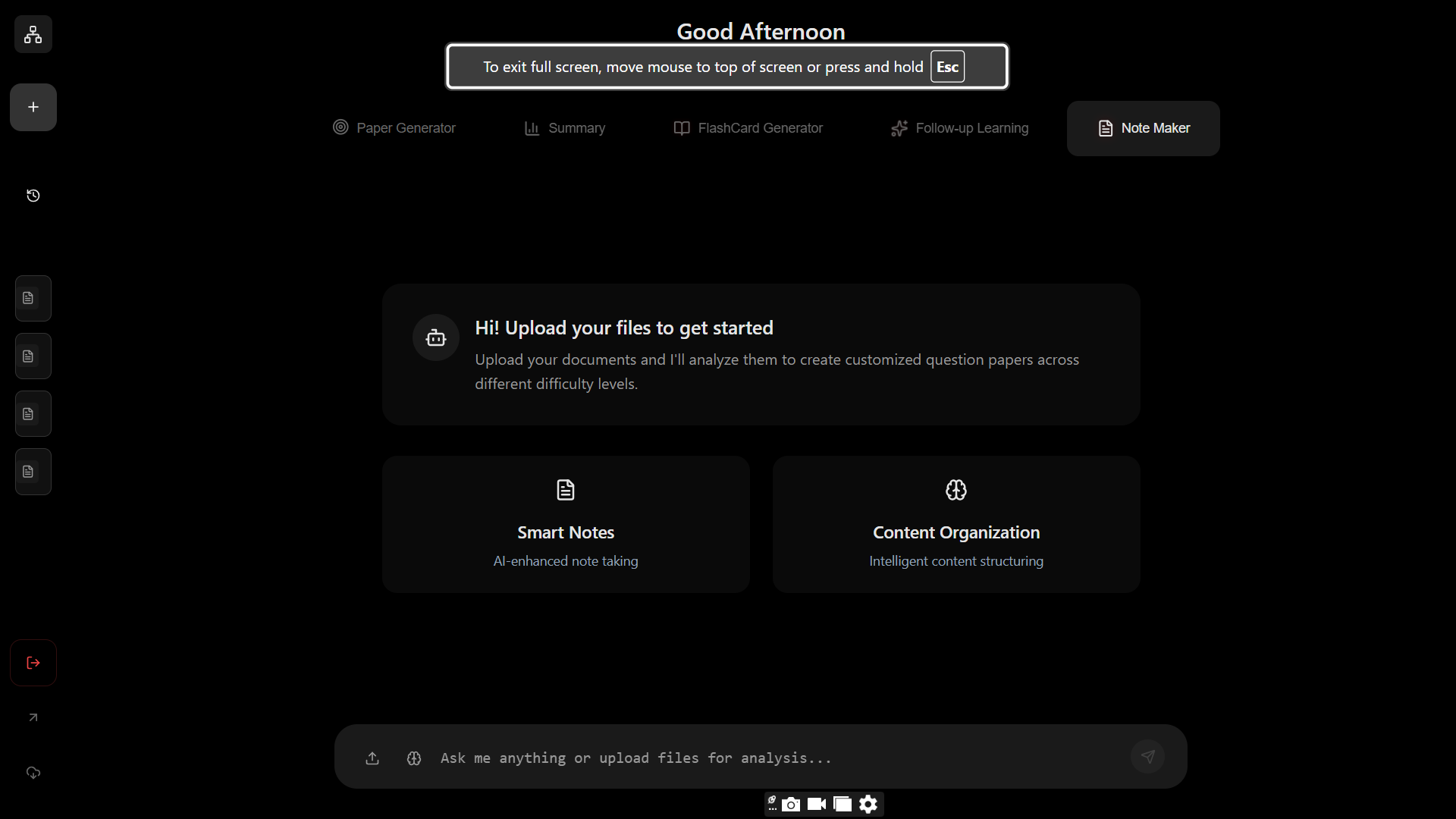
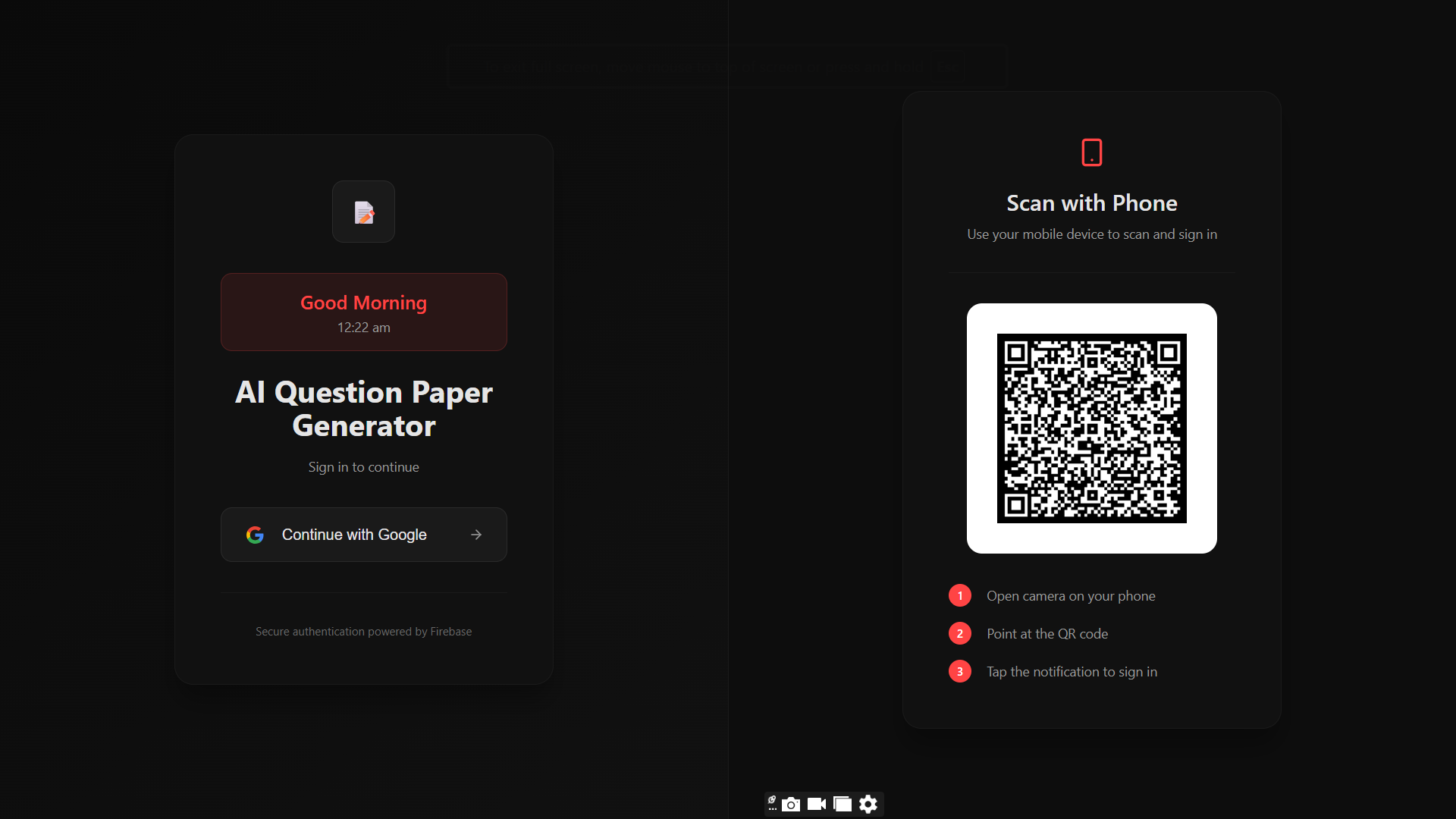
StudyAlte is an intelligent question paper analyzer and generator that creates a distraction-free study environment powered by AI. The application:
- Analyzes Study Materials: Uses Gemini AI to extract key topics, difficulty levels, and question patterns from uploaded documents
- Intelligent Agent Selection: Automatically selects the most suitable specialist from 8 AWS Bedrock agents based on subject matter (Mathematics, Computer Science, Engineering disciplines, Economics, etc.)
- Generates Custom Question Papers: Creates examination-worthy question papers with proper formatting, LaTeX mathematical content, and Mermaid diagrams
- Provides Comprehensive Coverage: Includes multiple question types (MCQ, Short Answer, Long Answer, Numerical) with detailed answer keys
- Maintains Academic Standards: Follows Bloom's taxonomy and proper marking schemes
The app supports diverse subjects through specialized agents:
- Mathematics & Statistics Specialist
- Data Science Specialist
- Engineering Specialists (Mechanical, Electrical, Civil, Chemical)
- Computer Science Specialist
- Economics Specialist
- General Academic Specialist
How we built it
The application is built using modern web technologies with a robust AI backend:
Frontend: React with TypeScript for type safety and better development experience
AI Integration:
- Gemini API: For document analysis, content extraction, and pattern recognition
- AWS Bedrock Agents: 8 specialized agents for subject-specific question generation
- Multi-Agent Architecture: Intelligent routing system that selects the best agent based on content analysis
Key Technical Features:
- Intelligent Parsing: Extracts questions, topics, and requirements from various document formats
- Mathematical Rendering: Full LaTeX support for equations, integrals, and mathematical expressions
- Visual Content: Mermaid diagram generation for flowcharts, graphs, and technical diagrams
- Fallback Systems: Robust error handling with local generation when cloud services are unavailable
- Environment Configuration: Secure credential management through environment variables
Architecture Highlights:
- Service-oriented design with separate modules for Gemini and Bedrock
- Comprehensive error handling and fallback mechanisms
- Structured data models for questions, sections, and mathematical content
- Real-time content generation with streaming responses
Challenges we ran into
Multi-AI Integration Complexity: Coordinating between Gemini for analysis and multiple Bedrock agents for generation required careful prompt engineering and response parsing.
Content Parsing Reliability: Handling various document formats and extracting meaningful question patterns from unstructured text proved challenging, requiring multiple parsing strategies.
Mathematical Content Rendering: Implementing proper LaTeX rendering and ensuring mathematical expressions are correctly formatted across different question types.
Agent Selection Logic: Developing an intelligent scoring system to match content with the most appropriate specialized agent based on subject matter and complexity.
Response Format Consistency: Different AI models return responses in varying formats, requiring robust parsing logic and fallback mechanisms.
Error Handling: Building comprehensive fallback systems to ensure the app remains functional even when specific AI services are unavailable.
Accomplishments that we're proud of
Seamless Multi-AI Orchestration: Successfully integrated 9 different AI models (1 Gemini + 8 Bedrock agents) working in harmony to deliver specialized content generation.
Intelligent Subject Specialization: Created a system that automatically routes content to domain experts, ensuring high-quality, subject-appropriate question papers.
Comprehensive Mathematical Support: Implemented full LaTeX rendering with support for complex equations, integrals, matrices, and chemical formulas.
Visual Content Generation: Integrated Mermaid diagram support for flowcharts, graphs, and technical diagrams within questions.
Robust Fallback Architecture: Built a system that gracefully degrades and continues functioning even when cloud AI services are unavailable.
Academic Standard Compliance: Ensured generated content follows proper academic standards with Bloom's taxonomy levels and structured marking schemes.
What we learned
AI Model Specialization: Different AI models excel at different tasks - Gemini's analytical capabilities complement Bedrock's specialized generation perfectly.
Prompt Engineering at Scale: Managing prompts across multiple specialized agents requires careful consideration of context, format, and expected outputs.
Error Resilience Design: In AI-powered applications, robust error handling and fallback mechanisms are not optional - they're essential for user experience.
Content Structure Importance: Well-structured data models and clear interfaces between services are crucial for maintaining consistency across different AI outputs.
User Requirements Precision: The importance of accurately parsing and maintaining user requirements throughout the AI generation pipeline.
Academic Content Complexity: Generating educationally valuable content requires understanding of pedagogical principles, not just technical implementation.
What's next for StudyAI
Real-time Collaboration: Add features for group study sessions where multiple students can work on the same question paper simultaneously.
Performance Analytics: Implement detailed analytics to track study patterns, time spent on different topics, and performance improvement over time.
Adaptive Learning: Develop AI-powered recommendations that adapt question difficulty and focus areas based on individual student performance.
Mobile Application: Create a mobile app for on-the-go studying with offline capabilities for generated content.
Integration Expansion: Add support for more document formats, learning management systems, and educational platforms.
Advanced Visualization: Enhance mathematical and scientific content with interactive graphs, 3D models, and simulation capabilities.
Personalized Study Plans: Generate comprehensive study schedules and revision plans based on exam dates and available study time.
Community Features: Build a platform where students can share generated question papers and study materials while maintaining academic integrity.
The vision is to evolve StudyAlte from a question paper generator into a comprehensive AI-powered learning ecosystem that supports students throughout their academic journey, not just in those crucial last-minute study sessions.


Log in or sign up for Devpost to join the conversation.