-
-
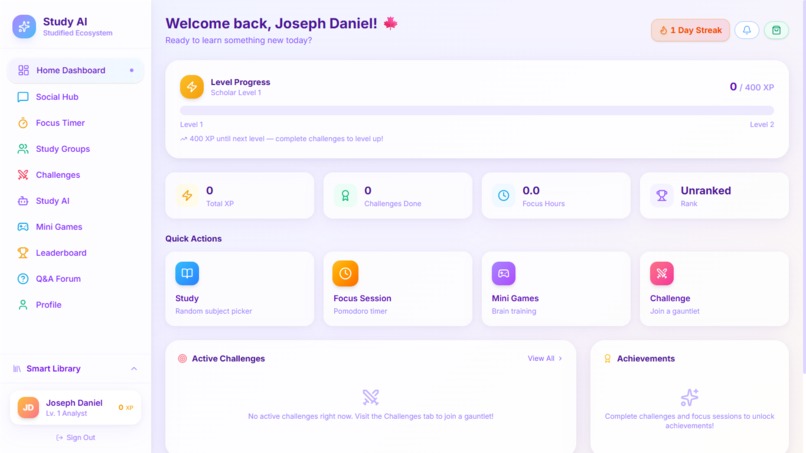
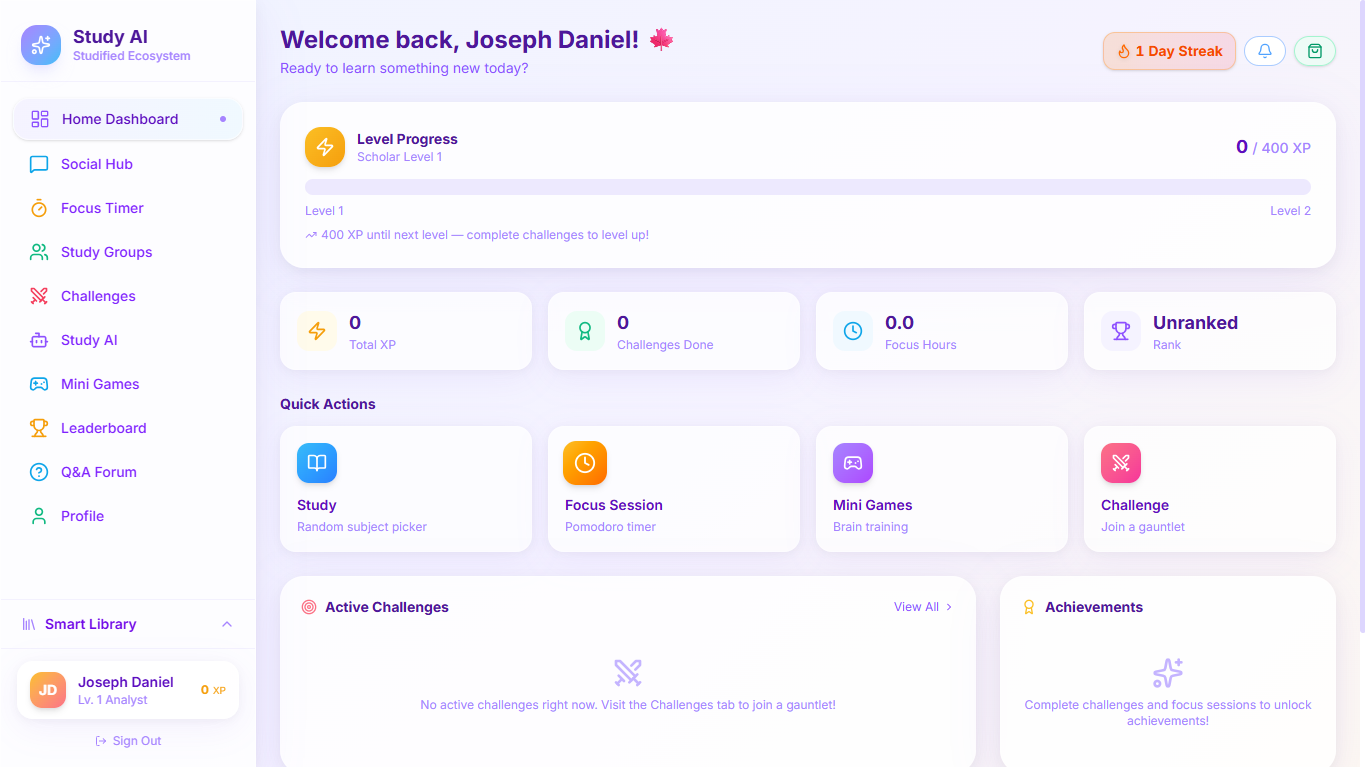
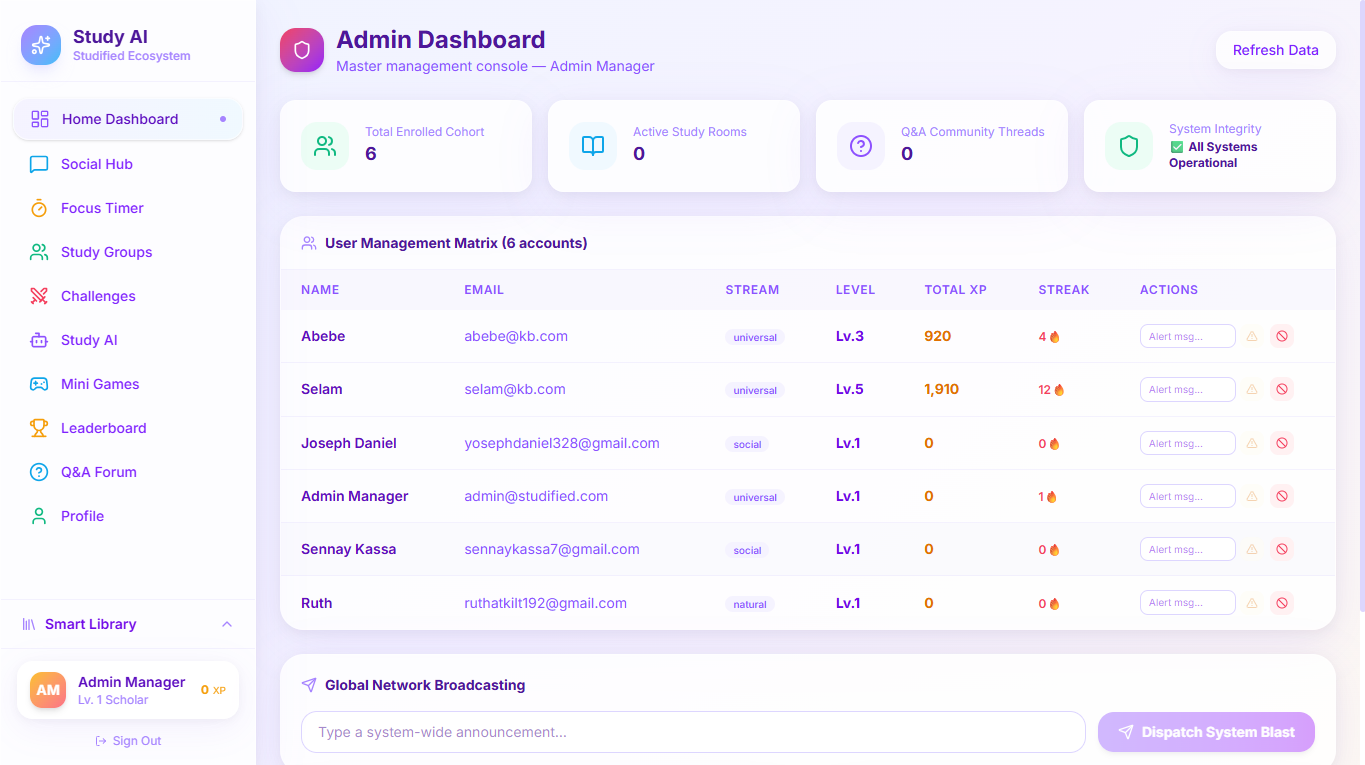
Dashboard
-
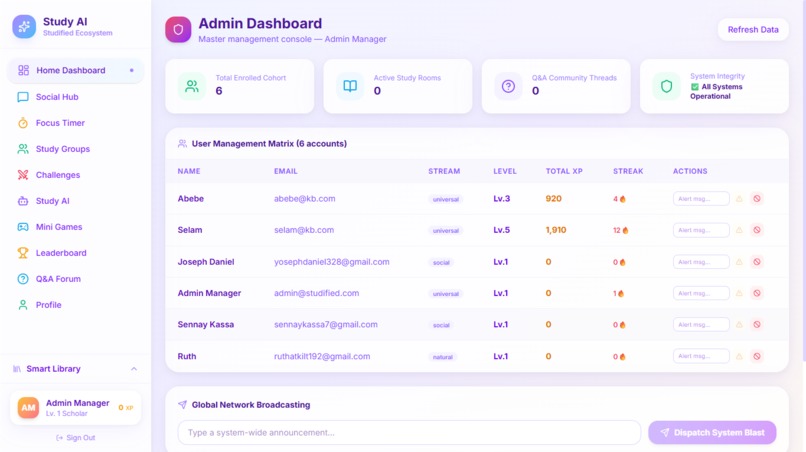
Admin Dashboard
-
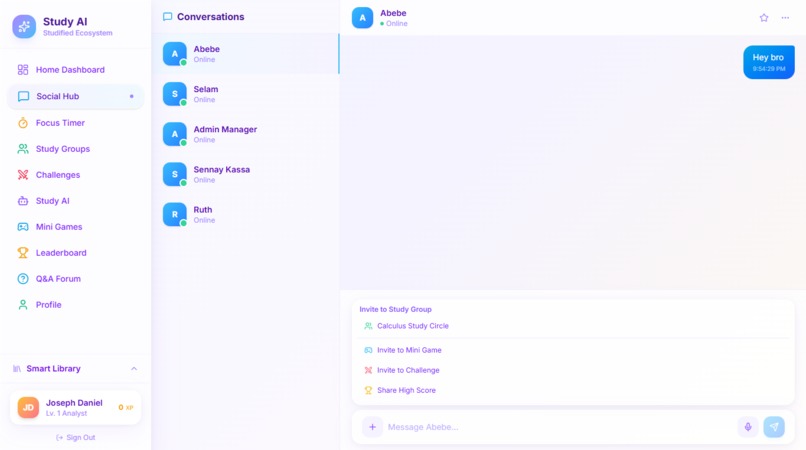
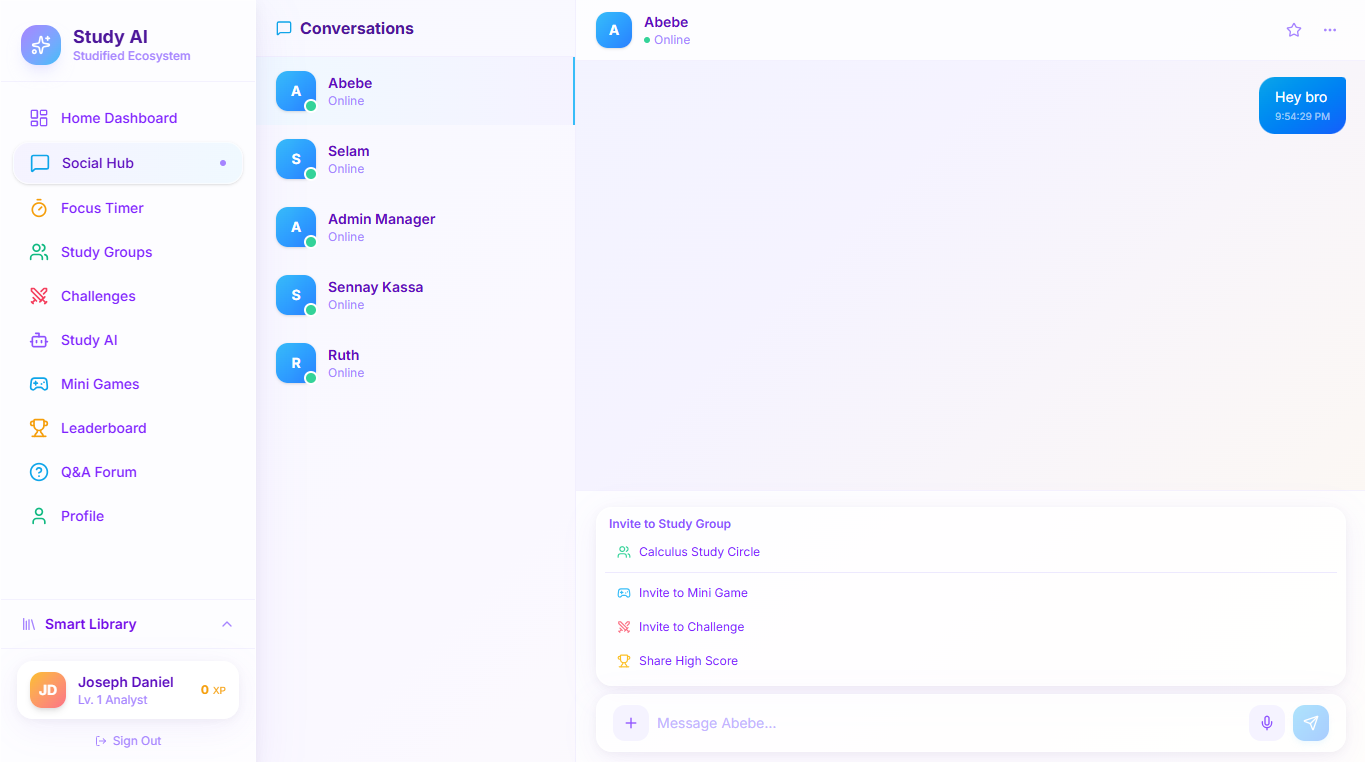
Social Hub
-
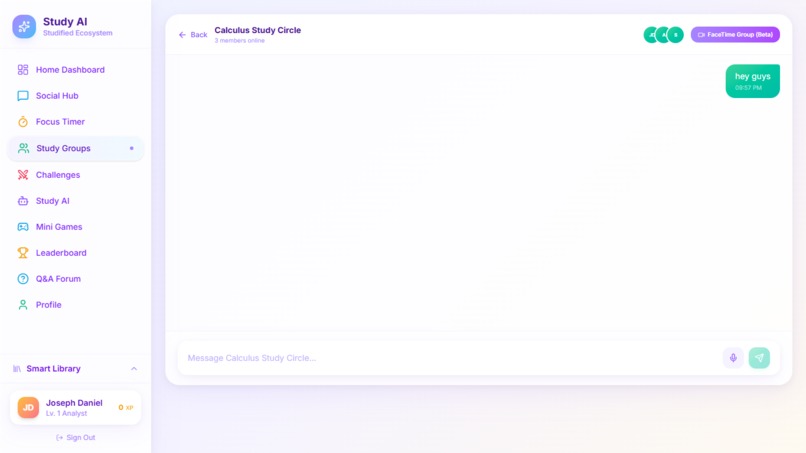
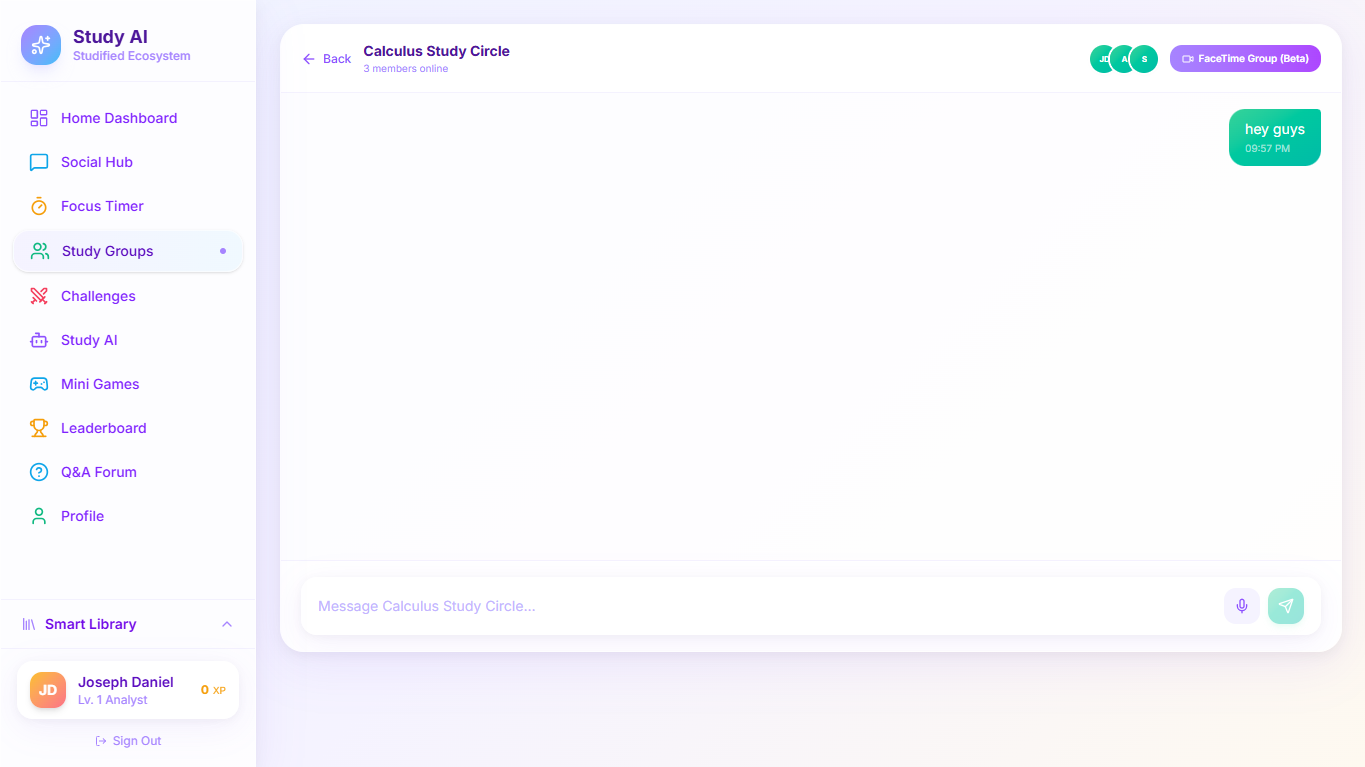
Study Groups
-
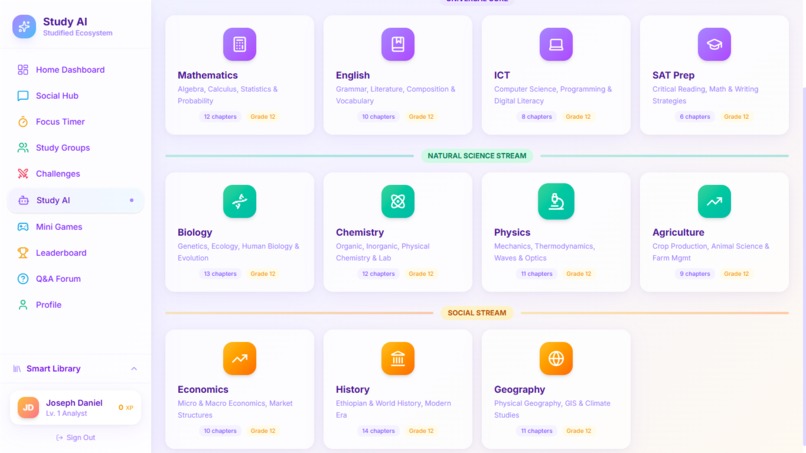
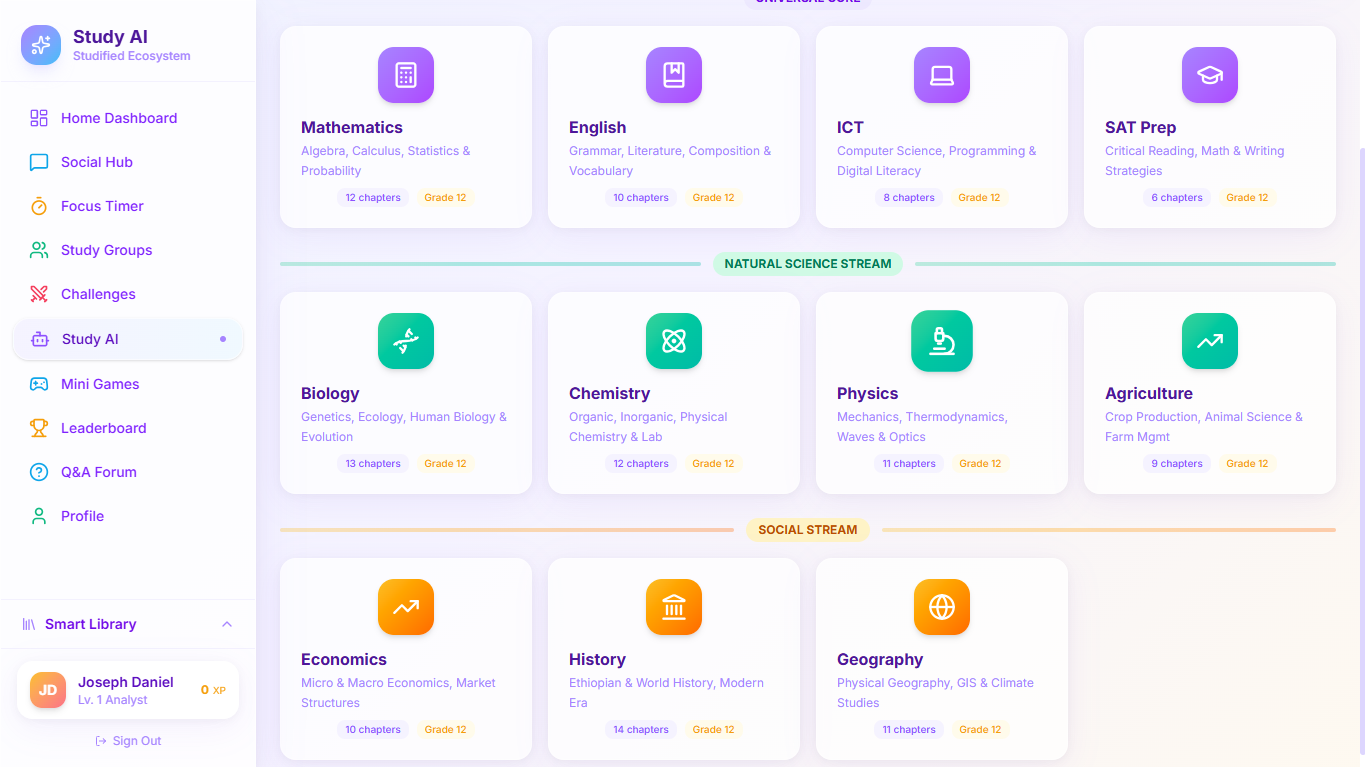
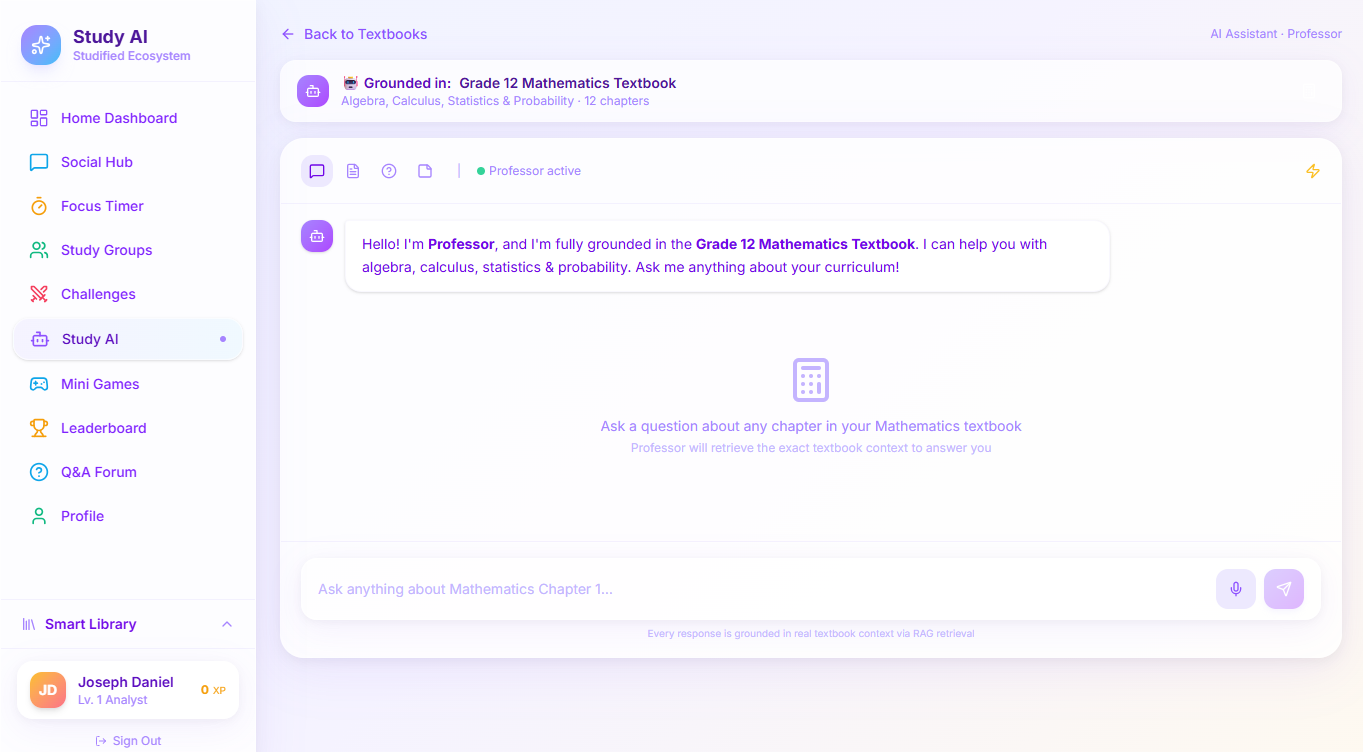
Study AI
-
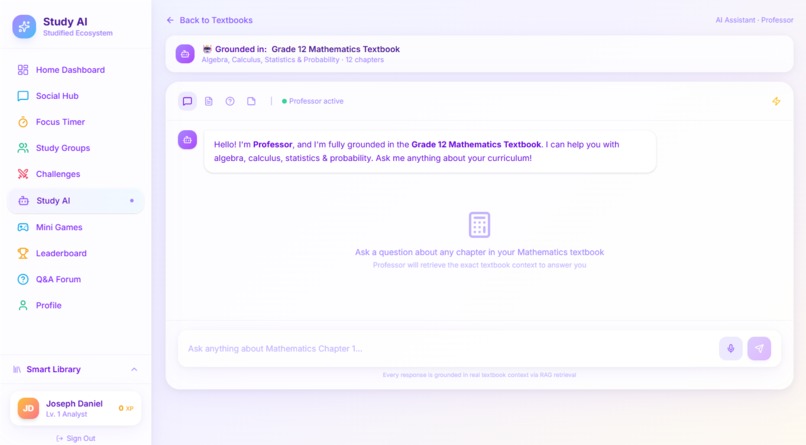
StudyAI/Math subject with RAG
-
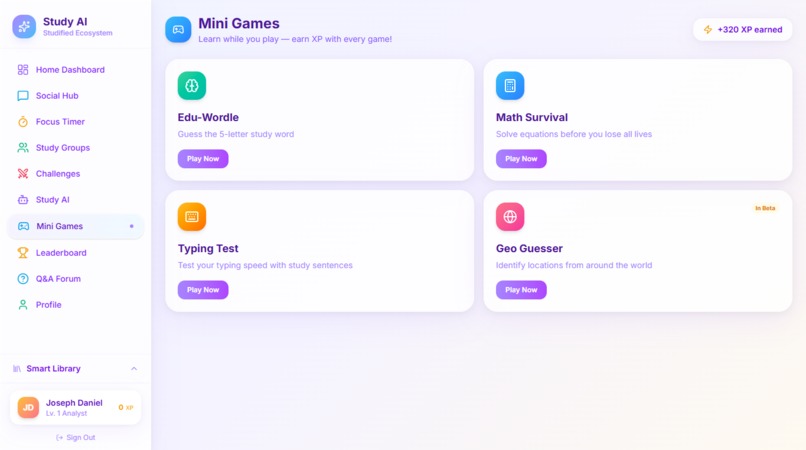
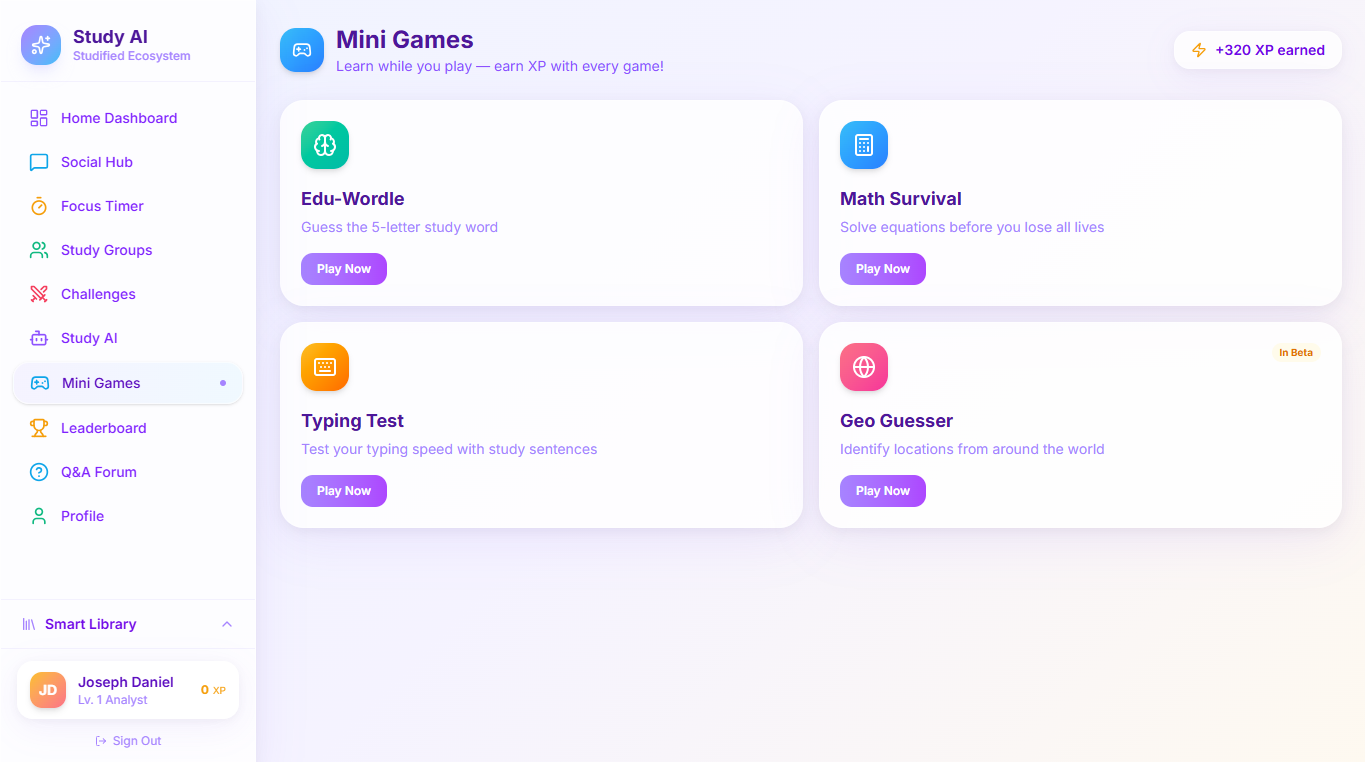
Mini Games
-
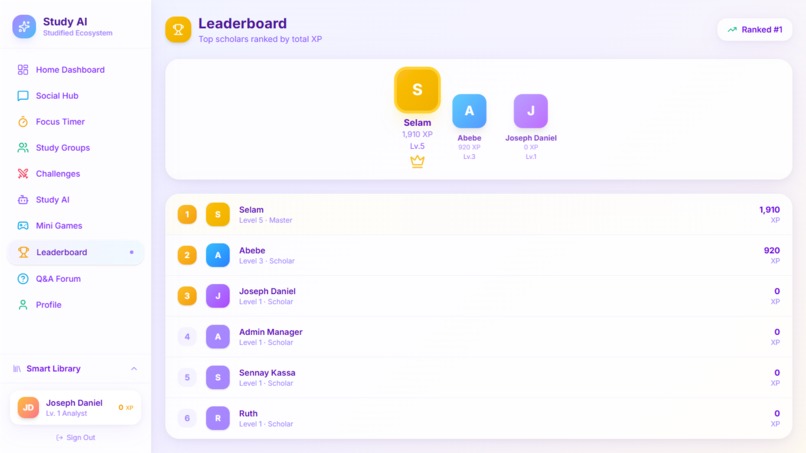
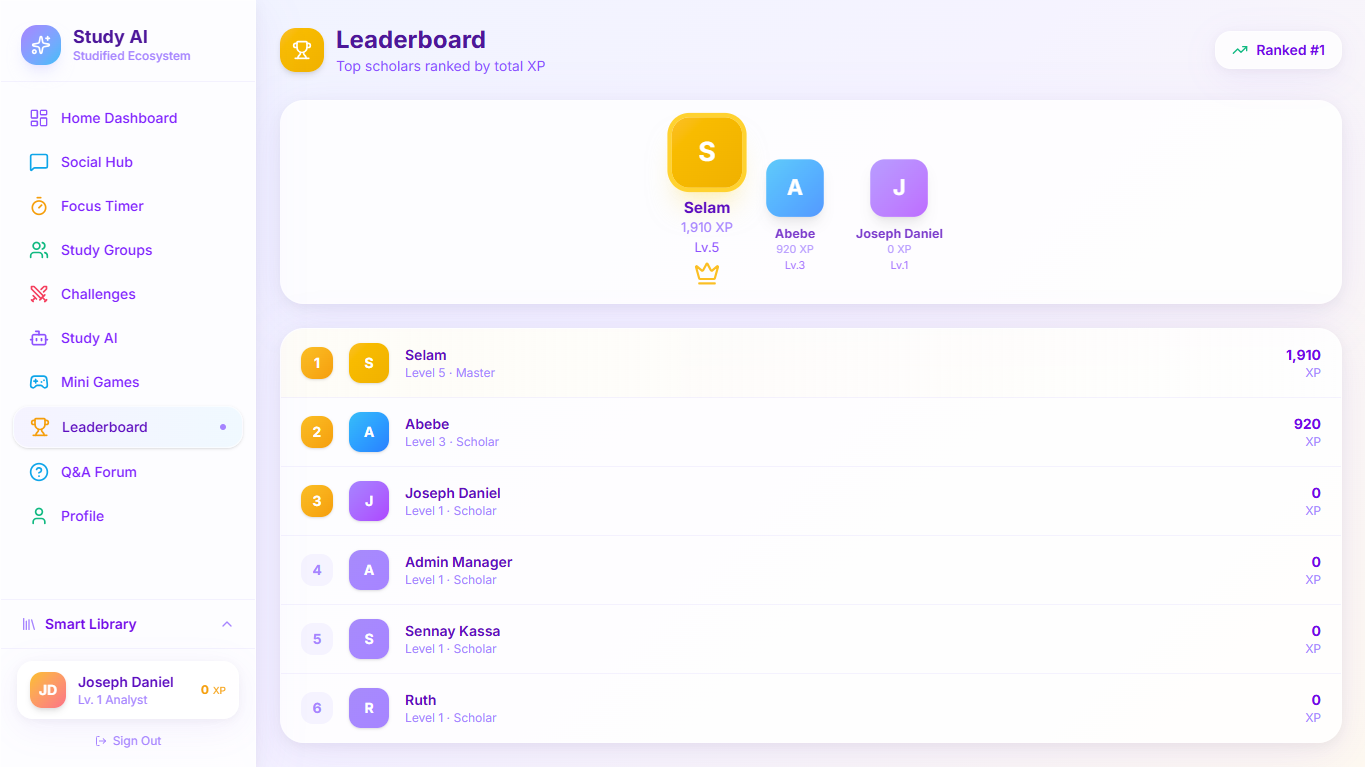
Leaderboard
-
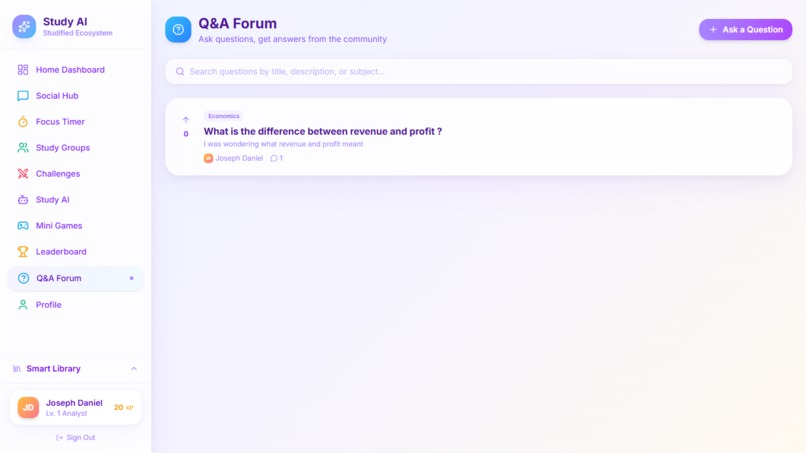
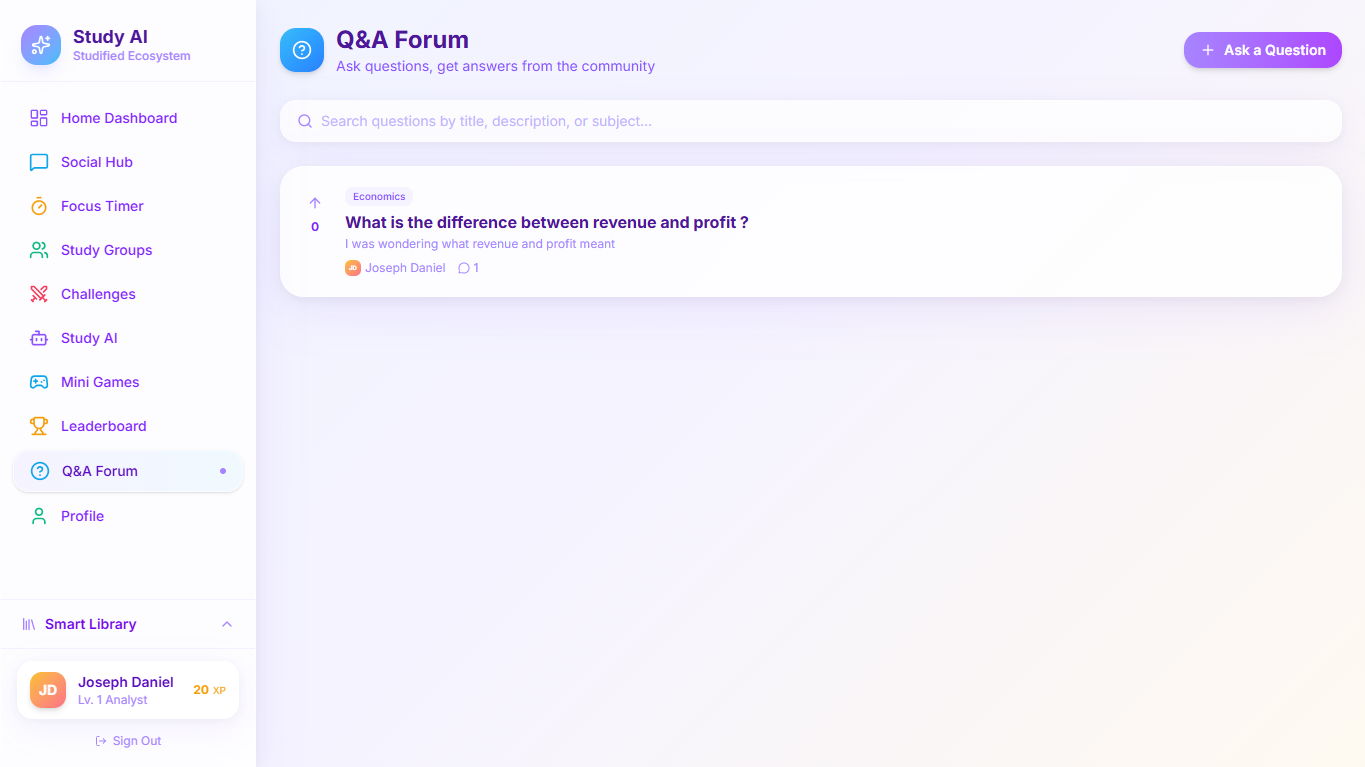
Questions and answers
-
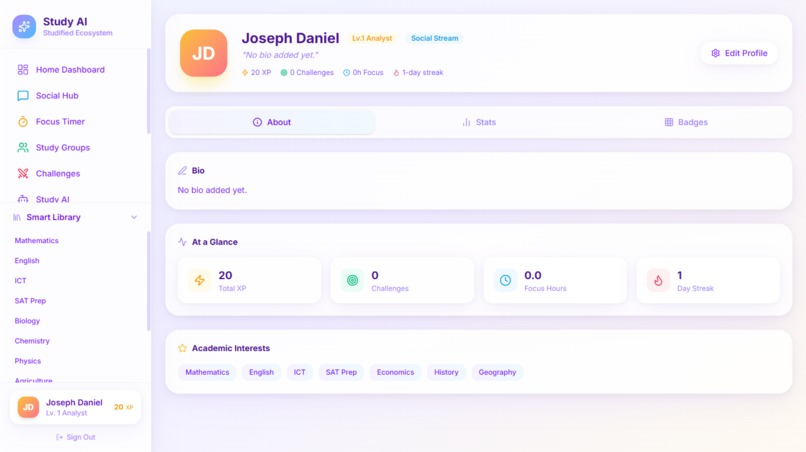
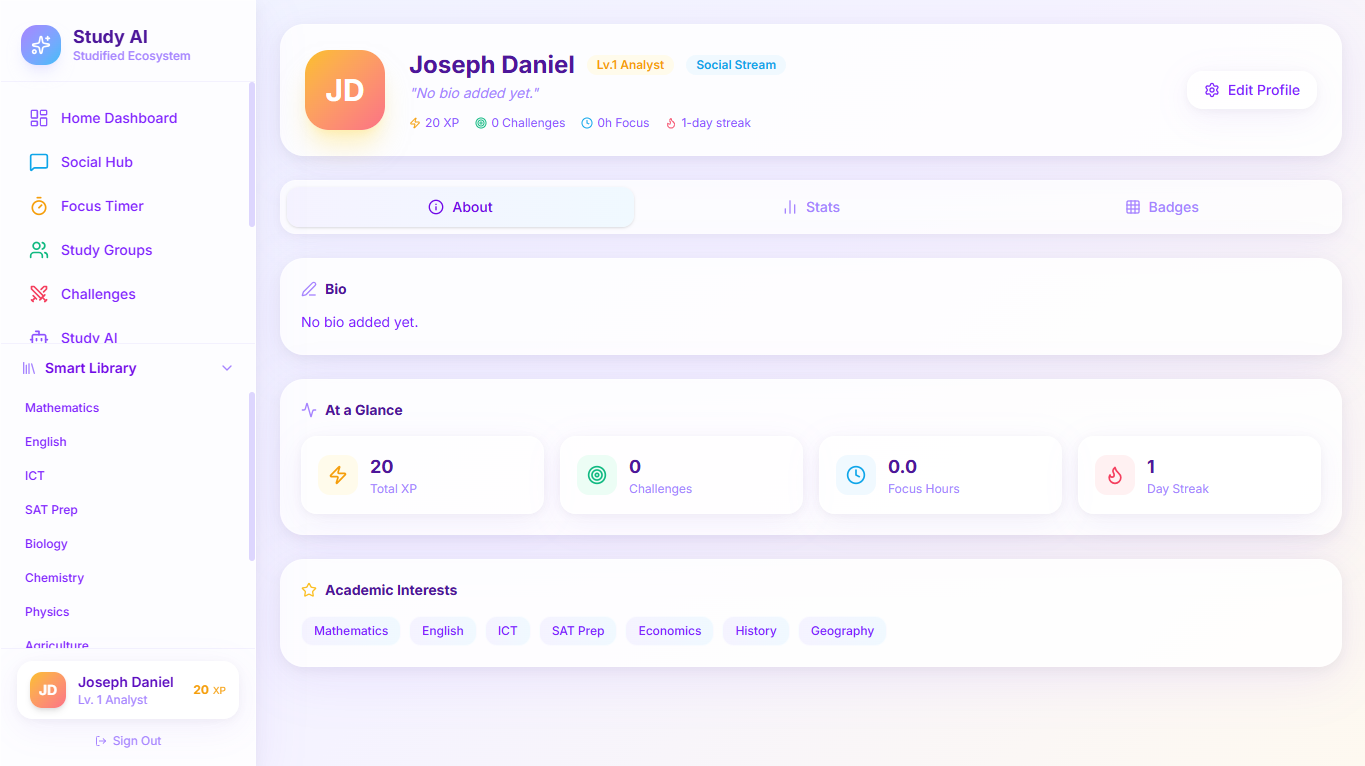
Profile
-
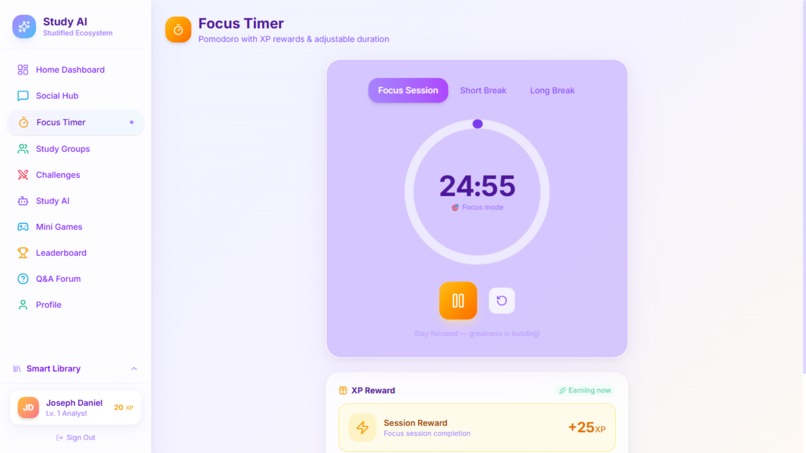
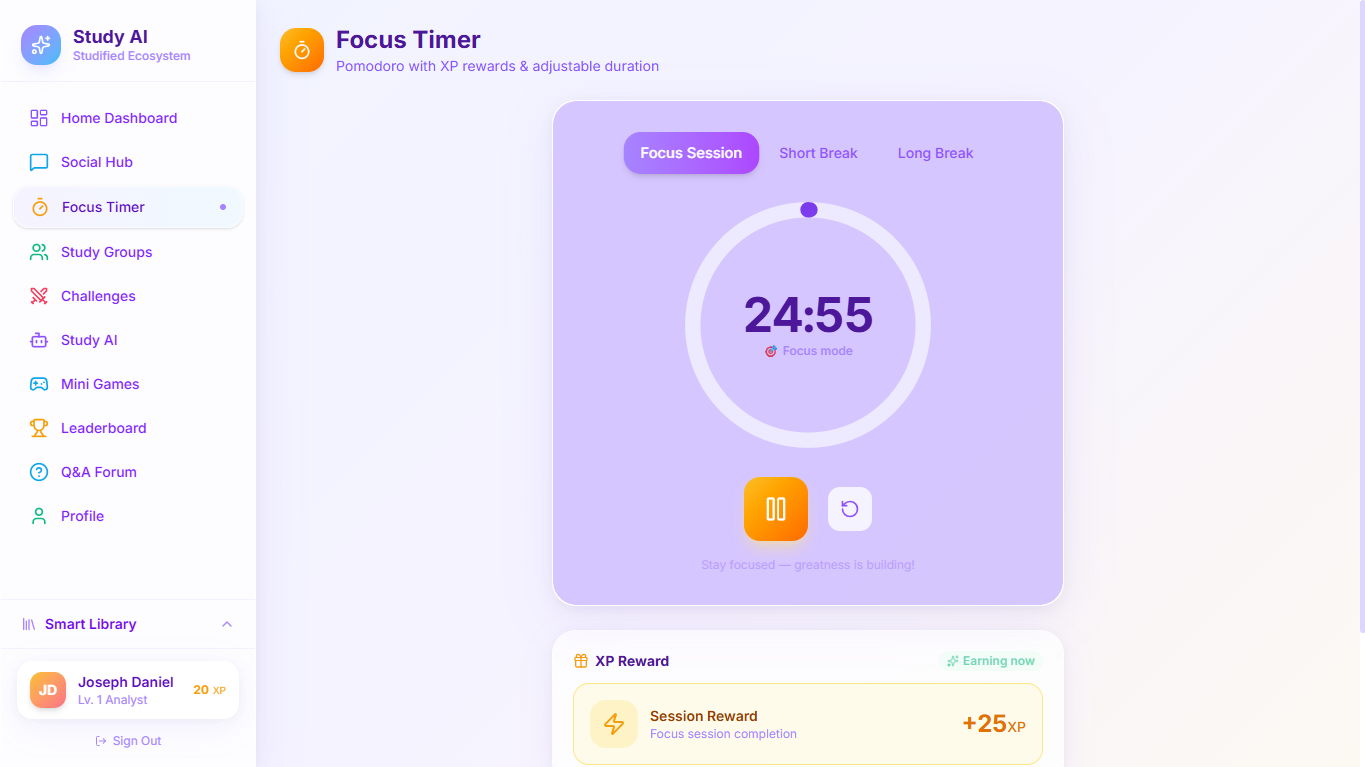
Focus timer
-
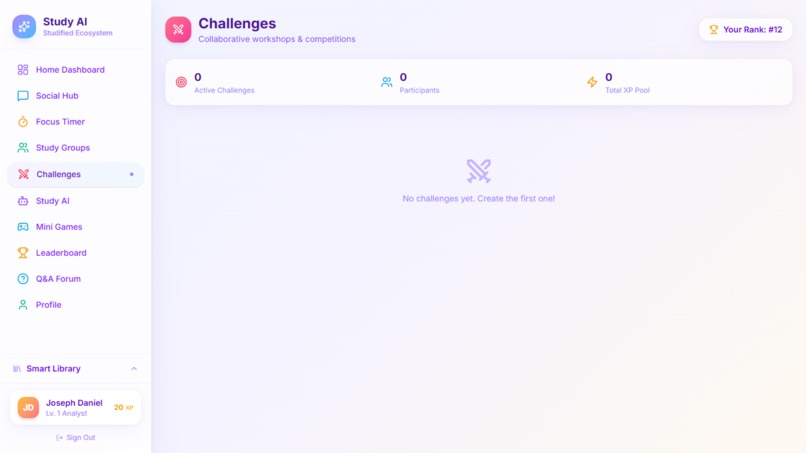
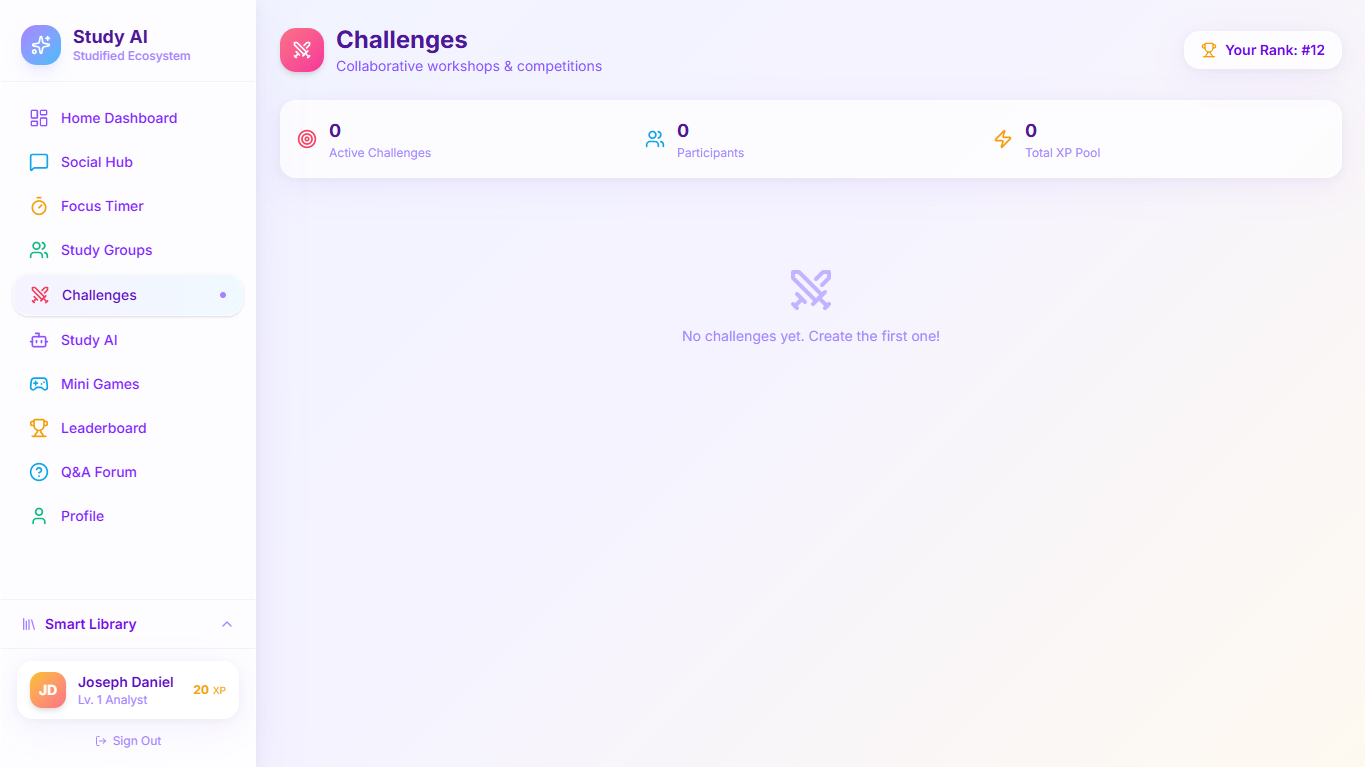
Challenges
-
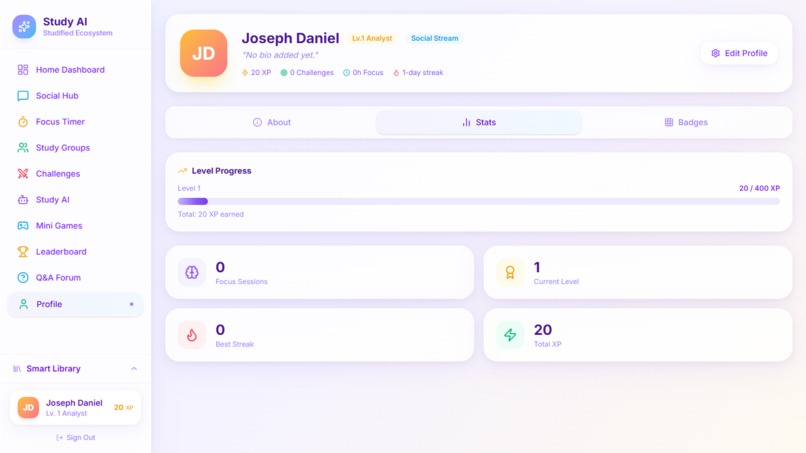
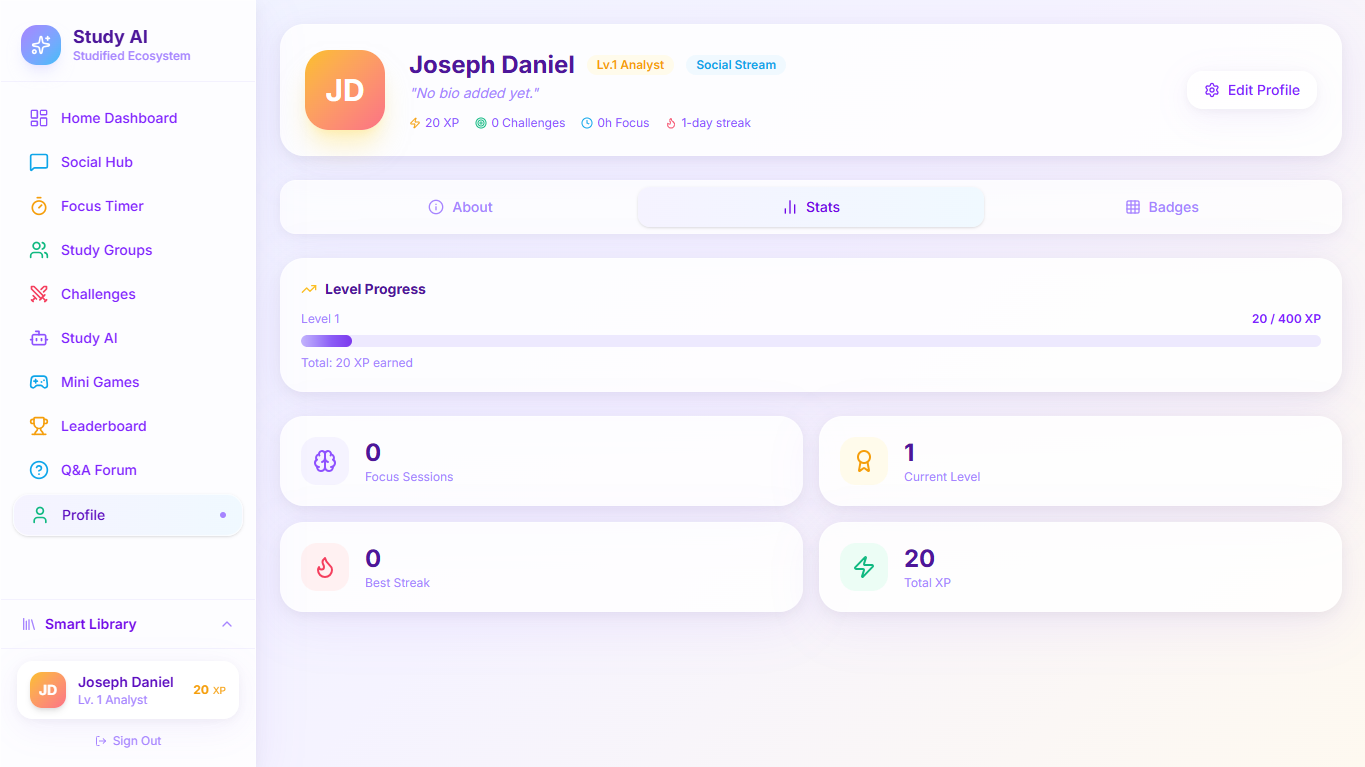
Profile/Stats
-
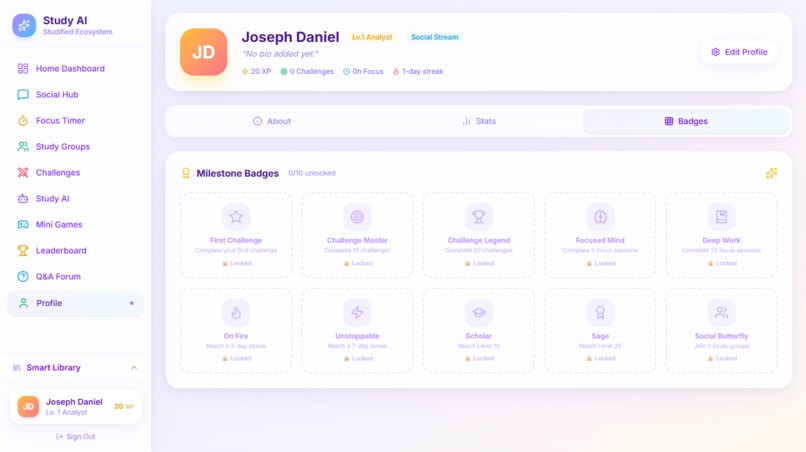
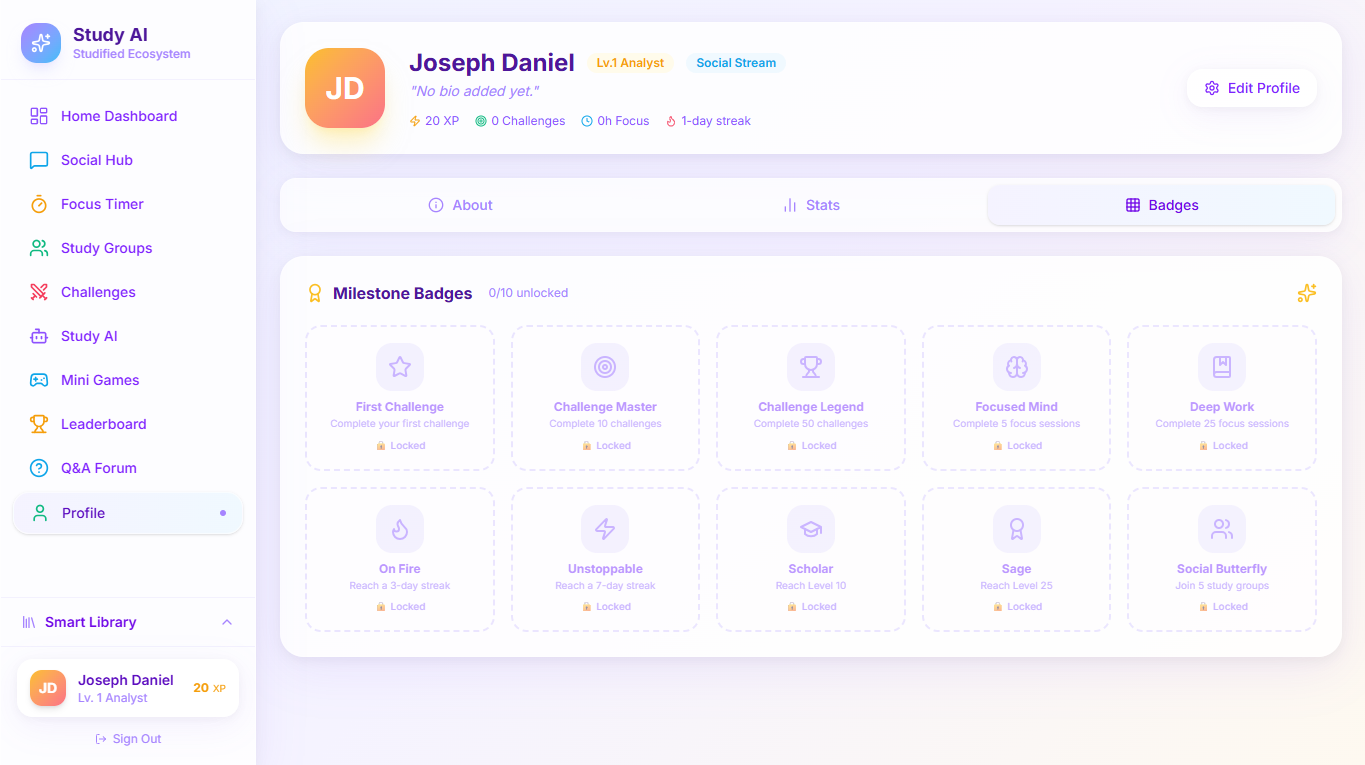
Profile/Badges
-
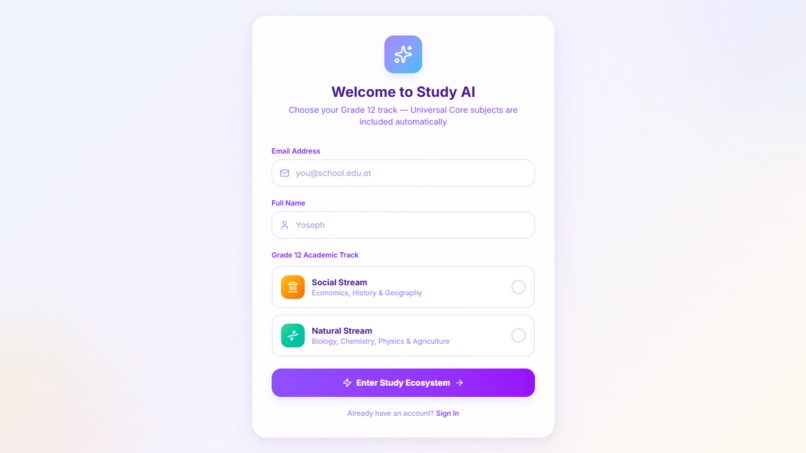
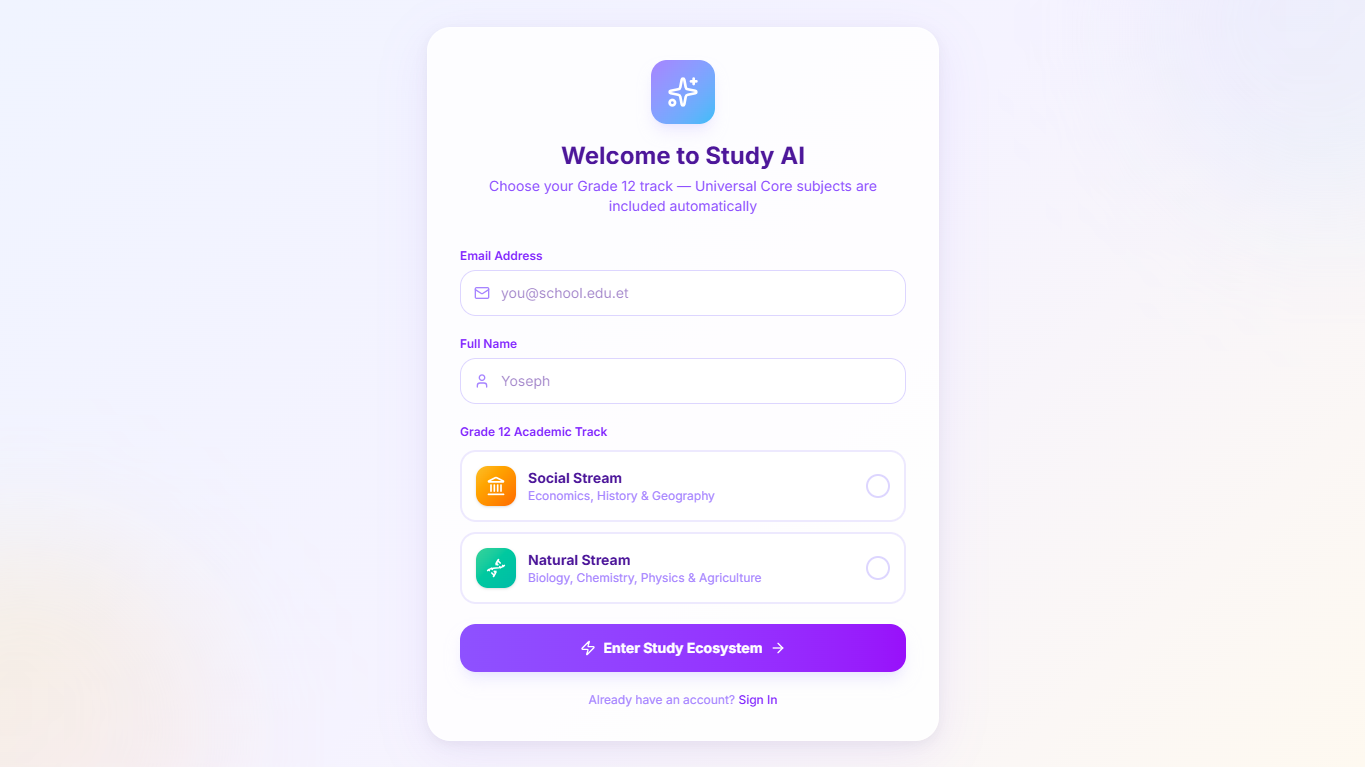
Sign up page
Inspiration
Studified started with a problem I knew personally.
As a student in Ethiopia, I noticed that studying often comes down to working through large textbooks, class notes, and the same explanation of a concept until it finally makes sense. When it doesn't, getting a different explanation can mean finding a tutor, searching online, or hoping that someone else can explain it better. Access to those resources isn't equal for every student.
I started wondering what school would feel like if the textbook itself could respond to you.
That idea eventually became Studified.
I didn't want to build another general AI chatbot where students ask random school questions. I wanted something built around the actual curriculum students use, while also addressing another problem I noticed: studying isn't only about getting information. Students also need motivation, consistency, ways to practice, and people to learn with.
That's why Studified eventually grew from an AI study idea into a full learning ecosystem.
What it does
Studified is an AI-powered learning ecosystem designed around the Ethiopian Grade 12 curriculum.
Students can explore subjects from both the Natural Science and Social Science streams and use an AI tutor that is grounded in their actual textbook material. Instead of relying only on an AI model's general knowledge, Studified retrieves relevant curriculum context before producing an answer.
But the platform goes beyond the AI tutor.
Students can join and create study groups, chat with other learners, complete challenges, use focus tools, play educational mini-games, earn XP, build streaks, compete on leaderboards, track their progress, and interact through a social learning environment.
The idea is to bring the different parts of studying into one place instead of making students jump between an AI chatbot, textbook, timer, group chat, practice app, and progress tracker.
How we built it
One of the most important parts of Studified is its Retrieval-Augmented Generation (RAG) system.
Rather than sending a student's question directly to a general-purpose language model, Studified first searches the relevant learning material for useful context. The retrieved textbook information is then provided to the AI when generating its response.
This allows the tutor to answer questions while staying grounded in the curriculum the student is actually studying.
Behind that system, we use techniques such as document chunking, embeddings, semantic/vector retrieval, and large language models. Groq is used for fast AI inference, while Supabase provides the database and authentication layer. PostgreSQL stores application data, and the platform is deployed as a web application using services including Netlify and Google Cloud tooling.
Around the AI layer, we built the rest of the Studified ecosystem: subject libraries, student profiles, study groups, messaging, challenges, XP and leveling, leaderboards, focus sessions, educational games, progress tracking, and an administration system for managing the platform.
The goal wasn't to make RAG a feature students had to think about. It works underneath the experience so that when a student opens a subject and asks Professor a question, the AI already knows which textbook it should be learning from.
Challenges we ran into
One of the biggest challenges was figuring out how to make the AI useful for education without turning Studified into just another chatbot.
A language model can give an impressive answer while still giving information that doesn't match what a student is expected to learn. That matters even more when the platform is supposed to follow a specific national curriculum.
Building the RAG pipeline meant working through how textbook content should be divided, represented, retrieved, and passed to the model so that the most relevant material reaches the AI without overwhelming it with unnecessary context.
Another challenge was connecting all of the different parts of the ecosystem. Study groups, messaging, XP, streaks, challenges, profiles, leaderboards, AI tools, and curriculum content all depend on shared user data and have to feel like parts of one application rather than unrelated features.
We also learned that building the interface is only part of the problem. Authentication, database relationships, permissions, AI APIs, retrieval quality, deployment, and keeping everything synchronized created some of the most time-consuming problems behind screens that look simple to the user.
Accomplishments that we're proud of
We're especially proud that Studified became much more than the original AI study assistant we imagined.
The platform now covers Grade 12 subjects across both Natural Science and Social Science streams, with an AI tutor capable of grounding its responses in the textbook selected by the student through RAG.
We're also proud of creating an ecosystem around that intelligence instead of leaving it as a standalone chatbot. Students can learn individually, study socially, compete, practice, focus, and track their progress without leaving the same platform.
Seeing features like textbook-grounded AI, real study groups, messaging, educational games, XP, levels, leaderboards, and student profiles working together made the project finally feel less like a prototype and more like something students could genuinely use.
Most importantly, Studified came from a problem we experience ourselves rather than a problem we searched for just to build an AI project around.
What we learned
Building Studified changed the way we think about AI applications.
One of the biggest lessons was that connecting an LLM to an interface isn't enough. The quality of an AI product depends heavily on what information reaches the model, how that information is retrieved, and how the rest of the product is designed around the AI.
Working with RAG taught us about embeddings, semantic retrieval, document chunking, context selection, and the difference between an AI that knows many things and an AI that knows what information it should use for a particular question.
We also learned a lot about building a larger full-stack application: databases, authentication, APIs, user-generated data, social features, deployment, debugging, and designing systems where many features interact with the same users and data.
And perhaps the biggest lesson was that technology alone doesn't make studying better. AI can explain something, but students still need motivation, community, practice, structure, and consistency. That realization shaped Studified into the ecosystem it is now.
What's next for Studified
Studified is still far from the version we ultimately imagine.
The next step is improving the RAG system so retrieval becomes even more accurate and transparent, including better source references and stronger handling of questions that span multiple parts of a textbook.
We also want to expand beyond Grade 12, improve personalized learning so Studified can adapt to each student's strengths and weaknesses, create richer quizzes and study activities from curriculum material, and make the social and collaborative parts of the platform more useful.
Another major goal is accessibility. Studified was inspired by students who don't all have equal access to tutors and educational resources, so over time we want to explore better support for low-bandwidth environments and make the platform useful to more students across Ethiopia.
The long-term vision is not simply to build an AI tutor.
It's to build a place where a student can learn, ask, practice, focus, compete, collaborate, and improve — with AI quietly helping throughout the entire experience.
Sometimes a student just needs the same idea explained one more time, differently.
Built With
- ai
- auth
- embeddings
- git
- github
- google-cloud
- groq
- javascript
- llm
- natural-language-processing
- netlify
- node.js
- postgresql
- rag
- react
- semantic
- supabase
- vite

Log in or sign up for Devpost to join the conversation.