-
-
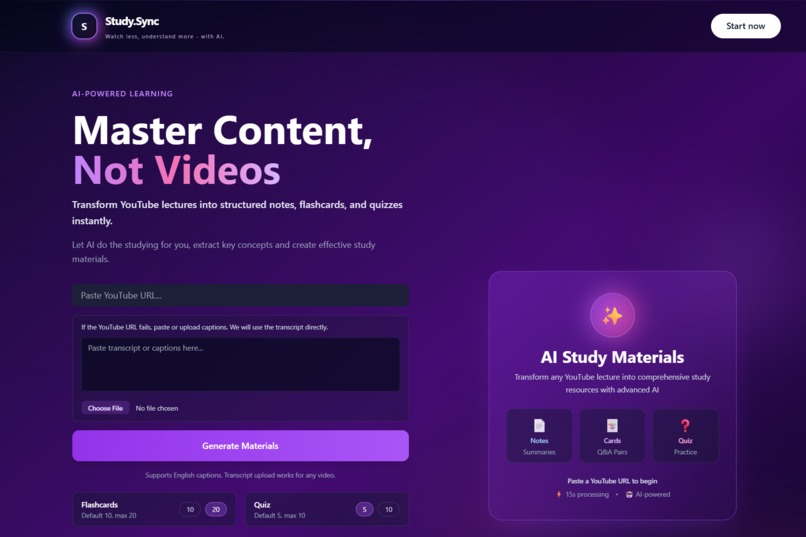
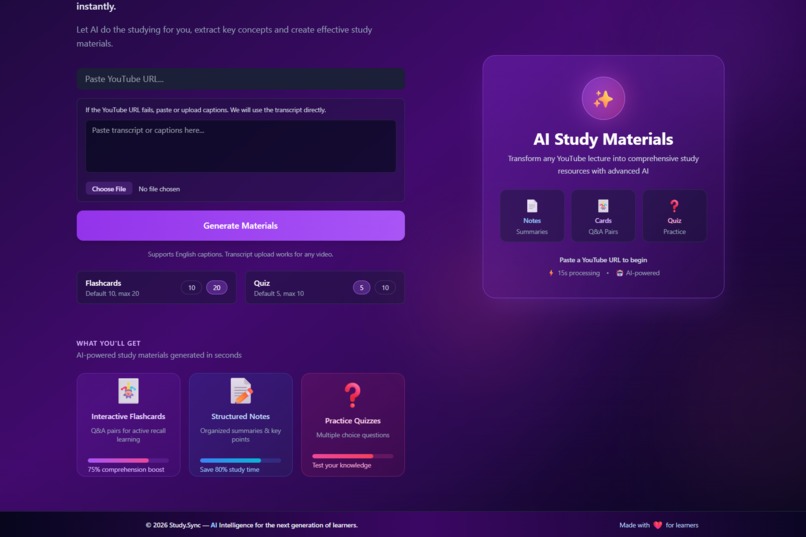
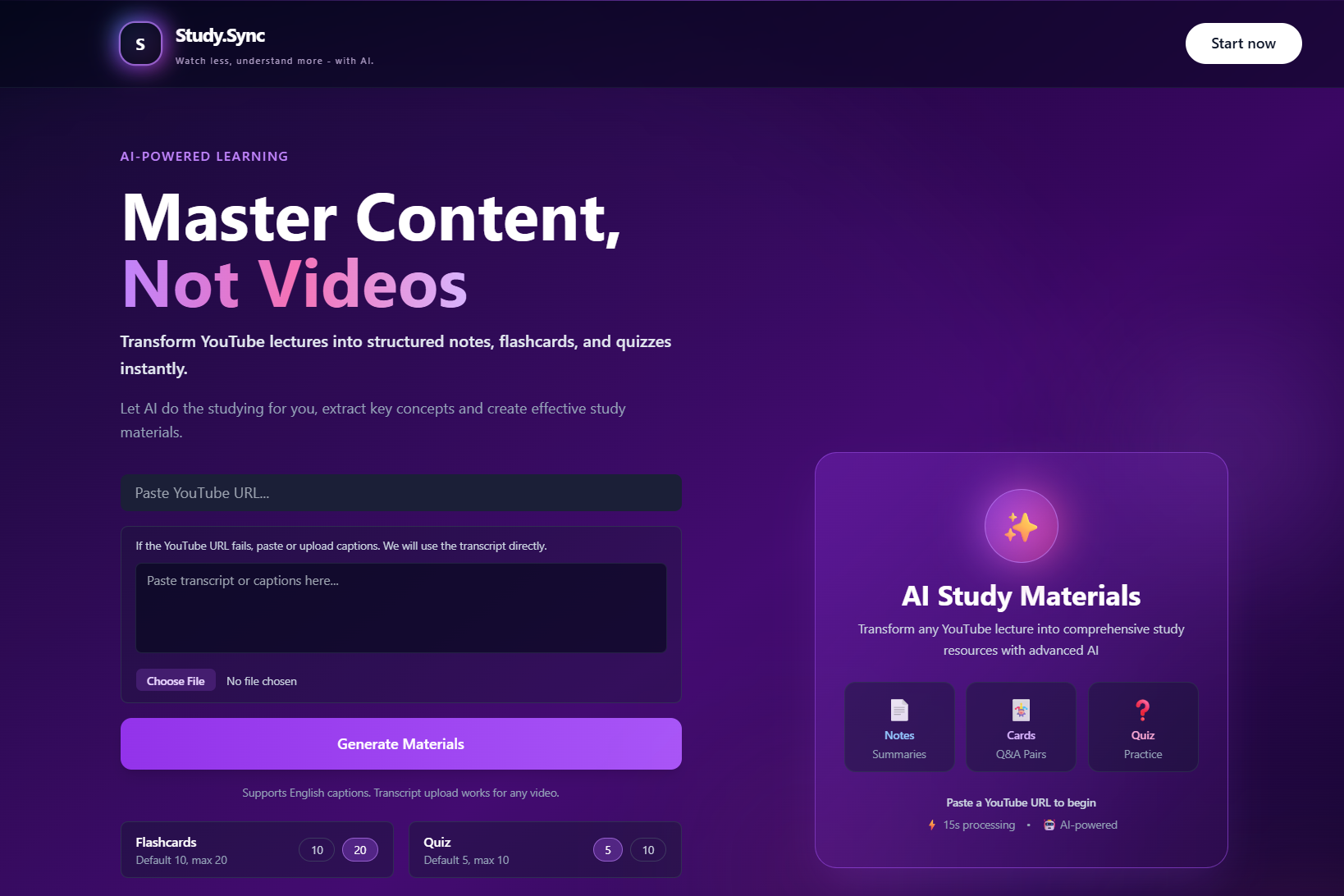
dashborad
-
-
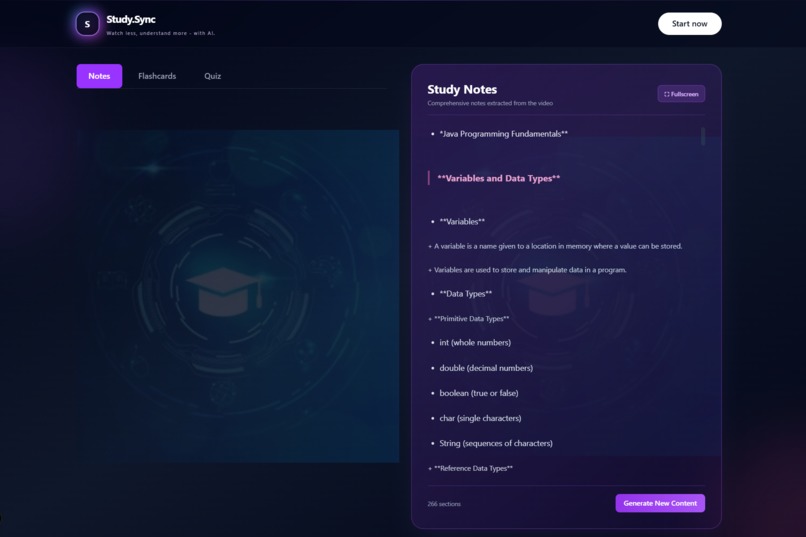
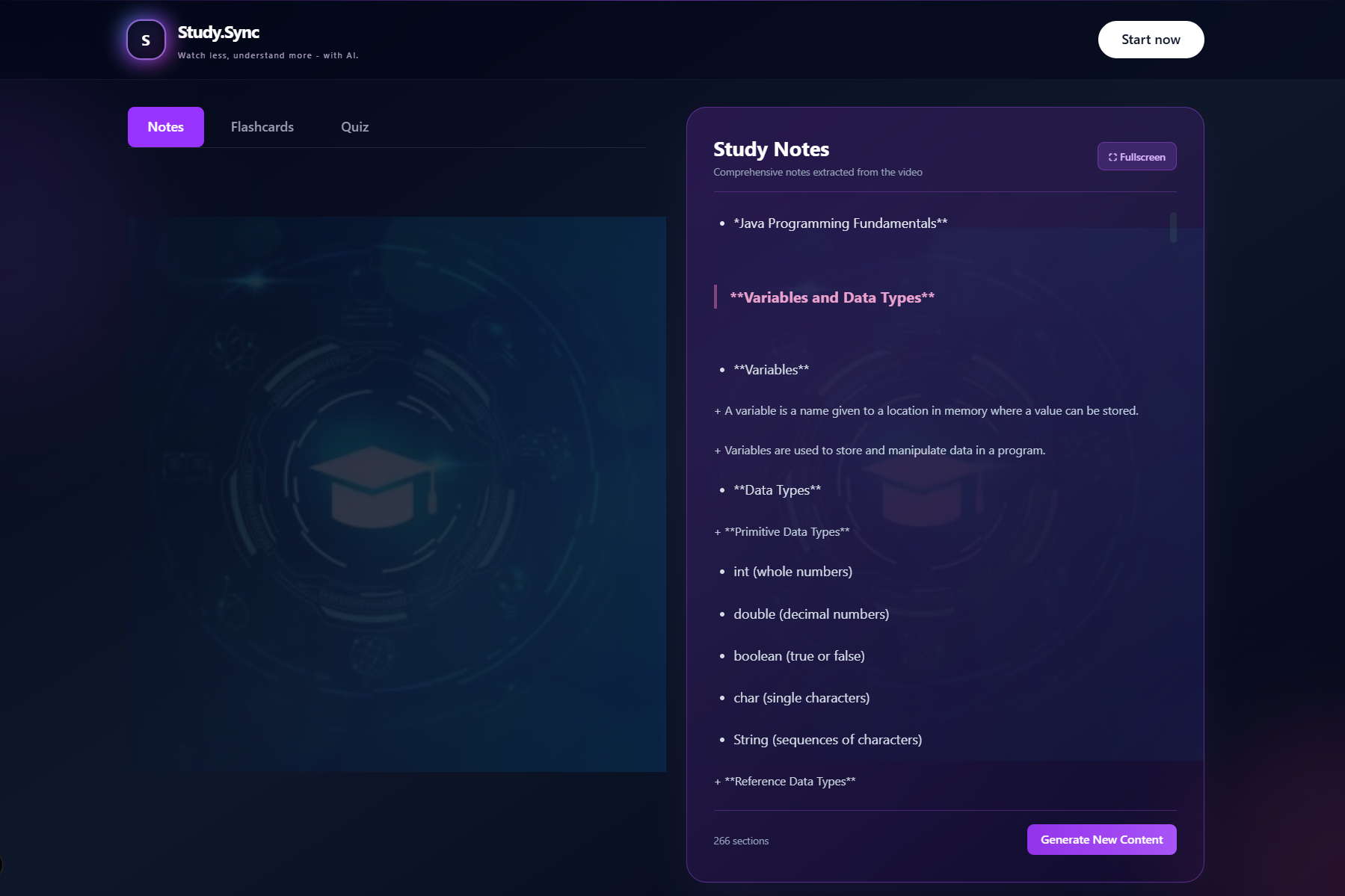
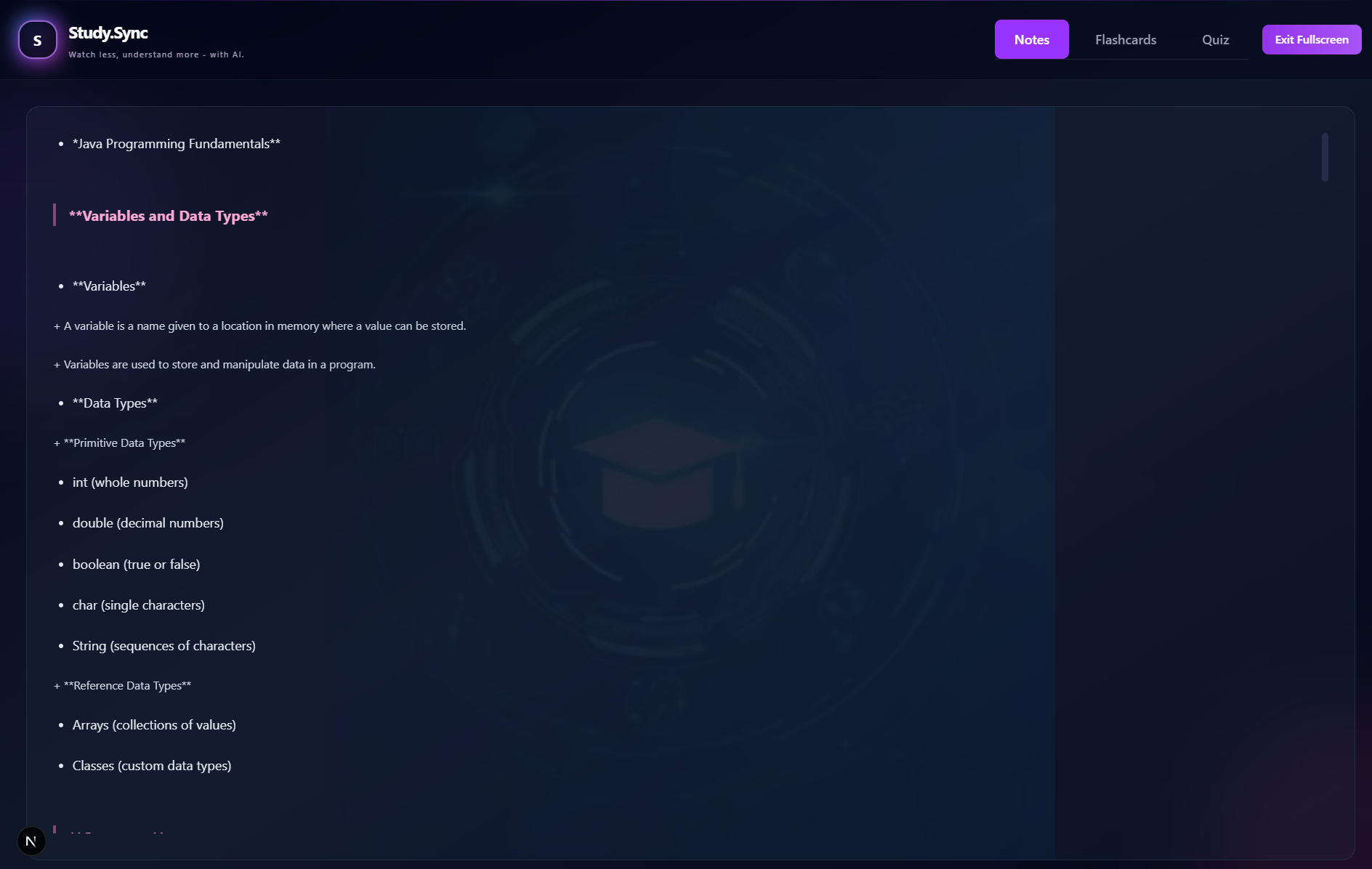
notes
-
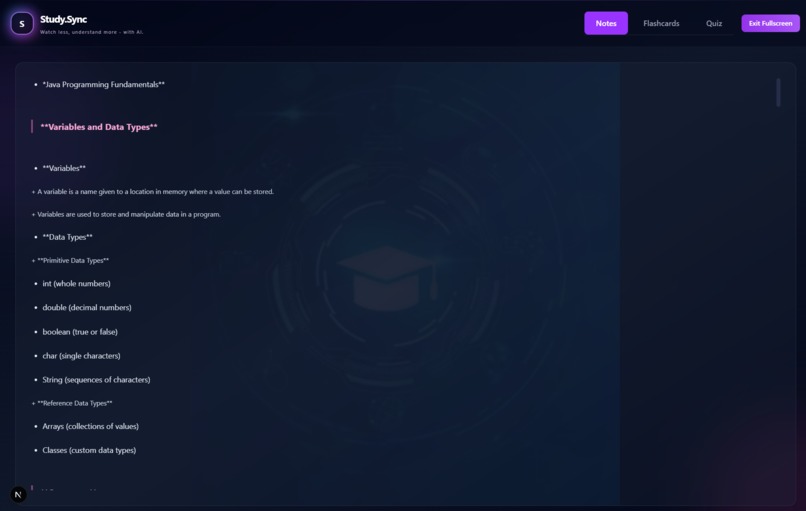
notes with fullscreen
-
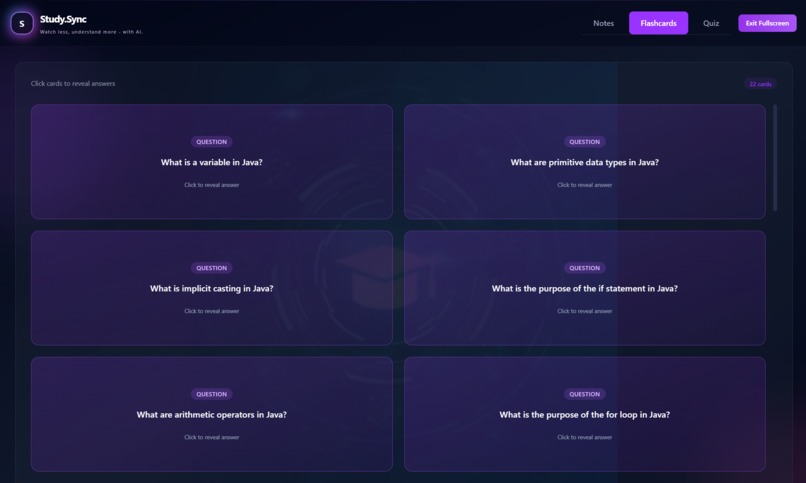
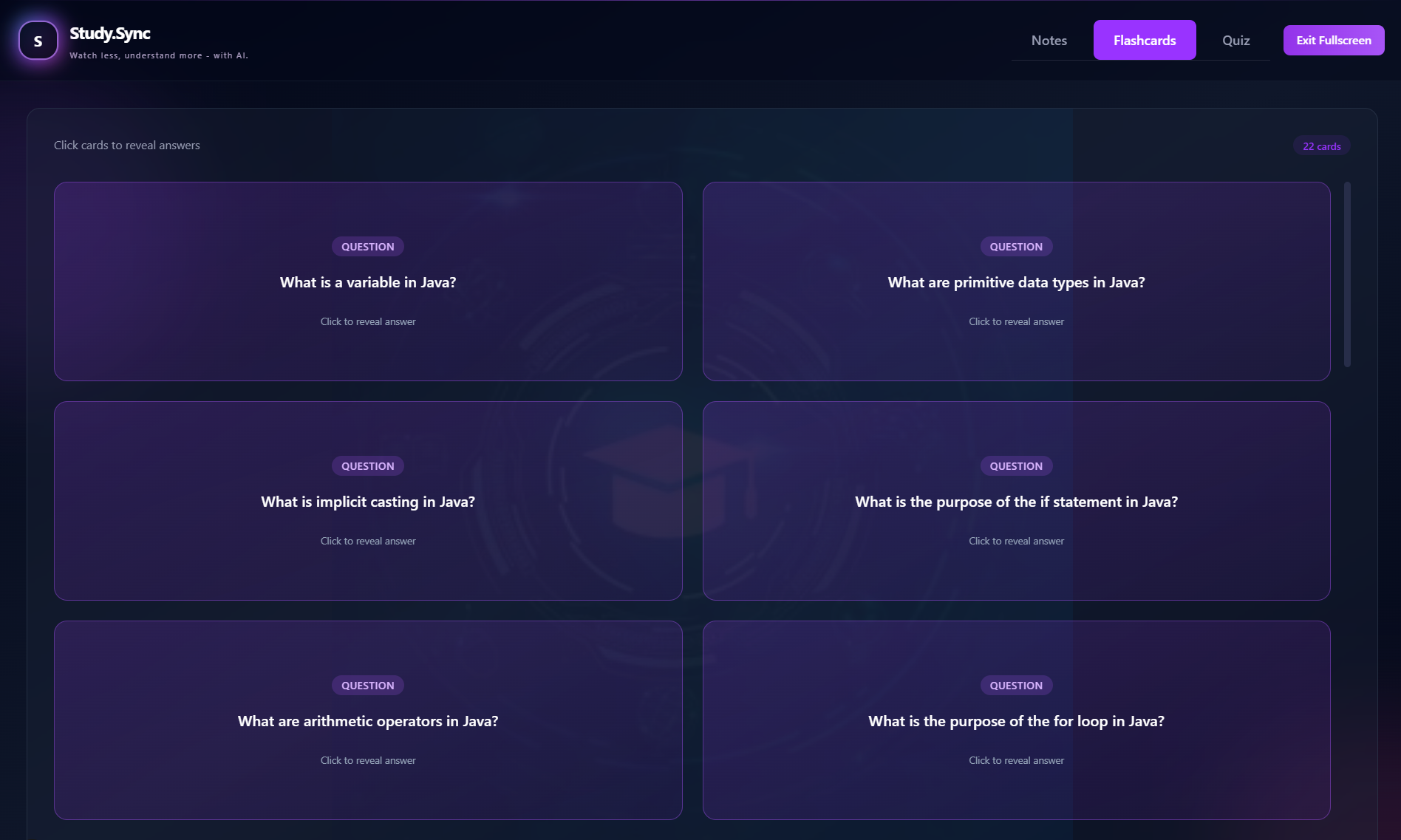
flashcards
-
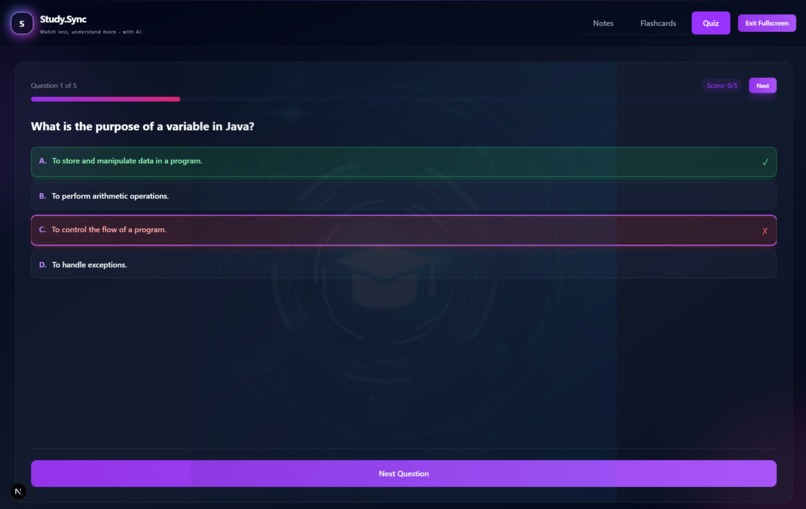
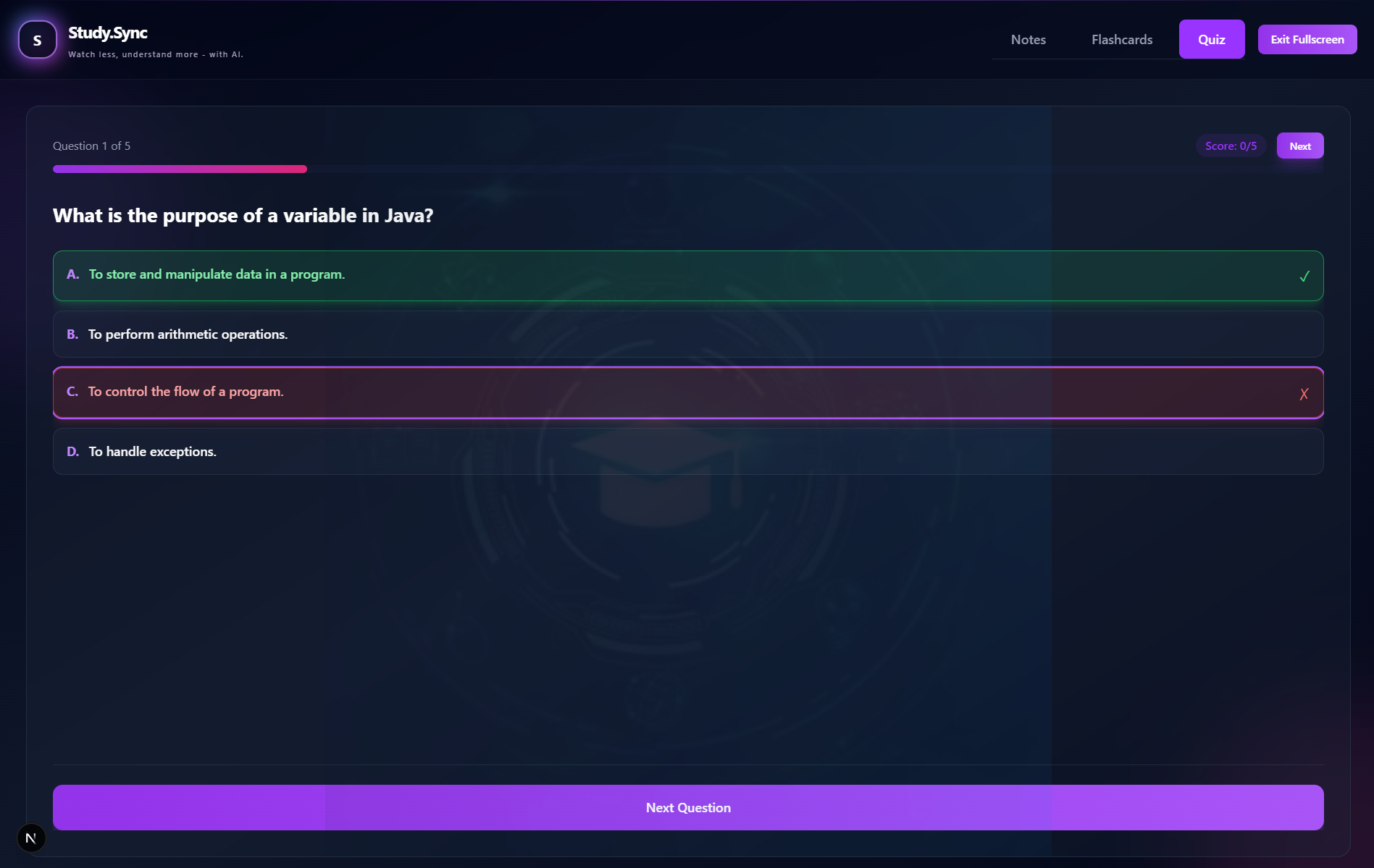
quiz

Inspiration
Studying from long YouTube lectures is painful. Students waste hours pausing videos, taking messy notes, and still end up confused before exams. While educational content is everywhere, reliable and structured learning is not.
We also observed a practical challenge: YouTube transcript access can be limited or temporarily blocked, disrupting learning tools that rely only on video URLs. This inspired Study.Sync — a platform that syncs AI with learning content, whether from YouTube or uploaded transcripts, to instantly convert raw material into clear notes, flashcards, and quizzes, making learning faster, smarter, and stress-free.
What it does
Study.Sync transforms learning content into structured study material in seconds. Users can either: Paste a YouTube link, or Upload a transcript (.txt / .srt) when captions are unavailable Study.Sync then: Generates concise, well-structured notes Creates flashcards for quick revision Builds MCQ quizzes to test understanding Allows users to regenerate quizzes and flashcards on demand Provides a clean, distraction-free learning interface It turns passive content consumption into active learning, even when external platforms impose limits.
How we built it
Frontend: Built with a modern React-based stack for a smooth and responsive user experience Backend: API-driven architecture handling transcript ingestion, AI processing, and content generation AI Layer: Uses advanced LLMs to extract key concepts, summarize content, and generate quizzes and flashcards YouTube Integration: Fetches transcripts directly from video URLs without requiring video playback Fallback System: Supports manual transcript uploads when YouTube captions are unavailable or rate-limited Modular Design: Separate services for notes, quizzes, and flashcards to ensure scalability and maintainability The system was designed with speed, reliability, and real-world constraints in mind.
Challenges we ran into
YouTube transcript limitations and temporary access blocks Handling videos with no captions or unsupported languages Maintaining accuracy and relevance in AI-generated quizzes Avoiding overly long or shallow summaries Designing APIs that support dynamic regeneration of learning material Balancing performance, reliability, and AI usage cost These challenges pushed us to build robust fallbacks and improve system resilience.
Accomplishments that we’re proud of
Built a fully functional end-to-end MVP Successfully converted real-world lecture content into usable study material Implemented a transcript upload fallback to handle YouTube limitations Enabled on-demand regeneration of quizzes and flashcards Designed a clean, intuitive, and student-friendly UI Created a product that meaningfully saves time and improves learning efficiency Most importantly, we solved a real student problem under real technical constraints.
What we learned
AI is most powerful when paired with clear structure and constraints UX matters just as much as AI quality in learning tools Handling third-party APIs requires strong error handling and fallbacks Building modular systems early saves time later Educational products must focus on clarity over complexity This project sharpened both our technical and product-thinking skills.
What’s next for Study.Sync
User accounts and learning history tracking Topic-wise and difficulty-based quizzes Export notes and flashcards (PDF, Anki, Notion) Expanded content support (PDFs, articles, documents) Personalized learning paths using performance analytics Mobile-first design and offline access Our vision is to make Study.Sync a reliable, AI-powered study companion that adapts to real-world learning challenges.


Log in or sign up for Devpost to join the conversation.