

Inspiration
I wanted a simple way to digest long readings without juggling multiple tools. The idea was to build something that could break text down into clean keypoints and flashcards so studying feels lighter and way more efficient.
What it does
Figured out how to score sentences based on word frequency, generate concept-driven keypoints, and map them into useful Q&A flashcards. Also picked up some lessons on structuring small modular NLP pipelines.
How we built it
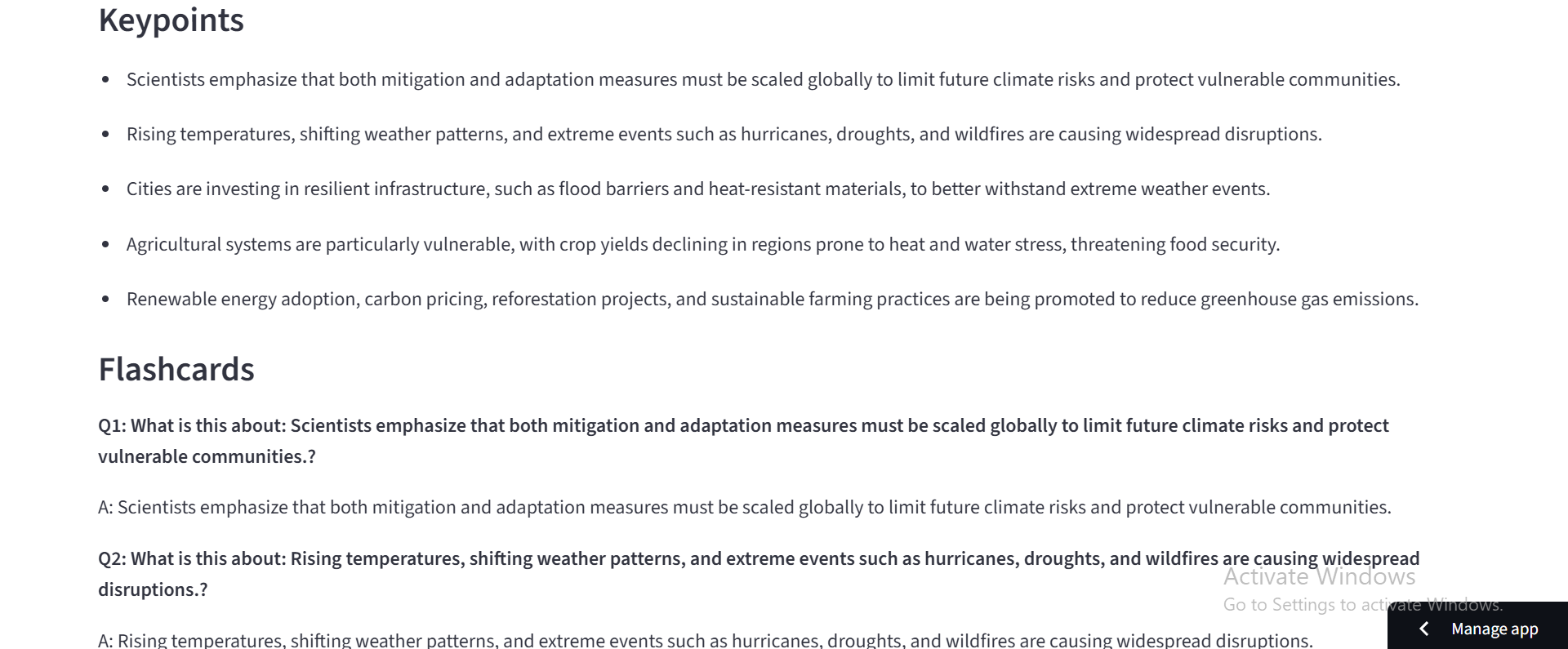
The app runs a lightweight text-processing workflow:
Split text into sentences
Rank them using frequency-based scoring
Extract concise keypoints
Generate flashcards tied to those keypoints
Everything stays local and offline, so it runs fast and avoids external dependencies.
Challenges we ran into
Getting keypoints to feel “meaningful” instead of random took some tuning. Sentence scoring also needed a few iterations to avoid noisy picks.
Accomplishments that we're proud of
We built a fully offline text-processing workflow that extracts clean keypoints and turns them into useful flashcards. The system stays lightweight, fast, and modular, and it works reliably across different writing styles. Getting meaningful keypoints without external NLP libraries was a big win.
What we learned
We learned how frequency-based scoring can surface high-value sentences, how to tune sentence segmentation for better accuracy, and how to map key concepts into flashcard-friendly prompts. We also realized how much UI and workflow design impacts how people actually use study tools.
What's next for Study Simplifier
Next up, we're planning to add voice input, direct book/document ingestion, and image-based extraction. We also want to improve the interface to make the experience smoother, more intuitive, and faster for everyday studying.
Built With
- natural-language-processing
- python
- regex
- streamlit

Log in or sign up for Devpost to join the conversation.